
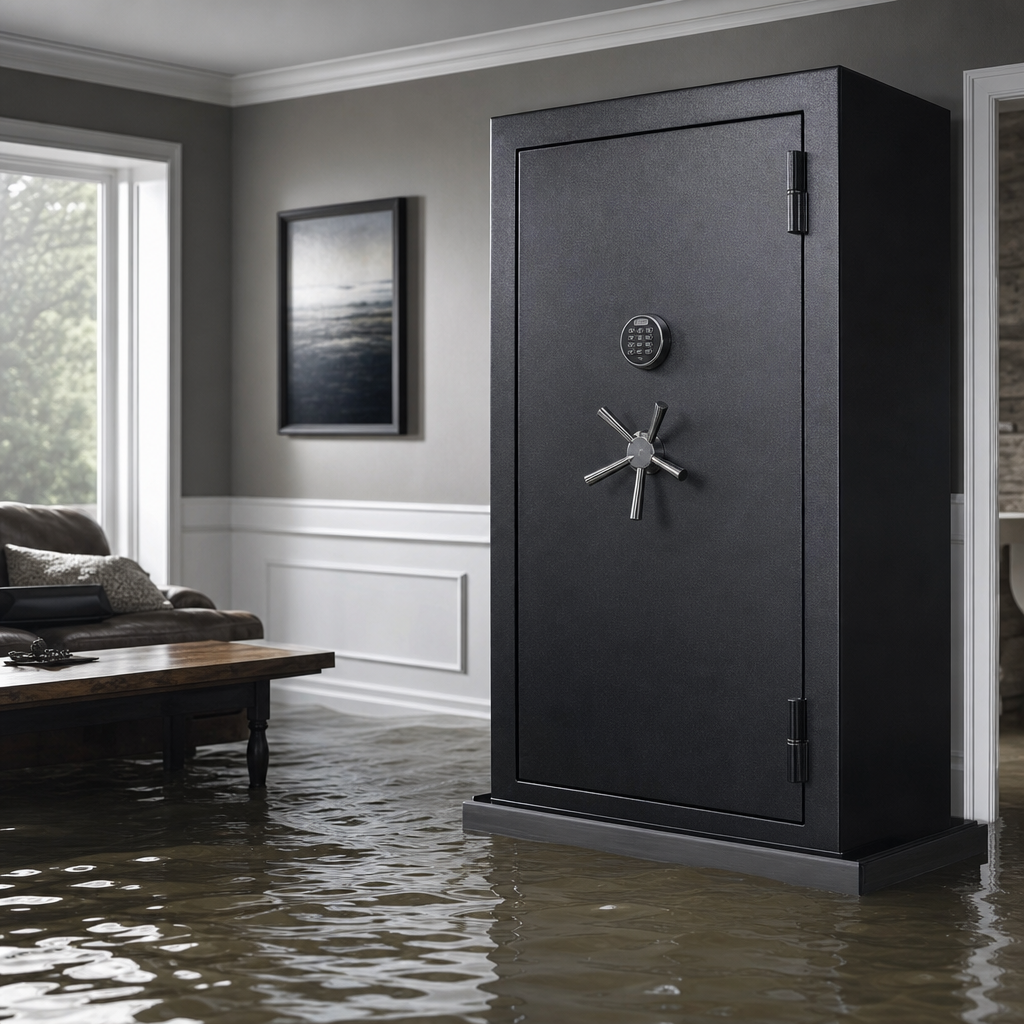
Choosing the right gun safe brand for flood protection is not just about keeping firearms locked away; it is about preventing water intrusion, corrosion, stock damage, optic failure, and the kind of long-term loss that often appears days after a storm. In the gun safes and safety category, flood-resistant storage sits at the intersection of physical security, environmental control, insurance preparedness, and emergency planning. Many buyers focus on fire ratings and steel thickness first, but after years of reviewing safes, helping owners document collections, and seeing what happens after basement seepage, hurricanes, and burst pipes, I can say flood performance is often the feature people research too late.
A flood-protective gun safe is not the same thing as a waterproof container in the boating sense. Most gun safes are built around heavy steel bodies, expanding fire seals, layered doors, composite insulation, and anchor points. When a manufacturer advertises water resistance, that usually means the safe has been designed to slow or prevent water entry for a stated duration and depth, often using door gaskets, welded bodies, elevated thresholds, and laboratory or factory testing. It does not mean the safe is invulnerable in every flooding scenario, especially if it tips over, is submerged beyond its rating, or suffers impact from debris.
This matters because firearms are particularly vulnerable to moisture. Blued steel rusts quickly, internal parts trap condensation, wooden stocks swell, leather slings mildew, and modern accessories such as red dot sights, thermal devices, batteries, and paper tax stamps can all be damaged by water. A quality flood-resistant safe reduces exposure, but the best outcome comes from matching brand strengths to your risks: coastal surge, groundwater seepage, sprinkler discharge, or household plumbing failure. This hub article compares the top five gun safe brands for protecting firearms against flooding, explains where each excels, and gives you a practical framework for evaluating any safe in the broader gun safe comparisons and brand spotlights category.
What Flood Protection in a Gun Safe Actually Means
The first question most shoppers ask is simple: what makes one gun safe better against flooding than another? The answer comes down to door design, seam construction, water seals, threshold height, body geometry, and verified test claims. In real use, the most important detail is often the door seal system. A quality gasket helps block water around the perimeter, while an elevated door lip or channel reduces the chance that shallow standing water reaches the interior. Some brands pair this with continuous welds and tighter door tolerances.
Manufacturers describe protection differently, so compare the actual rating rather than the marketing phrase. One brand may state “water resistant for seven days in two feet of water,” while another may advertise “waterproof up to 72 hours in two feet.” Those are close, but not identical. Also check whether the rating came from independent testing, in-house testing, or inherited design standards from a parent company. If the company does not clearly explain the conditions, assume the performance is less certain than a brand with a precise published specification.
Flood protection also depends on installation. A great safe placed in a basement low spot can perform worse than a good safe elevated on a reinforced platform in a first-floor closet. I generally recommend thinking in layers: buy a safe with a clear water rating, add a GoldenRod or dehumidifier, use desiccant packs, store documents in sealed pouches, and elevate the safe if your property has any flood history. Brand matters, but placement and maintenance matter too.
Top 5 Gun Safe Brands for Flood Protection
The brands below consistently come up in serious buyer comparisons because they combine recognized build quality with meaningful water-resistance features, broad dealer networks, and established product lines. They are not identical, and they should not be treated as interchangeable. Some are best for maximum published water ratings, some for all-around premium construction, and some for buyers balancing budget with better-than-average environmental protection.
| Brand | Known Water-Protection Strength | Typical Buyer Fit | Notable Tradeoff |
|---|---|---|---|
| Liberty Safe | Widely cited models with strong sealing systems and long water ratings on select lines | Mainstream buyers wanting broad support and proven residential options | Feature sets vary sharply by series |
| Fort Knox | High-end customization and robust construction with premium sealing options | Collectors wanting tailored builds and heavier construction | Higher pricing and longer lead times |
| Browning | Well-developed interior layouts and competitive water resistance on premium lines | Owners prioritizing organization and rifle access | Model-by-model differences require careful reading |
| Sports Afield | Strong value positioning with published waterproof claims on many models | Budget-conscious buyers seeking concrete water specs | Fit, finish, and steel may be less premium than flagship brands |
| Rhino Metals | Solid construction and water-rated options under several respected lines | Buyers seeking a balance of aesthetics, security, and environmental protection | Dealer availability can be more limited by region |
Liberty Safe remains one of the most visible names in residential gun storage because the company offers multiple tiers, widespread dealer access, and several models that clearly state water protection claims. In practice, Liberty appeals to buyers who want a brand with established service channels and familiar product segmentation. Higher-end Liberty lines typically combine better fire insulation, upgraded door seals, and more substantial construction than entry-level models. The caution is straightforward: do not assume every Liberty safe has the same flood protection. Read the exact specification for the series you are considering.
Fort Knox is often the brand I mention when a collector wants premium customization rather than an off-the-rack purchase. Fort Knox safes are known for thicker steel options, reinforced bodies, door upgrades, and custom interiors. For flood protection, the value is not just the seal; it is the overall fit and build quality that supports environmental resistance. These safes are often chosen by owners storing high-value rifles, heirloom revolvers, suppressor paperwork, and optics in one place. The downside is cost. If your budget is tight, Fort Knox may set the benchmark without being the practical choice.
Browning gun safes deserve attention because the company has long focused on interior usability, especially the DPX-style door storage systems and flexible long-gun arrangements. That matters after flooding too, because organization reduces gun-to-gun contact and can improve airflow when you reopen the safe and dry contents. Browning’s better lines offer meaningful water and fire protection, though buyers need to compare series carefully. In showroom conversations, I have found Browning especially popular with hunters who want accessible storage for scoped rifles and shotguns rather than a dense, collector-style cram layout.
Sports Afield has earned a real place in this comparison because many of its safes are marketed with explicit waterproof ratings that are easy for shoppers to understand. For first-time safe buyers, that clarity is valuable. If you live in an area where minor flooding, slab leaks, or heavy storms are your biggest concern, Sports Afield can offer an accessible entry point into water-protective storage. The tradeoff is that premium buyers may want thicker steel, finer fit and finish, or more robust locking systems than some value-focused models provide. Even so, a correctly placed and maintained Sports Afield safe can outperform a more expensive but non-water-rated competitor.
Rhino Metals, including lines such as Ironworks and Kodiak, has developed a loyal following among buyers who want strong visuals, respectable security, and practical protective features. Rhino’s better models frequently appear in serious comparison lists because they blend residential appeal with useful specifications rather than gimmicks. I have seen buyers choose Rhino when they wanted a safe that looked furniture-grade in a living space but still offered substantial environmental protection. As always, verify the exact rating on the exact model, because line-level branding can hide important differences in door seals, insulation, and body construction.
How to Compare Brands Beyond the Water Rating
Flood resistance is critical, but it should never be evaluated in isolation. Start with construction. Steel thickness affects pry resistance and structural rigidity, which matters if a safe is moved by water or struck by debris. Door design matters because gaps are where both tools and water exploit weakness. Lock type matters too. Electronic locks are convenient, but after a disaster many owners appreciate a proven, reliable lock from recognized names such as Sargent and Greenleaf or SecuRam, along with accessible override and service support.
Interior environment is the next comparison point. A flood-rated safe can still trap humidity after the event if you do not manage moisture. Look for pass-throughs for power, shelf flexibility, and enough space to avoid overpacking. I regularly advise buyers to leave room for airflow, install a dehumidifier rod, and keep a hygrometer inside. If your safe is packed wall to wall with foam-lined cases, soft sleeves, and stacked documents, recovery after exposure becomes harder.
Warranty and claims support matter more than many shoppers realize. Some manufacturers provide stronger replacement promises after fire or attempted burglary than after water damage. Read the policy. Ask whether the company covers locksmith service, freight, interior replacement, or just limited parts. Also ask the dealer who handles post-sale issues. In a regional flood event, local support can be as important as the printed warranty language.
Best Brand Match for Common Buyer Scenarios
If you want the safest mainstream choice with broad recognition, Liberty is usually the easiest brand to research, inspect locally, and compare across price levels. If you want a premium safe for a serious collection and are willing to pay for tailored features, Fort Knox is often the strongest fit. If interior organization and rifle accessibility matter as much as the shell, Browning stands out. If your priority is value with clearly published waterproof claims, Sports Afield deserves a close look. If you want a blend of appearance, security, and practical flood-minded design, Rhino Metals is a smart contender.
For basement installations, I strongly favor brands and models with explicit water ratings, then recommend elevating the safe on a concrete plinth or engineered steel stand that does not compromise anchoring. For first-floor closet installs in low-risk homes, you may accept a shorter water rating if the safe offers better burglary protection. For coastal regions, combine a water-rated safe with corrosion-control habits because salt air can be as damaging as floodwater. In other words, the best gun safe brand is the one whose strengths match the environment around your firearms, not just the logo on the door.
Hub Guide: Building Your Gun Safe Comparison Shortlist
As the central page for gun safe comparisons and brand spotlights, this article should help you narrow the field before diving into model-specific reviews. Start with your risk profile: flood zone, installation floor, collection value, and whether you store documents, NFA items, or electronics alongside firearms. Next, filter brands by published water rating, then by construction quality, lock reputation, interior capacity, and dealer support. Finally, compare total installed cost, including delivery, placement, anchoring, dehumidification, and any riser platform.
A smart shortlist usually contains one mainstream brand, one premium brand, and one value brand. That structure keeps the decision grounded. You can compare Liberty against Fort Knox for build philosophy, then measure both against Sports Afield on practical value. Add Browning if organization is central to your setup, or Rhino if aesthetics and balanced specifications matter. This process prevents buyers from getting lost in marketing terms and keeps attention on the factors that actually protect firearms during a water event.
The best gun safe brands for protecting firearms against flooding are the ones that publish clear ratings, build consistent products, and support owners after the sale. Liberty, Fort Knox, Browning, Sports Afield, and Rhino Metals all belong on the shortlist, but they serve different buyers. Water resistance should be treated as one part of a complete storage strategy that also includes solid installation, humidity control, realistic capacity planning, and careful review of warranty terms.
If you are shopping within the broader gun safes and safety category, use this hub as your starting point for deeper comparisons by price tier, capacity, lock type, and installation environment. Focus on exact model specifications, not just brand reputation, and match the safe to the kind of flooding risk your home actually faces. A well-chosen safe protects more than metal; it protects function, value, records, and peace of mind. Build your shortlist now, verify the published water rating, and choose a brand that fits both your firearms and your flood risk.
Frequently Asked Questions
What makes a gun safe brand better for flood protection than a standard gun safe?
A gun safe brand that performs well in flood conditions usually does more than simply offer a strong locking mechanism and heavy steel construction. The biggest difference is how the safe is designed to slow or limit water intrusion and how well it helps protect firearms from the secondary damage that follows exposure to moisture. Flood protection is not only about whether water gets inside during a storm. It is also about what happens afterward, when trapped humidity, standing moisture, and poor airflow begin causing corrosion on metal parts, swelling in wood stocks, rust in barrel interiors, and failures in optics, electronics, and ammunition storage.
Brands known for better flood-related protection often pay more attention to door seals, continuous welds, body construction, internal finishes, and the compatibility of the safe with dehumidifiers and desiccant systems. Some also offer better overall build quality that reduces gaps and weak points where water may enter. While many safes are marketed heavily for fire resistance, flood readiness is often more practical for homeowners in storm-prone, coastal, river-adjacent, or basement-storage environments. In real-world use, a strong flood-conscious safe should be viewed as part of a complete protection system that includes elevated placement, anchoring, interior moisture control, and post-storm inspection procedures.
In other words, the better brand is the one that combines security, durability, environmental management, and realistic ownership needs. Buyers should look beyond advertising language and ask direct questions about seal design, finish durability, interior materials, anchoring options, replacement parts, and whether the safe is suitable for adding humidity-control accessories. A safe that survives a break-in attempt but allows moisture to linger inside can still lead to expensive firearm damage days later.
Are fire-rated gun safes also waterproof or flood-resistant?
Not necessarily, and this is one of the most common points of confusion for buyers. Fire-rated gun safes and flood-resistant gun safes are designed to solve different problems. A fire rating usually refers to how long the interior can stay below a certain temperature when exposed to external heat. That rating says very little by itself about how a safe will perform if it is surrounded by rising water, splashed repeatedly during a storm, or left in a damp, post-flood environment.
Some buyers assume that if a safe has thick seals to block smoke and heat, those same seals will automatically stop water. In practice, that is not always true. Door gaskets that expand during heat exposure are helpful in a fire, but they may not create a reliable waterproof barrier under flood pressure. Likewise, fireboard materials inside the walls can help with insulation, yet if water enters the safe or the safe sits in a high-moisture environment for too long, internal materials may absorb moisture and contribute to lingering humidity issues.
This is why it is important to review the manufacturer’s specifications carefully. If flood resistance matters, look for explicit claims about water resistance, seal performance, door construction, and any test standards the company uses. If those details are missing, it is safer to assume the product was primarily designed for theft and fire, not submersion or prolonged water exposure. Even among premium brands, the level of water protection can vary significantly from one model line to another.
The most effective approach is to treat fire protection and flood protection as separate buying criteria. A safe can be excellent in one area and average in the other. For households in flood zones, hurricane regions, or homes with basement storage, flood resistance should be part of the primary shortlist rather than an afterthought.
Which features should I compare when evaluating the top gun safe brands for flooding concerns?
When comparing leading gun safe brands for flood protection, start with the features that affect water intrusion and moisture management first, then evaluate security and long-term durability. The first thing to examine is the door seal system. A well-designed seal can help reduce water entry and also improve resistance to humid outside air. Next, inspect the safe body construction, including weld quality, steel thickness, and how the door sits in the frame. Tighter tolerances and stronger construction usually translate to fewer weak points.
Another major factor is whether the interior can support environmental control. The best brands typically make it easy to use electrical pass-throughs, dehumidifier rods, rechargeable desiccants, and moisture-monitoring tools. That matters because many firearm losses after flooding are caused not by dramatic submersion but by lingering humidity inside a sealed container. Once moisture gets trapped around blued steel, stainless components, wood furniture, scopes, red dots, and ammunition, the damage can escalate quickly.
You should also compare finish quality inside and outside the safe. Exterior coatings help the cabinet resist rust after storm exposure, while interior materials should be checked for their ability to dry out and resist odor, mold, or breakdown. Lock type is worth considering too. Electronic locks are convenient, but in flood-prone areas buyers should evaluate weather-related reliability, battery access, and post-event serviceability. Mechanical locks are often valued for simplicity, though the best choice depends on your usage, environment, and maintenance habits.
Finally, consider practical setup factors such as safe weight, anchoring options, base design, and whether the manufacturer gives clear guidance on elevation and installation. A highly rated brand can still underperform if the safe is placed directly on a basement slab in a flood zone. The strongest buying decision comes from comparing build quality, seal integrity, humidity-control compatibility, placement flexibility, and brand reputation for consistent manufacturing and support.
Can a gun safe completely protect firearms during a major flood?
No gun safe should be assumed to offer absolute protection in every flood scenario, especially during severe or prolonged flooding. Water depth, current force, contamination, duration of exposure, and where the safe is installed all influence the outcome. A quality safe from a reputable brand can greatly improve your chances of protecting firearms, but complete protection depends on the entire setup, not just the logo on the door.
For example, a heavy safe with good seals may perform well against shallow water intrusion or short-term exposure, but if the safe is located in a basement that fills completely, or if floodwater remains around it for an extended period, the risk changes significantly. Water can eventually enter through vulnerable points, and even if the interior stays mostly dry, the outside of the safe may corrode, the lock may be affected, and internal humidity may rise. In extreme conditions, an unanchored safe can also tip, shift, or become partially submerged in ways the buyer did not anticipate.
The better way to think about flood protection is layered risk reduction. Choose a high-quality safe brand, install the safe above the lowest likely water line if possible, use a raised platform when appropriate, anchor it correctly, maintain internal dehumidification, and create a storm preparation checklist. It is also wise to document serial numbers, store insurance records separately, and inspect firearms immediately after any water event. Fast cleanup and lubrication can make the difference between temporary exposure and permanent damage.
So while a safe can dramatically reduce risk, it is not a magic barrier against every flood disaster. Buyers who understand that flood protection involves installation strategy, maintenance, and emergency planning are usually the ones who protect their firearms most effectively over the long term.
What should I do after a flood if my firearms were stored in a gun safe?
After a flood, act quickly but carefully. Even if the safe appears intact, do not assume the contents are fully protected. The first step is to inspect the exterior for signs of water line exposure, rust, door seal damage, or lock issues. If local conditions are unsafe, such as structural instability or electrical hazards, wait until the area is secure. Once it is safe to proceed, open the safe as soon as practical and check for any trapped humidity, condensation, odor, or visible dampness inside.
If firearms were exposed to moisture, remove them immediately and begin a controlled drying and cleaning process. Wipe down all metal surfaces, inspect bores, actions, magazines, trigger assemblies, optics mounts, and accessory rails, and look closely for early rust formation in hidden areas. Wood stocks should be checked for swelling, cracking, or finish lifting. Optics and electronics should be examined for fogging, battery compartment contamination, and seal failure. Ammunition that may have been exposed to water or prolonged humidity should be evaluated cautiously and often separated from unaffected supplies.
The safe itself also needs attention. Dry the interior fully, remove any wet fabric or padding if possible, and replace desiccants or reactivate them according to the manufacturer’s instructions. If the safe has an electrical dehumidifier, confirm that the outlet, cord, and device are safe before using them again. Keep the door open temporarily to promote airflow until all interior moisture is gone. If floodwater was contaminated, a more thorough sanitation and inspection may be necessary.
Finally, document everything. Take photos of the safe, the interior, and each affected firearm for insurance purposes. Contact the safe manufacturer if you suspect seal failure or lock damage, and consider having valuable firearms inspected by a qualified gunsmith. The key principle is speed. In many cases, the worst damage does not happen during the flood itself but in the hours and days after, when moisture lingers and corrosion begins to spread.