
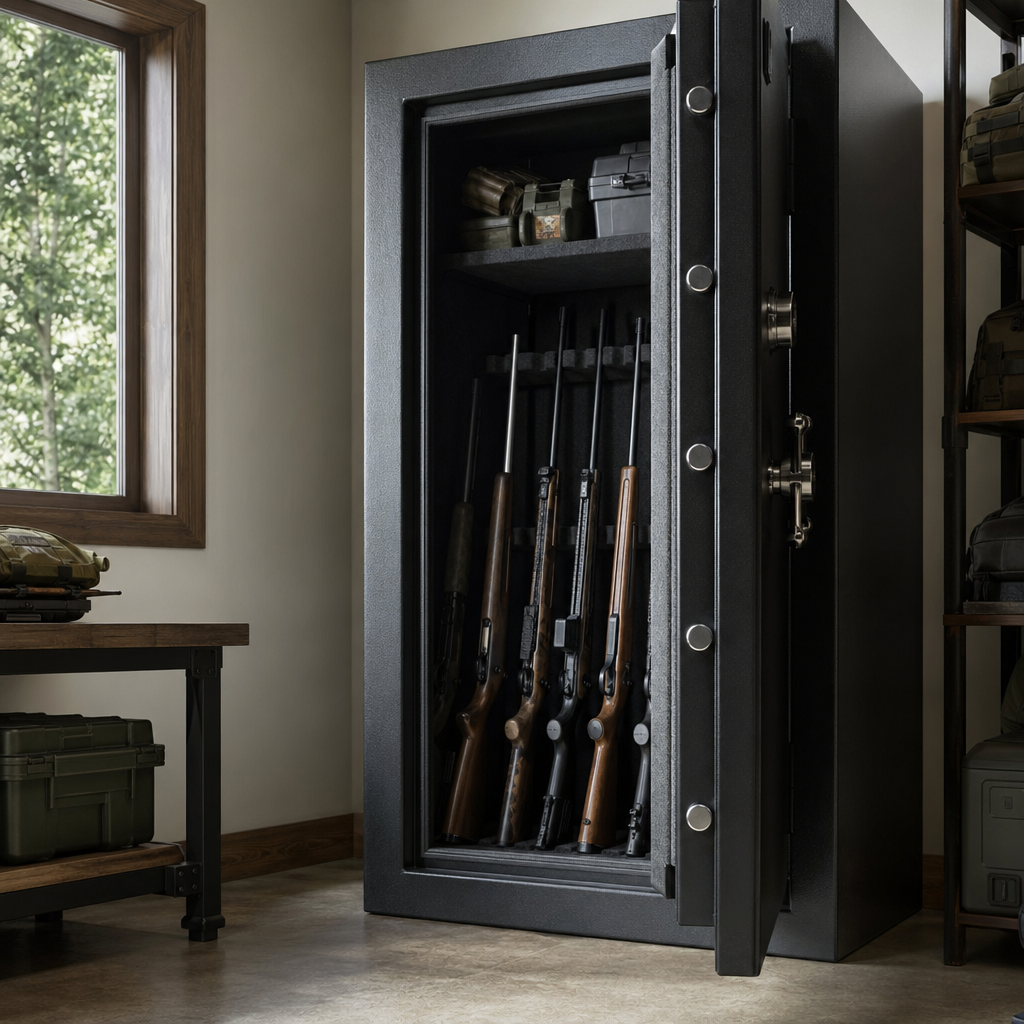
Choosing a gun safe with a heavy-duty steel construction starts with understanding that steel thickness, weld quality, door design, lock reliability, and fire protection all work together. A safe that looks massive on a showroom floor can still fail quickly if the body uses thin sheet metal, weak locking bolts, or poor anchoring. In practical buying guides, this topic matters because buyers often focus on brand marketing, interior capacity, or paint finish before checking the construction details that determine whether a safe slows theft, protects firearms, and supports safe storage habits.
Heavy-duty steel construction refers to a safe body and door built from steel thick enough to resist prying, cutting, drilling, and deformation under force. In the gun safe market, thickness is commonly described by gauge or by inches. Lower gauge numbers mean thicker steel. For example, 7-gauge steel is substantially thicker than 14-gauge steel, and that difference has real security implications. I have inspected safes that appeared nearly identical from the outside, yet one used a thin folded shell while another used reinforced plate steel with continuous welds. The better-built unit resisted pry attacks far longer, and that extra time is often what defeats opportunistic theft.
This buying guide serves as a hub for the wider Gun Safes & Safety category because construction quality influences every related decision: burglary resistance, fire protection, humidity control, placement, installation, and long-term ownership cost. Buyers also need a framework for comparing residential security containers, true safes, modular models, and specialty long-gun cabinets. Standards from UL, California Department of Justice compliance requirements, and manufacturer test claims can help, but they require interpretation. The goal is simple: choose a heavy-duty steel gun safe that matches your risk level, firearm collection, home layout, and budget without paying for features that do little to improve actual security.
Start with steel thickness, body design, and door construction
The first question most buyers should ask is not how many guns a safe claims to hold, but how the shell and door are built. In residential gun safes, body steel commonly ranges from 16-gauge to 10-gauge, with premium models moving into 7-gauge, 4-gauge, or composite plate construction. For a serious heavy-duty steel gun safe, 10-gauge is a practical minimum, while 7-gauge or thicker offers a more meaningful barrier against pry bars and basic cutting tools. Door steel matters even more because attackers usually target the front. A safe with a 12-gauge body and a multi-layer reinforced door can outperform one with a thicker shell but a weak door edge.
Look closely at how the safe gains stiffness. Formed bends can strengthen a body panel, but strength also comes from full-length welds, internal reinforcement, anti-pry tabs, and a door frame that minimizes gaps. I prefer safes with continuous welds over spot-weld-heavy construction because weak seams become attack points. Plate doors are generally better than decorative panel doors wrapped around thinner steel. Composite doors that combine plate steel, hard plates, and fire layers can perform well if the steel core is substantial. Ask for exact body gauge, door plate thickness, total door thickness, and whether the hinge side includes dead bars or active bolts.
Door fit is another overlooked detail. Large external hinges can look impressive, yet the real issue is whether the locking side and hinge side resist spreading under leverage. A secure door uses a robust frame, recessed profile, or stepped edge that makes it difficult to insert pry tools. Bolt count alone does not prove quality. Ten small bolts driven into a weak frame may be worse than four thick bolts supported by a reinforced door jamb. Good buying guides treat steel construction as a system, not a single spec, because a safe is only as strong as its easiest point of failure.
Understand security ratings, lock options, and burglary resistance
Many consumers assume every heavy steel gun safe has the same level of security, but the market is broad. Most gun safes sold for homes are classified as residential security containers rather than high-security burglary safes. That does not make them useless; it means buyers should align expectations with tested performance. UL ratings, third-party lock certifications, relocker mechanisms, hard plates, and anti-drill features carry more weight than broad claims such as military-style construction. If a manufacturer avoids precise language and relies on oversized bolt counts or patriotic branding, treat that as a reason to dig deeper.
Lock choice affects both convenience and attack resistance. Mechanical dial locks remain respected for longevity and simplicity, especially from brands like Sargent and Greenleaf or La Gard. Quality electronic keypad locks provide faster access and can be excellent if they are UL-listed and installed correctly. Redundant locks, biometric systems, and smart features add convenience, but they should not distract from steel construction and boltwork integrity. In my experience, low-cost biometric readers are often the first feature to disappoint owners, especially in dusty garages or humid basements. A dependable keypad or mechanical dial is usually the better primary option for a heavy-duty safe.
Burglary resistance also depends on relockers and hard plates. A relocker triggers if the lock is punched or tampered with, keeping the boltwork engaged. Hard plates protect the lock from drilling. Some better safes also use ball-bearing drill-resistant plates or manganese steel around critical areas. Ask whether the safe has active bolts on the opening side, dead locking bars on the hinge side, and internal hinges or protected external hinges. External hinges are not automatically weak if the hinge side is secured with fixed dead bolts. The important factor is whether the door stays locked in place even if hinges are attacked.
Compare heavy-duty steel features that actually matter
When buyers compare brands, they need a short list of specifications that influence real performance. Marketing language can make two safes sound equivalent when they are not. The table below highlights practical factors to compare before narrowing choices for your buying guide research or before visiting a dealer.
| Feature | What to Look For | Why It Matters |
|---|---|---|
| Body steel | 10-gauge minimum; 7-gauge or thicker for higher risk | Thicker steel slows pry and cut attacks |
| Door construction | Plate steel or reinforced composite door with strong frame | Most attacks target the door first |
| Weld quality | Continuous welds and reinforced seams | Weak seams can spread under leverage |
| Lock protection | UL-listed lock, hard plate, relocker | Improves resistance to punch and drill attacks |
| Anchoring | Factory anchor holes and proper concrete installation | Prevents tip-over and removal from the home |
| Fire design | Verified fire seal, insulation layers, documented test data | Protects contents beyond basic theft resistance |
Use this comparison method consistently across all buying guide pages in your research. It also helps when evaluating related topics such as handgun safes, long-gun storage layouts, safe accessories, and safe room planning. A heavy-duty steel construction should show up in the measurable details, not only in brochure photos. If a seller cannot clearly explain body gauge, lock brand, anchor pattern, and door reinforcement, move on to a manufacturer that can.
Balance fire protection, interior layout, and long-term usability
A gun safe with heavy-duty steel construction still needs to work as a daily storage solution. Fire protection is the most common secondary feature buyers weigh, but fire ratings can be confusing because manufacturers use different test methods. Some quote ninety minutes at 1200 degrees, others sixty minutes at 1400 degrees, and some offer no independent verification. Better fire designs use multiple layers of Type X gypsum board, heat-expanding door seals, and construction that limits gaps where hot gases can enter. However, more fireboard can reduce interior space and add weight without increasing burglary resistance, so compare security and fire design separately.
Interior layout matters more than advertised gun count. A “36-gun safe” often fits far fewer scoped rifles in real use. Measure your longest firearm, optic height, and accessory footprint. Adjustable shelving, barrel rests, door organizers, and power outlets improve daily usability, especially if you store documents, suppressors, magazines, or camera gear alongside firearms. I advise buyers to purchase more capacity than they think they need because collections grow, and cramped interiors lead to dings, tangled slings, and poor organization. A wider safe with better shelving is often more useful than a taller model that inflates capacity with unrealistic rack spacing.
Do not ignore humidity management and maintenance. Steel safes in basements, garages, or coastal climates need dehumidifier rods, desiccants, and periodic inspection of door seals and boltwork. Powder-coated interiors, carpet liners, and electrical pass-throughs add convenience but do not replace climate control. The best buying decision is one that still works five or ten years later: the lock remains serviceable, replacement parts are available, the interior can adapt to new firearms, and the steel body resists both theft and environmental wear.
Plan installation, placement, and total cost before you buy
Even an excellent heavy-duty steel gun safe underperforms if it is poorly installed. Placement should limit visibility, reduce access to long pry bars, and take advantage of structural support. Ground-floor concrete is ideal because it handles weight and allows robust anchoring. Upstairs installation may require a structural review, especially for safes exceeding 800 pounds before firearms and accessories are loaded. Tucking a safe into a closet alcove or corner where one or two sides are hard against walls can reduce pry access. That simple placement decision can materially improve real-world security.
Anchoring is nonnegotiable. A thief who can tip a safe onto its back gains mechanical advantage and time. Wedge anchors in concrete are the standard approach for residential installations, while lag bolts into wood framing are less desirable and highly dependent on subfloor structure. Professional delivery teams can use stair climbers, pallet jacks, and door jamb protection to place a safe correctly without damaging the home. This is one area where cutting costs often backfires. I have seen buyers spend thousands on thick steel only to skip anchoring and leave the safe in a garage where it could be attacked with privacy and room to work.
Total cost includes more than sticker price. Add freight, inside delivery, installation, humidity control, lighting, insurance considerations, and possible locksmith support. Some premium brands cost more because they use thicker American steel, better welds, and proven lock components. Others charge more mostly for finish options. A smart buying guide separates cosmetic upgrades from structural upgrades. If your budget is fixed, spend on thicker steel, a better lock, and proper anchoring before paying for gloss paint, elaborate graphics, or luxury interiors.
How to choose the right model for your risk level
The right gun safe depends on who you are protecting against and what you are storing. For many households, a well-anchored 10-gauge or 7-gauge residential gun safe with a reinforced door, UL-listed electronic lock, relocker, and honest fire protection is the sweet spot. If you own a modest collection in a suburban home with an alarm system and low traffic, that setup usually provides strong value. If you keep high-value custom rifles, NFA items, heirlooms, or sensitive documents, stepping up to thicker plate construction or a higher-rated burglary safe makes sense.
Think in scenarios. A smash-and-grab burglar wants speed, not a prolonged fight with thick steel and hidden anchors. In that case, heavy-duty construction, difficult placement, and visible alarm coverage often end the attempt. A determined attacker with tools is a different threat profile, and that is where higher steel thickness, better lock protection, and perhaps a dedicated safe room become more relevant. The biggest mistake I see is buying for appearance rather than threat level. The best safe is not the biggest or flashiest model; it is the one whose construction and installation match the risks in your home.
As you continue exploring this Gun Safes & Safety hub, use this guide as your baseline for every buying decision. Check steel thickness first, verify door and lock construction, compare tested features, plan installation, and buy more usable capacity than the brochure suggests. A heavy-duty steel gun safe is a long-term piece of security equipment, not a decorative cabinet. Choose carefully, ask precise questions, and invest in the structural features that actually protect your firearms and your family.
Frequently Asked Questions
1. What should I look for first when choosing a gun safe with heavy-duty steel construction?
The first thing to check is the actual steel thickness used in both the safe body and the door, because this has a direct impact on how well the safe resists prying, cutting, and brute-force attacks. Many buyers assume a safe is strong simply because it feels heavy or looks large, but weight alone does not tell you how thick the steel is or how the safe is built. A well-made gun safe should clearly list the body gauge or steel plate thickness, and in general, thicker steel provides better protection than thinner sheet metal. The door often gets more attention, but the body matters just as much, since an attacker may target the sides or top if those panels are weaker.
Beyond thickness, look closely at how the safe is assembled. Continuous welds, reinforced door frames, solid internal supports, and a pry-resistant door design are all signs of better construction. The locking system also matters, because even a safe with decent steel can be compromised if it uses weak bolts, poor bolt coverage, or a low-quality lock. Finally, consider whether the safe can be anchored securely to the floor. Heavy-duty steel construction works best as part of a complete design that includes strong materials, reliable locking components, and proper installation.
2. How important is steel gauge when comparing gun safes?
Steel gauge is one of the most important details to compare, because it is one of the clearest indicators of how much real physical security a gun safe offers. In simple terms, lower gauge numbers generally mean thicker steel. That matters because thicker steel is harder to bend, punch through, pry open, or cut quickly with tools. A safe with a thinner body may still look impressive on the sales floor due to size, trim, shelving, or finish, but if the steel is light, its resistance to forced entry can be much lower than expected.
When evaluating steel gauge, make sure you are not only looking at the door. Some manufacturers promote a thick door while using thinner steel on the sides, back, or top. A balanced build is important, because real-world attacks do not always target the front. Also remember that gauge is only part of the picture. Reinforced corners, door jamb strength, internal plate construction, and weld quality all influence how the safe performs under stress. The best approach is to use steel gauge as a starting point, then confirm that the rest of the safe’s structure matches the strength suggested by the specifications.
3. Why do weld quality and door design matter as much as steel thickness?
Steel thickness is critical, but it does not work in isolation. A gun safe is only as strong as the way its parts are joined and how the door is engineered to resist leverage. Poor welds can create weak points where panels separate under force, reducing the value of otherwise decent steel. Strong, continuous welds help the safe act as a unified structure, while inconsistent or minimal welds can leave vulnerable seams that may fail during an attack. This is why construction quality should always be examined alongside raw material specs.
Door design is equally important because the door is the most commonly attacked part of the safe. A well-built door should sit tightly in a reinforced frame and resist pry-bar access around the edges. Features such as recessed doors, anti-pry tabs, robust hinge support, and a solid bolt system improve security significantly. Large locking bolts may look impressive in marketing photos, but what matters more is how they engage the frame and whether the overall door structure supports them. In practical terms, a safe with slightly thinner steel but excellent welds and a strong anti-pry door can outperform a larger safe that relies on appearance more than real engineering.
4. How do lock reliability and locking bolts affect the security of a heavy-duty steel gun safe?
Lock reliability is essential because even the strongest steel body cannot protect your firearms if the lock fails or the locking mechanism is poorly designed. Buyers often focus on the safe’s exterior construction and overlook the fact that the lock is the system that controls access every single time the safe is used. Whether you choose an electronic lock, mechanical dial, or another style, the key consideration is quality. A reputable lock from a trusted manufacturer is usually a better long-term choice than a feature-heavy lock with a weak track record. Reliability, consistency, and resistance to tampering should come first.
Locking bolts also deserve close attention, but bigger is not always better. What matters most is the total locking design: how many bolts there are, where they are placed, how deeply they engage, and how well the door frame supports them. Active bolts on multiple sides can improve pry resistance, but their effectiveness depends on the strength of the surrounding steel and the integrity of the bolt carriage system. Some safes advertise impressive bolt counts while neglecting the actual body strength or door frame reinforcement. A strong lock paired with a properly engineered bolt system gives you a safe that not only looks secure on paper, but also performs better under real attack conditions.
5. Should fire protection and anchoring be part of the decision when choosing a heavy-duty steel gun safe?
Yes, absolutely. Fire protection and anchoring are both important parts of the buying decision, even when your main focus is heavy-duty steel construction. A safe is not truly well-rounded if it resists theft but performs poorly in a house fire. Fire ratings vary widely, so it is worth looking beyond broad claims and checking the actual time and temperature standards provided by the manufacturer. Fireboard layers, door seals, and overall build quality all influence how much heat and smoke the interior can withstand. If you are storing firearms along with documents, optics, or valuables, fire protection becomes even more important.
Anchoring is just as critical because a thief may try to tip, drag, or remove the entire safe rather than attack it on-site. Even a well-built steel safe becomes more vulnerable if it can be moved into a garage, workshop, or remote location where tools and time are available. A properly anchored safe is harder to pry from below, harder to destabilize, and much less attractive as a target. When choosing a gun safe, think of heavy-duty steel construction as the foundation, then confirm that fire resistance and secure anchoring complete the overall protection strategy. That combination gives you a safer, more realistic purchase than relying on size, branding, or showroom appearance alone.