
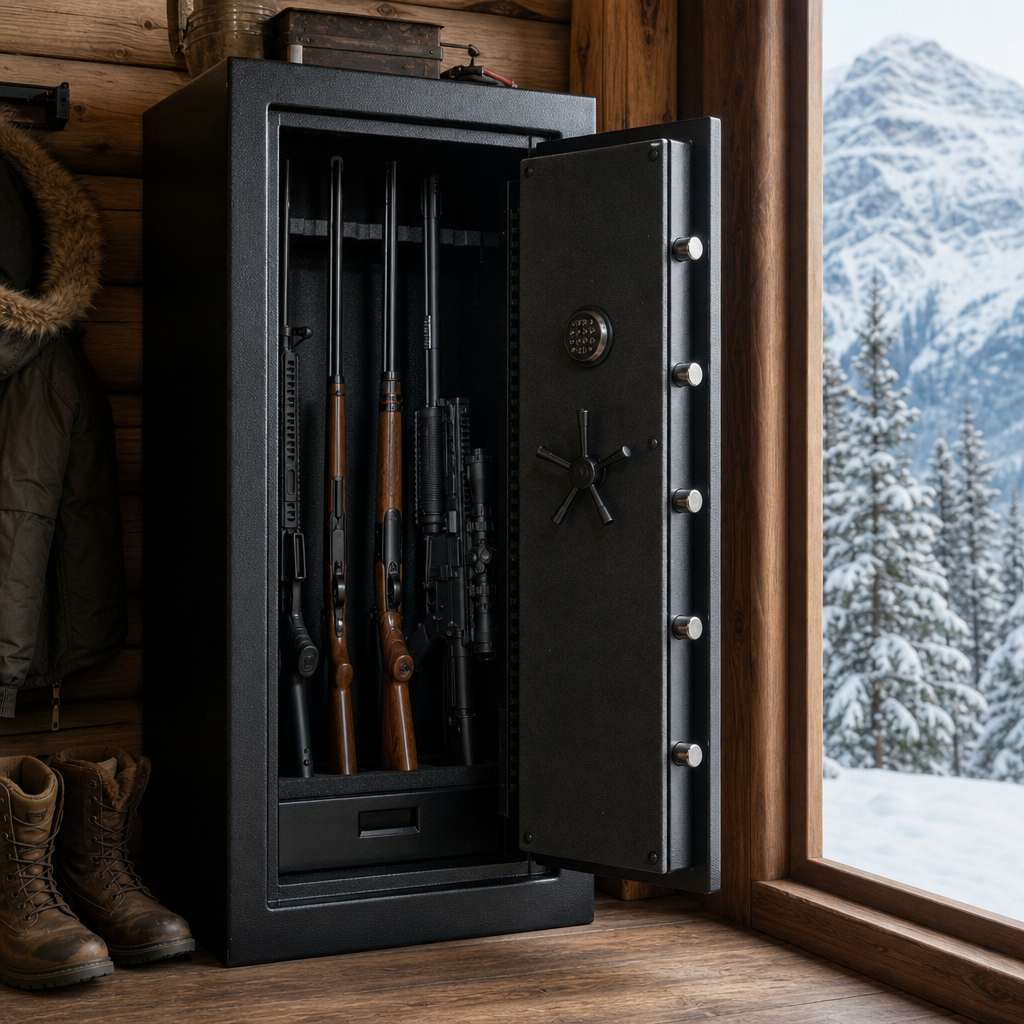
Choosing a gun safe that works well in extreme cold weather starts with understanding that low temperatures change how steel, locks, insulation, lubricants, batteries, and even the room around the safe behave. In practical terms, a safe that performs perfectly in a heated basement may become frustrating or unreliable in an unheated garage, hunting cabin, workshop, or outbuilding when temperatures drop well below freezing. For buyers in northern states, mountain regions, Alaska, Canada, or any place where winter cold is sustained, this is not a niche concern. It directly affects security, access, corrosion control, and long-term firearm preservation.
Extreme cold weather usually means extended exposure to temperatures below 32 degrees Fahrenheit, with many real-world buying decisions centered on conditions from 0 to minus 20 degrees and occasional swings warmer and colder. Those swings matter as much as the low temperature itself. In my experience evaluating safes for detached garages and seasonal properties, the biggest problems are rarely dramatic steel failures. They are lockouts caused by drained batteries, stiff mechanical components, interior condensation from rapid temperature changes, and buyers choosing fire liners or door seals without understanding how they react to moisture and freeze-thaw cycles. A good cold-weather gun safe is not simply “heavy duty.” It is a system matched to climate, location, access needs, and maintenance habits.
This buying guide serves as a hub for choosing the right model and narrowing the field before you compare brands, lock types, and installation methods. The core question is simple: what should you prioritize so the safe remains secure and usable through winter? The answer is insulation that manages temperature swings, a lock that remains dependable in cold conditions, a body and door design that resists moisture intrusion, an installation plan that avoids condensation traps, and an interior setup that controls humidity all year. If you get those five factors right, most reputable gun safe brands can work. If you ignore them, even an expensive safe can become a cold-weather headache.
Start With Placement, Because Location Determines the Safe You Need
The first buying decision is not brand or size. It is placement. A safe inside a climate-controlled room faces different risks than a safe in an attached garage, detached shop, barn office, or hunting cabin that sits vacant for weeks. In heated indoor spaces, your main concern is stable humidity control. In unheated spaces, you must plan for condensation, cold-soaked steel, and power interruptions. I have seen buyers overspend on thicker steel while ignoring the fact that the safe was going onto a concrete slab beside an exterior wall, which almost guarantees more moisture exposure than the same safe on an interior floor.
Concrete floors are especially important. Concrete wicks moisture, and in winter the slab can stay colder than the surrounding air. When a warm spell or a heater briefly raises room temperature, moisture condenses on cold surfaces first, including the safe bottom and lower walls. That is why elevation matters. A steel pedestal, composite riser, or pressure-treated platform with a moisture break can materially reduce corrosion risk. If your safe will live in a detached building, prioritize a model with a robust door seal, a dehumidifier port, and enough internal volume for air circulation around firearms rather than packing every inch.
As a hub guide, this is also where related buying decisions connect: size planning, room layout, garage installation, concrete anchoring, and cabin storage all flow from placement. Before reading any brand brochure, note the coldest expected temperature, whether the space is heated continuously or intermittently, the floor type, and how often you need quick access. Those answers narrow the safe category immediately.
Lock Type Matters More in Cold Weather Than Most Buyers Realize
If you want the most cold-tolerant option, a quality mechanical dial lock is still the baseline recommendation for extreme weather. Mechanical locks from established makers such as Sargent and Greenleaf or La Gard avoid battery dependence and generally tolerate low temperatures well when properly installed and serviced. They are slower to open and require practice, but they are not vulnerable to dead keypads after a week of subzero temperatures in an outbuilding. For a remote cabin safe, that tradeoff is often worth it.
Electronic locks can still work in extreme cold, but only if you buy carefully. Look for commercial-grade lock bodies, external battery access, and documented operating ranges. Alkaline batteries lose performance sharply in low temperatures, while lithium 9-volt batteries generally perform better and have longer shelf life. Even then, a keypad mounted on a door that has been sitting at minus 10 degrees will not feel or respond like one in a heated house. Some buyers solve this by choosing redundant-entry systems, such as electronic locks with backup key override or a secondary mechanical option, but backup keys also create security and key-control considerations.
Biometric locks are the weakest choice for extreme cold unless the safe is indoors and heated. Finger conditions change in winter; dry skin, gloves, and reduced sensor responsiveness all increase failure rates. Biometrics can be convenient on bedside handgun safes in conditioned rooms, but for a primary long-gun safe in an unheated space, they should not be your first choice. Reliability under stress matters more than convenience on a spec sheet.
| Lock type | Cold-weather strengths | Main drawbacks | Best use case |
|---|---|---|---|
| Mechanical dial | No batteries, proven durability, consistent in subzero storage | Slower access, steeper learning curve | Cabins, garages, long-term storage |
| Electronic keypad | Fast entry, easy code changes, common on full-size safes | Battery sensitivity, keypad response can degrade in cold | Attached garages, lightly conditioned spaces |
| Biometric | Quick when conditions are ideal | Sensor reliability drops with cold, dry skin, gloves | Heated interior rooms only |
Steel Thickness, Door Design, and Seals Affect Winter Performance
Cold weather does not make safe steel suddenly brittle in normal consumer use, but construction quality still matters because temperature swings exploit weak fit and finish. Focus on body gauge, door plate thickness, weld quality, and door alignment. A safe with a flimsy body and poor door fit is more likely to admit moist air, develop icing around the seal, and show finish wear where condensation lingers. Many mainstream residential security containers use 12-gauge to 14-gauge steel bodies, while stronger models move to 10-gauge or thicker. For cold-weather installations, thicker steel helps with durability, but it also increases thermal mass, meaning the safe stays cold longer. That is not automatically bad; it simply means humidity control and placement become even more important.
Door seals deserve close attention. Many fire-rated gun safes use expanding intumescent seals designed to swell under heat during a fire. They are essential for fire protection but should not be mistaken for moisture-proof weather stripping. If you need better control of air leakage in a garage or cabin, inspect whether the safe also uses continuous door-edge seals or tight door tolerances that help reduce ambient exchange. Ask specifically how the seal behaves after repeated freeze-thaw cycles and whether replacement parts are available. Brands that can answer these questions clearly usually have better parts support overall.
Pay attention to hardware as well. Hinges, relockers, boltwork, and handle assemblies should operate smoothly without excessive force. In low temperatures, poor lubrication choices become obvious fast. Heavy grease can stiffen, and cheap handle assemblies can feel rough or bind. Reputable safe technicians often favor lubricants suited to broad temperature ranges, and that servicing detail can matter more than glossy marketing claims.
Insulation, Fire Ratings, and Condensation Control Need to Be Evaluated Together
Many buyers assume that more insulation automatically means better performance in cold weather. The reality is more nuanced. Fire insulation slows heat transfer during a fire, but it can also slow temperature equalization during winter swings. That can be helpful if the room cools gradually, yet it can worsen condensation if a suddenly warmed room surrounds a cold-soaked safe. Drywall-based fire liners, poured composite materials, and proprietary barrier systems all behave differently, so focus less on marketing names and more on verified fire ratings, interior fit, and moisture management features.
A practical way to think about this is simple: insulation helps, but humidity control finishes the job. If the safe includes a factory pass-through for an electric dehumidifier rod, that is a significant advantage. GoldenRod-style heaters are common because they gently raise the internal temperature a few degrees, encouraging air circulation and reducing condensation risk. In very cold detached buildings, I often recommend pairing a dehumidifier rod with rechargeable desiccants or canisters so you have both active and passive moisture control. Hygrometers are inexpensive and should be standard equipment in any cold-weather setup.
Fire ratings also need realistic interpretation. A label such as 30, 60, or 90 minutes only means something if you know the test standard behind it. Independent testing is more meaningful than unspecified factory claims. If your safe is going in a remote building, balancing burglary resistance and moisture control may matter more than chasing the highest advertised fire number. The best buying choice is not the highest single rating. It is the most credible overall package for your environment.
Interior Protection Is About Humidity, Airflow, and Materials
Once the safe is closed, the interior environment becomes its own microclimate. In extreme cold regions, corrosion often comes from condensation events rather than constant wetness. A rifle brought in from a snowy truck, a safe opened during a warm humid day, or a cabin heated quickly after weeks of vacancy can all introduce moisture. That is why interior organization matters. Leave space between long guns, avoid foam that traps moisture against metal, and use silicone-treated gun socks for additional surface protection on blued firearms.
Interior materials matter too. Carpeted panels and fabric liners look attractive, but they can hold moisture if the safe experiences repeated condensation. Cedar interiors smell pleasant and may deter pests, yet cedar is not a substitute for active humidity control. For optics, ammunition, and documents stored alongside firearms, use sealed containers where appropriate and keep a digital hygrometer visible. A target internal relative humidity around 45 to 50 percent is widely accepted for firearm storage because it limits rust risk without encouraging wood-stock shrinkage that can occur in excessively dry conditions.
Do not overlook lubricants and protectants on the firearms themselves. Traditional oils can thicken in very low temperatures, while some modern CLP formulations and corrosion inhibitors remain stable across broader ranges. The right gun safe supports preservation, but it cannot compensate for neglected firearm prep. Buyers in severe climates should think of the safe and the firearm maintenance plan as one combined system.
Installation, Anchoring, and Power Planning Separate Good Buys From Costly Mistakes
A cold-weather gun safe should be installed as carefully as it is selected. Anchoring is still essential, especially in garages and workshops where thieves may have more privacy and tool access. Use manufacturer-approved anchor points and hardware matched to concrete or wood structure. If the safe is elevated to create a thermal break from a slab, make sure the platform itself is secure and does not compromise anchoring strength. A poorly improvised base can create leverage points for attack or door misalignment over time.
Power planning is the other overlooked issue. If you rely on an electric dehumidifier, interior lighting, or an electronic lock with accessory power, think through outages and seasonal vacancy. Route cords cleanly through factory ports, protect them from crushing, and avoid extension-cord setups that become permanent. In remote properties, low-power monitoring devices that log temperature and humidity can be useful, especially if cellular connectivity is available. Data beats guesswork when you are trying to understand whether the safe is seeing stable conditions or repeated swings.
Finally, buy from a dealer or brand with parts, service, and lock support. In my experience, that is one of the clearest dividing lines between a safe that remains usable for a decade and one that becomes difficult to maintain after one harsh winter. Before purchasing, ask who services the lock locally, how replacement keypads or dials are sourced, what the warranty covers for electronics in unheated spaces, and whether the finish is rated for garage or utility-room conditions. Good answers are a sign of a good buying decision.
The best gun safe for extreme cold weather is the one that matches its environment, not the one with the longest feature list. Start with location, because a heated interior room, attached garage, and remote cabin each demand different priorities. Choose a lock for dependable winter access, with mechanical dials leading for the harshest conditions and quality electronic locks working well when battery strategy and temperature range are addressed. Look for solid steel construction, tight door fit, credible fire protection, and practical moisture-control support such as dehumidifier ports and room for airflow. Then install the safe correctly with elevation, anchoring, and monitoring in mind.
As the hub for buying guides within Gun Safes and Safety, this page should help you make every related decision with more confidence: sizing, placement, lock selection, fire rating evaluation, garage installation, and humidity control all connect back to cold-weather performance. The main benefit of choosing carefully is simple. Your firearms stay protected, your safe stays accessible, and winter stops being a hidden risk factor. Use this guide to build your shortlist, compare specifications against your real storage conditions, and move forward with a safe designed to perform when temperatures are at their worst.
Frequently Asked Questions
1. What features matter most when choosing a gun safe for extreme cold weather?
In extreme cold, the most important thing to understand is that a gun safe is not just a steel box with a lock. It is a system made up of steel, seals, locking parts, insulation, hinges, lubricants, electronics, and the environment around it. When temperatures fall well below freezing, each of those parts can behave differently than they would inside a climate-controlled home. That means buyers should focus on reliability in cold conditions rather than only comparing size, fire rating, or price.
Start with the lock type. A mechanical dial lock is often preferred for very cold locations because it does not depend on batteries or sensitive electronics. Electronic locks can still work well, but they should be from a reputable manufacturer and ideally rated for wider temperature swings. If you choose an electronic lock for convenience, confirm how the battery is accessed, how the keypad performs in freezing weather, and whether the lock offers backup entry options. Battery-dependent systems can become less dependable in very low temperatures, especially if the safe sits in an unheated garage, barn, or cabin for long periods.
Next, look at the safe’s body construction and door fit. Thick steel, a solid door, and quality welds matter because metal contracts and expands with temperature changes. Better-built safes tend to maintain alignment and smoother operation over time. Pay attention to the door seal as well. In a cold-weather setting, seals help limit moisture migration and reduce rapid temperature exchange between the interior of the safe and the surrounding air. That can help with condensation control, which is one of the biggest real-world threats to firearms stored in cold environments.
Insulation also matters, but not only for fire protection. Some fire-lined safes provide a buffering effect against abrupt temperature swings, which can be useful when outside temperatures fluctuate or when a building is heated intermittently. However, insulation is not the same as active climate control. A heavily insulated safe can still develop moisture issues if warm humid air gets trapped inside and then cools. That is why interior humidity management should be considered part of the feature list, not an afterthought.
Finally, evaluate where the safe will live. A safe in an attached garage, detached shop, hunting camp, or seasonal cabin needs different planning than one in a heated utility room. In cold-weather installations, buyers should prioritize dependable locking hardware, quality fit and finish, manageable humidity control options, and a placement strategy that reduces exposure to damp floors, drafts, and severe temperature swings. The best cold-weather gun safe is usually the one that combines sturdy construction with a lock system and storage environment that stay predictable when the weather is not.
2. Are mechanical locks better than electronic locks for gun safes in freezing temperatures?
For many cold-weather applications, mechanical locks are the safer choice from a reliability standpoint. The main reason is simple: mechanical dial locks do not rely on batteries, keypads, display screens, or circuit boards. In extreme cold, electronics can become sluggish, batteries can weaken quickly, and keypad responsiveness can become inconsistent, especially in locations that remain below freezing for extended stretches. If your safe may sit in an unheated building through winter, mechanical simplicity is often a major advantage.
That said, “better” depends on how and where the safe is used. A high-quality electronic lock installed on a safe in a lightly insulated garage may work just fine if the climate never gets to severe extremes and if battery maintenance is taken seriously. Electronic locks are convenient, fast to open, and easier for many owners to use than a dial. But in very cold areas such as northern states, mountain properties, remote lodges, and outbuildings that can reach deep subzero temperatures, electronic locks present more potential failure points. Cold can reduce battery output, and if the battery is already weak, a lock that worked yesterday may fail today.
If convenience leads you toward an electronic lock, choose carefully. Look for a lock from a known manufacturer with a strong track record, and ask whether it has been tested for broad operating temperatures. Find out where the battery is located and whether you can change it from outside the safe. Also ask whether there is a low-battery warning and how long that warning is likely to remain reliable in cold conditions. It is wise to replace batteries proactively before winter rather than waiting for a warning light.
Mechanical locks have their own tradeoffs. They can be slower to open, and some users find them less intuitive. In very cold spaces, fine hand movements may also be less comfortable if you are wearing gloves or if your hands are numb. Still, from a pure cold-weather dependability perspective, many experienced safe owners, locksmiths, and hunters trust a quality mechanical dial lock more than an electronic keypad when temperatures are severe and the location is remote.
A practical middle-ground approach is to match the lock to the environment. For a safe in a heated interior room, an electronic lock can be perfectly reasonable. For a safe in an unheated structure exposed to prolonged freeze-thaw cycles, a mechanical lock often offers greater peace of mind. The key is to think beyond convenience and focus on what will still work consistently on the coldest day of the year.
3. How do extreme cold and temperature swings affect the inside of a gun safe?
Extreme cold does not usually damage firearms simply because the temperature is low. The bigger problem is what happens when temperatures change. Condensation is the real enemy. If a cold safe or cold firearm is exposed to warmer, humid air, moisture can form on metal surfaces just like it forms on a cold drink brought into a warm room. Inside a gun safe, that moisture can lead to rust, corrosion, mildew on soft goods, swollen wood stocks, and long-term damage to optics, magazines, documents, and accessories.
This is why cold-weather safe selection is really also about moisture management. A safe placed in an unheated garage may stay cold for days or weeks. If the garage warms briefly, if a vehicle with snow on it raises humidity, or if the door is opened repeatedly during damp weather, humid air can enter the safe. Once temperatures drop again, that trapped moisture can condense on the contents. The same problem can happen in cabins and hunting camps where heat is turned on only occasionally. Rapid warming and cooling cycles create ideal conditions for condensation if the safe interior is not controlled.
The safe’s insulation and door seal can help slow these changes, but they cannot eliminate them. That is why many owners use a dehumidifier rod, desiccant packs, or both. A low-wattage dehumidifying rod can slightly warm the interior air, helping reduce condensation by keeping the inside of the safe a bit more stable than the surrounding air. Desiccants help absorb excess moisture, but they need to be monitored and recharged or replaced regularly. In harsh climates, relying on a sealed safe alone is rarely enough.
It also helps to think about what goes into the safe. Firearms should be clean, lightly protected with a rust-preventive product suited to cold conditions, and stored dry. Avoid putting wet gear, snow-covered cases, damp clothing, or recently exposed firearms into the safe without letting them acclimate and dry first. A common mistake is returning from a cold hunt, bringing a rifle into a warm room, and quickly locking it away before moisture on the metal has fully evaporated. That traps risk inside the safe.
In short, temperature swings matter more than low temperatures alone. The safest cold-weather setup is one that keeps the safe in the most stable environment possible, minimizes humidity entry, and actively manages moisture inside. If you are buying a safe for a freezing location, you are also buying a responsibility: protecting the contents from condensation every bit as much as from theft or fire.
4. Where should you place a gun safe in a home, garage, cabin, or outbuilding if winters are severe?
Placement matters a great deal in cold climates because the environment around the safe influences lock performance, corrosion risk, and long-term durability. In general, the best location is the most temperature-stable, dry, and secure part of the structure. A heated interior space is ideal. Even a utility room, finished basement, interior closet, or insulated room with moderate temperature consistency is usually a better choice than an unheated garage or detached outbuilding.
If the safe must go in a garage, workshop, shed, or cabin, try to avoid the coldest and dampest spots. Do not place it directly against an exterior wall if that wall sees heavy cold soak, wind exposure, or condensation. Likewise, keep it off bare concrete when possible. Concrete floors can transfer cold and moisture, increasing the chance of condensation at the bottom of the safe. A raised platform, moisture barrier, or properly designed base can help reduce that exposure. Just make sure any platform still allows the safe to be securely anchored according to manufacturer guidance.
Also think about how the surrounding space behaves during winter. Garages often experience sharp humidity changes from melting snow, road slush, and vehicles coming in and out. Cabins may sit unheated for long periods and then be warmed quickly on arrival. Workshops and barns can be drafty and may expose a safe to blowing dust, fluctuating temperatures, and damp air. In those settings, keeping the safe away from doors, windows, and frequent air exchange points can help. Even moving a safe from