
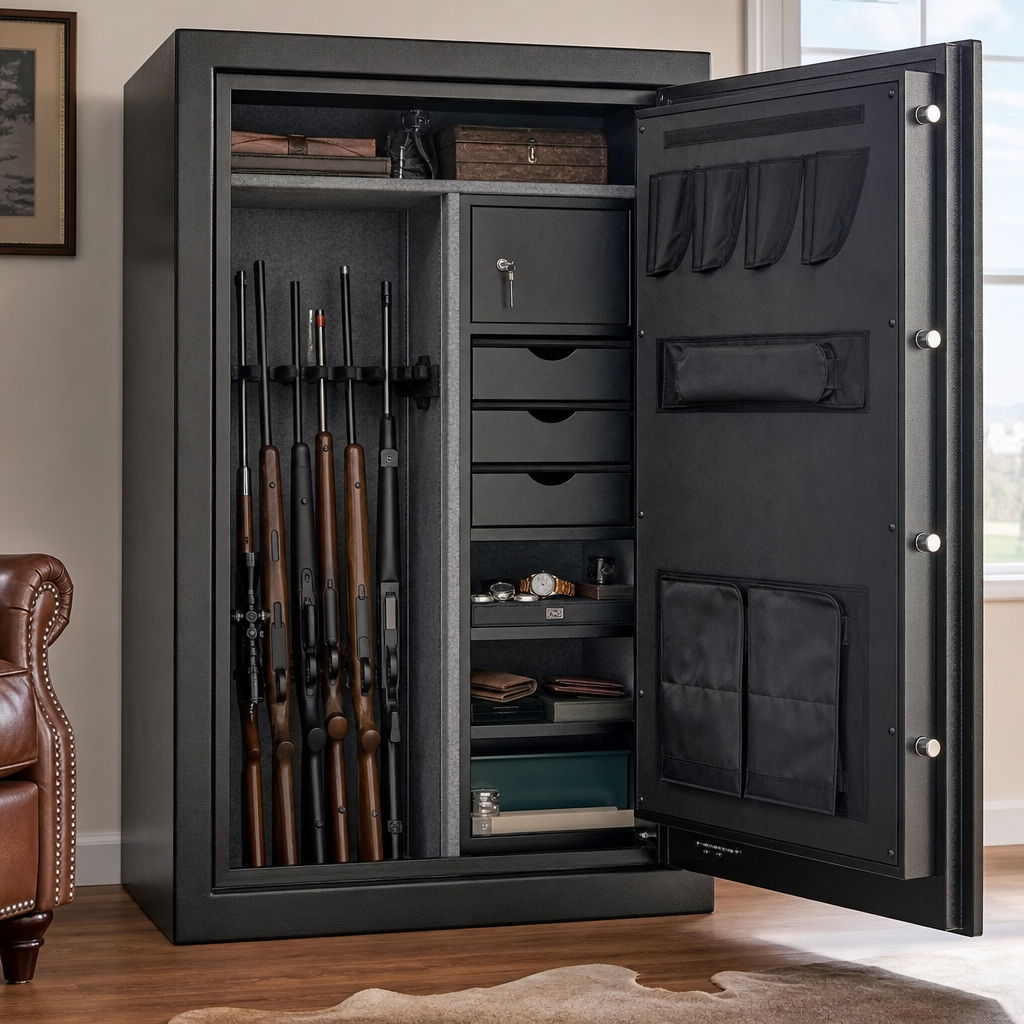
The best gun safes that include built-in safe deposit boxes solve two storage problems at once: they secure firearms against theft and unauthorized access while also protecting smaller valuables in a separate locked compartment. In practical terms, a gun safe is a steel security container designed for long guns, handguns, magazines, and related gear, while a built-in safe deposit box is an interior locker, drawer, or compartment with its own key or digital lock. I recommend this configuration to buyers who need layered access control inside a single footprint, especially families, collectors, and homeowners balancing fast organization with stronger segregation of valuables.
This category matters because storage needs have changed. Most buyers no longer want a simple tall cabinet that only fits rifles. They want room for passports, jewelry, tax records, suppressor paperwork where legal, backup drives, cash, and heirlooms. They also want to separate those items from firearms, either for convenience or to limit who can access what. In homes where one adult should access documents but not guns, or where a temporary helper may need one section but not the other, an internal lockbox becomes far more than a marketing add-on. It is a practical security layer that reduces handling, clutter, and access mistakes.
From years of evaluating gun safes in showrooms, at trade events, and during home installations, I have seen the difference between a useful internal compartment and a gimmick. The good versions are rigidly mounted, use decent gauge steel, sit high enough to preserve long-gun capacity, and have a lock that does not fail under daily use. The weak versions eat up shelf space, rattle, or rely on wafer locks that a buyer outgrows quickly. This guide explains how to identify the difference, which specifications actually matter, and how to choose the right safe for your budget, room layout, climate, and firearm collection.
What a built-in safe deposit box adds to a gun safe
A built-in safe deposit box is an independently locking interior compartment located inside the main safe body. Manufacturers may call it an interior locker, top locker, locking vault, jewelry box, or document compartment. Functionally, it creates a second security zone. If the main door is open during cleaning, inventory checks, or temporary access, sensitive small items can remain locked. That simple division is the main reason these safes appeal to buyers who need more than one level of organization.
The strongest use cases are straightforward. First, document isolation: passports, deeds, titles, trusts, and encrypted USB drives are easier to organize in a fixed locker than in loose pouches on a shelf. Second, controlled family access: one spouse may know the main combination, while the inner compartment key remains with the other. Third, theft resistance for compact valuables: jewelry and cash are harder to sweep quickly when they are not sitting on open shelves. Fourth, compliance and record keeping: NFA tax documents where legal, serial number lists, and estate documents can live in one dedicated place instead of moving around the house.
There is a space tradeoff. The interior locker occupies upper cubic volume, which can reduce room for scoped rifles or upper shelving flexibility. That is why buyers should not evaluate only exterior dimensions. A “36-gun” safe with a large top locker may hold fewer than 18 practical long guns once optics, slings, and power cords for dehumidifiers are accounted for. In my experience, the best way to think about capacity is to count your current long guns, add 30 to 50 percent for growth, then subtract additional space for the built-in box and any door organizer.
Core buying criteria that separate a strong model from a weak one
Steel thickness comes first. For residential gun safes, body steel is commonly listed in gauge, where a lower number means thicker steel. Many entry models use 14-gauge bodies; midrange models often move to 12-gauge or 11-gauge; premium units may use 10-gauge bodies or heavier plate construction on critical surfaces. Door construction matters as much as body steel. Composite doors with multiple layers can perform well, but buyers should ask what those layers are, how thick the outer plate is, and whether the door edge resists pry attacks.
Lock type is the next decision. Electronic keypad locks are convenient and common from brands using Sargent and Greenleaf, SecuRam, or La Gard systems. Mechanical dial locks remain reliable and simple, especially for owners who dislike batteries, though they are slower to open. Biometric locks on gun safes have improved, but quality varies sharply; I consider them best as a convenience feature only when backed by a reputable electronic lock platform. For the built-in compartment, key locks are common. Higher-end units may use a separate digital lock, which adds better access control but also more complexity and battery maintenance.
Fire protection claims need careful reading. A label like “60 minutes at 1,400 degrees” is not standardized across the industry the way many buyers assume. Some companies publish independent testing, while others rely on internal methods. Better indicators include continuous fire seals, multiple layers of fireboard, reinforced door jambs, and clear disclosure about test protocols. If document protection is your priority, consider using a UL-rated document pouch or media case inside the internal locker, because paper, flash media, and firearms each tolerate heat and humidity differently.
Interior layout determines whether the safe remains useful after year one. Adjustable shelving, barrel rests, door organizers, power outlets, and LED lighting all matter. The best built-in lockboxes are positioned so they do not block the top of rifle stocks or interfere with shelves. Hinges, bolt coverage, anchor holes, and finish quality also matter. A safe that cannot be properly anchored to concrete or framing is easier to tip and attack, especially in a garage installation.
Best-fit categories, price ranges, and examples buyers should compare
Most shoppers can narrow the market by thinking in categories rather than chasing one model name. Entry-level safes under roughly $1,000 often include a basic top locker, 14-gauge steel, an electronic lock, and modest fire lining. They work for new gun owners in low-risk settings, but buyers should keep expectations realistic. Midrange safes from around $1,200 to $2,500 usually offer thicker steel, better boltwork, improved interiors, and stronger lock reputations. Premium safes above that range may add heavier plate doors, upgraded fire seals, better fit and finish, and more useful internal compartments.
Brands commonly considered in this segment include Liberty Safe, Winchester Safes, Browning, Cannon, Sports Afield, Rhino Metals under the Ironworks and Kodiak lines, and secure storage makers such as Hollon or AMSEC in adjacent categories. Availability varies by dealer and region, and lineups change, so compare current specifications rather than relying on old forum posts. In dealer showrooms, I have seen buyers choose a broad, shallow safe because the brochure promised high capacity, only to realize the internal box blocked shelf plans and made scoped rifle placement awkward. Depth, not just height, often determines whether a built-in compartment feels helpful or intrusive.
| Buyer profile | Recommended safe traits | Typical compromise |
|---|---|---|
| First-time owner | 12- or 14-gauge body, electronic lock, basic top locker, anchor kit | Less interior flexibility and lighter pry resistance |
| Growing collection | 11- or 12-gauge body, deeper cabinet, adjustable shelves, better door organizer | Higher cost and weight |
| Document-heavy household | Larger internal locker, humidity control, fire seals, document pouch | Reduced long-gun capacity |
| High-value valuables storage | Thicker steel, stronger relocker system, premium lock brands, anchored installation | Fewer bargain options |
If you are building a buying-guides hub within a larger gun safes and safety section, this article should point readers toward more specific comparisons such as fireproof gun safes, biometric gun safes, modular gun safe interiors, handgun storage options, and safe installation best practices. The hub role is to help shoppers understand why built-in compartments matter, then move them to narrower decision pages based on budget, access style, and risk profile.
Installation, placement, and climate control for long-term performance
Even the best gun safe performs poorly if installed badly. Weight is your ally once the unit is anchored; before anchoring, weight alone is not enough. Thieves routinely use pry bars, hand trucks, and leverage. A safe should be bolted to concrete whenever possible using approved anchors sized for the manufacturer’s bolt holes. On wood floors, anchoring into joists or a reinforced platform is better than relying on subfloor alone. Closet corners, basement walls, and low-visibility rooms generally offer better security than exposed garage placements, though garages are common when floor load and access are the deciding factors.
Humidity control is essential, especially when the safe contains both firearms and documents. A powered dehumidifier rod helps keep air slightly warmer inside the safe, reducing condensation. Desiccant packs add backup protection but need recharging or replacement. In humid coastal regions, I recommend both. The internal deposit box also needs airflow consideration. If it seals too tightly and holds paper, cash, or jewelry, moisture can become trapped. That does not mean the compartment is flawed; it means you should monitor conditions with a small hygrometer and avoid stuffing damp items inside.
Plan interior use before delivery day. Measure the longest rifle with optic, the height of shelf stacks, and the dimensions of binders or document cases. If the built-in box is key-operated, choose a key storage routine immediately. Too many owners hide the key inside the main safe, defeating the point of separate access control. Better practice is to store the key in a different secure location or with an authorized user. After installation, test door swing, battery access, interior lighting, and lock operation several times before loading valuables.
Common mistakes, realistic expectations, and final buying guidance
The most common mistake is buying to the advertised gun count. Manufacturers count slim, unscoped long guns placed tightly together. Real collections include optics, bipods, slings, spare bolts, soft sleeves, and documents. Buy larger than you think you need. The second mistake is overvaluing cosmetic features while ignoring steel thickness and anchoring. Plush interiors and chrome hardware look good on a showroom floor, but pry resistance, lock quality, and proper installation are what matter during an attempted break-in. The third mistake is treating fire ratings as absolute guarantees rather than relative indicators of protection.
Another mistake is misunderstanding what the built-in safe deposit box can and cannot do. It improves organization and access control, but it does not replace a true burglary-rated jewelry safe or a bank safe deposit box for exceptionally high-value items. If you hold rare watches, significant cash reserves, or irreplaceable gems, a specialized TL-rated safe or off-site storage may still be the right answer. For most households, though, the integrated compartment is a highly effective middle ground that keeps essential documents and compact valuables secure without requiring a second full-size container.
The main benefit of the best gun safes that include built-in safe deposit boxes is layered protection in one organized system. You gain safer firearm storage, better control over who can access sensitive items, and cleaner day-to-day organization for documents and valuables. Start by defining what belongs in the inner compartment, then compare steel thickness, lock brands, fire construction, and interior layout before you buy. If possible, inspect models in person, open the locker yourself, and verify usable space. That extra diligence will help you choose a safe that works well for years, not just one that looks impressive in a product photo.
Frequently Asked Questions
What is a gun safe with a built-in safe deposit box, and why is it useful?
A gun safe with a built-in safe deposit box is a full-size firearm security safe that includes a separate interior compartment, locker, or drawer secured by its own lock. The main safe is designed to store long guns, handguns, ammunition, magazines, and shooting accessories, while the inner deposit box gives you a second layer of security for smaller valuables. That separate compartment is especially useful for items such as passports, jewelry, spare cash, backup hard drives, suppressor paperwork, vehicle titles, and other documents or valuables you do not want mixed in with firearms or general gear.
This configuration is useful because it solves two storage needs in one footprint. Instead of buying a dedicated gun safe and a separate home security box, you get organized firearm storage plus a more restricted area for high-priority items. It is also practical in households where more than one trusted adult can access the main safe, but only one person should be able to open the internal compartment. In that situation, the built-in deposit box creates a simple access-control layer without requiring another full-size safe elsewhere in the home.
From a day-to-day standpoint, it also improves organization. Many owners prefer keeping critical documents, estate papers, heirloom jewelry, and emergency cash away from firearm shelves and accessory bins. A built-in locker helps reduce clutter and makes it easier to find important items quickly. For buyers who want efficient use of space, stronger separation of contents, and a cleaner storage setup, this type of gun safe is one of the smartest all-in-one options available.
Who should consider buying a gun safe that includes a separate interior lock box?
This style of safe is a strong choice for gun owners who want more than basic firearm storage. I typically recommend it to homeowners who need to secure both guns and compact valuables in one place, especially if floor space is limited. It is also a great fit for people who keep legal documents, family records, jewelry, cash reserves, collectible coins, or digital media that deserve added protection beyond the main safe door. Rather than stacking everything together, the internal lock box lets you separate categories of items in a more intentional way.
It is particularly valuable for families, shared households, and anyone managing layered access. For example, you may want a spouse or trusted family member to access the main compartment for firearms or emergency equipment, while reserving the inner deposit box for only one person. That can be useful for estate planning documents, business records, medications, or personal valuables that should remain more tightly controlled. The same applies to collectors who want to isolate rare watches, serialized accessories, or irreplaceable paperwork from routine firearm storage.
Buyers who prioritize organization and convenience should also take a close look at this design. If you dislike using multiple safes in different rooms, or you want one anchored, fire-rated, theft-resistant unit that handles several categories of valuables, a gun safe with a built-in lock box is a practical upgrade. It is not just about extra storage space; it is about better storage structure, stronger internal separation, and more flexible control over who can access what.
What features matter most when choosing the best gun safe with a built-in safe deposit box?
The most important feature is overall security quality, because the inner compartment is only as meaningful as the protection offered by the main safe itself. Start by evaluating steel thickness, door construction, locking bolt design, pry resistance, hinge protection, and whether the safe can be securely anchored to concrete or wood framing. A built-in deposit box is a great feature, but it should not distract from the fact that the safe still needs to perform well against forced entry and unauthorized access.
Next, look closely at the internal compartment itself. The best models offer a genuinely useful deposit box, not a token metal drawer with minimal security. Check whether it uses a separate key lock, electronic keypad, or another independent locking system. Consider the size, placement, and interior clearance of that compartment. Some are ideal for documents and jewelry, while others are better suited for handguns, cash pouches, passports, or small electronics. If you plan to store legal-size papers, backup drives, or boxed valuables, dimensions matter more than many buyers expect.
Fire protection is another major consideration. If you are storing documents, family records, or digital media inside the safe, fire ratings become especially relevant. Review the manufacturer’s stated fire rating, temperature threshold, and duration, but treat all ratings with some caution and compare brands carefully. Interior layout, door organizers, shelving flexibility, humidity management, and dehumidifier compatibility are also important. A well-designed safe should not just be hard to break into; it should also make it easy to store long guns, handguns, ammo, papers, and valuables without wasted space.
Finally, pay attention to practical ownership factors such as lock reliability, warranty support, delivery options, and total loaded weight. A safe that is too small, poorly organized, or difficult to install often becomes frustrating to use. In most cases, it is wise to buy slightly larger than your current collection requires, because firearms, accessories, and important documents tend to accumulate over time. The best purchase is one that balances burglary resistance, fire protection, storage efficiency, internal separation, and long-term usability.
Are gun safes with built-in safe deposit boxes really secure enough for jewelry, cash, and important documents?
Yes, in many cases they are secure enough for those items, provided you choose a quality safe and install it properly. The separate interior box adds another obstacle for anyone who gains access to the main compartment, whether that is an unauthorized household member, a curious visitor, or a thief who somehow defeats the primary lock. It is not the same as having a bank vault or a commercial high-security safe, but for residential use, it can be an excellent way to protect compact valuables inside a larger firearm safe.
That said, realistic expectations matter. The level of security varies significantly by brand, steel gauge, lock quality, and how the inner compartment is built. A robust internal locker with its own well-made lock is far more useful than a thin accessory box with a simple wafer key. You should also think about the types of items you are storing. Jewelry, cash, passports, estate papers, and backup drives are commonly kept in these compartments, but extremely high-value collections may justify a dedicated burglary-rated jewelry safe or off-site storage solution in addition to the gun safe.
Protection from theft is only one part of the equation. Important documents and media can also be vulnerable to fire, humidity, and water exposure from fire suppression efforts. If you plan to use the inner box for deeds, titles, birth certificates, trust paperwork, or irreplaceable records, make sure the overall safe has credible fire protection and use sealed document pouches or additional protective containers where appropriate. Adding a dehumidifier or desiccant system is also smart, especially in humid climates or basements.
In short, these safes can be a very secure and practical solution for smaller valuables, but the best results come from pairing a well-built model with proper anchoring, good environmental control, and sensible expectations about what residential security products can and cannot do.
How should I organize and use a gun safe with an interior deposit box for maximum security and convenience?
The best approach is to treat the safe as two distinct security zones. Use the main compartment for firearms, magazines, range gear, optics, and regularly accessed accessories, and reserve the built-in deposit box for items that are smaller, more sensitive, or more personal. This creates a clean separation between defensive equipment and valuables such as passports, jewelry, tax documents, wills, spare cash, memory cards, and encrypted drives. When everything has a dedicated place, the safe becomes easier to use and much easier to audit.
For convenience, organize by priority and frequency of access. Firearms you use most often should be easy to reach without having to remove half the contents of the safe. Items in the deposit box should be grouped in labeled pouches, envelopes, or folders so you do not have to dig through loose valuables. If the box is used for emergency documents or cash, keep those items at the front and in water-resistant packaging. If it stores highly personal or legally important records, consider maintaining a simple private inventory so you can verify contents quickly without repeated handling.
For maximum security, always anchor the safe, place it in a discreet but accessible location, and control who knows about both the safe and the inner box. Use strong, unique codes where electronic locks are involved, and do not leave backup keys in obvious places. It is also wise to manage humidity inside the safe and periodically inspect both locks, door seals, shelves, and mounting points. A safe is not a set-it-and-forget-it purchase; regular maintenance helps preserve both security and the condition of what is stored inside.
Finally, think ahead. Leave room for future firearms, documents, and valuables rather than filling every shelf on day one. A slightly underfilled safe is easier to organize, less likely to cause accidental damage to contents, and more adaptable as your needs change. The most effective setup is one that combines smart internal separation, reliable locking habits, good environmental control, and a storage plan you can maintain consistently over time.