
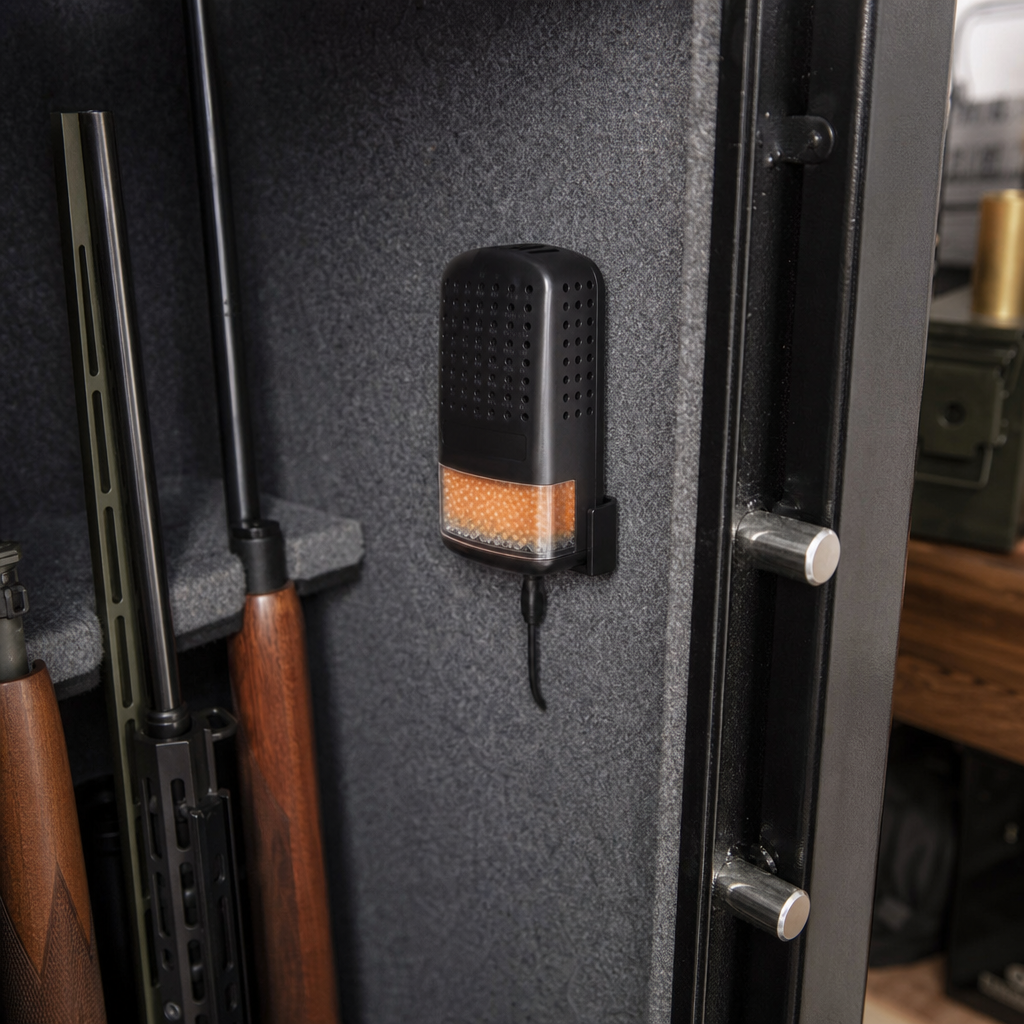
A DIY gun safe dehumidifier installation guide starts with one fact every gun owner eventually learns: moisture is the quiet threat that does its damage long before rust is visible. Inside a closed safe, temperature swings, trapped humidity, foam linings, and even cardboard ammunition boxes can create a microclimate that promotes corrosion on blued steel, pitting on barrels, swelling on wood stocks, mildew on slings, and oxidation on optics mounts and electronics. A dehumidifier is any device that lowers relative humidity inside that enclosed space, but in gun safe use the term usually means either a low-wattage heating rod, a rechargeable desiccant unit, or silica-based moisture absorbers. Installation matters because poor cable routing, overloaded outlets, blocked airflow, or misplaced desiccant can reduce performance and, in some cases, compromise the safe’s fire seal or security.
I have installed dehumidifiers in compact pistol safes, full-height fire safes, and converted lockers, and the pattern is consistent: owners focus on locks, steel gauge, and shelving, then discover that environmental control determines long-term condition. Firearm finishes are durable, not immune. Relative humidity above about 50 percent for extended periods increases risk, while a practical target range inside most safes is roughly 35 to 50 percent, depending on finish type, stock material, and local climate. The goal is not desert-dry air. Over-drying can affect wood furniture and leather accessories. The goal is stable, moderate humidity with even air circulation. This hub article covers the full custom and DIY gun safe modifications landscape, but it centers on dehumidifier installation because moisture control is usually the highest-value upgrade you can make before adding lights, racks, door panels, or power systems.
Custom and DIY gun safe modifications include humidity control, interior lighting, power pass-throughs, pistol racks, magazine storage, door organizers, shelf reinforcements, anchor upgrades, and monitoring devices such as hygrometers. These modifications matter because safes are rarely configured perfectly from the factory. A collector with walnut-stock rifles needs a different layout than a competitive shooter storing polymer pistols, suppressors, magazines, and optics. A humid basement installation needs different moisture control than a climate-controlled office. Thinking of this page as a hub is useful: dehumidifier installation connects to every other upgrade. Lighting helps you inspect for rust. Power kits support rods, fans, and sensors. Shelf design affects airflow. Even where you place long guns changes how evenly heat and dry air move through the cabinet. If you understand the moisture problem first, every other safe modification becomes smarter and more durable.
Choose the right dehumidifier for your safe size, location, and power options
The best gun safe dehumidifier depends on three variables: cubic volume, ambient conditions, and access to electricity. Heating rods are the most common permanent solution. They work by raising the internal air temperature slightly, which reduces relative humidity and creates convective airflow from bottom to top. In practice, they are reliable, low maintenance, and ideal for larger safes, especially in garages, basements, or rooms with seasonal humidity swings. Desiccants physically absorb moisture instead of warming the air. They are useful for small safes, interior lockboxes, and owners who do not want to route power. Rechargeable plug-in units, such as Eva-Dry models, are convenient but must be removed and dried on schedule. Silica canisters and hanging packs are inexpensive, but they are not a complete solution for a tall 40-gun safe in a damp basement.
I usually advise a heating rod for full-size safes and a hygrometer-guided desiccant backup if the safe sits in a persistently humid space. Trusted product categories include GoldenRod-style dehumidifier rods, PEET drying systems adapted carefully for cabinets, and rechargeable desiccant units from Eva-Dry. A quality digital hygrometer from SensorPush, Govee, or ThermoPro gives you the data to confirm whether the install is actually working. Many safe manufacturers provide pre-drilled access holes for power cords. If your safe has one, use it rather than drilling. Drilling a safe body can void warranties, breach fire lining, weaken a panel, or create a path for moisture and smoke. Before buying anything, measure interior height, width, and depth, inspect for a power outlet within reach, and verify that your safe’s access port can accommodate the cord and plug type.
| Option | Best for | Main advantage | Main limitation |
|---|---|---|---|
| Heating rod | Full-size safes, humid rooms, long-term use | Continuous low-maintenance humidity control | Requires power access |
| Rechargeable desiccant | Small safes, apartments, no cable routing | No permanent wiring | Needs frequent recharging in humid climates |
| Silica canister or packs | Supplemental use, ammo cans, travel cases | Low cost and simple placement | Limited capacity for large cabinets |
| Rod plus hygrometer | Most homeowners with full safes | Stable performance with measurable results | Higher upfront setup effort |
Plan the installation to protect the fire seal, wiring path, and interior airflow
Most dehumidifier problems are planning problems. Before mounting anything, unload the safe enough to work safely and see the floor, side walls, back panel, and door frame. Look for a factory electrical pass-through, often located low on the back or side wall. It may be covered by a removable cap. If you force a cord through the door gap instead, you can deform the door seal, reduce fire resistance, create pressure points on the cord jacket, and compromise locking alignment over time. Read your safe manufacturer’s manual first. Liberty Safe, Browning, Winchester, Stack-On, Cannon, and Rhino all have different interior layouts and access features. Use those built-in pathways wherever possible.
Placement inside the safe should support natural convection. A heating rod usually performs best mounted low, near the floor, because warmed air rises and circulates upward around firearms. Do not bury the rod behind carpet-covered clutter or press soft cases against it. Leave clearance around the unit so air can move. Desiccants should be placed where moisture accumulates and where you can inspect them easily, often on a shelf midway up or near the lower interior, depending on the product style. If the safe sits directly on concrete, install a barrier under the safe or ensure its base is isolated from slab moisture. I have seen owners chase high humidity readings for months when the real problem was a basement slab transmitting moisture into the environment around the cabinet, not a weak dehumidifier.
Install a heating rod correctly and verify performance with measured humidity
A standard rod installation is straightforward, but details separate a clean upgrade from a sloppy one. Start by confirming the rod length matches the safe’s width and the manufacturer’s recommendation. Larger safes often use 18-inch or 24-inch rods, while smaller units may need 12-inch models. Position the rod low on a side wall or across the back floor edge using the included brackets. In carpeted interiors, mark the bracket points carefully and avoid tearing the liner. Use the provided screws only where the safe manufacturer indicates that interior panel fastening is safe. Some interiors are wood-backed, some are composite, and some use thin steel liners over fireboard. Do not guess. If the rod can sit in factory clips without drilling into liner material, that is preferable.
Route the cord through the access hole without kinking it, then seal the pass-through as intended by the safe maker. After powering on, place a digital hygrometer inside the safe, not on the room wall outside. Give the system at least 24 to 72 hours before judging results, because safe contents hold moisture and the internal air mass needs time to stabilize. In a typical home, a well-installed rod should reduce the internal humidity meaningfully relative to the room, especially at the lower portions of the safe where stagnant air commonly forms. If readings remain high, the issue is usually one of four things: the room itself is excessively humid, the safe is overpacked and airflow is blocked, the rod is undersized, or the access hole or door seal is not closing correctly after cable routing. Data should drive the fix, not guesswork.
Use desiccants, sensors, and power accessories as part of a complete DIY safe system
Custom and DIY gun safe modifications work best as a system, not as isolated gadgets. If your safe cannot take a permanent power connection, rechargeable desiccants are a practical alternative, but pair them with a hygrometer so you know when moisture is actually rising. Color-indicating silica packs are useful in ammo bins, drawer inserts, and document boxes inside the safe, where micro-environments form around dense stored items. For powered safes, adding a small internal power strip designed for safe interiors can support a heating rod, low-heat LED lighting, and a sensor gateway. Just avoid bargain power strips with stiff cords or oversized plugs that force bad routing. Use ETL- or UL-listed accessories whenever possible, and keep cable management neat with adhesive clips rated for the interior surface.
Monitoring is the most underrated modification in this category. A Bluetooth hygrometer lets you confirm seasonal patterns without opening the safe daily. In one basement install, humidity looked stable in winter but spiked every spring weekend when exterior temperatures rose and the slab lagged behind, creating condensation risk in the room. The owner solved it by running a room dehumidifier and slightly increasing airflow around the safe, not by adding more silica. That example matters because gun safe humidity control starts with the room and finishes with the cabinet. If the surrounding environment sits at 70 percent relative humidity, no small passive accessory inside a packed safe will overcome the load for long. Good DIY work means identifying the bottleneck, then using the right tool at the right level.
Connect dehumidifier installation to other custom gun safe modifications
As a sub-pillar hub for custom and DIY gun safe modifications, this guide should point you toward the broader upgrade strategy. Interior lighting is the natural next step because brighter visibility improves maintenance and inventory checks. LED strip kits with motion sensors are popular, but choose low-heat products and route wires so they do not obstruct shelves or rifle barrels. Door panel organizers increase handgun and magazine capacity, yet they can also block airflow if overloaded with pouches. Shelf rebuilds using plywood, HDPE, or metal brackets can dramatically improve usable space, but do not create sealed cubbies that trap stagnant air. Pistol racks, barrel rests, and rifle rods all increase storage density; still, packing firearms too tightly reduces the airflow that your dehumidifier depends on.
Other worthwhile modifications include anchor upgrades, felt or closed-cell foam shelf liners, labeled magazine bins, suppressor stands, and camera or contact sensors for access logging. The discipline is the same in every case: respect the safe’s structural shell, use existing openings before making new ones, avoid blocking locks or relockers, and test changes with real use. If you need to drill, contact the manufacturer first and confirm safe zones. Many owners assume the interior walls are empty behind the fabric, but fireboard, hard plate, wiring, and locking components may sit exactly where they plan to cut. I have corrected more than one DIY project where a convenient-looking cable route nearly interfered with the boltwork. The best custom gun safe modifications are reversible, tidy, and measured against clear goals like lower humidity, better access, or safer organization.
Common mistakes, maintenance schedule, and when to upgrade the room instead of the safe
The most common dehumidifier installation mistakes are easy to avoid. First, relying on desiccant alone in a large safe located in a damp basement. Second, stuffing the safe so tightly that air cannot circulate around long guns and shelves. Third, skipping the hygrometer and assuming the device works because it feels warm or looks dry. Fourth, routing a cord through the door opening and damaging the seal. Fifth, ignoring the room’s moisture source, such as concrete walls, poor HVAC balance, or a nearby sump area. A dehumidifier inside the safe is not a cure for a chronically wet room. In those cases, a room dehumidifier sized by pint capacity, better ventilation, or relocating the safe may produce a larger benefit than any internal accessory.
Maintenance should be simple and scheduled. Check humidity readings monthly, more often during seasonal transitions. Recharge desiccants as directed, usually when indicator beads change color. Vacuum dust from rod areas and lower corners so airflow remains open. Inspect firearms at regular intervals, especially blued steel, screws, sling swivels, and hidden contact points where foam or fabric touches metal. Re-oil according to your storage duration and climate rather than a generic calendar. If your safe still runs above the target range after a proper install, step back and reassess: increase room-level moisture control, reduce internal crowding, add a second monitoring point, or upgrade to a more appropriate dehumidifier type. Start with measurement, install carefully, and build the rest of your gun safe modifications around stable humidity. That approach protects firearms, preserves accessories, and gives every future safe upgrade a better foundation. Review your setup this week and make moisture control your first improvement.
Frequently Asked Questions
1. Why do I need a dehumidifier in my gun safe if I already keep the safe closed?
Keeping a gun safe closed helps with security, but it does not automatically protect firearms from moisture. In fact, a sealed or mostly sealed safe can trap humidity inside and create the exact conditions that encourage corrosion. Every time the door opens, humid room air enters. When the door closes again, that moisture remains inside, especially if the safe is located in a garage, basement, closet on an exterior wall, or another space affected by temperature swings. As temperatures change, condensation can form on cold metal surfaces long before you see any visible rust.
A gun safe can also hold hidden sources of moisture. Foam inserts, fabric-lined interiors, paper documents, cardboard ammunition boxes, leather slings, and even wood stocks can absorb and release humidity over time. This creates a small microclimate inside the safe where moisture lingers around blued steel, stainless parts, optics mounts, magazines, tools, and ammunition. The result can be surface rust, pitting, mildew, stock swelling, and slow damage to finishes and electronics.
A dehumidifier helps control that environment instead of simply hoping the safe stays dry. Whether you install a low-wattage heating rod, rechargeable desiccant unit, or another moisture-control device, the goal is to lower relative humidity and reduce condensation risk. For most gun safes, maintaining roughly 40% to 50% relative humidity is a practical target. That range is generally dry enough to protect metal parts while avoiding the overly dry conditions that can also affect wood components over long periods.
2. What type of gun safe dehumidifier is best for a DIY installation?
The best type depends on your safe size, where the safe is located, how often it is opened, and whether you have access to power. The two most common DIY-friendly options are electric dehumidifier rods and desiccant-based dehumidifiers. Each works well when matched to the right situation.
Electric dehumidifier rods are one of the most popular choices for larger safes and frequent use. These devices do not pull water into a reservoir. Instead, they gently warm the air inside the safe, creating circulation that helps prevent moisture from settling on firearms and other metal surfaces. They are simple, reliable, and low maintenance, which makes them ideal for owners who want a set-it-and-forget-it solution. Installation is usually straightforward if your safe has a factory pass-through hole for a power cord. You mount the rod low in the safe, route the cord through the access port, and plug it into a nearby outlet.
Desiccant dehumidifiers are a good option when no power is available or when you want supplemental moisture control. These units absorb humidity directly from the air. Some are disposable, while others are rechargeable by plugging them into a wall outlet or heating them according to the manufacturer’s instructions. They are especially useful for smaller safes, ammo lockers, and cabinets, but they require regular monitoring because once saturated, they stop working effectively until replaced or recharged.
For many gun owners, the best setup is a combination approach: an electric rod for continuous baseline protection and a hygrometer to monitor humidity, with a desiccant pack added during especially humid seasons. If your safe is in a damp basement or non-climate-controlled garage, this layered strategy is often the most dependable DIY solution.
3. How do I install a dehumidifier in a gun safe correctly and safely?
Start by removing firearms, ammunition, and valuables so you have full access to the interior. This makes installation easier and reduces the chance of damaging anything while working inside the safe. Next, inspect the safe for a built-in electrical pass-through hole, usually located on the back wall, floor, or rear corner. Many modern safes include a protected opening specifically for lighting kits and dehumidifier cords. If your safe has one, use it rather than drilling a new hole, since drilling can affect fire lining, interior panels, warranties, and security features.
If you are installing an electric rod, place it near the bottom of the safe because warm air rises. This positioning helps create a convection effect that moves air upward and reduces stagnant pockets of humid air. Mount the rod according to the manufacturer’s instructions, typically using clips or brackets attached to the floor or lower wall. Keep it clear of fabric, papers, foam, and stored items so airflow is not blocked. Route the power cord neatly through the pass-through opening and avoid pinching it in the door seal.
If you are using a desiccant unit, place it where air can circulate around it rather than burying it behind cases or boxes. On taller safes with shelves, it often makes sense to put one unit lower and another on a middle shelf if the manufacturer recommends coverage by volume. No matter which system you choose, add a digital hygrometer so you can verify that the installation is actually controlling humidity. Monitoring matters because location, climate, and safe contents all affect performance.
After installation, close the safe and check humidity readings over several days. If the reading stays too high, reduce clutter, remove cardboard and moisture-holding materials, confirm the door seal is intact, and consider adding a second moisture-control device. A proper DIY installation is not just about mounting the unit; it is about creating a stable environment that keeps air moving and humidity under control consistently.
4. Can I drill a hole in my gun safe for a power cord if it does not already have one?
Technically, it may be possible, but it is usually not the first recommendation. Drilling into a gun safe can create several problems if you do not know the safe’s construction. Many safes include fireboard, internal relockers, wiring for electronic locks, reinforced steel layers, and door or body designs that are not obvious from the interior. Drilling in the wrong place can damage the fire lining, weaken the safe body, affect the seal, void the warranty, or interfere with security components.
Before considering any drilling, check the manufacturer’s manual or contact the manufacturer directly. Some safes have hidden access panels or optional power kits that use existing openings. Others specifically identify approved areas for cable routing. If the safe manufacturer says drilling is permitted, follow their location guidance exactly and use appropriate tools and safety precautions. In many cases, however, the safer and more practical solution is to use a rechargeable desiccant dehumidifier instead of modifying the safe.
If you absolutely need continuous electric dehumidification and the safe has no approved pass-through, a professional locksmith or safe technician is the better choice than a trial-and-error DIY approach. The cost of a proper modification is usually far less than the cost of damaging a safe, reducing its fire protection, or compromising its warranty. As a rule, use factory openings whenever possible, and treat drilling as a last resort rather than a standard installation step.
5. How do I know if my gun safe dehumidifier is working, and how often should I maintain it?
The most reliable way to know your dehumidifier is working is to measure the environment inside the safe. A digital hygrometer is one of the most useful accessories you can add because it tells you the actual relative humidity rather than forcing you to guess. Without a hygrometer, many gun owners assume a dehumidifier is working simply because it is plugged in or sitting inside the safe. That assumption can be costly. Moisture problems often develop slowly and silently, especially on firearms that are stored for long periods without handling.
For most safes, a relative humidity range of about 40% to 50% is a solid target. If readings regularly climb above that range, especially into the upper 50s or beyond, you likely need to improve airflow, reduce moisture-holding contents, recharge or replace desiccants, or upgrade your dehumidification setup. Seasonal checks are important because humidity can change significantly between summer and winter, and room conditions around the safe matter just as much as the safe itself.
Maintenance depends on the device type. Electric rods are low maintenance, but they still need periodic inspection. Make sure the unit stays securely mounted, the cord remains undamaged, the outlet is functioning, and stored gear is not blocking airflow. Desiccant units require much closer attention. Rechargeable versions may need servicing every few weeks or months depending on climate and how often the safe is opened. Disposable desiccants need replacement once saturated. It is also smart to inspect firearms regularly for any signs of rust, haze, spotting, or mildew on slings and soft goods.
In short, a dehumidifier is not a one-time install-and-forget accessory. It is part of a larger moisture-control routine. When paired with a hygrometer, regular inspections, and sensible storage habits, it becomes a very effective way to protect firearms, ammunition, optics, and accessories from the long-term effects of humidity.