
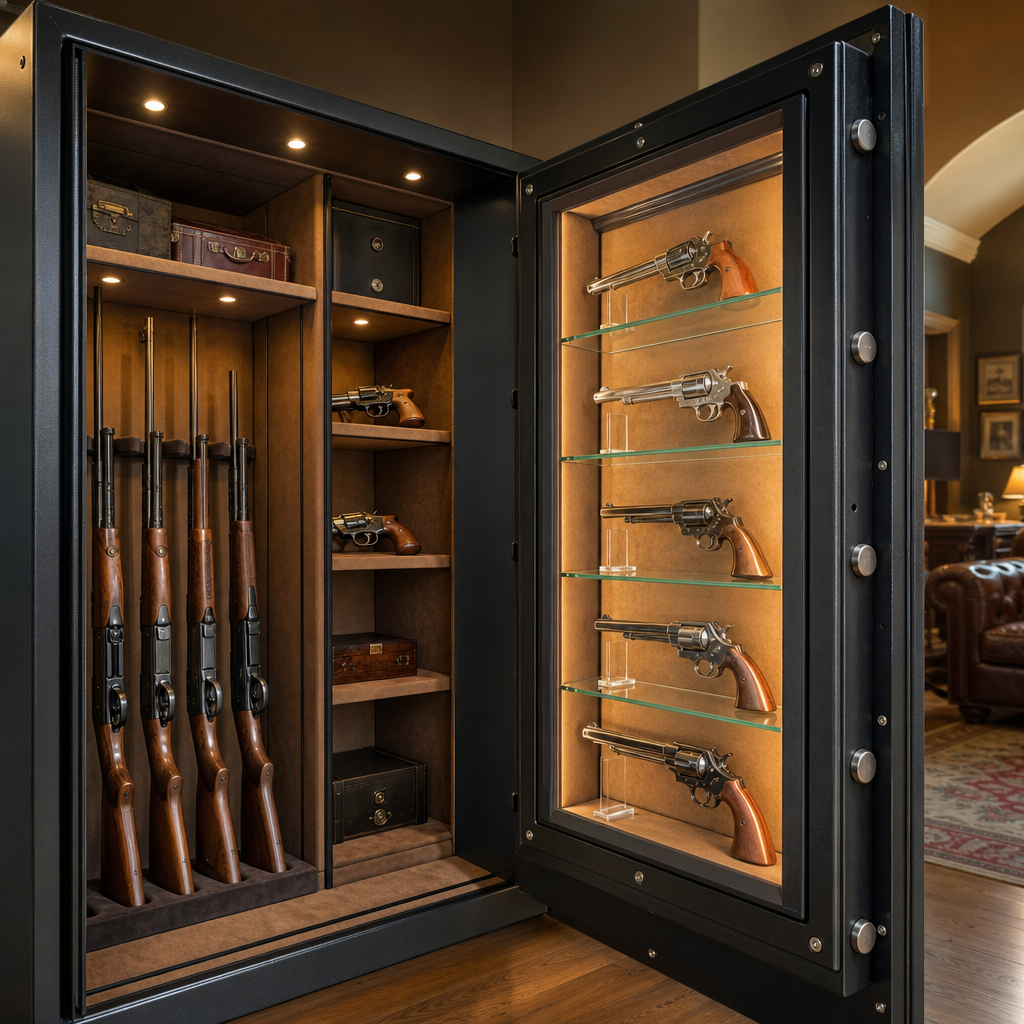
Collectors who value display cases face a very specific challenge: they want a gun safe that protects firearms from theft, fire, humidity, and unauthorized access while still presenting a curated collection with the pride of a showroom. In practical terms, this buyer persona sits between a traditional security-first safe owner and a pure display-cabinet buyer. The right solution is not simply a bigger steel box or a prettier cabinet. It is a purpose-built gun safe with display-friendly features such as tempered glass inserts rated for impact resistance, adjustable lighting, modular shelving, low-glare interiors, and climate control that preserves wood, bluing, optics, and historical finishes. For collectors, these details are not cosmetic extras. They directly affect preservation, access, insurance documentation, and long-term value.
I have worked with collectors outfitting trophy rooms, home offices, hunting lodges, and dedicated vault spaces, and the same pattern appears every time: the best gun safe for a display-minded owner must balance aesthetics, security standards, and collection management. A collector may own engraved over-unders, commemorative lever actions, military surplus rifles, or a mixed collection with optics, suppressors, and heirloom handguns. Each category imposes different storage needs. Display cases emphasize visibility, but visible storage can introduce risk if glass quality, lock placement, anchoring, and room placement are poorly chosen. That is why understanding gun safe buyer personas matters. It helps narrow the market by use case, not by marketing slogans.
Within the broader Gun Safes & Safety topic, buyer personas explain why one owner chooses a concealed closet safe, another chooses a fire-lined modular vault, and a collector chooses a display-capable safe that still meets serious protection requirements. This hub article focuses on the collector persona but also connects that profile to adjacent buyer types, including investors, heirloom keepers, competitive shooters, and design-conscious homeowners. If you understand what motivates each of these buyers, you can choose features that genuinely fit your collection rather than paying for options you will never use. For collectors who value presentation, the best features are the ones that let your firearms remain secure, organized, preserved, and visible under controlled conditions.
What Defines the Display-Focused Gun Safe Buyer Persona
A display-focused collector is not shopping for simple capacity. This buyer wants controlled visibility. In my experience, these owners usually care about provenance, finish condition, serial-number records, and how the collection fits into a room. They are more likely to rotate featured pieces, use interior lighting, maintain inventory photos, and request custom interiors. They also tend to own firearms with above-average sentimental or appraised value. That makes them less tolerant of rough barrel rests, cramped shelving, or dark interiors where metal parts rub against each other.
This persona often overlaps with several subtypes. The first is the heritage collector, who stores heirloom Winchesters, Brownings, Colt revolvers, or wartime rifles and wants preservation-grade storage. The second is the investment collector, who treats rare firearms as appreciating assets and prioritizes humidity control, documentation, and insurer-friendly security specifications. The third is the trophy-room curator, who wants the safe to look integrated with premium furniture, millwork, or a dedicated gun room. The fourth is the mixed-use enthusiast, who owns collectible pieces but also regularly accesses modern rifles, handguns, magazines, and accessories.
These distinctions matter because they change feature priorities. A heritage collector may rank soft-lined cradles and dehumidification above quick access. A trophy-room curator may insist on glass visibility and interior lighting but still need a high-security lock and anchor points. An investment collector may want a UL-listed lock, thick steel body, and documented fire rating from a recognized testing approach rather than broad advertising claims. A mixed-use buyer may prioritize reconfigurable shelving so display pieces and range gear can coexist. The best hub approach to gun safe buyer personas starts by identifying which of these motivations drives the purchase.
Core Security Features That Should Never Be Sacrificed for Appearance
A display-capable gun safe is still a safe. That means baseline protection must come first. The most important structural feature is steel thickness in the body and door. In general, lower gauge steel is thicker, and serious collectors should avoid thin cabinet-grade construction when storing valuable firearms. Composite doors, reinforced frames, hard plates protecting the lock, and multiple locking bolts improve resistance to pry attacks. External hinges can allow a wider door opening, but they must be paired with dead bars or internal locking engagement so removing hinges does not compromise the door.
Lock choice matters just as much. A quality mechanical dial lock remains respected for longevity and low dependency on power, while modern electronic locks offer speed, audit features, and multiple user codes. For collectors with frequent access and inventory routines, a commercial-grade electronic lock can be practical, but it should come from a recognized manufacturer such as Sargent and Greenleaf, SecuRam, or La Gard. Biometric locks are convenient for some handgun safes, but for large collector safes, fingerprint systems should be viewed as a secondary convenience feature, not the sole reason to buy.
Fire protection is another area where display-minded buyers sometimes get distracted by cosmetics. Fire ratings vary widely, and not all advertised ratings are equal. Look for details on duration, temperature threshold, door seals, and test methodology. Fireboard layers, expanding heat seals, and insulated door edges all matter, but no fire rating eliminates the need for placement strategy. A safe installed against an exterior garage wall may face larger temperature swings and more moisture than one installed in a conditioned interior room. Security also includes anchoring. Even heavy safes can be tipped or moved with pry bars, appliance dollies, and enough time. Bolting the safe to concrete or a structurally sound floor is non-negotiable.
Display Features That Improve Visibility Without Undermining Protection
Once structural security is confirmed, display features become the differentiators. For collectors, the best interiors are designed to showcase firearms without creating pressure points or finish wear. Adjustable barrel supports and stock bases allow spacing between scoped rifles, while sidewall organizers can display handguns or documents without crowding long guns. Interior fabric should be non-abrasive and tightly fitted. Cheap carpeting can trap debris that scratches polished wood or blued steel, so premium velour or similar soft liners are worth the upgrade.
Lighting is one of the most valuable display features when done correctly. LED systems are preferable because they generate little heat, use little power, and can be placed along door frames or interior edges to reduce shadows. I recommend warm-neutral color temperatures for walnut stocks and engraved steel because they reveal detail without giving metal an overly blue cast. Motion-activated lighting can be useful, but manual controls are often better for collectors who want predictable presentation during inventory checks or photography. If the safe includes a glass panel, low-glare lighting becomes even more important because reflections can obscure the collection.
Glass itself deserves scrutiny. A display-oriented gun safe should not use ordinary residential glass. Tempered or laminated security glass is the minimum expectation, and some premium models use multi-layer assemblies to improve impact resistance. Even then, the collector must accept a tradeoff: any glass section is usually less resistant than equivalent solid steel. That is why many buyers reserve glass-front safes for secured interior rooms, alarmed spaces, or secondary layers inside a dedicated vault room. The visual appeal is substantial, but the surrounding environment must compensate for the reduced physical barrier.
How Interior Configuration Supports Different Collector Types
Interior layout determines whether a safe feels like a curated storage system or a cramped locker. Collectors benefit most from modular interiors that can be reconfigured as the collection changes. Adjustable shelving allows handguns, presentation boxes, optics, and documents to sit above or beside long guns. Pull-out racks, door-panel storage, and accessory bins reduce stacking and make each item easier to inspect. For high-value collections, that inspection routine matters because small rust spots, sling pressure marks, and leather contact staining are easier to catch early than to reverse later.
The right layout also depends on collection category. Antique long guns often need more breathing room because protruding sights, delicate finishes, or irregular dimensions do not fit standard rack spacing. Tactical rifles with large optics need taller vertical clearance and wider slot spacing. Handgun collectors may prefer shelves with individual stands and integrated lighting. Families preserving inherited firearms often need room for papers, appraisals, military records, and photographs. In those cases, document drawers or sealed interior boxes become just as important as rifle capacity.
| Collector type | Best interior features | Main reason |
|---|---|---|
| Heritage collector | Soft-lined racks, dehumidifier, document shelf | Protects original finishes and provenance records |
| Investment collector | Wide spacing, inventory storage, premium lock | Supports condition control and insurance documentation |
| Trophy-room curator | LED lighting, glass panel, custom shelving | Improves presentation in a designed room |
| Mixed-use enthusiast | Modular shelves, accessory bins, rifle-and-handgun zones | Keeps collectibles separate from frequently used gear |
Capacity claims should also be treated cautiously. A “40-gun safe” rarely holds 40 scoped rifles comfortably. Real usable capacity may be closer to half or two-thirds of the advertised number once optics, slings, and collector spacing are considered. Buyers who value display should size up rather than down. Empty space is not wasted space in a collector safe; it prevents contact damage and makes the collection legible at a glance.
Preservation Features: Humidity, Materials, and Finish Protection
Collectors do not just store firearms; they preserve materials. Steel, wood, leather, paper, and optics all respond differently to temperature and humidity. Relative humidity around 45 to 50 percent is a practical target for many collections, reducing corrosion risk without over-drying wood stocks. In humid climates, an electric dehumidifier rod combined with desiccant can stabilize conditions better than desiccant alone. In basements or garages, I have seen expensive collections develop rust because owners trusted the safe’s fire liner but ignored ambient moisture infiltration around the room.
Interior materials matter too. Off-gassing from adhesives, foam, or low-grade fabric can affect finishes over time, especially in sealed environments. Collectors storing antique firearms should avoid direct long-term contact with leather slings or cases because tanning acids and trapped moisture can stain metal and wood. Silicone-treated gun socks can help with individual protection, but they should not be a substitute for climate control. If optics are stored inside, batteries should be checked regularly, and illumination modules should not be left neglected for years in fluctuating temperatures.
Preservation also includes handling routines. A display-safe owner is likely to open the safe more often, whether to show a guest a piece, update photos, or rotate the arrangement. That increased access means fingerprints become a bigger issue. Modern blued steel and polished surfaces can show salts and oils quickly, so microfiber cloths and appropriate protectants should be kept inside or adjacent to the safe. Good display features encourage this kind of active stewardship. That is one reason collectors often get more value from a thoughtfully organized safe than from a larger but poorly configured box.
Placement, Room Design, and the Role of Layered Security
Where the safe lives is as important as what the safe includes. For collectors who prioritize display, the ideal setting is usually a controlled interior room with limited sightlines from windows and entry doors. A home office, den, or dedicated vault room works better than a garage or exposed basement corner. If the safe has a glass front or illuminated interior, visible placement should be balanced with privacy measures such as alarm contacts, cameras, window coverings, and restricted room access. The principle is simple: visible to invited viewers, not visible to casual outsiders.
Layered security strengthens display-oriented setups. That can mean installing the safe in a locked room, integrating it with a monitored alarm, using motion detectors, and placing cameras that cover the approach path rather than only the safe door. Insurance is part of this layer too. Many standard homeowners policies impose low sublimits on firearms, so collectors often need scheduled personal property coverage or a specialty policy. Accurate inventory photos, serial numbers, appraisals, and purchase records should be stored securely, ideally both in the safe and in encrypted off-site backups.
For some buyers, the better answer is not one display safe but two separate storage solutions: a high-security opaque safe for the most valuable pieces and a display-capable safe for selected firearms in a secured room. I have recommended this split approach for clients with rare Colts, transferable machine guns where legal, or museum-grade militaria. It acknowledges reality. Not every piece should be continuously visible, and the best collector system often combines presentation with deeper reserve storage for irreplaceable items.
How to Buy the Right Safe for This Persona
The best buying process starts with a written list of collection needs: firearm count, average dimensions, optics usage, document storage, climate conditions, room location, and desired presentation level. Then compare models by steel thickness, lock brand, fire details, anchoring options, interior configurability, lighting system, and warranty support. Reputable manufacturers and dealers should answer direct questions about body steel, door construction, glass specification, and replacement parts. If they rely on vague terms like “premium security” without measurable details, move on.
Measure the room, doorway clearances, stair loads, and final installation path before purchase. Professional delivery is usually worth the cost because collector safes are heavy, awkward, and easy to damage during moves. Ask whether interior components can be removed for transport and whether the installer will anchor and level the unit. Finally, buy for the collection you expect to have five years from now, not only the one you own today. A display-minded collector almost always expands, and a safe that feels full on day one will feel like a compromise long before its finish shows age.
For collectors who value display cases, the best gun safe features are the ones that unite visibility with serious protection. Thick steel, a proven lock, fire resistance, and anchoring are the foundation. Layered on top of that should be tempered or laminated viewing panels, low-heat LED lighting, modular shelving, soft-lined supports, and reliable humidity control. These features serve distinct buyer personas within the collector market, from heritage stewards to investment-minded owners and trophy-room curators. When you match the safe to the persona, the result is better preservation, easier organization, and a collection you can present with confidence. Review your collection, define your priorities, and choose a safe that protects what your firearms are worth both financially and personally.
Frequently Asked Questions
What features matter most in a gun safe for collectors who also want a display-case look?
The most important features are the ones that balance presentation with real protection. For a collector, a display-oriented gun safe should start with a reinforced steel body, a solid locking system, and certified fire protection, but it also needs features that make the collection visually impressive rather than hidden away in a dark metal box. That means a safe with an organized interior, adjustable shelving, premium lighting, and a door or panel layout that showcases long guns and handguns in a deliberate, gallery-style arrangement. Many collectors also look for higher-end interior materials such as upholstered walls, leather-like trim, or hardwood accents because these elevate the viewing experience and protect delicate finishes.
Visibility is another major factor. Some display-friendly safes include tempered or reinforced glass elements, interior LED lighting, and door-mounted handgun racks that make the collection easier to see at a glance. However, appearance should never come at the expense of security. A true collector-grade safe should use pry-resistant construction, multiple locking bolts, quality hinges, and secure anchoring options. It should also control environmental risks with features like dehumidifier ports or sealed door systems to limit moisture. In short, the best model is one that looks refined enough for a collector’s room but is still engineered like a serious gun safe, not just a decorative cabinet with a lock.
Are glass-front gun safes a good choice for firearm collectors, or do they compromise security?
Glass-front gun safes can be an excellent choice for collectors, but only when they are designed specifically for firearm security rather than simple visual appeal. The concern is understandable: once glass is introduced, many buyers worry that the safe becomes more like a furniture piece than a real defensive storage solution. The difference lies in the build quality. A well-made display-oriented gun safe may use reinforced, tamper-resistant glass combined with a heavy steel frame, robust locking bolts, and anti-pry construction. In that case, the glass is part of a broader security design, not a weak point added for aesthetics alone.
That said, collectors should be realistic about the trade-off. A traditional all-steel safe usually offers the highest level of physical attack resistance, especially against forced entry tools. A glass-front model may slightly shift the balance toward presentation. This does not automatically make it a poor choice, but it does mean the buyer should scrutinize the specifications more carefully. Look at the thickness of the steel, the type of glass, the lock rating, the fire seal, and whether the unit can be bolted down securely. It is also wise to think about placement. A display safe in a controlled room, monitored by alarms and cameras, is a much stronger overall solution than a glass-front unit placed in an exposed or high-traffic area. For collectors who want showroom appeal, a premium display safe can work very well, but only if security engineering remains the foundation.
How important are interior lighting and layout options in a display-focused gun safe?
Interior lighting and layout flexibility are extremely important because they are what transform a secure storage unit into a true collector’s display environment. Without good lighting, even a high-end collection can look flat, cluttered, or partially hidden. Quality LED lighting allows finishes, engravings, wood stocks, custom grips, and historical details to stand out clearly. It also improves practical access by helping the owner inspect serial numbers, condition, and placement without using a flashlight or opening the safe for extended periods. Soft, even lighting is usually better than harsh point-source lighting because it creates a cleaner, more refined presentation and avoids glare on metal surfaces or glass.
Layout matters just as much. Collectors rarely have a one-size-fits-all inventory. They may own scoped rifles, side-by-sides, antique long guns, revolvers, modern pistols, boxed accessories, and documents, all with different storage needs. Adjustable shelving, modular barrel supports, door organizers, and customizable handgun racks help the owner create a curated display instead of a cramped storage wall. A flexible interior also has long-term value because collections evolve. You may start with mostly long guns and later want more space for handguns, optics, or collectible memorabilia. The best display-friendly gun safes allow the interior to adapt without sacrificing order, protection, or visual symmetry.
What level of fire and humidity protection should collectors look for in a display-style gun safe?
Collectors should take fire and humidity protection very seriously, even if aesthetics are a top priority. A display-oriented safe is still a gun safe first, and one of its most important jobs is to protect firearms from damage that may not be immediately visible. Fire ratings are especially important because heat can ruin wood stocks, damage finishes, compromise optics, and affect the value of collectible firearms even if the guns are later recovered. A good collector-grade safe should have a clearly stated fire rating from a reputable manufacturer, with enough duration and temperature resistance to match the risks in the home. Many buyers prefer models with at least a meaningful mid-range fire rating rather than purely decorative cabinets with little or no thermal protection.
Humidity protection is equally important because rust, corrosion, stock warping, and mildew can quietly damage a collection over time. This matters even more for collectors displaying blued steel, case-hardened finishes, antiques, or premium wood furniture. Look for safes with a tight door seal, internal power access for dehumidifiers or golden rods, and enough interior space for desiccants or climate-control accessories. Some premium units also offer better insulation and more stable interior conditions, which helps preserve collectible value. For display-minded owners, environmental protection should be viewed as part of presentation: a firearm only looks showroom-worthy if it stays in excellent condition year after year.
How can collectors balance showroom presentation with security and responsible firearm storage?
The best way to balance presentation with security is to think in layers rather than choosing one priority over the other. A collector does not need to give up visual impact to store firearms responsibly, but the safe must be selected and installed with a complete protection strategy in mind. Start with a safe that has legitimate anti-theft construction, reliable locking technology, and strong fire resistance. Then add the visual features that support a curated look, such as LED lighting, premium interior finishes, glass viewing panels, and organized display racks. This creates a safe that feels like a private gallery while still functioning as secure firearm storage.
Beyond the safe itself, collectors should strengthen the surrounding environment. Anchoring the safe to the floor, placing it in a low-moisture room, using a monitored alarm system, and adding surveillance can dramatically improve overall security. If children or unauthorized guests may enter the home, quick and reliable access controls become even more important, whether that means a high-quality electronic lock, biometric option, or mechanical lock with disciplined key and code management. Responsible display also means controlling what is visible and when. Some collectors prefer a safe with interior display features but a more discreet exterior appearance, while others place a display-oriented safe in a private office, trophy room, or dedicated collection space. The goal is not just to show the collection beautifully, but to preserve it, secure it, and keep access limited to the right person at all times.