
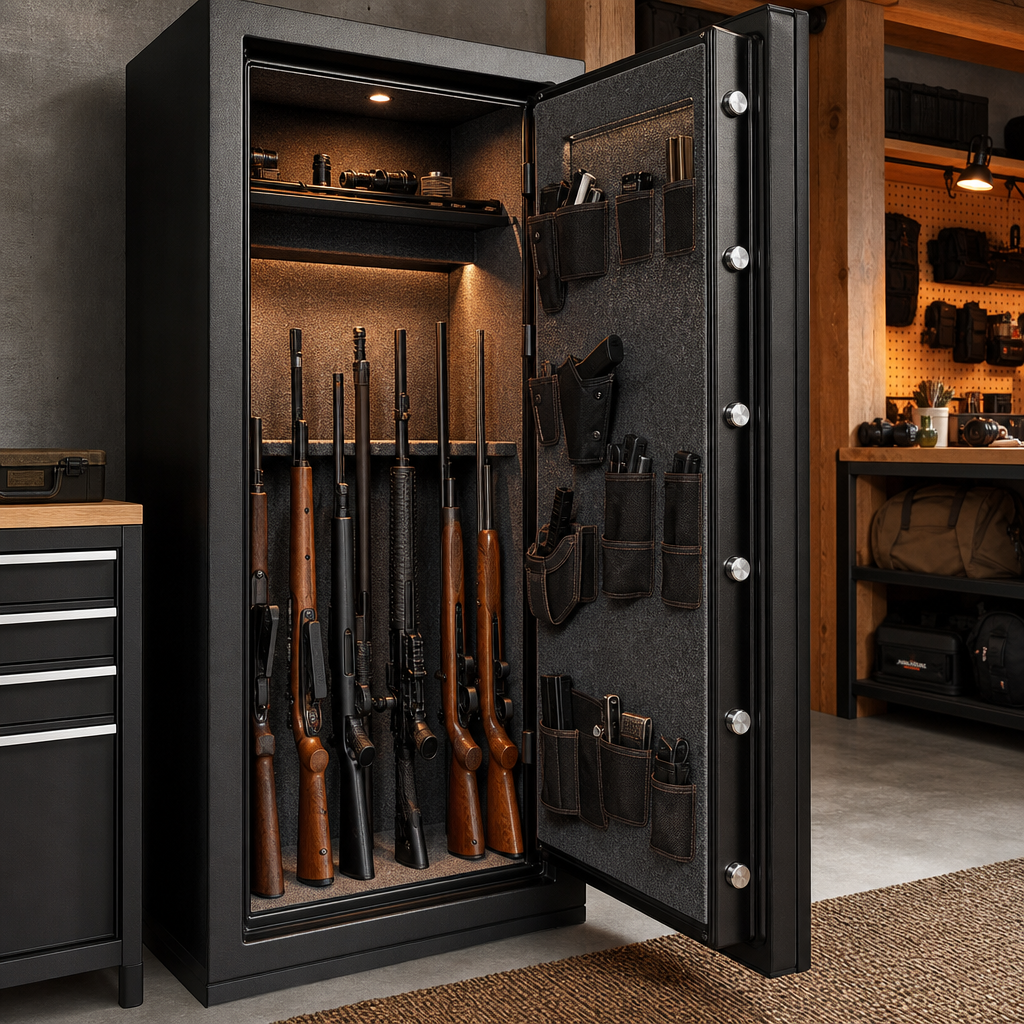
Fireproof gun safe materials are changing fast as manufacturers respond to hotter house fires, more intense storms, and higher expectations for disaster-resistant storage. In the gun safes and safety category, fireproof and disaster-resistant storage refers to safes engineered to protect firearms, ammunition, documents, and valuables against heat, smoke, moisture, impact, and sometimes forced entry during catastrophic events. The phrase matters because many buyers still assume “fireproof” means absolute protection, when in practice performance depends on insulation chemistry, seal design, wall construction, test method, and installation conditions. After evaluating safes for homeowners, collectors, and small dealers, I have seen the same mistake repeatedly: people shop by advertised minutes alone and ignore how materials behave in a real structure fire or after firefighters soak the room.
A modern fireproof gun safe is a layered system, not a single material. The steel shell provides structure and security, while interior fire barriers slow heat transfer. Expanding door seals limit smoke and steam infiltration, and elevated bases or sealed seams help during minor flooding. Some premium models add composite walls, ceramic blanket insulation, poured fill, or modular liners designed to maintain lower internal temperatures for longer periods. The future of these products lies in improving each layer without making the safe too heavy, too expensive, or too difficult to install in ordinary homes. That balance is important because a safe that never gets properly anchored or cannot fit through the door offers less practical protection than a slightly lower-rated model installed correctly.
This hub article covers the materials, testing standards, design tradeoffs, and emerging innovations shaping fireproof and disaster-resistant storage. It also frames the key questions buyers ask: What materials actually resist fire best? How are ratings determined? Can one safe protect against fire, water, and theft at the same time? What maintenance keeps disaster protection intact over years of use? By answering those questions clearly, this page serves as the central guide for deeper articles on fire ratings, waterproofing, placement, humidity control, anchoring, and post-disaster inspection. If you are building a storage plan for firearms and sensitive gear, understanding the next generation of safe materials is the foundation for making an informed choice.
How fireproof gun safe materials work in real fires
Heat reaches the contents of a safe through conduction, convection, and radiation. Steel is structurally useful but it is also a good conductor, which means steel alone cannot keep interior temperatures low enough to protect wood stocks, optics, paper records, or polymer components. That is why fireproof gun safe materials rely on insulating layers with low thermal conductivity and predictable behavior at elevated temperatures. The industry has long used gypsum-based board because it contains chemically bound water that absorbs heat as steam is released. Gypsum is affordable and widely available, but it adds weight, can leave gaps if poorly fitted, and may degrade after repeated moisture exposure.
More advanced composite safes use proprietary concrete-like fills, ceramic fiber blankets, mineral wool, or multilayer barrier systems. Ceramic fiber performs well at high temperatures and is common in industrial furnaces, though in safes it must be packaged carefully to avoid settling and to maintain interior air quality. Mineral wool offers strong thermal resistance and moisture tolerance, making it attractive for hybrid fire and water resistance. Poured composite fills can add both rigidity and heat resistance, but consistency matters; a poorly mixed fill can create voids that become thermal bridges. In side-by-side evaluations, the best-performing safes were not always the thickest. They were the units where insulation coverage, door fit, and seal continuity were engineered as a complete system.
Door construction is often the deciding factor. During a structure fire, door edges are vulnerable because gaps allow superheated gases and smoke to enter before the safe’s core insulation is overwhelmed. Intumescent seals expand under heat and can dramatically improve performance when properly compressed. Better designs pair those seals with stepped door jambs that create longer heat paths. Reinforced hinges, continuous welds, and internal hard plates support security, but they also help the safe maintain alignment under thermal stress. If the body warps or the door twists, even good insulation can fail early. That is why future material innovation is increasingly tied to structural engineering, not just insulation chemistry.
Why fire ratings, test methods, and standards matter
Not all fire ratings mean the same thing. A label such as 60 minutes at 1200 degrees Fahrenheit may be based on a manufacturer test, a laboratory protocol, or an industry benchmark with very different pass criteria. The most useful ratings specify duration, external temperature, and maximum internal temperature, because content survival depends on what is inside the safe. Paper chars around 451 degrees Fahrenheit, but plastics, adhesives, ammunition packaging, and electronic media can fail far earlier. For many gun owners, the practical interior threshold is much lower than the threshold used to protect paper records.
Independent testing matters because furnace temperature curves, cool-down periods, and sample preparation all influence results. Underwriters Laboratories has long set recognized methods for fire endurance on record-protection products, and while many residential gun safes are not certified to the highest commercial classes, the UL framework remains a useful reference point for comparing claims. California Department of Justice standards address firearm safety container requirements related to unauthorized access, but they do not replace a robust fire test. In my experience, buyers should treat broad marketing claims cautiously unless the manufacturer explains the method used, whether the door seals were active, and whether the safe was tested after impact or water exposure.
The future of fireproof and disaster-resistant storage will bring more transparent reporting. Better manufacturers are already publishing full test conditions, not just headline minutes. Expect to see more brands disclose furnace profiles, internal sensor locations, humidity effects after suppression, and post-fire opening results. That level of detail is valuable because a safe that technically maintains a pass temperature but fills with steam can still damage blued steel, optics coatings, and important documents. Clear, comparable testing helps buyers match a safe to actual risk rather than advertising language.
Emerging materials and design innovations shaping the next generation
Several innovations are pushing the category forward. The first is the move from simple drywall-lined cabinets to engineered composite bodies. Composite walls combine steel with poured insulation, ceramic layers, and thermal breaks that interrupt direct heat paths. A thermal break is any design feature that reduces heat transfer between conductive layers, and in safes it may include spacers, air gaps, or low-conductivity separators at boltwork and door frames. These details sound minor, but they produce measurable gains in burn tests because bolt channels and jambs are common leakage points.
Another important innovation is nanostructured and aerogel-inspired insulation. Silica aerogel is extremely light and offers exceptional thermal resistance, though cost and durability constraints have limited widespread use in consumer safes. Manufacturers are experimenting with aerogel blankets and high-performance barrier laminates in strategic zones such as door panels and roof sections, where fire exposure is often most severe. If costs continue to fall, these materials could reduce weight while improving endurance, making high-performance fire protection more practical for second-floor installations and retrofit projects.
Smart monitoring is also becoming part of disaster resistance. Embedded temperature and humidity sensors, battery-backed alert modules, and integration with home monitoring systems can warn owners when internal conditions drift outside safe ranges. These tools do not make a safe more fire resistant by themselves, but they improve prevention and post-event response. A safe that records peak temperature and humidity after a fire or flood gives owners and insurers better evidence for deciding whether firearms need immediate cleaning, refinishing, or replacement.
| Material or feature | Main advantage | Primary limitation | Best use case |
|---|---|---|---|
| Gypsum fireboard | Low cost and proven heat absorption | Heavy and moisture sensitive | Entry to midrange residential safes |
| Ceramic fiber blanket | High heat resistance with lower thickness | Higher cost and careful encapsulation needed | Premium fire liners and door panels |
| Mineral wool | Good thermal performance and moisture tolerance | Less structural contribution than poured fill | Hybrid fire and water-resistant designs |
| Poured composite fill | Uniform coverage and structural mass | Very heavy and quality dependent | High-end composite gun safes |
| Intumescent door seal | Expands to block smoke and heat | Can wear or compress over time | Any safe expected to face fire exposure |
| Aerogel-enhanced panel | Excellent insulation at low weight | Expensive and still emerging | Advanced lightweight designs |
Manufacturing methods are changing too. Precision robotic welding improves seam consistency, laser-cut door geometry tightens tolerances, and modular insulation packages reduce the voids that used to appear around lock bodies and relockers. Some builders are coating interior steel with corrosion-resistant finishes to manage the humidity spike that often follows firefighting efforts. Others are redesigning anchor systems so water cannot wick upward through unsealed bolt holes as easily. Taken together, these advances show that the future is not one miracle material. It is integrated engineering across heat, water, impact, and corrosion pathways.
Beyond fire: water, impact, corrosion, and whole-disaster performance
Fire rarely happens alone. During many losses, the safe is exposed to collapse debris, hose streams, sprinkler discharge, and days of trapped humidity. That is why disaster-resistant storage must be evaluated as a whole system. Water resistance in gun safes generally comes from compression gaskets, elevated thresholds, tighter seam construction, and better finishing around bolt-down points. However, a waterproof claim is only credible if the manufacturer defines depth and duration. Being able to resist a few inches of standing water for several hours is very different from surviving full submersion after a flood.
Impact resistance matters because upper floors can fail and safes can drop into a basement during a severe fire. Commercial record safes sometimes include impact testing after furnace exposure, but most residential products provide little detail. Buyers in wildfire, hurricane, tornado, or earthquake zones should prioritize heavier bodies, stronger continuous welds, and shelves or racks that keep firearms from shifting violently if the safe tips or falls. I have inspected units after storm events where the contents survived the fire but suffered stock cracks and optic damage because the interior organization system was designed for showroom appearance rather than shock control.
Corrosion prevention is another overlooked frontier. After a fire, trapped chlorides, soot residues, and moisture can start rust within hours. Future-ready safes increasingly include better powder coatings, zinc-rich primers on vulnerable steel surfaces, dehumidifier ports with improved sealing, and interiors designed for airflow around long guns. Desiccants and electric dehumidifiers remain essential, but materials now play a bigger role in reducing secondary damage. For owners storing collectible firearms, suppressors, optics, and serialized paperwork, this broader approach to disaster resistance is more useful than a fire rating alone.
How to choose a future-ready fireproof gun safe
The best way to choose a fireproof gun safe is to match the safe’s tested performance and materials to your actual risk profile. Start with the fire scenario. Detached rural homes may face longer fire department response times, which can justify higher endurance ratings and thicker composite construction. Urban apartments may require lower weight, smaller footprints, and more attention to smoke and water sealing because sprinkler activation is more likely than a prolonged burn. Then consider content sensitivity. If you store optics, documents, batteries, and heirloom firearms, look for lower internal temperature claims, active door seals, and humidity control provisions.
Next, evaluate construction specifics. Ask what insulation is used, where it is placed, whether the door has a stepped jamb, and how anchor holes are sealed. Check whether the rating is independently verified and whether the lock, relocker, and boltwork are protected from direct heat paths. Pay attention to the warranty, but read the exclusions. A lifetime fire warranty is only as useful as the proof required after a loss and whether replacement covers shipping, installation, and damaged contents. Also consider placement. Even the most advanced safe performs better on a concrete slab, away from direct window exposure, in a location that reduces collapse and water accumulation risk.
Finally, think of this hub page as the starting point for your broader storage plan. Fireproof and disaster-resistant storage works best when combined with proper anchoring, inventory records, interior organization, routine seal inspection, and humidity management. The future of fireproof gun safe materials is promising because manufacturers are moving toward lighter high-performance insulation, better test transparency, and more complete disaster engineering. But the core principle remains simple: buy a safe based on verified construction and realistic hazards, not marketing shorthand. Use that standard as you explore the related guides in this subtopic, compare models carefully, and upgrade your storage before the next emergency tests it.
Frequently Asked Questions
1. What does “fireproof” really mean for a gun safe, and why is that definition changing?
In practical terms, “fireproof” does not mean a gun safe is immune to fire under every condition. It usually means the safe has been designed and tested to keep its internal temperature below a specified threshold for a certain amount of time while exposed to high external heat. That distinction matters because firearms, ammunition, paper documents, optics, electronics, and other valuables all have different heat tolerances. A safe that protects paper for 30 or 60 minutes may not offer the same level of protection for sensitive items during a prolonged, high-intensity house fire.
The definition is changing because real-world fire conditions are changing. Modern homes often burn hotter and faster due to synthetic furnishings, open floor plans, and more combustible materials. At the same time, buyers expect a safe to do more than resist flames. They want protection from smoke infiltration, steam, water from sprinklers or fire hoses, structural collapse, and storm-related damage. As a result, the future of fireproof gun safe materials is less about a simple marketing label and more about integrated disaster resistance.
That is why more manufacturers are moving toward clearer fire ratings, better third-party testing, and multi-layer construction that addresses several risks at once. Instead of asking whether a safe is “fireproof,” informed buyers should ask how long it is rated for, at what temperature, what testing standard was used, and what additional protections are built in. The industry is gradually shifting from broad claims to more transparent performance data, which is a major innovation in itself.
2. What new fireproof gun safe materials are likely to shape the future of the industry?
The next generation of fire-resistant gun safes is expected to rely on smarter material combinations rather than one single breakthrough substance. Traditional fire linings have often used gypsum-based board or similar insulating layers that release moisture as they heat up, helping slow temperature transfer. While that approach remains common, newer designs are improving on it with denser ceramic fiber insulation, advanced composite barriers, intumescent seals, and layered steel structures engineered to manage both heat and impact.
Ceramic-based insulation is especially important because it can tolerate extremely high temperatures while remaining relatively lightweight compared to some older methods. Intumescent door seals are another major area of innovation. These seals expand dramatically when exposed to heat, helping block smoke, hot gases, and embers from entering through door gaps. That matters because internal damage often comes not just from direct heat, but from smoke and superheated air infiltration.
We are also seeing increased use of hybrid composites that combine fire resistance, rigidity, moisture management, and structural reinforcement. Some future safes may incorporate aerospace-inspired materials, thermal breaks that reduce heat transfer through metal surfaces, and corrosion-resistant inner liners that help after firefighting water exposure. On top of that, manufacturers are exploring coatings that improve resistance to heat, humidity, and rust over the long term.
The most meaningful innovation is not just stronger insulation. It is the move toward systems engineering: outer shells, insulation layers, seals, door frames, locking assemblies, and interior materials all working together. In other words, future fireproof gun safes will likely be judged by how well their materials perform as a complete protective environment, not just by the thickness of the steel or the presence of fireboard alone.
3. How are manufacturers improving gun safes for disasters beyond fire, such as storms, flooding, and structural collapse?
Manufacturers are increasingly designing safes to withstand complex disaster scenarios rather than isolated threats. A severe house fire can involve intense heat, falling debris, suppression water, prolonged humidity, and compromised building structure all at once. Likewise, hurricanes, tornadoes, and other extreme weather events can expose a safe to impact forces, moisture intrusion, and relocation stress if the safe is not properly anchored. That reality is pushing innovation toward more complete disaster-resistant storage.
One major area of progress is improved sealing. Better door gaskets and expanding heat seals help block smoke during a fire, but they can also reduce moisture intrusion during high-humidity or water-exposure events. Interior materials are also changing, with more manufacturers using rust-resistant finishes, dehumidification compatibility, and moisture-conscious liners to reduce corrosion risk after a disaster. This is especially important for firearm owners storing metal components, optics, and ammunition that can be damaged by lingering damp conditions.
Structural design is improving as well. Reinforced door frames, stronger welds, better hinge protection, and more stable bodies can help a safe maintain integrity if debris falls on it or if it is jostled during a storm event. In higher-end models, anchoring systems and heavier base construction reduce the chance of tipping or movement. Some safes are also being built with better tolerance for thermal shock, which is the stress caused by rapid heating and cooling during active firefighting.
Looking ahead, the best safes in this category will likely continue blending fire resistance with water resistance, impact durability, corrosion management, and secure anchoring. For buyers, that means evaluating a gun safe not just as a fire box, but as a long-term disaster preparedness tool designed to protect firearms, documents, and valuables through the full chain of damage that catastrophic events can create.
4. What should buyers look for when comparing future-ready fireproof gun safes?
Buyers should start with verified performance rather than advertising language. The first thing to examine is the fire rating itself: the temperature, the duration, and whether the rating comes from internal company testing or an independent third party. A safe advertised with a vague “fireproof” claim is far less informative than one that clearly states how long it maintained protective internal temperatures under defined test conditions. Transparency is one of the clearest signs of a future-ready manufacturer.
Next, look closely at material construction. Ask what type of insulation is used, how many layers are present, whether the safe includes intumescent seals, and how the door and body are engineered to minimize heat entry. Also consider whether the safe has features for moisture management, such as sealed seams, corrosion-resistant interiors, and compatibility with desiccants or powered dehumidifiers. Since post-fire water damage is common, these details can make a meaningful difference.
Security features should also be evaluated alongside fire resistance. Better materials should not come at the expense of burglary protection. Check steel thickness, locking bolt design, relocker systems, pry resistance, hinge protection, and anchor options. The best modern safes are balancing both priorities, recognizing that a gun safe must defend against human threats as well as environmental ones.
Finally, think about the safe’s intended use. If you are protecting collectible firearms, tax records, digital media, passports, and optics, you may need a higher standard than someone storing a few utility firearms in a low-risk environment. A future-ready safe is one that matches realistic threat conditions in your region, whether that means wildfire, severe storms, high humidity, or extended emergency response times. The smartest purchase is rarely the one with the boldest label; it is the one with the clearest evidence of comprehensive protection.
5. Will smart technology and testing innovations change how fireproof gun safes are built and rated?
Yes, and this is one of the most important developments to watch. The future of fireproof gun safe innovation is not only about materials, but also about how performance is measured, monitored, and communicated. As buyers become more educated, they are demanding more realistic testing and more specific data. That pressure is encouraging manufacturers to improve both design standards and transparency around how their safes are evaluated.
We are likely to see more sophisticated thermal testing that better reflects modern residential fire conditions, including faster heat rise, longer burn times, and the effects of smoke and water exposure. Some companies may adopt sensor-based monitoring during development to map heat transfer through different layers of the safe and identify weak points around doors, seams, and locking systems. That can lead to more precise engineering and better real-world protection.
Smart technology may also play a growing role in ownership and maintenance. While not every feature directly improves fire resistance, connected humidity monitoring, internal environmental sensors, tamper alerts, and maintenance reminders can help owners protect firearms and valuables over time. For example, a safe that alerts the owner to excess moisture after a storm or power outage may help prevent corrosion before damage becomes severe. In premium models, digital diagnostics may eventually become part of how safes are serviced and evaluated.
Most importantly, innovation in testing and disclosure may help reduce consumer confusion. For years, many buyers assumed “fireproof” was an absolute promise. The industry is moving toward a more accurate and helpful model where safes are rated, compared, and selected based on measurable performance under specific conditions. That shift will benefit consumers because it rewards manufacturers that invest in better materials, better engineering, and more honest standards. In the long run, the safest gun storage solutions will be the ones that combine advanced materials, realistic disaster testing, and clear, evidence-based claims.