
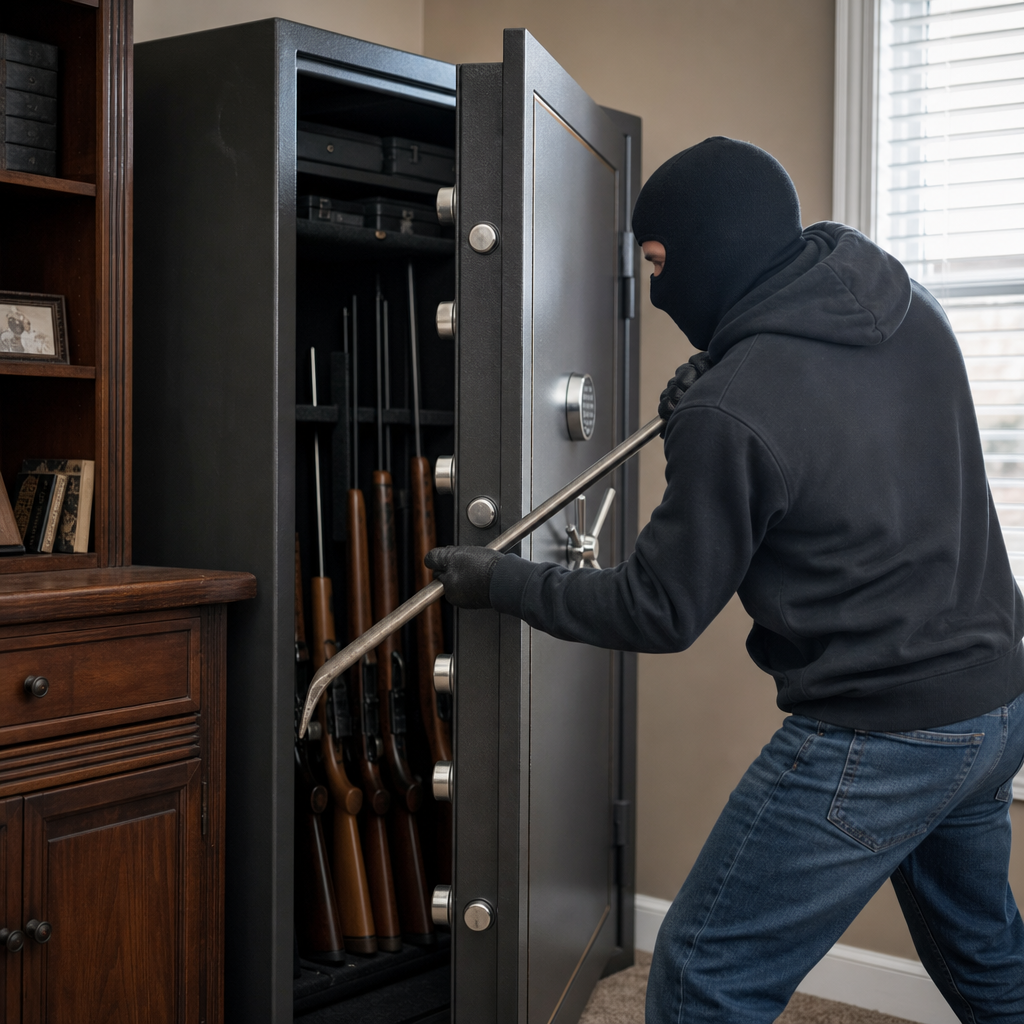
Many buyers assume a higher price tag automatically means a gun safe is harder to break into, but that belief oversimplifies how safe construction, lock design, installation, and certification actually work. In practice, price and burglary resistance overlap, yet they do not move in perfect lockstep. I have inspected entry-level residential security containers that were bolted correctly and performed better against opportunistic attacks than pricier models with flashy interiors, weak lock protection, and poor anchoring. To answer the question clearly: more expensive gun safes are not always harder to break into, although well-built premium safes often deliver stronger protection when their cost reflects better materials and verified performance rather than cosmetics.
This distinction matters because people shopping within the broader Gun Safes & Safety category often compare safes by brand reputation, steel gauge, fire rating, lock type, and capacity, yet many still rely on myths. A gun safe, in consumer terms, may be a residential security container, a burglary-rated safe, or a hybrid product that emphasizes both fire and theft protection. Those labels are not interchangeable. A residential security container, commonly tested to UL 1037 standards, is designed to resist limited attacks for a short period using basic hand tools. A true burglary safe may carry UL TL ratings that indicate substantially greater resistance under controlled testing. Understanding those categories is the foundation for evaluating every other claim you hear about security, convenience, and value.
This article serves as the hub for gun safe myths and misconceptions because the same misunderstanding appears in many forms: thicker doors always mean better protection, digital locks are less secure than dial locks, heavier safes cannot be stolen, fire ratings guarantee document survival, and imported safes are all the same. Each claim contains a grain of truth, but none works as a universal rule. What matters is how the safe was engineered as a system. Steel thickness, hardplate placement, relocker design, boltwork geometry, door gap tolerances, hinge exposure, concrete or composite fill, anchor points, and even where the safe sits in a home all change the real outcome of an attempted break-in.
If you are building a shortlist, think less about prestige and more about attack paths. Most residential safe breaches happen through prying, sidewall cutting, top peeling, lock punching, or simply removing the entire unit to open later. A serious evaluation asks direct questions: What tools is the safe designed to resist? How long can it resist them? Has a recognized lab tested it? Does the body use continuously welded seams? Is the door backed by more than decorative thickness? Can it be anchored to concrete? Those answers reveal more than price alone, and they help buyers avoid expensive mistakes that create only the appearance of security.
Why Price and Security Do Not Always Match
Gun safe pricing includes far more than burglary resistance. Manufacturers charge for size, interior fit-out, branding, paint quality, dehumidifier ports, power outlets, door organizers, lighting kits, and labor location. A larger safe with premium shelving and a glossy automotive finish may cost more than a smaller, uglier unit that uses thicker steel and stronger lock protection. I have seen this repeatedly in showroom comparisons where consumers focus on door swing and upholstery while overlooking body gauge and anchor hole design. Price reflects the full package, not only the ability to stop pry bars, grinders, or carbide bits.
Retail strategy also distorts the relationship between cost and security. Big-box stores often sell exclusive model numbers that look comparable across brands but vary in steel content and lock components. Promotional bundles can make one safe appear premium because it includes accessories, delivery, and humidity control. Dealer-only safes may cost more because of white-glove installation and service support, not because the shell is dramatically stronger. None of that is inherently bad, but it means shoppers should separate convenience value from protective value.
The most reliable way to judge security is to look for objective construction details and independent ratings. If a manufacturer highlights “10 gauge equivalent” without clearly stating actual steel thickness, ask for specifics. If a model advertises many locking bolts, remember that bolt count is weaker evidence than door fit, frame reinforcement, and pry resistance. A safe with fewer but well-supported bolts can outperform one covered in oversized chrome bolts that do little structurally. Marketing often emphasizes what is easy to photograph rather than what is difficult to engineer.
What Actually Makes a Gun Safe Harder to Break Into
Break-in resistance comes from the interaction of materials, design, locking components, and installation. Body steel is critical because attackers usually go after the weakest surface, not the front door shown in advertisements. Many residential gun safes use thinner steel on the sides and top than buyers expect, which makes cutting or peeling more practical than attacking the lock. Door construction matters too. A formed door skin over thin plate can look substantial while providing less resistance than a simpler, thicker solid-plate design.
Lock protection is another decisive factor. A hardened drill plate, spring-loaded relocker, and protected spindle area can stop or delay common lock attacks. Without these, a criminal with basic knowledge may bypass the lock body or punch vulnerable components. The boltwork should engage securely on multiple sides, but the frame receiving those bolts must also be reinforced. Otherwise, prying attacks can deform the door frame enough to release the bolts without defeating the lock itself.
Anchoring is where many expensive safes fail in the real world. A 700-pound safe sounds immovable until two people, a dolly, and a pickup prove otherwise. Once removed from the house, thieves gain time, privacy, and better tools. Bolting the safe to concrete dramatically improves security because it denies repositioning and tipping attacks. Location matters just as much. A safe tucked into a corner, with one side against a wall and the back secured, offers fewer pry points than a centerpiece installation in an open garage.
| Feature | Why It Matters | What to Check |
|---|---|---|
| Steel thickness | Slows cutting, bending, and peeling attacks | Actual gauge or plate thickness for body and door |
| Independent rating | Provides standardized evidence of resistance | UL RSC, TL ratings, or equivalent verified testing |
| Lock protection | Defeats drilling and punching near the lock | Hardplate, relocker, protected spindle and keypad area |
| Door and frame design | Reduces successful prying | Tight door gaps, reinforced frame, robust bolt engagement |
| Anchor system | Prevents removal and tipping for easier attack | Factory anchor holes and proper concrete installation |
| Placement | Limits attacker leverage and working room | Corner placement, concealed location, restricted tool access |
Common Gun Safe Myths Buyers Should Ignore
The first myth is that all heavy safes are secure. Weight helps, especially when it comes from thick steel or composite construction, but weight can also come from fireboard, interior materials, or sheer size. A bulky safe with thin walls is still vulnerable. The second myth is that more locking bolts always equal better protection. External bolt count is often cosmetic. If the door skin, frame, or bolt supports are weak, extra bolts add little real resistance. The third myth is that external hinges are less secure than internal hinges. In most modern designs, hinge exposure mainly affects door swing. If the door has dead bars or fixed locking tabs on the hinge side, cutting the hinges will not free the door.
Another common misconception is that any “fireproof gun safe” protects everything inside. Fire ratings vary by duration, temperature, testing method, and interior heat rise. Fireboard-lined gun safes may protect firearms from short residential fires yet still allow interior temperatures that damage optics, documents, media, or wood stocks. Buyers who store passports, cash, hard drives, or irreplaceable paperwork should not assume a gun safe replaces a properly rated document safe. Different contents require different protection profiles.
A fifth myth is that electronic locks are inherently unsafe. Poor electronic locks can fail, but so can neglected mechanical locks. Quality matters more than format. Commercial-grade electronic locks from established manufacturers such as Sargent and Greenleaf, SecuRam, or La Gard are widely used because they offer quick access, audit features on some models, and reliable everyday operation. Mechanical dials remain durable and battery-free, but they are slower and often less convenient under stress. The best choice depends on usage pattern, maintenance discipline, and the quality of the specific lock installed.
The final myth is that a cheap safe is pointless. That is too absolute. A modest safe can reduce unauthorized access by children, deter smash-and-grab theft, and help owners meet basic secure-storage goals. It becomes a poor choice only when buyers expect it to perform like a commercial burglary safe. Matching the safe to the threat is the rational approach. For many households, a properly installed midrange safe is a meaningful upgrade over closet storage or a locking cabinet with exposed weaknesses.
How to Compare Budget, Midrange, and Premium Safes Realistically
Budget gun safes usually prioritize storage volume and baseline access control. They often use thinner body steel, simpler boltwork, limited lock hardening, and modest fire lining. That does not make them useless. In apartments, starter homes, or low-risk environments, they can secure firearms from children and discourage quick theft. However, they are rarely engineered to resist sustained attacks with pry bars, grinders, or demolition tools. If you buy at this level, anchoring and placement become even more important because the unit itself may not tolerate much abuse.
Midrange safes are where many buyers find the best balance. Here you are more likely to see thicker bodies, stronger doors, upgraded hardplates, relockers, better weld quality, and more credible fire claims. Some dealer-supported models in this category outperform more expensive lifestyle-oriented safes because the money goes into shell strength rather than appearance. When I evaluate midrange options, I focus on whether the manufacturer publishes real steel thickness, names the lock brand, explains the fire test basis, and supports the product through trained installers or locksmiths. Transparency is usually a good sign.
Premium safes can absolutely be harder to break into, especially when they move beyond the residential security container category into true burglary-rated construction. Composite barriers, plate steel bodies, sophisticated relockers, glass relocking systems, and UL TL classifications justify higher prices because they measurably increase resistance. Yet premium branding alone is not enough. Some expensive models primarily add cabinetry, custom colors, or elaborate interiors. Those are legitimate luxury features, but they should not be confused with a major jump in anti-theft performance.
Smart Buying Criteria for a Myth-Free Purchase
A sound buying process starts with threat modeling. Ask who you are trying to stop: curious children, houseguests, impulsive burglars, organized thieves, or all of the above. Then set realistic expectations for access speed, capacity, and budget. Next, verify actual specifications. Read the manufacturer sheet, not just retail bullet points. Confirm body steel, door construction, lock brand, relocker presence, hardplate details, and anchor provisions. If the seller cannot answer those basics, move on.
Also think beyond the box itself. Delivery path, floor loading, humidity control, and local laws matter. Some jurisdictions impose storage requirements, and insurance carriers may ask how firearms were secured after a theft. Good installation reduces risk more than many accessories do. Use proper concrete anchors where possible, minimize visibility from entry points, and avoid isolated garages if climate and exposure are poor. If quick access is essential for a defensive firearm, consider a separate handgun safe for immediate use and a larger long-gun safe for bulk storage.
The bottom line is simple: price is a clue, not a verdict. More expensive gun safes are often better built, but they are not automatically harder to break into. Real security comes from verified construction, credible ratings, quality locks, disciplined installation, and a match between the safe and the threats you actually face. As you explore the wider Gun Safe Myths & Misconceptions topic, use this page as your starting point: question marketing shorthand, compare specifications carefully, and treat independent testing as your best guide. A well-chosen safe protects firearms, supports responsible ownership, and saves money by preventing the false confidence that comes from buying on price alone. Before you purchase, list your risks, inspect the specs, and choose the model that proves its strength rather than merely pricing it.
Frequently Asked Questions
Does a more expensive gun safe automatically mean it is harder to break into?
No. Higher price often correlates with better materials, more refined construction, and upgraded features, but it does not automatically guarantee better burglary resistance. Many buyers see a premium price tag and assume the safe must be tougher, when in reality part of that cost may be going toward appearance, larger storage capacity, decorative finishes, lighting, shelving systems, dehumidification accessories, or brand prestige rather than meaningful security upgrades. A safe can be expensive because it is spacious and attractive, not because it uses thicker steel, stronger door construction, or superior boltwork.
What matters most is how the safe is built and how it will perform under realistic attack conditions. Steel thickness, door reinforcement, lock protection, pry resistance, relocker design, hinge-side strength, and the overall integrity of the body are much better indicators of break-in resistance than price alone. Installation also matters greatly. A modestly priced residential security container that is properly anchored to concrete and placed in a tight, difficult-to-access location may frustrate an opportunistic burglar far more effectively than a more expensive model that is left free-standing and easy to tip, pry, or attack with tools. Price can be a clue, but it should never be treated as proof.
What construction features matter more than price when comparing gun safes?
The most important features are the ones that directly affect resistance to prying, cutting, drilling, and forced entry. Start with steel thickness in both the body and the door. Marketing language can be vague, so buyers should look for actual gauge or plate thickness rather than general terms like “heavy-duty” or “premium.” A thicker door skin does not help much if the body walls are comparatively thin and vulnerable. Likewise, lots of visible locking bolts do not necessarily improve security if the door frame and bolt support structure are weak enough to flex under attack.
Lock protection is another major factor. A quality safe should shield the lock and hardplate areas against drilling and should ideally include relockers that trigger if someone attempts to punch or tamper with the lock. The design of the door frame matters too. Safes with better anti-pry geometry, stronger edge reinforcement, and less gap around the door are generally harder to exploit with pry bars. Internal weld quality and how the safe is assembled also deserve attention, because weak seams can undermine otherwise decent materials.
Certification is equally important. Independent testing from recognized organizations provides more useful information than marketing claims alone. A safe or residential security container with a credible rating gives buyers a clearer sense of what standards it has met. In short, look past upholstery, paint, and interior extras. The real question is whether the safe’s core structure is designed to delay entry by common burglary methods.
How important are lock design and lock type in determining how secure a gun safe really is?
They are extremely important, but they should be evaluated as part of the entire security system rather than in isolation. A good lock cannot make up for weak steel or poor door construction, and a strong body can still be compromised if the lock area is poorly protected. When comparing lock types, the debate usually centers on mechanical dial locks versus electronic keypad locks. Both can be secure when sourced from reputable manufacturers and properly installed, and both can be vulnerable if they are cheaply made or badly integrated into the safe.
Mechanical locks are valued for long-term reliability and simplicity. They do not depend on batteries or electronics, and many owners appreciate their proven track record. Electronic locks offer faster access and convenience, but quality varies widely. A premium electronic lock from a respected maker is very different from a budget keypad included mainly to hit a retail price point. Beyond lock type, buyers should pay attention to whether the safe includes hardplates, relockers, and reinforced lock mounting areas. These supporting elements often determine whether an attack on the lock face is slowed down or becomes a quick point of failure.
It is also worth remembering that burglars do not always attack the lock directly. In many residential break-ins, thieves go after the easiest weak point, which may be the door edge, side wall, top panel, or the safe’s anchoring setup. That is why lock quality matters, but it should be judged alongside overall construction and installation, not as a standalone measure of security.
Can a lower-priced gun safe sometimes outperform a more expensive one in a real burglary attempt?
Yes, absolutely. Real-world outcomes often depend on context, not just MSRP. A lower-priced safe that is anchored properly, installed in a corner or alcove that limits pry-bar access, and built with solid fundamentals can outperform a pricier unit that emphasizes cosmetics over structural strength. This happens more often than many shoppers expect. Some expensive safes include upscale interiors, glossy finishes, and organizational accessories that raise price but do little to improve resistance to forced entry. Meanwhile, a simpler safe with fewer frills may devote more of its cost to steel, reinforcement, and a more practical design.
Installation can completely change the equation. If a burglar can tip a safe onto its back or side, prying often becomes easier because they can use body weight and leverage more effectively. A bolted-down safe is significantly harder to manipulate. Placement matters too. A unit installed in a tight closet, against a wall, or in a way that restricts tool swing and access to vulnerable sides can become much harder to attack. Conversely, an expensive safe sitting unanchored in an open garage may be far more vulnerable than its owner realizes.
The likely threat level also matters. Many residential burglaries are quick, noisy, and tool-limited. In those situations, delaying access is the goal. If a reasonably priced safe creates enough time, noise, and frustration to make the burglar give up or flee, it has done its job well. That does not mean all budget safes are equal, but it does mean higher cost alone does not determine real-world performance.
What should buyers look for if they want the best value in burglary protection rather than just the highest price tag?
Buyers should focus on measurable security features, credible testing, and practical installation planning. First, identify the actual threat you are trying to defend against. For many households, the priority is stopping smash-and-grab theft, unauthorized access, and common hand-tool attacks. In that case, the best value may come from a well-built residential security container with sensible steel thickness, a reputable lock, good lock protection, and proper anchoring rather than the most expensive model on the showroom floor.
Ask specific questions. What is the body steel thickness? How is the door constructed? Is there a hardplate? Are there relockers? Has the safe earned an independent rating or certification? Is the boltwork meaningful, or is it mostly a visual selling point? Does the design reduce pry gaps? These questions reveal far more than broad claims such as “premium security” or “bank-style protection.” Buyers should also evaluate where the money is going. Fire lining, interior trim, shelving, and appearance may be important, but they should not be confused with burglary resistance.
Finally, budget for installation from the beginning. A strong safe that is not anchored is a missed opportunity. Proper placement, bolting, and environmental considerations can materially improve performance. The best value usually comes from balancing construction quality, lock reliability, certification, and installation rather than chasing the highest price. Smart buyers compare specifications, not just sticker numbers, because true security is built from design and execution, not from cost alone.