
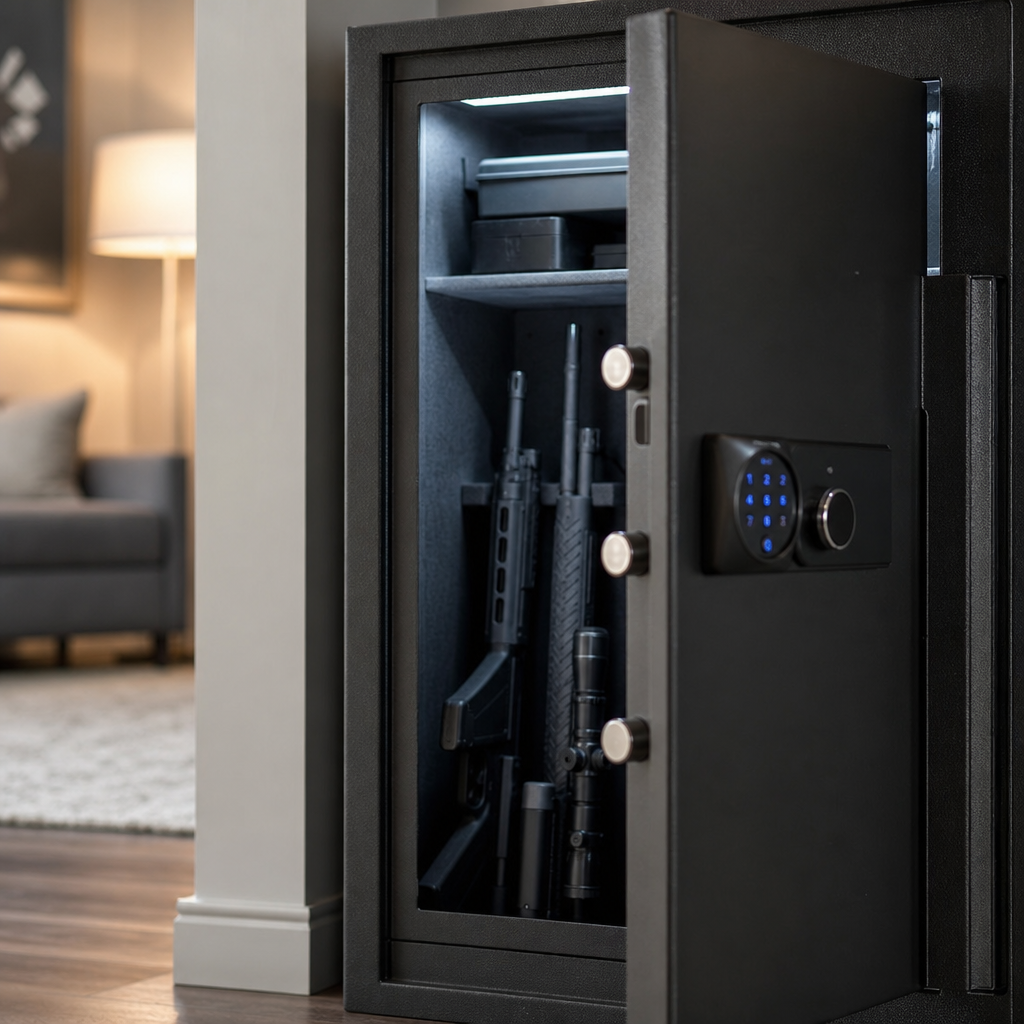
Does a smart gun safe improve firearm security? In most households, yes—when it is chosen for the right threat model, installed correctly, and used with disciplined access controls. A smart gun safe is a firearm storage device that adds electronic features such as biometric entry, keypad codes, app alerts, audit logs, tamper sensors, or remote management to the physical protections found in traditional safes. Firearm security, by contrast, is broader than burglary resistance. It includes preventing unauthorized access by children, guests, and prohibited users; maintaining rapid access for lawful owners; reducing negligent handling; and protecting guns from theft, fire, and moisture damage.
I have worked with both mechanical and electronic safes in homes, retail environments, and training settings, and the same misconception appears repeatedly: people assume “smart” automatically means safer, or they dismiss smart features as gimmicks. Both views miss the real issue. Security improves when features match actual risks. A biometric bedside safe can reduce the chance of a child finding a loaded handgun in a drawer. A network-connected long-gun safe can alert an owner if a door is opened during a trip. Yet a poorly built safe with flashy electronics can still be pried open, and a strong mechanical safe can still fail if the code is shared carelessly.
This matters because firearm storage decisions sit at the intersection of safety, legal responsibility, and emergency readiness. Many states impose secure storage requirements under certain conditions, and insurers, trainers, and law enforcement agencies consistently emphasize locked storage as a basic risk-control measure. The Consumer Product Safety Commission has long warned that unsecured firearms increase the risk of injury and death, especially involving children. The National Shooting Sports Foundation and Project ChildSafe also stress that secure storage should combine a locking device, owner education, and a plan for access in emergencies. In practical terms, the question is not whether smart gun safes are universally better than traditional models. The right question is whether smart features solve real storage problems without introducing new failure points.
As a hub for gun safe myths and misconceptions, this article addresses the claims I hear most often: that biometric locks are unreliable, that batteries make safes unsafe, that heavy steel alone is enough, that connected features create unacceptable privacy risks, and that any safe on a retailer’s floor offers the same level of protection. Some myths contain a grain of truth, which is why they persist. Understanding where those claims are accurate, where they are exaggerated, and how to evaluate a safe by build quality, lock design, certifications, installation, and daily use is what actually improves firearm security.
What a Smart Gun Safe Actually Adds
A smart gun safe improves firearm security when it adds control, speed, and accountability without weakening core physical protection. In plain terms, a smart safe can do four things a purely mechanical safe usually cannot. First, it can speed authorized entry through biometrics, RFID, or programmable keypad access. Second, it can create visibility through alerts, timestamps, and access logs. Third, it can support layered permissions, allowing temporary codes or limited user enrollment. Fourth, it can integrate environmental and tamper monitoring, warning the owner about humidity spikes, vibration, or unauthorized opening.
These functions are valuable in specific scenarios. A common bedside case is the owner who wants a loaded defensive handgun inaccessible to children but available in seconds at night. A biometric scanner with a tested fingerprint enrollment process can outperform a key hidden in a drawer or a simple three-button lock that a teenager can observe. In another scenario, a collector stores several handguns in a closet safe while traveling. A connected sensor that sends an alert if the door opens can shorten the time between a break-in and a police report, which matters for recovery. Neither feature replaces steel thickness, lock-bolt engagement, or anchoring, but both can improve real-world outcomes.
The critical distinction is that smart features are not a substitute for a proper safe body. A fast lock on thin steel is still thin steel. I advise buyers to start with the same baseline they would use for any firearm safe: welded construction, pry-resistant door design, concealed or protected hinges where appropriate, decent internal organization, anchoring points, and clear information about lock type and emergency override. Then evaluate whether smart features support how the firearm will actually be accessed. Security improves when the safe is both hard to defeat and easy for the owner to use consistently.
Common Myths and the Reality Behind Them
The most common myth is that “all biometric safes fail when you need them.” The reality is narrower. Cheap sensors, poor fingerprint enrollment, dirty scanner surfaces, and inconsistent finger placement absolutely cause failures. However, higher-quality capacitive sensors, multiple enrolled fingers, and regular testing significantly improve reliability. I recommend enrolling both thumbs and index fingers on each hand, then practicing under low light. In classes, this simple step solves many complaints people blame on the entire technology category.
A second myth is that “battery-powered means insecure.” Batteries are a maintenance issue, not automatically a security defect. Reputable models provide low-battery warnings and external power contacts or mechanical backup keys. The real mistake is installing a safe and forgetting it for two years. A quarterly battery check, just like replacing optic batteries or smoke detector cells on a schedule, turns a perceived weakness into a manageable routine.
A third myth is that “if it’s heavy, it’s secure.” Weight helps, especially against smash-and-grab theft, but construction matters more. Many consumer safes use relatively thin steel and drywall-based fire lining. They may deter casual theft yet perform poorly against pry attacks with common tools. A bolted-down safe with better door geometry often beats a heavier but unanchored unit. This misconception shows up constantly in gun safe buying decisions.
A fourth myth is that “connected safes are always a hacking disaster.” Connectivity does introduce attack surface, so skepticism is healthy. But risk depends on implementation: local-only Bluetooth is different from cloud-based remote access; encrypted communications are different from poorly documented firmware; and app alerts are different from unlock-from-anywhere features. For many owners, the safest choice is a smart safe with local features and no remote unlock capability.
| Myth | Reality | Best Practice |
|---|---|---|
| Biometric locks are unreliable | Quality sensors and proper enrollment can be dependable | Enroll multiple fingers and test monthly |
| Batteries make safes unsafe | Battery failure is manageable with maintenance and backup entry | Replace on a schedule and verify external backup options |
| Heavy equals secure | Steel gauge, door design, and anchoring matter more than mass alone | Bolt the safe down and inspect pry resistance |
| Connected features are never worth it | Some alerts add value without enabling risky remote unlocks | Prefer minimal connectivity and updated firmware |
How to Judge Security Beyond Marketing Claims
Marketing language around gun safes is notoriously loose, so buyers need objective criteria. Start with the lock. Electronic keypads from established lock makers such as SecuRam, Sargent and Greenleaf, and La Gard generally inspire more confidence than anonymous generic modules. For biometric units, look for brands that explain sensor type, false acceptance considerations, and backup entry methods rather than merely promising “instant access.” A trustworthy manufacturer also documents lockout behavior after repeated failed attempts and whether user codes can be deleted individually.
Next, inspect physical construction. Steel thickness is often advertised in gauge, but comparisons can be confusing because lower gauge means thicker steel. Door edge design matters because wide pry gaps invite attacks with bars and screwdrivers. Continuous welds are preferable to sparse spot welds. Bolt count sounds impressive, but bolt engagement and door frame reinforcement are more important than the raw number. On residential security containers, a sophisticated lock cannot compensate for a weak body. If a safe stores high-value firearms, consider burglary ratings and construction details rather than consumer-friendly adjectives like “tactical” or “premium.”
Fire protection also deserves sober analysis. Many buyers assume every gun safe is a fire safe, but ratings vary widely and testing methods are not uniform across the market. Verify whether the manufacturer cites an established testing protocol, a specific temperature threshold, and a duration. Remember that electronics, optics, documents, and wood stocks may respond differently to heat and humidity. In humid regions, internal dehumidifiers, desiccants, and ventilation planning are not optional extras; they are part of firearm preservation.
Finally, evaluate daily usability. The safest storage system is one the owner will actually use every time. If the safe is too slow, too noisy, too hard to reach, or too small for the gun with a mounted light or optic, people start bypassing it. I have seen owners leave a handgun on a shelf because the bedside box would not fit a red-dot-equipped pistol. That is not a lock failure; it is a planning failure. Good security requires matching dimensions, opening direction, interior padding, and access method to the specific firearm and scenario.
Where Smart Safes Help Most in Real Homes
Smart gun safes provide the clearest benefit in households balancing quick lawful access with strict unauthorized-access prevention. Parents with young children are the obvious example, but they are not the only one. Homes with frequent visitors, cleaning crews, caregivers, contractors, roommates, or teenagers create access-control problems that a basic keyed box may not handle well. Smart features can reduce risky workarounds such as hiding keys nearby or using a code shared with too many people.
For bedside handgun storage, rapid biometric or keypad entry can be a meaningful safety upgrade if the owner practices with it. For closet or office storage, open alerts and audit logs can help identify who accessed the safe and when. For rental properties, second homes, or seasonal travel, tamper notifications can provide awareness that a conventional safe lacks. Even simple features such as an interior light or silent mode can matter during stressed retrieval in darkness.
That said, smart safes are not ideal for every role. A large collection of long guns, suppressors, ammunition, and documents may be better served by a heavier safe with a commercial-grade electronic lock and no app connectivity at all. Likewise, owners in remote locations with unstable temperatures may favor simpler systems with fewer electronics. The point is not to maximize technology. It is to reduce risk in the environment where the guns are actually stored.
Limits, Tradeoffs, and the Best Buying Strategy
Smart gun safes have limitations, and acknowledging them is what leads to better buying decisions. Electronics can fail. Fingerprints can be harder to read when wet, dirty, or injured. Apps can lose support. Cloud services can change terms. Firmware updates can be neglected. If a product depends heavily on a mobile app, ask what still works if the manufacturer disappears. The best designs fail gracefully: the safe remains secure, local entry still works, and backup access is clearly defined.
There is also a tradeoff between convenience and attack surface. Remote monitoring is often useful; remote unlocking is usually far harder to justify for firearm storage. Every additional feature should answer a specific need. If it does not reduce unauthorized access, improve owner response, or increase consistent safe use, it may simply add complexity. In my experience, the most effective setup for many households is straightforward: a well-built, anchored safe; a proven electronic or biometric entry system with backup access; regular battery changes; enrolled users reviewed periodically; and no unnecessary internet exposure.
As the hub for gun safe myths and misconceptions, the main lesson is simple. A smart gun safe can improve firearm security, but only when smart features sit on top of strong physical construction and disciplined ownership habits. Ignore the false choice between “old-school secure” and “high-tech safe.” Evaluate lock reliability, steel and door design, anchoring, fire and moisture protection, connectivity risks, and day-to-day usability as one system. That systems view is what prevents unauthorized access, supports emergency readiness, and protects firearms from theft and damage.
If you are shopping now, start by listing your real risks: children, burglary, travel, humidity, response time, and the number of authorized users. Then compare safes against those risks rather than against advertising slogans. A carefully chosen smart gun safe can be a genuine security upgrade. A poorly chosen one is just expensive false confidence. Build your storage plan around how firearms are actually used in your home, and you will make better, safer decisions.
Frequently Asked Questions
Does a smart gun safe actually improve firearm security compared with a traditional safe?
In many households, yes. A smart gun safe can improve firearm security because it adds layers of control and visibility that a traditional mechanical safe usually does not provide. Standard safes focus mainly on physical resistance: keeping unauthorized people from opening the container by force. A smart gun safe still needs that physical protection, but it can also include features such as biometric access, keypad entry, app notifications, tamper alerts, audit logs, and remote management settings. Those tools can reduce the chance of unauthorized access by children, guests, or other household members while also helping the owner monitor how and when the safe is used.
That said, the improvement depends on matching the safe to the real threat model. If the main concern is quick access during a home-defense emergency, a well-designed smart handgun safe with reliable biometric and keypad backup may be more secure in practice than hiding a loaded firearm in a drawer. If the concern is organized burglary, the smart features matter less unless the safe also has strong steel construction, pry resistance, secure mounting, and protection against power loss or electronic failure. In other words, the “smart” part does not replace the fundamentals. It enhances them when the product is well built, properly installed, and used consistently.
Firearm security is also broader than burglary resistance alone. It includes preventing unauthorized access, reducing accidental injury risk, maintaining dependable access for authorized users, and supporting accountability in the home. Smart features can help with all of those goals, but only if the owner uses disciplined access controls, keeps credentials private, updates settings when needed, and avoids relying on convenience features that weaken security. So the short answer is yes, a smart gun safe often improves firearm security, but only when it is selected and managed as a security device rather than treated like a gadget.
What smart gun safe features matter most for preventing unauthorized access?
The most important features are the ones that reliably limit access to authorized users without creating easy points of failure. Biometric entry is one of the biggest selling points, but it should be evaluated carefully. A good fingerprint reader can provide fast access and help avoid problems like forgotten codes or written-down combinations. However, it should not be the only access method. The best smart gun safes pair biometrics with a secure keypad, backup override option, and lockout protections after repeated failed attempts. That combination improves both security and reliability.
Tamper alerts and audit logs are also highly valuable. Tamper alerts can notify the owner if someone is attempting to open, move, or interfere with the safe. Audit logs create a record of when the safe was accessed, which can be useful in homes with multiple authorized adults or in any environment where accountability matters. App-based alerts can be especially helpful for people who want immediate awareness of access attempts, but they are most useful as a supplement rather than the foundation of security. A safe should still remain secure even if the internet is down, the app fails, or the user’s phone battery is dead.
Another key feature is secure user management. Some smart safes let the owner enroll and remove users, assign temporary access, or review activity history. That can be useful, but it also requires discipline. Any safe that allows remote changes or app-based administration should have strong authentication protections, ideally including multi-factor authentication where available. Finally, no smart feature matters if the physical design is weak. A secure locking mechanism, solid body construction, pry-resistant door design, concealed hinges where appropriate, and proper mounting hardware are just as important as electronics. The right answer is not “biometric versus steel”; it is both working together.
Are there security risks associated with biometric access, mobile apps, or connected features?
Yes, there can be. Smart features can improve convenience and control, but they also introduce new failure points and new categories of risk. With biometric access, the main concern is reliability. Fingerprint sensors may struggle with wet fingers, dirt, skin condition changes, cuts, or poor sensor quality. A low-quality biometric reader can create two problems at once: it may reject an authorized user when quick access is needed, or worse, it may not provide the level of resistance expected against unauthorized use. That is why backup access methods are essential, and why buyers should prioritize proven performance over marketing claims.
Mobile apps and connected features create cybersecurity and privacy considerations. Any safe that uses Bluetooth, Wi-Fi, cloud connectivity, or remote management should be evaluated like any other internet-connected security device. Questions worth asking include whether communication is encrypted, whether the manufacturer provides firmware updates, how user credentials are protected, whether access logs are stored locally or in the cloud, and whether the app requires strong account security. A poorly designed connected safe may expose sensitive information about the owner’s access habits, or in rare cases create attack surfaces that do not exist in a purely mechanical product.
Power and system dependency are another practical concern. Electronic safes can fail because of dead batteries, damaged keypads, software bugs, or connectivity issues. A well-designed smart gun safe addresses this with low-battery warnings, offline functionality, reliable backup entry methods, and robust lock mechanisms that fail safely. The takeaway is not that smart safes are inherently risky. It is that buyers should treat electronic and connected features as security systems that must be vetted. A smart gun safe is most effective when it offers the convenience of modern access controls without becoming dependent on a fragile app ecosystem or weak digital protections.
How should a smart gun safe be installed and used to maximize firearm security?
Installation and daily habits matter just as much as the safe’s feature list. A smart gun safe that is not mounted properly can be defeated simply by being carried away, especially if it is a smaller handgun model. For that reason, secure anchoring is one of the most important steps. The safe should be bolted to a solid structure according to the manufacturer’s instructions, whether that means floor joists, wall studs, concrete, or a heavy fixed base. Placement also matters. The safe should be accessible enough for authorized use, but not so exposed that it invites tampering, observation, or theft.
Owners should also think carefully about credential management. If the safe uses a keypad, the code should be unique, difficult to guess, and never shared casually. If it supports multiple users, access should be granted only to people who are truly authorized and trained. If biometric profiles are used, each enrolled user should test access repeatedly under realistic conditions so there are no surprises. Remote access settings, if available, should be configured conservatively. In many cases, receiving alerts is useful, but allowing extensive remote unlocking or administration may not be appropriate for every household.
Routine maintenance is another often-overlooked part of firearm security. Batteries should be replaced proactively, firmware updates should be installed when they come from a reputable manufacturer, and the locking system should be tested regularly. Owners should also rehearse access in low light and under time pressure if the firearm is intended for defensive use. Just as important, the safe should fit into a broader storage plan: unloaded versus loaded status should be intentional, ammunition storage should be considered carefully, and local laws should be followed. A smart gun safe is not a “set it and forget it” tool. It works best when installation, configuration, maintenance, and responsible handling all support the same security goals.
Who benefits most from a smart gun safe, and when might a traditional safe be the better choice?
Smart gun safes are especially beneficial for households that need a balance between secure storage and fast, controlled access. That includes homes with children, shared living environments, and owners who want immediate alerts or accountability features. They can also be useful for people who are more likely to use and maintain a safe consistently when access is straightforward. In real life, the best safe is often the one the owner uses every single time. If biometric or keypad access makes secure storage practical enough to prevent leaving a firearm unsecured, that alone can represent a meaningful improvement in safety and security.
They are also a strong option for owners who value monitoring and recordkeeping. Audit logs and tamper notifications can provide peace of mind and additional oversight that traditional safes generally cannot. In households where more than one adult may have access, smart features can support clearer access control policies. For some users, these benefits directly support broader firearm security goals, including unauthorized access prevention, safer storage habits, and faster recognition of unusual activity.
However, a traditional safe may be the better choice in some cases. If the primary concern is long-term storage of multiple firearms with maximum emphasis on heavy construction, fire protection, and resistance to forced entry, a large high-quality traditional safe may outperform many smaller smart models. Likewise, owners who prefer minimal electronic dependence, who store firearms in areas with harsh conditions, or who do not want app or connectivity risks may be better served by a robust mechanical design. In the end, the decision is less about whether “smart” is automatically better and more about whether the safe fits the user’s priorities. A smart gun safe improves firearm security when its electronic features support, rather than undermine, strong physical protection and disciplined ownership practices.