
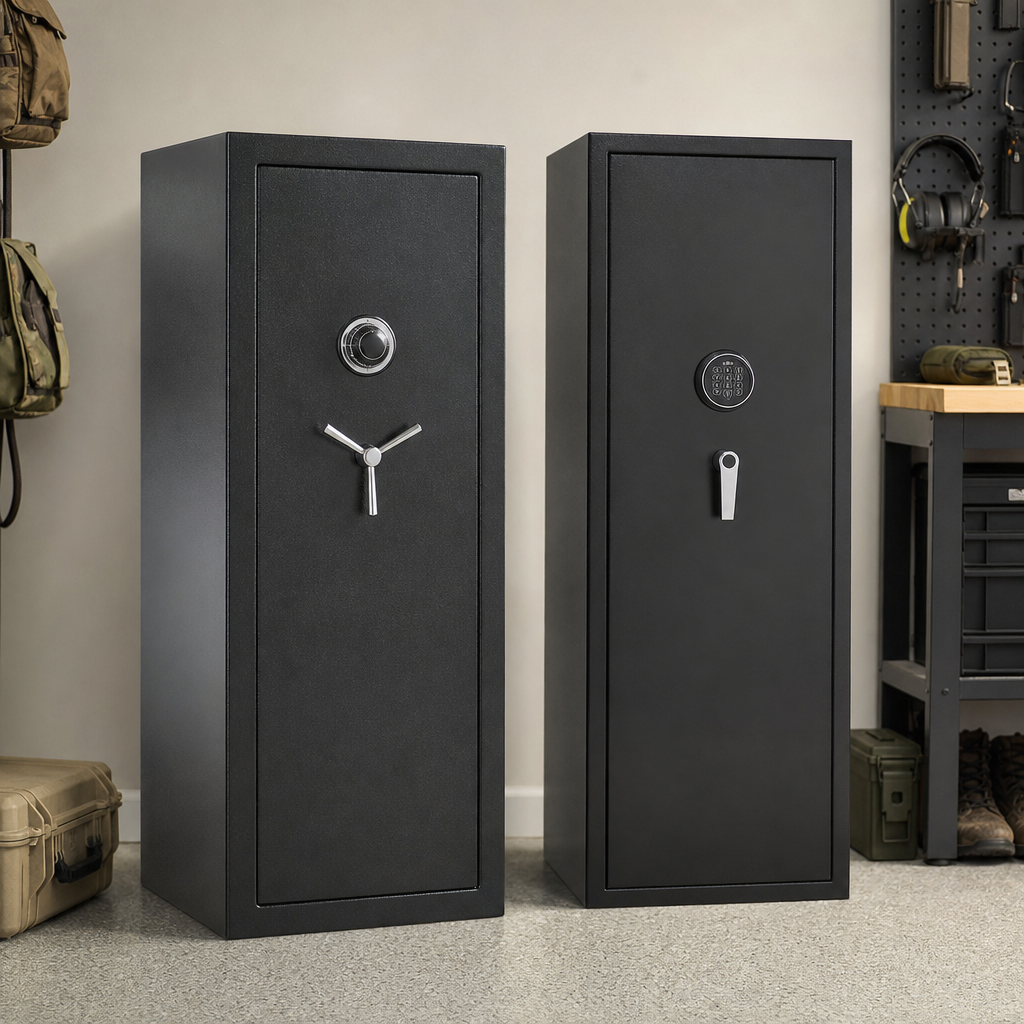
Choosing between Stack-On and Barska comes down to one question: which budget gun safe is actually more secure for the way you store firearms at home? In the entry-level market, both brands are widely available, often priced below premium safe makers, and commonly considered by first-time gun owners who need a practical solution without spending thousands. That overlap creates confusion, because “budget gun safe” can mean anything from a thin steel security cabinet to a fire-rated residential security container with electronic locking bolts. If you want a clear answer, you need to compare construction, lock design, pry resistance, anchoring, capacity claims, and the type of threat each product is built to resist.
In plain terms, Stack-On is best known for affordable gun cabinets and basic safes sold through large retailers, while Barska is best known for compact biometric safes, handgun vaults, and a smaller selection of rifle safes aimed at convenience. Security, in this context, means delaying unauthorized access by children, opportunistic thieves, or smash-and-grab burglars. It does not mean bank-vault protection. Most products from both brands are designed for residential storage and basic deterrence, not for withstanding prolonged attack with heavy tools. That distinction matters, because many buyers assume all gun safes perform at roughly the same level when the price and capacity look similar on a product page.
I have evaluated entry-level safes in garages, closets, and retail showrooms, and the same pattern shows up repeatedly: buyers focus on lock type first and ignore the body and door. In practice, steel thickness, hinge layout, bolt engagement, and whether the unit is anchored usually matter more than whether the keypad looks advanced. A biometric scanner is convenient, but convenience does not compensate for a thin door skin or weak frame. Likewise, a key lock is not automatically inferior if the container is solidly built and properly installed. This is why a direct Stack-On vs. Barska comparison is useful. The brands often compete for the same budget, but they solve different storage problems.
This article serves as a hub for gun safe comparisons and brand spotlights within the broader gun safes and safety category. It explains where Stack-On cabinets make sense, where Barska biometric units fit, what security compromises are normal under the budget tier, and how to choose based on firearm type, access needs, and household risk. If your goal is fast bedside access, the better answer may be different than if your goal is locking up several long guns in a utility room. The key is matching the safe to the threat model rather than the marketing label.
What Stack-On and Barska Actually Sell
Stack-On’s lineup traditionally centers on steel gun cabinets, entry-level long-gun safes, ammo cabinets, and convertible storage units. Many Stack-On products use relatively thin steel, simple locking systems, and interiors optimized to fit multiple rifles or shotguns in a compact footprint. The practical appeal is obvious: low cost, decent storage volume, and broad retailer availability. In many homes, a Stack-On cabinet is the first step up from keeping firearms in a closet. That is a meaningful improvement for child access prevention and general organization, but it should be understood as cabinet-level security unless the model is a true safe with heavier construction and a reinforced door.
Barska’s reputation is different. The brand is closely associated with biometric handgun safes, drawer safes, bedside vaults, and a handful of biometric rifle safes. Its products appeal to buyers who prioritize quick access and modern features such as fingerprint readers, backup keys, and compact dimensions. In real use, Barska often enters the conversation when someone wants a pistol secured from children but accessible in seconds. That is a different use case from storing ten long guns in a basement. Comparing the brands fairly means comparing like with like: handgun safe to handgun safe, cabinet to cabinet, and rifle safe to rifle safe.
The first important conclusion is that Stack-On generally offers better value for bulk long-gun storage, while Barska generally offers better feature sets for fast-access handgun storage. The second is that neither brand dominates every category on raw security. Security depends heavily on the specific model. A Stack-On cabinet may outperform a Barska compact safe for organizing rifles, but a Barska biometric pistol vault may be more appropriate than a basic Stack-On lockbox for defensive handgun access. Buyers get into trouble when they compare only brand reputation instead of product category and construction details.
Security Basics: Steel, Locks, Bolts, and Anchoring
When judging any budget gun safe, start with the body and door. Steel gauge is a practical indicator, though manufacturers do not always present it clearly. Lower gauge numbers mean thicker steel. Many affordable cabinets use thin sheet steel that can be bent or pried with common tools if the unit is not anchored. Heavier safes often use composite doors, reinforced frames, and live locking bolts that engage more deeply. The lock matters, but the lock is only one part of the attack surface. I have seen inexpensive containers with respectable electronic locks fail the overall test because the sidewalls flexed too easily under pry pressure.
Lock type affects both access and reliability. Mechanical key locks are simple and cheap, but key management is a security issue if spare keys are poorly stored. Electronic keypads are more convenient for repeated access and can be reliable when made by quality lock manufacturers, though entry-level electronic systems vary widely. Biometric locks can be fast, but their performance depends on scanner quality, enrolled prints, finger condition, and battery health. The Federal Bureau of Investigation and National Institute of Standards and Technology have both discussed biometric performance tradeoffs generally, and those tradeoffs apply here: convenience improves access speed, but false rejects and setup quality matter.
Anchoring is non-negotiable. A lightweight safe that is not bolted to a floor or wall can be removed and attacked elsewhere. That risk is especially high with small handgun vaults and narrow rifle cabinets. California Department of Justice standards for firearm safety devices and Underwriters Laboratories residential security concepts both reinforce the same principle: delay and deterrence matter most when the container stays in place. In a real burglary, thieves often have only minutes. A bolted cabinet in a constrained closet is dramatically harder to defeat than the same cabinet sitting loose in an open garage.
| Security factor | Why it matters | Typical Stack-On strength | Typical Barska strength |
|---|---|---|---|
| Steel body and door | Resists bending, prying, and quick tool attacks | Better in cabinets and basic long-gun units than in tiny lockboxes | Varies; often lighter in compact biometric models |
| Lock system | Controls access speed and failure points | Simple key and keypad options | Strong biometric and electronic feature focus |
| Anchoring points | Prevents whole-unit theft | Common and important on cabinets | Critical on bedside and drawer safes |
| Interior layout | Affects safe handling and practical capacity | Usually better for rifles and shared storage | Usually better for one or two handguns |
If you want the shortest answer to “which is more secure,” it is this: for long-gun storage, a properly anchored Stack-On safe or cabinet is usually the more secure choice than a comparably priced Barska quick-access unit, because it is designed around larger-scale physical containment. For bedside handgun access, a well-mounted Barska biometric safe can be the more secure choice than a lightweight generic pistol box because it balances child resistance with speed. The better brand depends on the firearm and the threat.
Stack-On vs. Barska for Long-Gun Storage
For rifles and shotguns, Stack-On usually has the advantage in product depth and practical design. Many Stack-On cabinets include barrel rests, foam-padded bottoms, and shelving arrangements that let owners separate long guns from ammunition or accessories. Capacity claims, however, should be treated cautiously. A “10-gun” or “14-gun” rating often assumes slim long guns with no optics, no slings, and no awkward bolt handles. In actual homes, scopes and modern sporting rifle configurations reduce usable capacity significantly. A realistic rule is to cut stated capacity by about one-third to one-half if your guns have optics or thicker stocks.
Barska rifle safes can be attractive because biometric access sounds modern and useful. The problem is that long-gun safes in the budget range still live or die by cabinet strength and mounting. A biometric reader on a lightly built body does not create higher burglary resistance. It mainly changes access speed. For a hallway closet or bedroom corner, that may still be valuable, especially if you want authorized adults to open the unit without managing a key or code under stress. But if your primary concern is keeping a thief from peeling open the door with pry tools, construction remains the deciding factor.
In side-by-side shopping, Stack-On tends to win on volume, shelving flexibility, and the number of configurations available at lower prices. Barska tends to win on tech-forward features. If the safe will spend most of its life closed while protecting several hunting rifles or shotguns from children and casual theft, Stack-On is usually the more rational pick. If immediate access is central to your plan and you accept tradeoffs in steel thickness and feature complexity, Barska has a case. For most households storing multiple long guns, the safer recommendation is to prioritize the sturdier, simpler unit and anchor it aggressively.
Stack-On vs. Barska for Handgun and Quick-Access Use
This is where Barska becomes much more competitive. Compact handgun safes are not just miniature rifle safes; they solve a different problem. The goal is often to secure a loaded defensive pistol from children, guests, or unauthorized users while keeping it available within seconds. Barska has invested heavily in that niche, and many of its biometric safes are designed for drawer mounting, nightstand placement, or closet shelf installation. In homes where the handgun must remain close at hand, that convenience can produce better real-world safety because the firearm is more likely to stay locked rather than being left unsecured for access.
Stack-On also offers pistol boxes and compact safes, but its comparative advantage is not usually biometric convenience. If you want a simple keyed or electronic box for occasional access, Stack-On may be sufficient. If you want one-handed entry in low light, Barska often has the more purpose-built option. The caveat is reliability testing. Any biometric safe should be tested extensively before it is trusted for defensive use. Enroll multiple fingers, verify performance with dry skin and slightly wet skin, replace batteries on a schedule, and practice backup access. The scanner is only safe if it works consistently for the authorized user.
For quick-access handgun storage, I usually tell buyers to rank priorities in this order: secure mounting, consistent opening method, tamper resistance around the door seam, and then interior extras. A foam-lined interior or silent mode is nice, but it is not more important than a strong latch and a mounting plate that prevents the box from being carried away. In this segment, Barska often edges Stack-On because it has focused more clearly on the user scenario. If the question is specifically bedside handgun security on a budget, Barska is often the better fit.
Common Weaknesses and How to Buy Smarter
Both brands share the limitations common to budget gun safes. Fire ratings can be modest or absent. Weld quality and door gaps may be less robust than on premium safes. Electronic components are not in the same class as commercial-grade lock systems from specialist manufacturers. Interior capacity is often overstated. Finish quality can vary from unit to unit. None of these issues make budget safes useless, but they do define what they can realistically accomplish. They are designed to provide controlled access and meaningful delay, not invulnerability.
The smartest way to buy is to match the container to the highest-likelihood threat. If you have children in the home, almost any anchored locking container from a reputable seller is better than unsecured storage. If you live in an apartment and worry about smash-and-grab theft, bolting a compact safe into a concealed location can matter more than buying extra advertised capacity. If you own several long guns and expect true burglary resistance, you may be better served by saving for a heavier safe from brands that publish steel thickness, lock certifications, and independent testing information more clearly.
Also pay attention to placement. A safe in a climate-controlled interior closet usually performs better over time than one in a damp garage. Use a dehumidifier rod or desiccant where needed. Install the safe where a thief cannot easily swing tools. Keep it out of obvious sightlines from doors and windows. And avoid storing override keys in the same room. These habits improve security more than many buyers realize. The best budget gun safe is not the one with the most marketing features. It is the one installed, used, and maintained correctly for your particular firearms and household risks.
Final Verdict: Which Budget Gun Safe Is More Secure?
Stack-On is generally more secure for budget long-gun storage because its lineup is better aligned with rifle and shotgun containment, broader capacity needs, and straightforward anchoring in closets, utility rooms, and dedicated storage spaces. Barska is generally more secure for budget quick-access handgun storage because its biometric and compact electronic designs better support fast authorized entry while still restricting children and casual unauthorized users. The brands are not really strongest in the same lane, and that is the core insight many buyers miss.
If you need to lock up several long guns, start with Stack-On, then compare cabinet construction, locking points, and mounting hardware carefully. If you need a bedside or drawer safe for one defensive pistol, start with Barska, then test the biometric or keypad system thoroughly before relying on it. In either case, remember that anchoring, placement, and realistic expectations matter as much as brand. A modest safe installed well beats a fancier safe used carelessly almost every time.
As the hub for gun safe comparisons and brand spotlights, this guide gives you the framework to judge more than just these two names. Look past marketing labels, identify the threat you are actually trying to stop, and buy for that scenario. Then continue exploring related comparisons in the gun safes and safety category so you can choose a storage solution that protects your firearms, your family, and your peace of mind.
Frequently Asked Questions
Is Stack-On or Barska more secure overall for a budget gun safe?
In most cases, neither brand is universally “more secure” across every model, because Stack-On and Barska both sell products at different points within the entry-level market. The better question is what kind of security you actually need. If you are comparing very low-cost security cabinets, Stack-On is often known for simple, lightweight designs meant primarily to keep firearms organized and away from unauthorized access, especially children or casual visitors. Those cabinets can be useful, but they are not usually built to resist determined forced entry for long. Barska, on the other hand, is often associated with biometric and electronic-access safes, and some buyers are drawn to the convenience of quick entry. That can make Barska appealing for home-defense use, but convenience features alone do not automatically make a safe more secure.
When you compare actual security, focus on construction details rather than the logo on the door. Steel thickness, pry resistance, the quality of the locking bolts, internal hinge protection, anchoring capability, and overall weight matter far more than brand reputation at this price point. A heavier unit with better door reinforcement and proper floor or wall anchoring is typically more secure than a lighter cabinet with a flashy lock. In many side-by-side comparisons, Stack-On models may offer practical basic storage, while Barska models may offer faster access technology, but both can be limited by thin steel and budget construction. For buyers looking for true burglary resistance, neither brand consistently performs like a premium safe manufacturer. For buyers looking for affordable, entry-level firearm storage, either can work if you choose carefully and install it properly.
The bottom line is that Stack-On often makes sense for basic long-gun storage and simple access control, while Barska may stand out if fast electronic or biometric access is your priority. But if your main goal is resisting theft, the specific model and how it is anchored and located in the home matter more than choosing Stack-On versus Barska in the abstract.
Are Stack-On and Barska safes real safes, or are they closer to security cabinets?
That depends on the model, but many products sold under both names in the budget category are closer to security cabinets than high-security gun safes. This distinction matters because many first-time buyers hear the word “safe” and assume they are getting thick steel, substantial fire protection, and meaningful burglary resistance. In reality, a large number of entry-level firearm storage products use relatively thin sheet steel, basic locking systems, and lighter construction designed more to deter casual access than to defeat experienced thieves with tools.
Stack-On has long been associated with locking gun cabinets that are affordable, lightweight, and easy to place in closets, bedrooms, or utility areas. These products are often practical for households that mainly need to secure firearms against children, guests, or opportunistic handling. Barska also offers cabinets and safes in this broad budget space, but many of its popular models emphasize electronic or biometric locking for convenience rather than a major leap in structural strength. In both cases, some units may be described as safes in retail listings, even though their real-world resistance is much closer to a cabinet than a heavy residential security container.
For consumers, the key is to read the specifications carefully. Look for the actual steel gauge, the presence or absence of independent fire ratings, the number and size of locking bolts, and whether the body and door are reinforced in meaningful ways. Also check the unit’s weight. Very light products are easier to move, easier to install, and easier to attack or steal outright if not bolted down. So yes, some Stack-On and Barska products technically function as safes in a general sense, but many budget offerings should be understood as entry-level secure storage rather than high-security equipment. That is not necessarily a deal-breaker; it just means you should match your expectations to what the product is actually built to do.
Which is better for quick access: Stack-On or Barska?
Barska often has the edge if quick access is your top priority, especially if you are looking at biometric handgun safes or electronic-access models designed for bedside, closet, or home-defense use. Barska built much of its reputation in the consumer market around fingerprint-enabled access, and for some owners, that convenience is the main reason to buy one. A well-functioning biometric safe can allow faster entry than a traditional key lock or even some mechanical systems, particularly in low-light or high-stress situations. That said, quick access and maximum reliability are not always the same thing, especially in lower-priced electronic products.
Stack-On also offers key, electronic, and combination options depending on the product category, but many of its classic long-gun cabinets are less about instant defensive access and more about organized storage. If you are storing hunting rifles, shotguns, or firearms that are not intended for immediate emergency use, Stack-On’s simpler designs may be perfectly adequate. If you need to retrieve a defensive firearm quickly, Barska’s electronic and biometric lineup may feel more purpose-built for that role, but the quality of the reader, the speed of lock actuation, backup access methods, and battery maintenance become very important.
The practical advice is to avoid assuming that biometric automatically means best. Test reliability, ease of programming, false reads, battery alerts, backup keys, and lockout features matter a lot. A budget biometric safe that fails to read consistently can be more frustrating and less useful than a simpler electronic keypad or mechanical lock. If your use case is emergency access, Barska may be more attractive on paper, but you should research the specific model’s real-world performance. If your use case is secure, low-cost long-gun storage with less emphasis on speed, Stack-On may be the more straightforward fit.
How much does installation and anchoring affect the security of a Stack-On or Barska safe?
Installation and anchoring can make a dramatic difference, especially in the budget category. In fact, proper anchoring is often one of the biggest factors separating a reasonably effective firearm storage setup from one that can be defeated very quickly. Many lower-cost safes and cabinets from both Stack-On and Barska are light enough that a thief could potentially tip, drag, or remove the entire unit if it is not secured to the floor or wall. Once that happens, the attacker has more time, more leverage, and fewer constraints. Even a decent locking mechanism becomes far less meaningful if the whole container can simply be carried away.
Bolting the unit to concrete or to solid structural framing can significantly improve real-world security. Anchoring reduces the chance of removal, makes prying more difficult, and often limits access to weak points on the back or sides. Placement matters too. A safe installed in a tight closet corner, where pry bars cannot easily be inserted and the door swing is somewhat constrained, is generally better protected than the same safe sitting exposed in an open garage. Concealment is also helpful. Thieves tend to work fast, and a safe that is hidden from immediate view may avoid becoming the first target altogether.
This is particularly important when comparing Stack-On and Barska because buyers sometimes overemphasize lock type and underemphasize setup. A Barska biometric safe that is poorly anchored can be less secure overall than a basic Stack-On cabinet that is well hidden and firmly installed. Likewise, a Stack-On cabinet in an unsecured corner of the garage may offer little meaningful resistance if the thief has time and tools. For budget safes, smart placement, solid anchoring, and realistic expectations are essential. They do not transform an entry-level unit into a premium burglary safe, but they can greatly increase the protection you actually get from your purchase.
What should buyers look for besides brand name when comparing Stack-On and Barska?
The smartest way to compare Stack-On and Barska is to look beyond branding and focus on the product’s actual security profile. Start with steel thickness. Thicker steel generally resists bending, prying, and cutting better than thin sheet metal. Then examine the door construction. A reinforced door frame, solid locking bolt engagement, protected hinges, and minimal flex around the lock area all matter. Next, evaluate the lock itself. Is it a basic key lock, an electronic keypad, or a biometric reader? Does it include a backup override? What do verified owners say about long-term reliability rather than just first impressions?
Fire protection is another area where buyers need to be careful. Some budget products may advertise fire resistance in broad marketing language, but the details can be limited or unclear. If fire protection matters to you, look for specific ratings, test standards if available, and realistic duration and temperature claims. Also consider interior capacity honestly. Many safes are marketed by the number of long guns they can hold, but those estimates are often optimistic, especially once scopes, slings, documents, and shelves are involved. A cramped safe can make secure organization harder and discourage proper use.
You should also think about your threat model. If your main goal is child access prevention and lawful household storage, a basic Stack-On or Barska cabinet may be enough. If you want fast access to a defensive handgun, a Barska biometric model may better match that need. If you are concerned about smash-and-grab theft, focus on weight, anchoring, door strength, and concealment. If you need serious burglary resistance or dependable fire protection for high-value firearms, you may need