
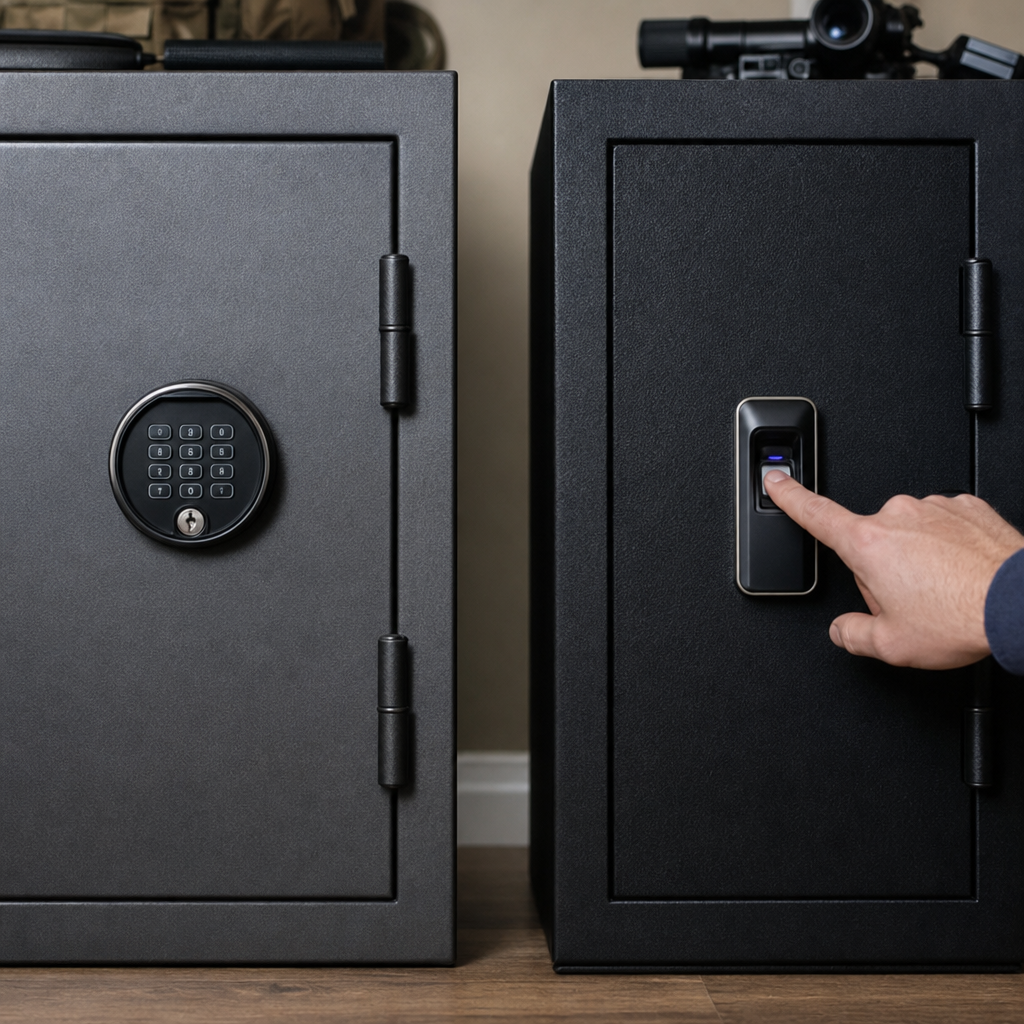
Biometric gun safes promise fast access with a fingerprint, while traditional keyed and mechanical combination locks promise simplicity, familiarity, and fewer electronic parts. The question is not whether one category is universally better, but whether biometric gun safes are less reliable than traditional locks in the situations that matter most: emergency access, long-term storage, false rejections, battery loss, tampering, and day-to-day use inside real homes. In my experience evaluating residential handgun safes and larger long-gun cabinets, the answer is nuanced. A quality biometric safe can be highly dependable when it uses a strong sensor, stores multiple fingerprint templates, includes a backup entry method, and is maintained correctly. A cheap biometric unit with weak enrollment software and inconsistent latching can be frustrating. Traditional locks have their own strengths and failure points. Keys can be lost, bent, copied, or left accessible. Mechanical dials are durable but slower under stress. Electronic keypads are often more consistent than low-end biometric readers, yet they still rely on batteries and internal electronics. For gun owners researching gun safe myths and misconceptions, reliability should be judged by failure modes, not marketing claims.
That matters because safe access is a safety issue, not just a convenience feature. A bedside handgun safe used for home defense has different requirements than a fire-rated long-gun safe in a basement. Quick-access products are judged by response time, one-handed operation, low-light performance, and repeatable opening under adrenaline. Storage-focused safes are judged more by lock durability, pry resistance, boltwork quality, and protection against unauthorized users, especially children. Many buyers hear simplified claims such as “biometric safes fail when your finger is sweaty” or “mechanical locks never fail.” Both statements are incomplete. Fingerprint readers can struggle with poor enrollment, skin damage, or dirty sensors, but modern capacitive readers and better algorithms have improved substantially. Mechanical locks avoid batteries, yet they can drift out of tolerance, wear internally, or be misdialed under stress. The practical question is which design gives you the most reliable access for your use case, with the fewest predictable points of failure.
What reliability really means for a gun safe
Reliability in a gun safe means consistent authorized access and consistent unauthorized denial over time. That definition has two sides. First, the safe must open quickly for the right person under normal and stressful conditions. Second, it must stay locked against children, guests, burglars, and accidental manipulation. In testing and product reviews, I look at five measurable factors: successful first-attempt opening rate, average access time, backup entry performance, battery or power resilience, and resistance to common abuse such as vibration, lid pressure, and repeated cycling. A biometric safe that opens on the first attempt 95 percent of the time but has no usable backup key is less dependable overall than a biometric safe with a 90 percent first-attempt rate and a robust keypad fallback. Reliability is a system property, not a single feature.
For context, biometric locks use stored fingerprint templates matched by software, usually through a capacitive or semiconductor sensor. Traditional locks in the consumer gun-safe market usually mean three categories: mechanical combination dials, tubular or flat keys, and electronic keypad locks. Buyers often compare biometrics only to mechanical dials, but in reality the most common quick-access alternative is an electronic keypad. That comparison matters because electronic keypads and biometric readers share some vulnerabilities, including battery dependence and circuit-board quality, while differing in input method. A complete evaluation should separate “electronic versus purely mechanical” from “biometric versus non-biometric.”
Why biometric safes gained popularity
Biometric gun safes became popular because they address a real user problem: speed with reduced cognitive load. Under stress, fine motor skills degrade and memory recall can suffer. Pressing a stored finger to a sensor is often faster than finding a key in the dark or dialing a combination accurately. That is why bedside pistol safes from brands such as Vaultek, Fort Knox, Hornady, Barska, and GunVault have heavily emphasized biometric access in the past decade. The appeal is obvious for parents who want secure storage but do not want to fumble through a code at 2 a.m.
Another reason is user management. Better biometric systems let owners enroll multiple fingers from one hand, both thumbs, and sometimes trusted secondary users. That redundancy improves access reliability because fingerprint recognition is probabilistic, not absolute. When I set up a biometric safe properly, I never enroll just one finger once. I enroll at least four to six templates across different angles and pressure patterns. That single setup decision often determines whether the safe feels “flawless” or “unreliable.” Many horror stories trace back to weak initial enrollment or bargain models with poor sensors, not to the concept of biometrics itself.
Where biometric safes fail in the real world
The most common biometric failure is false rejection, where the authorized user presents a valid fingerprint and the safe does not open on the first try. This happens for several practical reasons: dry skin, wet skin, cuts, dirt, worn ridge detail, poor finger placement, sensor contamination, and low-quality matching software. Construction workers, mechanics, nurses, and older adults often have more challenging fingerprints than office workers. A safe that performs well in a showroom may perform worse after six months on a dusty nightstand unless the sensor is cleaned regularly.
Another weak point is cheap hardware. Low-end biometric safes often cut cost in three places: the sensor module, the latch solenoid, and the housing rigidity around the door. The result is inconsistent recognition, delayed unlocking, or a condition where the lock disengages but the door still needs a second tug because of pressure on the lid. Owners interpret that as the fingerprint reader failing, when the real problem is the mechanical fit of the safe. This is one reason serious evaluations should include repeated opening tests with the safe loaded, mounted, and placed under light top pressure, not just empty bench tests.
Power is a third issue. Most biometric safes use AA, AAA, or rechargeable lithium batteries. If owners ignore low-battery warnings, access can become inconsistent. Good designs retain stored templates during battery replacement and provide an external power option or backup key. Poor designs make the user discover a dead battery at the worst moment. This does not mean biometric safes are inherently unreliable. It means power management is part of ownership, just as lubrication and code memorization are part of mechanical ownership.
How traditional locks fail too
Traditional locks are often discussed as if they are failure-proof, but every type has known drawbacks. Keyed locks are simple and inexpensive, yet keys create an immediate security tradeoff. They can be lost, stolen, copied, or left in a drawer that children know about. In emergency use, locating and inserting a key in darkness is slower than most users expect. Keys also fail physically. I have seen bent wafer keys, worn cuts, and sticky cylinders cause more frustration than many midrange keypad safes.
Mechanical combination locks have an excellent reputation for longevity, and deservedly so, especially quality Group 2 or Group 2M style locks built by established lock manufacturers. They avoid batteries and can last for years with minimal service. However, they are not ideal for rapid defensive access. They require fine motor control, practice, and proper dialing sequence. Under stress, users overshoot numbers, lose count on turns, or fail to return to zero correctly. Mechanical locks can also drift out of adjustment or require professional servicing over a long lifespan. Their reliability for long-term storage is high; their reliability for fast access is lower for most households.
Electronic keypad locks split the difference. They are usually faster than dials and often more consistent than entry-level biometrics. But they rely on batteries, membrane buttons or switches, and lock bodies that vary widely in quality. Forgotten codes, worn buttons, and depleted batteries are common real-world failures. In other words, traditional does not automatically mean more reliable. It means different failure modes.
Comparing lock types by use case
The best way to answer whether biometric gun safes are less reliable than traditional locks is to compare them by task, not ideology. A bedside handgun safe for immediate access is a different product than a heavy burglary-rated gun safe intended mainly to delay theft. For a quick-access role, speed and repeatability matter most. For a storage role, long-term durability, lock serviceability, and resistance to forced entry matter more. The table below summarizes the practical tradeoffs.
| Lock type | Best use case | Main reliability strength | Main reliability weakness |
|---|---|---|---|
| Biometric fingerprint | Quick-access handgun safe | Fast entry with low cognitive load | False rejections, sensor quality, battery dependence |
| Electronic keypad | Quick-access or mid-size safe | Consistent input, easy multi-user access | Dead batteries, forgotten codes, switch wear |
| Keyed lock | Basic locking storage | Simple mechanism, low cost | Lost or copied keys, slower emergency use |
| Mechanical combination | Long-term storage and large safes | No batteries, long service life | Slow access, user dialing error under stress |
For most homeowners, that leads to a practical conclusion. If the safe’s primary purpose is preventing unauthorized access while preserving fast defensive retrieval, a high-quality biometric safe with keypad or key backup can be very reliable. If the safe’s primary purpose is secure storage of multiple firearms, documents, and valuables over many years, a larger safe with a reputable mechanical or commercial-grade electronic lock is often the better fit. This is not because biometrics are bad. It is because every lock technology performs best when matched to the right job.
Common myths and misconceptions about gun safe reliability
One myth is that biometric safes open for anyone. That confuses consumer marketing with actual lock behavior. Fingerprint readers do have false acceptance rates and false rejection rates, but a competent reader configured correctly is not casually opening for random strangers. The bigger consumer issue is not unauthorized opening; it is authorized users needing a second attempt. Another myth is that a traditional lock is automatically more secure because it is older technology. Security depends heavily on build quality, lock certification, bolt design, hinge protection, and anchoring, not just on whether the lock uses a fingerprint.
A third misconception is that a safe is only as good as the lock. In practice, many residential gun safes are defeated through body attacks, pry attacks, poor mounting, or thin steel long before a burglar attempts sophisticated lock manipulation. I have seen owners spend heavily on a premium lock while bolting it to a lightweight enclosure that can be pried from furniture or carried away. That is a classic gun safe myth. The lock matters, but the enclosure, steel thickness, door fit, relocker design, and installation matter just as much.
A fourth myth is that backup keys make a biometric safe insecure by default. They can create risk if the override keyway is poorly hidden or the key is stored carelessly. But a backup method is also a major reliability advantage. The right question is whether the override design is robust and whether the owner manages the key responsibly.
How to choose a reliable gun safe without falling for marketing
Start by defining the job. Are you securing one defensive handgun near the bed, several pistols in a closet, or a long-gun collection in a garage? Then look for independent indicators of quality. On larger safes, ask about steel gauge, door construction, bolt count, hard plate, relockers, fire seal, and anchoring points. On quick-access safes, ask about first-attempt recognition, backup access methods, internal lighting, battery life, and whether the lid opens reliably under light pressure. Read owner feedback for repeated patterns, not isolated complaints.
Choose brands with established support and available replacement parts. A lock is only reliable if the manufacturer can help when it fails. Favor safes that let you enroll multiple prints, support both hands, and provide low-battery alerts well before failure. If possible, test the safe in conditions that resemble actual use: darkness, one-handed access, mild sweat, and seated or prone positions. Finally, install it correctly. Even the best lock cannot compensate for a safe that is not anchored, is placed where humidity destroys electronics, or is used without routine maintenance.
Bottom line: are biometric gun safes less reliable?
Biometric gun safes are not inherently less reliable than traditional locks, but they are less forgiving of poor design, poor setup, and poor maintenance. Cheap biometric safes deserve their mixed reputation because weak sensors, bad firmware, and flimsy latches create inconsistent performance. High-quality biometric safes, especially those with a keypad or key backup, can be extremely dependable for quick-access roles. Traditional locks remain excellent choices, particularly mechanical combinations for long-term storage and electronic keypads for predictable fast entry. The smart takeaway is to match the lock to the purpose, buy above the bargain tier, and judge reliability by tested performance rather than assumptions.
As the hub for gun safe myths and misconceptions, this topic points to a larger lesson: no lock type eliminates responsibility. The most reliable gun safe is the one that fits your use case, is built well, is installed securely, and is practiced with regularly. If you are comparing options now, shortlist the role first, then compare construction quality, backup access, and real-world user reports before you buy.
Frequently Asked Questions
Are biometric gun safes actually less reliable than keyed or combination locks?
Not automatically. A biometric gun safe is not inherently less reliable than a traditional lock, but it is more dependent on variables that do not affect a simple key or mechanical dial in the same way. A fingerprint reader has to correctly scan a finger, match it to stored data, and trigger an electronic release. That adds convenience and speed, but it also adds more points where real-world conditions can interfere. Dry skin, dirty sensors, poor finger placement, low batteries, and cheaper electronics can all reduce consistency. By contrast, a good keyed lock or mechanical combination lock relies on simpler physical components and tends to be more predictable over long periods with minimal maintenance.
That said, reliability depends heavily on quality, setup, and use case. A well-made biometric safe from a reputable manufacturer, properly programmed with multiple scans of the same finger and tested regularly, can be very dependable for bedside or quick-access use. A poorly made traditional lock can also fail, bind, jam, or become difficult to open under stress. So the better framing is this: biometric safes can be extremely useful, but they usually require more testing, more maintenance, and more user discipline to reach the same confidence level people often assume with a mechanical lock. In other words, they are not necessarily less reliable overall, but they are usually less forgiving of neglect and low build quality.
How do biometric safes compare to traditional locks in an emergency?
In an emergency, biometric safes can be faster when everything goes right. A quick fingerprint scan can open the safe in a second or two without requiring you to find a key, see a keypad clearly, or remember a combination under stress. That speed is the main reason many buyers choose them. In a dark bedroom, under adrenaline, with one hand free, a properly functioning biometric reader can offer a real advantage in access time.
However, emergency reliability is about more than speed on a perfect day. It is about repeatable performance when your hands are sweaty, your finger lands at an odd angle, your skin is dry, or you wake up disoriented. This is where some biometric models show their limitations. False rejections can happen, especially on lower-end readers or units that were not enrolled carefully. Traditional push-button mechanical safes and well-designed electronic keypad safes often perform more consistently under stress because they do not depend on the condition of your skin or the cleanliness of a sensor. Mechanical combination dials are secure, but they are usually too slow for true rapid-access defensive use.
The best answer for emergency use is to judge the specific lock type against the actual scenario. If the safe is intended for immediate defensive access, a biometric safe can work very well, but only if it has been thoroughly tested by the owner, backed up by a fast secondary method such as a keypad or key override, and maintained so battery or sensor problems do not catch you by surprise. If the safe is primarily for secure storage rather than immediate access, traditional locks often inspire more long-term confidence because their performance changes less over time.
Do false rejections make biometric gun safes a bad choice for home defense?
False rejections are one of the biggest concerns with biometric gun safes, but they do not automatically make them a bad choice. A false rejection simply means the safe fails to recognize an authorized fingerprint on a given attempt. In practice, this can happen because the finger is slightly rotated, the sensor is dirty, the enrolled print was captured poorly, or the user’s skin condition has changed. People who work with their hands, have worn fingerprints, or experience very dry skin often see more inconsistency than others.
What matters is how often false rejections occur and what backup options exist. On a quality biometric safe, careful enrollment can significantly improve performance. It is smart to enroll the same finger multiple times from slightly different angles, and also enroll more than one finger from each likely user. Regular testing is just as important. If a safe works well at setup but starts rejecting more often over time, that is valuable information, not an inconvenience to ignore. A home-defense safe should be tested often enough that you know exactly how it behaves in normal use, in low light, and under mild stress.
False rejections become a serious issue when buyers treat a biometric safe as a set-it-and-forget-it device. If the safe has no practical backup entry method, or if the owner never replaces batteries and never cleans the scanner, reliability drops quickly in the moments that matter. In contrast, if the safe includes a responsive keypad or other backup access method and the owner confirms function regularly, the risk becomes more manageable. So false rejections are a legitimate drawback, but not a universal deal-breaker. They simply mean biometric safes demand more validation than many traditional lock designs.
What happens if the battery dies or the electronics fail?
Battery loss is one of the clearest differences between biometric safes and traditional mechanical locks. A biometric safe depends on power for the sensor and locking mechanism, so a dead battery can prevent normal entry if you are not proactive. Some safes provide warning indicators well before the battery becomes critical, and many include backup power contacts, override keys, or secondary keypad entry. Those features matter a great deal, because they determine whether a dead battery is a minor inconvenience or a major failure.
Traditional keyed and mechanical combination locks avoid this particular problem because they do not rely on batteries at all. That simplicity is one reason many owners trust them for long-term storage. There is less concern about the safe sitting untouched for months and then refusing to open because a battery drained or circuitry failed. Mechanical systems can still wear out or jam, but they generally age in a more predictable way and are not vulnerable to power-related failure.
For owners considering biometric access, the practical lesson is simple: battery dependence is not disqualifying, but it requires routine attention. Replace batteries on a schedule rather than waiting for a warning. Test the backup entry method before you ever need it. Confirm that override keys are accessible but secure, and not stored in a way that defeats the purpose of the safe. If you are the kind of owner who values low-maintenance reliability above all else, a traditional lock may fit better. If fast access is a priority and you are willing to maintain the unit properly, a biometric safe can still be a sound choice.
Which type of gun safe is better for long-term reliability and everyday use in a real home?
For pure long-term reliability, traditional locks usually have the edge, especially mechanical designs. They have fewer failure points, no sensors to clean, no batteries to monitor, and no software or electronics to age. If a gun safe is mainly for secure storage in a closet, office, or garage, and rapid entry is not the top priority, traditional keyed or mechanical combination locks are often the safer bet from a reliability standpoint. They reward simplicity, and simplicity tends to age well.
For everyday use in a real home, though, the answer becomes more nuanced. Many people do not interact with their safe under ideal conditions. They may need one-handed access, nighttime access, or access while managing children, phones, lights, or stress. In those practical scenarios, biometric safes can be more convenient and therefore more likely to be used consistently. That matters, because the most secure safe in theory is not helping much if the owner avoids locking it due to hassle. Convenience can improve compliance, and compliance is part of real-world safety.
The tradeoff is that biometric safes ask more of the owner. They should be tested frequently, enrolled carefully, cleaned periodically, and treated as electronic devices rather than purely mechanical boxes. The strongest approach for many households is not to think in absolute terms, but to match the lock type to the role. For immediate-access defensive storage, a high-quality biometric safe with a proven backup method can make sense. For long-term storage where consistent opening speed matters less, traditional locks often provide more peace of mind. Reliability is not just about technology category; it is about how the safe is built, how it is maintained, and whether its strengths align with how it will actually be used in the home.