
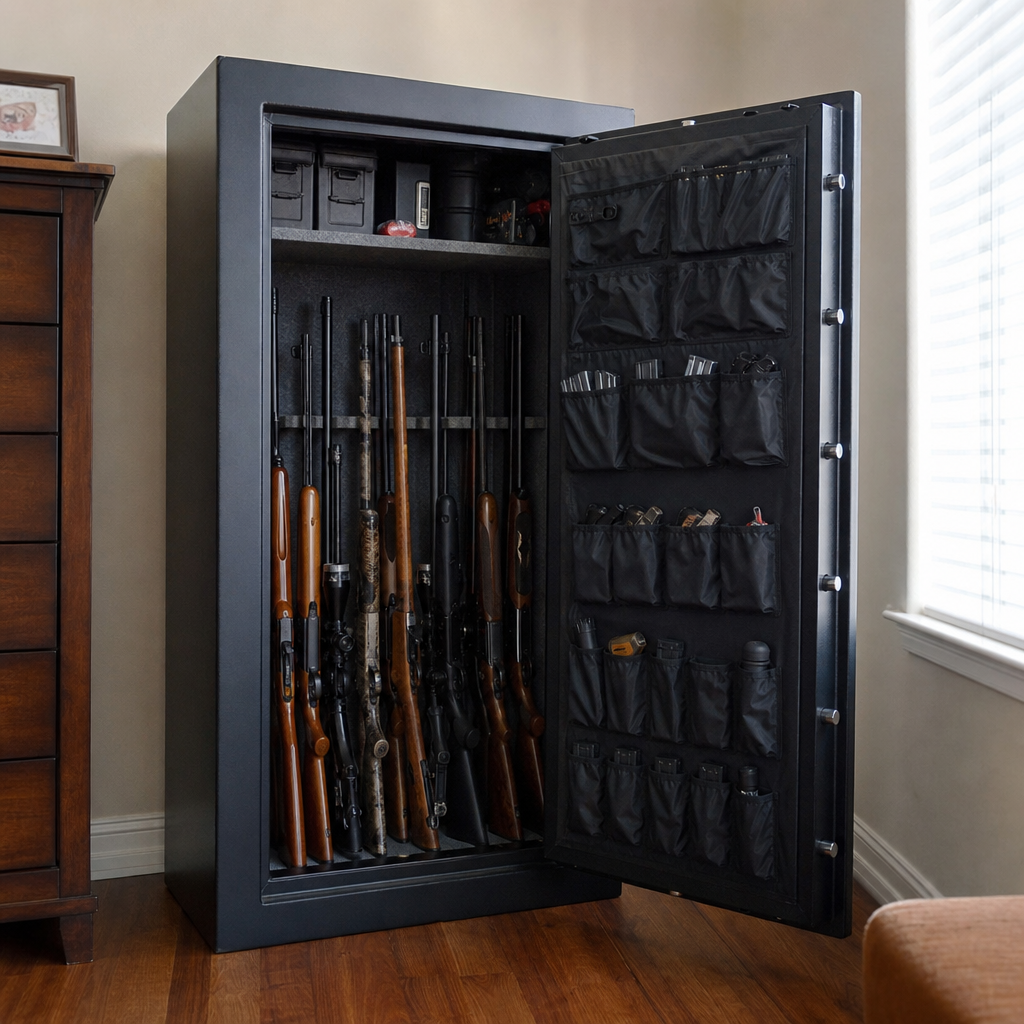
Gun safes do reduce firearm theft, but only when buyers understand what a safe can and cannot do. In my work evaluating residential security setups, I have seen two opposite mistakes cause the most losses: owners assume any steel box is “good enough,” or they dismiss gun safes entirely after hearing that “a thief can get into anything.” Both views miss the practical reality. A gun safe is not a magic barrier, and it is not useless. It is one layer in a broader theft-prevention system that combines physical security, concealment, installation quality, access control, and safe storage habits.
To answer the central question directly: yes, gun safes actually prevent firearm theft by increasing the time, noise, tools, and risk required to steal guns. That matters because most residential burglaries are fast, opportunistic crimes. According to long-established crime pattern research and FBI burglary reporting trends, many break-ins are completed in minutes, not hours. Thieves usually want cash, jewelry, electronics, and portable valuables they can grab quickly. A properly installed gun safe changes that equation. If a burglar cannot carry it out, pry it open quickly, or locate it easily, the odds of theft drop sharply.
Key terms matter here. “Gun safe” can refer to everything from a thin steel cabinet to a heavy Residential Security Container rated under UL 1037, to a true high-security safe with thicker plate steel, hardplates, relockers, and commercial burglary ratings. “Prevent” also needs precision. No container guarantees that a determined attacker with time, privacy, and power tools will fail forever. In residential security, prevention usually means deterrence and delay long enough that the criminal leaves, gets interrupted, or chooses easier targets.
This matters far beyond protecting property value. Stolen firearms can be used in later crimes, trafficked through illicit markets, or leave owners facing legal, financial, and emotional fallout. Safe storage is also part of responsible ownership. A household that stores firearms securely reduces unauthorized access by children, visitors, and thieves at the same time. That is why the most useful way to approach gun safe myths and misconceptions is not through marketing claims or internet bravado, but through realistic threat assessment: who is the likely thief, how do burglaries happen, and what safe features change outcomes in real homes?
Why Gun Safes Stop Many Real-World Thefts
The average residential burglar is not a professional safecracker. In case reviews I have worked through, thefts usually happen because guns were left unsecured in closets, under beds, in vehicle consoles, or in lightweight cabinets that were never anchored. A real safe improves security through delay. Delay is the core concept in physical protection. Every extra minute required to attack a target raises the chance of detection, increases stress on the intruder, and reduces the number of items stolen.
A quality gun safe also defeats the simplest theft method: carrying the guns away. Long guns in a closet can be taken in seconds. A 600- to 1,000-pound safe, bolted to concrete, cannot. Even a smaller safe anchored through its base and back into structural material can stop the common “dolly and go” burglary. This is one of the most misunderstood points in gun safe buying. For many homes, the safe does not need to be impregnable to be effective; it needs to be difficult to remove and too time-consuming to open during a rushed break-in.
Placement and concealment multiply the benefit. A safe in a garage by the main door is easier to spot and attack than one installed in a closet corner, utility room, or basement space with limited leverage for pry bars. Attack geometry matters. If a thief cannot access the side gaps, cannot lay the safe on its back, and cannot swing long tools freely, even modest construction becomes harder to defeat. This is why installers often recommend tight placement against walls with minimal exposed seams.
Locks matter too, but less than many buyers think. Whether a safe uses a mechanical dial, electronic keypad, or redundant lock system, the container’s body, door construction, boltwork, and anchoring usually determine theft resistance more than lock type alone. An excellent lock on thin steel does not produce a strong safe. A decent lock on a well-built, anchored container can provide meaningful protection.
Myth: Any Gun Safe Is Basically the Same
This misconception causes expensive mistakes. The market includes stack-on style cabinets, big-box-store “safes,” premium RSCs, and true burglary-rated safes. They look similar in photos, but they are not equivalent. Steel thickness is a major differentiator. Many low-cost units use 14- to 12-gauge steel bodies, which can be breached with aggressive prying or common cutting tools much faster than thicker steel or composite construction. Better units may use 10-gauge, 7-gauge, or plate-steel doors with reinforced frames and anti-pry features.
Door design is another dividing line. External hinge marketing often distracts buyers, but pry resistance depends more on door overlap, frame rigidity, locking bolt engagement, and return flanges than on visible bolts alone. In practical attacks, weak corners and flexing door frames fail before impressive-looking bolt arrays help. Fireboard-lined interiors can improve fire resistance, but they do not necessarily improve burglary protection and sometimes create a false impression of mass and strength.
Ratings help buyers compare products realistically. Many consumer gun safes are classified as Residential Security Containers under UL 1037, which is not the same as a commercial TL-rated burglary safe. RSC testing is meaningful for household use, but buyers should not confuse it with high-end commercial protection. If someone stores a modest collection in a suburban home with alarms and neighbors nearby, a good RSC can be entirely appropriate. If someone stores highly valuable transferable machine guns, rare collectibles, or a large inventory, a heavier safe room or commercial-rated unit may be justified.
| Storage option | Typical strength | Best use case | Main limitation |
|---|---|---|---|
| Light gun cabinet | Basic access control | Keeping children or casual visitors out | Often vulnerable to prying and removal |
| Entry-level gun safe | Moderate theft delay | Budget home security when anchored well | Thin steel may fail against determined attack |
| Quality RSC gun safe | Strong household theft resistance | Most gun owners seeking balanced protection | Not equivalent to commercial burglary ratings |
| Commercial-rated safe | High burglary resistance | Very valuable collections or elevated risk | Cost, weight, delivery, and space demands |
Myth: If a Thief Has Tools, the Safe Is Useless
This claim sounds tough-minded but ignores how burglaries actually unfold. Yes, tools defeat weak containers faster. Yes, angle grinders have changed the threat landscape. But “can eventually be opened” is not the same as “useless.” Security professionals judge barriers by delay, not fantasy invincibility. In a normal occupied neighborhood, noise, sparks, time, and repeated tool use are serious constraints. Most burglars do not arrive prepared for a prolonged cutting attack inside a stranger’s house.
The better question is: what tools, how much time, and under what conditions? Prying thin cabinets is often quick. Cutting heavier steel in cramped indoor spaces is not. Anchoring the safe prevents tipping it over for easier leverage. Tight placement restricts access. Alarm sirens, camera notifications, monitored response, and barking dogs all compound the attacker’s problems. Layered defense is why many theft attempts fail or end with partial loss rather than total loss.
I have also seen owners focus on dramatic online “safe breach” videos without noting the setup. Demonstration attacks often occur in workshops with ideal access, specialized tools, no time pressure, and no concern about noise. That environment does not resemble a hurried residential burglary. These videos can still teach useful lessons about weak welds or thin bodies, but they should not be interpreted as proof that all safes are pointless.
There is a tradeoff to acknowledge. If a criminal specifically knows firearms are present, believes the collection is valuable, and has enough privacy to return with tools, even a decent safe may be targeted aggressively. In those cases, the answer is not to abandon safes; it is to upgrade the entire system with better concealment, monitored intrusion detection, camera coverage, reinforced doors, and in some homes a security closet or safe room.
Myth: Bigger and Heavier Automatically Means More Secure
Weight helps, but weight alone can mislead. Some large gun safes feel impressive because they include fireboard, shelving, and decorative panels, not because they use substantially thicker burglary-resistant steel. A bulky safe with a thin body may still be vulnerable in the right conditions. Conversely, a smaller plate-steel safe with better construction and anchoring can outperform a much larger showroom model in theft resistance.
Interior capacity claims are another common source of disappointment. A “36-gun safe” rarely stores 36 scoped rifles in a practical, accessible way. Overcrowding leads owners to leave some firearms outside the safe, which defeats the purpose. Real capacity is often closer to half the advertised number for modern sporting rifles, optics-equipped hunting rifles, pistol racks, and accessory storage. In practice, buyers should choose more capacity than they think they need, but they should judge security by steel, lockwork, boltwork, and installation rather than by exterior dimensions.
Fire ratings also deserve careful reading. Some manufacturers publish internal test protocols rather than independent certifications. Fire protection matters, especially for documents and optics, but it should not be confused with burglary strength. Drywall-based insulation can increase weight dramatically without adding much resistance to pry attacks. Smart buyers ask who performed the fire test, what temperature curve was used, how long the test lasted, and whether the rating reflects a recognized standard.
What Actually Makes a Gun Safe Effective Against Theft
Theft resistance comes from a combination of construction, installation, and operational discipline. Start with steel thickness and door structure. Thicker bodies reduce flex and slow cutting. Reinforced door edges and recessed doors reduce pry points. Hardplates protect lock areas from drilling, and relockers can trigger if the lock is attacked. Continuous weld quality matters because failed seams create attack openings. These are less glamorous than glossy paint and tactical interiors, but they are what affect outcomes.
Anchoring is nonnegotiable. Many gun safes fail not because they are opened on site, but because they are removed and attacked elsewhere. Bolting into a concrete slab is ideal. Wood floor installations can work when they tie into joists and use proper hardware, but they are generally less robust than concrete. In upper floors, structural load calculations matter. A heavy safe concentrated over a small footprint can exceed what owners assume a floor can handle, so installers may recommend reinforcement or a different location.
Lock choice should match the household. Mechanical dials are durable and battery-free, but slower. Electronic locks are faster and often encourage consistent locking because they are convenient. That matters more than forum arguments suggest. A safe left unlocked for convenience provides no theft resistance at all. Some owners benefit from redundant locks or audit-capable commercial solutions, especially in shared access environments. Whatever the lock, change factory codes immediately and protect override keys if the design includes them.
Finally, discretion matters. Do not advertise the safe delivery on social media. Do not discuss the collection casually with contractors, neighbors, or casual acquaintances. The best safe in the world is easier to attack when criminals know it exists, know where it is, and know the house is vacant every weekday afternoon.
Common Mistakes That Undermine Gun Safe Security
The most common failure is buying for cosmetics instead of resistance. Decorative doors, door organizers, and patriotic graphics do not stop pry bars. The second is underestimating installation. A quality safe simply set on garage concrete near a vehicle door invites removal. The third is poor access hygiene: default codes, shared combinations, keys hidden nearby, or habitual unlocked periods during the day.
Another mistake is treating the safe as the whole security plan. Homes need perimeter protection too. Monitored alarm systems, door and window sensors, exterior lighting, cameras with motion alerts, and solid entry doors reduce burglary opportunity before the safe is ever tested. Insurance is also part of the picture. Owners should verify firearm coverage limits, document serial numbers, photograph collections, and understand whether accessories and optics are included.
Humidity control is often overlooked. A safe that prevents theft but rusts firearms is not doing the full job. Desiccants, goldenrod-style heaters, and basic hygrometers help maintain suitable conditions, especially in garages, basements, and humid regions. Good storage practice means theft protection, fire planning, corrosion control, and responsible access management working together.
So, Do Gun Safes Actually Prevent Firearm Theft?
Yes, when chosen realistically and installed correctly, gun safes prevent many firearm thefts by denying speed, portability, and easy access. They are most effective against the most common threat: the fast residential burglar who wants low-risk, easy-to-sell property. They are less effective when owners buy undersized, unanchored, lightly built units and expect cinematic protection. The myth is not that gun safes work; the myth is that all safes work equally well or that any single box can replace a complete home security strategy.
The practical takeaway is straightforward. Match the safe to the value of the collection and the risk profile of the home. Prioritize construction over marketing, anchoring over appearance, and discretion over bravado. If you are building out a responsible storage plan, review the related topics in this Gun Safes & Safety hub, including safe ratings, fire protection claims, installation best practices, humidity control, and quick-access myths. Better decisions start with accurate assumptions, and accurate assumptions are what actually keep guns out of the wrong hands.
Frequently Asked Questions
Do gun safes actually prevent firearm theft, or do they just slow thieves down?
Gun safes absolutely can prevent firearm theft, but the key is understanding what “prevent” means in the real world. A safe does not create perfect security. What it does is add time, noise, difficulty, and risk for the thief. That matters more than many people realize. Most residential break-ins are fast, opportunistic events. Burglars usually want easy valuables they can grab and leave with in minutes. A properly selected and installed gun safe changes that equation by making firearms much harder to access quickly.
In practice, many thefts happen because guns are stored in lightweight cabinets, closets, drawers, or unsecured containers that can be opened, carried away, or pried into with basic tools. A true safe, especially one that is bolted down and sized appropriately, is a major upgrade over those options. It may force a thief to abandon the attempt entirely, particularly if they are under time pressure or worried about being seen or heard. That said, the safe must be viewed as one layer of security, not the only layer. Alarm systems, reinforced doors, surveillance, careful placement inside the home, and limiting who knows about the collection all contribute to theft prevention.
The most accurate answer is this: a gun safe reduces the likelihood of theft, often substantially, but its effectiveness depends on build quality, installation, and the overall security plan around it. It is neither a magical barrier nor a pointless purchase. It is a practical tool that works best when owners understand both its strengths and its limits.
What features make a gun safe more effective against theft?
Theft resistance comes down to more than just thick-looking steel or a big locking handle. The most effective gun safes combine solid body construction, a strong door, quality locking components, and secure installation. One of the first things to look at is steel thickness. Thin steel can be bent, peeled, or cut more easily, while thicker steel generally provides better resistance to pry attacks and brute force. Door construction matters just as much. Many attacks focus on the door edge, the locking area, or the frame, so strong bolts, reinforced hard plates, and anti-pry designs are important.
The lock itself also matters, though not in the way many buyers assume. Electronic and mechanical locks can both be effective if they are well made and properly maintained. The larger issue is whether the lock is part of a well-engineered locking system that resists punch, drill, and tampering attacks. Beyond the lock, internal hinges versus external hinges are often overemphasized by marketing. What matters more is how well the door is secured when closed and whether the structure around the lock can withstand force.
Just as important as construction is weight and anchoring. A safe that is not bolted down may be tipped, moved, or removed entirely, especially if it is smaller or lighter. Once thieves get a safe into a garage, truck, or workshop, they can attack it with more time and better tools. Anchoring the safe to concrete or another solid structural surface makes that much harder. Placement also improves performance. A safe installed in a tight location, such as a closet corner where pry access is limited, is usually more secure than one standing exposed in an open room.
In short, the most theft-resistant setup is not just “a heavy box.” It is a safe with meaningful steel, a reinforced door and lock area, solid boltwork, professional or carefully executed anchoring, and smart placement within a layered home security strategy.
Can thieves break into a gun safe if they really want to?
Yes, given enough time, tools, privacy, and determination, many safes can be breached. That is true of almost any physical security product used in a home. But that fact is often misunderstood and overstated. Saying “a thief can get into anything” is technically true, yet practically incomplete. Residential security is rarely about creating an impenetrable object. It is about making the attack difficult enough that the criminal gives up, runs out of time, makes too much noise, or chooses an easier target.
Burglars usually do not arrive prepared for a long technical safe attack. Most are trying to move quickly. If they encounter a well-anchored safe in a difficult location, they may not have the tools or the uninterrupted time needed to defeat it. The risk of detection rises quickly when an intruder has to pry, cut, drill, or strike a safe. Even if the safe is not invulnerable, it can still do its job by pushing the attack beyond what the burglar is willing or able to do during the break-in.
This is why dismissing all gun safes because some can be opened under ideal attack conditions is a mistake. The real question is not whether defeat is theoretically possible. The real question is whether the safe materially improves your odds compared with less secure storage. In most cases, the answer is yes. A decent safe that is well installed is far better than unsecured storage, and a better safe improves those odds further. The goal is not perfection. The goal is meaningful delay and deterrence within a realistic home security plan.
Is a cheap gun safe better than no safe at all?
Usually, yes, but with important qualifications. A lower-cost safe or residential security container can still be better than leaving firearms unsecured in a closet, under a bed, or in a basic cabinet. Even a modest safe can keep out children, casual visitors, and opportunistic thieves who are looking for the fastest possible access. For many households, that alone is a meaningful improvement. However, problems begin when buyers expect a budget product to perform like a high-security safe. That mismatch between expectations and reality is where disappointment and losses often happen.
Some lower-priced products use thinner steel, lighter bodies, simpler door construction, and less robust lock protection. That does not automatically make them useless, but it does mean they may offer limited resistance to determined forced entry. If a burglar can pry it open quickly or remove it from the house because it is not anchored, the value of the purchase drops sharply. That is why even a less expensive safe should be installed carefully and used intelligently. Bolt it down if the design allows. Place it where access is restricted. Do not advertise it. Pair it with alarms, cameras, and good household security habits.
The best way to think about a cheap gun safe is as an entry-level security layer, not a complete solution. It can reduce risk, especially compared with no secure storage, but it has to be chosen with realistic expectations. If you own high-value firearms or have elevated theft concerns, investing in stronger construction and better installation is usually worthwhile. A budget safe can be a good starting point. It just should not be mistaken for top-tier protection.
What is the best way to use a gun safe as part of a broader theft-prevention system?
The most effective approach is to treat the gun safe as one component of a layered residential security plan. The safe protects the firearms directly, but the surrounding layers help prevent the thief from ever reaching it, or reduce the time available for an attack if they do. Start with the home itself: solid exterior doors, quality deadbolts, reinforced strike plates, working locks on accessible windows, and good exterior lighting all increase the effort required to enter. An alarm system adds another layer by creating urgency and raising the chance of interruption. Cameras, especially visible ones, can also increase deterrence.
Inside the home, placement of the safe matters. Avoid obvious, highly exposed locations if possible. A concealed or less accessible area can reduce discovery and make attacks harder. Tight corners and closet installations can limit leverage for prying tools. Anchoring is essential, because many thefts succeed when thieves simply remove the container and open it later. If the safe cannot be carried away and is difficult to attack in place, its theft-prevention value rises significantly.
Operational habits are just as important. Keep the safe locked consistently. Limit who knows where it is and what is inside. Be careful about posting firearms, new purchases, or safe deliveries on social media. If contractors, movers, or visitors are in the home, think about what they can see and infer. Maintain the lock, replace batteries in electronic locks when needed, and make sure all responsible users know how to operate it correctly.
Ultimately, the strongest setup combines physical barriers, smart installation, discretion, and detection. A gun safe works best when it is not expected to do everything alone. In a layered system, it becomes much more effective because the thief must defeat multiple obstacles, not just one.