
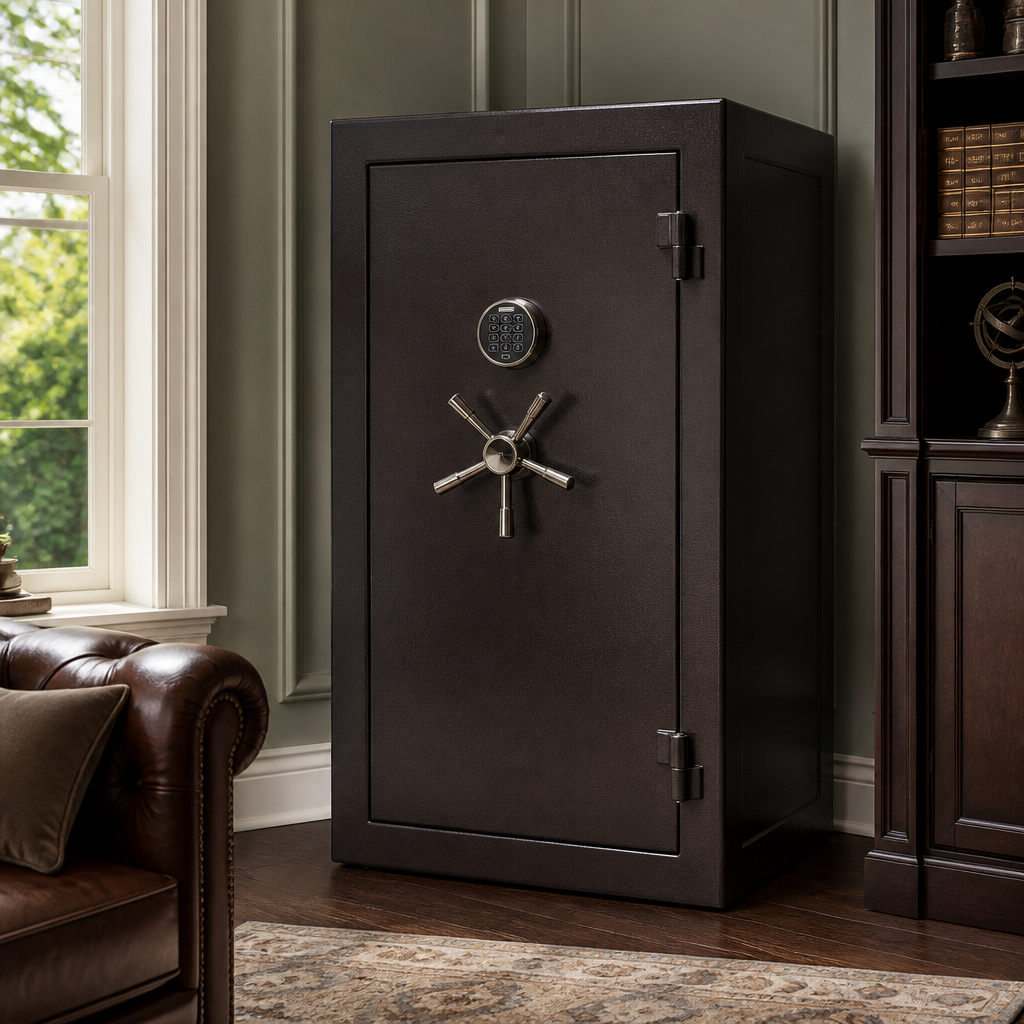
The Heritage Centennial CX3966 sits in a category many buyers struggle to find: a gun safe that delivers credible burglary protection, organized firearm storage, and furniture-grade styling without looking like a plain steel box dropped into a finished room. In the gun safes and safety market, that combination matters because owners are no longer choosing storage on security alone. They want a product review that explains steel thickness, lock options, fire ratings, door construction, interior flexibility, and day-to-day usability, while also answering a practical question: will this safe fit the way I live? As a hub page for product reviews, this article uses the Heritage Centennial CX3966 as a model for how to evaluate gun safes seriously. It covers what the CX3966 is, where it stands out, where buyers should be cautious, and which review criteria matter most across the broader gun safes and safety category.
Heritage positions the Centennial line as premium residential storage, and the CX3966 reflects that intent. The name generally points to a safe in the roughly 39-gun class with a 66-inch overall height, though real usable capacity always depends on optics, barrel length, shelving layout, and whether long guns are modern sporting rifles or traditional hunting firearms. Capacity labels are marketing shorthand, not literal inventory counts. That is one of the first lessons I emphasize when reviewing any safe, because disappointed buyers often assumed the printed number represented realistic storage with scopes, slings, and accessories installed. A good review begins by translating brochure language into what ownership actually feels like. On that standard, the Heritage Centennial CX3966 deserves attention because it aims to solve both secure storage and visual integration, two priorities that often conflict in competing models.
Style is not cosmetic fluff in this segment; it affects placement, discretion, and long-term satisfaction. Safes that resemble cabinetry are more likely to be installed in offices, dens, and master closets rather than hidden badly in humid garages. Better placement can improve climate control, access, and anchoring options. At the same time, attractive exterior finishes do not excuse weak construction. The central question for any Heritage Centennial CX3966 product review is whether appearance complements real protection instead of distracting from it. Buyers comparing this model with Liberty, Browning, Fort Knox, Rhino, or American Security should focus on measurable details: body steel, composite door design, relocker features, bolt coverage, hinge arrangement, lock certification, fireboard strategy, seal design, and internal configurability. Those specifics determine whether a safe merely looks premium or performs like one when it matters.
What the Heritage Centennial CX3966 Is Designed to Do
The Heritage Centennial CX3966 is best understood as a premium long-gun safe intended for homeowners who want a balance of theft deterrence, fire resistance, and refined aesthetics. In practical terms, it is built for collectors, hunters, and families storing firearms alongside documents, jewelry, heirlooms, and accessories. That mixed-use role is important. Many safe owners do not buy separate units for guns and valuables, so shelf layout, door panel storage, and interior access matter just as much as raw long-gun count. In stores and in-home installations, I have seen this buyer profile repeatedly: someone wants one secure centerpiece that protects firearms responsibly while still functioning like an organized valuables safe. The CX3966 aligns with that use case better than stripped-down utilitarian models.
Its appeal starts with presentation. Heritage safes are known for polished finishes, decorative hardware, and interiors that resemble custom cabinetry more than industrial storage. That design direction has real value if the safe will live in a visible room. A safe owners are proud to place indoors often ends up in a climate-stable environment, which is better for firearms, optics, wood stocks, and important papers. The tradeoff is that buyers must stay disciplined and verify that visual upgrades are paired with substantial structural features. Any serious review of the CX3966 should therefore treat style as part of the ownership equation, but never as a substitute for tested security design.
The safe also serves an essential safety purpose within the larger gun safes and safety conversation: restricting unauthorized access. For households with children, guests, contractors, or visiting relatives, secure storage is not optional. A quality gun safe reduces the risk of theft, negligent access, and opportunistic misuse. That is why reviewers should move beyond showroom impressions and ask direct questions. Is the lock from a recognized manufacturer such as Sargent and Greenleaf or SecuRam? Does the boltwork engage multiple sides of the door? Are there internal hinges or external hinges with dead bars? Can the unit be anchored to concrete? Does the fire seal expand under heat? These are not niche technicalities. They are the factors that determine whether a safe supports responsible firearm ownership in the real world.
Security Evaluation: What Matters More Than the Brochure
When assessing the Heritage Centennial CX3966, the first security issue is always steel. Marketing language often highlights “thick doors” without clarifying the body gauge or whether the door uses a composite build that adds pry resistance through multiple layers. Buyers should request exact body steel specifications and door construction details from the dealer or manufacturer. A safe with elegant paint and a high gun-capacity label can still underperform if the body is relatively thin and the door skin does most of the visual work. In burglary resistance, body steel matters because the sides and top are commonly attacked once thieves have time and privacy.
The second issue is lock integrity. A gun safe in this class typically offers either a mechanical dial lock or an electronic lock. Mechanical locks have a long service record and are valued for durability, while electronic locks provide faster access and easier code changes. Neither is automatically superior in every household. In my experience, the better choice depends on usage frequency, user discipline, and whether multiple adults need access. What matters most is certification and track record. Trusted lock platforms from established makers consistently outperform bargain electronics seen on lower-end imports. If the CX3966 you are considering includes a reputable lock package, that adds meaningful confidence.
Door design and boltwork deserve equal scrutiny. A quality safe should resist pry attacks not only through large locking bolts but through solid bolt carriage, reinforced door edges, and relockers that activate if the lock is punched or tampered with. External hinges are not a flaw by themselves; many strong safes use them to allow a wider door opening. The important question is whether fixed dead bolts or interlocking door structures secure the hinge side. Buyers sometimes focus too heavily on the visible number of chrome bolts. That figure can be misleading. Bolt count is less important than bolt engagement, door clearance, and overall engineering.
| Review Criterion | What to Verify on the CX3966 | Why It Matters |
|---|---|---|
| Body steel | Exact gauge or plate thickness | Determines resistance to side and top attacks |
| Door construction | Composite layers, edge reinforcement, relockers | Improves pry resistance and lock protection |
| Lock type | Mechanical or electronic, brand, certification | Affects reliability, speed, and tamper resistance |
| Boltwork | Active bolts, dead bars, hinge-side protection | Prevents prying and door flex under attack |
| Anchoring | Factory anchor holes and approved installation | Stops tip-over and removal by thieves |
| Fire protection | Time and temperature rating, seal design | Protects contents in typical residential fires |
Anchoring is the most overlooked part of safe security, and it is often where good safes fail in bad installations. Even a heavy safe can be tipped, moved with appliance dollies, or attacked more easily once laid on its back. The Heritage Centennial CX3966 should be bolted down according to manufacturer guidance, ideally to concrete with appropriate anchors. If installed over wood framing, reinforcement may be needed depending on weight and floor structure. For product reviews across this hub, anchoring always deserves its own section because consumers routinely compare safes as objects rather than complete installed systems. A well-anchored mid-tier safe can outperform a loosely placed premium model during an actual break-in.
Fire Protection, Interior Design, and Daily Use
Fire ratings are among the most confusing aspects of any gun safe review, including the Heritage Centennial CX3966. Manufacturers may publish a time rating paired with a temperature threshold, but test methods vary widely. Some brands use independent verification, while others rely on internal protocols. That does not make published ratings useless, but it does mean buyers should treat them as comparative indicators rather than universal guarantees. In residential fires, survivability depends on burn time, room location, fuel load, water exposure, and post-fire conditions. For documents, the stakes are higher because paper chars at much lower temperatures than steel fails. A safe can protect firearms from heat deformation while still exposing paperwork to damaging temperatures.
That is why interior planning matters. If you intend to store passports, cash, titles, or digital media inside the CX3966, use supplemental protection such as a UL-classified document chest or media box placed inside the safe. I recommend this approach routinely because layered protection solves a common misunderstanding: a gun safe is not automatically equivalent to a data safe or record vault. The Centennial line’s value lies in broad household protection, but smart owners still match storage method to content type. Fireboard layers, expanding door seals, and tighter construction help, yet they do not erase the differences between firearms, paper, and electronic media.
Interior layout is one area where the Heritage Centennial CX3966 can justify its premium identity. Buyers in this segment expect adjustable shelving, barrel supports, soft-touch materials, and efficient use of door space. A configurable interior can increase real capacity far more than a bigger external shell with poor organization. Scoped rifles, handguns in pouches, suppressor accessories where legal, optics boxes, and cleaning supplies all compete for room. An effective layout separates them without forcing awkward stacking that scratches finishes or blocks access. In homes with multiple users, clear organization also reduces unnecessary handling, which supports safer storage habits.
Daily usability often decides whether owners remain satisfied after the purchase glow fades. Door swing clearance, handle feel, interior lighting, shelf rigidity, and lock responsiveness all affect the ownership experience. A premium safe should open smoothly, provide visibility deep into the interior, and allow quick retrieval without turning every access event into a reorganization project. This is where the CX3966’s blend of style and function can be a real advantage. If the safe is pleasant to use, owners are less likely to leave firearms unsecured temporarily because putting them away feels inconvenient. Good design can support good safety behavior.
How the CX3966 Compares in the Product Review Landscape
As a hub for product reviews under gun safes and safety, this page should help readers compare categories, not just one model. The Heritage Centennial CX3966 is strongest for buyers who want a decorative, premium-home safe that still takes security seriously. It is not necessarily the ideal fit for every scenario. If your top priority is maximum steel thickness per dollar, a more utilitarian brand or a step into commercial plate safes may offer stronger burglary value with fewer aesthetic refinements. If your primary need is compact quick access for defensive firearms, a dedicated handgun safe or modular fast-access unit is more appropriate than a full-size long-gun safe.
Against mainstream gun safes from Liberty or Browning, the CX3966 stands out most on visual finish and room integration. Against heavier custom or semi-custom safes from brands like Fort Knox or American Security, the decision often comes down to budget, lead time, and which specifications you prioritize most. Rhino occupies an interesting middle ground, often pairing ornate styling with robust build features. That is why serious reviewers should resist one-size-fits-all rankings. The right safe depends on threat model, collection size, floor load limits, room placement, and whether the buyer values appearance enough to pay for it.
For readers exploring this product review subtopic more broadly, the key lesson is that a hub page should connect evaluation standards across every safe reviewed. Ask the same questions every time: What attack is the safe realistically built to resist? What lock platform does it use? How transparent is the manufacturer about steel and fire testing? How usable is the interior with real rifles and accessories, not showroom spacing? Does the warranty cover parts, labor, entry, or shipping, and is the dealer network responsive? The Heritage Centennial CX3966 performs best when judged through that disciplined framework rather than through appearance alone.
Who Should Buy It and Final Review Takeaways
The Heritage Centennial CX3966 is a compelling choice for homeowners who want one safe that secures firearms responsibly while complementing a refined interior. It is especially well suited to collectors storing a mix of long guns, handguns, documents, and valuables in a climate-controlled part of the home. Its biggest advantage is balance. Few safes manage to combine credible protective features, configurable storage, and upscale presentation as effectively. That balance can improve placement, organization, and daily use, all of which matter in long-term ownership. Still, informed buyers should confirm exact security specifications, lock brand, fire rating methodology, and anchoring requirements before purchase.
The broader takeaway for any gun safe product review is simple: style should enhance function, never replace it. The Heritage Centennial CX3966 earns attention because it recognizes that secure storage is part of home life, not an isolated hardware decision. Evaluate it the way experienced reviewers do: verify the steel, study the door and boltwork, understand the lock, plan for layered fire protection, and install it correctly. If those boxes are checked, the CX3966 can be more than an attractive safe. It can be a dependable center of a responsible firearm storage plan. Use this page as your starting point, then compare related reviews in the gun safes and safety category to find the safe that truly fits your space, collection, and risk profile.
Frequently Asked Questions
What makes the Heritage Centennial CX3966 different from a standard gun safe?
The Heritage Centennial CX3966 stands out because it is designed to solve a problem many buyers run into: most safes lean heavily toward raw utility, while this model aims to combine meaningful security, practical firearm organization, and a more refined appearance that works in a finished interior. Instead of looking like an oversized industrial cabinet, it is positioned as a safe that can live in a home office, den, or other visible room without dominating the space in a purely utilitarian way.
That difference matters because modern buyers are not evaluating safes on burglary resistance alone. They also want to know how a safe will fit into their home, how efficiently it stores rifles, handguns, documents, and valuables, and whether it feels like a premium long-term purchase rather than a compromise. The CX3966 is part of a category where visual design and furniture-grade presentation are expected to complement, not replace, core protective features.
In practical terms, that means shoppers should evaluate the CX3966 across several categories at once: steel body and door construction, locking system quality, fire protection claims, interior flexibility, and exterior finish quality. A safe in this class earns attention not because it looks attractive, but because it tries to deliver a more complete ownership experience. For buyers who want security without sacrificing room aesthetics, that is the central appeal.
How secure is the Heritage Centennial CX3966 for burglary protection?
Burglary protection should always begin with construction details, and that is where serious buyers need to focus. When evaluating the Heritage Centennial CX3966, the most important elements are steel thickness in the body and door, the rigidity of the door construction, the boltwork design, the strength of the locking mechanism, and how well the door fits the frame. A safe can have a beautiful finish and organized interior, but if the steel is light, the door is weak, or the lock area lacks reinforcement, the appearance does not matter much in a real forced-entry attempt.
For a model like the CX3966, credible security usually comes from a combination of a reinforced door, active locking bolts, and a lock system that resists common attack methods better than entry-level cabinets or thin-sheet-metal containers. Buyers should pay close attention to whether the door has composite or formed construction, whether the lock area is protected by hardplate or relocking features, and whether the hinges are paired with internal locking support so the door remains secure even if external hinges are attacked. Those details say far more about real-world protection than simple marketing language.
It is also important to keep expectations realistic. A residential gun safe is generally meant to delay and discourage smash-and-grab burglars, not function as a commercial high-security vault. The CX3966 is best viewed as part of a layered security strategy that includes proper anchoring, discreet placement, alarm coverage, and limited exposure of ownership details. When installed correctly and used in a home-security plan, a well-built safe in this category can provide strong resistance against opportunistic theft and enough delay to make a burglar abandon the attempt.
Does the Heritage Centennial CX3966 offer enough interior space and organization for firearms and valuables?
Interior layout is one of the most overlooked parts of safe shopping, and it plays a major role in long-term satisfaction. The Heritage Centennial CX3966 is appealing to buyers who want more than a row of long guns standing in a dark metal box. In this segment, users often expect organized firearm storage, shelving flexibility, room for optics-equipped rifles, and dedicated space for handguns, documents, jewelry, and other valuables. A safe that looks premium on the outside should also feel intelligently designed on the inside.
For most owners, the real question is not just how many firearms the safe can technically hold, but how usable that capacity is in everyday life. Manufacturer gun counts are often optimistic and assume slim, unscoped rifles packed closely together. In actual use, pistol grips, slings, bipods, scopes, and tactical accessories reduce capacity quickly. A well-designed interior helps offset that by offering adjustable shelving, door storage, segmented compartments, and a layout that allows users to separate defensive firearms from collectibles, paperwork, and small valuables.
If the CX3966 includes premium interior finishes or modular organization features, that adds meaningful value beyond aesthetics. Soft-lined shelves, barrel supports, door organizers, and configurable racks make access easier and help protect firearms from unnecessary contact damage. For buyers who want a safe that functions as both secure storage and a clean organization system, the interior design can be just as important as external construction. In that sense, the CX3966 is especially attractive to owners who care about presentation, accessibility, and efficient use of space rather than bare minimum storage.
How important are the lock options and fire rating on the Heritage Centennial CX3966?
Both are important, but they should be understood correctly. Lock options affect daily usability and access confidence, while the fire rating helps buyers estimate how the safe may perform in a residential fire scenario. On the locking side, many buyers choose between electronic and mechanical systems. An electronic lock offers quick access and straightforward code changes, which is useful for owners who want convenience. A mechanical dial lock appeals to those who prefer a simpler system with no batteries and a long reputation for durability. Neither is automatically better in every situation; the right choice depends on user preference, maintenance habits, and speed-of-access expectations.
With any lock, quality matters more than format alone. Buyers should look for a trusted lock brand, smooth operation, and supporting anti-tamper features such as relockers or drill-resistant protection around the lock body. A premium safe should not pair refined styling with an afterthought locking system. If the CX3966 offers multiple lock choices, that flexibility is a major advantage because it lets the buyer match the safe to the way it will actually be used.
Fire ratings also deserve careful interpretation. A listed fire rating generally reflects a combination of temperature and time under test conditions, but those tests can vary by manufacturer and may not perfectly duplicate a real house fire. Even so, a legitimate fire-protection design still matters because many owners store not only firearms, but also paper records, heirlooms, media, and other valuables that are vulnerable to heat and smoke. The best approach is to treat the fire rating as one meaningful data point, not the only one. Insulation type, door seals, fit and finish, and the reputation of the manufacturer all help determine whether the fire protection claim feels credible.
Is the Heritage Centennial CX3966 a good choice for someone who wants security without sacrificing home style?
Yes, that is exactly the kind of buyer this safe is meant to attract. The Heritage Centennial CX3966 appeals to homeowners who want a serious storage solution but do not want their room design interrupted by a plain, commercial-looking steel box. That can be especially important in homes where the safe will be installed in a study, library, bedroom, or entertaining space rather than hidden in a garage or unfinished basement. A safe with furniture-grade styling can feel like a more intentional part of the home rather than an object that needs to be disguised.
That said, style should only be considered a real advantage if the underlying protective features are also solid. The right question is not whether the CX3966 looks better than a conventional safe, but whether it maintains strong fundamentals while offering a more sophisticated exterior. If it combines respectable steel construction, good door strength, dependable lock options, practical fire protection, and a thoughtfully organized interior, then the design upgrade is more than cosmetic. It becomes a genuine differentiator in the market.
For many buyers, that blend of function and appearance is worth paying for because the safe will be part of their home for years. A model that protects firearms and valuables, supports organized storage, and complements interior decor can feel like a smarter overall investment than a purely utilitarian option. If your priorities include both security performance and how the safe fits into your living space, the Heritage Centennial CX3966 is positioned as a compelling solution.