
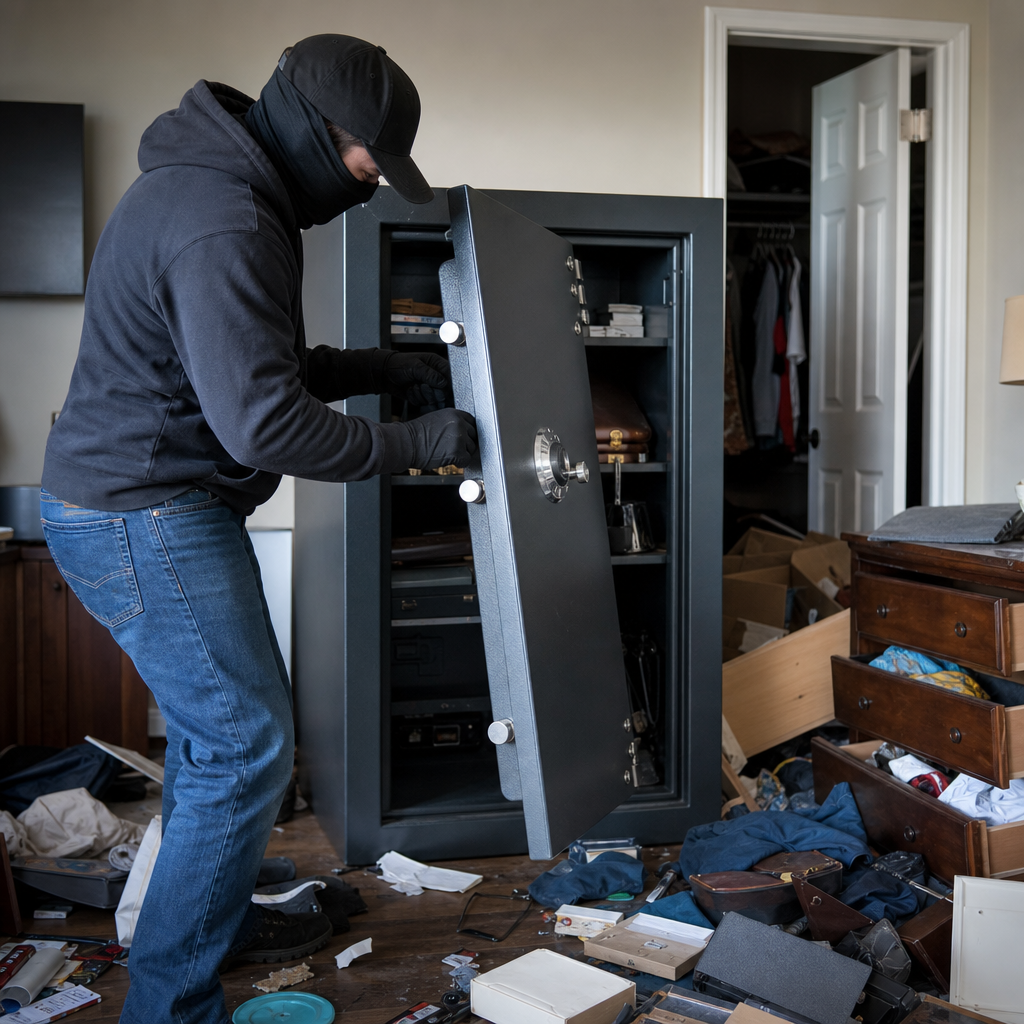
Gun safes are a target for thieves, but not in the simplistic way many buyers assume. After years of evaluating residential security setups, reviewing burglary reports, and inspecting safes after break-ins, I have seen the same pattern repeatedly: criminals do not usually arrive with a movie-style plan to crack a vault on site. They look for speed, low resistance, and opportunities created by poor installation, weak construction, or unrealistic expectations. Understanding the reality of safe theft matters because a gun safe protects more than property. It helps prevent unauthorized access, reduces the risk of stolen firearms entering criminal markets, supports responsible storage, and can affect legal and insurance outcomes after a loss.
To discuss this clearly, a few terms need definition. A gun safe is a secure storage container designed to restrict access to firearms and often to provide some level of fire protection. A residential security container, commonly labeled RSC under UL 1037, is the category most consumer gun safes fall into. It is not the same as a commercial burglary safe with higher burglary ratings such as TL-15 or TL-30. Forced entry resistance refers to how long and how effectively a container delays attack with common tools. Anchoring means mechanically fastening the safe to concrete or structural framing so it cannot be tipped, dragged, or removed intact. These distinctions are central because many myths about gun safe theft begin when consumers treat all safes as equivalent.
This page serves as the hub for gun safe myths and misconceptions because the biggest mistake is not buying the wrong brand. It is misunderstanding the threat model. People ask whether thieves target gun safes, whether a safe advertises the presence of firearms, whether heavier safes are automatically secure, whether fire ratings prove burglary resistance, and whether hiding a safe is better than bolting it down. The truthful answer to each question is nuanced. A gun safe can absolutely deter theft, but only when matched to likely risks and installed correctly. The sections below explain what burglars actually do, which myths cause preventable losses, and how to make a safe meaningfully harder to steal.
Why thieves notice gun safes and what they usually do next
Thieves target gun safes for one obvious reason: firearms have high resale value, easy liquidity in illegal channels, and compact form relative to value. In police case summaries and insurer loss reviews, stolen guns routinely appear in burglaries where criminals had limited time on site. That does not mean every visible safe guarantees an attack. It means that if a thief already enters a home and identifies a likely firearms container, the safe becomes a high-priority object.
In practice, most residential burglars are not expert safecrackers. They test doors, search master bedrooms, closets, home offices, and garages, and grab items they can carry. If they find a lightweight or unanchored gun safe, their first idea is often not to open it there. It is to remove the entire container and attack it later with privacy, power tools, and time. I have seen this exact outcome with entry-level cabinets and thin steel safes placed in garages near exterior doors. A hand truck, two people, and five minutes can defeat months of careful shopping if the unit is not anchored.
Visibility influences risk, but context matters. A prominent safe in a trophy room may signal firearms. A concealed safe in a closet still may be discovered during a full-room search. Delivery practices also matter. Branded packaging, installers discussing the safe outside, or social media posts about a new purchase can create intelligence for criminals before any burglary occurs. The practical lesson is simple: assume a determined thief may know the safe exists, then plan for delay and removal resistance accordingly.
Myth: any gun safe is too heavy to steal
This is the misconception that causes the most preventable losses. Many gun safes sold through big-box retailers weigh between 200 and 600 pounds. That sounds substantial until you remember that appliance dollies, pry bars, lifting straps, and pickup trucks exist. Weight alone is not a security rating. Once a safe is tipped, friction drops dramatically. On smooth garage floors or tile, even a large cabinet becomes manageable for two or three adults.
Anchoring changes the equation more than adding a modest amount of mass. A 400-pound safe anchored into concrete with proper expansion anchors or wedge anchors is vastly harder to remove than a 700-pound safe standing loose. When I inspect post-burglary scenes, unanchored safes often show drag marks, not sophisticated attack marks. Criminals exploit mobility first because it is fast and quiet compared with cutting open steel in a bedroom.
Placement also affects removability. A safe installed on an upper floor may strain framing and still remain vulnerable if not secured to structure. A safe in a garage is convenient but often exposed to easier access, concealment for tool use, and direct routes to vehicles. The better approach is to place the safe where removal is awkward, then anchor it to concrete or reinforced structure, and limit side and rear access so prying attacks are harder.
Myth: a fire rating means strong burglary protection
Consumers regularly confuse fire protection with theft resistance. These are different design goals. Many gun safes achieve fire performance by using gypsum-based board, intumescent seals, and layered construction that slows heat transfer. Those features help protect contents from elevated temperatures for a stated duration under a manufacturer test or third-party protocol. They do not necessarily indicate thick steel, reinforced boltwork, hard plates, relockers, or superior resistance to pry and cut attacks.
A safe can advertise 60 or 90 minutes of fire protection and still use relatively thin body steel. Conversely, a more burglary-resistant unit may have modest fire performance unless additional insulation is added. Neither attribute automatically predicts the other. Reputable buyers separate the questions. First, how long will the container resist common forced-entry methods? Second, what level of heat exposure is realistic for the building type and fire response conditions?
This distinction matters because marketing language often compresses both concepts into one general impression of strength. Look for published steel thickness, door construction details, lock type, bolt design, UL RSC status if present, and how the fire rating was established. If the seller cannot explain those specifics, do not assume the glossy fire badge tells you anything useful about theft resistance.
Myth: the lock is the main weak point
Lock discussions attract attention because they feel technical, but in residential safe theft the body and installation usually matter more. Electronic locks from recognized brands such as Sargent and Greenleaf, SecuRam, and La Gard can be reliable when installed correctly and maintained with fresh batteries. Mechanical dial locks remain durable and avoid battery dependence. Both types can fail, and both can be secure.
The common consumer mistake is to obsess over dial versus keypad while ignoring 12-gauge steel bodies, exposed hinge-side gaps, poor anchor installation, or easy pry access. Most burglars do not manipulate locks. They attack doors with pry bars, cut sidewalls with abrasive wheels when thin steel allows it, or remove the entire safe. A premium lock on a weak cabinet is like a hardened padlock on a hollow interior door.
That said, lock choice still has practical implications. Electronic locks offer fast access and user code management, which encourages consistent daily use. Mechanical locks reduce some electronic failure points and have a long service history. For households balancing defensive access and child prevention, a redundant lock or secondary rapid-access bedside unit may make more sense than relying on one large long-gun safe for every use case. Match the lock to the access pattern, but treat structural resistance and anchoring as the primary defense.
What burglars attack first: a practical comparison
The fastest way to understand safe theft is to compare common assumptions with actual attack behavior. In field inspections, I usually see criminals choose the path that creates the least noise, the shortest dwell time, and the highest chance of taking the safe or contents. The table below summarizes those patterns.
| Myth or assumption | What burglars often do | Better defensive response |
|---|---|---|
| The safe is too heavy to move | Tip, dolly, drag, and remove the whole unit | Anchor to concrete or structure and restrict moving clearance |
| A fire label means it is hard to break into | Exploit thin steel bodies with pry or cut tools | Verify steel thickness, construction, and burglary classification |
| The lock is the only real vulnerability | Ignore the lock and attack the door seam or side panel | Prioritize body strength, door fit, and installation quality |
| Hiding the safe is enough | Find it during bedroom or closet searches | Use concealment as a supplement, not a substitute for anchoring |
| Any safe protects all guns equally well | Target the easiest container first, especially cabinets | Separate high-value items and use layered storage where needed |
Myth: hiding a gun safe is better than bolting it down
Concealment helps, but it is not a complete strategy. Hidden safes are missed in some rushed burglaries, especially smash-and-grab events lasting only a few minutes. Yet many home intrusions involve focused searches of closets, offices, and garages. If a safe is discovered and unanchored, concealment stops helping immediately.
The strongest residential setups combine concealment, anchoring, and environmental obstacles. A safe placed in a closet with limited swing space for long pry bars, bolted through the floor into concrete, and monitored by an alarm contact or room sensor is significantly harder to exploit than a visible safe in open garage space. Even better is limiting who knows it exists. Deliver discreetly, break down packaging inside, and avoid online photos that show model numbers, room layouts, or collections.
One subtle point many owners miss is that concealment can complicate emergency access if done poorly. A false wall, tight cabinetry, or obstructed door swing can create handling problems, especially for long guns. Good concealment keeps the safe less obvious without undermining usability, ventilation, or anchor integrity.
Myth: a gun safe is a complete security plan
A gun safe is one layer, not the entire system. Criminals choose homes as targets based on occupancy patterns, visibility, neighborhood access, and obvious valuables. If exterior doors have weak strike plates, windows lack alarms, garage service doors are flimsy, and there is no monitored detection, the burglar may have plenty of time to work on the safe. Delay only matters if someone or something shortens the attack window.
Layered protection is what changes outcomes. Start outside with lighting, trimmed landscaping, cameras that capture approach routes, and solid door hardware using long screws into framing. Add intrusion alarms with professional monitoring, especially contacts on likely entry points and motion coverage for the room containing the safe. Inside the safe, use dehumidification, inventory records, and separate storage for documents, suppressors, ammunition, or heirloom firearms when appropriate. If one container is compromised, not every asset should be immediately exposed.
Insurance also belongs in this conversation. Standard homeowners policies may impose sublimits on firearms theft unless scheduled separately. Document serial numbers, model information, photographs, and appraisals for collectible guns. Security without documentation can still leave owners undercompensated after a theft.
How to make a gun safe a harder target in real homes
The most effective improvements are practical, not exotic. Choose the strongest safe your budget, floor loading, and access route can support, but verify specifications rather than trusting broad marketing claims. For many homes, stepping up from a thin steel cabinet to a better-built RSC with thicker steel and improved door design is a major gain. For collections with very high value or elevated theft risk, consult a locksmith or safe specialist about burglary-rated options beyond the typical gun-safe category.
Install the safe correctly. On concrete slabs, use manufacturer-approved anchors of the proper diameter and embedment depth. On wood floors, tie into structural members or install reinforcement that a contractor or installer can document. Position the safe so pry access on the sides is limited by walls or cabinetry while still allowing full door function. Avoid placing the safe where humidity, flood exposure, or obvious visibility work against you.
Finally, think like the thief. Reduce information leakage, keep delivery discreet, maintain alarm coverage, and rehearse who has access. If you store defensive firearms, balance security with responsible readiness through separate rapid-access storage where justified. The reality of safe theft is not that gun safes are pointless. It is that myths create blind spots. A well-chosen, well-anchored safe inside a layered home security plan remains one of the most effective ways to prevent unauthorized access and reduce theft risk. Review your setup, identify weak assumptions, and upgrade the points a burglar would exploit first.
Frequently Asked Questions
Are gun safes actually a target for thieves?
Yes, gun safes can absolutely be a target, but usually not for the reasons people imagine. Most burglars are not showing up with specialized tools, unlimited time, and a detailed plan to defeat a safe door on site. In real-world residential thefts, criminals typically want quick results with the least amount of risk. That means they are far more likely to attack a safe that is easy to find, poorly anchored, lightly built, or placed where they can work without interruption. In many cases, the safe itself is not the first target at all. Thieves may discover it while searching the home, recognize that firearms and valuables are likely inside, and then decide whether it is worth taking or attacking.
The important distinction is that a gun safe is often targeted as an opportunity, not as a high-security vault challenge. If a safe can be tipped over, dragged out, loaded into a vehicle, or pried open with common tools, it becomes extremely attractive. If it is heavy, properly installed, concealed, and located where access is awkward, many burglars will move on. So the reality is not that every thief is obsessed with cracking safes, but that any visible weakness in your setup can turn your safe into one of the most valuable and practical things for them to go after.
Do thieves usually try to open a gun safe in the house, or steal the entire safe?
In many residential burglaries, stealing the entire safe is the more realistic threat. That surprises a lot of buyers who focus almost entirely on lock type, fire rating, or brand reputation while overlooking basic anchoring and placement. Smaller and mid-sized safes, especially those that are not bolted down, can often be moved with a hand truck, pry bars, straps, or simple teamwork. Once a safe leaves the house, the thief gains a major advantage: time. Instead of rushing through a burglary, they can attack the safe later in a garage, storage unit, rural property, or workshop without fear of being interrupted.
That is why secure installation matters just as much as the safe itself. A decent safe that is properly anchored to concrete and positioned in a tight location is often much harder to defeat than a more expensive safe sitting loose on a garage slab or bedroom floor. Thieves look for the easiest path. If carrying the whole unit out is easier than opening it in place, that is what many will try first. The best way to think about safe theft is not just “Can they open it?” but “Can they move it, tip it, pry on it, or work on it with leverage?” Those are the real-world questions that matter during a burglary.
What makes a gun safe more vulnerable to theft?
Several factors make a gun safe far more vulnerable than most owners realize. The biggest one is poor installation. An unanchored safe, even a fairly heavy one, can often be tipped onto its back or side, which gives thieves better leverage for prying and can expose weaker areas of the body. Another major issue is light construction. Some products marketed as “gun safes” are closer to locking cabinets than true safes. Thin steel, weak door bends, basic locking arrangements, and wide pry gaps can make forced entry much easier than buyers expect.
Location also plays a major role. A safe sitting in plain sight in a garage, master bedroom, or office gives thieves a head start. If it is placed where they have room to swing tools, use pry bars, or work for several minutes without being seen or heard, your risk goes up significantly. Then there is the human factor: telling too many people you own guns, posting photos online, allowing contractors or visitors to see the safe, or assuming a keypad alone equals security. Many safe thefts are helped by information leakage as much as by hardware weakness.
Finally, unrealistic expectations are a serious vulnerability. No residential gun safe is invincible. Most are delay tools, not absolute barriers. Their job is to buy time, raise effort, and discourage opportunistic thieves. If owners assume “I bought a safe, so the problem is solved,” they often neglect layering security around it. A safe performs best when combined with concealment, alarms, cameras, reinforced entry points, smart placement, and proper anchoring. The safe is one part of the system, not the whole system.
How can I make a gun safe less appealing or accessible to burglars?
The most effective approach is to reduce visibility, increase effort, and eliminate easy opportunities. Start by anchoring the safe correctly. If possible, bolt it to concrete or a structurally sound floor system using the manufacturer’s recommended hardware or better. Then place it where movement and tool access are limited. Tight corners, closets, alcoves, utility rooms, or custom enclosures can make a major difference because they reduce the ability to tip the safe over or attack the sides and rear. Even a strong safe becomes much stronger when a burglar cannot get leverage on it.
Concealment matters more than many people think. A safe that is not immediately visible is less likely to become the center of attention during a quick smash-and-grab burglary. That does not mean relying on gimmicks, but rather avoiding obvious placement and controlling who knows the safe exists. Keep ownership details private, avoid advertising expensive firearms collections, and be cautious with photos posted online. It is common for thieves to act on information gained casually through conversation, social media, service visits, or prior access to the home.
Beyond the safe itself, strengthen the environment around it. Monitored alarm systems, door and window sensors, motion lighting, cameras, reinforced doors, longer strike plate screws, and even simple habits like locking interior access points can all shorten the time a burglar has to work. If criminals think they have only a minute or two before detection or interruption, many will abandon anything difficult. The goal is not to create the impossible standard of perfect security. It is to make your home and your safe a high-effort, high-risk, low-reward target compared with easier options nearby.
Is buying a more expensive gun safe enough to stop theft?
Not by itself. A better-built safe is important, but price alone does not solve the problem of theft. A high-end safe that is poorly installed, placed in a vulnerable location, or surrounded by weak home security can still become a practical target. On the other hand, a mid-tier safe that is anchored well, partially concealed, and integrated into a layered security plan may perform much better during an actual burglary. What matters is how the safe functions in the real conditions of a break-in, not just how impressive it looks on a showroom floor.
When evaluating a safe, focus on meaningful factors such as steel thickness, door construction, bolt design, pry resistance, lock quality, overall weight, and whether the unit has a credible structure rather than decorative bulk. Then consider how it will be installed. Will it be bolted down? Can a burglar access the sides? Is it sitting in a garage where grinders and pry bars are easier to use? Is it in a spot where noise will carry and surveillance will catch activity? These questions often matter as much as the badge on the door.
The most realistic mindset is this: a gun safe is a delay-and-denial tool within a broader security strategy. Spending more can improve that tool, sometimes dramatically, but it is not a substitute for smart placement, secure anchoring, discretion, and layered home protection. Buyers who understand that tend to make better decisions and end up with a setup that performs well against the kind of theft that actually happens, rather than the cinematic version people tend to fear.