
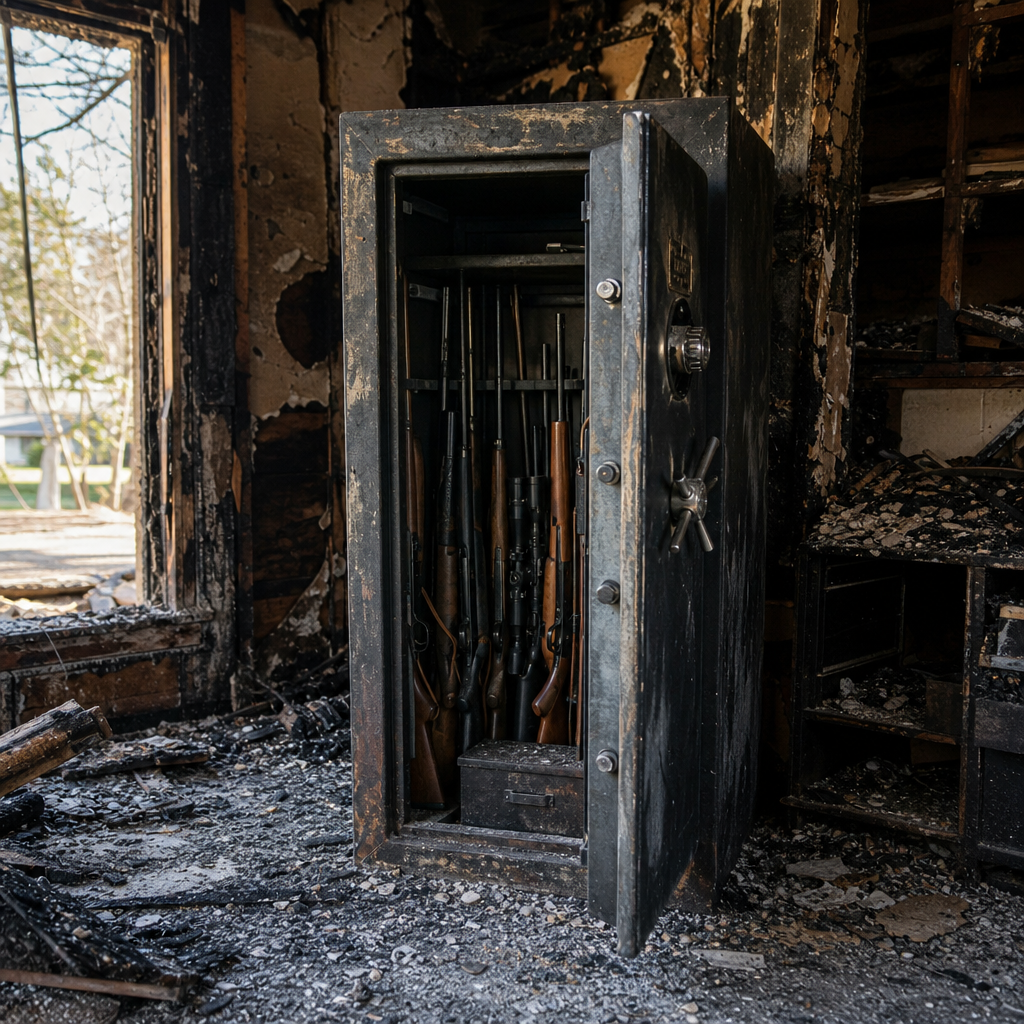
Fireproofing a gun safe does not automatically mean your guns will survive a house fire, because safe ratings, fire behavior, internal humidity, ammunition storage, and post-fire corrosion all affect the outcome. In the gun safes and safety category, few topics create more confusion than fire protection claims. I have evaluated safes after real residential fires, compared manufacturer test data, and seen two safes with similar labels produce very different results. The core problem is simple: many buyers assume “fireproof” means total protection under any condition. That assumption is wrong. A gun safe can improve survival odds dramatically, but no consumer safe is invincible, and many are only fire resistant for a limited time under controlled conditions.
To understand the issue, it helps to define terms clearly. A fireproof gun safe is usually a fire-resistant gun safe built with gypsum board, ceramic wool, intumescent door seals, and layered steel construction intended to slow heat transfer. True fireproofing would imply indefinite protection against fire, which is not how consumer ratings work. Fire ratings are typically expressed as a temperature and duration, such as 1,200 degrees Fahrenheit for 30 minutes or 1,680 degrees Fahrenheit for 60 minutes. Those numbers describe a test condition, not a guarantee in every fire. House fires vary by fuel load, ventilation, room size, flashover timing, structural collapse, and how long the fire burns before suppression.
This matters because firearms are heat-sensitive systems made from blued steel, stainless steel, polymers, optics adhesives, lubricants, wood stocks, and precision springs. Even if the safe shell remains intact, interior temperatures can rise enough to damage finishes, warp stocks, cook optics, degrade ammunition, and start corrosion after the event. A hub page on gun safe myths and misconceptions should answer the question directly: fireproofing helps, but survival depends on the rating, the safe’s placement, the intensity of the fire, and what happens after firefighters leave. The safest buying decision comes from reading the label critically, understanding testing limits, and treating fire resistance as one layer in a broader protection plan.
Myth 1: “Fireproof” Means Absolute Protection
The biggest myth in gun safe marketing is the word fireproof itself. In practice, most residential security containers and gun safes are not absolute fireproof boxes. They are steel cabinets with insulation designed to delay heat transfer for a stated period. That distinction matters. If a safe is rated for 30 minutes at 1,400 degrees Fahrenheit, it is saying the interior should stay below a target temperature during that test. It is not promising that the contents will emerge unharmed after a 90-minute fire, after a collapse into a basement, or after direct exposure to higher temperatures. When I review manufacturer specifications, the useful details are the test agency, peak furnace temperature, duration, and maximum internal temperature allowed during testing.
Independent testing is generally more credible than an internal brand claim. Standards from UL and other recognized labs carry more weight because they specify procedures, instrumentation, and pass criteria. Some manufacturers use proprietary tests that may still be meaningful, but buyers should ask: Was the test performed by an independent lab? What was the starting temperature? Was there a cool-down period inside the furnace? Did the test include a drop to simulate floor collapse? These details separate serious fire resistance from a sticker designed mainly for showroom appeal.
What Actually Damages Guns in a Fire
Many people picture a gun surviving as long as it does not melt. That is far too simplistic. Most firearms suffer functional or cosmetic harm well before steel liquefies. Heat breaks down oil and grease, leaving metal surfaces exposed. Bluing can discolor, coatings can blister, and wooden stocks can crack as moisture leaves the grain. Polymer frames, grips, magazine followers, butt plates, and scope components can deform at relatively modest temperatures. Adhesives used in optics, night sights, recoil pads, and laminated stocks are especially vulnerable. In one post-fire inspection I handled, the rifles looked externally intact, but two scopes lost zero permanently because internal seals failed under heat.
Ammunition adds another layer. Modern cartridges stored in a safe are less dangerous than Hollywood suggests, but heat can ruin primers and powder long before rounds cook off. SAAMI guidance has long noted that ammunition exposed to fire behaves differently when not chambered, yet degraded ammo is still unreliable and should not be trusted afterward. Documents, paper targets, suppressor paperwork, and electronics such as dehumidifiers or hard drives often fail even sooner than the firearms themselves. That is why a rating based on keeping the interior below around 350 degrees Fahrenheit is aimed partly at protecting paper, not guaranteeing perfect firearm condition.
How Fire Ratings Work and Where They Mislead Buyers
Fire ratings are useful, but only when interpreted correctly. A longer duration is generally better, yet the number alone does not tell the whole story. The construction method matters. Drywall-based safes use chemically bound water in gypsum to absorb heat as steam is released. This works, but it also introduces moisture into the safe during heating. Better-built models may combine multiple insulation layers, reinforced door gaps, and expanding seals that close off smoke. Some premium safes use poured composite insulation or ceramic materials that resist heat more consistently. Weight can be an indirect clue here; heavier safes often contain more insulation, though weight alone does not prove quality.
The most common buyer mistake is comparing one brand’s 90-minute rating to another brand’s 60-minute rating as if both were generated under the same standard. They often are not. One company may test to 1,200 degrees, another to 1,680, and another may quote only an internal engineering estimate. Cooling phase also matters. In real fires, contents continue absorbing heat after flames are knocked down. If a test ends the moment the timer stops, it can overstate real-world protection. A meaningful rating should explain the exposure temperature, internal temperature threshold, and whether the safe remained sealed during and after the burn.
| Claim on Label | What It Usually Means | Buyer Question to Ask |
|---|---|---|
| 30 minutes fireproof | Short-duration fire resistance under a specific test | At what furnace temperature and internal limit? |
| 60 minutes at 1,400°F | Moderate protection if the test was legitimate | Was testing independent and was cool-down included? |
| UL rated | Tested under a recognized standard | Which UL class and what contents was it designed to protect? |
| Fire seal | Expanding gasket intended to block smoke and heat | How wide are door gaps and what material is used? |
Placement, Structure, and Why Location Can Matter More Than the Label
Where the safe sits in the home can determine whether the rating has any chance to work. A garage location may seem practical, but attached garages can burn hot because of fuel, vehicles, solvents, and open floor space that feeds fire. Upper floors create another risk: structural collapse. A safe that falls through a burning floor may experience far more stress and heat than its test anticipated. Basements can be better for theft resistance and cooler temperatures in some fires, but water exposure and collapse debris become concerns. In my experience, first-floor interior corners on concrete slabs tend to offer a balanced compromise, especially away from windows and known fuel loads.
Safe surroundings matter too. Storing a safe beside paint cans, reloading powder, propane cylinders, or stacked cardboard is asking the safe to endure a more severe event. Firefighters often describe modern house fires as faster and hotter than older ones because furnishings now contain more synthetics. NIST and UL fire research has repeatedly shown how rapidly flashover can occur in contemporary homes. That means your safe may reach extreme exposure sooner than buyers expect. A better-rated safe in a smarter location can outperform a premium safe placed in the worst part of the house.
Myth 2: If the Safe Survives, the Guns Are Fine
This misconception causes expensive mistakes after a fire. Owners open the safe, see recognizable firearms, and assume a basic cleaning will solve everything. Sometimes that is true for minor smoke exposure, but heat and steam can cause hidden damage. Springs may lose temper, scope lenses may haze, and bores may begin rusting within hours if moisture is trapped inside. The gypsum insulation used in many fire-resistant safes releases steam during heating, so a “successful” fire performance can still leave the contents in a humid, corrosive environment. Once the fire is out, that moisture combines with soot residues, which are often acidic.
Post-fire handling should be methodical. If guns were exposed to heat, smoke, or steam, document everything for insurance before aggressive cleaning. Then remove firearms, wipe off residue, and get them evaluated by a competent gunsmith, especially if they are collectible, heirloom, or duty firearms. Optics should be checked for seal failure, reticles, and tracking. Ammunition that saw significant heat should be discarded according to local hazardous waste guidance. Leather slings, soft cases, and foam inserts often trap contaminants and should be treated with caution. The point is simple: safe survival and firearm serviceability are not the same thing.
Myth 3: Higher Steel Thickness Automatically Means Better Fire Protection
Steel thickness matters more for burglary resistance than fire resistance. A thicker body can slow heat transfer slightly, but steel is a conductor, not an insulator. The decisive fire-protection components are the insulation package, door design, seals, and total assembly quality. I have seen heavy-looking safes with impressive gauge numbers but mediocre fire performance because the insulation was thin and the door gap was poorly controlled. Conversely, some modestly built safes preserved contents surprisingly well because the insulation system and seal geometry were engineered properly. Buyers should not confuse anti-theft strength with thermal performance.
That said, tradeoffs exist. A heavier, more rigid safe may better withstand collapse or impact during a fire event. Better hinges and door frames can help maintain seal integrity under heat. The right approach is to evaluate security and fire resistance separately, then buy the strongest overall package your budget and floor load can support. If theft is your biggest risk, body steel and boltwork deserve priority. If wildfire or delayed rural fire response is your main concern, fire performance deserves more weight. The best gun safe myths and misconceptions articles make this distinction explicit because many shoppers blend these categories together.
What to Look For When Buying a Fire-Resistant Gun Safe
Start with an honest risk assessment. Urban homeowners near a full-time fire department may need less duration than rural owners who face longer response times. Ask for the exact fire rating, the test source, insulation type, seal design, and replacement warranty terms. Look for adjustable shelving that keeps guns off the floor, because water intrusion after suppression is common. Add a hygrometer and a dehumidification plan, such as a GoldenRod heater or desiccant system, because the same sealed environment that slows fire can trap moisture year-round.
Consider what else belongs inside. If you store passports, tax records, NFA paperwork, cash, or hard drives, verify whether the safe’s internal temperature limit is suitable for those items. Many gun safes are not ideal media safes. For irreplaceable documents or digital backups, a smaller dedicated fire document safe inside the gun safe can provide layered protection. Bolting the safe down remains essential for theft prevention and can reduce movement during a fire. Finally, photograph serial numbers, maintain an inventory, and review your insurance policy. Fire resistance lowers risk, but documentation determines how well you recover when protection is incomplete.
Conclusion
Does fireproofing a gun safe mean your guns will survive a house fire? No, not with certainty. It means the safe may keep temperatures and smoke low enough for long enough to improve the odds, sometimes substantially. The difference between survival and loss depends on the rating, the honesty of the testing, the location of the safe, the intensity and length of the fire, and the care taken afterward. The biggest myths are that fireproof means absolute, that a surviving safe guarantees unharmed firearms, and that thick steel alone solves the problem.
The practical takeaway is straightforward. Buy a gun safe with credible fire resistance, place it wisely, control humidity, and plan for recovery with records, insurance, and post-fire inspection. Treat fire protection as a delay system, not a magic shield. If you are building out your gun safes and safety plan, use this hub as your starting point for evaluating gun safe myths and misconceptions, then compare related guidance on ratings, placement, humidity control, and insurance so your next purchase is based on evidence rather than labels.
Frequently Asked Questions
1. Does a fireproof gun safe guarantee that my guns will survive a house fire?
No. A fireproof or fire-rated gun safe does not guarantee that your firearms will come through a house fire undamaged. The label usually means the safe met a specific test under specific conditions, not that it can protect every gun in every fire scenario. Real residential fires vary widely in temperature, duration, location, fuel load, ventilation, and collapse risk. A safe exposed to a short, moderate fire on a concrete slab may perform very differently than the same safe trapped under a collapsed second floor, surrounded by burning furniture, insulation, and structural debris for an extended period.
The biggest misunderstanding is that “fireproof” sounds absolute. In practice, protection is conditional. Most gun safes are designed to slow heat transfer, not stop it indefinitely. If interior temperatures rise high enough, wood stocks can char or crack, optics can fail, lubricants can burn off, polymer components can deform, and finishes can discolor. Even if the safe keeps direct flames away from the guns, steam, smoke residue, and corrosive moisture can still create serious damage afterward. So the honest answer is that fireproofing improves your odds, but it is not a survival guarantee.
2. What do gun safe fire ratings actually mean, and why can two safes with similar ratings perform differently?
Fire ratings are often one of the most misunderstood parts of gun safe shopping. A rating usually refers to a time-and-temperature test, such as a claim that the safe can withstand a certain number of minutes at a certain external temperature while keeping the interior below a target threshold. That sounds straightforward, but the details matter a lot. Who conducted the test? Was it an independent lab or the manufacturer? Was the safe tested empty or loaded? Was there a cool-down period included? Was the furnace test designed to mimic a real house fire, or only a controlled exposure?
Two safes with nearly identical labels can behave very differently because construction quality varies. Steel thickness, door fit, hinge design, sealing materials, insulation type, drywall layering, and body-to-door gaps all affect how quickly heat and smoke enter the interior. Some safes rely heavily on layers of fireboard that work reasonably well for limited exposure but may break down if the fire becomes prolonged or the safe is heavily impacted during structural collapse. Others have better seals, tighter tolerances, or more robust insulation systems that hold up longer in real-world conditions.
That is why the rating alone should never be your only decision point. Look at the test standard, the reputation of the manufacturer, the design of the safe, and whether the company explains how the rating was obtained. A similar sticker on the door does not always mean similar real-life protection.
3. If the guns do not burn, can they still be ruined after a fire?
Yes, absolutely. One of the most overlooked issues is post-fire corrosion. Fire damage is not limited to obvious melting or charring. Even when firearms look intact after the fire is out, they may have been exposed to extreme humidity, acidic smoke residues, and rapid temperature changes inside the safe. As the safe cools, moisture can condense on metal surfaces. That trapped moisture, combined with combustion byproducts, can begin attacking blued steel, internal parts, springs, bores, and optics surprisingly quickly.
Wood-stocked firearms can swell, crack, or separate at glued joints. Polymer-framed guns may warp even if they are not visibly melted. Scopes, red dots, tritium sights, electronics, and illumination systems are especially vulnerable to heat and smoke contamination. Ammunition may also be compromised even if cartridges appear normal from the outside. Primers and powder can be affected by heat exposure, making reliability uncertain.
In real fire recoveries, some of the worst damage happens in the hours and days after the fire, not just during it. If a safe has been through a fire, the contents should be removed as soon as it is safe to do so and assessed carefully. Firearms should be dried, cleaned, and inspected by a qualified gunsmith if there is any question about heat exposure or corrosion. Survival is not just about whether the gun is still recognizable; it is about whether it remains safe, functional, and worth restoring.
4. How do humidity, sealed interiors, and ammunition storage affect fire survival inside a gun safe?
These factors matter more than many owners realize. A sealed safe can help slow smoke and heat intrusion, but it can also trap moisture during and after a fire event. Firefighting water, steam, and humidity changes can create a highly corrosive environment inside the safe. If the safe contains desiccants, dehumidifiers, foam-lined accessories, gun socks, or soft cases, those materials may hold moisture against metal surfaces after the fire. In some situations, the guns are not destroyed by flames at all; they are damaged by the wet, chemically active environment that develops afterward.
Ammunition storage adds another layer of complexity. While ammo inside a safe is not the same kind of hazard as loose cartridges in open fire, large quantities of ammunition can still be affected by heat and may contribute to pressure, residue, and contamination concerns inside the compartment. More importantly, heat-exposed ammunition should never be casually trusted just because it remained inside the safe. If the internal temperature rose significantly, the ammunition may no longer be reliable, and the same heat that affected the cartridges may also have affected nearby firearms, optics, and magazines.
For that reason, fire preparedness should include more than buying a rated safe. Owners should think about interior organization, avoiding unnecessary moisture-trapping materials, using appropriate humidity control, and having a plan for rapid inspection and cleaning after any fire exposure. Fire survival inside a safe is not only about insulation; it is also about managing what happens to the environment inside the safe before, during, and after the fire.
5. What should I do if I want the best possible chance of protecting my guns in a house fire?
Start by understanding that no residential gun safe can promise perfect protection under all fire conditions. Your goal is to improve the odds through layered protection. Choose a safe from a reputable manufacturer that provides meaningful fire testing information rather than vague marketing language. Pay attention to overall build quality, not just the printed fire rating. Heavier construction, better door seals, stronger insulation systems, and more credible testing all matter.
Where you place the safe is also important. A safe installed on a concrete slab in a lower-risk area may face less severe heat exposure than one placed in a garage full of fuel sources or on a wood-framed upper floor that could collapse into the hottest part of the fire. Proper anchoring can help keep the safe upright and stable if the structure shifts. Consider the surrounding fire load as well, because a safe packed tightly between combustible materials may be exposed longer and more intensely.
Inside the safe, use smart storage practices. Control humidity, avoid storing guns long-term in soft cases, and keep an updated inventory with photos, serial numbers, and appraisals for insurance purposes. If you store valuable heirlooms, rare collectibles, or especially sensitive optics, consider whether additional protection measures are appropriate, such as a higher-end safe, a dedicated fire-resistant enclosure inside the safe, or off-site storage for the most irreplaceable items.
Finally, if a fire does happen, act quickly once authorities say it is safe. Open the safe as soon as practical, remove the contents, dry and stabilize them, and have any suspect firearm professionally evaluated. In the real world, the owners who fare best are usually the ones who combine a good safe, good placement, realistic expectations, and a fast post-fire response.