
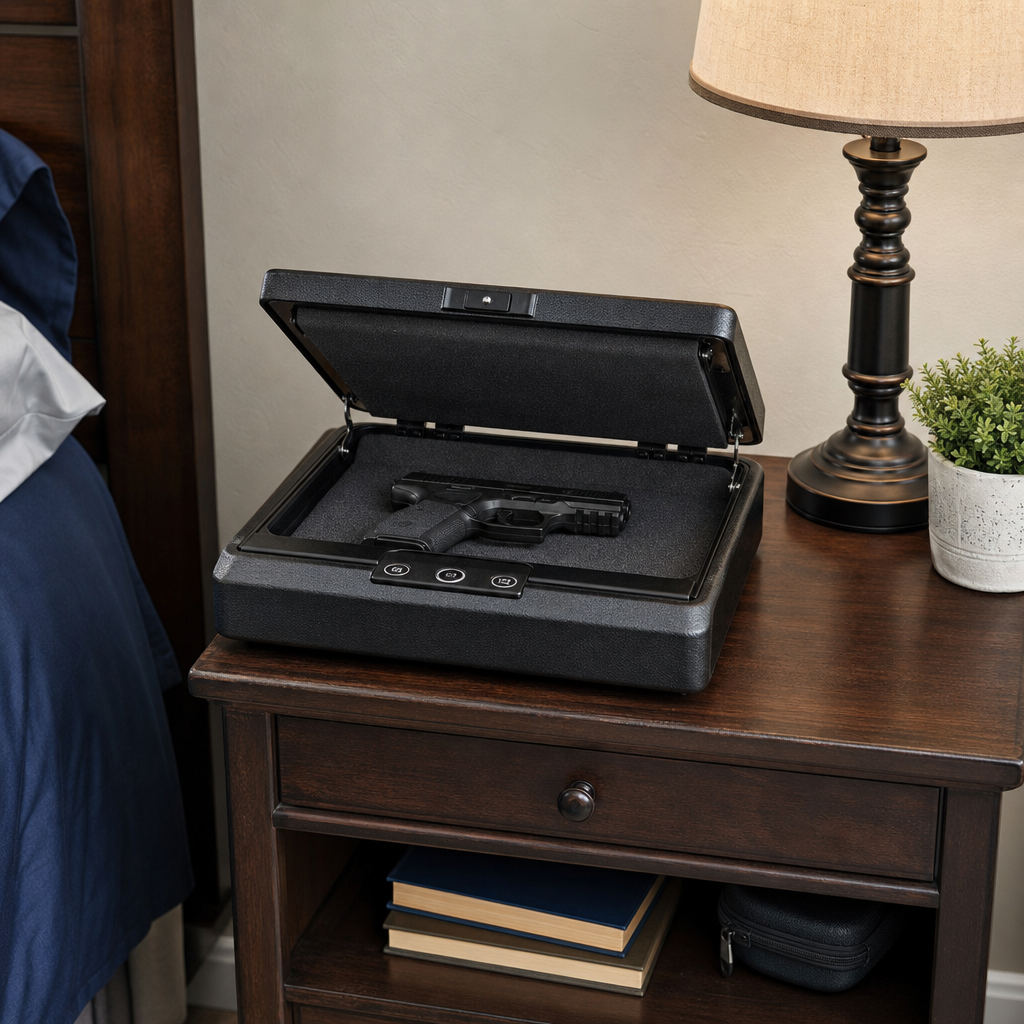
Quick-access gun safes promise speed when seconds matter, but they also raise a serious question: are quick-access gun safes a security risk? The honest answer, based on years of handling residential security products, testing lock types, and reviewing break-in reports, is that they can be a risk when buyers misunderstand what they are designed to do. A quick-access gun safe is a compact firearm storage unit built for rapid opening through biometric scanners, electronic keypads, RFID tags, or simplex-style mechanical push buttons. Its purpose is immediate defensive access, not long-duration burglary resistance like a heavy, anchored full-size gun safe.
That distinction matters because many gun owners shop under pressure, compare products by marketing terms instead of construction standards, and assume any locked container provides the same level of protection. It does not. In practical use, quick-access handgun safes, bedside vaults, vehicle lock boxes, and under-desk pistol safes occupy a middle ground between total exposure and true hardened storage. They reduce unauthorized handling by children, guests, and opportunistic thieves, but they vary widely in steel thickness, lock integrity, mounting strength, pry resistance, and reliability under stress.
This makes quick-access models central to the broader discussion of gun safe myths and misconceptions. Common claims include “biometric safes are unreliable,” “a fast-opening safe is easy to steal,” “all handgun safes fail against tools,” and “keeping a firearm loaded in a bedside safe is inherently unsafe.” Some of those claims contain a kernel of truth; most become misleading when stripped of context. Security is never a single feature. It is the combination of access control, delay time, installation quality, user training, and realistic threat assessment.
If your goal is balancing defensive readiness with safe storage, this topic matters. A poor choice can create exactly the danger you hoped to avoid: a child opening the unit, a burglar carrying it away, or an owner fumbling with a lock in low light. A well-chosen quick-access safe, by contrast, can materially improve household firearm safety. The key is understanding what these safes can do, what they cannot do, and how to match the product to the threat.
What quick-access gun safes are designed to secure
Quick-access gun safes are designed primarily to stop unauthorized access during normal daily life. That means preventing children, teenagers, visitors, house cleaners, contractors, and casual intruders from handling a firearm left near a bed, in a closet, inside a nightstand, or under a vehicle seat. In that role, even a relatively small handgun vault provides a major safety upgrade over a drawer, shelf, or unsecured bag.
Where owners go wrong is expecting the same unit to perform like a 700-pound residential security container. Most bedside safes are not intended to withstand a committed attack with pry bars, angle grinders, or extended uninterrupted time. Security professionals evaluate storage in layers: concealment, lock control, anchoring, construction, alarm coverage, and response time. A quick-access safe is one layer, not the whole system.
In homes with children, the value is especially clear. Safe storage guidance from pediatric and public health organizations consistently stresses that firearms should be unloaded when not in use, locked, and inaccessible to minors, with ammunition stored separately when feasible. Owners sometimes reject quick-access safes because they think only a large traditional safe counts as responsible storage. In reality, a fast-opening handgun safe beside the bed often prevents far more unauthorized contact than a large gun safe in the basement that encourages “temporary” unsecured staging upstairs.
For defensive use, speed matters. Under stress, fine motor skills degrade, tunnel vision increases, and memory recall can narrow. That is why lock design is not cosmetic. A mechanical simplex lock, a high-quality capacitive fingerprint reader with backup keypad, or a reliable illuminated keypad can all work, but each needs practice. I have seen owners buy advanced biometric safes, enroll one fingerprint, never test it again, then call the product unsafe when dry skin or poor finger placement causes a delay. The safe did not fail alone; setup and training failed too.
The biggest myths and misconceptions about quick-access gun safes
The most persistent myth is that quick access and real security are mutually exclusive. They are not. Fast-opening access does not automatically mean weak security; it means the lock is optimized for immediate authorized entry. Security depends on more than opening speed. A 10-gauge steel body with internal hinges, anti-pry tabs, and anchor bolts can offer meaningful resistance, while a thin imported box with exposed gaps may not, even if both open in two seconds.
Another myth is that biometric safes are inherently unreliable. Low-end biometric units can absolutely be inconsistent, especially when they use cheap sensors, weak processors, or poor firmware. But modern biometric safes from established manufacturers are significantly better than early-generation products. The best models allow enrollment of multiple fingers, store prints securely, and provide secondary access methods. Reliability improves further when owners register thumbs and index fingers from both hands and periodically retest under realistic conditions.
A third misconception is that all quick-access safes are easy to steal. Some are. Lightweight portable lock boxes with cable attachments can be cut free or simply taken. But a properly anchored handgun safe bolted into a solid wood stud, concrete floor, or heavy furniture frame is much harder to remove quickly. Burglars often operate on compressed timelines. Even modest delay can force abandonment, especially when noise, visibility, and uncertainty increase risk.
Many buyers also believe any product labeled “safe” has passed a universal standard. That is false. The term is used loosely across the market. Some products are better described as lock boxes than safes. Buyers should look for specifics: steel gauge, lock type, anti-pry design, mounting hardware, hinge protection, tamper alerts, and in larger products, certifications or testing claims. Marketing language such as “military style” or “FBI approved” is often meaningless unless supported by clear evidence.
Finally, some owners think hidden storage is equivalent to secure storage. It is not. A pistol tucked in a nightstand cubby or disguised shelf may be out of sight, but it remains accessible to anyone who finds it. Hidden storage can complement a locked container, not replace it.
How to judge whether a quick-access safe is actually secure
Start with construction. Steel thickness matters because pry resistance begins with material strength and rigidity. Many weak units use thin sheet metal that flexes at the door seam. Better handgun safes typically use thicker steel, tighter door gaps, reinforced latch areas, and internal geometry that reduces pry leverage. Weight alone is not proof of quality, but an unusually light “safe” often signals compromises.
Next, evaluate the lock. Electronic keypads should have responsive buttons, sensible lockout behavior after repeated failed attempts, and battery access that does not require leaving the safe open by default. Mechanical push-button locks, especially proven simplex-style systems, are valued because they need no batteries and can be opened by touch in darkness. Biometric locks should be tested repeatedly with dry fingers, slightly dirty fingers, and awkward hand angles, because bedside access rarely happens under ideal conditions.
Mounting is nonnegotiable. If a burglar can carry the safe away, they can attack it later with privacy and better tools. The best quick-access safe for home defense is usually one anchored to framing, flooring, or heavy built-in furniture using the manufacturer’s hardware or upgraded fasteners appropriate to the substrate. Vehicle safes deserve extra scrutiny because car break-ins are fast and common; a console vault integrated into the vehicle structure is generally superior to a cabled portable box under a seat.
| Feature | Lower-security sign | Higher-security sign |
|---|---|---|
| Steel body | Thin flexing shell | Rigid heavy-gauge steel |
| Door gap | Wide pry points | Tight seams with anti-pry design |
| Locking method | Single cheap biometric reader | Reliable primary lock plus backup entry |
| Mounting | Loose cable or no anchor | Bolted to structure |
| Access testing | Never practiced | Repeated real-world drills |
Power management matters too. Electronic safes fail in predictable ways when owners ignore batteries. Replace batteries on a schedule, not after they die. Use name-brand cells. Test backup keys and override methods before you need them. A quick-access safe is only secure if it is also dependable.
Where quick-access safes create real risk
The biggest risk appears when the safe is used outside its intended role. A small bedside safe is not ideal for storing a firearm collection, protecting against prolonged burglary attack, or securing guns in a detached garage with poor surveillance. Misapplication turns a useful device into a liability. If you need theft protection against targeted burglary, a heavier anchored long-gun safe or residential security container remains the right solution.
Another real risk is poor installation. I routinely see owners place a quick-access safe loose in a drawer because they fear drilling furniture or walls. That defeats much of the theft deterrence. Similarly, mounting a safe where the keypad is visible from across the room, where children can watch the code being entered, or where the door cannot open cleanly under stress undermines both security and access.
Shared access also creates risk. In households with multiple authorized adults, code discipline and biometric enrollment need planning. If one person changes the keypad code without retraining the other, or if backup keys are left in obvious locations, the control system breaks down. Security is only as strong as the household routine behind it.
Cheap products sold through generic online listings present another hazard. Some have poor welds, weak solenoids, exposed reset buttons, or bypass vulnerabilities discovered by reviewers. Independent testing, reputable brand history, and transparent specifications matter more than star ratings alone. A product with thousands of reviews may still be insecure if buyers are only rating delivery speed and appearance.
There is also the false-confidence problem. Once owners buy any locking box, they may stop reassessing habits. Yet safe storage must evolve with the home. A toddler becomes a curious school-age child. A spare room becomes a teenager’s hangout. A move to a higher-crime area changes burglary risk. What was adequate last year may be inadequate now.
Best practices for balancing fast access and safe storage
The best approach is layered storage. Use a quick-access safe where defensive access is genuinely needed, and use a larger anchored safe for bulk storage, spare firearms, important documents, and ammunition. This arrangement solves the main tension between readiness and security without forcing one device to do everything poorly.
Choose the lock type that you can operate consistently under stress. For some owners, that is a mechanical push-button lock because it is tactile and battery-free. For others, a quality biometric safe is faster, especially if arthritis or low-light conditions make keypad entry harder. There is no universal best option. The correct option is the one that works repeatedly for the authorized user, in the actual environment where the safe will live.
Practice matters more than most buyers expect. Run opening drills in darkness, from bed, with your non-dominant hand, and while using the same glasses or no-glasses condition you would likely face at night. Confirm that the safe opens fully without snagging on drawer rails, lamp cords, or bed frames. If the firearm is stored loaded, follow your own defensive readiness plan with strict muzzle discipline and a secure trigger-protected orientation inside the safe.
Maintenance should be scheduled. Clean biometric sensors, replace batteries at fixed intervals, inspect anchor bolts, update access credentials when household circumstances change, and verify the backup key location is itself secure. If the safe lives in a humid room, use desiccant or rust prevention appropriate to the firearm and enclosure.
Most importantly, be honest about your threat model. If your primary concern is keeping children out, a high-quality quick-access safe is usually a strong answer. If your primary concern is organized theft, you need heavier steel, better concealment, alarms, cameras, and anchored full-size storage. Matching the tool to the risk is the entire point.
So, are quick-access gun safes a security risk? They are a risk only when owners confuse convenience with complete protection, buy weak products, skip installation, or neglect training. Used correctly, they are one of the most practical firearm safety tools available because they solve a real daily problem: how to keep a defensive firearm inaccessible to unauthorized hands while still reachable in an emergency.
The central lesson in gun safe myths and misconceptions is that storage is not binary. A quick-access handgun safe is neither worthless nor invincible. It is a specialized device with clear strengths and clear limits. Its strengths are rapid authorized access, child access prevention, and better day-to-day control than unsecured storage. Its limits are portability, reduced burglary resistance compared with larger safes, and dependence on proper setup.
For most households, the smartest path is simple. Buy from a reputable manufacturer, study the construction details, choose a lock you can operate reliably, anchor the unit correctly, and test it often. Then pair that bedside or vehicle safe with a larger security solution for long-term storage. That combination gives you speed where you need speed and resistance where you need resistance.
If you are building out your gun safes and safety plan, use this article as the hub for evaluating every related claim. Question marketing terms, prioritize real construction and lock performance, and review your storage habits the same way you would review any other critical safety system. The right quick-access gun safe does not create unnecessary risk; it reduces it when chosen and used with discipline.
Frequently Asked Questions
Are quick-access gun safes actually secure, or are they mainly for convenience?
Quick-access gun safes can be secure, but only when they are used for the purpose they were designed to serve. These units are built to provide fast firearm access in an emergency, not to function as high-security, long-term vaults that can resist determined burglary attempts for extended periods. That distinction matters. Many owners assume that because a product is called a “safe,” it offers the same level of protection as a heavy, full-size gun safe with thick steel, reinforced doors, anti-pry features, and formal burglary ratings. In reality, most quick-access models are compact lockboxes or handgun safes designed to balance speed, accessibility, and basic unauthorized-access prevention.
When used properly, a good quick-access safe can significantly reduce the risk of children, guests, or casual intruders gaining access to a firearm. It also helps prevent the common and dangerous habit of leaving a gun unsecured in a nightstand, drawer, vehicle console, or under a mattress. However, a poorly made quick-access safe, or one installed carelessly, can become a weak point in a home security plan. Thin-gauge metal, cheap locking components, weak hinges, unreliable biometric sensors, or failure to anchor the unit can all make the safe easier to bypass or remove.
The best way to think about these safes is as a layer of access control rather than absolute theft protection. A quality quick-access safe from a reputable manufacturer, properly mounted and tested regularly, is usually far safer than leaving a firearm unsecured. But if the goal is maximum burglary resistance, broader firearm storage, or long-term protection against forced entry, then a traditional gun safe is the better solution. In many homes, the smartest setup is using both: a larger safe for primary storage and a quick-access safe for one defensive firearm that needs to remain available.
What makes a quick-access gun safe a security risk?
A quick-access gun safe becomes a security risk when buyers expect speed without understanding the tradeoffs that often come with it. The biggest risk is confusion about design purpose. These safes are meant to open fast, and any system built for rapid entry may introduce vulnerabilities if quality control, lock design, or user habits are poor. For example, some low-end biometric safes can be inconsistent, some budget electronic keypads may use weak internal components, and some compact safes rely on thin metal shells that can be pried open with basic tools faster than many owners realize.
Another major risk is poor installation. Even a decent quick-access safe can fail as a security tool if it is not bolted down or tethered properly. A criminal may not need to open it on the spot if they can simply carry the entire unit away and attack it later with more time and better tools. This is especially important for bedside, closet, and vehicle safes, which are often chosen for convenience and then left unsecured. In those cases, the “safe” may only delay access for a moment rather than truly prevent theft.
User error also plays a large role. Owners sometimes choose weak keypad codes, fail to update factory defaults, leave backup keys in obvious locations, or never test the opening method under real conditions. Others rely completely on one access method without thinking through battery failure, fingerprint reading issues, or lockout behavior. A secure product can become risky if it is set up badly or used carelessly. In short, the danger usually is not that every quick-access gun safe is inherently unsafe. The danger is that some are poorly built, many are installed poorly, and too many owners assume “fast” automatically means “fully secure.”
Are biometric quick-access safes less secure than keypad or RFID models?
Not necessarily, but biometric safes can be less dependable if the sensor quality is poor or the owner does not understand how the technology behaves in real life. A well-designed biometric safe can offer excellent speed and practical security because it removes the need to remember a code or locate a key under stress. For many owners, especially those using a bedside handgun safe, that speed is the main selling point. But biometrics are only as good as the sensor, the internal programming, and the consistency of enrollment.
Fingerprint readers can struggle if fingers are wet, dirty, injured, dry, or placed inconsistently. That does not always mean the safe is insecure in the sense that it opens for the wrong person; more often, it means the safe may fail to open quickly for the authorized user when needed. That reliability problem is its own kind of security issue because emergency access is part of the product’s purpose. A keypad safe may be more mechanically predictable, while an RFID model may be extremely quick if the tag is kept accessible and secure. Each system has tradeoffs. Keypads require memorization and can be slowed by stress. RFID depends on possession of a tag, card, or device that can be misplaced. Biometrics depend on consistent fingerprint recognition.
From a security standpoint, the best approach is to focus less on the category and more on execution. Look for models with a proven track record, solid construction, and a secondary entry method in case the primary access system fails. If choosing biometric, enroll the same finger multiple times at slightly different angles, test the safe under realistic conditions, and maintain the power source. A high-quality biometric safe can be a strong choice, but buyers should avoid treating any lock type as foolproof. Reliability, build quality, and proper setup matter more than marketing labels.
How can you reduce the security risks of a quick-access gun safe?
The most effective way to reduce risk is to treat the safe as one part of a broader storage and home-defense plan rather than the entire solution. Start by buying quality. Avoid ultra-cheap no-name products that emphasize speed and gadgets while saying little about steel thickness, pry resistance, hinge protection, mounting hardware, or warranty support. Reputable manufacturers usually provide clearer specifications, better fit and finish, and more consistent lock performance. Independent reviews, long-term owner feedback, and real-world testing are often more useful than marketing claims.
Next, install the safe correctly. A quick-access safe should be anchored to a solid surface whenever possible. If it is intended for a nightstand, bed frame, closet shelf, or vehicle use, follow the strongest mounting method the location allows. Preventing removal is one of the simplest and most important security upgrades. You should also place the safe where it is accessible to you but not obvious to every visitor or service worker entering the room. Concealment does not replace security, but it can reduce attention and buy time.
Then focus on setup and maintenance. Use a strong code, store backup keys in a truly separate and secure location, replace batteries before they become weak, and test the opening method regularly. If the safe uses biometrics, re-enroll prints as needed and verify access under low light or awkward positioning. If it uses RFID, make sure the tag is secure but reachable. Most importantly, practice. In a defensive scenario, the safe must open reliably and the firearm must be accessed safely. A quick-access safe is safest when it prevents unauthorized access without slowing the authorized user into confusion or panic.
Finally, match the product to the role. If you need to secure multiple firearms, protect valuables, or resist burglary for longer periods, use a traditional gun safe as your primary storage. Keep the quick-access safe for the limited task it handles best: controlled, rapid access to a single defensive firearm or a small number of firearms in a specific location.
Who should use a quick-access gun safe, and when is a traditional gun safe the better choice?
Quick-access gun safes are often a very good choice for responsible firearm owners who need a defensive weapon available on a realistic timeline while still preventing unauthorized handling. That includes people with children in the home, owners who want a bedside handgun secured but close at hand, and those who need controlled storage in a closet, office, or vehicle. In these situations, a quick-access safe can solve a real problem: it keeps the firearm out of casual reach without forcing the owner to choose between total inaccessibility and unsafe storage.
That said, they are not ideal for every purpose. If your primary concern is burglary resistance, long-term storage, collection management, or securing multiple firearms and ammunition together, a traditional gun safe is the better option. Full-size safes generally offer heavier construction, stronger locking systems, better anchoring potential, and more protection against pry attacks and smash-and-grab theft. They are also better suited for organized, compliant storage over time, especially in households with several firearms.
For many households, the most effective answer is not choosing one or the other, but using each where it makes sense. A traditional safe can serve as the main storage location for most firearms, important documents, and valuables. A quick-access safe can then hold one defensive firearm in a strategic location, ready for authorized use while still secured from children, visitors, and opportunistic theft. That layered approach reflects the real-world strengths of each product. Quick-access safes are not automatically a security risk, but they do become one when people expect them to do a job they were never engineered to handle.