
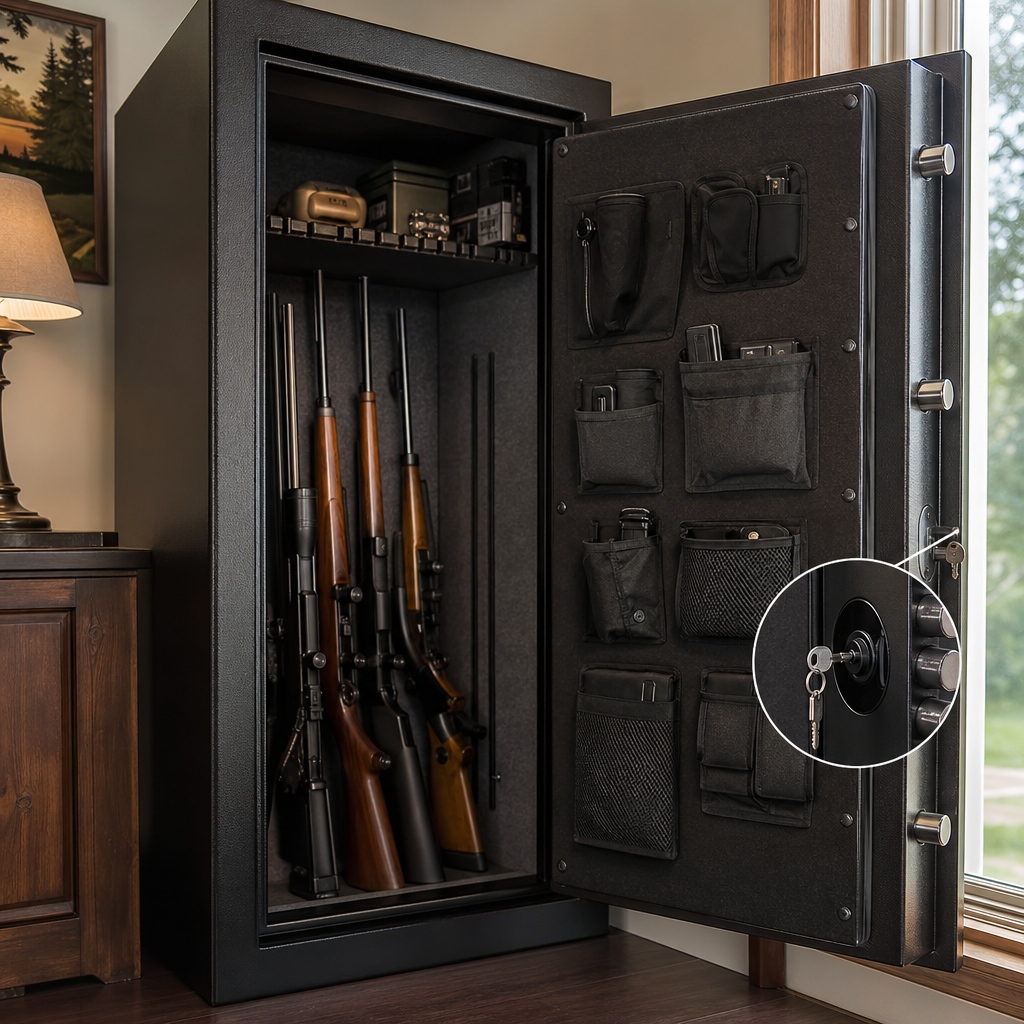
Choosing a gun safe with a hidden key override system sounds straightforward, but the decision affects security, reliability, emergency access, and long-term value. In the gun safes and safety category, buying guides matter because marketing language often hides important differences in lock design, steel thickness, fire protection, and installation requirements. A hidden key override system is a backup entry method concealed behind a panel, logo plate, keypad, or trim piece, allowing access when batteries fail, electronics malfunction, or a user forgets a code. Not every backup key feature is equal. Some are well integrated and resistant to tampering, while others create a weak point that undermines the safe’s main purpose.
I have inspected safes in homes, hunting cabins, retail counters, and workshop installations, and the same pattern appears repeatedly: buyers focus first on size and price, then discover too late that the lock is slow, the backup key is easy to spot, or the interior does not fit optics-equipped rifles. A good buying decision starts with the use case. Will the safe store defensive handguns for quick access, a mixed collection of rifles and documents, or family heirlooms that need both theft resistance and fire protection? The answer determines whether a hidden key override system is a convenience feature, a critical redundancy layer, or a compromise to avoid altogether.
This guide explains how to choose a gun safe that offers hidden key override systems without sacrificing core protection. It defines the terms that matter, shows what to compare, and highlights the tradeoffs between mechanical simplicity and electronic speed. As the hub for buying guides in the gun safes and safety topic, it is designed to help you evaluate lock types, construction quality, capacity planning, installation, and maintenance in one place so you can narrow options confidently and buy once instead of replacing a poor fit later.
What a hidden key override system is and when it makes sense
A hidden key override system is a secondary unlocking method designed to remain out of sight during normal use. On most handgun safes, the keyway sits behind a removable faceplate, under a badge, or beneath part of the keypad bezel. On larger gun safes and cabinets, a backup tubular or flat key may be placed behind the electronic keypad assembly or another concealed cover. The purpose is redundancy. If the electronic lock loses power, the keypad fails, or the solenoid does not retract, the owner still has a way in.
That redundancy is useful in several real-world situations. A bedside pistol safe may stop responding after a battery leak. A garage-installed safe can experience humidity-related keypad issues. A vacation property safe may sit untouched long enough for batteries to die. In those cases, hidden key override access can save time, money, and forced entry damage. It is especially practical for users who want electronic convenience but do not want to rely on electronics alone.
However, a hidden key override is not automatically a premium feature. On low-cost imports, the concealed lock cylinder is often the easiest point of attack. If a burglar can pry off the badge and rake a weak tubular lock, the safe’s electronic keypad becomes mostly cosmetic. That is why buyers should ask a simple question: does the backup key improve reliability more than it reduces resistance to attack? If the manufacturer cannot explain the lock cylinder quality, anti-drill protection, and concealment method, the answer is often no.
How to evaluate security beyond the lock
The lock system gets the most attention, but the body and door determine whether the safe can resist pry attacks, drilling, and smash-and-grab theft. Start with steel thickness. Many budget “gun safes” are technically security cabinets made from thinner steel, often 14 to 18 gauge. That may deter children and casual access, but it is far less resistant to prying than a safe with a heavier body and plate door. For serious theft resistance, buyers should look carefully at body gauge, door thickness, and the number and placement of locking bolts.
Door construction matters as much as raw steel gauge. A recessed door, continuous welds, reinforced hinge area, and anti-pry tabs provide meaningful gains. If the safe relies on decorative external hinges and a flimsy door jamb, a hidden key override will not redeem the design. Internal relockers and hard plates also matter. A hard plate helps resist drill attacks against the lock. A relocker can activate when the lock is punched or attacked, preventing straightforward opening even if the primary lock is compromised.
Buyers should also compare third-party ratings realistically. For handguns, California Department of Justice compliance may indicate basic child-resistance standards, but it is not the same as a burglary rating. For larger safes, a UL-listed lock is a stronger sign of quality than a generic electronic keypad with no stated certification. Fire ratings require scrutiny too. There is no single universal consumer fire test, so compare duration, temperature, and whether the manufacturer explains the testing basis. In practice, a well-anchored safe with solid steel and a competent lock usually does more for theft protection than a flashy keypad and a vague fire label.
Comparing lock types and hidden override designs
Most buyers choosing this feature are deciding between three broad categories: electronic keypad safes with hidden key override, biometric safes with hidden key override, and traditional mechanical locks without override. Electronic keypad safes are popular because they balance speed, cost, and simple programming. Biometric units can be fast when fingerprint sensors are good, but performance varies with skin condition, angle, and sensor quality. Mechanical dial locks avoid batteries and many electronic failures, but they are slower and uncommon on small quick-access safes.
The hidden override design itself deserves close inspection. Better designs conceal the keyway completely, use stronger key profiles, and avoid obvious removable covers that can be peeled away with a screwdriver. Tubular key overrides are common, but quality varies widely. Some can be manipulated with inexpensive tools. Flat laser-cut keys or higher quality dimple keys can be more robust, but execution matters more than key style alone. Ask whether replacement keys require proof of ownership and whether key codes are tightly controlled. If duplicate keys can be ordered casually, the backup system becomes a liability.
| Option | Best use | Main advantage | Main concern |
|---|---|---|---|
| Electronic keypad with hidden key override | Quick home access with backup entry | Fast daily use and battery-failure redundancy | Override cylinder quality varies greatly |
| Biometric with hidden key override | Shared access for multiple authorized users | No need to remember a code under stress | Sensor reliability differs by model and conditions |
| Mechanical dial without override | Long-term reliability in low-traffic storage | No batteries and fewer electronic failure points | Slower access, less common in compact safes |
In homes with children, I often recommend buyers view the hidden key as an emergency tool, not the everyday method. Store the override keys separately, document where they are, and never leave them in the room with the safe. If you expect frequent defensive access, prioritize lock speed and repeatable operation first, then evaluate whether the override has been implemented in a way that does not meaningfully weaken the unit.
Size, interior layout, and buying for actual capacity
Gun safe capacity claims are notoriously optimistic. A “24-gun safe” may hold far fewer long guns once you include scopes, slings, bipods, magazine-fed rifles, or pistol racks on the door panel. Buyers should count their collection honestly, then add space for growth, documents, ammunition separation, and accessories such as suppressor tools, cleaning kits, and dehumidifiers. In my experience, most owners outgrow their first safe because they buy to the label instead of the usable interior dimensions.
For handgun safes with hidden key override systems, interior foam layout matters. A bedside unit may technically hold two large pistols, but not if both have red-dot optics, weapon lights, or extended magazines. Measure the firearm at its widest configured state, not the factory profile. For long-gun safes, adjustable shelving is a major advantage because mixed storage is common. Many households use one safe for rifles, passports, jewelry, and family records. Flexible shelving lets the safe adapt instead of forcing risky overflow storage elsewhere.
Door swing and placement also affect usability. A safe tucked into a closet corner may not open wide enough to access the back row. Deep interiors can become frustrating if the door organizer blocks rifle scopes. If the safe includes a hidden override behind the keypad, confirm you can reach that area cleanly when the safe is installed in its final location. Tight alcoves, low shelves, and thick trim can interfere with both keypad use and emergency key access.
Installation, concealment, and environmental factors
A well-built safe performs poorly if it is not installed correctly. The first rule is anchoring. Even a heavy safe can be tipped, pried, or removed with a dolly if left unsecured. Bolt the safe to concrete whenever possible or to strong structural framing using the manufacturer’s hardware guidance. Anchoring improves burglary resistance and reduces the leverage an attacker can apply to the door. It also matters for quick-access handgun safes mounted in drawers, vehicles, or bedside furniture. A portable safe that is not tethered or bolted can simply be taken and opened later.
Placement should balance accessibility and discretion. A hidden key override does not help if the safe is so visible that an intruder has time to attack it. Closets, finished basements, and low-traffic interior rooms are usually better than garages, where temperature swings, moisture, and observation risk are higher. If garage placement is unavoidable, pay extra attention to rust prevention, battery maintenance, and desiccant or electric dehumidifier use. Humidity affects firearms, electronics, and lock components over time.
Concealment is not the same as security, but it adds delay and uncertainty for an intruder. I advise buyers to avoid obvious showroom-style placement. Integrate the safe into a built-in, behind storage cabinetry, or in a closet with clear door swing and anchor access. At the same time, keep the override keys off-site or in a separate locked location. A hidden key system only improves access control if the keys are controlled with equal discipline.
Brand questions, testing, and signs of a trustworthy purchase
Before buying, ask pointed questions that force meaningful answers. Is the primary lock UL listed? What type of lock cylinder is used for the hidden override? How is the keyway concealed? What is the body steel gauge and door construction? Are replacement keys restricted? Is there a documented warranty on both the safe and the lock? Reputable brands usually answer these clearly and provide manuals, exploded diagrams, or service policies. Vague descriptions such as “solid steel construction” or “advanced anti-theft technology” are not enough.
Testing a safe in person is ideal. Enter the code several times, open and close the door repeatedly, and examine fit and finish around the lock area. A sloppy keypad bezel or loose cover plate is a warning sign. On biometric models, enroll and test multiple fingers if possible. Good sensors handle slight angle changes and repeated use better than bargain units. Read independent reviews carefully, especially reports about lockouts, failed solenoids, battery drain, and customer service response. A warranty is only valuable if the company actually supports owners after the sale.
Finally, match the safe to your risk profile. For a quick-access bedside handgun safe, a hidden key override can be a smart redundancy feature if the lock cylinder is well concealed and the unit is anchored. For a primary long-gun safe storing valuable collections, many experienced owners prefer a higher-grade electronic or mechanical lock without an easily attacked override point. The best buying decision is the one that reflects how you store firearms, who needs access, how fast access must be, and how much burglary resistance your environment demands.
The best way to choose a gun safe that offers hidden key override systems is to treat the override as one factor in a larger buying decision, not the headline feature. Start with the purpose of the safe: child access prevention, quick defensive access, long-term collection storage, or a combination of all three. Then evaluate steel thickness, door design, anchoring options, lock quality, interior layout, and environmental fit. A hidden key override is valuable when it provides genuine redundancy without creating an easy attack path.
Buyers who take a careful, specification-first approach avoid the most common mistakes. They do not assume all backup keys are secure. They do not trust advertised capacity numbers without measuring their firearms and accessories. They verify certifications, inspect construction details, and plan installation before delivery day. Most important, they control the override keys as seriously as the firearms themselves. That discipline is what turns a backup feature into a responsible ownership tool rather than a vulnerability.
If you are comparing models now, build a shortlist and score each one on lock design, construction, capacity, installation needs, and key control. That simple process will quickly separate safes that merely advertise convenience from safes that truly support secure, reliable firearm storage.
Frequently Asked Questions
What is a hidden key override system on a gun safe, and why does it matter?
A hidden key override system is a concealed backup entry method built into certain gun safes. In most cases, the keyway is placed behind the keypad, under a removable trim piece, beneath a logo plate, or behind another small panel so it is not visible during normal use. Its main purpose is to provide emergency access if the electronic lock fails, the keypad stops responding, the battery dies, or the lock experiences a temporary malfunction. That sounds simple, but it matters because backup access can make the difference between a short inconvenience and being locked out of your own safe when you need it most.
When comparing safes, it is important to understand that not all override systems are equally secure. A hidden key override should be treated as a convenience feature, but also as a potential attack point if it is poorly designed. The best systems are genuinely concealed, use restricted or difficult-to-duplicate keys, and are paired with a lock body and relocking mechanism that still maintain the safe’s overall security. A weak override design can undermine an otherwise good electronic lock.
It also matters from a long-term ownership perspective. Electronics can age, wiring can fail, and keypads can wear out after years of use. A hidden key override offers redundancy, which is a major advantage for owners who want reliability over time. That said, redundancy is only valuable if the safe also has solid steel construction, a quality bolt system, and proper installation. In other words, the override is one piece of the decision, not the whole decision.
Are gun safes with hidden key override systems less secure than safes without them?
They can be, but they are not automatically less secure. The answer depends on how the override is engineered, how well it is concealed, and whether the rest of the safe is built to a serious standard. A hidden key override creates an additional entry path, so in theory it introduces another vulnerability. However, a well-made safe can minimize that risk through better lock design, stronger shielding, restricted key control, anti-drill protection, and thoughtful placement of the override mechanism.
One of the biggest mistakes buyers make is assuming that “hidden” always means “secure.” Concealment helps, but concealment alone is not true security. If the override is hidden behind an obvious snap-off plate or a flimsy keypad cover, a thief may locate it quickly. A stronger design uses a keyway that is not easy to access without damaging exterior components, and it should not rely on a common, easily copied key blank. Ideally, the manufacturer should also explain whether the safe includes hard plates, relockers, or other anti-tamper features around the lock area.
If maximum burglary resistance is your top priority, compare the safe’s overall construction before focusing on the override. Look at steel thickness, door design, locking bolt engagement, pry resistance, and anchoring options. In many cases, a safe with a hidden override and robust build quality is a better real-world choice than a safe without an override but with thinner steel or poor installation support. The safest approach is to view the hidden override as a backup feature that should be carefully vetted, not as a deal-breaker by itself.
What should I look for when choosing a gun safe with a hidden key override system?
Start with lock quality and backup access design. You want to know who makes the lock, whether it has a reputation for reliability, and how the hidden override is implemented. Ask where the key access point is located, what type of key is used, whether duplicates are controlled, and whether the override can be exploited if someone knows the brand and model. Reputable sellers and manufacturers should be able to answer these questions clearly. If they are vague, that is usually a sign to keep looking.
Next, examine the safe’s physical security. Steel thickness matters because it affects resistance to prying, drilling, and cutting. Door construction matters because some safes use attractive marketing terms while relying on composite designs that are less impressive than they sound. Bolt size alone is not enough; what matters more is how the bolts engage and how the door frame resists leverage attacks. Also check whether the safe can be anchored securely to concrete or another solid base. Even a heavy safe becomes far more secure when properly installed.
Fire protection is another major buying factor. If the safe is advertised as fire-resistant, look for the fire rating duration, temperature standard, and whether testing was done by an independent laboratory or only by the manufacturer. Marketing claims can vary widely. Interior size, shelving flexibility, moisture control, and access speed also deserve attention, especially if the safe will store firearms, documents, and valuables together.
Finally, think about ownership over several years, not just the day of purchase. Consider battery replacement access, replacement key procedures, warranty support, lock servicing, and whether local technicians can work on that model if needed. A good gun safe should balance security, emergency access, durability, and maintainability. The hidden key override is useful, but it should fit into a broader design that makes sense for your home, your risk level, and the way you actually plan to use the safe.
Is a hidden key override better than relying only on an electronic keypad or biometric lock?
For many buyers, yes, because it adds a layer of redundancy. Electronic keypads are convenient and fast, but they depend on batteries, electronics, and internal components that can eventually fail. Biometric locks can be even quicker in ideal conditions, but they may be inconsistent with dirty fingers, aging sensors, low batteries, or rushed access attempts. A hidden key override gives you a manual backup if the primary entry method stops working. That can be especially important in emergency situations or when you discover a failure at the worst possible time.
That said, “better” depends on what kind of owner you are and what tradeoffs you accept. Some buyers prefer a simple mechanical dial lock because it avoids battery issues and often has a long service life. Others want electronic speed and are comfortable keeping a backup key stored securely off-site or in another protected location. A hidden key override is most appealing to people who want the convenience of electronic access but do not want to rely on electronics alone.
The key is not to confuse convenience with invincibility. A biometric lock with a hidden override is not automatically superior to a high-quality electronic or mechanical lock without one. You still need to compare lock brand, construction quality, key control, and safe body strength. In practice, a quality electronic safe with a well-designed hidden override often offers an excellent balance of speed and backup access, as long as you store the override keys responsibly and do not choose a model whose backup system looks easy to defeat.
How should I store and manage the override keys to keep the safe secure?
Override keys should never be stored inside the safe, taped to the back of it, hidden in the same room, or placed in obvious household “secret” spots like a desk drawer, closet shelf, or kitchen cabinet. The entire purpose of the hidden key override is to provide emergency access if the primary lock fails, but if the key is easy to find, it can weaken the safe’s security significantly. Treat the override key like a high-value credential, not like a spare house key.
The best practice is to store the key in a separate secure location. That may mean a small secondary lockbox, a bank safe deposit box, or another controlled-access storage point that is not obvious and not immediately accessible to unauthorized people. Some owners split storage responsibility by keeping one key in a secure off-site location and another in a separate locked container at home. The right setup depends on how quickly you may need emergency access versus how much separation you want between the safe and the key.
You should also document the safe’s model number, serial number, and manufacturer support contact information in a secure place. If a key is lost, stolen, or possibly copied, contact the manufacturer immediately to ask about rekeying options or lock replacement. Do not assume that replacing the electronic keypad alone solves the problem if the override key is compromised. Good key management is part of responsible gun safe ownership, and it directly affects whether a hidden key override remains a helpful backup or becomes an unnecessary security risk.