
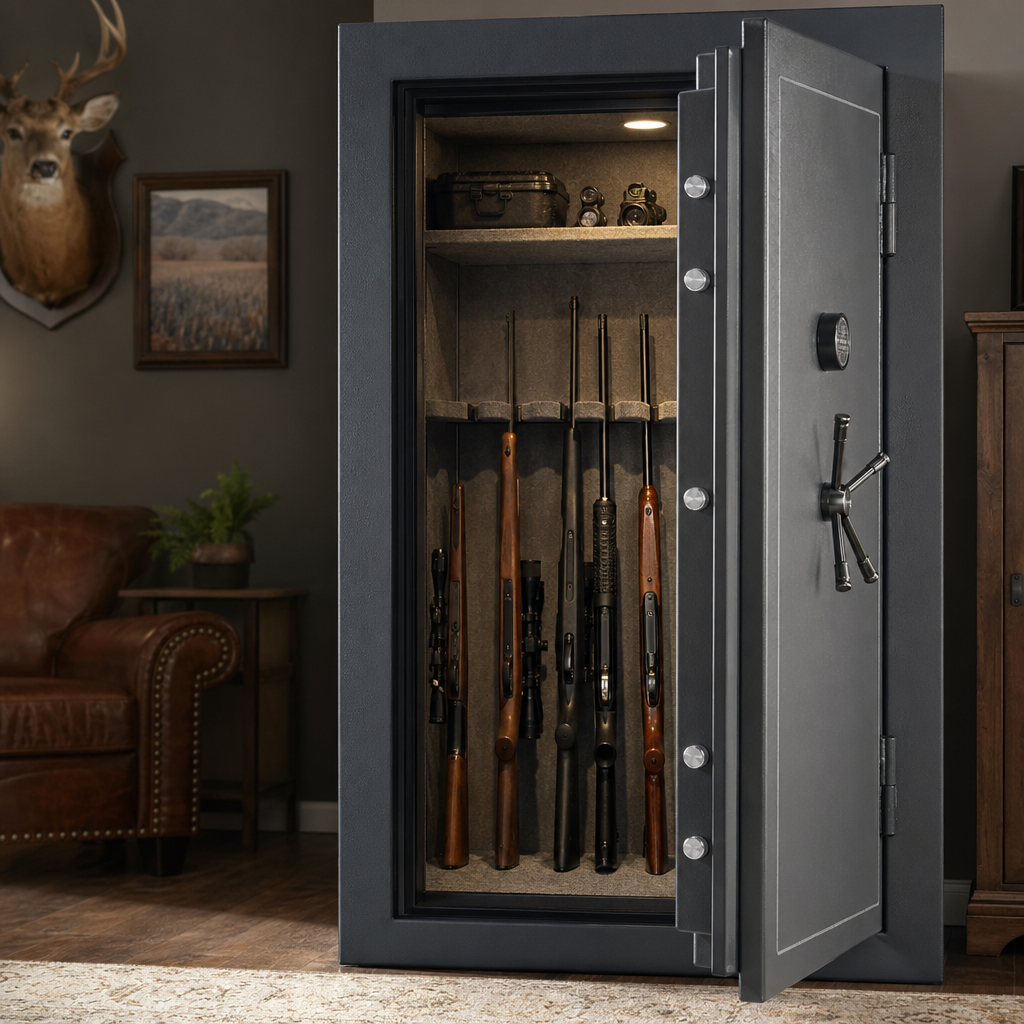
Choosing the best gun safes with reinforced door frames for extra security starts with understanding a simple truth: most attacks on a residential safe target the door, not the body. A reinforced door frame is the structural barrier around that door opening, designed to resist prying, flexing, and bolt-side deformation when a thief uses bars, wedges, or power tools. In practical buying-guide terms, this feature matters because impressive steel thickness on the safe body means far less if the frame around the opening can bend under pressure. I have evaluated safes in dealer showrooms, compared manufacturer cutaway diagrams, and inspected failed units after break-in attempts, and the pattern is consistent: weak frames fail early, while stronger door channels buy crucial time.
For buyers researching gun safes and safety, reinforced door frames deserve hub-level attention because they connect nearly every major purchase criterion. They influence burglary resistance, lock performance, bolt engagement, fire-seal integrity, door alignment, long-term durability, and even installation strategy. They also affect value. Many shoppers focus on headline specs like “12-gauge steel” or “90-minute fire rating,” yet skip the frame architecture that determines whether locking bolts actually stay anchored during an attack. A buying guide centered on reinforced door frames helps you compare safes more intelligently, ask better questions, and avoid paying premium prices for cosmetic features that do not materially improve security.
At a basic level, the key terms are straightforward. The door frame is the steel structure surrounding the door opening. A reinforced frame may use thicker formed steel, a continuous bend profile, added return flanges, internal support channels, or composite construction with multiple layers. Some manufacturers pair this with a formed door edge, anti-pry tabs, active and dead locking bolts, and external or internal hinges engineered to maintain alignment under load. Extra security, in this context, means increased resistance to common residential burglary methods and better preservation of lockup when the safe is stressed. It does not mean invulnerability. No consumer gun safe is impossible to breach, but design choices can significantly change how long a break-in takes.
This article serves as a comprehensive buying-guide hub for the subtopic. It explains what reinforced door frames do, how to evaluate them alongside steel gauge, locks, fire ratings, and installation, which features matter most in different price tiers, and where buyers commonly make mistakes. If you are comparing Liberty, Fort Knox, American Security, Browning, Rhino, Sports Afield, Winchester, or similar brands, use this guide to separate meaningful construction details from marketing shorthand and build a shortlist based on real protection.
What a Reinforced Door Frame Actually Does
A reinforced door frame strengthens the most vulnerable perimeter of the safe opening. During a pry attack, force concentrates where a bar slips between the door edge and frame lip. If that lip is shallow, thin, or poorly supported, it can deform enough for locking bolts to disengage or for the door to peel back. Better frames use deeper formed sections and stronger bends that spread force across a larger area. Think of it as the difference between pushing on sheet metal and pushing on a boxed structural channel. The second shape resists twisting and collapse much more effectively.
In real-world product design, the strongest residential gun safes often combine a reinforced frame with a stepped door profile. That means the door sits into a recessed opening instead of lying nearly flush against a simple flat jamb. This geometry matters because it reduces pry-bar purchase. American Security’s BF series, for example, has long been recognized for robust body and door construction that pairs anti-pry design with substantial locking coverage. Fort Knox and similar premium builders also emphasize formed door and frame relationships rather than relying only on more bolts. More bolts sound impressive, but bolt count alone is not a primary predictor of pry resistance if the receiving frame bends first.
Reinforced frames also support day-to-day reliability. A heavy gun safe door can weigh several hundred pounds. Over time, weak frames may shift, especially if the floor is uneven or the safe is repeatedly opened under load. That can produce rubbing, poor seal contact, and lockwork stress. Stronger frames hold alignment better, which helps electronic and mechanical locks operate consistently and keeps expanding fire seals positioned correctly during a heat event. Security and usability are linked more closely than most buyers realize.
How to Evaluate Construction Beyond Marketing Claims
The fastest way to judge a gun safe is to look past labels and ask how the frame is built. “Reinforced” is not a regulated consumer term, so brands use it loosely. Ask whether the frame is a single formed steel channel, a multi-bend return flange, or a separate weld-in structure. Request steel thickness for both the body and door edge. If the salesperson cannot explain the jamb design, ask for a cutaway photo or interior door-panel removal image. Reputable manufacturers usually provide sectional diagrams showing composite layers, bolt receivers, hardplate placement, and frame geometry.
Steel gauge remains important, but context matters. A 10-gauge body with a shallow door frame may underperform a carefully designed 11-gauge or composite structure with a stronger anti-pry profile. Gauge numbers are also frequently misunderstood: lower gauge means thicker steel. Twelve-gauge steel is about 0.105 inch, while 10-gauge is about 0.135 inch. That difference is meaningful, but shape and reinforcement can multiply or waste the advantage. A continuous formed bend is typically stronger than a flat strip welded into a basic opening because bends add stiffness. Weld quality matters too. Continuous welds generally distribute stress better than sparse stitch welds around a high-load opening.
Buyers should also separate safe classifications. Many products sold as gun safes are technically residential security containers, not true high-security safes. In the United States, UL 1037 Residential Security Container ratings test against limited attack scenarios. A UL RSC rating is useful, but RSC is still an entry-level security classification compared with TL-rated commercial safes. For most homes, an RSC with a well-reinforced door frame, solid anchoring, and good location strategy is a practical solution, but it is important to calibrate expectations. If you store high-value firearms, NFA items, or irreplaceable collections, structure and certification should carry more weight than capacity or upholstery.
| Feature | What to Look For | Why It Matters |
|---|---|---|
| Door frame design | Deep formed channel, return flange, recessed opening | Improves pry resistance and keeps bolts engaged |
| Body steel | 10-gauge or thicker, or composite equivalent | Resists cutting and body flex better than thin sheet steel |
| Lock protection | Hardplate, relocker, protected spindle or cable routing | Slows drill attacks and lock manipulation after impact |
| Certification | UL RSC minimum; stronger ratings when budget allows | Provides standardized baseline for burglary resistance |
| Anchoring | Bolted to concrete with proper hardware | Prevents tipping, removal, and easier pry leverage |
Key Features That Work with Reinforced Door Frames
A reinforced frame should never be evaluated in isolation. The first supporting feature is the door itself. A thicker plate door or composite door with internal reinforcement gives the frame a similarly strong partner. If the frame is robust but the door skin can bow inward, the overall system still has a weakness. The second feature is bolt design. Active bolts on the opening side and dead bolts or fixed locking bars on the hinge side help prevent door removal and improve engagement under attack. Again, the frame must be strong enough to receive those bolts without tearing or spreading.
Lock choice matters, though less than frame quality during a pry attack. Mechanical dial locks from Sargent and Greenleaf or La Gard have a long service record and do not depend on batteries. Modern electronic locks can be excellent for quick access, especially premium models from SecuRam, S&G, and La Gard, but cheap keypads are a common failure point in lower-cost safes. When I inspect safes for purchase, I always ask what lock model is installed, not just whether it is “electronic.” A reinforced frame keeps the door closed during brute-force attacks, while a well-protected lock prevents bypass through drilling or impact. You want both.
Fire protection also intersects with frame quality. Many gun safes use expanding intumescent seals around the door opening. A rigid frame helps maintain even contact so the seal can do its job when temperatures rise. However, published fire ratings vary widely in test method, furnace profile, and pass criteria. Some brands quote independent ETL verification, while others rely on in-house testing. Fire rating should be treated as comparative information, not as an absolute guarantee. For burglary-focused buyers, frame construction is often the more reliable differentiator because it is visible in the engineering itself.
Buying by Budget: What to Expect at Each Tier
In the entry tier, usually below about $1,000 depending on size, most gun safes use thinner steel, simpler door jambs, and basic electronic locks. Reinforced door frames may be present in marketing language, but often this means a modest folded edge rather than a genuinely robust anti-pry channel. Brands in big-box retail often compete on capacity numbers and interiors rather than structural details. These safes can still be worthwhile for low-risk environments, especially when anchored in a closet or corner, but buyers should be realistic. At this level, installation quality can contribute as much security as the safe’s factory construction.
In the midrange, roughly $1,200 to $3,000, construction usually improves substantially. This is where many serious homeowners find the best value. You may see 11-gauge or 10-gauge bodies, upgraded fireboard packages, better lock options, and more thoughtfully engineered door frames. Models from Liberty’s higher lines, Browning’s better residential offerings, Rhino’s stronger units, and several regional manufacturers often sit here. Look for disclosed frame details, internal hardplate, relockers, and stronger hinge-side protection. A safe in this class, properly anchored, gives meaningful resistance against the short, noisy attacks typical in residential burglaries.
In the premium residential tier, often $3,000 and up, reinforced door frames become more sophisticated. Composite construction, thicker plate doors, substantial formed jambs, and serious lock protection are more common. Fort Knox, American Security, Graffunder, and other high-end builders distinguish themselves here. Some allow custom steel upgrades, stainless liners, or advanced fire packages. The improvement is not just cosmetic. Heavier frame sections, better welding, and tighter tolerances create a door system that remains rigid under force. If you own expensive optics, collectible rifles, or suppressors and short-barreled rifles that carry additional regulatory and replacement burdens, paying for a stronger frame is rational, not excessive.
Installation, Placement, and Common Buying Mistakes
Even the best gun safe with a reinforced door frame can be compromised by poor placement. A safe that is freestanding in the middle of a garage gives thieves room to attack the door from multiple angles. Put that same safe in a tight closet corner, with the hinge side near a wall and the top constrained by shelving, and pry opportunities shrink dramatically. Anchoring is essential. Use the manufacturer’s anchor locations, quality wedge anchors or concrete screws rated for the load, and a solid slab whenever possible. A tipped safe is a much easier target because attackers can work downward with body weight and better leverage.
One frequent mistake is buying for the advertised gun count. A “36-gun” safe rarely stores 36 modern long guns with optics, slings, bipods, and wider handguards in a practical way. Crowding firearms forces owners to remove shelves, stack rifles, and leave the door open longer during access. Choose a size at least 25 to 50 percent larger than your current collection if budget and space permit. Larger safes also tend to have more substantial frames simply because the better lines use heavier construction, though that is not universal.
Another mistake is treating brand reputation as a substitute for model-level analysis. Every major brand has stronger and weaker lines. Ask for steel thickness, frame design, lock model, relocker presence, fire-test basis, and total weight. Weight is not a perfect metric, but unusually low weight for the size often signals lighter materials. Finally, do not ignore humidity control and maintenance. A dehumidifier rod, desiccants, and periodic hinge and seal inspection protect both the firearms and the safe’s long-term function. A buying guide is only useful if it leads to durable ownership decisions, not just a purchase.
The best gun safes with reinforced door frames for extra security combine strong geometry, adequate steel thickness, reliable lock protection, and careful installation into one coherent system. That is the central lesson buyers should carry into every comparison. A reinforced frame is not a decorative feature or a minor upgrade. It is one of the clearest indicators that a manufacturer understands how residential safes are actually attacked and has designed the door opening to resist those forces. When the frame is weak, bolt count, carpeting, and glossy paint do little to compensate.
For most homeowners, the smartest path is to buy the strongest frame and door construction you can reasonably afford after accounting for delivery and anchoring. Then verify the supporting details: body steel, lock brand, hardplate, relocker, fire-seal design, and independent certification where available. Place the safe where leverage is limited, bolt it down correctly, and size it for future growth rather than today’s minimum need. Those choices raise real security more than marketing promises ever will.
Use this hub as your starting point for every gun safe buying decision in the broader gun safes and safety category. Build a shortlist, ask manufacturers direct questions about door-frame construction, and compare models line by line before you buy. A better frame buys time, and in safe security, time is the feature that matters most.
Frequently Asked Questions
Why is a reinforced door frame so important in a gun safe?
A reinforced door frame matters because the door opening is usually the most heavily attacked part of a residential gun safe. In a break-in, thieves often do not spend time trying to cut through the entire body of the safe. Instead, they focus on the area where the door meets the frame, using pry bars, wedges, hammers, and other tools to create enough flex to defeat the locking system. A reinforced door frame is specifically designed to strengthen that vulnerable perimeter, helping the safe resist spreading, twisting, and bolt-side deformation under force.
In practical terms, this means the frame acts like a hardened structural collar around the entry point. Even if a safe has decent body steel, weak frame construction can allow the door gap to widen during an attack. Once that happens, locking bolts may lose support, the door may bend away from the frame, and the thief gains a major advantage. A stronger frame helps maintain the integrity of the opening so the bolts, relockers, and lock mechanism can continue doing their job.
For buyers, the takeaway is simple: do not judge a safe only by body steel thickness or by the total number of locking bolts. If the frame around the door is underbuilt, the door system can still become the failure point. A reinforced door frame is one of the clearest signs that a safe is engineered for real-world forced-entry resistance rather than just showroom appeal.
How does a reinforced door frame improve protection against prying attacks?
Prying attacks work by exploiting leverage. A thief inserts a tool into the door gap and applies force to bend the door, spread the frame, or compromise the area supporting the locking bolts. A reinforced door frame improves resistance by reducing the amount of flex at the opening and making it much harder for tools to gain purchase. Better designs use thicker steel, formed edge construction, internal reinforcement, or multi-layer door and frame assemblies that absorb and distribute force instead of allowing a single weak point to collapse.
This is especially important on the bolt side of the door, where attackers typically try to force the locking bolts out of engagement. When the frame is heavily reinforced, it better supports the bolt works and prevents the channel around the opening from peeling or bowing under pressure. Some safes also combine reinforced door frames with tight door clearances, anti-pry tabs, continuous welds, and recessed doors to further limit entry points for pry tools.
From a buyer’s perspective, reinforced framing should be viewed as part of a larger anti-pry system. It works best when paired with solid door construction, an effective bolt pattern, and proper installation. If the safe is bolted down securely and built with a strong frame around the opening, the thief has fewer weak spots to attack and must spend more time, make more noise, and use more aggressive tools—exactly the kind of resistance that helps deter a successful residential break-in.
What should I look for when comparing gun safes with reinforced door frames?
Start by looking beyond marketing language. Many manufacturers use terms like “reinforced,” “enhanced,” or “heavy-duty” without clearly explaining what the frame actually consists of. The best approach is to look for specifics: door edge thickness, frame steel gauge, formed or boxed frame construction, internal hardening features, anti-pry tabs, recessed doors, continuous welds, and detailed lock-bolt support design. If a brand provides cutaway images, cross-section diagrams, or engineering descriptions of the door opening, that is usually a good sign of transparency.
You should also evaluate how the reinforced frame works with the rest of the safe. A strong frame is most valuable when paired with a robust door plate, dependable lock system, relockers, drill-resistant hard plates, and well-supported locking bolts. In other words, do not treat the reinforced frame as an isolated feature. The entire door assembly must be designed to resist flex, impact, and concentrated leverage. A safe with a modest but well-integrated security design can outperform one that simply advertises lots of bolts and thick steel in only one area.
It is also smart to consider independent testing, burglary ratings where available, and the reputation of the manufacturer. Pay attention to fit and finish, because poor alignment, inconsistent gaps, or questionable welding can undermine otherwise promising specifications. Finally, remember that safe size, interior capacity, fire protection, anchoring hardware, and ease of daily use still matter. The best gun safe is not just one with a reinforced door frame, but one that combines that security advantage with reliable construction, practical storage, and proper installation in your home.
Are reinforced door frames only important on high-end gun safes?
No, reinforced door frames are valuable across nearly every price category because the door opening is a universal attack point. While premium safes may use more advanced frame designs, better steel quality, and stronger anti-pry engineering, the basic principle applies just as much to mid-range and even entry-level models. If a criminal targets the door gap first—and that is common—a better-reinforced frame can make a meaningful difference regardless of whether the safe is ultra-premium or simply a well-chosen residential model.
That said, there are differences in how reinforcement is executed at different price levels. In lower-cost safes, the manufacturer may use simpler formed steel or limited reinforcement around the opening. In better mid-tier and premium models, you are more likely to see thicker door structures, boxed frames, more precise machining, stronger bolt support, and additional anti-pry features. So while reinforced framing is not exclusive to high-end safes, the quality and effectiveness of that reinforcement often improves as you move up in build quality and engineering.
For most buyers, the smart move is to prioritize structural integrity over flashy specifications. A reasonably priced gun safe with a genuinely reinforced door frame, solid locking design, and proper anchoring may provide better real-world security than a larger or more heavily marketed model that skimps on door-frame strength. If your goal is extra protection against common forced-entry methods, this feature deserves attention even if you are not shopping at the very top of the market.
Can a reinforced door frame replace the need for other security features?
No, a reinforced door frame is important, but it is not a substitute for a complete security design. Think of it as one of the most critical parts of the safe’s defensive structure rather than a standalone guarantee. A strong frame helps protect the most commonly attacked area, but the safe still needs a solid body, a reliable lock, strong bolt work, relockers, drill-resistant components, secure hinges or hinge-side protection, and quality welds. If any of those areas are weak, overall protection can still be compromised.
Installation is just as important. Even an excellent gun safe with a reinforced door frame can be vulnerable if it is not anchored properly. Thieves may try to tip a safe onto its back to gain leverage, move it to another location, or attack it with more time and better tools. Bolting the safe to concrete or another approved structural surface reduces those risks and makes the reinforced frame more effective by denying attackers easy positioning advantages. Location matters too; placing the safe in a tight corner or closet can limit access for pry bars and larger tools.
The best results come from layering protections. Choose a safe with a reinforced door frame, but also pay attention to steel quality, lock type, anti-pry design, fire performance, and anchoring options. Add home security measures such as alarms, cameras, and controlled access if possible. When all of these elements work together, the reinforced door frame becomes part of a much stronger overall defense—one that is far more likely to stop, slow, or discourage a real-world attack.