
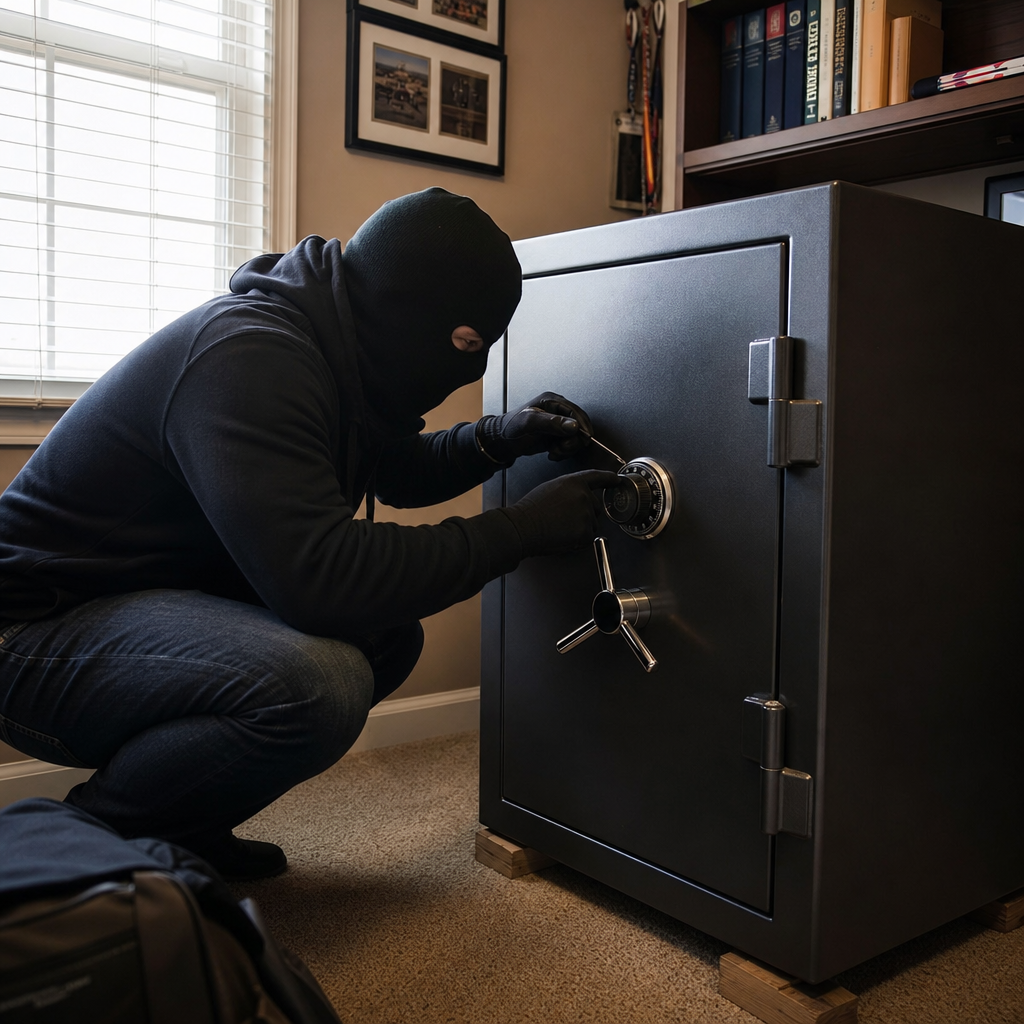
Can burglars really crack a gun safe in minutes? Sometimes, yes—but only under specific conditions, and that answer is exactly why gun safe myths and misconceptions cause so many costly buying mistakes. In my work evaluating residential security products, I have seen owners assume a heavy safe is automatically secure, believe any fire label means meaningful protection, or expect a lock alone to defeat determined thieves. A gun safe is not a magic box. It is a layered security device designed to delay unauthorized access, reduce theft risk, protect against careless handling, and, in better models, provide a measured level of fire resistance. Understanding what a gun safe can and cannot do matters because the wrong expectations lead to poor installation, bad placement, weak lock choices, and overconfidence around children, guests, cleaners, contractors, and burglars. This hub explains the most common gun safe myths, how burglars actually attack safes, what “minutes” means in real break-in scenarios, and how to judge security claims with clear criteria. If you want practical answers before buying, upgrading, or anchoring a safe, start here and use each section as a foundation for deeper reading across the wider Gun Safes & Safety topic.
What “Crack a Gun Safe in Minutes” Actually Means
When people say burglars can crack a gun safe in minutes, they are usually talking about fast entry into a consumer-grade residential security container, not a high-security vault. That distinction matters. Many products sold as gun safes are technically residential security containers, or RSCs, a category tested under UL 1037 for limited attack resistance. In plain terms, an RSC is intended to resist a brief tool attack by one person using basic hand tools. It is not designed to withstand prolonged attacks with grinders, carbide bits, demolition bars, or multiple attackers who have privacy and time. In actual burglaries, time is compressed. Most residential intrusions last only a few minutes, and thieves prioritize easy-to-carry valuables first. But if they locate an unanchored, lightly built safe in a secluded area, they may tip it over, pry the door edge, attack the lock area, or remove the entire container to open elsewhere.
The word “minutes” also hides huge differences in attack method. A thin 14-gauge cabinet with exposed door gaps may be compromised quickly with a long pry bar. A better-built 10-gauge or 7-gauge body, reinforced door, hard plate, relocker, and solid anchor installation can dramatically increase attack time and noise. That delay is the point. For home security, success is rarely about making theft impossible; it is about making attack loud, slow, risky, and unrewarding. A burglar who needs ten noisy minutes with tools in a garage is in a completely different position than one who can peel open a cheap cabinet in ninety seconds.
Myth: Any Heavy Gun Safe Is Secure
Weight helps, but weight alone is a poor proxy for burglary resistance. I have inspected safes that looked imposing on a showroom floor yet relied on thin steel shells, decorative door bolts, and weak interiors. Some manufacturers add weight through fireboard layers or oversized dimensions rather than thicker steel. A 700-pound safe may still be vulnerable if the body uses light-gauge metal and the door frame flexes under pry pressure. Conversely, a smaller unit with a thicker steel body and strong boltwork may resist opportunistic attacks better than a larger but thinner competitor.
Steel thickness is one of the most important facts buyers should verify. Many entry-level gun safes use 14-gauge or 12-gauge steel. That may be acceptable for basic deterrence and child access prevention when properly anchored, but it is not robust against dedicated pry attacks. As steel gets thicker, stiffness and resistance improve significantly. Door construction matters just as much. Look for formed or composite doors, reinforced hinge sides, minimal pry gaps, and internal hard plate protecting the lock area. A safe should also be anchored through substantial concrete or framing with appropriate hardware, because even a heavy unit becomes easier to defeat if thieves can tip it onto its back to gain leverage.
For that reason, buyers should think in systems, not silhouettes. Construction, lock protection, door fit, boltwork, relockers, anchoring, and placement together determine real security. Heavy is useful. Well engineered is better.
Myth: The Lock Is the Main Thing That Stops Burglars
The lock matters, but most residential gun safe attacks target the container, door edge, or mounting condition rather than “Hollywood” lock manipulation. Electronic locks and mechanical dial locks each have strengths. Quality electronic locks offer fast access, multiple user codes, and common audit or lockout features on some models. Mechanical locks avoid battery dependence and have long service histories. Either can perform well if sourced from reputable makers such as Sargent and Greenleaf, SecuRam, or La Gard and installed correctly. Cheap locks of either type can fail prematurely or be vulnerable to abuse.
What stops burglars is usually the total protective package around the lock. Hard plate can resist drill attacks. Relockers can trigger if the lock is punched or compromised, blocking boltwork movement. A reinforced door skin helps prevent peeling. Tight door clearances make prying harder. If the safe body is thin, however, an attacker may ignore the lock entirely and cut, pry, or punch through a weaker point nearby. This is why shoppers who obsess over keypad versus dial while ignoring steel gauge often focus on the wrong issue.
For households prioritizing child resistance and fast defensive access, a fast, reliable electronic lock on a sturdy safe can be a sensible choice. For long-term simplicity with less concern about speed, a quality mechanical lock remains viable. The key is matching lock type to use case while remembering that lock choice does not rescue weak construction.
Myth: Fire Ratings and Burglary Ratings Mean the Same Thing
One of the most persistent gun safe misconceptions is that a safe with an impressive fire label must also be difficult to burglarize. Fire resistance and burglary resistance are separate engineering problems. Fire protection focuses on insulation, heat expansion, door seals, and internal temperature management over a stated duration. Burglary protection focuses on steel thickness, structural rigidity, lock shielding, pry resistance, and attack delay. A safe can perform better in one category than the other.
Marketing language often blurs the distinction. Some brands publish proprietary fire claims without independent verification, while others reference recognized standards. Consumers should ask who performed the test, what temperature curve was used, whether the safe was preheated, what internal temperature threshold was measured, and whether the duration reflects a complete test or a marketing estimate. Similar skepticism applies to burglary claims. “Drill resistant” or “tamper proof” are not standardized guarantees. Certifications from recognized organizations provide more useful signals than generic promises.
| Claim Type | What It Usually Refers To | What Buyers Should Verify |
|---|---|---|
| Fire rating | Insulation and internal heat protection for a stated time | Testing method, temperature, independent lab, internal threshold |
| Security rating | Resistance to forced entry or tool attack | Certification level, steel thickness, lock protection, relocker |
| Water protection | Gasket sealing against brief exposure or flooding | Depth, duration, test conditions, drain risk after fire response |
| California DOJ approval | Meets specific firearm safety device requirements | Whether the listed model and lock match current certification |
For a hub page on gun safe myths and misconceptions, this distinction is foundational: do not buy a fire story when your real concern is theft, and do not assume a theft-focused unit will protect paper documents or optics from severe heat. Choose according to threat model.
How Burglars Actually Attack Gun Safes
Real-world attacks are usually simple, physical, and opportunistic. In residential cases, I most often see five patterns. First, thieves remove an unanchored safe entirely using dollies, furniture sliders, or two people. Second, they tip the safe onto its back, which improves leverage for prying at the door edge. Third, they attack weak sidewalls or top panels instead of the door because many entry-level safes have thinner bodies than doors. Fourth, they use grinders, cutoff wheels, or demolition tools in detached garages, workshops, or rural homes where noise is less noticeable. Fifth, they exploit placement mistakes, such as safes visible from windows, near tool benches, or in closets with enough clearance to swing long bars.
These attack patterns explain why installation often matters as much as the safe itself. Anchoring into concrete prevents removal and tipping. Tight placement into a corner or alcove reduces pry access to sides and top. Separating the safe from readily available household tools increases the attacker’s difficulty. Alarm coverage, cameras, dogs, lighting, and occupied appearance all reduce the uninterrupted time burglars need. A mediocre safe in a strong security environment can outperform a premium safe installed carelessly in a detached outbuilding full of power tools.
This is also why the phrase “crack a gun safe in minutes” is both true and misleading. Under favorable conditions for the attacker—thin steel, no anchors, easy tool access, no alarm, no witnesses—minutes may be enough. Under unfavorable conditions, the same burglar may give up almost immediately.
Myth: Bigger Safe Means Better Protection
A larger safe gives more capacity, not automatically more protection. Oversized models can be excellent, but only if structural quality scales with size. Large doors create more leverage opportunities, wide bodies may flex more if steel is thin, and owners often overfill interiors until organized access disappears. In practice, a crowded safe leads to guns leaning against each other, optics getting bumped, and owners leaving one firearm outside “temporarily,” which defeats the purpose of secure storage.
The better approach is to buy for realistic capacity and future growth while checking actual long-gun counts skeptically. Published capacities are often optimistic and based on slim rifles without optics, slings, bipods, or AR-style magazines. If a safe is marketed for twenty-four guns, many households will store half that number comfortably. A right-sized, well-built safe with efficient interior layout is usually safer and easier to use than a huge, lightly built box chosen for the headline capacity number.
Myth: A Gun Safe Makes Firearms Childproof
A gun safe reduces unauthorized access, but no storage device substitutes for disciplined handling, ammunition management, code control, and household education. If children can observe the code being entered, retrieve a backup key, or access a pistol left out during daily routine, the presence of a safe does not make the home functionally secure. Quick-access handgun safes, for example, are valuable near a bed or desk, but they require careful placement away from children’s reach, regular battery checks, and a lock design that resists simple bypass methods.
Responsible storage means controlling every access path. That includes changing factory codes, avoiding easy patterns, restricting who knows combinations, preventing shoulder surfing, and keeping override keys truly inaccessible. It also means storing firearms unloaded when appropriate to the household’s risk profile, securing ammunition separately when desired, and maintaining a consistent routine so guns are not left on counters, in vehicles, or in bags. The myth to avoid is the idea that purchasing a safe finishes the job. In reality, the safe is one layer in a broader safety protocol.
What Buyers Should Focus on Instead of Marketing Hype
When comparing gun safes, start with verifiable construction details and your actual threat model. Ask where the safe will live, who might try to access it, what tools they could obtain, and how quickly you need legitimate access. Then check steel gauge of body and door, type of fire insulation, lock brand, hard plate presence, relocker design, anchor hole layout, interior dimensions, shelving flexibility, power passthroughs, dehumidification options, and warranty support. A glossy finish, patriotic branding, or impressive bolt count means little if the body steel is thin and the frame flexes.
Placement should be planned before purchase. Basements can be good for concealment and concrete anchoring but may raise humidity concerns. Garages offer space but often expose the safe to temperature swings, visible delivery paths, and readily available tools. Closets can conceal a safe well if floor structure supports the load and installation leaves limited pry clearance. Humidity control matters for long-term firearm preservation; desiccants, goldenrod-style dehumidifiers, and basic hygrometers are inexpensive compared with rust damage to blued steel and optics.
As a hub for gun safe myths and misconceptions, the central lesson is straightforward: evaluate delays, not promises. The best residential gun safe is the one that meaningfully slows attack, fits your firearms and habits, and is installed as part of a layered home security plan. Review your current setup, identify weak points, and use that checklist before your next purchase or upgrade.
Frequently Asked Questions
Can burglars really crack a gun safe in just a few minutes?
Yes, under the right circumstances, some burglars can get into a gun safe surprisingly fast. The key issue is that “gun safe” is a broad category, and not every product sold under that label offers the same level of burglary resistance. Thin steel cabinets, big-box store safes with light bodies, poorly reinforced doors, and units that are not bolted down can all be defeated much more quickly than most owners expect. In many residential break-ins, burglars are not using movie-style lock manipulation. They are attacking weak construction, prying doors at the corners, tipping the safe over to exploit leverage, or removing the entire unit to open later. If the safe is lightly built and accessible from the sides, minutes may be all a determined intruder needs.
That said, “minutes” does not mean every burglar can open every safe quickly. Better-built safes with thicker steel, stronger door construction, active locking bolts, hardplates, relockers, and proper anchoring can dramatically increase the difficulty and time required. Most residential burglars want speed, low noise, and low risk. A safe that forces them into a longer, louder, messier attack often does its job by making the attempt unattractive. So the honest answer is yes, some safes can be cracked in minutes, but usually because they were entry-level, poorly installed, badly located, or purchased based on marketing assumptions rather than true security features.
What makes one gun safe easy to break into while another is much more secure?
The biggest difference is not the lock type alone but the overall construction of the safe. Many buyers focus on exterior size, weight, glossy paint, door bolt count, or branding, yet the real question is how the safe resists physical attack. Steel thickness matters. Door design matters. Body reinforcement matters. A safe with a thin sheet-metal body may look substantial, but if a pry bar can peel back the door frame or bow the sidewall, the lock never has to be “cracked” in the traditional sense. Burglars often defeat the container, not the lock itself.
Anchoring is another major factor. A safe that is not bolted to concrete or a structurally sound floor can be tipped onto its back or side, making pry attacks easier and giving thieves options they would not have if the safe were fixed in place. Placement matters too. A safe tucked into a tight closet corner with limited side access is much harder to attack than one sitting exposed in a garage. Lock protection also matters, but in context. Mechanical and electronic locks can both be effective if they are quality units installed on a strong safe. However, even a good lock cannot compensate for weak steel or poor door geometry.
Finally, independent burglary ratings, build transparency, and manufacturer reputation carry more weight than marketing labels. Some products are really security cabinets or residential security containers rather than high-security safes. That does not make them useless, but it does mean buyers should align expectations with design. The more a safe is built and installed to resist prying, peeling, drilling, and removal, the less realistic the “cracked in minutes” scenario becomes.
Are fire ratings and heavy weight good indicators of burglary protection?
Not by themselves, and this is one of the most common buying mistakes. A fire label tells you very little about how well a safe resists forced entry unless the rating comes from a credible, clearly explained testing standard and is paired with strong anti-burglary construction. Some gun safes achieve fire claims through layers of insulation, gypsum board, seals, and design features that help during heat exposure, but those same features do not automatically make the body more resistant to pry bars, cutting tools, or aggressive leverage. Fire protection and burglary protection are related only in the sense that both involve construction quality; they are not interchangeable.
Weight is also easy to misread. A heavier safe may simply contain more fireboard, thicker interior materials, or larger dimensions rather than substantially thicker steel. Consumers often assume weight equals security, but a safe can be heavy and still have a relatively thin body vulnerable to attack. On the other hand, weight does matter in one practical sense: a heavier, properly anchored safe is harder to remove from the home. That can be a real advantage, but it should not be mistaken for proof of superior break-in resistance.
The better approach is to evaluate the actual steel thickness of the body and door, the presence of reinforced door frames, hardplate protection, relockers, internal hinges or protected hinge-side designs, and whether the safe has meaningful third-party testing or ratings. A smart buyer treats fire performance, burglary resistance, and installation strategy as separate but connected issues. A safe that performs well in one category should not be assumed strong in all the others.
Does the lock determine whether a burglar can open a gun safe quickly?
Not nearly as much as people think. Locks matter, but in most residential burglaries, criminals are not expertly manipulating dials or hacking keypads. They are looking for the fastest point of failure. On lower-end safes, that point is often the door edge, frame, sidewall, top panel, or anchoring system rather than the lock. If a burglar can pry the door away from the body, punch through thin steel around the lock area, or carry off the entire safe, the sophistication of the lock becomes much less important.
That said, lock quality still plays a role. Cheap electronic locks can fail prematurely or offer less reliability over time, while well-made mechanical or electronic locks from reputable manufacturers tend to provide better durability and tamper resistance. Some safes also include hardplates and relockers that help protect the lock area from drilling or punch attacks. These features can materially improve security, especially against more deliberate attackers. But they should be viewed as part of a system, not a standalone solution.
For most homeowners, the better question is not “Which lock is impossible to crack?” but “Is the safe built and installed so the lock is not the only thing standing between a thief and my firearms?” A high-quality lock on a weak safe can still leave you exposed. A solidly built safe, properly anchored and thoughtfully located, with a reliable lock and supporting anti-attack features, gives you a much more realistic level of protection.
What should homeowners do to keep burglars from getting into a gun safe quickly?
Start by thinking in layers rather than relying on the safe as a magic box. Choose a safe with credible burglary-resistant construction, not just attractive marketing. Look closely at body steel thickness, door thickness and design, reinforced frames, boltwork quality, lock protection features, and any legitimate independent testing. Avoid making a purchase based only on capacity, cosmetics, fire stickers, or the number of locking bolts shown in a brochure. Those details can be misleading if the core structure is weak.
Installation is just as important as the safe itself. Bolt the safe down securely, ideally to concrete or a structurally appropriate surface using proper hardware. Place it where access is restricted, such as in a closet, alcove, or corner that limits pry-bar angles and prevents easy side or rear attacks. Avoid leaving it in a highly visible, easy-to-work-on location like the center of a garage. If possible, integrate the safe into a broader home security plan that includes alarm systems, cameras, reinforced entry points, motion lighting, and fast police notification. Burglars are highly sensitive to time pressure and interruption.
You should also manage expectations. Most residential gun safes are intended to delay unauthorized access, protect against opportunistic theft, and increase the difficulty of a smash-and-grab burglary. They are not vaults immune to tools, time, and persistence. The goal is to make your safe take longer, create more noise, and attract more attention than a burglar can tolerate. When buyers understand that reality, they make better decisions: they choose stronger safes, install them correctly, and use them as one part of a layered security strategy rather than assuming any heavy box with a lock is enough.