
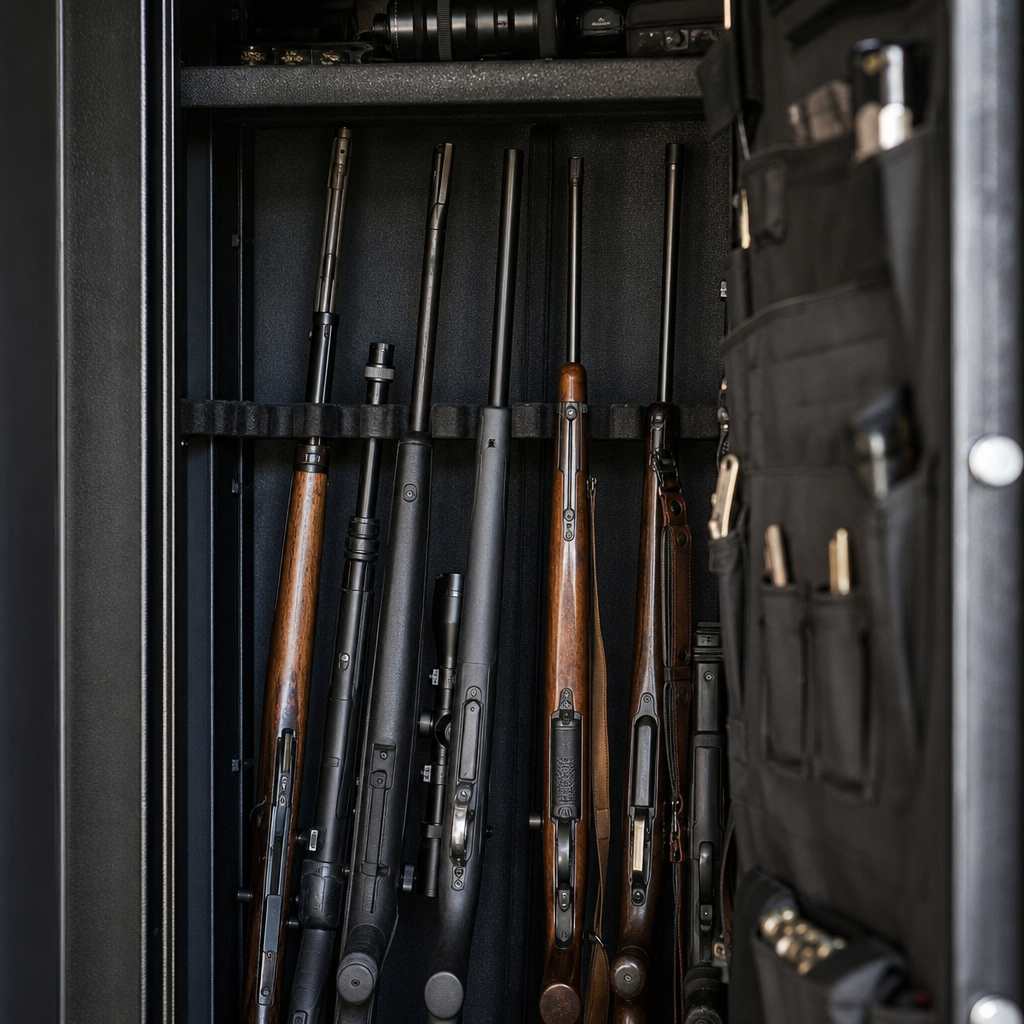
Gun safes can reduce the risk of rust and corrosion on firearms, but they do not stop those problems automatically. A safe is a controlled storage container, not a climate-proof vault. Whether guns stay rust-free inside it depends on humidity, temperature swings, airflow, the materials touching the metal, and the owner’s maintenance routine. In practical terms, I have seen two collections stored in similar safes produce opposite results: one remained pristine for years because the owner monitored humidity and wiped down each firearm before storage, while the other developed surface rust because damp cases, foam lining, and a garage location turned the safe into a moisture trap.
Rust on firearms is the oxidation of iron or steel after exposure to oxygen and moisture. Corrosion is broader. It includes rust on carbon steel, pitting on blued finishes, and deterioration caused by salts, acids, or dissimilar metals. Stainless steel resists corrosion better than blued steel, but it is not immune. Fingerprints, bore residue, leather slings, fabric cases, and even some wood stocks can hold moisture against metal long enough to cause damage. That is why the question “Do gun safes stop rust and corrosion on firearms?” matters so much. A quality safe protects against theft, unauthorized access, and some fire threats, but owners often assume it also guarantees ideal preservation. That assumption is one of the most common gun safe myths.
This article serves as a hub for gun safe myths and misconceptions, with rust prevention as the central issue. The short answer is that a gun safe helps only when it is part of a full storage system. Owners need to understand relative humidity targets, dehumidification options, safe placement, inspection intervals, and what should never be stored against a firearm. Once those factors are handled correctly, a safe becomes one of the best tools for preserving a collection. When they are ignored, the same safe can accelerate corrosion by trapping humid air in an enclosed space.
Why Firearms Rust Inside Safes
Firearms rust inside safes for the same basic reason they rust anywhere else: moisture reaches vulnerable metal surfaces. The difference is that safes can hide the problem until it becomes serious. Most owners expect danger outdoors, in boats, hunting blinds, or damp basements. In reality, enclosed storage can be riskier because the environment changes slowly and quietly. A gun may enter the safe after a range session with light fouling in the bore, salts from handling on the receiver, and a thin oil film that has partially evaporated. If the safe sits in a humid room, the trapped air can condense on cooler steel surfaces, especially during seasonal temperature swings.
Relative humidity is the key measurement. For firearm storage, many experienced safe technicians and preservation specialists aim for roughly 45 to 50 percent relative humidity. Above about 55 percent, corrosion risk rises. Below about 35 percent, wood stocks, grips, and interior safe materials can dry excessively. The exact target depends on local climate and firearm materials, but the principle stays consistent: moderate, stable humidity is safer than either dampness or extreme dryness. In my experience, owners in coastal states and the Southeast face the most frequent rust issues, but collections in northern climates also corrode when safes are placed against exterior walls or in unconditioned garages.
Another hidden cause is thermal lag. A heavy steel safe changes temperature more slowly than room air. When warm, humid air enters after the door opens, the metal inside may still be cool. That can create a condensation event similar to moisture forming on a cold drink. It does not require visible water droplets to be harmful. A microscopic film of moisture is enough to start oxidation on neglected steel. This is why a safe alone is not a rust barrier. It is only an enclosure whose internal environment must be managed.
Common Gun Safe Myths and Misconceptions
The first myth is that fire-rated safes are sealed tightly enough to block humidity. Most are not airtight, and many should not be. Fire seals expand during high heat, but under normal conditions safes still exchange some air with the room. That means a safe in a damp basement usually becomes a damp safe. The second myth is that thicker steel alone prevents corrosion. Steel thickness improves security, not preservation. Moisture does not care whether the body is 12-gauge or 7-gauge if humid air remains inside.
The third myth is that foam, fleece, and soft cases always protect finishes. In reality, many linings and cases hold moisture next to the gun. I routinely advise owners not to store firearms long term in soft cases, especially after hunting in rain or snow. The fourth myth is that stainless firearms do not need protection. Stainless alloys resist rust better than ordinary carbon steel, but chlorides from sweat, fingerprints, and marine air still cause corrosion. The fifth myth is that a desiccant canister solves everything forever. Desiccants work, but they saturate and must be recharged or replaced. Owners often install one and forget it.
The sixth myth is that if a safe is indoors, climate control is unnecessary. Interior closets in conditioned spaces are usually better than garages, sheds, and basements, yet indoor safes still face humidity swings from weather, HVAC cycling, and nearby bathrooms or laundry rooms. The seventh myth is that visible rust is the first warning. Often it is not. By the time red or orange spotting appears, bluing may already be compromised and pitting may have begun in hidden areas such as under optic mounts, inside the trigger guard, beneath grips, or in the bore.
What Actually Prevents Rust in a Gun Safe
Reliable rust prevention combines environment control, surface protection, and routine inspection. Start with location. A safe performs best in a climate-controlled interior room, away from exterior masonry walls, direct sunlight, HVAC vents, and high-moisture areas. Next, control humidity inside the safe using either a low-wattage heating rod, rechargeable desiccants, an electric compressorless dehumidifier designed for enclosed storage, or a combination of these. Heating rods work by raising interior temperature slightly so moisture is less likely to condense. Desiccants absorb moisture directly. In humid regions, a rod plus monitored desiccants is often the most dependable setup.
Use a digital hygrometer, not guesswork. Good units from companies such as SensorPush, Govee, and ThermoPro let owners track trends rather than relying on occasional checks. In higher-end installations, a remote sensor with mobile alerts is worth the cost because it reveals humidity spikes after storms, power failures, or door openings. I recommend placing the sensor near the center of the safe rather than at the top, where readings can be misleading if warm air stratifies.
Surface protection matters just as much. Before storage, firearms should be clean, dry, and lightly protected with a quality rust inhibitor or preservative oil. Products such as Break-Free CLP, Eezox, CorrosionX, and RIG grease are widely used, though the best choice depends on whether the gun is in regular rotation or long-term storage. Thin oils are convenient for frequent use; waxes and heavier preservatives can provide longer protection but must be removed before shooting. Bore protection should match storage duration and barrel material, and owners should always follow manufacturer guidance.
| Method | How It Works | Best Use Case | Main Limitation |
|---|---|---|---|
| Heating rod | Raises safe temperature slightly to reduce condensation | Large safes in humid homes | Does not remove moisture directly |
| Rechargeable desiccant | Absorbs moisture from enclosed air | Smaller safes or supplemental use | Requires regular recharging |
| Digital hygrometer | Monitors humidity and temperature trends | Any firearm storage setup | Only informs; does not control conditions |
| Protective oil or grease | Creates a barrier on metal surfaces | All firearms before storage | Must be renewed and applied correctly |
Safe Materials, Accessories, and Placement Mistakes
Many corrosion problems come from what is placed inside the safe, not the safe shell itself. Foam can trap moisture. Cardboard ammunition boxes absorb ambient humidity. Leather slings and holsters hold tannic acids and moisture against metal. Silicone-treated gun socks can help prevent light contact damage and provide another moisture-resistant layer, but only if the firearm goes in clean and dry. They are not a fix for a damp environment. GoldenRod-style heaters are effective because they address condensation risk, yet they work best when the safe is not overpacked. Air circulation inside matters.
Safe placement mistakes are especially common. Garages seem convenient but often produce the worst outcomes because of daily temperature swings, concrete floor moisture, and open-door humidity surges. Basements can be acceptable only if they are fully conditioned and dry year-round. An interior closet on the main floor is usually superior. If the safe must sit on concrete, use a barrier or riser to limit ground moisture transfer and promote airflow under the base. I have inspected safes with perfect-looking interiors and badly corroded lower shelves because moisture entered from below over several seasons.
Overcrowding also creates dead air pockets. Rifles pressed tightly together can trap moisture where stocks touch barrels or where fabric sleeves contact receivers. A packed safe should be reorganized with spacing, racks that keep metal separated, and enough access to inspect each gun without removing the entire collection. This is one reason advertised safe capacity numbers are often unrealistic. A “36-gun safe” may store far fewer scoped rifles safely if the real goal is preservation rather than just fitting them inside.
Maintenance Habits That Matter More Than Safe Marketing
Marketing language often implies that premium safes solve preservation on their own. They do not. Maintenance habits decide the outcome. After every handling session, wipe exposed metal with a clean cloth and a light protectant, especially if the gun has been carried against the body or used in humid weather. Salts from fingerprints are one of the most underestimated causes of localized corrosion. Hunters should never return a firearm to the safe immediately after coming in from rain or snow. Let it reach room temperature, dry fully, then clean and protect it.
Inspection intervals should be scheduled, not casual. For frequently used firearms, monthly checks are reasonable. For long-term storage, inspect at least every 60 to 90 days, more often in coastal or high-humidity climates. Look under slings, inside the bore, at screw heads, beneath optic rings, and around muzzle devices. These are common early rust points. If corrosion is found, remove it promptly with the least aggressive method appropriate to the finish, then correct the environmental cause. Ignoring a tiny orange spot is how owners end up with permanent pitting.
Documentation helps more than people expect. Keep a simple log of hygrometer readings, desiccant recharge dates, and product applications. Over time, patterns emerge. You may notice humidity rising every summer, or after the safe door remains open during cleaning sessions. That kind of evidence makes prevention practical rather than theoretical. It also turns this hub topic of gun safe myths and misconceptions into something useful: the truth is measurable, repeatable, and easier than repairing a damaged finish.
How This Hub Connects to Broader Gun Safe Myths
Rust prevention sits at the center of several broader misconceptions about safes. Owners often believe a fire rating means total environmental protection, a larger safe means better storage conditions, or expensive interiors equal better preservation. Those claims are incomplete. Fireboard materials can release moisture during a real fire event, plush interiors can still hold humidity, and size only helps if airflow and monitoring improve with it. This is why hub coverage matters. Understanding corrosion teaches a broader lesson: every safe claim should be tested against real storage conditions, not brochure language.
The practical takeaway is simple. A gun safe is essential for security and responsible storage, but it is not a self-managing preservation device. To stop rust and corrosion on firearms, pair the safe with humidity control, a monitored environment, smart placement, clean handling, and regular inspection. If you are building out your Gun Safes & Safety knowledge base, use this article as the starting point for evaluating every other claim you hear about liners, ratings, dehumidifiers, long-term storage, and maintenance products. Begin by checking the humidity inside your safe today, then adjust your setup before corrosion has a chance to start.
Frequently Asked Questions
Do gun safes automatically prevent rust and corrosion on firearms?
No. A gun safe can lower the risk of rust and corrosion, but it does not automatically stop either problem. A safe is best understood as a controlled storage container, not a sealed, climate-proof environment. Firearms rust when moisture, oxygen, and metal interact over time, and a safe only helps if the conditions inside it are managed properly. If humidity stays too high, if temperatures swing enough to create condensation, or if moisture gets trapped inside with the guns, rust can still develop even in a high-quality safe.
This is why two nearly identical safes can produce very different outcomes. One owner may keep humidity stable, use a dehumidifier, avoid storing guns in foam or damp cases, and regularly wipe metal surfaces with a protective oil. Another may place firearms in the safe after exposure to rain or sweat, leave the interior unmonitored, and assume the steel box alone is enough protection. The first collection stays clean; the second may show surface rust, pitting, or corrosion around screws, bores, sights, and hidden contact points. The safe helps, but owner habits determine whether it becomes a protective environment or just a place where moisture is trapped out of sight.
What causes firearms to rust inside a gun safe?
The most common cause is excess humidity. When the relative humidity inside a safe remains too high, metal surfaces are more likely to develop oxidation, especially on blued steel, carbon steel, and small untreated components. Temperature fluctuations can make the problem worse by creating condensation. For example, if the safe and the guns inside cool down and then warm up quickly, moisture in the air may condense on the metal. Even a small amount of repeated condensation can lead to rust over time.
Other factors matter as well. Firearms stored with fingerprints, skin oils, bore residue, powder fouling, or salt from sweat are more vulnerable because contaminants attract and hold moisture. Soft cases, foam padding, fabric sleeves, and some interior materials can also trap humidity against the gun rather than letting it dissipate. Limited airflow inside a packed safe may create stagnant pockets where moisture lingers. In coastal climates, basements, garages, or other naturally damp areas, the risk increases further because the air surrounding the safe already contains more moisture.
There is also the issue of neglect. Rust often starts in places owners do not inspect often: under stocks, beneath optic mounts, around sling studs, inside trigger guards, in bores, and where firearms touch shelving or each other. A safe does not eliminate these risks. It only gives you a better chance to control them if you actively manage the environment inside.
What is the ideal humidity level inside a gun safe to help prevent corrosion?
A commonly recommended target is around 45% to 50% relative humidity, with many gun owners aiming broadly for 40% to 50%. That range is usually low enough to reduce the risk of rust while not being so dry that it creates avoidable issues for wood stocks, grips, or other natural materials. The exact ideal number can vary depending on the firearm finishes, whether the collection includes wood-heavy long guns, and the climate where the safe is located, but the key principle is stability. A steady, moderate humidity level is generally much better than wide swings between very dry and very damp conditions.
Once humidity rises much above that general range for sustained periods, corrosion risk tends to increase. If the safe lives in a garage, shed, basement, or humid region, internal humidity can climb surprisingly fast, especially when the door is opened often. That is why a hygrometer is one of the most useful and inexpensive tools you can add to a safe. Without one, you are guessing. With one, you can see whether your dehumidifier, desiccant, or room conditions are actually working.
It is also important to remember that relative humidity is only part of the picture. Rapid temperature changes can still create moisture problems even if average humidity readings do not seem extreme. For that reason, the best setup combines humidity monitoring with a stable room environment, good safe placement, and routine inspection of the firearms themselves.
What are the best ways to keep guns from rusting inside a safe?
The most effective approach is to combine environmental control with regular firearm maintenance. Start by storing only clean, dry firearms. After handling or shooting, wipe down exposed metal with a quality protectant before the guns go back into the safe. Fingerprints and sweat can leave salts and acids behind, and those residues can start corrosion surprisingly quickly. If a firearm has been used in rain, snow, high humidity, or extreme temperature changes, let it fully dry and return to room temperature before locking it away.
Inside the safe, control moisture actively. Many owners use an electric dehumidifier rod, rechargeable desiccant packs, silica gel canisters, or a combination of those methods. A hygrometer should be used to confirm actual results rather than relying on assumptions. Keep the safe in a climate-controlled part of the home whenever possible, because the surrounding room strongly affects the conditions inside. Avoid storing firearms in foam-lined cases, soft sleeves, or materials that hold moisture against the metal for long periods. Give the guns some space so air can circulate, and try not to overcrowd the safe.
Routine inspection matters just as much as the equipment. Open the safe periodically, check humidity readings, and examine vulnerable areas such as muzzles, actions, bores, magazine wells, and contact points. If you own blued steel firearms or collectible pieces, inspect them even more often. In practice, preventing rust is less about finding one perfect product and more about maintaining a consistent system: stable humidity, clean guns, protective coatings, and periodic checks before a small spot of oxidation turns into lasting damage.
Are dehumidifiers and desiccants necessary in a gun safe?
In many cases, yes. While not every safe in every climate requires both, some form of moisture control is strongly recommended if you want reliable protection against rust and corrosion. A gun safe is a confined space, and confined spaces tend to hold moisture unless that moisture is actively reduced or managed. If you live in a humid region, place the safe in a basement or garage, or store valuable firearms long term, relying on the safe alone is usually not enough.
Electric dehumidifier rods work by gently warming the interior air, which helps reduce condensation and encourages air circulation within the safe. Desiccants, such as silica gel, physically absorb moisture from the air. Each method has advantages. Dehumidifier rods are low-maintenance and work continuously when powered. Desiccants are useful where power is unavailable and can be very effective in smaller spaces, though they must be recharged or replaced regularly. Many firearm owners use both: a rod for constant background control and desiccant for extra moisture absorption during wet seasons.
The main point is that these tools are not optional luxuries for many owners; they are practical safeguards. The right solution depends on your climate, safe location, how often the door is opened, and the size of the collection. The best way to know whether your setup is enough is to pair it with a hygrometer and monitor the results over time. If humidity stays in the recommended range and the guns remain dry and clean, your system is working. If not, more active moisture control is needed before corrosion has a chance to begin.