
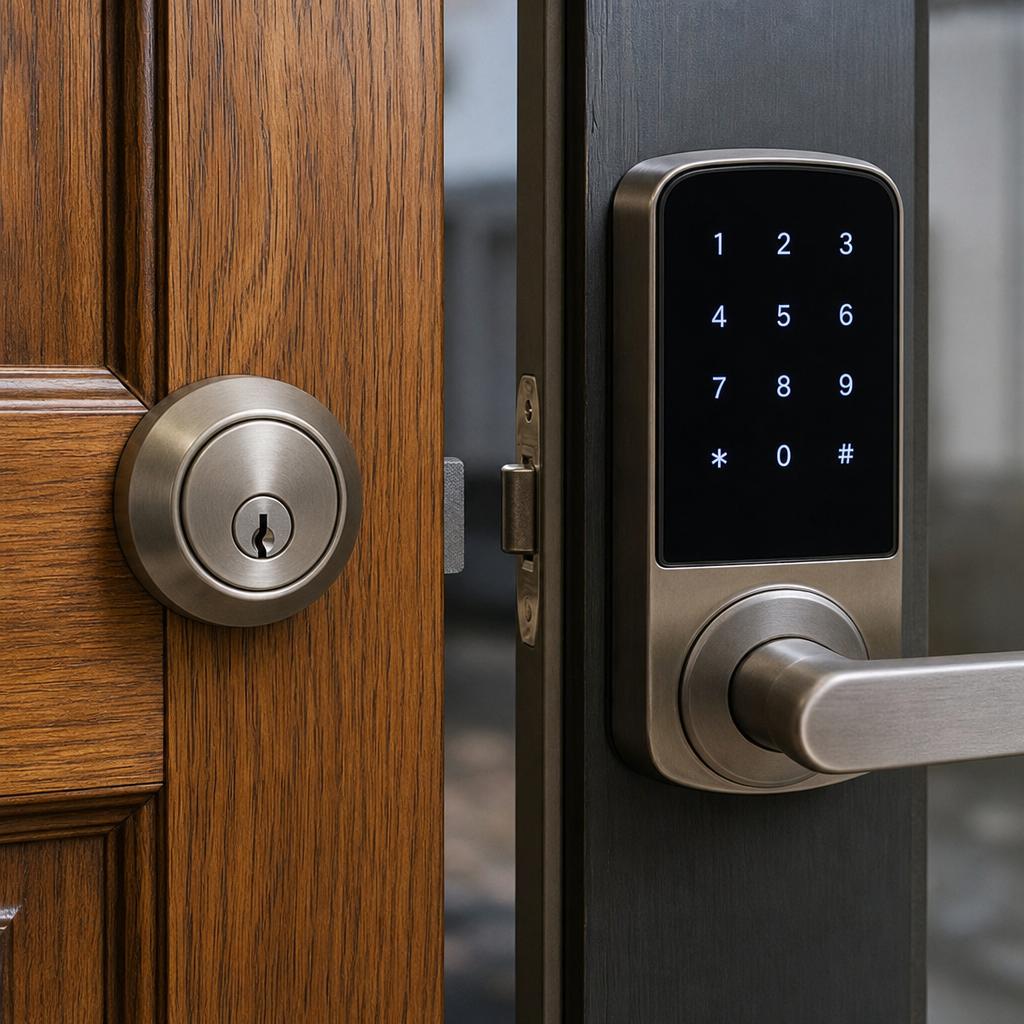
When shoppers ask whether a mechanical lock is more reliable than an electronic lock, they are usually asking a broader question about gun safe dependability, failure risk, and long-term security. In the gun safes and safety category, that question sits at the center of many gun safe myths and misconceptions, because lock type often gets treated as the only factor that matters. After years of evaluating residential security containers, commercial safes, and lock replacements, I have found that reliability depends on three linked issues: lock design, installation quality, and owner behavior. A well-made mechanical dial can run for decades with minimal service, but a quality electronic lock can deliver faster access, consistent lockout control, and excellent real-world performance when it is installed correctly and maintained with fresh batteries.
To answer the question clearly, a mechanical lock uses physical wheels, a spindle, a drive cam, and a fence to align a combination and retract the boltwork. An electronic lock uses a keypad, a control board, a solenoid or motor-driven actuator, and a battery-powered circuit to release the safe when the correct code is entered. Reliability means the lock opens when authorized users need it, resists unauthorized entry, and continues working across years of normal use. For gun owners, that matters because a safe is not just a storage box. It is part of a layered safety plan involving child access prevention, theft deterrence, fire protection, and fast retrieval in stressful situations.
The biggest misconception is that mechanical automatically means stronger and electronic automatically means fragile. That is too simplistic. Some of the most dependable locks I have seen in the field were electronic models from established manufacturers such as Sargent and Greenleaf, SecuRam, and La Gard, especially on safes that were anchored properly and used in climate-controlled rooms. At the same time, I have serviced inexpensive import dial locks with inconsistent tolerances, rough dialing feel, and poor assembly that caused opening issues long before owners expected problems. The opposite is also true: high-quality Group 2M mechanical locks remain a benchmark for long service life, especially for owners who value independence from batteries and who rarely need rapid access.
Because this page serves as a hub for gun safe myths and misconceptions, it helps to frame the lock debate within the larger reality of safe ownership. Buyers often overestimate fire ratings, misunderstand “gun safe” versus “TL-rated safe,” assume heavier always means better, or believe any digital keypad is vulnerable to easy hacking. The truth is that lock reliability is one important variable among many, and the best choice depends on how the safe will be used, where it will be installed, who needs access, and what level of maintenance the owner will realistically perform.
What reliability really means in a gun safe lock
In plain terms, a reliable gun safe lock is one that works consistently under normal conditions and fails infrequently over its service life. Consistency includes accurate code acceptance, predictable bolt retraction, tolerance for regular use, and resistance to vibration, humidity, and minor user mistakes. A lock that is technically durable but difficult to operate under stress may be less reliable for home defense use than a lock that opens instantly with a practiced code. That distinction matters because reliability is not only mechanical endurance. It is functional reliability in the moments owners actually depend on the safe.
Industry standards help separate marketing from substance. Many reputable safe locks are tested under UL standards, and lock ratings such as Group 2M for mechanical locks indicate recognized performance criteria. Electronic locks from established brands are also designed around commercial safe use, not just consumer electronics expectations. In practical terms, if you compare a no-name keypad on a budget cabinet to a commercial-grade electronic lock body installed on a welded safe, you are not comparing “electronic versus mechanical.” You are comparing low-grade hardware to higher-grade hardware. That is where many buying mistakes start.
Where mechanical locks usually outperform electronic locks
Mechanical locks have three reliability advantages that deserve respect. First, they do not depend on batteries. If the safe sits unused for months or years, a mechanical dial does not lose power or throw a low-battery warning that someone ignored. Second, quality dial locks can operate for very long periods with little intervention. I regularly see older safes that still open smoothly on their original mechanical lock after decades, provided the lock was not abused or exposed to severe corrosion. Third, mechanical locks reduce one common human failure point: dead batteries at the worst possible time.
Mechanical locks also handle environmental neglect better in some situations. In garages, barns, workshops, or seasonal properties with temperature swings, battery chemistry and keypad membranes can become a weak link for electronic systems. Dust, condensation, and insect intrusion affect both lock types, but a sealed mechanical lock body often tolerates long idle periods better than a cheap electronic keypad assembly. For owners who access the safe occasionally and prioritize longevity over speed, a mechanical dial remains a strong choice.
That said, mechanical reliability is not effortless. Dialing errors are common, especially among new owners and older users with vision or dexterity challenges. A dial can drift out of adjustment if parts wear or if the lock suffers impact. Spindles can be bent during poor installation. Lock lubricants can attract debris when applied incorrectly. In real service calls, many “lock failures” on mechanical safes turn out to be technique issues: turning too fast, stopping past the index, or forgetting the left-right-left sequence. Reliable hardware still depends on a reliable user.
Where electronic locks usually outperform mechanical locks
Electronic locks excel in speed, convenience, and access consistency. In repeated use, a good keypad is simply easier for most people. Pressing a six-digit code under low light is faster than dialing a three-number combination through multiple rotations, and that speed can matter if the safe stores a defensive firearm. Electronic locks also reduce user error because the process is simpler and more repeatable. When I train owners on both types, first-time successful opening rates are consistently higher with electronic locks.
Modern electronic locks also provide features mechanical locks cannot match. Depending on model, users can change codes without disassembling the door panel, create time delays, enable dual control, or set penalty lockouts after repeated wrong entries. Those functions matter in households where more than one adult may need controlled access, or where the owner wants to change credentials after a move, divorce, contractor visit, or lost trust event. From a practical safety standpoint, a code that can be updated quickly is a major benefit.
The myth that electronic safe locks are easily hacked is overstated. A consumer smart lock on a front door is not the same thing as a commercial electronic safe lock. Most gun safe keypads are not internet-connected, do not expose wireless attack surfaces, and are attacked physically rather than digitally. In the field, electronic lock failures are far more likely to involve battery neglect, worn keypads, damaged cables, or low-quality components than Hollywood-style hacking.
| Factor | Mechanical Lock | Electronic Lock |
|---|---|---|
| Power source | No battery required | Battery dependent |
| Access speed | Slower, more deliberate | Fast and repeatable |
| User error risk | Higher dialing error rate | Lower for practiced users |
| Long idle periods | Usually excellent | Good if battery maintained |
| Code changes | Requires lock work | Usually simple |
| Typical failure points | Wear, misdialing, adjustment issues | Battery, keypad, cable, circuit board |
Common gun safe myths and misconceptions about locks
One myth says mechanical locks never fail. They do fail, just differently. Worn wheels, broken relock components, loose set screws, and technician-induced errors after bad servicing are all real failure modes. Another myth says electronic locks fail constantly. That is mostly driven by cheap big-box safes, poor battery habits, and confusion between lock brand quality levels. On better safes, electronic locks are often extremely dependable in daily use.
A third myth says the lock determines burglary resistance more than the safe body. In most residential attacks, thieves go after thin steel, weak door gaps, exposed hinges, or the entire unanchored safe. The lock matters, but body construction, hard plate protection, relockers, boltwork design, and anchoring often matter more. A fourth myth says a backup key makes an electronic lock safer. On gun safes, emergency override keys can create a serious attack point if poorly designed. Many buyers do not realize that “convenience features” sometimes reduce actual security.
Another persistent misconception is that all digital displays indicate modern quality. In reality, many entry-level gun safes use consumer-grade electronics paired with minimal steel and optimistic fire claims. A sturdy safe with a proven mechanical lock can outperform a flashy keypad model if the latter cuts corners everywhere else. The reverse can also be true when a premium electronic lock is installed on a solid safe and supported by good maintenance. The lesson is simple: evaluate the entire safe, not just the keypad or dial.
How usage patterns should decide your choice
The best lock for a hunting rifle safe in a basement is not always the best lock for a bedside quick-access safe. If the safe is opened several times a week, electronic locks usually offer the better ownership experience because they reduce friction. More convenience means owners are more likely to keep firearms secured consistently rather than leaving them out after repeated handling. In safety planning, compliance matters. A lock that is slightly less romantic but used properly is better than a lock people avoid using.
If the safe is opened rarely, perhaps for document storage, heirloom firearms, or seasonal gear, a mechanical lock becomes more attractive. Long standby periods favor systems with fewer power dependencies. Likewise, in rural areas where replacement batteries are not always close at hand, or in cabins where environmental control is limited, a mechanical dial may offer more peace of mind. I generally recommend matching the lock to the access pattern first, then considering secondary preferences such as tactile feel or code management.
Household composition also matters. If multiple adults need authorized access, electronic locks simplify handoff and credential changes. If children are present, disciplined battery replacement and regular function testing should become part of the home safety routine. If an owner has arthritis, reduced eyesight, or difficulty remembering dialing sequences, a mechanical lock may be theoretically durable yet practically unreliable for that person. Real reliability is personal.
How to maximize reliability no matter which lock you choose
Start with a reputable manufacturer and an authorized dealer or locksmith who understands safe lock installation. Choose established lock brands, confirm the safe uses a protected lock area with hard plate and relocker support, and anchor the safe according to manufacturer guidance. For electronic locks, replace batteries on a schedule rather than waiting for failure, use name-brand alkaline batteries if specified, and avoid mixing old and new cells. For mechanical locks, practice the dialing sequence until it is automatic and have rough operation inspected before it becomes a lockout.
Keep the safe in a stable environment when possible. Moisture control with desiccants or dehumidifier rods helps both lock types by reducing corrosion risk. Test the lock with the door open after any code change, battery replacement, or relocation. Do not slam the door unnecessarily, force the handle, or apply household lubricants inside the lock body unless the manufacturer or a qualified safe technician recommends it. In my experience, most catastrophic lockouts begin as small ignored symptoms: sticky dialing, intermittent keypad response, weak battery alerts, or rough boltwork movement.
The bottom line is that neither lock type is universally more reliable in every scenario. Mechanical locks usually win on passive longevity and freedom from batteries. Electronic locks usually win on fast access, easier operation, and adaptable code control. For most gun safe owners, the right answer is the lock that fits the safe’s quality level, the environment, and the owner’s real habits. Review your use case, buy for the whole safe rather than the lock alone, and then maintain it like the critical safety equipment it is.
Frequently Asked Questions
Is a mechanical lock more reliable than an electronic lock on a gun safe?
Not automatically. A quality mechanical lock has a long reputation for durability because it operates with fewer electronic components and does not depend on batteries, keypads, or circuit boards. That history is why many buyers assume mechanical always means more reliable. In real-world gun safe use, though, reliability depends on more than lock type alone. Build quality, installation, how often the safe is used, environmental conditions, and whether the lock was properly serviced all play major roles in long-term dependability.
A well-made electronic lock from a reputable manufacturer can be extremely reliable for residential use and often performs very consistently when it is installed correctly and maintained properly. At the same time, a poorly made mechanical dial lock can develop wear, drift out of adjustment, or become harder to use accurately over time. The more accurate answer is that mechanical locks are often preferred for simplicity and long service life, while electronic locks are often preferred for speed, convenience, and ease of access. If someone is trying to decide which is “more reliable,” the better question is which lock is better matched to the intended use, service expectations, and tolerance for potential failure modes.
What are the most common ways mechanical and electronic safe locks fail?
Mechanical locks usually fail gradually rather than suddenly. Common issues include worn internal components, dialing errors caused by user technique, loose dials, misalignment, and age-related wear in the lock body or linkage. In many cases, what appears to be a “failed” mechanical lock is really a problem with the boltwork, door pressure, or incorrect dialing sequence. Mechanical locks are valued because they are fundamentally simple, but they are still precision devices, and decades of use can eventually affect their accuracy and feel.
Electronic locks tend to fail in different ways. The most common issues are dead or weak batteries, keypad wear, damaged wiring, programming errors, moisture intrusion, and failed electronic components. Unlike mechanical locks, electronic failures can feel sudden. A keypad that worked yesterday may not respond properly today if power drops or a component malfunctions. That said, many electronic lock problems are preventable with regular battery changes, careful handling, and choosing a proven lock brand instead of a bargain-grade unit. For both lock types, failure risk goes up significantly when the safe is exposed to humidity, poor installation, rough use, or long-term neglect.
Which lock type is better for long-term gun safe security and dependability?
For long-term dependability, many experienced safe owners still lean toward mechanical locks because they have a long service record and do not rely on electronics that can degrade, lose power, or become obsolete. A good mechanical lock can serve for many years with minimal intervention, which makes it especially attractive for owners who do not access their safe constantly and want a simple, time-tested locking system. That is one reason mechanical locks remain popular on higher-end safes and in applications where conservative reliability is the priority.
However, dependability is not just about whether the lock opens ten or twenty years from now. It is also about whether the safe can be accessed quickly and consistently when needed. For many households, an electronic lock is actually the more practical option because it reduces dialing mistakes and allows faster entry under stress. If the safe is used frequently, that ease of use can matter a great deal. The most dependable setup is often the one that balances security, user behavior, and maintenance habits. A premium lock on a poorly built safe is still a weak system, while a good safe with a quality lock, proper environment, and periodic service will usually outperform a cheaper setup regardless of whether the lock is mechanical or electronic.
Are electronic locks less secure because they use batteries and circuits?
Not necessarily. Batteries and electronics introduce different risks, but they do not automatically make a lock less secure. Security and reliability overlap, but they are not identical. A secure lock resists unauthorized access, while a reliable lock continues to function as intended over time. High-quality electronic safe locks are designed with security features such as relockers, penalty lockouts, encrypted input handling, and tamper resistance. When they are built well and used correctly, they can provide excellent protection on a gun safe.
The concern with electronic locks is usually not that they are easy to defeat, but that they may be more vulnerable to power loss, component failure, or lower-quality manufacturing. That is why brand selection matters so much. A respected commercial-grade electronic lock is very different from a low-cost keypad installed on an entry-level safe. If a buyer chooses electronic, the smart approach is to look for proven lock manufacturers, verify that the lock is serviceable, replace batteries on a schedule, and test operation regularly. In other words, electronic does not equal insecure; it simply means the owner must account for a different set of maintenance and failure considerations.
How should I choose between a mechanical and electronic lock for my gun safe?
Start by thinking about how the safe will actually be used. If you value simplicity, want a lock with a long traditional track record, do not mind slower access, and prefer to avoid batteries altogether, a mechanical lock may be the better fit. It is often a strong choice for long-term storage, lower-frequency access, and buyers who are comfortable dialing carefully every time. Mechanical locks also appeal to people who want fewer electronic variables in the system.
If quick access, convenience, and easier day-to-day operation matter more, an electronic lock may be the better option. That is especially true for users who open the safe often or want faster entry in a defensive context. The key is not to shop by lock type alone. Evaluate the overall safe: steel thickness, door design, boltwork, fire protection, lock brand, warranty support, replacement options, and access to qualified service if something goes wrong. In practice, the best decision usually comes down to buying a well-built safe with a high-quality lock from a reputable maker, then maintaining it properly. That approach is far more important than repeating the myth that one lock type is always superior in every situation.