
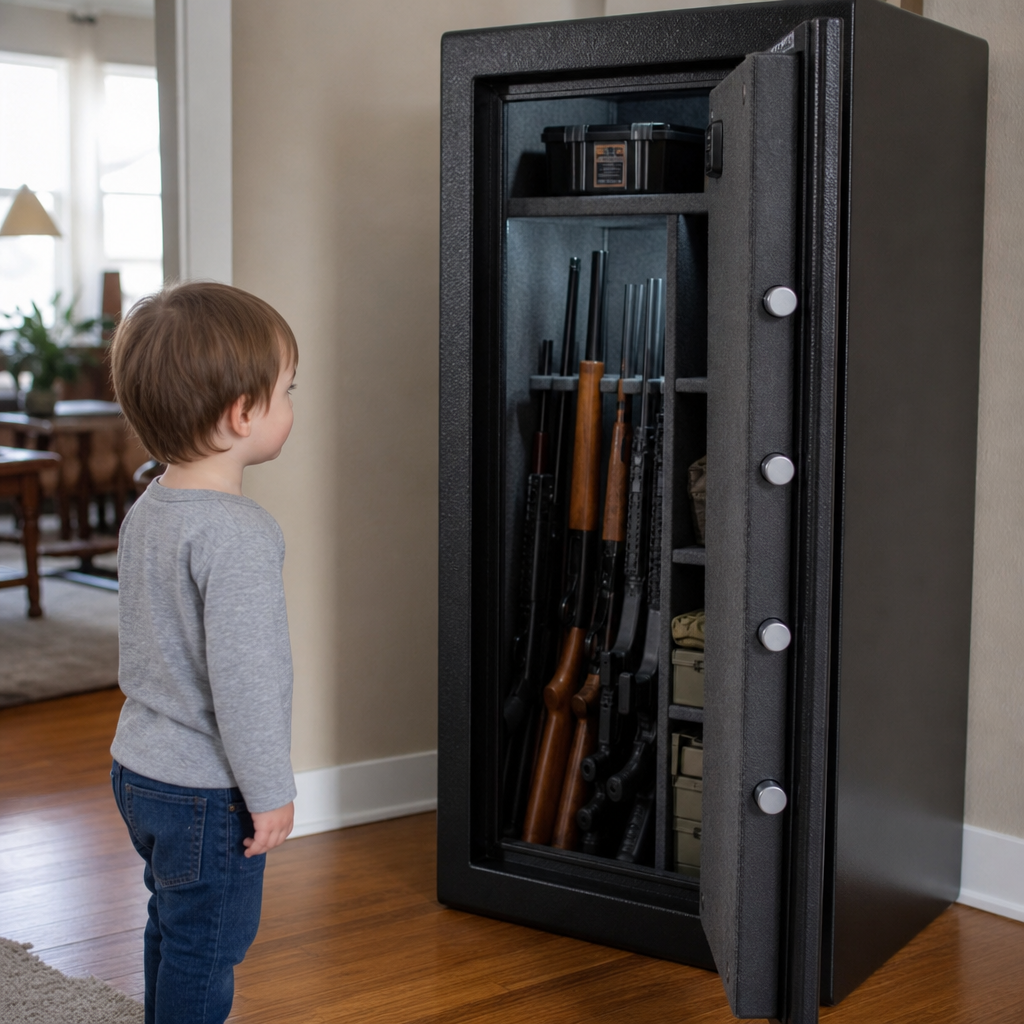
Choosing a gun safe for a family home starts with one nonnegotiable goal: preventing unauthorized access, especially by children, while still allowing a responsible adult to secure firearms properly and retrieve them when legally and practically necessary. In this context, a gun safe is more than a steel box. It is a layered safety system that combines secure storage, access control, responsible gun handling, home layout, and day-to-day habits. Families shopping for a safe often focus first on size, price, or fire rating, but the better starting point is the people in the home. Buyer personas matter because a household with toddlers, a blended family with visiting teens, a rural home with long guns, and an urban condo with one defensive handgun all face different risks and storage priorities.
I have helped families evaluate safes after moves, after children were born, and after close calls involving unsecured firearms in relatives’ homes. The same pattern comes up every time: the right safe is the one that fits the family’s actual behavior, floor plan, firearm mix, and tolerance for routine. Standards from groups such as UL, the California Department of Justice roster requirements, and basic safe-installation best practices provide useful guardrails, but the final decision should reflect real household use. A family-safe setup reduces the chance of child access, lowers theft risk, supports legal compliance, and makes responsible ownership sustainable. This hub article explains how to choose a gun safe for a family home by mapping the main buyer personas, the core features that matter, and the tradeoffs families should understand before buying.
The Safety-First Family Persona: Parents of Toddlers and Young Children
For families with infants, toddlers, and elementary-age children, the central question is simple: can a curious child touch a firearm, ammunition, or a loaded magazine without an adult present? If the answer is even maybe, the storage plan is inadequate. This persona needs a true locking safe, not a fabric case, not a closet shelf, and not a decorative cabinet with a weak cam lock. Children test boundaries, imitate adults, and discover hiding places faster than many parents expect. I have seen three-year-olds open bedside drawers, drag chairs to high shelves, and memorize keypad movements after watching once or twice.
For this household, the best gun safe usually includes a pry-resistant steel body, internal hinges or robust external hinge protection, a tamper-resistant lock, and anchor points that allow the unit to be bolted to framing or concrete. Quick-access handgun safes can work well for one home-defense pistol, but only if they are from reputable manufacturers and mounted securely. Common reliable formats include simplex mechanical locks, quality electronic keypads with lockout protection, and biometric units that have been tested repeatedly by the actual users. Biometric safes vary widely; some are excellent, while cheap models fail under dry fingers, poor placement, or low battery conditions. Families with young kids should test any biometric option extensively before trusting it.
Another key decision is whether ammunition is stored in the same safe. Many families choose separate locked storage for ammunition to add another barrier. That is a reasonable option when the priority is child safety over immediate defensive access. However, if a defensive firearm must be quickly available to a trained adult, speed and storage configuration need to be planned deliberately. In practice, young-child households do best with one larger anchored safe for long-term storage and one high-quality quick-access safe for a designated defensive handgun, placed where children cannot observe the access code being entered.
The Busy Household Persona: School-Age Kids, Teens, and Frequent Visitors
Once children reach school age, the risk profile changes. Kids become more capable, more social, and more exposed to peer influence, online trends, and curiosity about adult possessions. Teenagers can be physically strong enough to move lighter safes, search through offices and garages, or notice patterns in adult routines. Families with sleepovers, after-school guests, babysitters, cleaners, or extended relatives in the home should assume more eyes are on the safe than they realize. For this persona, concealment helps, but physical security and disciplined access procedures matter more.
A common mistake is buying a lightweight residential security container and treating it like a commercial burglary-rated safe. Many consumer gun safes are designed to slow theft, not defeat a determined attack with power tools. That does not make them useless. It means families should match expectations to construction. Thicker steel, reinforced door edges, hard plates protecting the lock, relockers, and substantial boltwork all improve resistance. Weight also matters because a heavier safe is harder to tip, move, or remove. If the safe is under a few hundred pounds, anchoring is essential.
Households with teenagers should also create explicit rules. No codes shared. No demonstrations for friends. No posting photos of the safe or gun room online. No assumption that a hidden key is secure just because adults know the hiding spot. In many homes, a keypad code becomes less secure over time because it is entered in view of children, reflected in mirrors, or inferred from repeated finger placement. Changing codes periodically and shielding the keypad during entry are simple, effective habits. This persona often benefits from an audit mindset: who can access the safe, who sees it opened, and how often is it left unlocked “just for a minute” during cleaning or range prep?
The Defensive Access Persona: Families Prioritizing Rapid Retrieval
Some families buy a gun safe primarily because they keep a firearm for home defense. Their challenge is balancing rapid adult access with absolute child denial. This is where many poor purchases happen, usually because speed is marketed aggressively and tested superficially. In a family home, fast access is only valuable if the safe opens reliably under stress, in darkness, and with one hand if necessary. It must also remain secure against a child pressing buttons, guessing patterns, or finding a backup key.
The most practical setup for this persona is often a two-safe strategy. A quick-access handgun safe is installed in the bedroom or another legally appropriate location for the designated defensive firearm. A second larger safe stores all additional firearms, spare magazines, documents, and perhaps ammunition. This approach limits exposure. Only one gun is staged for speed, while everything else remains in deeper storage. It also reduces the temptation to leave multiple firearms unsecured during the day.
Mechanical push-button locks remain a favorite among experienced owners because they do not depend on batteries, can be opened by touch, and tend to be durable when made by established brands such as Fort Knox or V-Line. Electronic keypads can also work very well, especially from higher-end makers, but families should check battery type, low-battery warning behavior, and override policies. Biometric units are best treated as proven only after repeated live testing by every authorized adult, in varied conditions. If one spouse has inconsistent fingerprint reads, that is not a minor inconvenience. It is a disqualifying safety problem for a defensive-access safe in a family setting.
The Collector or Multi-Firearm Persona: Long Guns, Optics, and Growing Inventory
Families with several firearms, scoped rifles, shotguns, heirlooms, or NFA-regulated items have different storage needs from a one-pistol household. Capacity claims on gun safes are notoriously optimistic. A “24-gun” safe may hold far fewer if the rifles have scopes, slings, bipods, or adjustable stocks. I usually tell buyers to cut advertised long-gun capacity by at least one-third and sometimes by half. Buying too small is the most common regret in this category, especially after adding optics, important papers, suppressor accessories, or separate locked boxes inside the main safe.
Interior configuration matters as much as exterior dimensions. Adjustable shelving, barrel rests, door organizers, and power access for dehumidifiers or lighting can make a safe dramatically more usable. In family homes, organization is not a luxury. It reduces the time the safe stays open and lowers the chance of unsafe handling while moving items around. A cluttered safe encourages bad habits, including temporarily leaning loaded or unloaded firearms against a wall while searching for gear.
| Buyer persona | Primary risk | Best safe type | Key feature to prioritize |
|---|---|---|---|
| Parents with toddlers | Curious child access | Anchored full-size safe plus quick-access handgun safe | Reliable lock and secure mounting |
| Families with teens and visitors | Observation, tampering, theft | Heavier residential safe | Steel thickness, relocker, code discipline |
| Home-defense focused household | Slow adult access or unsafe staging | Dedicated quick-access safe | Fast, repeatable opening under stress |
| Collectors and long-gun owners | Overcrowding and poor organization | Larger modular interior safe | Realistic capacity and interior flexibility |
Collectors should also think about environmental control. In humid regions, a goldenrod-style heater, rechargeable desiccants, and regular inspection help prevent corrosion. Fire lining deserves careful reading as well. Fire ratings vary by manufacturer and are not always based on the same test method. A label stating 30, 60, or 90 minutes has limited value unless the brand explains the temperature threshold and test protocol. For family buyers, burglary resistance and safe installation often matter more than inflated fire claims.
The Space-Limited Persona: Apartment, Townhouse, and Small-Home Owners
Not every family has a basement or a dedicated office. In apartments, condos, and compact homes, buyers must work around limited floor space, weight restrictions, shared walls, and visibility concerns. Here, choosing a gun safe for a family home means planning for both security and practicality. A huge safe that cannot be moved upstairs safely or bolted properly is not the right answer. Smaller safes can be appropriate if they are installed intelligently and matched to a restrained firearm inventory.
For this persona, under-bed safes, closet-installed safes, and compact vertical cabinets can be effective if they are constructed from real steel, secured to structural members where possible, and placed away from obvious sight lines. The best location is usually the one that combines discreet access for adults with minimal exposure to children and guests. In rentals, buyers should review lease terms before drilling into floors or walls. If anchoring options are limited, a heavier unit hidden in a constrained space can still be better than a portable lockbox, but the tradeoff should be understood clearly.
Noise and routine also matter in small homes. If the safe squeaks, blocks storage, or is awkward to open, adults may stop using it consistently. I have seen families improve compliance simply by moving a bedside safe to a more ergonomic height and changing from a fingerprint-only unit to a tactile push-button design. Convenience is not a superficial factor. In the real world, convenience drives whether the firearm is secured every single time.
How to Evaluate Features, Installation, and Daily Use
Across all buyer personas, the buying process should follow a disciplined checklist. First, define the firearm inventory and likely growth over five years. Second, identify who needs authorized access and under what circumstances. Third, decide whether the storage priority is deep security, fast access, or a layered combination. Fourth, measure the installation location carefully, including doorway width, stair turns, floor load concerns, and anchor options. Fifth, compare lock types based on actual household use, not marketing claims.
When evaluating construction, look at steel gauge, door design, boltwork, lock protection, hinge design, and whether the unit includes a relocker. Ask if the fire rating is independently tested and by whom. Check for California DOJ compliance if relevant to local purchasing standards, but understand that roster-style compliance is a baseline, not the same thing as high burglary resistance. Reputable brands often publish more detailed specifications than bargain import models. That transparency is valuable.
Installation is where many family-safe plans succeed or fail. A safe should be anchored whenever possible, placed where moisture is controlled, and located so that opening the door does not expose contents to children or visitors passing by. Codes should be memorized, backup keys controlled tightly, and batteries replaced on a schedule rather than after failure. Every authorized adult should practice opening the safe in daylight and darkness. Finally, storage rules should extend beyond the container: firearms should be unloaded or staged according to the family’s deliberate plan, ammunition managed consistently, and the safe kept locked immediately after use, every time, without exception.
Choosing a gun safe for a family home is ultimately an exercise in honest risk assessment. The best model is not the most expensive one on the showroom floor or the one with the boldest advertising claims. It is the safe that matches the family’s buyer persona, denies access to children, supports responsible adult use, and fits the home well enough that it will be used correctly every day. Parents of toddlers need childproof certainty and secure mounting. Families with teens need stronger theft resistance and stricter access discipline. Defensive users need repeatable speed without shortcuts. Collectors need realistic capacity and organization. Small-home owners need discreet, practical installation.
If there is one principle that applies to every household, it is this: safe ownership depends on systems, not intentions. A strong lock, a bolted installation, a tested access method, and clear family rules prevent the lapses that cause tragedies. Start by defining your household type, then compare safes against the risks that actually exist in your home. From there, choose one quality solution you will use consistently, install it correctly, and review your setup whenever your family, firearm collection, or living situation changes.
Frequently Asked Questions
What should families prioritize first when choosing a gun safe for a home with children?
The first priority should always be preventing unauthorized access, especially by children. That means the right gun safe is not simply the biggest or heaviest model on the showroom floor. It is the one that reliably keeps firearms inaccessible to kids, visitors, and anyone else who should not handle them, while still allowing a responsible adult to store firearms securely and access them when legally and practically necessary. For most family homes, that starts with a safe that has solid steel construction, a dependable locking system, concealed or protected hinges, and enough interior space to keep firearms organized rather than loosely stacked or improperly stored.
Families should also think beyond the box itself. A safe works best as part of a layered safety plan. That includes storing firearms unloaded when appropriate, using additional locking devices if desired, securing ammunition according to household preferences and applicable law, and making sure the safe is installed in a location that children cannot casually observe or access. In many homes, a safe placed in a private bedroom, closet, or controlled-access area is preferable to one placed in a high-traffic room. The goal is to reduce both temptation and opportunity.
Another key consideration is daily usability. If the safe is so inconvenient that an adult is tempted to leave a firearm unsecured “just for a minute,” then the system is already breaking down. Families should look for a safe that fits their routine, opens reliably under normal conditions, and supports consistent habits. In a family home, the best gun safe is the one that reinforces safe behavior every single day, not just one that looks impressive on paper.
Which type of lock is best for a family gun safe: biometric, keypad, or mechanical?
Each lock type has strengths, and the best choice depends on your household’s priorities, but reliability and consistency matter more than marketing claims. Biometric locks appeal to many families because they can provide fast access without requiring a child to be protected from discovering a written code. However, biometric systems vary widely in quality. A good biometric lock should recognize authorized users quickly and accurately, even with minor changes in finger placement. Lower-quality biometric locks can become frustrating if they fail under stress, require repeated scans, or perform poorly with dirty, wet, or injured fingers.
Electronic keypad locks are a popular middle ground because they are usually fast, easy to use, and relatively straightforward to manage. For many households, a high-quality keypad safe offers a strong balance between security and practicality. Adults can memorize a code, change it when needed, and avoid the slower process of dialing a mechanical lock. The biggest responsibility with a keypad lock is maintaining battery life, testing the lock regularly, and making sure codes are never shared carelessly or entered where children can observe the sequence.
Mechanical locks are often valued for durability and long-term dependability, especially because they do not rely on batteries or electronics. That said, they are typically slower to open and may be less practical for adults who want faster access. In a family home, speed should never override security, but practical use still matters. If a lock is too cumbersome for how the safe will actually be used, some owners may be tempted to cut corners. A well-made mechanical lock can be an excellent option for long-term storage, while a quality keypad or carefully vetted biometric lock may be more suitable when authorized adults need efficient access. Whatever the choice, families should avoid poorly made budget locks and should test operation regularly so the safe remains a dependable safety tool rather than a false sense of security.
How important is safe size, and should families buy a larger safe than they think they need?
Safe size is more important than many first-time buyers realize. Families often shop based on the number of firearms they own today, but that can lead to buying a safe that becomes cramped almost immediately. Manufacturer capacity ratings are also often optimistic, especially when firearms have optics, lights, slings, or other accessories. A safe advertised for a certain number of long guns may hold fewer in real-world use if you want them stored without crowding, scratching, or unsafe stacking. In a family home, interior organization matters because disorder can make safe handling more difficult and increase the chance of bumping or mishandling firearms during storage and retrieval.
Buying larger than you currently need is usually a smart decision if space and budget allow. Extra room can accommodate future purchases, important documents, valuables, and accessories such as magazines or storage bins. More importantly, additional space helps maintain separation and visibility. Adults should be able to see what is inside, remove one item without shifting several others, and close the safe properly every time. A tightly packed safe can undermine the very safety habits it is supposed to support.
That said, bigger is not automatically better if it pushes the safe into an unsuitable location or causes a family to compromise on quality. A slightly smaller safe with stronger construction, better lock quality, and proper installation is often a better choice than an oversized model with weaker security. The ideal approach is to select a safe that gives you room to organize responsibly, fits the intended location well, and supports safe day-to-day use without becoming an obstacle in the household.
Where should a gun safe be installed in a family home to help keep kids safe?
Placement matters because even a strong safe can be part of a weak safety plan if it is installed in the wrong spot. In a family home, the best location is usually one that balances security, discretion, and practical access for authorized adults. A private room, controlled-access closet, or low-visibility area is often preferable to a garage corner, living room, or other highly visible space. Children are naturally curious, and the less attention the safe draws, the better. Safe placement should reduce the chances that kids see adults opening it, become familiar with routines, or treat it as an object of fascination.
Families should also think about physical installation. A gun safe should generally be anchored according to manufacturer instructions and placed on a stable surface. Anchoring helps prevent tipping hazards and makes it much harder for someone to move or remove the safe. This is especially important in homes with children, where safety includes not only keeping firearms inaccessible but also ensuring the safe itself does not become a physical hazard. Climate conditions matter too. Basements, garages, and outbuildings may expose the safe to moisture, temperature swings, or less controlled access, which can affect both the firearms and the lock system over time.
Just as important is the visibility of the access process. Adults should make a habit of opening the safe only when necessary, shielding entry of the code or fingerprint when possible, and closing and locking it immediately after use. A well-placed safe supports these habits. In short, the right location is one that minimizes children’s awareness and access, protects the safe from theft or damage, and allows responsible adults to use it consistently without shortcuts.
Is a gun safe alone enough to keep children safe, or are additional safety measures necessary?
A gun safe is essential, but by itself it should not be treated as a complete child-safety solution. The safest family approach is layered. The safe is the central barrier against unauthorized access, but additional measures strengthen the system and reduce the chance of human error. This may include storing firearms in a ready condition only when consistent with the owner’s legal responsibilities, training, and intended use; using chamber flags or trigger/cable locks when appropriate; keeping the safe locked at all times when not actively in use; and securing ammunition in a deliberate, organized way. The specific setup can vary, but the overall principle is the same: do not rely on one step when multiple sensible precautions are available.
Equally important are household habits. Children should be taught age-appropriate firearm safety, including that firearms are never toys, never to be touched without direct adult supervision, and should be reported immediately to a trusted adult if discovered. Education does not replace secure storage, but it adds another layer of protection. Adults in the home should also establish strict routines for checking that firearms are secured after cleaning, practice, hunting, or daily carry transitions. Many unsafe incidents happen not because a safe failed, but because a firearm was left out temporarily and that temporary lapse became a serious risk.
Finally, families should review applicable state and local laws regarding safe storage, child access prevention, and firearm responsibility. Legal requirements vary, and a good storage plan should meet both practical safety needs and legal obligations. In a family home, the strongest standard is simple: firearms should be inaccessible to children at all times unless a responsible adult is directly controlling the situation. A quality gun safe is the foundation of that standard, but the real protection comes from combining the right equipment with disciplined everyday behavior.