
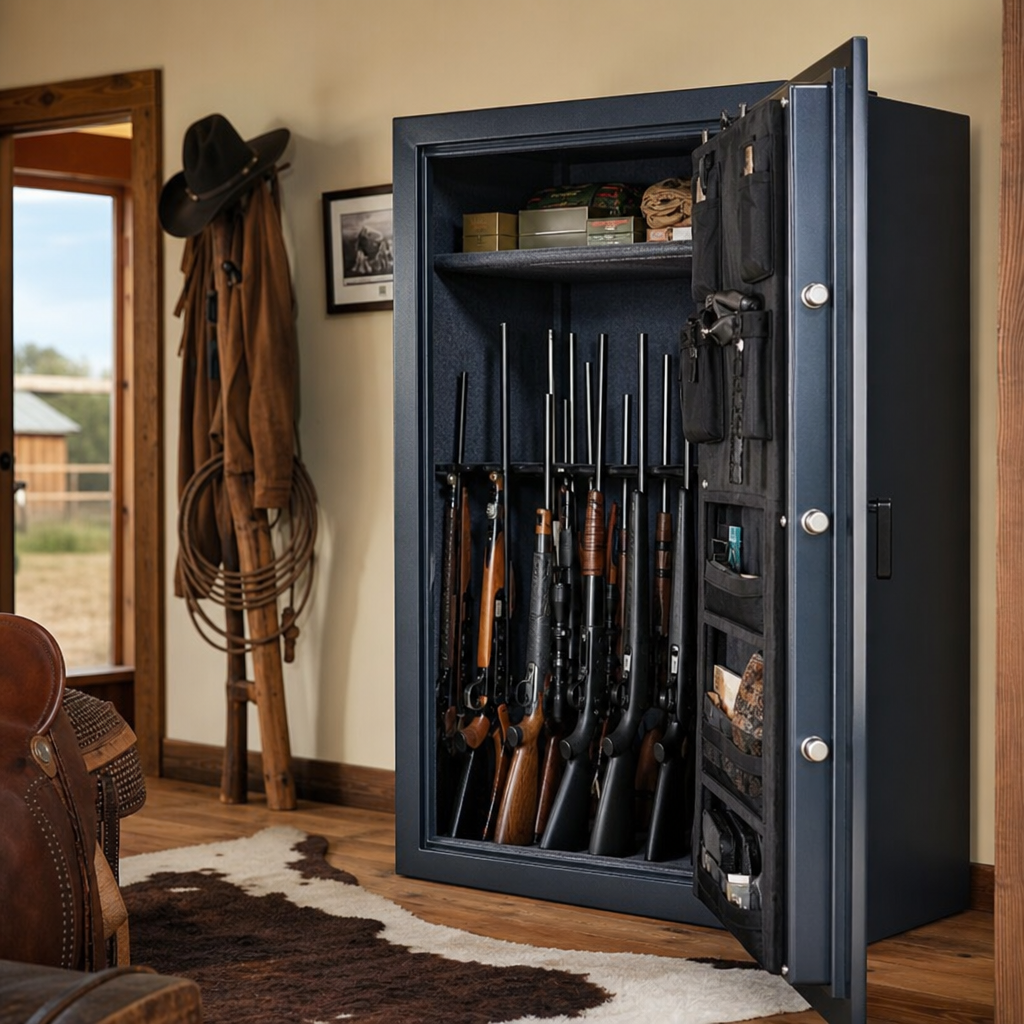
Gun safes for ranch owners solve a distinct security problem: protecting firearms across large properties, in isolated locations, and within households where tools, vehicles, livestock operations, and multiple family members create constant movement. A ranch is not a suburban home with a single front door and a predictable daily routine. It may include a main house, bunkhouse, equipment shed, horse barn, workshop, and several gates spread over hundreds or thousands of acres. That environment changes how firearms are used, stored, and accessed, which means ranch owners need gun safes built for rural risks rather than generic indoor storage.
When I have helped rural property owners evaluate safes, the same questions come up quickly: How fast can I reach a rifle during a predator issue? Will humidity ruin optics and blued steel? What happens if thieves have privacy, tools, and time because the nearest deputy is thirty minutes away? Those concerns are practical, not theoretical. Ranch firearms are often working assets used for predator control, livestock protection, pest management, dispatch, and personal defense. They can include scoped bolt guns, AR-platform rifles, lever actions, revolvers, shotguns, and inherited hunting pieces, all with different storage needs.
Key terms matter here. A gun safe is a locking security container designed to resist unauthorized access, theft, and fire damage. Residential Security Container ratings, often issued under UL standards, indicate baseline burglary resistance, while true safes with TL ratings provide higher protection but usually cost much more and weigh substantially more. Fire ratings describe tested heat exposure over a stated time, though manufacturers do not all test the same way. Dehumidification, anchoring, pry resistance, boltwork design, and door gap tolerances also affect real-world performance. For ranch owners, the right answer is rarely the biggest box at the farm store; it is a storage plan matched to land size, response times, family structure, and firearm mix.
This hub article covers gun safe buyer personas for ranch owners so you can identify which storage approach fits your operation. Some buyers need one high-capacity safe in a climate-controlled room. Others need layered storage: a primary safe in the house, a quick-access unit for defensive use, and locked cabinets in outbuildings for lower-risk gear. Understanding the buyer persona behind the purchase helps narrow options faster, avoid overspending on the wrong features, and protect firearms responsibly in rural areas.
The Ranch Owner Buyer Persona: Why Rural Storage Needs Are Different
The ranch owner persona is defined by distance, utility, and unpredictability. Firearms on a ranch are not only recreational items. They are often used as working equipment, much like chainsaws, saddles, or veterinary tools. A coyote near calving pens, feral hogs in hay ground, or a snake in a barn creates a time-sensitive need for access. At the same time, ranches regularly host family members, hired hands, contractors, feed deliveries, veterinarians, and hunting guests. That mix of frequent firearm use and changing foot traffic makes secure storage nonnegotiable.
Rural isolation cuts both ways. It can reduce random opportunistic theft compared with dense urban areas, but it can increase loss severity when theft does occur. Criminals may have more privacy, more time, and easier access to tools such as pry bars, grinders, chains, and trucks. I have seen ranch owners focus heavily on fire rating because wildfire is a visible rural threat, then overlook anchoring and room placement, even though removal of an unanchored safe is one of the most common failure points. A 700-pound safe sounds immovable until several people, a dolly, and a trailer are involved.
Another factor is environmental exposure. Ranch homes may use wood heat, swamp coolers, older HVAC systems, or no central climate control in some parts of the year. Outbuildings can swing from freezing mornings to extreme afternoon heat. Dust, fertilizer residue, and humidity from tack rooms or wash areas can accelerate corrosion. As a result, ranch owners should treat corrosion control as essential, not optional, especially for heirloom firearms, blued finishes, and optics with expensive coatings.
Finally, the ranch persona often includes long guns with unusual dimensions. Scoped varmint rifles, slug guns, takedown rifles, and long-barreled shotguns do not fit every interior layout well. Manufacturer “gun counts” are notoriously optimistic; a “36-gun” safe may realistically hold 18 to 24 long guns with optics and slings. For this persona, interior configurability matters as much as shell thickness or exterior paint.
Primary Ranch Gun Safe Use Cases and Matching Safe Types
Most ranch buyers fit into one of several use cases, and choosing by use case prevents expensive mistakes. The first is the working ranch family. This buyer keeps several firearms in regular rotation for predators, varmints, and seasonal hunting, with children or grandchildren visiting often. The best fit is usually a full-size safe in the main residence with adjustable shelving, interior power, a dehumidifier rod, and a separate quick-access handgun safe in the bedroom. The main safe handles bulk storage and controlled access, while the bedside unit covers immediate defensive needs without leaving a loaded handgun unsecured.
The second use case is the remote solo operator or couple. They may live far from town, own fewer guns, and prioritize rapid access to one or two long guns. In that situation, a compact, higher-quality safe can outperform a large, lower-grade cabinet. A 10- to 18-gun safe with thicker steel, hard plate protection for the lock, and solid anchoring often makes more sense than a budget 40-gun model with wide door gaps and light-gauge construction. Security quality matters more than empty volume.
The third use case is the multigenerational ranch compound. These properties may have multiple adults, several residences, and mixed ownership of firearms. Here, centralized storage alone is not enough. The better approach is layered storage with clear accountability: a primary safe for high-value collections and documents, a secondary safe for frequently used ranch guns, and lockable but lower-cost storage in detached structures only when justified and monitored. Access protocols should be discussed openly, especially when temporary workers or young adults are present.
The fourth use case is the ranch owner with a significant collection. This buyer may own premium hunting rifles, engraved shotguns, suppressors where legal, optics, and paperwork for specialized items. Insurance, inventory control, and fire protection become more important. A modular safe room, a true burglary-rated safe for the highest-value pieces, or at minimum a premium RSC with monitored alarm integration is appropriate. In practice, once replacement values climb sharply, the safe decision becomes part of a broader asset protection plan rather than a simple storage purchase.
| Buyer persona | Primary concern | Best safe setup | Common mistake |
|---|---|---|---|
| Working ranch family | Balancing child safety and quick access | Full-size main safe plus bedside quick-access unit | Storing daily-use guns unsecured behind doors or in closets |
| Remote solo operator | Theft resistance in isolated settings | Smaller heavy-gauge safe, anchored in a concealed interior room | Buying oversized low-steel models for advertised capacity |
| Multigenerational compound | Shared access and accountability | Layered storage with assigned access rules | Assuming family familiarity equals safe handling discipline |
| Collector ranch owner | Asset protection and documentation | Premium safe, alarm integration, detailed inventory | Relying on standard homeowner coverage alone |
How to Evaluate Security Features That Matter on a Ranch
Steel thickness is one of the clearest indicators of burglary resistance. Many entry-level residential containers use 14-gauge steel bodies, while stronger units may use 12-gauge, 10-gauge, or composite door constructions with plate steel. Thicker steel slows prying and cutting, especially when paired with a reinforced door frame and active locking bolts. Marketing often emphasizes the number of bolts, but bolt count alone is less important than bolt engagement, frame rigidity, hinge protection, and resistance around the lock area where many attacks begin.
Lock choice matters too. Mechanical dial locks remain durable and time-tested, with no batteries to fail, but they are slower under stress and less convenient for households with multiple authorized users. Electronic keypad locks are fast and practical, and quality units from established lock makers are reliable when maintained properly. Biometric handgun safes can be useful for bedside access, but for ranch conditions with dirty hands, gloves, cold weather, and dust, a keypad backup is important. I do not recommend depending on fingerprint access alone in a barn-adjacent environment.
Anchoring is essential. A safe should be bolted to concrete whenever possible, ideally in a corner or alcove that limits pry-bar access to the sides. On wood floors, proper structural reinforcement matters because the dynamic loads of heavy safes can exceed what owners assume. Concealment also helps. A safe in a mudroom visible to every delivery driver is less secure than one in an interior closet, office, or hardened utility room. On ranches, thieves often gain information from routine visits, so reducing visibility is a practical layer of defense.
Alarm integration adds another layer. Door contacts, glass-break sensors, motion detection, and cellular backup are especially valuable where internet reliability is inconsistent. If the property already uses cameras for gates and barns, tie the safe room into that system. Security is strongest when the safe is part of a broader delay-detect-respond plan rather than a standalone purchase.
Fire Protection, Moisture Control, and Placement in Rural Homes
Fire ratings require careful reading because manufacturers use different test protocols. A label claiming 60 or 90 minutes at a stated temperature may not reflect an identical standard across brands. Better manufacturers describe whether testing included a heat curve, internal temperature threshold, or drop test. For paper documents, the common target is keeping the interior below 350 degrees Fahrenheit, but firearms, optics, stocks, and lubricants can still suffer damage below that threshold. Fire protection reduces loss; it does not guarantee a perfect post-fire outcome.
Placement improves both fire and theft performance. Avoid garages when possible. They are easier to access, often have wider temperature swings, and can be a starting point for fires involving fuel, batteries, or equipment. Interior ground-floor rooms on concrete slabs are usually best, particularly if they are out of sight and away from large windows. In wildfire-prone regions, maintain defensible space around the home and think beyond the safe itself. Home hardening measures such as ember-resistant vents and clean rooflines can matter as much as the safe’s fire liner.
Moisture control is a constant issue on ranches. Use a powered dehumidifier rod if the safe has electrical access. Supplement with rechargeable desiccants in drier climates or where power is unavailable. Check relative humidity with a small hygrometer and aim roughly for 45 to 50 percent inside the safe. Too much humidity invites rust; too little can affect some wood stocks over time. Wipe firearms down regularly with a corrosion-inhibiting protectant, especially after carrying them in vehicles, scabbards, or side-by-sides where condensation and dust combine.
Capacity Planning, Compliance, and Long-Term Ownership Costs
Buy larger than your current collection suggests, but buy realistic capacity, not brochure capacity. On ranches, long guns often wear large scopes, bipods, slings, shell carriers, or suppressor-ready configurations. Those accessories consume space quickly. Adjustable interiors from brands such as Liberty, Fort Knox, Browning, and Rhino can help, but even the best layouts benefit from discipline. Store infrequently used valuables or documents on shelves to keep daily-use rifles accessible and prevent stock damage from overcrowding.
Compliance and liability should also guide the purchase. State storage laws vary, and ranch owners who host minors, employees, or guests should understand negligent storage exposure in their jurisdiction. If NFA-regulated items are owned where lawful, document serial numbers carefully and secure tax paperwork separately but accessibly. Insurance deserves equal attention. Standard homeowner policies may cap firearm coverage at relatively low amounts unless riders or specialty policies are added. A documented inventory with photos, serial numbers, appraisals, and model details makes claims smoother and helps law enforcement if theft occurs.
Long-term ownership costs include delivery, installation, electrical access, humidity control, maintenance, and possibly floor reinforcement. Professional delivery is worth paying for because damaged floors, tipped safes, and improper anchoring create expensive problems. Over years of use, the best value usually comes from buying one quality safe correctly installed rather than replacing a flimsy unit after a burglary scare or a collection expansion. For most ranch owners, the real benefit is peace of mind: working guns available when needed, family members protected from unauthorized access, and valuable firearms secured against the particular risks of rural life.
Choosing gun safes for ranch owners starts with knowing the buyer persona behind the purchase. A working ranch family needs fast but controlled access. A remote operator needs stronger theft resistance in an isolated setting. A multigenerational property needs rules and layered storage. A collector needs documentation, insurance planning, and higher-grade protection. Once that use case is clear, the right features become easier to rank: thicker steel, dependable locking systems, concrete anchoring, sensible fire protection, moisture control, and realistic capacity.
The central lesson is simple: rural firearm storage is not a one-size-fits-all decision. Ranch conditions create unique demands, from predator response and seasonal guests to wildfire risk and corrosive dust. A safe should fit the property, the firearms, and the people using them. Buying based on marketing alone usually leads to compromises in security, access, or durability. Buying based on actual ranch workflows leads to better protection and fewer regrets.
If you are building out your gun safe plan under the broader Gun Safes & Safety topic, start by listing your firearms, mapping where they are used, and identifying who needs access. Then compare safes by steel thickness, anchoring options, fire testing transparency, and interior layout rather than sticker gun count. That process will help you choose a gun safe that protects firearms properly in rural areas and supports safer ranch operations for years.
Frequently Asked Questions
1. Why do ranch owners need a different type of gun safe than homeowners in town?
Ranch owners usually face a much different security picture than someone living in a typical suburban neighborhood. On a ranch, firearms may be used for predator control, livestock protection, pest management, hunting, and general property defense, which means they are often accessed more regularly and stored in a setting with more people, more buildings, and more movement. A ranch may include a primary residence, guest quarters, bunkhouses, barns, machine sheds, and workshops, all spread out over a very large area. That creates more opportunities for unauthorized access, accidental handling, or theft if guns are left unsecured or stored in the wrong location.
A proper gun safe for a ranch owner has to do more than simply lock up firearms. It needs to match the realities of rural life: isolation, delayed emergency response times, seasonal employees or contractors coming and going, family members of different ages, and buildings that may not have the same level of climate control or physical security. In many cases, a ranch owner is not just protecting a few sporting rifles but a working collection of firearms used for specific purposes across the property. That makes organization, durability, access control, and resistance to theft especially important.
Another key issue is that rural properties can be attractive targets because they are often secluded. A thief may assume there is less surveillance, fewer nearby witnesses, and more time to enter outbuildings or search for valuables. A quality gun safe reduces that risk by creating a hardened layer of security that cannot be easily carried off or quickly forced open. For ranch owners, the best safe is not just a storage box; it is part of a broader ranch security plan designed to protect firearms, reduce liability, and keep weapons available to authorized users but out of reach of everyone else.
2. What features should ranch owners look for when choosing a gun safe for a rural property?
The best gun safe for a ranch owner starts with strong physical security. Look for a heavy steel body, a reinforced door, solid locking bolts, and a lock system from a reputable manufacturer. A safe that is too light or thin can sometimes be tipped, pried, or even removed from the property if it is not properly anchored. For ranch use, weight matters because it makes theft harder, and construction matters because rural properties may experience more wear, dust, and variable conditions than an indoor suburban setting.
Fire protection is another major consideration. Ranches often include workshops, fuel storage areas, tack rooms, equipment bays, and outbuildings where fire risks can be higher due to machinery, electrical systems, hay, chemicals, and other combustible materials. A safe with verified fire resistance can help protect firearms, optics, paperwork, and valuables during a structure fire. If the safe will hold title documents, insurance records, tax files, land maps, or backup drives, fire protection becomes even more important.
Capacity and layout should not be overlooked. Ranch owners often store a mix of long guns, scoped rifles, shotguns, handguns, and related gear. Many people buy a safe that fits their current collection only to outgrow it quickly. Choosing a larger safe with adjustable shelving, interior lighting, handgun storage options, and room for ammunition or important documents can make long-term use much easier. The interior should support practical organization so firearms used most often can be accessed without disrupting everything else inside.
Access control is equally important. Electronic locks can provide fast entry, while mechanical locks may appeal to owners who want simplicity and long-term reliability. Some ranch owners prefer biometric access for quick retrieval, but it should be from a proven system and ideally paired with backup entry options. No matter which lock type you choose, reliability is essential because a safe on a ranch may be used in urgent, real-world situations rather than only occasional recreational ones.
Finally, consider environmental protection. Rural properties can expose safes to dust, humidity, temperature swings, and power interruptions. Interior dehumidifiers, door seals, elevated installation, and placement in a stable indoor environment can all help preserve firearms from rust and damage. The right safe for a ranch owner balances security, fire resistance, usable storage, dependable access, and environmental protection in a package that fits the way the property actually operates.
3. Where is the best place to install a gun safe on a ranch?
The best location depends on how the ranch is laid out, who lives or works there, and how the firearms are used, but in most cases the ideal placement is inside a secure, climate-controlled structure that is regularly occupied and not easily visible to visitors. For many ranch owners, that means a discreet area inside the main house rather than in a detached outbuilding. A gun safe placed in a barn, shop, or equipment shed may seem convenient, but those structures are often easier to break into, more exposed to moisture and temperature extremes, and less suitable for long-term firearm protection.
That said, convenience does matter. If a safe is too far away from the firearms’ actual point of use, people are more likely to leave guns unsecured temporarily in trucks, side-by-sides, mud rooms, or workspaces. The goal is to create a storage setup that supports both security and routine use. Some ranch owners solve this by keeping the primary collection in a full-size safe in the house and using a smaller, highly secure secondary safe in another approved location for limited-access needs. This can work well if the secondary storage is carefully chosen and held to the same standards for locking, anchoring, and environmental protection.
Anchoring the safe is critical no matter where it is placed. A safe that is not bolted to concrete or another solid foundation is much easier to steal, especially on a large property where a thief may have time and vehicle access. Placement should also take into account visibility from windows, access by guests or workers, and proximity to potential hazards such as fuel, welding areas, livestock traffic, or water intrusion. A corner or interior room with structural support, limited visibility, and controlled access is often a smart choice.
It is also wise to think in terms of operational security. The fewer people who know the exact location and contents of the safe, the better. On a busy ranch, that includes delivery personnel, temporary labor, contractors, and even casual visitors. The safest installation is one that blends into the property, is physically hard to reach and remove, and allows authorized family members to access firearms responsibly without advertising where they are stored.
4. How can a gun safe help ranch owners prevent theft, accidents, and liability?
A gun safe reduces risk on several levels at once. First, it helps prevent theft by making firearms significantly harder to access, remove, and resell. Firearms are high-value, portable items, and on isolated rural properties they can be tempting targets for burglars who believe they have more time to search buildings. A securely installed safe creates a strong barrier that discourages opportunistic theft and slows down determined intruders. In many cases, that delay is enough to make the theft attempt fail altogether.
Second, a safe helps prevent accidents by keeping firearms away from unauthorized or untrained users. Ranch properties are active places. Children may move between the house and barns, family members may come and go on changing schedules, and workers or guests may be present throughout the day. In that kind of environment, relying on hiding spots, closet storage, or unlocked cabinets is not enough. Secure storage reduces the chance of a child finding a firearm, a visitor handling one without permission, or a gun being left accessible during a busy workday.
Third, secure firearm storage helps reduce legal and financial exposure. If a stolen firearm is later used in a crime, or if an improperly stored weapon is involved in an accidental injury, the consequences can be severe. While laws vary by state and locality, responsible storage practices may affect insurance claims, liability questions, and how a ranch owner’s overall risk management is viewed. A gun safe shows a clear commitment to controlling access and handling firearms responsibly, which is important not only for personal safety but also for protecting the ranching operation as a whole.
There is also a practical side to liability prevention: a good safe encourages better habits. Firearms are more likely to be returned to a designated secure place when storage is organized, accessible, and reliable. That lowers the chance of a rifle being left in a truck overnight, a handgun being forgotten in a drawer, or a working firearm being exposed to dust, moisture, or tampering. In short, a gun safe is one of the most effective tools a ranch owner can use to improve daily safety, limit avoidable risks, and maintain control over firearms in a demanding rural environment.
5. Should ranch owners store guns, ammunition, and important documents together in the same safe?
In many cases, ranch owners can store firearms, certain ammunition, and important documents in the same safe, but the setup should be intentional and organized rather than simply using the safe as a catch-all. A larger gun safe often provides enough room for rifles, handguns, optics, passports, deeds, insurance papers, backup drives, and other valuables, which can make it a practical central storage point. This is especially useful on a ranch where important records related to land ownership, livestock, equipment, permits, and insurance may need stronger protection from theft or fire.
However, organization matters. Documents should ideally be placed