
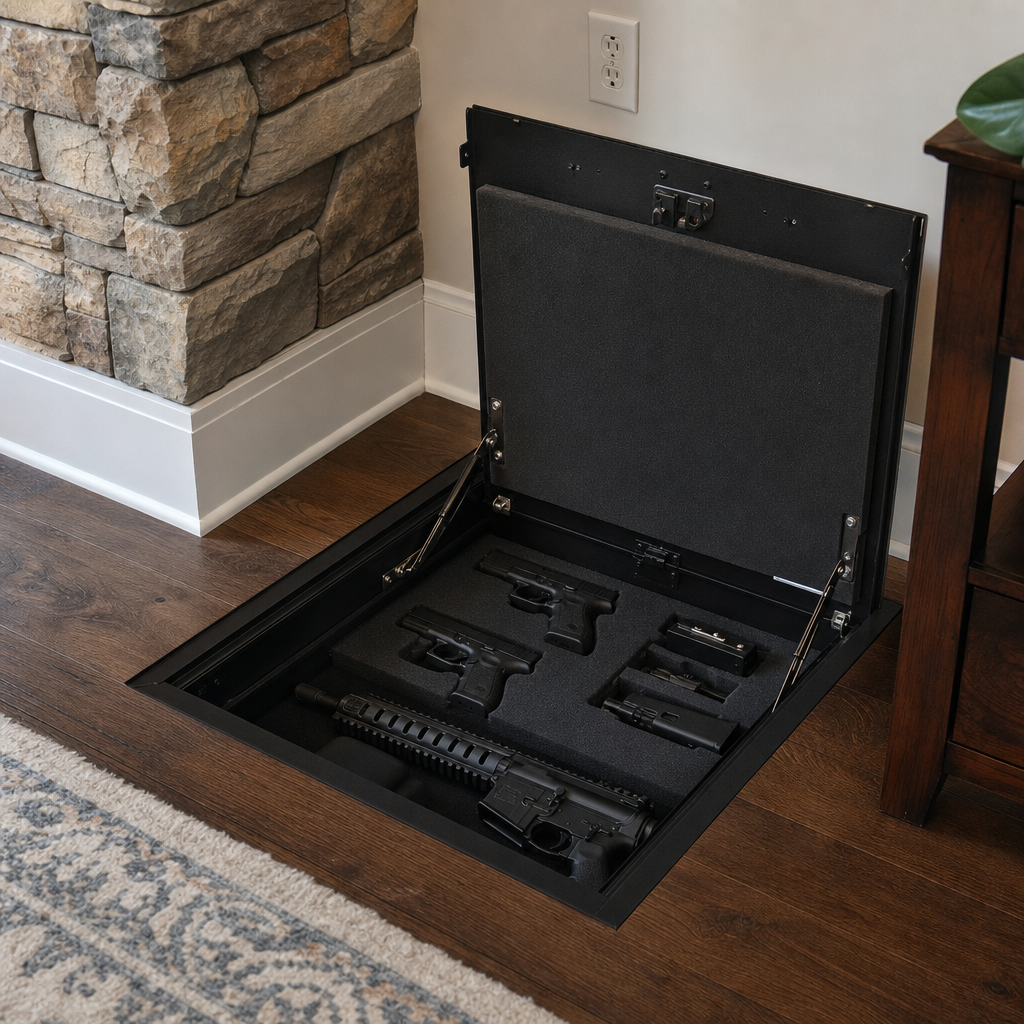
Choosing among the best hidden gun safe brands for wall and floor safes is not just a shopping decision; it is a security decision that affects theft resistance, child safety, fire protection, and daily access. A hidden gun safe is a secure storage unit designed to stay out of obvious sight while still allowing authorized owners to reach firearms quickly. In practice, that usually means a wall safe installed between studs, a floor safe anchored in concrete or subfloor framing, or a disguised unit built into furniture, shelving, or decorative elements. The “best” brand depends less on marketing and more on how well a safe matches the room, the firearm type, and the owner’s access needs.
I have evaluated hidden safes in remodels, closet retrofits, and dedicated security upgrades, and the same pattern always appears: buyers focus first on concealment, then later realize lock quality, installation depth, and anchoring method matter more. A hidden safe that is easy to find or easy to pry out fails its core purpose. On the other hand, a well-placed wall or floor safe can reduce smash-and-grab risk, limit unauthorized access, and preserve usable living space better than a full-size freestanding gun safe. That matters for apartment owners, suburban households, and anyone trying to secure a handgun or compact long gun without placing a large steel box in plain view.
This hub article compares leading hidden gun safe brands for wall and floor safes, explains where each brand fits, and gives clear buying criteria you can apply before reading deeper brand spotlights and model reviews. It also answers common questions directly: Which hidden gun safe brands are best for quick access? Which are best for discreet wall installation? Which floor safes offer the strongest burglary resistance? What tradeoffs come with biometric locks, RFID access, and electronic keypads? By the end, you should be able to narrow the field confidently and choose a safe based on construction, fit, and use case rather than surface features alone.
What Makes a Hidden Gun Safe Brand Worth Comparing
When comparing hidden gun safe brands, start with objective factors. Steel thickness, door construction, lock type, hinge design, relocker features, internal dimensions, and anchoring options tell you far more than product photos. For wall safes, the key constraint is stud spacing. Most residential walls in the United States are framed at 16 inches on center, so a wall safe usually needs a narrow body and enough flange support to mount cleanly between studs. That makes wall safes naturally limited in depth and capacity. Good brands design around those constraints with reinforced doors, internal shelves, pistol racks, and trim systems that disappear behind framed art or mirrors.
Floor safes follow different rules. A true floor safe gains security from being recessed and surrounded by dense material, ideally concrete. That makes extraction harder, but it also limits fast relocation and increases installation complexity. Fire behavior differs too. Because heat rises, a floor safe set into concrete can perform differently from a wall safe placed in a cavity where fire can move through studs and insulation. Buyers often assume any hidden safe is automatically more secure than a visible safe. That is incorrect. Concealment helps, but burglary resistance still comes from steel, lock integrity, and anchoring.
Brand comparison also matters because hidden safe makers do not all serve the same role. Some specialize in tactical quick-access products for bedside or closet use. Others build heavier in-wall or in-floor units with stronger door assemblies. Still others focus on disguised furniture and decor integration. In real homes, those categories overlap. A parent securing one defensive handgun in a bedroom has a different requirement from a collector hiding documents, jewelry, magazines, and multiple pistols in a basement office. The strongest buying decision comes from matching the brand’s design philosophy to the installation environment and the access pattern you actually expect.
Best Hidden Wall Safe Brands: Where Each One Fits
Among hidden wall safe brands, SnapSafe, Hollon, Protex, and Mesa Safe consistently appear because they address the practical demands of in-wall storage. SnapSafe is often one of the best entry points for homeowners who want a recognizable brand, straightforward installation, and enough capacity for handguns, documents, and valuables. Its wall safes tend to prioritize compact dimensions and simple electronic or key locking. They are workable for closets, bedrooms, and home offices, especially when covered with framed artwork. The limitation is that many entry-level wall safes are designed more for concealment and organized storage than for defeating a prolonged attack with heavy pry tools.
Hollon generally earns stronger consideration from buyers who want more serious steel construction and better burglary resistance. In projects where clients wanted hidden storage without stepping up to a large freestanding safe, Hollon wall safes often made the shortlist because the company pays more attention to door strength, recessed design, and solid fit and finish. Protex occupies a useful middle ground, with multiple in-wall models that are popular for homeowners seeking a blend of affordability, electronic access, and practical capacity. Mesa Safe, known more broadly in the commercial safe market, brings brand credibility and disciplined construction standards that appeal to buyers who prioritize established manufacturing reputation over novelty features.
For hidden wall gun storage specifically, Tactical Walls deserves separate mention because it approaches concealment differently. Its products often disguise storage behind decor panels, mirrors, or shelves instead of presenting as traditional steel wall safes with visible doors. That makes Tactical Walls effective for fast access and low visual profile, especially in rooms where a conventional safe door would be difficult to hide. The tradeoff is obvious: disguised furniture-style storage is not equivalent to a heavy recessed burglary safe. It should be judged as a concealment and access solution first, not as a substitute for a high-mass TL-rated commercial safe. That distinction prevents disappointment and helps buyers compare products fairly.
Best Hidden Floor Safe Brands and Why Installation Matters
For hidden floor safes, the comparison shifts toward brands such as Hollon, AMSEC, Hayman Safe, and Gardall. AMSEC has long held a strong position in the broader safe market because of its disciplined engineering, broad product line, and credibility among locksmiths and security installers. When a buyer wants a floor safe with stronger anti-pry characteristics and dependable lock options, AMSEC is often the benchmark. Hayman Safe is also respected for floor safes, particularly when buyers want substantial body construction and commercial-grade sensibilities. Gardall remains relevant because it offers proven in-floor designs that installers know how to work with, especially in residential slab applications.
Hollon crosses over here as well, which is one reason the brand stands out in hidden gun safe comparisons. A company that can compete in both wall and floor categories gives buyers more flexibility when they are deciding between a closet wall cavity and a concrete basement slab. Floor safe performance, however, depends heavily on installation quality. A strong safe installed shallow, unanchored, or under a flimsy cover-up defeats the purpose. In retrofit work, I have seen excellent floor safes undermined by poor placement under thin rugs in predictable bedroom corners. Concealment works best when the safe is integrated into a room pattern, not merely dropped where space is available.
| Brand | Best For | Typical Hidden Safe Strength | Main Limitation |
|---|---|---|---|
| AMSEC | Burglary-focused floor safe buyers | Strong construction, trusted lock options, installer confidence | Higher cost and more demanding installation |
| Hollon | Balanced wall and floor safe shoppers | Solid steel, good value, broad hidden-safe relevance | Fewer disguise-oriented options |
| SnapSafe | Accessible wall safe entry point | Easy installation, practical home use | Less robust against aggressive prying |
| Tactical Walls | Fast-access concealed room integration | Excellent visual concealment and convenience | Not a replacement for heavy burglary safes |
The best hidden floor safe brands also tend to offer better lock flexibility. Mechanical dial locks remain extremely durable and are favored by many installers because they do not depend on batteries or consumer electronics. Electronic keypads provide faster access and easier code changes, which many homeowners prefer. Some hidden safe buyers want biometric entry, but fingerprint readers remain inconsistent across the category. High-end biometric systems can work well, yet inexpensive readers often struggle with dry fingers, partial prints, or hurried use. For a defensive firearm, reliability under stress matters more than novelty. That is why many professionals still recommend keypad or mechanical access over low-cost biometric systems.
How to Compare Lock Types, Fire Ratings, and Build Quality
The most common mistake in gun safe comparisons is treating all lock options as equal. They are not. A UL-listed electronic lock from a reputable manufacturer is materially different from a generic keypad with minimal testing history. Mechanical dial locks have the longest service record, but they are slower. Electronic locks strike the best balance for many wall and floor safes because they provide repeatable access with less maintenance than many consumer biometric units. Redundant entry methods, such as keypad plus tubular key override, can be useful, but the override channel can also introduce another attack point if poorly designed.
Fire ratings deserve the same skepticism. Many hidden gun safe brands publish internal testing claims, but not every claim reflects the same standard or test protocol. A “30-minute fire rating” may not tell you the peak temperature, starting temperature, humidity behavior, or whether the unit protects paper only. Fire resistance also interacts with installation location. A wall safe in an interior wall may face different heat exposure from a floor safe embedded in concrete. If fire protection is critical, compare published test details carefully and remember that dedicated fire-lined document safes and full-size composite gun safes often outperform compact hidden units.
Build quality shows up in smaller details that experienced buyers notice quickly: continuous welds instead of sparse stitch welds, robust deadbolts, recessed doors that reduce pry access, and interior finishing that does not interfere with function. Door gap consistency matters. So does hinge protection. On wall safes, flimsy trim and weak mounting points can negate an otherwise decent door. On floor safes, the lid or door assembly often determines the real burglary resistance because the body gains protection from the surrounding structure. Comparing these elements brand by brand gives a clearer picture than any single specification line.
Choosing the Right Brand for Your Room, Firearm, and Daily Use
The right hidden gun safe brand depends on where the safe will live and what you need it to hold. For a primary defensive handgun in a bedroom or closet, quick access and discreet placement may make Tactical Walls or a compact SnapSafe-style wall unit attractive. For mixed storage including passports, cash, and one or two pistols in a home office, Protex or Hollon can make more sense because they offer a more traditional secure enclosure. For basement, slab, or first-floor remodels where concealment and extraction resistance matter most, AMSEC, Hayman, or Gardall floor safes are usually stronger candidates.
Think carefully about firearm dimensions. Many so-called hidden gun safes are really handgun safes with optimistic marketing photos. A compact AR-pattern pistol, a shotgun with folded stock, or even a full-size handgun with mounted optic may not fit as expected. Measure height, width, and depth with the firearm in its real storage condition, including lights, optics, suppressor-ready sights, and holsters if relevant. I routinely advise buyers to mock up the interior using cardboard before ordering. That simple step prevents expensive returns and keeps the comparison grounded in physical reality rather than brochure assumptions.
Household routine matters too. If the safe is opened daily, lock speed and ergonomics matter more than on a long-term document safe. If children are present, code discipline, placement height, and tamper resistance matter more. If the safe is part of a layered security plan, it should work alongside cameras, alarm contacts, reinforced doors, and sensible storage habits. Hidden safes are most effective when they support a broader gun safety strategy, not when they are expected to solve every risk alone.
Final Verdict on the Best Hidden Gun Safe Brands for Wall and Floor Safes
The best hidden gun safe brands for wall and floor safes are the ones that align concealment with real security performance. For traditional in-wall storage, Hollon, Protex, Mesa Safe, and SnapSafe are the core brands worth comparing first, with Hollon often standing out for a stronger balance of construction and value. For decor-integrated concealment and faster access, Tactical Walls fills a distinct niche, but it should be evaluated as a concealment-first option rather than a maximum-security safe. For in-floor protection, AMSEC, Hayman Safe, Gardall, and Hollon deserve priority because installation quality and burglary resistance matter more in that category than surface styling.
The central lesson is simple: compare hidden gun safe brands by structure, lock reliability, fit, and installation demands before you compare them by appearance. A wall safe must work within stud spacing and still resist prying. A floor safe must be installed correctly and matched to the surrounding structure. Fire claims, biometric features, and accessory shelves are secondary to those fundamentals. Buyers who focus on those basics usually end up happier with their purchase and more confident in daily use.
Use this hub as your starting point for deeper gun safe comparisons and brand spotlights, then narrow your shortlist by room, firearm size, and access needs. If you are planning a purchase now, measure your space, define your risk priorities, and compare two wall safe brands and two floor safe brands side by side before making a final decision.
Frequently Asked Questions
1. What should I compare first when choosing among the best hidden gun safe brands for wall and floor safes?
Start with the basics: construction quality, locking system, installation method, and the type of concealment the safe is designed for. The best hidden gun safe brands usually separate themselves in the details, such as thicker steel, stronger pry resistance, more reliable locking components, and better fit-and-finish around the door and frame. For a wall safe, check whether the unit is designed to fit standard stud spacing and whether it includes a reinforced door that compensates for the limited depth of in-wall installation. For a floor safe, focus on body strength, lid design, corrosion protection, and whether the safe is made to be anchored securely in concrete or a framed floor structure.
You should also compare access speed and real-world usability. A hidden gun safe is not useful if it is so inconvenient that the owner avoids using it consistently. Some brands prioritize quick-access electronic locks, biometric entry, or mechanical push-button locks, while others emphasize long-term durability with traditional dial or key-based systems. Think carefully about your environment as well. If the safe will be installed in a bedroom wall behind décor, a low-profile wall model may be ideal. If you want deeper concealment and stronger resistance to removal, a floor safe may be the better fit. In short, the first comparison should not be brand reputation alone. It should be how well each brand balances security, concealment, access, installation requirements, and the specific risks in your home.
2. Are wall safes or floor safes better for hidden firearm storage?
Neither option is universally better; the right choice depends on your priorities. Wall safes are often preferred for fast access and discreet placement. They can be hidden behind mirrors, framed artwork, shelving, or custom furniture panels, making them a practical choice for people who want a firearm nearby without leaving it in plain sight. Their main limitation is size and depth. Because they typically fit between wall studs, storage capacity is more limited, and the body of the safe may not be as robust as a heavier floor-mounted unit. That does not make a wall safe ineffective, but it does mean that buyers should pay close attention to steel thickness, door strength, and anchoring quality when comparing brands.
Floor safes tend to offer stronger concealment and better resistance to smash-and-grab theft because they are harder to spot and more difficult to remove once properly installed. Many are anchored into concrete or substantial framing, which adds meaningful protection against physical attacks. They may also provide better storage for handguns, documents, valuables, and extra magazines, depending on the design. However, floor safes can be slower to access, especially if they are placed under rugs, furniture, or built-in features. Moisture management is also more important with floor models, particularly in basements or slab installations. In practical terms, wall safes are often better for convenience and fast retrieval, while floor safes are often better for concealment, anchoring strength, and long-term resistance to removal. The best hidden gun safe brands usually offer both options because each serves a different need.
3. Which safe features matter most for theft resistance, child safety, and fire protection?
For theft resistance, the most important features are solid steel construction, a reinforced door, strong locking bolts, tamper-resistant hinges, and secure anchoring capability. A safe that is hidden but lightly built can still be vulnerable if discovered. That is why reputable brands focus not just on concealment, but on delaying forced entry long enough to discourage an intruder or allow time for response. Pay close attention to how the safe mounts into the wall or floor, because even a strong body can be compromised by poor installation. A hidden gun safe should be treated as part of a larger home security plan rather than a standalone solution.
For child safety, lock reliability and consistent use matter more than any marketing claim. A good hidden gun safe should prevent unauthorized access every time, not just when it is convenient. Biometric locks can be useful, but they should be evaluated carefully for speed, accuracy, and backup entry options. Electronic keypad locks are common and easy to use, while mechanical push-button locks are often appreciated for reliability and battery-free operation. Regardless of the lock type, the safe should allow the owner to store firearms loaded or unloaded according to legal requirements, household risk factors, and personal defense strategy while ensuring that children cannot access them.
When it comes to fire protection, buyers should read the specifications with care. Not every hidden safe is designed to deliver the same level of fire resistance, and some concealment-focused models offer little or no meaningful fire rating. If protecting firearms from heat and smoke is important, compare certified or clearly documented fire performance rather than relying on vague language. Keep in mind that wall safes may have less insulation due to size constraints, while some floor safes benefit from surrounding materials during installation. Fire protection, like theft resistance, should be evaluated in context. A strong hidden gun safe brand will be transparent about what its products are actually built to withstand.
4. How important is the locking system when comparing hidden gun safe brands?
The locking system is one of the most important parts of the buying decision because it directly affects both security and access. A hidden gun safe has to do two things well: keep unauthorized users out and let authorized users in quickly under stress. The best hidden gun safe brands usually offer multiple lock options because no single system is perfect for every household. Biometric locks are popular for fast access, especially in defensive situations, but quality varies widely. Better models store multiple fingerprints, read consistently from different angles, and include keypad or key backups. Lower-quality biometric systems can be frustrating if they fail to read reliably when hands are wet, dirty, or rushed.
Electronic keypad locks are a common middle ground because they are relatively fast, easy to program, and simple for most users to operate in low light. They do, however, depend on battery health and internal electronics, so it is important to choose a brand with a solid reputation for lock reliability. Mechanical push-button locks are often favored by users who want speed without relying on batteries. Traditional dial locks are durable and proven, but they are usually slower, which may matter if the safe is intended for defensive firearm access. The right lock depends on whether your top priority is rapid retrieval, long-term reliability, or a balance of both. In any case, a premium safe body paired with a poor lock is still a compromised product, so lock quality should carry significant weight in brand comparisons.
5. How can I tell whether a hidden gun safe brand is actually reputable and worth the investment?
Look beyond advertising and focus on evidence. Reputable hidden gun safe brands tend to provide clear details about steel thickness, lock type, mounting method, dimensions, warranty coverage, and intended installation environment. They are usually transparent about whether a model is best suited for walls, floors, furniture concealment, or disguised installations. Good brands also design with real use in mind, offering interior layouts that accommodate handguns, documents, spare magazines, and accessories without creating clutter or unsafe storage habits. If a manufacturer avoids technical specifics and leans heavily on phrases like “ultimate security” without measurable support, that is a sign to be cautious.
It also helps to examine customer feedback with a critical eye. The most useful reviews discuss installation experience, lock reliability over time, customer service responsiveness, and how the safe performs in daily use. Professional installer feedback can be especially valuable because it reveals whether the unit is well designed for actual wall or floor integration. Strong warranty support and available replacement parts are also signs of a serious brand. In the end, a hidden gun safe is not just a decorative concealment product. It is a long-term security device. A brand is worth the investment when it combines durable construction, reliable access, smart concealment design, dependable support, and a product lineup that clearly addresses the different strengths of wall safes and floor safes.