
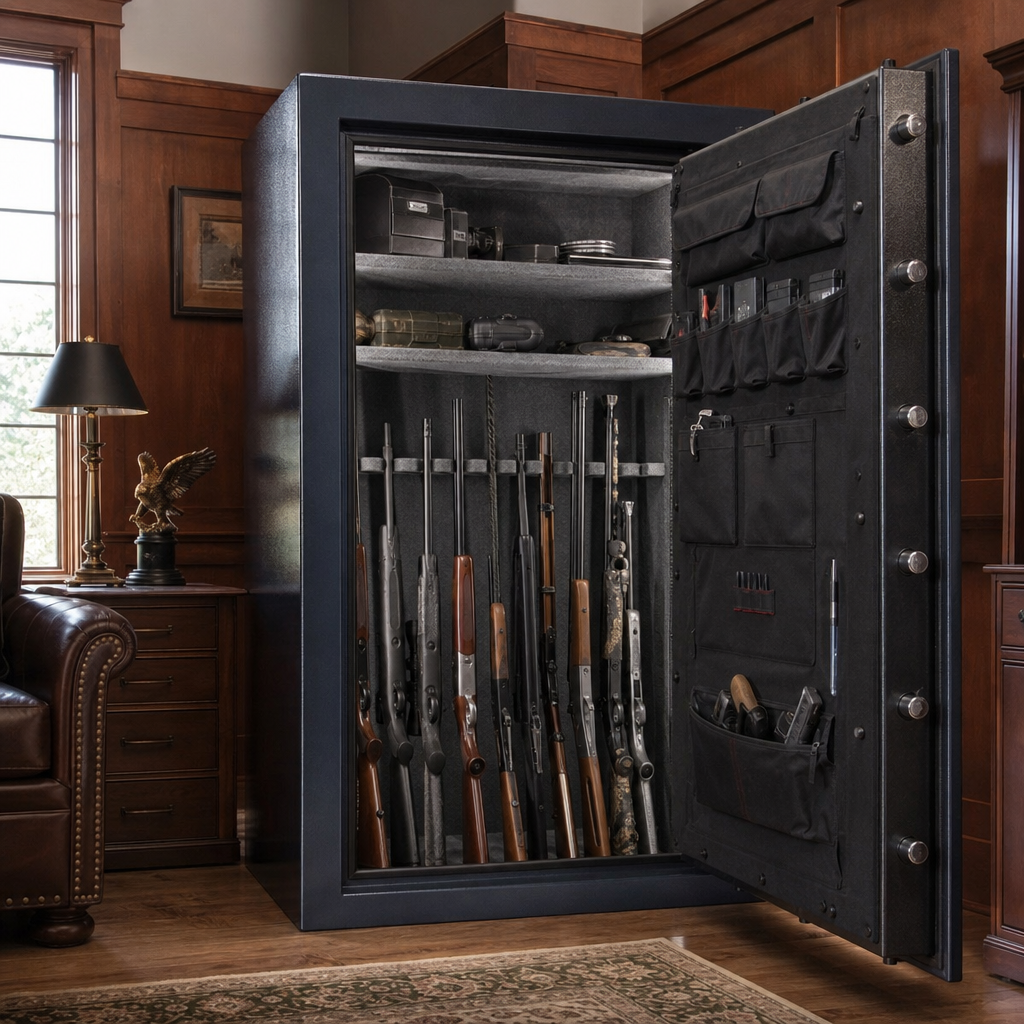
Choosing a gun safe for both fire and theft protection is harder than comparing a single feature because the strongest brands balance steel thickness, door construction, lock quality, bolt work, fire insulation, and verified testing rather than relying on one headline claim. In the gun safes and safety category, this question matters more than ever because owners are not just storing firearms. They are protecting optics, tax stamps, passports, family records, cash, and irreplaceable heirlooms against two very different threats: a fast-moving residential fire and a targeted burglary. A safe that performs well in one event can still disappoint in the other if the body flexes under prying, the lock is weak, or the fire rating is based on light testing. When people ask which gun safe brands offer the best fire and theft combo protection, they usually mean one practical thing: which manufacturers deliver the most balanced real-world security for the money, without misleading marketing. After working with buyers comparing residential security containers, premium gun safes, and commercial burglary-rated units, I have found that brand reputation is useful only when tied to specific construction details and independent standards.
Before comparing brands, define the key terms. Fire protection refers to how long the interior stays below a temperature threshold, commonly around 350 degrees Fahrenheit for paper documents, during a controlled heat exposure. Theft protection refers to how well the safe resists entry through prying, drilling, punching, peeling, cutting, or lock attacks. Most gun safes sold in sporting goods stores are classified as Residential Security Containers under UL 1037, which is not the same as a true burglary safe rating such as UL TL-15 or TL-30. That distinction is crucial. An RSC can deter smash-and-grab thieves and buy time, especially if bolted down and hidden, but it is not designed to withstand prolonged assault with professional tools. Fire claims also vary widely. Some brands cite independent lab tests, while others use internal protocols that are difficult to compare across manufacturers. The best fire and theft combo protection therefore comes from brands that pair heavier steel, robust hardplate and relockers, quality seals and insulation, and transparent testing with good installation practices. That is the lens that separates serious options from attractive brochures.
How to Judge Fire and Theft Combo Protection Without Falling for Marketing
The fastest way to compare gun safe brands is to ignore the decal first and read the spec sheet like a technician. Start with steel thickness in the body and door. Many entry-level safes use 14-gauge or 12-gauge steel bodies, which can be acceptable for basic deterrence but are easier to pry or cut than 10-gauge, 7-gauge, or composite constructions. Door design matters just as much as gauge because a thick plate door with strong edge reinforcement often resists pry attacks better than a thin door loaded with decorative bolts. Next, examine the locking system. A UL-listed mechanical or electronic lock from established makers such as Sargent and Greenleaf or SecuRam is preferable to unbranded imports. Then look for hardplate protecting the lock and relockers that trigger if the lock is attacked.
For fire protection, do not stop at the minute rating printed on the brochure. Ask what temperature was used, whether the test included a cool-down period, and whether the test was conducted by an independent lab such as Intertek ETL or UL. Fireboard layers, proprietary concrete-like fill, door seals, and body design all affect actual performance. In my experience, buyers often overvalue a long fire duration claim on a lightly built safe and undervalue a moderate fire rating on a much stronger body. For most homes, the right answer is balance: enough fire endurance for local response times and enough burglary resistance to slow attack until the thief gives up or is interrupted. Installation completes the picture. Even a well-built safe loses much of its theft advantage if it is not anchored to concrete and placed where pry bars can get full leverage.
Best Overall Combo Protection: American Security, Graffunder, and Fort Knox
If the question is which gun safe brands are consistently strongest at combining fire and theft protection, three names belong near the top: American Security, Graffunder, and Fort Knox. They earn that position for different reasons. American Security, usually shortened to AMSEC, stands out because its lineup spans solid midrange RSC models to true high-security composite safes. The BF series is especially important in this conversation because it combines a heavy steel body with a poured proprietary fire barrier and a substantial door design. Buyers who need more than basic sporting-goods-store construction often land here because AMSEC publishes meaningful details and has long credibility in commercial security. If a household stores a serious firearm collection plus documents and valuables, AMSEC is one of the safest recommendations.
Graffunder operates at a more premium, heavier-built tier and has earned respect among enthusiasts who prioritize steel and weld quality over flashy interiors. Their safes use thick plate construction and very serious door systems, making them among the best gun safe brands for theft resistance in the residential market. Fire protection is also strong, but the real appeal is that Graffunder does not substitute cosmetic bulk for genuine mass. These are difficult, expensive safes that require planning for delivery and floor load, yet that difficulty is part of the value. Fort Knox, meanwhile, remains popular because it offers broad customization, heavier steel upgrades, and stronger-than-average build options compared with many mass-market competitors. Not every Fort Knox model is configured the same, so the brand should be judged by the exact body gauge, liner, and fire package chosen. Properly specified, a Fort Knox safe can deliver an excellent fire and theft balance for a homeowner who wants premium features without stepping into a full commercial burglary safe category.
Strong Midrange Brands: Liberty, Browning ProSteel, Rhino, and Champion
Most shoppers are not buying a six-thousand-pound plate safe. They want reliable protection in the broad middle of the market, and this is where Liberty, Browning ProSteel, Rhino, and Champion deserve careful attention. Liberty has become one of the most recognized names in gun safes, partly because its dealer network is extensive and its model ladder is easy to shop. The better Liberty lines, not the lightest entry options, offer respectable fire ratings, decent door construction, and good interior layouts. Liberty safes are often a practical fit for families who need organized storage, broad accessory support, and better-than-basic residential security. The caveat is that buyers should compare steel gauge closely across lines because the brand ranges from entry-level to much stronger builds.
Browning ProSteel brings thoughtful interiors and solid fit and finish, with features that appeal to collectors storing long guns, optics, and documents together. Rhino has earned attention for heavier steel in certain models and distinctive styling, but the important point is not the finish. It is the availability of configurations that compete well on door strength and fire package value. Champion also sits in the worthwhile midrange conversation, especially for buyers focused on dependable construction and straightforward feature sets. In this tier, the best fire and theft combo protection often comes down to choosing the upgraded steel body and lock package instead of paying only for cosmetics, lighting, or extra shelving. A midrange safe with heavier steel and a verified lock is almost always a smarter buy than a prettier cabinet with a bigger claimed fire number.
Where Entry-Level Brands Fit and Where They Usually Fall Short
Entry-level gun safe brands, including many private-label store models, can still serve a purpose, but buyers should understand the limitations clearly. Brands such as Winchester-branded mass retail safes, Cannon in certain lines, Stack-On cabinets, and various warehouse-club imports are often chosen because they are affordable and immediately available. For basic child access prevention, simple organization, and modest deterrence, they can be better than unsecured firearms or thin lockers. However, they typically use lighter-gauge steel, simpler door construction, and less sophisticated lock protection. Their fire ratings may also be harder to compare because testing standards are not always described in detail. In a smash-and-grab burglary, these safes can still help if they are bolted down, concealed, and located in a low-visibility part of the home. Against extended attack, they are outmatched.
The key mistake is assuming all safes with external bolts and a glossy finish are equivalent. They are not. I have seen buyers compare a budget 14-gauge body safe and a heavier AMSEC or Fort Knox model as though the difference were branding alone. In reality, the gap in pry resistance, lock protection, door rigidity, and overall mass is significant. That does not mean everyone must buy premium. It means an entry-level safe should be framed honestly as a delay device and child safety tool, not as a near-impenetrable vault. If you are protecting a few hunting rifles in a low-risk area, a carefully installed budget safe may be enough for now. If you are storing NFA items, high-end optics, collectible firearms, or layered valuables, moving up a tier is the rational decision.
Side-by-Side Brand Snapshot for Gun Safe Comparisons
For a hub page covering gun safe comparisons and brand spotlights, readers need a quick framework that turns broad reputation into practical buying guidance. The table below summarizes how major brands typically compare when fire and theft combo protection is the priority. Because model lines vary, treat this as a directional guide and confirm specifications on the exact safe you are considering.
| Brand | Best Known For | Theft Protection Strength | Fire Protection Strength | Best Fit Buyer |
|---|---|---|---|---|
| AMSEC | Balanced construction, strong premium lines, commercial credibility | High, especially BF and above | High with more transparent testing than many rivals | Buyers wanting serious all-around protection |
| Graffunder | Heavy plate steel, elite build quality | Very high | High | Collectors prioritizing theft resistance and mass |
| Fort Knox | Customization, steel upgrades, premium residential builds | High when properly configured | High | Homeowners wanting tailored premium options |
| Liberty | Dealer availability, broad model range, user-friendly interiors | Moderate to high by line | Moderate to high by line | Mainstream buyers shopping midrange and up |
| Browning ProSteel | Interior organization and polished fit and finish | Moderate to high | Moderate to high | Collectors balancing storage convenience and protection |
| Rhino | Value in selected heavier models | Moderate to high | Moderate to high | Buyers comparing features closely for value |
| Champion | Straightforward midrange offerings | Moderate | Moderate | Shoppers wanting dependable basics with fewer gimmicks |
What Matters More Than Brand Name: Installation, Location, and Layered Security
The best gun safe brand can still underperform if the safe is installed poorly. Theft resistance rises dramatically when a safe is bolted to concrete with proper anchors, positioned in a corner or alcove that limits pry-bar access, and hidden from casual visitors. Weight alone is not enough. Many thieves use leverage, not finesse, and side or rear access can turn a decent safe into an easy project. If you must install on a wood-framed floor, verify load capacity and use the strongest anchoring approach the manufacturer allows. Basement placement can help with concealment and moderate temperatures, but moisture control becomes essential. A dehumidifier rod or desiccant system is a small cost compared with rust on blued firearms and optics.
Layered security adds more value than most brand upgrades. An alarm system, cameras, exterior lighting, reinforced doors, and disciplined discretion all reduce the chance that a burglar will spend enough time attacking the safe. Fire planning matters too. If your area has longer fire department response times or wildfire exposure, move more weight toward robust fire construction and consider placing critical paper documents inside a dedicated media or document chest within the gun safe. That nested approach often outperforms relying on one broad rating alone. This is why the best fire and theft combo protection is not simply a brand choice. It is a system built around the safe. In real homes, that system determines whether the safe remains a deterrent or becomes a proven asset after an emergency.
How to Choose the Right Brand for Your Budget and Risk Level
The right gun safe comparison starts with your risk profile, not with social media opinions. If your main goal is secure storage for a few defensive firearms and important papers, a strong midrange model from Liberty, Browning ProSteel, Rhino, or Champion may be enough, provided you choose better steel and anchor it correctly. If you have a large collection, expensive night vision, suppressors, serialized accessories, or rare shotguns, AMSEC and Fort Knox move to the front because they offer stronger paths to combined protection. If theft resistance is the overriding concern and budget, weight, and delivery complexity are manageable, Graffunder is one of the clearest premium answers in the category.
Also budget for the parts buyers forget: professional delivery, anchoring hardware, humidity control, door organizers, and insurance documentation. A safe that is too small on day one becomes cramped quickly, and cramped safes lead to dings, poor access, and eventually unsecured overflow storage. Buy larger than your current count suggests. Most importantly, compare exact model specifications, not just brand names. Within the same brand, construction can vary enough to change the recommendation completely. Start your research with the brands above, then dig into line-by-line comparisons, lock options, steel thickness, and verified fire data before making the final call. That disciplined approach is how you find the gun safe brand that truly offers the best fire and theft combo protection for your home.
Frequently Asked Questions
Which gun safe brands are most often recommended for strong fire and theft combo protection?
When buyers want a true balance of fire resistance and burglary deterrence, a handful of brands consistently come up in serious comparisons: Fort Knox, AMSEC, Liberty, Browning, Rhino Metals, and Hollon. That said, the best choice is rarely about the brand name alone. It is about which specific series or model within that brand gives you the right combination of steel thickness, door strength, lock quality, relockers, bolt work, internal hinge protection, and fire insulation. Some brands are known for heavier steel and more customizable security upgrades, while others focus on broad dealer availability, strong fire packages, or better value in the midrange market.
For example, AMSEC is often respected for blending commercial-style security thinking with residential safe design, especially in higher-end lines. Fort Knox has a strong reputation for customization and robust construction options. Liberty is widely recognized and popular because it offers a broad lineup that can fit different budgets while still providing meaningful fire and theft features in its upper tiers. Browning is frequently discussed for interior organization and practical long-gun storage, while still offering competitive protection in better models. Rhino Metals and Hollon are often considered by buyers who want thicker steel or specific feature sets without automatically jumping to luxury pricing.
The most important takeaway is that no brand is universally “best” across every price point. Many entry-level safes from premium brands still use lighter steel than people expect, while some less-publicized brands may offer stronger anti-theft construction in a comparable budget range. If your goal is combo protection, look at the exact specifications and test standards rather than marketing labels. A brand earns its reputation over time, but the real decision should come down to model-level construction and how well that safe protects both firearms and sensitive valuables like optics, cash, passports, legal documents, and family heirlooms.
How can I tell whether a gun safe offers real fire protection instead of just a marketing claim?
This is one of the most important questions a buyer can ask, because fire ratings are not always measured the same way. A headline like “90 minutes at 1,200 degrees” sounds impressive, but it does not always tell you how the test was performed, whether the temperature inside the safe was monitored in a meaningful way, or whether the safe was independently verified. Real fire protection depends on several factors working together: the insulation material, its thickness and placement, the design of the door seal, the way seams are protected, and whether heat can enter through thinner steel or weak door gaps.
Look for brands and models that explain their fire testing clearly. Better manufacturers describe how long the safe was exposed, to what temperature, and what internal temperature threshold was maintained. Independent or third-party verification generally carries more weight than a purely in-house claim. You should also pay attention to expanding door seals, often called intumescent seals, which help block smoke and heat from entering around the door frame. In many house fires, smoke and steam damage can be just as destructive to documents and valuables as direct flame exposure.
It is also important to understand what you are protecting. Firearms may tolerate conditions that would ruin paper records, digital media, tax stamps, photographs, and jewelry boxes with delicate contents. If you plan to store documents, trust paperwork, cash, birth certificates, or backup drives inside your gun safe, you may need a higher fire standard than someone storing only metal firearms. Some owners even place the most heat-sensitive items inside a secondary document box or media-rated insert within the larger gun safe for added protection.
In short, real fire protection is about test credibility and design quality, not just a single advertised number. Brands that explain their fire construction honestly and back it up with clear testing information are usually a safer bet than those relying on oversized labels and vague promises.
What theft protection features matter most when comparing gun safe brands?
Theft protection starts with steel, but it does not end there. Many buyers focus only on door thickness or the number of locking bolts, yet a safe is only as strong as its weakest point. The most meaningful anti-theft features include body steel thickness, reinforced door construction, a secure bolt system, hard plates that protect the lock from drilling, internal relockers that trigger during an attack, quality hinges, and a design that resists prying at the door edge. A good safe also needs to be properly anchored, because even a heavy safe becomes far more vulnerable if thieves can tip it, pry it from different angles, or remove it entirely.
One of the biggest mistakes consumers make is assuming more bolts automatically means more security. Bolt count can be a marketing number. What matters more is the strength of the bolt work system, the way the door engages with the frame, and the overall rigidity of the safe under pry pressure. Likewise, a very high fire rating on a safe with lighter body steel may not translate into strong burglary resistance. Brands that do combo protection well usually make smart tradeoffs instead of overbuilding one category while cutting corners in another.
Lock quality is another major factor. Both mechanical dial locks and quality electronic locks can be excellent, but they should come from reputable lock manufacturers and be backed by anti-drill protection. Some buyers prefer mechanical locks for long-term simplicity and fewer electronic concerns, while others like modern electronic locks for speed and convenience. Neither type makes a safe secure by itself; proper installation and surrounding hardening features matter just as much.
If theft protection is a top priority, pay close attention to steel gauge, door edge design, lock protection, relockers, and anchoring options. The strongest gun safe brands for theft resistance usually make these details easy to find in their product literature instead of distracting buyers with only exterior finish, interior lighting, or oversized long-gun capacity claims.
Is it better to buy a larger midrange safe from a well-known brand or a smaller heavier-duty safe from a less famous brand?
For many buyers, this is the real-world decision. In general, if your primary concern is serious protection against both fire and theft, a smaller safe with heavier steel and better construction is often the smarter investment than a larger safe that compromises security to maximize capacity. Bigger interiors are appealing, especially when storing rifles, optics, handguns, documents, and valuables together, but large published capacities can be misleading. Once you add scoped rifles, slings, shelves, and accessory storage, real capacity drops fast. That means a large but lightly built safe can leave you with the illusion of protection rather than the substance of it.
A smaller premium or heavier-built safe from a less famous brand may deliver thicker steel, stronger door construction, and more credible burglary resistance in the same budget where a mainstream brand offers more size but lighter construction. That tradeoff matters because theft attacks are often fast and opportunistic. A safe that buys more time through better steel and stronger pry resistance may outperform a larger model with flashier marketing and more interior features.
That said, capacity still matters. If the safe is too small, owners tend to overcrowd it, leave valuables elsewhere, or postpone buying secure storage for important records and cash. The best long-term strategy is to buy more capacity than you think you need, but not at the expense of dropping below acceptable construction standards. If your budget is limited, prioritize structural quality first, then buy the most interior space you can within that stronger construction tier.
This is why model-by-model comparison matters more than brand popularity. A less famous brand with heavier steel, better lock protection, and honest fire testing can be a better combo-protection choice than a larger, more recognizable safe built to hit a lower price point. The right answer depends on your threat level, what you are storing, and whether you are willing to trade some capacity for a meaningful jump in real protection.
What else should I consider besides brand when choosing a gun safe for firearms and valuables?
Brand reputation is helpful, but placement, installation, and intended use often matter just as much as the logo on the door. First, think about where the safe will live. A safe installed in a garage may face different fire conditions, humidity swings, and visibility risks than one placed inside the home. A basement can offer concealment and a more stable environment, but depending on the property, it may also introduce moisture concerns. Interior closets, corners, and locations that limit access to pry tools can improve real-world theft resistance because they make attacks harder to carry out.
Anchoring is absolutely essential. Even a high-quality safe can be compromised if thieves can tip it over or remove it from the home. Bolting the safe to a solid concrete slab or other manufacturer-approved foundation can drastically improve theft resistance. You should also consider humidity management, especially if you are storing firearms, optics, paper records, and heirlooms together. Dehumidifiers, desiccants, and good airflow planning help prevent rust, mildew, and damage to documents over time.
Insurance and inventory are also worth thinking about. A gun safe is part of a broader protection plan, not the entire plan. Keep a record of serial numbers, photographs, and key documents in a separate secure location or encrypted digital backup. If you own NFA items, expensive optics, collectible firearms, cash, or jewelry, verify whether your homeowners policy actually covers those losses at their full value. In many cases, additional riders or separate