
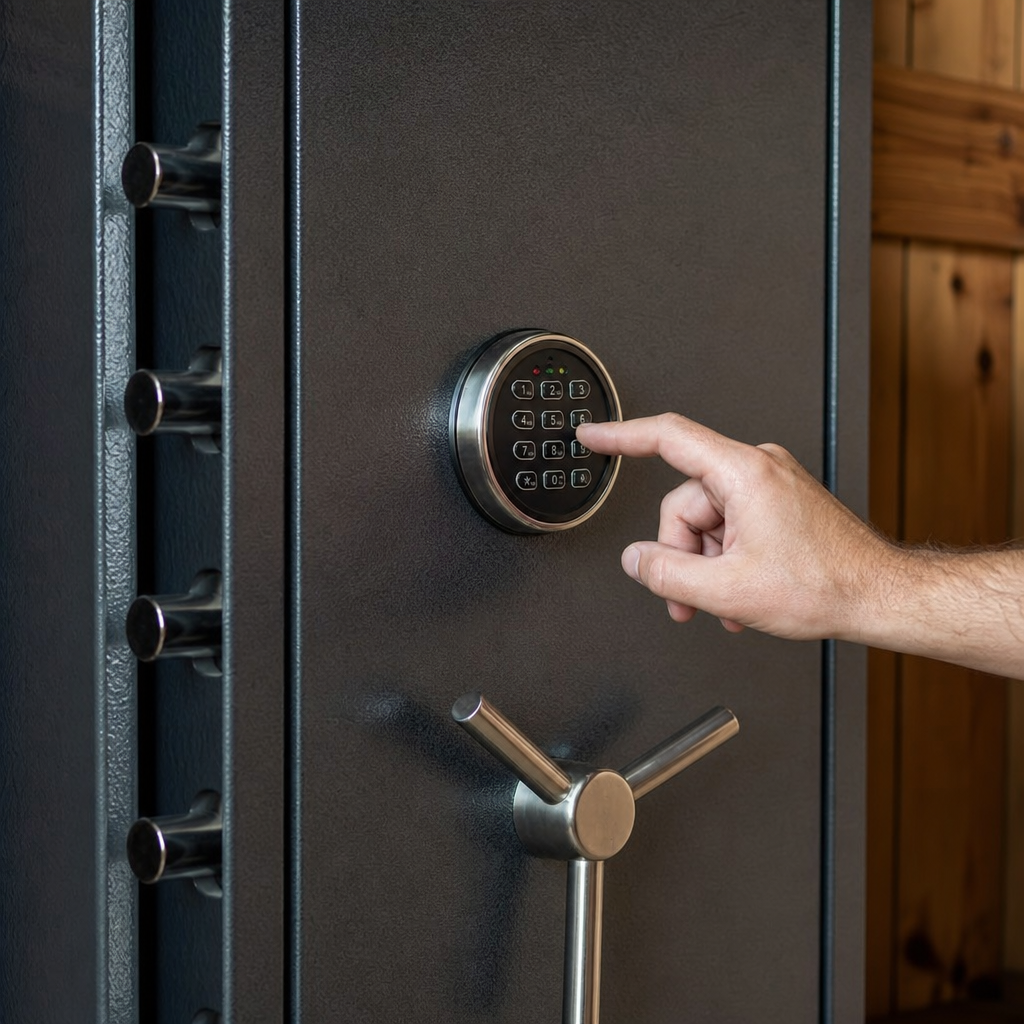
Electronic gun safe locks are convenient, fast, and common, but they also introduce attack paths that mechanical dials never had, which is why DIY gun safe hacking prevention matters for anyone planning custom and DIY gun safe modifications. In practical terms, “hacking” does not only mean a laptop-based cyberattack. On safes, it includes keypad code guessing, relay or solenoid manipulation, power interruption tricks, bypassing weak backup keys, probing exposed wiring, and exploiting poor installation choices. I have worked on safe retrofits where the lock body was solid but the cable routing, mounting plate, or battery access made the entire system easier to defeat than the owner realized. A secure setup is therefore not one product but a layered system that combines lock quality, physical reinforcement, disciplined code management, and careful modification work.
This topic matters because many owners buy an entry-level gun safe, then improve it over time with shelves, dehumidifiers, lighting, organizers, or upgraded electronic locks. Those upgrades are useful, yet every new hole, cable, adhesive mount, and power source can create a weakness. The hub topic of custom and DIY gun safe modifications should therefore start with security first: if a modification improves convenience but reduces resistance to tampering, it is the wrong modification. The goal of this guide is to explain how electronic gun safe locks are attacked, what preventive steps work in the real world, and how to modify a gun safe without undermining safety, child access prevention, or reliable emergency access for the owner.
Understand how electronic gun safe locks are actually defeated
The first step in DIY gun safe hacking prevention is understanding the threat model. Most gun safe attacks are low-tech and opportunistic. A thief is more likely to pry, tip, cut, or exploit an obvious weak point than to perform advanced electronics work. Still, electronic locks create several specific vulnerabilities. The most common is weak credential practice: factory default codes, birthdays, repeated digits, and shared household codes. Another common issue is accessible external battery compartments. If battery access is exposed and the keypad housing is lightly built, attackers may attempt to remove the keypad, short contacts, or manipulate the lock’s power state.
Some lower-cost safes also have exposed or lightly protected lock cables behind thin inner panels. During retrofits, I have seen owners route accessory wiring too close to lock wiring, making it easier to identify and reach critical connections after panel removal. Backup key overrides are another major concern. Many budget electronic safes rely on wafer locks that are far less secure than the electronic lock itself. If your safe includes a tubular key or flat emergency keyway behind a badge plate, that component deserves the same scrutiny as the keypad because it can become the easiest attack path.
There is also a difference between a residential security container and a true high-security safe. Many consumer gun safes are designed to meet practical home storage needs, not bank-vault standards. Steel thickness, relocker design, hardplate coverage, and boltwork geometry vary widely. That means your prevention strategy must be grounded in the actual construction of your safe, not marketing labels. Before modifying anything, identify the lock brand, lock mounting footprint, door panel layout, relockers if present, battery location, and whether the backup override can be disabled or upgraded.
Choose upgrades that improve security instead of only adding convenience
If you are modifying a safe, start by deciding whether the existing electronic lock is worth keeping. Trusted lock manufacturers in the safe industry include Sargent and Greenleaf, SecuRam, La Gard, and AMSEC-branded systems depending on the model. Look for features such as wrong-try penalty lockout, nonvolatile memory, UL-listed lock components where applicable, and robust spindle or cable protection. A quality electronic safe lock should fail securely, retain programming during battery changes, and resist casual keypad removal or simple probing attempts.
One of the best custom modifications is replacing a no-name lock on a budget safe with a recognized safe lock platform installed to the proper footprint and torque specification. This is not the same as adding a consumer smart lock. In fact, internet-connected lock add-ons are usually a poor fit for gun safes because they increase complexity, create battery dependency, and can introduce software or app security concerns without adding meaningful burglary resistance. For gun safes, simpler and purpose-built is usually safer.
Owners also ask whether biometric locks are better. The answer is nuanced. A good biometric system can improve access speed under stress, but fingerprint sensors vary widely in quality and environmental tolerance. Dry skin, dirt, cuts, and temperature can reduce reliability. For a primary gun safe, I recommend biometrics only when paired with a strong PIN workflow and quality hardware from an established manufacturer. Convenience should never replace a dependable code-based method.
| Modification | Security Benefit | Main Risk | Best Practice |
|---|---|---|---|
| Replace factory keypad lock | Better tamper resistance and programming security | Bad installation can misalign boltwork or expose wiring | Use a recognized safe lock and follow mounting specs exactly |
| Add interior power or lighting | Improves access and visibility | New cable holes can expose lock area or reduce fire lining integrity | Route power away from lockwork and use existing pass-throughs when possible |
| Disable weak backup override | Removes an easy bypass path | May complicate emergency entry if lock fails | Confirm service options and battery protocol before removing override access |
| Install door organizer | Better storage efficiency | Screws or anchors can interfere with lock cables and inner panel clearance | Map the inside of the door before drilling or fastening anything |
Harden the physical attack points around the lock
Electronic lock security is never only electronic. The lock must be protected by the door structure around it. Start with the keypad mount. If the keypad housing can be twisted off easily or if mounting screws are accessible from the exterior, address that immediately. Some housings are decorative and do not provide true tamper resistance. The protection comes from what sits behind them: hardplate, relockers, internal shielding, and tight cable routing. If your safe door has a removable interior panel, open it and inspect the area directly behind the keypad and lock body. You are checking for exposed cable loops, unsupported connectors, and large unprotected cavities that would let a tool reach the lock.
Reinforcement strategies depend on the safe’s design. On some units, adding a properly placed steel shield over the cable path can reduce probing risk. On others, the better fix is simply rerouting slack and securing it with adhesive mounts or clips rated for the interior temperature range. Avoid random drilling in the door. Many fire-lined doors use gypsum-based fireboard, and careless drilling can compromise both fit and fire performance. If reinforcement requires drilling, confirm there is no interference with boltwork travel and no chance of striking relocker components.
Anchor the safe as well. A surprisingly high number of electronic lock defeats become easier when the safe can be tipped onto its back or side. Once repositioned, a thief may gain better leverage on the door, hinges, or keypad area. Use manufacturer-recommended anchor points and appropriate concrete anchors or lag bolts depending on the floor structure. A well-anchored safe denies time and access, which is often more important than any single lock feature.
Protect codes, power, and maintenance routines
Most successful unauthorized entries into electronic safes start with code mishandling, not technical wizardry. Use a unique code that is not tied to personal data and avoid simple patterns such as 123456, 111111, addresses, anniversaries, or repeating pairs. If the lock supports multiple users, assign only the minimum needed and remove old codes immediately. In households with teenagers, caregivers, contractors, or frequent visitors, this matters more than owners assume. Treat the safe code like a financial credential, not a garage keypad number.
Battery management is another overlooked layer. Weak batteries can create erratic keypad behavior and lockout confusion that owners mistake for hacking or lock failure. Use name-brand alkaline batteries unless the lock manufacturer specifically approves another chemistry. Replace batteries on a schedule, not only after low-battery warnings. I prefer logging changes twice a year and testing several open-close cycles after every replacement with the door open. Never let a battery leak inside the keypad housing. Corrosion can damage contacts and create a preventable service issue.
Routine inspection should be part of any custom gun safe modification plan. Every few months, check keypad stability, battery compartment fit, mounting screws, handle movement, door gap consistency, and internal cable security. If you added lighting, dehumidifiers, or organizers, verify that nothing now presses on the lock body or wiring when the door closes. Small shifts over time cause bigger problems than the original installation. A safe that opens perfectly after a modification can become unreliable six months later if adhesive mounts fail or added accessories sag into the mechanism.
Modify the interior without creating new bypass routes
Custom interiors are useful, but they can accidentally expose the very components you need to protect. Door organizers, rifle barrel supports, magazine racks, and power kits often require fastening points. Before adding anything, remove interior panels if possible and document the hidden layout with photos. Mark the positions of lock bodies, cables, relockers, boltwork bars, and linkage travel. This prevents one of the most common DIY mistakes: driving a screw into the inside of the door near lock components because the installer assumed the door cavity was empty.
Lighting kits deserve particular caution. Adhesive LED strips are generally safer than drilled fixtures, but the wiring path matters. Do not run wires parallel to lock cables if they can be distinguished or grabbed together during panel removal. Keep accessory wiring separate, tidy, and clearly identifiable. If you add a pass-through for power, place it far from the lock area and seal it properly to preserve the interior environment. For safes used in humid regions, a dehumidifier rod or desiccant system helps firearm preservation, but cords should never compromise the lock side of the cabinet.
If you are adding hidden storage or false panels inside a gun safe, make sure they do not obstruct emergency service access to the lock mechanism from the interior side of the door panel. Serviceability is part of security. When owners bury the lock area behind a rigid custom liner, technicians may need to destroy the liner during maintenance or lock replacement. A better approach is modular panels attached with removable hardware that can be taken out without disturbing the lock body or boltwork.
Know when to stop DIY and call a safe technician
Some gun safe modifications are reasonable for careful owners, and some are not. Changing batteries, replacing interior panels, adding noninvasive organizers, anchoring the safe, or installing approved lighting are generally manageable. Replacing the lock body, altering the door, disabling a backup key override, adding hardplate, or drilling near the lock area can cross into technician territory quickly. The reason is not just skill; it is consequence. A small error in lock alignment, spindle placement, cable routing, or relocker interference can leave you locked out or, worse, leave the safe easier to defeat.
Use a qualified safe technician when the work affects lock mounting, door penetration, boltwork timing, or manufacturer warranty. Look for experience with gun safes specifically, not only general locksmith services. Safe work is its own discipline. A technician familiar with UL 768 lock expectations, relocker behavior, and common residential security container designs will spot issues a general installer may miss. Ask whether the technician has worked on your lock brand and whether they will test multiple open-close cycles with the door open before finalizing the job.
Documentation also matters. Keep records of lock model numbers, code programming instructions stored separately and securely, battery type, installation dates, and any modifications made inside the door. If a technician services the safe later, that record saves time and reduces avoidable mistakes. Good documentation is one of the simplest forms of hacking prevention because it keeps the owner in control of the system instead of guessing when a problem appears.
DIY gun safe hacking prevention tips for electronic locks all come back to one principle: every modification should make unauthorized access harder without making legitimate access unreliable. Start by understanding how electronic locks fail and how they are bypassed in practice. Upgrade weak factory locks when needed, harden the physical area around the keypad and cable path, manage codes and batteries with discipline, and keep accessory wiring and interior upgrades away from lockwork. If a planned change introduces uncertainty around drilling, lock alignment, or emergency override design, stop and bring in a safe technician.
As the hub for custom and DIY gun safe modifications, this topic should guide every related project, from lighting and shelving to lock replacement and door organizers. Security, serviceability, and safe firearm storage are connected. The best modification is the one that preserves all three. Review your current safe this week: inspect the lock area, change any weak codes, check battery condition, and map out future upgrades before you drill or mount anything. A careful hour now can close off the shortcuts an attacker would count on later.
Frequently Asked Questions
What does “hacking” an electronic gun safe lock actually mean in a DIY security context?
In the context of electronic gun safes, “hacking” is much broader than a movie-style cyberattack. For most owners, the real risks are practical, hands-on methods that exploit weaknesses in the lock, keypad, wiring, backup entry system, or installation. That can include repeated code guessing on keypads without proper lockout controls, manipulating a relay or solenoid to trigger the lock, interrupting power in a way that causes the lock to fail open or behave unpredictably, probing exposed wiring added during a DIY upgrade, or defeating a low-quality backup key override. In other words, if an attacker can gain entry by abusing a design flaw, weak component, careless install, or predictable user habit, that counts as hacking in the real-world safe security sense.
For DIY gun safe projects, this matters because custom modifications can accidentally create new attack paths even when the safe body itself is strong. A neatly installed interior light, power pass-through, keypad relocation, or aftermarket lock swap can expose wiring routes, weaken panel areas, or make it easier to reach internal components from outside the safe. Good prevention starts with thinking like an attacker: what can be guessed, cut, shorted, pried, bumped, or bypassed? Once you look at the safe as a full system rather than just a door and keypad, it becomes much easier to make smart upgrades that improve convenience without sacrificing security.
What are the most effective DIY steps to prevent tampering with an electronic gun safe keypad and lock?
The most effective DIY protections focus on reducing easy opportunities. Start with the code itself: use a long, non-obvious entry code and avoid birthdays, addresses, repeating digits, or patterns that can be guessed from fingerprints and wear marks on common buttons. If your lock supports user management, disable unused codes, remove factory defaults immediately, and enable penalty lockout features after multiple failed attempts. Keep the keypad clean enough to avoid obvious button shine patterns, and if the system allows it, rotate codes periodically, especially after household changes, contractors in the home, or any situation where someone may have observed entry.
Physical installation is just as important. Make sure the keypad is mounted firmly with no looseness that would allow prying or removal to access the harness underneath. Route cables in protected paths and avoid leaving slack near the outer skin where a hole or cut could expose them. If you are adding or replacing a lock, use quality components from reputable safe lock manufacturers rather than generic electronic cabinet locks that are not designed for serious firearm storage. On the inside, secure wiring away from direct attack points, protect connections from easy unplugging, and avoid mounting control boards where they sit directly behind thin steel panels. If your design includes battery access from outside, use a model engineered for secure external battery replacement rather than improvising a vulnerable power access method. Small details in installation often determine whether a lock is merely convenient or genuinely resilient.
How can I secure the wiring, power system, and internal components of an electronic safe during a DIY modification?
When modifying an electronic gun safe, wiring and power are often the weakest points because they are easy to overlook. Any cable that can be reached, identified, and manipulated may become a bypass opportunity. The first rule is to minimize exposed runs. Route wires through protected channels, behind internal liners, or through reinforced paths that cannot be accessed from the exterior without major destructive entry. Avoid drilling unnecessary holes, especially near the lock body, relocker area, or door edge. If a pass-through is necessary for power or accessories, use grommets, bushings, and tamper-resistant routing so the opening does not become a direct line to critical lock components.
Power design deserves special attention. Electronic locks should fail secure, not fail open, during battery loss or interruption. Before trusting any aftermarket setup, verify how the lock behaves under low battery, dead battery, and abrupt power disconnection conditions. Do not assume all electronic locks are designed the same. If the safe uses an external battery contact system, make sure it is manufacturer-approved and not something a person can energize or manipulate from outside in an unintended way. Inside the door, secure connectors so they cannot be shaken loose, quickly unplugged, or bridged with basic tools. If you add lighting, USB charging, dehumidifier feeds, or alarm accessories, keep those circuits separate from the lock’s critical control path whenever possible. The goal is straightforward: no exposed wire, connector, or improvised power feature should provide a shortcut around the lock itself.
Are backup keys and override systems a major weak point on electronic gun safes?
Yes, they absolutely can be, especially on budget safes and poorly planned retrofits. Many electronic safes include a hidden key override intended for emergency access if the keypad fails or the battery dies. The problem is that a weak override cylinder can undermine the entire security system. If the backup key can be picked easily, impressioned, bumped, or attacked by simple drilling, then the electronic lock becomes more of a convenience feature than a meaningful barrier. For DIY builders and modifiers, this is a critical issue because adding an inexpensive override option may feel like a smart redundancy measure while actually creating the easiest point of entry.
If your safe already has a backup key system, inspect it realistically. Look at where it is located, how well it is concealed, what protects it from drilling, and whether opening that cylinder directly releases the boltwork or just enables a secondary access process. If you are choosing between lock systems, prioritize designs from established safe-lock brands with stronger emergency access architecture rather than generic consumer-grade units. If you do not truly need a key override, it is often safer to choose a lock design that relies on reliable battery management and documented emergency procedures instead of a vulnerable physical bypass. At a minimum, never leave override keys stored near the safe, never label them clearly, and never assume the cover plate over a keyway provides real security. Covers hide; they do not harden.
What installation mistakes make an electronic gun safe easier to hack, and how can I avoid them?
The most common mistakes are surprisingly simple: poor placement, weak mounting, exposed wiring, and overconfidence in aftermarket parts. A safe installed in an obvious, low-observation area such as a garage corner can give an attacker more time and privacy to work on the keypad, hinges, sidewalls, or lock area. A safe that is not properly anchored can be tipped, moved, or positioned for easier drilling and prying. Thin surfaces around the lock area may become even weaker if a DIY installer drills unnecessary holes or mounts accessories without considering what sits behind that metal. Many owners also add electronic conveniences like lights, biometric modules, charging ports, or remote monitors without evaluating whether those additions create penetrations or reachable circuits near the lock mechanism.
To avoid these problems, start with placement and anchoring. Install the safe where it is difficult to access from the sides and back, and bolt it down according to the manufacturer’s recommendations using appropriate anchors for concrete or structural framing. Before making any modification, map the internal layout of the door and body so you do not drill near lock components, relockers, hard plates, or boltwork. Keep all upgrades secondary to the primary security system, not intertwined with it. Use proven lock hardware, follow exact installation specs, and test the safe repeatedly under normal, low-battery, and fault conditions before putting it into service. Finally, remember that DIY gun safe hacking prevention is not about creating an invincible system. It is about removing easy wins, eliminating weak links, and making unauthorized access significantly harder, slower, louder, and less predictable.