
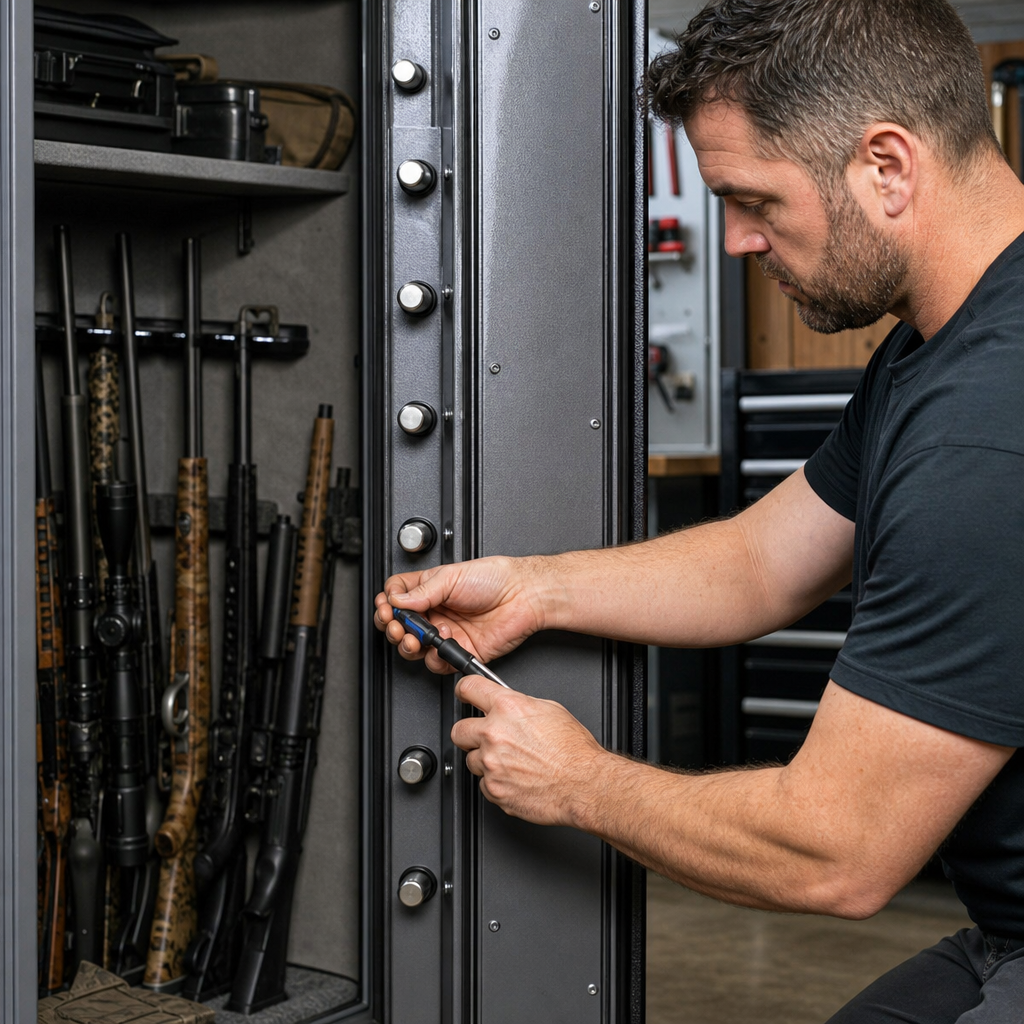
Reinforcing a gun safe’s bolt system is one of the most effective ways to improve real burglary resistance, especially for owners exploring custom and DIY gun safe modifications. In practical terms, the bolt system is the network of steel locking bolts, linkages, cams, and relock features that secure the door when the handle is turned and the lock is engaged. Many buyers assume a safe’s listed gauge, fire rating, or glossy finish determines security, but after working on residential safes, replacing failed lockwork, and evaluating pry attacks on entry-level cabinets and midrange safes, I have seen the opposite repeatedly: weak bolt engagement and thin door-side reinforcement are often the first points of failure. A reinforced bolt system does not make a safe invulnerable, but it can significantly increase the time, noise, tool wear, and skill required to open it by force.
This matters because most gun safe attacks are not cinematic lock-cracking exercises. They are fast, aggressive pry and peel attempts using long bars, wedges, grinders, and leverage against the door edge. If the active bolts are undersized, poorly supported, or linked to light-gauge internal parts, the attacker may not need to defeat the lock at all. They only need to spread the door frame enough to disengage or shear the lockwork. For gun owners building out a safer storage plan, custom and DIY gun safe modifications should prioritize the bolt system alongside anchoring, humidity control, interior organization, and access control. This hub article explains what the bolt system does, where common weaknesses appear, which modifications offer the most practical value, and how to evaluate upgrades without creating unsafe lock failures or voiding important warranty protections.
How a gun safe bolt system works and where it usually fails
A gun safe bolt system translates movement from the handle and lock into mechanical engagement around the door perimeter. On many consumer safes, rotating the external handle moves a drive cam or spindle assembly connected to bolt bars. Those bars extend cylindrical or rectangular locking bolts into receivers in the safe body. The lock, whether mechanical dial, electronic keypad, or redundant system, prevents the handle from moving until correct credentials are provided. Better designs also include hard plates to resist drilling and relockers that trigger if the lock is punched or attacked.
The marketing term “more bolts” often confuses buyers. Ten visible chrome bolts do not automatically mean stronger security than six larger bolts with deeper engagement and a reinforced frame. In the field, I look first at bolt diameter, bolt throw, the thickness of the door edge, the support behind the bolt carriage, and whether the hinge side has dead bars or fixed bolts that prevent the door from lifting free. The quality of the bolt receivers matters just as much. If the bolts throw into thin sheet metal or shallow cutouts, the system can fail even though the front of the safe looks impressive.
The most common failure points in entry-level and lightly built safes are straightforward. Thin door skins flex under pry pressure. Spot-welded bolt guides tear loose. Linkage arms bend before the lock itself is compromised. Gear-driven handle systems with cast components may crack under shock. On electronic-lock models, the lock can remain secure while the surrounding door structure distorts enough that a bolt retracts or slips past its receiver. This is why reinforcement should focus on load paths, not cosmetics. You want force applied at the door edge to travel into thicker steel, stronger welds, and tighter bolt support rather than into unsupported sheet metal.
Assessing your safe before starting any custom or DIY bolt system modification
Before adding steel, replacing bolts, or welding reinforcements, inspect the safe systematically. Start with the manufacturer label, model number, and construction details. Record the door thickness, body thickness, bolt count, bolt diameter, lock type, and whether the safe carries a UL Residential Security Container listing or another independent rating. If product literature is vague, remove the interior door panel and document the lockwork with photos. This step is essential for planning and for returning the system to proper alignment if parts move during the project.
Measure bolt throw accurately. Bolt throw is the distance the active bolts extend into the frame when locked. Shallow throw can leave little margin against door spread. Check whether the bolt carriage rides on bushings, slots, or welded guides, and look for wear marks that indicate misalignment. I also check handle play. Excess movement in the handle can signal slop in the spindle connection or cam, which reduces reliable bolt engagement over time. Examine welds around bolt receivers and note whether the frame shows deformation from prior pry attempts. Even minor frame spread can reduce bolt contact and should be corrected before reinforcement.
At this stage, decide what category your safe belongs to. A thin steel gun cabinet can sometimes be improved, but there is a limit to what bolt upgrades can achieve if the body walls and frame are weak throughout. A mid-tier safe with decent steel and poor internal reinforcement is often a strong candidate for modification. A high-end plate-door safe may need little beyond alignment correction and relocker improvement. Also review the warranty. Drilling, welding, or replacing lock components can void coverage or affect insurance documentation. If the safe protects regulated firearms or high-value collections, it is often worth consulting a safe technician before making permanent changes.
Best reinforcement strategies for maximum protection
The highest-value reinforcement is usually strengthening the door edge and bolt support structure, not simply installing larger shiny bolts. If the door can flex away from the frame, even robust bolts lose effectiveness. Adding a continuous steel backer plate behind the bolt carriage distributes pry loads across a wider area. In practical retrofit work, 3/16-inch or 1/4-inch steel plate tied into the door’s internal structure provides a meaningful improvement on many residential safes. Reinforcing the bolt guide area with welded or mechanically fastened angle sections can also prevent the guides from tearing away during prying.
Upgrading bolt receivers is another overlooked improvement. Many factory receivers are shallow tabs or cutouts in relatively thin steel. Replacing them with boxed receivers or welded channel sections creates deeper engagement and reduces the chance of the bolts camming out when the frame is spread. If there is room, extending bolt throw modestly can help, but only when linkage geometry remains correct and the lock can still reliably block retraction. Overextending bolts without proper receiver depth can create drag, incomplete locking, or failure to unlock after minor door sag.
Material choice matters. Mild steel plate is common and workable, but abrasion-resistant steel can improve resistance in targeted pry zones. For fasteners, use high-strength hardware only where a bolted solution is structurally appropriate; loose bolts inside a door cavity are not equivalent to full-penetration welds. I strongly prefer welded reinforcement for critical load-bearing components, provided heat is controlled to avoid warping the door and damaging insulation or finish. For owners without metalworking capability, a fabricated internal reinforcement kit installed by a local weld shop is usually safer than improvised brackets assembled with undersized hardware.
| Modification | Main Benefit | Best Use Case | Primary Limitation |
|---|---|---|---|
| Door backer plate | Reduces door flex and spreads pry loads | Mid-tier safes with thin inner door skin | Adds weight; requires careful fitment |
| Boxed bolt receivers | Increases bolt engagement strength | Safes with shallow factory receivers | Needs precise alignment |
| Larger or longer locking bolts | Improves shear resistance and engagement depth | Systems with adequate clearance and strong linkage | Can bind if geometry is wrong |
| Dead bars on hinge side | Prevents door removal if hinges are attacked | External-hinge safes without robust fixed bars | Limited value against frontal prying alone |
| Relocker and hard plate upgrade | Improves resistance to punch and drill attacks | Older safes with basic lock protection | More technical installation |
Adding passive security features around the bolt system often yields outsized benefits. Anti-pry tabs, interlocking door lips, and reinforced frame returns force an attacker to overcome geometry as well as steel thickness. Hinge-side dead bars deserve special mention. On external-hinge designs, these fixed bars do not move with the handle but engage the body when the door closes. If hinges are cut, the door remains captured. They are not a substitute for stronger active bolts, yet they close a common vulnerability on many affordable gun safes.
DIY modification methods, tools, and safety precautions
For experienced fabricators, the core process is straightforward but unforgiving. Remove firearms, dehumidifiers, shelving, and interior trim. Disconnect or protect any electronic lock components. Support the door properly before opening the panel because added steel can change balance and hinge load. Use templates made from cardboard or hardboard to confirm plate dimensions and bolt travel clearances before cutting steel. Common tools include a drill press, transfer punches, clamps, angle grinder, carbide bits, step bits, layout dye, and a MIG or TIG welder if welding is planned. Precision matters more than speed; a few millimeters of error can cause persistent binding.
Dry-fit every part before final attachment. Cycle the boltwork repeatedly with the door open, then with marking compound on the bolts to verify receiver contact. If replacing bolts, match material and diameter carefully to existing guides or machine new guides to suit. Never grind down bolt ends casually to make a tight system “work.” That often creates uneven engagement and accelerated wear. If the lock has a relocker, confirm that modification does not obstruct its trigger path. If insulation or fireboard is present in the door, control heat aggressively during welding and be aware that some materials release dust or fumes when disturbed.
Safety and liability deserve equal attention. A gun safe is a security device and a heavy steel enclosure. Poorly executed modifications can create lockouts, accidental self-locking conditions, fire-rating damage, or unsafe handling issues from increased door weight. If you add substantial steel to the door, reassess hinge condition and anchor stability. An overloaded door can sag, changing bolt alignment and eventually defeating the upgrade. Use eye protection, respirators where needed, and proper lifting support. If you lack confidence in lock timing, spindle alignment, or relocker setup, stop and bring in a safe technician. Precision repair costs less than drilling your own safe after a failed DIY upgrade.
When bolt reinforcement is not enough: anchoring, placement, and layered security
Even a well-reinforced bolt system cannot compensate for poor installation. I have seen burglars ignore stronger doors altogether and tip lighter safes onto their backs to gain leverage or attack thinner panels. Anchoring is therefore inseparable from bolt protection. A safe should be anchored into sound concrete with appropriate wedge anchors or into a structurally adequate floor and wall system using hardware suited to the manufacturer’s guidance. Anchoring reduces the attacker’s ability to rock the safe, exploit door flex, or move it to a location where power tools can be used without interruption.
Placement also changes real security. Installing a safe in a corner or closet so the vulnerable pry side has limited clearance can materially reduce attack options. Tight side clearance, overhead shelving, and thoughtful room layout can prevent long pry bars from being used effectively. Reinforced doors perform best when the attacker cannot generate full leverage at the seam. Add monitored alarms, door contacts, and cameras to extend that advantage. Time and exposure are your allies. Most residential thieves want speed; every layer that increases noise, time, or uncertainty supports the value of bolt system upgrades.
Finally, be realistic about thresholds. If the safe body is very thin, the frame is weak, and the lockwork is rudimentary, extensive custom and DIY gun safe modifications may cost nearly as much as moving to a better platform. In those cases, upgrading the entire safe is often the smarter security decision. Use modifications where they make a measurable difference: stronger engagement, less flex, better drill resistance, and improved resistance to prying. Build the system as a whole, and link this hub topic to related improvements such as safe anchoring methods, humidity management, interior retrofits, lighting, and lock upgrades. Start with an honest assessment, reinforce what matters most, and make each modification support the next.
Reinforcing a gun safe’s bolt system for maximum protection comes down to a few principles that hold true across most designs. First, focus on structure before appearance. The goal is not simply adding more visible bolts but creating stronger engagement, better support, deeper receivers, and less door flex under pry pressure. Second, evaluate the full lockwork path. Handle slop, bent linkages, weak guides, and shallow receiver tabs can undermine an otherwise decent safe. Third, treat bolt reinforcement as one part of a layered security plan that includes anchoring, smart placement, and attack-resistant lock protection.
For owners researching custom and DIY gun safe modifications, this subtopic should begin with careful inspection and honest cost-benefit analysis. Some safes respond well to internal steel plate reinforcement, boxed receivers, dead bars, and improved relocker protection. Others are too lightly built to justify major fabrication. The best results come from matching the upgrade to the safe’s actual weaknesses and testing alignment methodically before trusting the finished system. That practical approach reduces the risk of lockouts and produces security gains you can explain and verify.
If you are building out your “Gun Safes & Safety” plan, use this hub as the starting point for every modification decision. Document your safe, identify the failure points, prioritize bolt system strength, and then move to anchoring, lock upgrades, and interior improvements. A reinforced bolt system will not make a safe unbeatable, but it can make forced entry far harder, louder, and less likely to succeed. Review your current safe this week, and map the first upgrade that will deliver the greatest real protection.
Frequently Asked Questions
What parts of a gun safe’s bolt system matter most when reinforcing it?
The most important thing to understand is that the bolt system is more than the round steel bolts visible along the edge of the door. A complete bolt system includes the active locking bolts, any fixed dead bolts on the hinge side, internal linkages, cams, bolt carriers, relock components, the lock body, and the steel structure those parts attach to. If one weak point fails, the entire system can be defeated even if the bolts themselves look large and impressive. That is why effective reinforcement starts with identifying where force actually transfers during a pry attack, punch attack, or attempted lock defeat.
In many residential gun safes, the most vulnerable areas are the bolt carriage, the linkage connecting the handle to the locking bars, the thin sheet metal supporting the lock and relocker, and the door edge where bolts engage the frame. Oversized bolts alone do not guarantee better security if they are mounted to light-gauge internal hardware that can bend, shear, or disengage under pressure. Reinforcing the bolt system usually means strengthening the bolt supports, improving the engagement depth into the frame, upgrading weak cams or stamped linkage parts, and ensuring the relocker will still activate if the main lock is attacked.
Another critical factor is bolt work alignment. Even a strong system performs poorly if the door is sagging, the bolt holes are misaligned, or the handle mechanism binds. In that situation, owners may unknowingly create more wear by forcing the handle, which can weaken parts over time. A well-reinforced system should operate smoothly, lock fully, and distribute pressure evenly across the door edge. In practice, the best upgrades focus on the entire load path, not just on making one component thicker.
How can I tell whether my gun safe’s existing bolt system is actually weak or just basic?
A basic bolt system is not necessarily a weak one, but there are several signs that suggest the design may have limited burglary resistance. The first is excessive emphasis on bolt count in marketing without any meaningful details about bolt diameter, travel, support structure, frame engagement, or relocking features. A safe advertised with many bolts can still be vulnerable if those bolts are short, poorly supported, or connected by thin stamped components. What matters is how securely the bolts lock into the frame and how resistant the internal mechanism is to deformation when the door is attacked.
You can also learn a lot by evaluating the feel of the mechanism. If the handle feels loose, the linkage chatters, or the bolts do not extend consistently, the internal assembly may be lightly built. Other warning signs include very shallow bolt throw, minimal frame overlap, visible flex around the lock area, and a door skin that appears thin once the interior panel is removed. If the bolt carriage or cam system is made from light stamped steel rather than thicker machined or reinforced components, that can be a clue that the design prioritized cost over attack resistance.
Look for the presence or absence of relockers as well. A relocker is designed to fire and secure the bolt work if the lock is punched, drilled, or otherwise compromised. If your safe has no relocking feature, or if the relocker is mounted to thin material that could deform before it engages properly, the system may be more vulnerable than it appears. Basic does not automatically mean unsafe, but if the door structure, bolt engagement, and lock protection all seem minimal, reinforcement may provide a meaningful increase in real-world security.
What are the safest and most effective DIY ways to reinforce a gun safe’s bolt system?
The safest and most effective DIY improvements are the ones that strengthen known weak points without interfering with lock function, fire lining, or relocker operation. For most owners, that means focusing on better lock protection, improved door-to-frame engagement, reinforcement of internal mounting points, and correcting alignment issues before attempting major fabrication. For example, adding carefully fitted steel reinforcement plates around vulnerable lock and linkage mounting areas can help reduce flex and make punch-style attacks more difficult. Likewise, improving the rigidity of the bolt carriage support can make it harder for prying force to twist or disengage the system.
Another high-value DIY approach is to inspect and improve bolt engagement. If the active bolts are not extending fully into the receiving side of the frame, reinforcement should begin with alignment and fitment rather than with new parts. Adjusting the door, correcting sag, tightening hardware, or refining strike clearances can improve actual resistance substantially. In some cases, owners also reinforce bolt pockets or receiving channels so the frame better resists spreading under attack. That said, changes must be precise. If you reduce necessary tolerances too much, the safe may bind, fail to lock smoothly, or place constant stress on the lock mechanism.
Owners should be especially cautious about modifications that alter relockers, spring-loaded components, or hardened lock protection areas. A common mistake is adding metal in a way that blocks relocker travel, interferes with the lock body, or changes the geometry of the cam system. Another is welding near heat-sensitive components or fire insulation without understanding the side effects. DIY reinforcement works best when it is incremental, measured, and mechanically informed. If the safe has a thin door shell and economy-grade internals, selective reinforcement can still help, but major redesigns are usually better handled by a qualified safe technician or fabricator familiar with burglary-resistant door mechanics.
Do bigger locking bolts automatically make a gun safe more secure?
No. Bigger bolts can help, but only when the rest of the bolt system and door structure are strong enough to support them. This is one of the most misunderstood aspects of safe security. Large-diameter bolts often look impressive in product photos and showroom displays, but if they are mounted to weak carriers, connected through flimsy linkages, or engaging a lightly built frame with shallow depth, they may provide less practical resistance than smaller bolts in a better-engineered system. The bolt is only one element in the chain.
Real burglary resistance comes from how the bolt system behaves under force. During a pry attack, an intruder is trying to spread the door and frame, deform the bolt work, or cause the internal mechanism to slip. If the door edge buckles, the frame peels, or the cam assembly collapses, the diameter of the bolt matters much less. In contrast, a system with moderate-sized bolts, strong bolt guides, deep frame engagement, fixed dead bolts, reinforced lock protection, and a functional relocker can be far more resilient. That is why professionals pay close attention to bolt support, travel, spacing, and the stiffness of the structure surrounding them.
There is also a point where bigger bolts can create tradeoffs. Larger bolts require space, precise alignment, and sufficient structural support. If they are added without strengthening the surrounding hardware, they can increase stress on the handle assembly or make the mechanism more prone to wear and binding. For most gun safe owners, the smarter goal is not maximum bolt size but maximum system integrity. A balanced, well-supported bolt system almost always outperforms a flashy one built around bolt count or bolt diameter alone.
When should I reinforce the bolt system myself, and when should I hire a professional safe technician?
You should consider handling the work yourself only if the modifications are limited, reversible where possible, and well within your mechanical skill level. Good DIY candidates include interior inspection, documenting bolt travel, checking for loose hardware, correcting simple alignment problems, adding non-interfering reinforcement to clearly weak mounting areas, and upgrading surrounding support components when you fully understand how the mechanism operates. If you can evaluate clearances, maintain proper lock function, and verify that relock features remain unobstructed, you may be able to make meaningful improvements safely.
You should hire a professional when the project involves disassembling the bolt work extensively, changing the cam geometry, welding on the door, modifying hardened areas around the lock, relocating linkage components, or working around relockers and glass-trigger systems. Professional help is also strongly recommended if the safe is still under warranty, has a listed burglary or fire rating you do not want to compromise, or uses a lock and bolt arrangement you have never serviced before. Mistakes inside the door can lead to expensive lockouts, failed relock activation, or a safe that appears secure but actually becomes easier to defeat.
In practical terms, the dividing line is whether the work changes the way the bolt system reacts under attack or only improves support around an already functional design. If you are strengthening known weak points without altering core lock behavior, careful DIY work may be appropriate. If you are redesigning the locking sequence, modifying relocking behavior, or cutting and welding structural areas, a professional is the better choice. For maximum protection, the goal is not just to add steel, but to preserve reliable operation while making forced entry significantly more difficult. That balance is where expert safe technicians add the most value.