
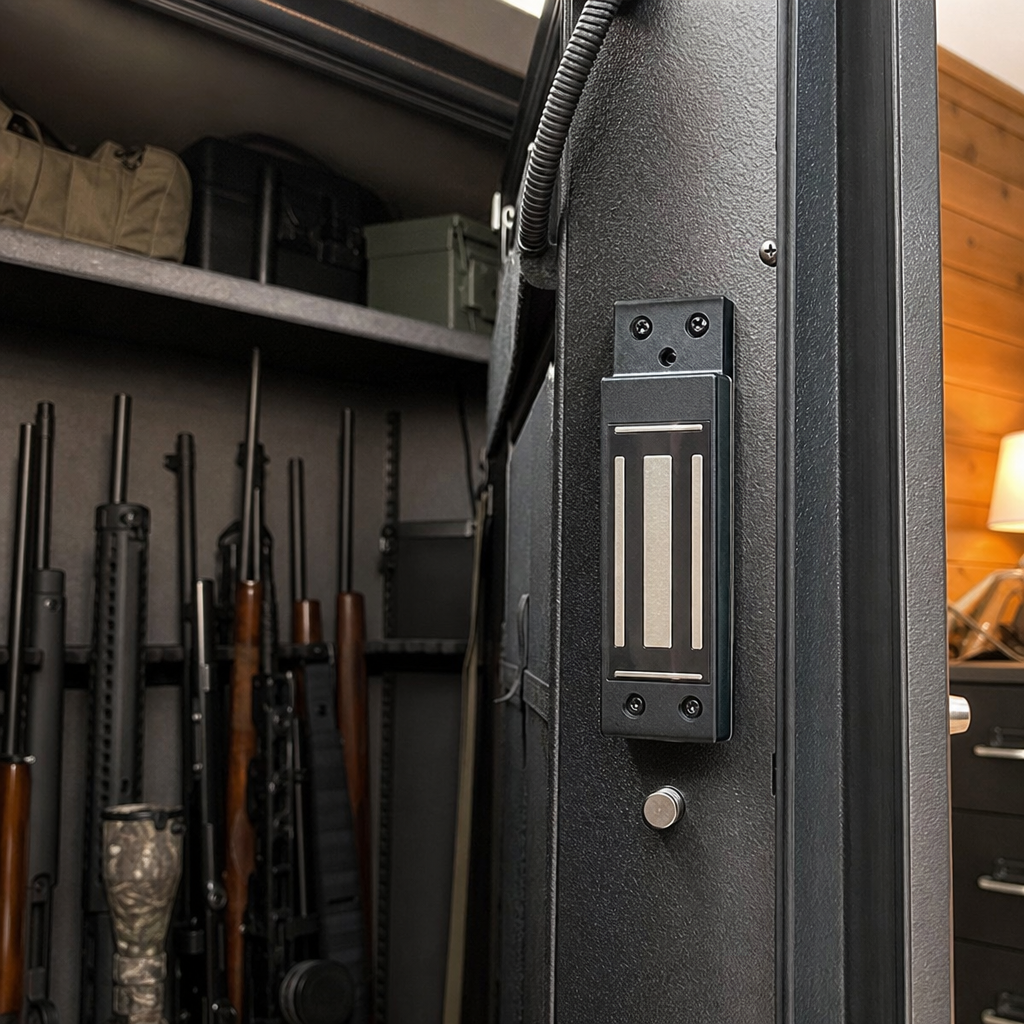
DIY magnetic lock upgrades for gun safe security appeal to owners who want faster access, cleaner installation, and stronger control over how a safe opens and stays secured. In practical terms, a magnetic lock upgrade uses an electromagnet, a magnetic reed sensor, or a hidden magnetic release point to supplement or modify a gun safe’s existing locking setup. The goal is not to replace certified burglary protection with a gadget, but to add convenience, discretion, and layered access control without undermining safe function. I have worked on cabinet retrofits, hidden compartment latches, and secondary lock systems for residential safes, and the same lesson applies every time: a modification is only worthwhile if it preserves safety, reliability, and legal compliance. For gun owners, that matters because a poorly planned DIY gun safe modification can create lockouts, accidental access, battery failures, or structural damage to the safe door and frame.
Custom and DIY gun safe modifications now cover far more than shelves and lighting. Owners add dehumidifiers, LED strips, door organizers, anchor kits, power pass-throughs, biometric access modules, and magnetic lock upgrades to tailor safes to specific firearms, storage habits, and household risk profiles. This hub article explains where magnetic upgrades fit within the broader category of custom gun safe modifications, what parts are commonly used, how they interact with factory locking systems, and which projects are sensible for a careful DIYer. It also covers the limits. Most residential gun safes rely on a UL-rated mechanical or electronic lock linked to bolts, relockers, hard plates, and anti-pry features. Any change that interferes with those elements can reduce security, void a warranty, or complicate insurance claims. Understanding those tradeoffs is the difference between a useful upgrade and an expensive mistake.
When people search for DIY magnetic lock upgrades for gun safe security, they usually mean one of three things: adding a hidden magnetic trigger to release an interior latch, adding magnetic sensors that monitor door status, or integrating an electromagnetic cabinet-style lock as a secondary access layer. Each serves a different purpose. A hidden magnetic trigger improves concealment. A door sensor improves awareness and accountability. An electromagnetic lock can create controlled secondary retention for interior compartments, ammo sections, or document drawers inside the safe. As a hub for custom and DIY gun safe modifications, this guide connects those applications to broader upgrade planning so you can decide what belongs on your project list and what is better left to a locksmith or safe technician.
Understanding Magnetic Lock Upgrades and Where They Fit
A magnetic lock is not one single device. In gun safe modification work, the term usually refers to one of four components: magnetic reed switches, magnetic contact sensors, hidden magnetic key latches, and electromagnetic locks powered by low-voltage current. Reed switches and contact sensors detect whether a door is open or closed. Hidden magnetic key latches release when a strong magnet is placed over a precise spot. Electromagnetic locks use electrical current to hold a plate in place until power is cut or a control signal is sent. For gun safe security, the safest DIY use cases are almost always monitoring and secondary interior retention, not replacing the factory lock body or boltwork.
That distinction matters because the primary safe lock is engineered as part of a tested system. On many gun safes from Liberty, Winchester, Browning, Fort Knox, Vaultek, and SecureIt, the lock interfaces with a bolt mechanism designed around exact tolerances. Add-on magnetic hardware should not obstruct bolt throw, door seal alignment, relocker engagement, or fire lining. In my experience, owners get the best results when they think of magnetic components as layered accessories. For example, a magnetic contact sensor tied to a Wi-Fi hub can alert you if the safe door opens unexpectedly. A hidden magnetic release can secure a false panel inside the safe that stores documents or a handgun vault. An electromagnetic lock can secure an internal locker where a family wants extra separation between defensive firearms and other contents.
As a sub-pillar hub for custom gun safe modifications, this topic overlaps with organization upgrades, power management, backup entry planning, and corrosion prevention. A magnetic device often needs wiring, batteries, mounting surfaces, and environmental protection. If your safe already has interior power, adding sensors is straightforward. If not, you may need a battery pack, adhesive wire clips, or a pass-through kit that does not compromise fire protection. A good project plan starts with purpose, then compatibility, then installation method.
Common DIY Gun Safe Modifications That Pair Well With Magnetic Systems
Magnetic lock upgrades rarely stand alone. They work best when combined with other practical gun safe improvements that address visibility, organization, and access consistency. The most common pairings are LED lighting, door-ajar monitoring, rechargeable backup power, handgun racks, modular shelving, and hidden compartments. For example, a magnetic contact sensor becomes much more useful when connected to a smart home routine that turns on interior lighting and sends a phone notification when the door opens. Likewise, a hidden magnetic latch on a document tray is easier to use when the tray itself is mounted on slides and clearly labeled for family members who are authorized to access it.
One frequent mistake is upgrading access before upgrading layout. If rifles snag on slings, shelves sag, or pistols slide around loosely, even the best lock modification will not make the safe feel efficient. Start with fit and retrieval. Add rifle rods, barrel rests, EVA foam organizers, and door-mounted pouches that avoid pressure points on optics. Then evaluate whether a magnetic lock or sensor solves a real problem. In one retrofit I handled, the owner thought he needed a secondary hidden lock, but the real issue was that teenagers could tell when the safe had been opened because he left interior items displaced. A better organization system and a simple magnetic door sensor solved the problem without altering the latch path.
Humidity control also pairs directly with magnetic upgrades. Electromagnetic locks and contact sensors can corrode if installed in damp conditions, especially in garages, basements, or coastal climates. GoldenRod dehumidifiers, silica canisters, rechargeable desiccants, and wireless hygrometers should be part of the same conversation. Gun safes are controlled environments only if the owner actively manages temperature swings and moisture. Any DIY electrical component inside the safe should be chosen with that environment in mind.
| Modification | Primary Benefit | Best Use With Magnetic Upgrade | Key Caution |
|---|---|---|---|
| LED interior lighting | Improves visibility and retrieval speed | Triggered by magnetic door sensor | Avoid heat and wire pinch points |
| Door contact sensor | Monitors open/closed status | Pairs with alerts or automation | Check battery life regularly |
| Hidden compartment | Adds discreet storage layer | Uses magnetic release latch | Do not obstruct main boltwork |
| Interior locker | Separates high-risk items | Secured by small electromagnetic lock | Maintain manual override access |
| Power pass-through | Supports sensors and charging | Feeds low-voltage magnetic devices | Protect fire barrier integrity |
| Dehumidifier system | Reduces corrosion risk | Protects magnetic and electronic parts | Monitor humidity, not just heat |
How to Choose the Right Magnetic Upgrade for Your Safe
The right upgrade depends on your threat model, safe construction, and tolerance for maintenance. If your goal is accountability, choose a magnetic contact sensor. These are inexpensive, easy to mount with VHB tape or screws, and available from Ring, Aqara, YoLink, Ecolink, and Honeywell-compatible systems. If your goal is concealment inside the safe, a hidden magnetic key latch from companies commonly used in cabinetry and hidden furniture builds may be appropriate. If your goal is compartmentalization, use a low-voltage electromagnetic lock on an internal steel box or divider rather than on the safe’s outer door.
Material thickness and door gap matter. Many gun safe doors have upholstery panels, stepped frames, and recessed edges that affect how well a magnet lines up with a sensor. Before buying parts, measure the gap, check for steel interference, and confirm whether the magnet must be surface-mounted or recessed. For powered locks, confirm holding force, voltage, current draw, and fail-safe versus fail-secure behavior. A fail-safe lock releases when power is lost. A fail-secure lock stays locked when power is lost. For firearms storage, interior compartment choices depend on who needs access during an outage and whether a mechanical override exists.
Also consider how often the component will cycle. A hidden compartment opened weekly can use lighter-duty hardware than a daily-access handgun shelf. Adhesive-backed solutions are convenient, but they must survive temperature variation and door vibration. I strongly prefer mechanical fasteners on steel sub-panels or purpose-built brackets whenever the safe interior allows it. Reliable operation over years is more important than a fast install on day one.
Installation Basics, Safety Rules, and Common Failure Points
Every DIY gun safe modification should begin with the manufacturer manual, warranty terms, and a clear decision about whether you will drill, screw, bond, or use existing mounting points. Drilling into a safe body or door can hit fireboard, relocker components, wiring, or lock linkages. On many safes, even a small misplaced fastener can create a serious problem. The safest approach is to avoid the door cavity entirely unless you have technical documentation or direct confirmation from the manufacturer. Interior liners, accessory panels, and removable shelving usually provide safer anchor points for magnetic hardware.
Use low-voltage components, protected wire routing, and battery compartments you can reach without unloading the entire safe. Secure wires with adhesive-backed mounts rated for the temperature range inside your room. Avoid loose loops near hinges and locking bars. Test alignment with painter’s tape before permanent mounting. Then run repeated cycles: open and close the door fifty times, simulate battery weakness, and check whether recoil pads, rifle stocks, or shelving shift into the device. A magnetic sensor that works only when the door is closed gently is not acceptable.
The most common failure points are dead batteries, drifted alignment, adhesive failure, rust on contacts, and human error. Keep a maintenance log. Replace batteries on a schedule, not when they fail. Check magnet spacing every few months. Use corrosion-resistant fasteners where possible. Most important, preserve a non-electronic path to access any firearm you may need urgently. Redundancy is not optional in safe work.
Legal, Insurance, and Security Considerations Before You Modify
Not every useful modification is a smart one. State storage laws, child-access prevention statutes, lease conditions, and homeowner insurance policies can all affect what is advisable. If a factory-rated gun safe is modified so extensively that its original lock behavior changes, an insurer may question whether the safe still meets the storage representation made on the policy application. The prudent path is simple: do not describe a DIY magnetic latch as equivalent to a certified safe lock, and do not remove or disable the primary lock system. Treat magnetic upgrades as supplemental.
You should also think through emergency access and household training. If a spouse or another authorized adult cannot operate the modified system under stress, the upgrade has reduced practical utility. If children observe a hidden magnetic release location, concealment value drops immediately. Security through obscurity is temporary; mechanical integrity lasts longer. That is why the best DIY projects improve awareness, organization, and layered control without pretending to create commercial-grade access control.
For owners who need higher assurance, the upgrade path often moves from DIY to professional help. A locksmith can install monitored contacts, tamper switches, or compartment locks with cleaner routing and less risk to the safe structure. A safe technician can tell you where not to drill and whether an interior steel locker can be added without affecting balance or door swing. Paying for expert work is often cheaper than fixing one bad hole in a fire-lined safe.
Best Use Cases for DIY Magnetic Lock Upgrades in a Custom Safe Plan
The strongest use cases are specific and limited. First, magnetic contact sensors are excellent for audit-style awareness: you know when the safe opens, how long it stays open, and whether it was left ajar. Second, magnetic release latches are useful for hidden document sleeves, jewelry trays, or small defensive compartments inside a larger locked safe. Third, electromagnetic locks can secure internal ammo boxes, controlled medication drawers, or NFA paperwork compartments where separate access is helpful. These are practical, realistic applications that complement the main safe rather than competing with it.
As a hub for custom and DIY gun safe modifications, the broader lesson is to build in layers. Start with anchoring and placement. Improve organization so access is consistent. Add lighting and humidity control. Then consider monitoring and compartmentalization. Magnetic upgrades make the most sense near the end of that sequence because they depend on everything else being stable. When you approach the project that way, you get a safer, more usable storage system instead of a collection of gadgets.
DIY magnetic lock upgrades for gun safe security can be worthwhile when they are chosen for the right job, installed without compromising the factory lock, and maintained like any other critical component. The main benefit is not magic security; it is better control. You gain clearer awareness of door status, cleaner access to hidden compartments, and more flexible separation of sensitive contents inside the safe. Those outcomes matter because real-world gun safe security is built from layers: physical strength, disciplined storage habits, environmental control, and reliable access methods that work every time.
The most effective custom and DIY gun safe modifications follow a simple rule: improve function first, then add sophistication. If your safe is disorganized, damp, poorly lit, or awkward to access, solve those issues before installing magnetic hardware. Once the basics are solid, choose upgrades that match your needs, such as contact sensors for monitoring, magnetic latches for discreet interior storage, or powered locks for secondary compartments with a manual override. Keep records, test regularly, and respect the limits of DIY work around certified lock systems.
If you are planning a custom safe project, use this hub as your starting point and map each modification by purpose, risk, and compatibility. Build your upgrade list in order, verify measurements, and involve a locksmith or safe technician whenever the door, boltwork, or fire lining could be affected. A careful plan will give you a gun safe that is more secure, easier to manage, and better suited to the way you actually store firearms every day.
Frequently Asked Questions
What is a DIY magnetic lock upgrade for a gun safe, and how does it actually work?
A DIY magnetic lock upgrade is a modification that adds magnetic components to a gun safe’s access or monitoring system in order to improve convenience, discretion, or control. In most cases, the upgrade does not replace the safe’s factory locking bolts, hardened steel construction, or certified burglary resistance. Instead, it works alongside the existing setup. Depending on the design, this can involve an electromagnet that holds an internal catch in place, a magnetic reed switch that detects whether the door is closed or opened, or a concealed magnetic release point that disengages a hidden latch when the correct magnet is placed in the right location.
The basic principle is simple: magnetic force is used either to secure a mechanism, trigger a release, or communicate the door’s status to another component. For example, a hidden magnetic release can be mounted behind the safe’s trim or inside a false panel so the user can open an interior secondary compartment only when a specific magnet is presented at the correct spot. A reed sensor can tie into an alarm, smart hub, or indicator light so the owner knows whether the door is shut and fully seated. An electromagnet can also be used in custom retention setups, though it must be carefully designed so that power loss behavior is predictable and safe.
What makes these upgrades attractive is that they can create cleaner-looking installations, reduce the need for visible keypads or extra drilled hardware, and offer fast access when properly engineered. Still, the most important point is that magnetic upgrades are best viewed as layered enhancements. They add convenience and a level of hidden or controlled access, but they should not be treated as a substitute for the safe’s tested mechanical security features.
Are magnetic lock upgrades secure enough to trust on a gun safe?
They can be useful, but they should be trusted within the right role. A magnetic upgrade can improve access control, help conceal a release mechanism, or add monitoring that makes the safe smarter and more responsive to your needs. However, it should not be considered a complete replacement for a quality lock body, solid boltwork, anti-pry construction, and the original security design of the safe. If the safe is rated or certified, those protections come from the safe’s structure and locking system as manufactured, not from an aftermarket magnetic add-on.
In practical use, the security of a magnetic upgrade depends on the type of hardware selected, how well it is concealed, how thoughtfully it is installed, and whether it introduces new failure points. A poorly placed hidden magnetic release may be discovered through trial and error. A weak electromagnet may not hold reliably under vibration or door flex. A low-quality reed switch may produce false status readings if alignment shifts over time. That is why planning matters. Strong mounting, precise placement, tamper-resistant routing, and a clear understanding of fail-safe versus fail-secure behavior are essential.
For most gun safe owners, the smartest approach is to use magnetic upgrades as part of a layered system. Keep the original lock in service, add magnetic features only where they enhance access or monitoring, and avoid any design that weakens the primary locking pathway. If your goal is faster access, cleaner installation, and better discretion, a magnetic upgrade can absolutely help. If your goal is to increase burglary resistance beyond the safe’s factory design, that usually requires more than a magnetic accessory can provide.
What are the main benefits of adding a magnetic lock or magnetic sensor to a gun safe?
The biggest benefit is speed combined with subtlety. Many gun safe owners want a setup that can be accessed quickly without advertising how it works. A hidden magnetic release point can eliminate the need for a visible button, key slot, or external switch. A magnetic reed sensor can quietly report door position to an alarm system, phone notification setup, or smart home controller. In some custom installations, magnetic hardware can also make it easier to keep modifications neat, with less exposed wiring and fewer obvious signs of how the safe is being operated.
Another major advantage is installation flexibility. Magnetic components are often compact, easy to conceal, and adaptable to tight internal spaces. That makes them appealing for owners who want to create a secondary retention layer, add a door-open alert, or build a cleaner custom access solution without dramatically changing the outside appearance of the safe. Because magnets can activate through non-metallic panels or at carefully selected points inside trim areas, they can support highly discreet designs when used correctly.
There is also a control benefit. Magnetic sensors and relays can be integrated into broader systems, such as lighting, alarms, logging, or delayed-access features. That gives the owner more information and more options for how the safe behaves. For example, opening the safe could trigger an internal light, send an alert, or record access events. That said, the benefit is greatest when the upgrade is designed conservatively. The best magnetic additions are the ones that improve usability and awareness without compromising reliability or interfering with the original locking function.
What should I consider before installing a DIY magnetic upgrade on my gun safe?
Start with the safe itself. You need to understand how the door, locking bolts, relockers, insulation, fire lining, and interior panels are arranged before adding anything. Many safes have complex internal layouts, and drilling or fastening in the wrong place can damage lockwork, reduce fire protection, interfere with the door seal, or even void the warranty. Before you install a magnetic system, determine whether your idea affects only an interior accessory compartment, a door-status circuit, or a non-critical convenience layer, or whether it touches the main lock path. The deeper the modification goes into the safe’s core security mechanism, the more caution is required.
You should also evaluate power, reliability, and failure behavior. If you use an electromagnet, ask what happens during a power outage, battery failure, heat exposure, or wire break. If you use a reed switch, make sure alignment is stable and the mounting method will not shift with repeated door movement. If you create a hidden magnetic release, consider how resistant it is to accidental activation, magnetic interference, and guesswork from an unauthorized person. In every case, the system should behave predictably and should never leave firearms inaccessible in an emergency or unexpectedly unsecured.
Finally, think about legal, safety, and household-use factors. A modification that makes access faster for you must still prevent unauthorized access by children, guests, or thieves. Test the setup repeatedly under real conditions, not just on a workbench. Use quality components, avoid weak adhesives in high-stress areas, secure all wiring, and document the installation so future maintenance is straightforward. If there is any doubt about how the upgrade affects the safe’s lockwork or structural integrity, consult a locksmith or safe technician before proceeding.
Can a magnetic upgrade replace the original lock on a gun safe, or should it only be used as a secondary layer?
In almost all situations, it should be used as a secondary layer rather than a full replacement. The original lock on a gun safe is part of a broader engineered system that includes bolt engagement, relocking features, hard plates, and resistance to attack. Replacing that with a DIY magnetic solution alone usually means giving up proven, purpose-built security for a convenience mechanism that was never intended to carry the entire burden of protecting firearms. Even when a magnetic system feels sophisticated, it may not offer the same resistance to manipulation, forced entry, or long-term wear.
The strongest use case for magnetic technology is supplementation. It can add a hidden release for a secondary compartment, provide door monitoring, control an auxiliary latch, or serve as part of an access sequence that works in addition to the factory lock. In that role, it can make the safe more practical to use while preserving the security foundation that the manufacturer built into it. This layered approach is also easier to troubleshoot because the primary lock remains the primary lock, and the magnetic components are not solely responsible for keeping the safe secure.
If you are considering a full replacement anyway, it is worth stepping back and asking what problem you are trying to solve. If the issue is speed, there may be better options such as upgrading the factory lock to a higher-quality electronic lock from a reputable safe-lock manufacturer. If the issue is concealment, a magnetic layer can often provide that without altering the core lock. If the issue is smarter access control, sensors and hidden triggers can usually be added around the existing system. In short, magnetic upgrades are most effective and responsible when they support the safe’s original protections rather than attempt to take their place.