
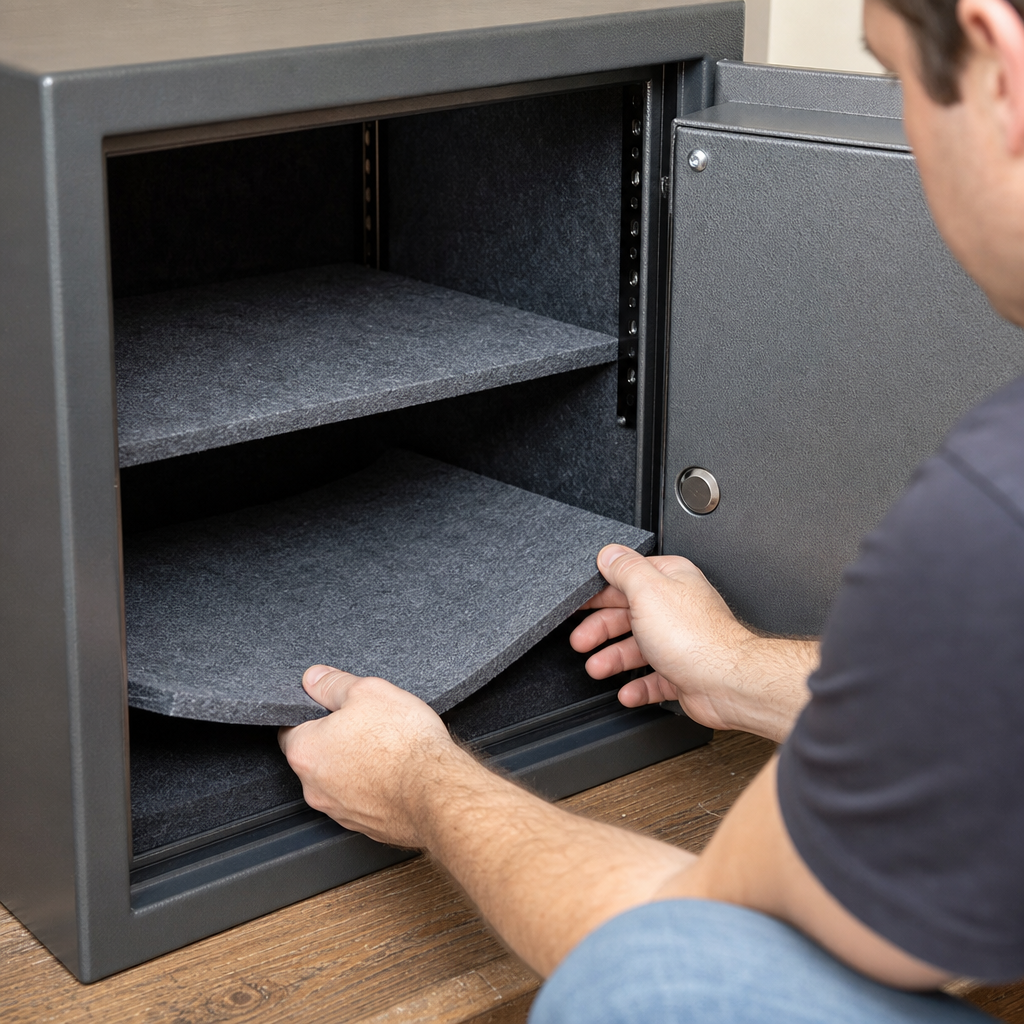
DIY safe-lining upgrades protect firearms, valuables, and the interior of a gun safe from scratches, dings, rust-promoting abrasion, and long-term wear that factory interiors often fail to prevent. In practical terms, safe lining means adding or replacing interior surfaces with softer, nonabrasive materials such as closed-cell foam, marine carpet, felt, hook-and-loop backed panels, silicone-treated sock barriers, and moisture-aware shelf covers. The goal is not decoration alone. It is impact control, finish preservation, organization, and safer contact between blued steel, optics, wood stocks, magazines, and hard metal shelving.
This matters because most gun safes are built to hit a price point before they are built to pamper contents. I have worked on entry-level cabinets with thin felt glued over particleboard, premium safes with rough shelf edges hidden under carpet, and older safes whose bare metal corners slowly wore shiny spots into shotgun stocks. Even a well-made interior can become a problem once owners add scoped rifles, suppressors, pistol racks, rechargeable dehumidifiers, and bins that were never part of the original layout. Every added item creates a new contact point, and every contact point is a chance for cosmetic or functional damage.
Safe-lining upgrades also fit a broader approach to custom and DIY gun safe modifications. When owners think about safe upgrades, they often focus on lighting, power outlets, handgun hangers, and door organizers. Those upgrades are useful, but lining is the foundation that supports them. Better lining reduces slipping, cushions movement when the door closes, limits finish wear on high spots, and creates cleaner surfaces for adhesives, hook-and-loop systems, and modular dividers. In a subtopic full of clever accessories, interior protection is the modification that quietly improves everything else inside the safe.
Another reason this topic deserves a hub article is that not all lining materials are equally safe. Some foams off-gas, some adhesives fail in heat, some carpets trap grit, and some fabrics hold moisture against steel. A smart DIY approach balances softness with chemical stability, compressive strength, cleanup, fire-resistance expectations, and humidity management. That balance is especially important in gun safes because firearms combine delicate finishes, tight tolerances, wood, leather, optics coatings, and corrosion-sensitive metal parts in one enclosed environment. A lining that looks good on day one can create real maintenance problems six months later if the material choice is wrong.
What Safe-Lining Upgrades Include and Where Damage Usually Starts
Custom and DIY gun safe modifications usually begin after owners notice predictable failure points. The first is shelf abrasion. Pistols, revolvers, magazines, and steel ammo boxes dragged across thin carpet can grind debris into the surface and mark bluing, Cerakote, anodizing, or polished stainless finishes. The second is sidewall and divider contact. Scoped rifles lean, muzzle devices bump partitions, and sling swivels scrape painted interiors. The third is compression damage. Low-density foam under heavy ammo or parts bins collapses, leaving hard surfaces exposed. The fourth is moisture interaction. A soft liner that stays damp near a dehumidifier drip point or condensation source becomes a corrosion risk rather than a safeguard.
Good safe lining addresses each of those failure modes with the right material in the right location. Shelf tops benefit from dense, low-abrasion coverings that can tolerate repeated loading. Vertical partitions and door pockets need thin, snag-resistant material that will not interfere with locking bolts or hinge-side clearance. Rifle rest areas need controlled cushioning, not deep plush material that pushes firearms out of alignment. Drawer bottoms and small-parts trays benefit from textured liners that reduce sliding without shedding fibers into actions or optics turrets. When people ask what the best gun safe liner is, the accurate answer is that the best liner depends on the contact pattern, weight load, and humidity profile inside that specific safe.
Choosing the Right Materials for a Gun Safe Interior
For shelves and flat storage areas, marine carpet is one of the most reliable DIY materials because it is durable, easy to cut, and less likely than household carpet to shed heavily. Closed-cell polyethylene foam is excellent for impact zones because it resists water absorption and holds shape better than open-cell craft foam. Felt works well for light-duty drawer liners but is a weaker choice under heavy metal items because it compresses and can trap fine grit. EVA foam is popular for pistol cutouts and magazine trays because it cuts cleanly and gives a finished look, though low-grade versions can compress or emit odor in warm conditions. Neoprene shelf liners offer slip resistance and modest cushioning, but they should be tested first for odor and surface transfer.
Material safety matters as much as softness. Acid-free and low-VOC products are preferred because enclosed spaces concentrate chemical emissions. Solvent-heavy adhesives can leave a persistent smell in a sealed safe, and some rubber-backed mats can transfer residue to wood stocks or coated surfaces over time. If you store collectible firearms, antique finishes, or leather slings, choose inert fabrics and removable attachment methods whenever possible. In my experience, removable liners outperform permanent glue jobs in the long run because safes evolve. A shelf used for revolvers this year may become suppressor storage next year, and a liner system that can be cleaned, replaced, or reconfigured saves time and reduces damage during future upgrades.
| Material | Best Use | Main Advantage | Main Limitation |
|---|---|---|---|
| Marine carpet | Shelves, door panels | Durable, easy to fit | Can trap grit if not vacuumed |
| Closed-cell polyethylene foam | Impact zones, rifle rests | Resists moisture, keeps shape | Less premium appearance |
| Felt | Light drawers, small trays | Soft and inexpensive | Compresses under heavy loads |
| EVA foam | Pistol cutouts, custom inserts | Clean machining and fit | Quality varies widely |
| Neoprene liner | Non-slip shelf surfaces | Good grip and cushioning | Needs testing for odor or residue |
How to Plan a DIY Safe-Lining Project Before Cutting Anything
The best custom gun safe interior projects are measured twice and installed once. Start by emptying the safe completely and photographing every shelf, bracket, and sidewall. Measure width, depth, shelf thickness, lip height, and the clearance between the door organizer and the shelves when the door closes. Check for boltwork intrusion near the frame because thick lining placed in the wrong spot can interfere with long-gun placement or compress against the door seal. Mark high-contact areas with painter’s tape: muzzle contact points, optic bell contact zones, magazine bins, and any shelf edge where a stock has already rubbed through factory fabric.
Next, decide whether the project is a surface upgrade or a structural reconfiguration. A surface upgrade keeps the same layout and improves only the protective finish. A structural reconfiguration adds pistol racks, long-gun supports, cut foam trays, under-shelf holsters, or modular bins. Surface upgrades are simpler and lower risk. Structural changes demand more attention to weight distribution, access, and future flexibility. I recommend sketching each shelf and assigning a storage purpose before buying materials. For example, a top shelf for documents and optics needs different lining from a middle shelf carrying loaded magazines and steel ammo cans. By planning by use case, you avoid the common mistake of covering the whole safe in one material that is ideal nowhere.
Installation Methods That Hold Up Over Time
Attachment method determines whether a gun safe liner stays flat, curls at corners, or tears during the first hot summer. Spray adhesive works for large carpet panels, but choose a product rated for fabric or foam and for the temperature range your safe may experience in a garage or outbuilding. High-strength contact adhesives create a firm bond but leave little room for repositioning and can complicate later removal. Hook-and-loop strips are often the best solution for modular shelf pads, door panels, and removable side liners because they allow cleaning and replacement. Double-sided industrial tape can work on smooth powder-coated steel, though it tends to fail sooner on textured interiors or humid surfaces.
Before any adhesive goes down, clean the substrate with a residue-free cleaner appropriate for paint or powder coat, then let it dry completely. Cut pieces slightly oversized, dry-fit them, and trim incrementally around corners, hinge-side protrusions, and shelf supports. Seal exposed foam edges if they will see repeated friction. On removable shelf boards, wrapping the liner around the underside and fastening there often looks cleaner than bonding only to the top face. If the safe has adjustable shelves, avoid adding so much thickness that shelf pins no longer seat fully. The strongest installation is not always the one with the most glue. It is the one that anticipates heat, dust, load shifts, and future maintenance.
Best DIY Lining Upgrades for Rifles, Pistols, and Accessories
Long guns benefit most from targeted protection rather than blanket padding. Add thin closed-cell foam or dense felt to barrel rest channels, stock contact points, and partition edges where slings and optics make incidental contact. For scoped rifles, widen spacing or stagger storage positions so turret caps and objective bells do not rub neighboring guns when the door shuts. Pistols usually benefit from a different system: EVA or polyethylene inserts cut for individual handguns, magazines, and lights keep metal from contacting metal and make inventory visible at a glance. On shelves where pistols are laid flat, low-pile carpet or neoprene mats prevent sliding without catching sights.
Accessories deserve equal attention. Suppressors should rest on moisture-resistant pads because they often return to storage with trace fouling or residual solvent smell after cleaning. Magazines stored in bulk can chip finishes if dropped into bare bins; lined trays solve that. Optics boxes, binoculars, and rangefinders should sit on liners firm enough to prevent tip-over. Jewelry, documents, and electronic hard drives each have different needs, which is why many safe owners eventually create zones: soft drawer lining for delicate items, dense pads for steel gear, and removable mats under ammo cans. A well-lined safe interior does more than prevent scratches. It turns mixed storage into controlled storage, which reduces handling mistakes and makes routine inspections easier.
Humidity, Fire Protection, and Common Mistakes to Avoid
Safe lining should support moisture control, not fight it. Leave airflow gaps around GoldenRod-style dehumidifiers, desiccant canisters, and circulation paths near the back wall. Avoid thick absorbent materials on the floor of the safe if you live in a humid region or store the safe in a basement. Closed-cell products are generally safer there than plush fabric pads. Also remember that aftermarket lining does not improve the manufacturer’s tested fire rating. Fireboard construction, door seals, and heat-expanding gaskets determine fire performance, and adding foam or carpet can introduce materials that char, melt, or smoke under extreme heat. That is not necessarily disqualifying, but it is a reason to choose quality products and keep expectations realistic.
The most common mistakes are easy to avoid. Do not install household carpet remnants that may contain abrasive backing, odor-retaining padding, or unknown treatments. Do not block boltwork, relocker access panels, serial number records, or shelf supports. Do not assume soft equals safe; loose fibers and trapped grit can scratch finishes faster than a smooth dense liner. Do not rely on adhesives alone for heavy vertical pieces when mechanical support or hook-and-loop would be more dependable. Finally, do not treat lining as a one-time job. Vacuum it, inspect for compression, replace contaminated pads, and reassess your layout as your collection changes. If you are building a serious custom gun safe interior, start with protective lining, document the materials you used, and upgrade section by section with purpose.
DIY safe-lining upgrades are one of the smartest ways to protect firearms and valuables while building a more functional custom gun safe interior. They solve real problems: shelf abrasion, contact damage, shifting gear, cluttered layouts, and moisture-prone surfaces that accelerate wear. The best results come from matching materials to the task. Marine carpet works well on shelves, closed-cell foam protects impact points, EVA creates organized handgun inserts, and removable fastening methods make future changes easier. Just as important, a good lining plan respects humidity control, clearance around door organizers and boltwork, and the difference between cosmetic softness and long-term material stability.
As the hub for custom and DIY gun safe modifications, this topic connects directly to every other interior upgrade you may add later, from pistol racks and shelf dividers to lighting, power management, and door storage. When the lining is right, every other accessory performs better and causes less wear. When the lining is wrong, even premium gear can scratch, shift, or trap moisture. Start by identifying your highest-contact areas, choose low-abrasion materials with proven durability, and install them carefully. Then expand your project shelf by shelf until the entire safe is organized, protected, and easier to use. If you are planning your next gun safe upgrade, begin with the surfaces that touch everything you own.
Frequently Asked Questions
1. Why should I upgrade the interior lining of my safe instead of relying on the factory finish?
Factory safe interiors are often designed to be serviceable, not ideal for long-term protection. While they may look clean and organized when new, many stock liners are thin, loosely fitted, or made from materials that do not do enough to cushion firearms, optics, jewelry boxes, documents, and other valuables against repeated contact. Over time, even light movement inside a safe can create scratches, pressure marks, finish wear, and abrasion on metal, wood, polymer, and glass surfaces. This is especially true if items are stored tightly together, moved in and out often, or rest against hard shelf edges, exposed fasteners, or rough fabric-backed panels.
A DIY safe-lining upgrade improves protection by turning the interior into a more forgiving, nonabrasive environment. Materials such as closed-cell foam, felt, marine carpet, shelf pads, and hook-and-loop-backed panels help absorb vibration, reduce hard contact points, and prevent items from rubbing directly against painted steel or coarse surfaces. For firearms, this matters because repeated micro-abrasion can wear bluing, mar coatings, or synthetic finishes. For valuables, it helps preserve appearance, resale value, and long-term condition. A properly lined safe also helps reduce noise, improve organization, and make storage more stable, which further lowers the chance of accidental bumps or dings when retrieving items.
Just as important, safe lining is not only about looks. It is a practical upgrade focused on impact control, surface protection, and wear reduction. When done correctly with moisture-aware materials and proper ventilation in mind, lining upgrades can protect both the contents of the safe and the safe interior itself from unnecessary long-term damage.
2. What are the best materials for DIY safe-lining upgrades, and which ones should I avoid?
The best materials are soft, stable, low-abrasion, and suitable for an enclosed environment where valuables may remain undisturbed for long periods. Closed-cell foam is one of the most useful options because it provides cushioning without absorbing as much moisture as open-cell alternatives. It works especially well for shelf tops, door organizers, barrel rests, and custom-cut contact points where you want controlled support. Marine carpet is another strong choice because it is durable, relatively soft, and designed for tougher environments. Felt can also work well for gentle surface protection, particularly on shelves or compartment dividers, provided it is high quality and installed securely so it does not bunch up or expose adhesive edges.
Hook-and-loop-backed panels are popular because they allow flexible organization and easy replacement. They are especially effective when you want to add modular pouches, barrel supports, or accessory holders without permanently committing to one layout. Silicone-treated gun socks or soft sleeve barriers can also be useful for preventing firearm-to-firearm contact, especially in crowded safes, though they should be used thoughtfully in conjunction with proper humidity control rather than as a substitute for it. Moisture-aware shelf covers or liners designed to wick or reduce trapped condensation can provide another layer of protection for sensitive items.
Materials to avoid include anything overly rough, crumbly, heavily shedding, or likely to trap moisture. Low-grade household carpet can hold humidity, collect grit, and become abrasive over time. Cheap foam that breaks down or off-gasses strongly should also be avoided, especially around metal finishes and optics. Bare rubber mats of unknown composition, adhesives with harsh solvents, and materials that leave residue in heat are poor choices for enclosed safes. In general, avoid lining products chosen solely for appearance. The best safe-lining materials are those that protect surfaces, remain dimensionally stable, and do not create new rust or abrasion risks inside a confined steel box.
3. Can safe-lining upgrades help prevent rust, or do they only protect against scratches and dings?
Safe-lining upgrades can absolutely support rust prevention, but only when they are chosen and installed with moisture management in mind. Their primary role is to prevent scratches, finish wear, pressure damage, and impact marks by creating softer contact surfaces. That matters for rust prevention because damaged finishes are more vulnerable to corrosion. If a rifle stock, handgun slide, scope tube, or knife blade is repeatedly rubbed against a hard or abrasive surface, the protective finish can gradually wear thin or become compromised. Once that happens, even normal humidity fluctuations inside the safe can become more problematic.
That said, lining by itself does not replace proper humidity control. In fact, poorly chosen lining materials can make rust more likely if they absorb and hold moisture against metal surfaces. This is why moisture-aware products matter. Closed-cell foam generally performs better than absorbent foams in this respect, and breathable, stable liners are usually preferable to thick materials that trap condensation. Shelf covers and barriers should protect without creating damp pockets. Firearms should still be cleaned, lightly protected with appropriate corrosion inhibitors, and stored in a safe that uses a dehumidifier rod, desiccant, or other humidity-control solution suited to the environment.
The best way to think about it is that safe lining and rust prevention work together. A good liner reduces abrasive wear and contact damage, while good climate control reduces the moisture risk that leads to corrosion. When both are addressed, you create a safer storage environment that protects finishes, structural integrity, and long-term value much more effectively than either strategy alone.
4. How do I install DIY safe lining correctly without creating fit, adhesive, or ventilation problems?
Successful installation starts with planning, not cutting material right away. First, empty the safe completely and inspect the interior for rough edges, worn areas, exposed hardware, shelf sag, or existing liner damage. Measure each shelf, side panel, door panel, and contact point individually because safe interiors are not always perfectly square. Decide where you need cushioning, where you need only surface protection, and where airflow must remain unobstructed. This is especially important around dehumidifier rods, vents, electrical pass-throughs, and door seals.
Before attaching anything, clean the surfaces thoroughly so dust, oil, and debris do not interfere with adhesives or hook-and-loop backing. Dry-fit every piece you cut. For shelf liners, trim carefully so edges sit flat and do not curl upward. For vertical surfaces, use fastening methods that are secure but not overly permanent unless you are certain the layout will never change. Hook-and-loop systems are often ideal because they allow easy replacement and repositioning. If you do use adhesive-backed products, choose options intended for interior applications with minimal odor and residue risk, and avoid excessive glue that can seep through fabrics or create hard spots beneath the liner.
Keep the installation practical. Do not overpad the interior to the point that items fit too tightly or airflow is reduced. A liner should cushion contact, not crowd the contents. Firearms should still be able to stand or rest naturally without being forced into pressure points. Door organizers should close cleanly without pushing stored items into shelves or optics. After installation, place items back slowly and check for interference, bunching, or new contact areas. A good safe-lining job feels clean, stable, and intentional. It protects surfaces while preserving access, organization, and ventilation.
5. How often should I inspect or replace safe lining, and what signs show that it is no longer protecting properly?
Safe lining should be inspected periodically rather than forgotten once installed. For most owners, a quick check every few months is a smart routine, especially if the safe is opened often, located in a humid garage or basement, or stores firearms and valuables with delicate finishes. During inspection, remove a few items and look closely for compressed foam, worn-through fabric, loose corners, exposed backing, adhesive failure, grit buildup, discoloration, or any area where hard surfaces are beginning to show through again. Also check whether shelf liners have shifted and whether barrel rests, dividers, or door panels still support items without rubbing.
Replacement timing depends on material quality, safe usage, and environmental conditions. High-quality marine carpet, dense felt, and closed-cell foam can last a long time, but any lining that becomes flattened, brittle, dirty, or moisture-prone should be replaced promptly. If you notice lint transfer, odor, sticky residue, or signs that a liner is trapping humidity against metal surfaces, that is a warning that the material is no longer appropriate for the job. Likewise, if firearms or other valuables are developing new rub marks, edge wear, or small dings despite being stored carefully, your liner may have lost its protective value or your layout may need to be revised.
Regular maintenance also matters. Vacuum or wipe nonabrasive liners as needed to remove dust and grit, since even a soft surface can become scratch-causing if abrasive particles collect on it. Reassess storage patterns when you add new items, optics, or accessories, because changing the safe’s layout can create new contact points. In short, safe lining is not a one-time cosmetic project. It is part of an ongoing protection strategy, and periodic inspection helps ensure it continues to prevent scratches, damage, and avoidable wear over the long term.