
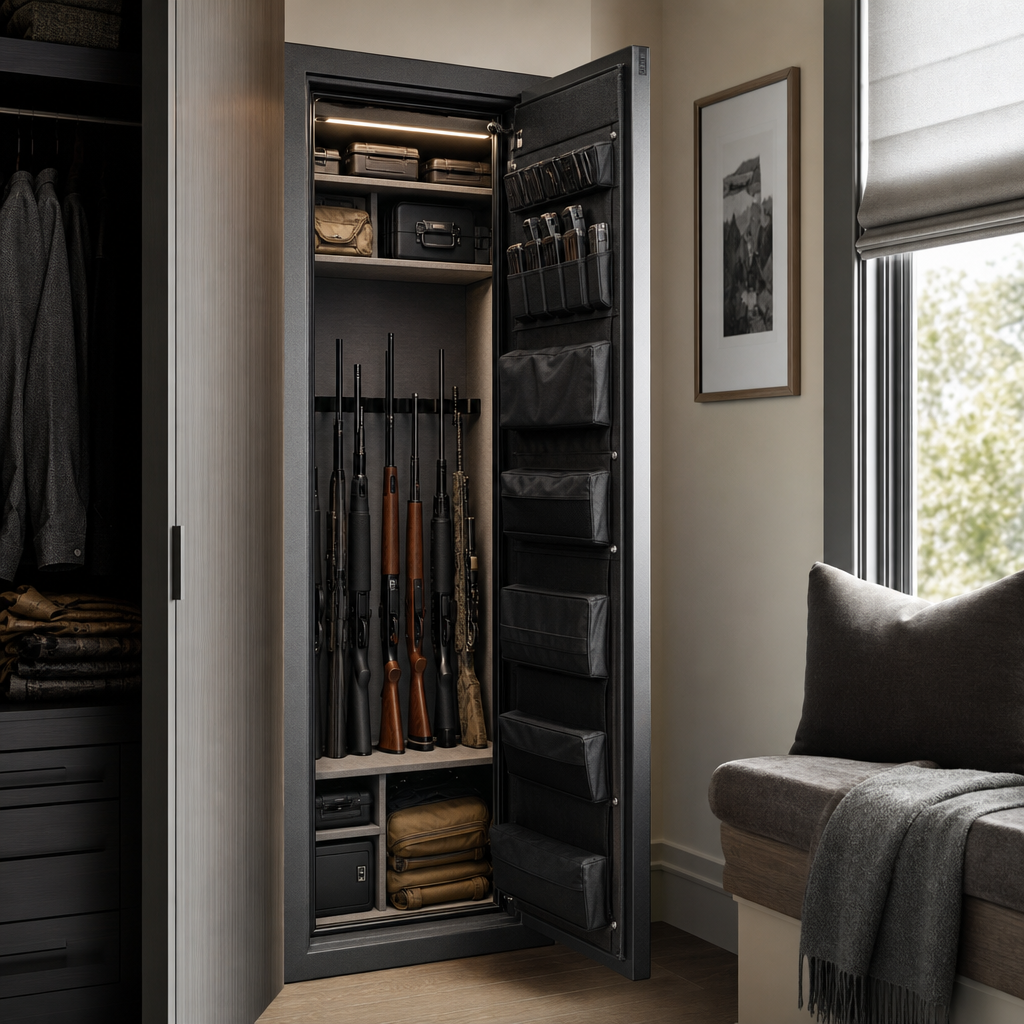
Small-space gun safe customization is the difference between a cramped metal box and a secure, efficient storage system that protects firearms, saves floor area, and makes access more predictable. In homes, apartments, workshops, and compact garages, gun owners often buy a safe based on burglary protection or fire rating, then discover the interior wastes vertical space, tangles accessories, and forces awkward stacking. Custom and DIY gun safe modifications solve that problem by adapting shelves, racks, lighting, power, dehumidification, door panels, and organizational layouts to the owner’s exact collection and room constraints. I have worked on compact safes in hall closets, under stairs, and in utility rooms, and the same lesson keeps proving true: a small safe can hold far more, and do so more safely, when every inch is assigned a job.
Before changing anything, it helps to define the terms. Gun safe customization means altering the interior or immediate installation environment to improve storage, access, climate control, and usability without undermining security. Custom work may be manufacturer-made, aftermarket, or owner-built. DIY gun safe modifications usually include adhesive door organizers, LED lighting, modular rifle rods, shelf dividers, pistol hangers, desiccant systems, and anchored risers that let a safe fit into tighter footprints. Small spaces generally refer to locations where swing clearance, depth, ceiling height, or surrounding furniture sharply limit placement. That matters because the best solution is rarely “buy a bigger safe.” In many homes, the winning strategy is to make the existing safe smarter, denser, and easier to use while preserving structural integrity, lock reliability, and code-compliant installation.
This subtopic matters for three practical reasons. First, capacity claims on safes are usually optimistic. A “24-gun” interior may fit half that number once optics, slings, bipods, and magazine couplers are involved. Second, disorganized storage creates risk. Firearms leaning against each other can mar finishes, knock over optics, and slow retrieval during routine handling. Third, poor environmental control shortens the life of wood stocks, blued finishes, documents, and ammunition packaging. A well-planned customization project fixes those issues with relatively modest cost compared with replacing the safe. This article serves as a hub for custom and DIY gun safe modifications, covering the core decisions, common upgrades, and tradeoffs that shape a small-space build.
Start with Space Planning, Capacity Math, and Safe Placement
The first step in any small-space gun safe customization project is measurement. Measure the exterior height, width, and depth of the safe, the door swing arc, handle projection, and the room itself. Then measure the usable interior dimensions, not just the outside shell. On many safes, insulation, paneling, hinge housings, and door organizers consume more room than buyers expect. I advise owners to map the interior in zones: long gun bay, shelf bay, door storage, floor storage, and upper dead space. Once you know those zones, you can decide whether your main need is more rifle density, better handgun access, safer document storage, or room for ammunition and accessories kept in limited quantities.
Placement matters as much as what goes inside. In small spaces, a safe often ends up in a closet corner, basement alcove, or bedroom niche. Leave enough room for the door to open to the angle needed to remove the longest firearm without scraping walls. If the safe must live on carpet, use a stable base plate or shims approved for the floor type, then anchor according to the manufacturer’s bolt pattern and local construction conditions. Concrete anchors, lag bolts into framing, and moisture barriers under basement installs are routine measures. A compact safe raised slightly on a sealed platform can improve air circulation, protect from minor water intrusion, and create cleaner clearance for leveling. Good placement also supports customization, because lighting, electrical routing, and dehumidifier access become much easier when the safe is not jammed flush against obstacles.
Capacity math should be honest. Count rifles with scopes as wider units, and set aside dedicated room for suppressors where legal, range bags, paperwork, and defensive handguns. A realistic inventory prevents overfilling, which is the main reason small safes become inefficient. If the collection changes often, choose modular systems rather than fixed dividers. That flexibility is what turns a hub article like this into a working framework: plan the space, define the storage mix, and only then buy accessories.
Interior Organization Upgrades That Recover Wasted Inches
The most effective gun safe storage ideas for small spaces usually involve vertical organization. Factory barrel rests and carpeted partitions are designed for generic fit, not modern rifles with large optics. Replacing or supplementing them with modular rifle rod systems can significantly increase usable density. These systems stabilize long guns from above, allowing stocks to sit closer together without the barrel channels dictating spacing. In practice, they work especially well for AR-platform rifles and bolt guns with mounted scopes, because the rifles no longer need perfectly matched stock widths to stand upright. For a crowded safe, this is often the single best customization per dollar.
Pistol storage is the next major gain. Instead of stacking handgun cases on shelves, use under-shelf pistol hangers or angled rack inserts that suspend pistols by the barrel or support them upright with slide spacing. That opens shelf surfaces for ammunition, ear protection, and cleaning kits. Shelf dividers also matter. Adjustable steel or polymer dividers keep magazine bins, document boxes, and optic cases from slumping into each other. In one compact safe I configured for a townhouse owner, replacing a single wide shelf with two half shelves and a vertical divider created room for six additional handguns, labeled magazines, passports, and a medical lockbox, without changing the footprint.
Door panels are another high-return modification. Many aftermarket door organizers use MOLLE-compatible layouts, zippered pouches, handgun holsters, and choke tube or magazine loops. They move shallow items off shelves and onto the door, which is otherwise underused space. The key is balance. Overloading the door with heavy ammunition can affect hinge wear or make the door cumbersome. Keep heavier items low and close to the hinge side when possible. For small spaces, door organization works best for documents, pistols, flashlights, spare magazines, and thin accessories.
| Customization | Best Use in Small Spaces | Main Benefit | Watch For |
|---|---|---|---|
| Rifle rod system | Scoped rifles in narrow interiors | Increases long-gun density | Needs compatible liner or shelf support |
| Under-shelf pistol hangers | Handgun-heavy collections | Frees shelf surface | Barrel fit and spacing |
| MOLLE door organizer | Documents and accessories | Uses door dead space | Do not overload the door |
| Adjustable shelf dividers | Mixed gear storage | Prevents clutter collapse | Measure shelf depth carefully |
Soft touch points reduce wear. Adhesive-backed felt, silicone-coated rests, and non-abrasive shelf liners protect finishes better than rough carpeting in some budget safes. Any added material should be thin, low-odor, and stable in heat. Avoid loose foam that traps moisture or breaks down into residue. The goal of interior organization is simple: every firearm should have a repeatable home, every accessory should be visible, and nothing should need to be removed just to reach something stored behind it.
Lighting, Power, and Climate Control Without Sacrificing Security
A dark safe wastes capacity because owners cannot see what they have. Battery puck lights are easy, but high-quality LED strip lighting with a motion sensor or magnetic door switch is more effective for small interiors. Look for low-heat LEDs in the 3000K to 5000K range, with wiring channels that do not interfere with shelving. If the safe includes a factory power pass-through, use it. If not, do not drill through the body unless the manufacturer explicitly approves the location and method. Unauthorized drilling can damage fire lining, compromise anti-tamper barriers, void warranties, and create corrosion points. In my experience, adhesive cable clips and rechargeable light bars solve most visibility problems without altering the shell.
Climate control is equally important. The safe interior creates a microenvironment, and in humid regions condensation can form even when the room feels comfortable. The common options are desiccants and electric dehumidifiers. Rechargeable silica gel units are useful in very small safes or locations without power, but they require maintenance and can be overwhelmed in damp basements. Electric convection-style dehumidifier rods, such as GoldenRod-type devices, maintain slightly warmer air circulation inside the safe and are better for steady control. A small digital hygrometer should be standard equipment. For most firearm storage, keeping relative humidity around 45 to 50 percent is a practical target. Too much humidity encourages corrosion; too little can dry wood stocks and leather accessories.
Power also supports charging for electronic hearing protection, safe lights, and, in some cases, a secondary lockbox. Manage cables carefully. Loose wires catch on rifle stocks and create visual clutter. Use low-profile routing and keep transformers outside the safe if the pass-through design allows it. If you store paper documents alongside firearms, climate control matters even more. Heat events, seasonal humidity swings, and poor airflow can warp paper and damage photos long before any emergency occurs. In a small-space setup, a simple lighting and humidity package often delivers more daily value than a dramatic storage accessory because it improves both preservation and usability every single time the door opens.
DIY Modifications That Are Safe, Reversible, and Worth the Effort
The best DIY gun safe modifications are reversible and avoid structural changes. Start with upgrades that attach to existing shelves, liners, or door panels rather than the steel body. Good examples include hook-and-loop holsters, magnetic LED bars, removable bins, labeled magazine caddies, and custom shelf risers built from sealed plywood or powder-coated steel. A riser can create a second level for handguns or optics while leaving room below for suppressor pouches, cleaning supplies, or document cases. In a small safe, elevation is often the missing dimension.
Custom shelf inserts are especially useful. I have built narrow cubbies for handgun magazines, camera-style padded sections for red-dot sights, and shallow trays for keys, bolts, and serialized parts. The rule is to match the insert to the collection, not the other way around. If you own mostly hunting rifles with long optics, dedicate more vertical clearance and less shelf area. If you rotate carry pistols and training magazines, emphasize quick handgun access and labeled bins. Thoughtful DIY work feels obvious once installed because it eliminates small daily frustrations.
Some modifications should be avoided. Do not cut fireboard, move locking bolts, alter hinge geometry, or mount accessories where they obstruct relockers, door seals, or internal linkage. Do not store loose ammunition in a way that spills into moving parts. Avoid household deodorizers, open-cell foam, or untreated wood that can off-gas or hold moisture. If you add magnets, test them carefully around optics, watches, and sensitive electronics. Adhesives should be chosen for temperature stability; products that soften in heat can fail inside enclosed spaces. Manufacturer manuals and customer support are useful here. Many brands publish approved accessory paths, door panel weights, and anchor recommendations that can save owners from expensive trial and error.
When to Customize, When to Upgrade, and How to Build a Long-Term System
Not every problem should be solved with another accessory. If the safe is consistently overloaded, lacks a meaningful fire rating for your needs, or cannot be properly anchored in the chosen location, customization has limits. Likewise, if optics snag on the door frame, the shelves bow, or humidity remains uncontrolled despite dehumidifiers, the collection may have outgrown the container. The best small-space strategy is often a layered one: optimize the current safe first, then decide whether a secondary handgun safe, ammo cabinet, or document safe should take pressure off the main unit. Separating categories can improve both security and efficiency.
Think of this page as the hub for all custom and DIY gun safe modifications. The core principles are consistent across every related project: measure the real space, assign storage zones, use modular organization, add reliable lighting, control humidity, and avoid changes that compromise security or warranty protection. For many owners, the biggest gains come from simple combinations rather than expensive rebuilds: rifle rods plus a door organizer, shelf hangers plus a hygrometer, LED lighting plus labeled bins. Those upgrades make a small safe easier to live with and safer to manage.
The best gun safe customization ideas for small spaces are the ones that make storage deliberate. A compact safe can protect more firearms and gear than most owners expect when the interior is planned around actual use, not brochure capacity. Start with one section of the safe, fix the most obvious bottleneck, and build from there. If you want better access, more capacity, and less clutter without sacrificing security, audit your current layout today and choose the first reversible upgrade that solves a real problem.
Frequently Asked Questions
1. What are the best gun safe customization ideas for small spaces?
The best gun safe customization ideas for small spaces focus on using every inch of interior volume more efficiently without compromising security or accessibility. In most compact safes, the biggest problem is wasted vertical space. Factory shelf layouts often leave large dead zones above handguns, ammo cans, documents, or accessories, while long guns are forced into awkward positions that make the entire safe feel cluttered. A smart first step is adjustable shelving, because movable shelves let you tailor the layout to your actual firearm collection instead of trying to fit your collection into a generic interior design.
Door panel organizers are also one of the highest-impact upgrades for small-space safes. The inside of the door is often underused, but it can hold pistol holsters, magazines, paperwork, suppressor accessories where legal, flashlights, and cleaning tools. That immediately frees up shelf and floor space. Many owners also benefit from adding barrel rests and rifle rods, which help store long guns more tightly and upright while reducing contact between firearms. This can significantly improve capacity in narrow safes where every inch matters.
Another highly effective idea is modular storage bins or labeled pouches for smaller items. Instead of letting optics tools, hearing protection, and spare parts slide around on shelves, dedicated compartments keep them sorted and easy to reach. LED lighting is also worth including in a small-space customization plan. In a tight safe, shadows make it harder to identify what you need quickly, and poor visibility often leads to unnecessary handling and rearranging. Motion-activated or battery-powered LED strips make the interior far more functional.
If the safe is in an apartment, workshop, closet, or garage where floor area is limited, consider interior customization that reduces the need for nearby external storage. For example, a shelf setup that stores handguns, documents, ammo in reasonable quantities, and cleaning essentials inside the safe can eliminate the need for separate cabinets or bins nearby. The goal is not just to fit more items, but to create a cleaner, safer, and more predictable storage system that works in a confined environment.
2. How can I maximize vertical space inside a small gun safe?
Maximizing vertical space is one of the most important principles in customizing a gun safe for a small room, apartment, or compact garage. Many small safes waste height because the original shelving does not account for differently sized firearms and gear. Instead of leaving one large open compartment, divide the height strategically with adjustable shelves, half-shelves, and stacked accessory trays. This allows you to create dedicated levels for handguns, ammunition, valuables, documents, and maintenance supplies while still preserving a full-height section for long guns.
Rifle rods are especially effective for making use of vertical space. They support long guns from above, allowing you to store rifles more closely together and more upright than many factory rack systems permit. In a narrow safe, this can create room for additional firearms or prevent stocks and optics from interfering with one another. Pairing rifle rods with customized barrel supports or notched racks can improve spacing even further and reduce the tendency for firearms to lean into each other.
The upper portion of the safe is another area that frequently goes underused. Shallow top shelves can hold documents, passports, jewelry, or smaller locked containers, while mid-level shelves can be dedicated to pistols and magazines. If ammunition is stored in the safe, distribute it carefully instead of stacking it in one heavy pile on the floor. Smaller, labeled containers on reinforced shelves often make better use of space and improve organization. Just be mindful of weight limits, since ammo is dense and can stress light-duty shelf materials.
Do not overlook the safe door when thinking vertically. Door-mounted organizers effectively turn an unused flat surface into another storage layer. In a small safe, reclaiming that space can change the entire layout. The best vertical-space strategy is a combination approach: long guns stabilized upright, shelves broken into practical tiers, door storage added for flat items, and loose accessories contained in stackable modules. That approach transforms a cramped safe into a system where each category has a place.
3. Are DIY gun safe modifications safe, or should I choose professional customization?
DIY gun safe modifications can be very safe and highly effective if they are limited to interior organization upgrades that do not interfere with the safe’s structural integrity, locking mechanism, fire lining, or warranty terms. Many of the most useful small-space upgrades are simple and low-risk, such as adding adhesive LED lights, installing removable shelves, using rifle rods, adding moisture control products, or attaching organizer panels designed specifically for gun safe interiors. These changes typically improve usability without altering the steel body or door hardware.
Problems arise when owners start drilling into the safe body, modifying hinges, cutting interior fireboard, changing lock components, or adding hardware in a way that compromises insulation, relocking systems, or anti-pry features. Those types of alterations can reduce burglary resistance, affect fire protection, and in some cases void the manufacturer’s warranty. In a small-space setup, it can be tempting to force a safe to do more than it was designed for, but structural modifications are rarely worth the risk unless they are performed by a qualified professional who understands the safe’s construction.
Professional customization is often the better option if you want a built-in look, major shelf redesign, premium interior upholstery work, electrical pass-through solutions, dehumidifier routing, or a complex mixed-use layout for firearms, valuables, and documents. A professional can also help ensure weight is balanced properly and that access remains practical in a tight room or closet. This matters more than many people realize, because a beautifully customized interior is still a poor design if the safe door cannot open fully or frequently used items are blocked by larger gear.
For most owners, the safest path is to start with reversible, non-invasive modifications. Use modular components first, evaluate what improves space and access, and only consider advanced customization if the layout still falls short. A carefully planned DIY approach can produce excellent results in a small safe, but anything that affects security performance should be handled with caution.
4. What accessories help organize firearms and gear in a compact gun safe?
The most helpful accessories for organizing a compact gun safe are the ones that increase storage density while keeping everything visible and easy to access. Door organizers rank near the top because they convert dead space into practical storage for pistols, magazines, documents, choke tubes, batteries, flashlights, and small tools. In a small-space safe, reclaiming the door can free entire shelves for larger items. Look for organizers with purpose-built pockets or holsters rather than generic soft pouches, since firearm-specific layouts tend to be more stable and efficient.
Rifle rods and barrel supports are also excellent accessories for compact safes. They help position long guns more neatly and upright, especially when optics, slings, or different stock shapes make standard rack spacing inefficient. By controlling how rifles stand inside the safe, these accessories reduce wasted gaps and make it easier to remove one firearm without disturbing the rest. Handgun racks are another strong addition, particularly for owners who currently stack pistols flat on shelves. A handgun rack can turn one messy shelf into an orderly row, improving both capacity and visibility.
Small bins, trays, and labeled storage boxes are ideal for accessories that otherwise create clutter. Items like bore snakes, spare parts, ear protection, lock keys, tools, and maintenance supplies should not be left loose in the safe. Compact containers allow you to group items by function and prevent them from sliding behind larger gear. Shelf dividers can also help separate ammunition, optics, paperwork, and valuables so the layout stays consistent over time.
Lighting and moisture control should also be considered organizational accessories, not just convenience add-ons. LED lighting makes a compact safe dramatically easier to use, especially in dim closets or garages. Dehumidifiers, desiccant packs, or rechargeable moisture absorbers help protect firearms and accessories from rust in confined spaces where airflow is limited. The best accessories are the ones that make the safe not only hold more, but function more predictably every time you open it.
5. How do I customize a gun safe for a small apartment, closet, or garage without creating access problems?
Customizing a gun safe for a small apartment, closet, or garage starts with understanding that interior storage and exterior placement work together. In tight spaces, the safe may technically fit, but access can still be poor if the door swing is restricted or if the interior layout forces you to reach past larger firearms to get to everyday items. The first step is to identify your most frequently accessed categories, such as a defensive handgun, documents, spare magazines, or hearing protection. Those items should be placed in the easiest-to-reach zones, usually on the door panel or at mid-shelf height, rather than buried behind long guns or stored at floor level.
Next, match the layout to the environment. In a closet, slimmer shelf profiles and door-mounted storage often work better than deep bins that protrude into the opening. In a garage or workshop, moisture control and durable containers matter more because temperature swings and humidity can affect both firearms and gear. In an apartment, where floor space is premium and discretion may matter, the best customization plan usually reduces the need for nearby external storage by consolidating essential items inside the safe in a neat, compact arrangement.
Avoid overpacking