
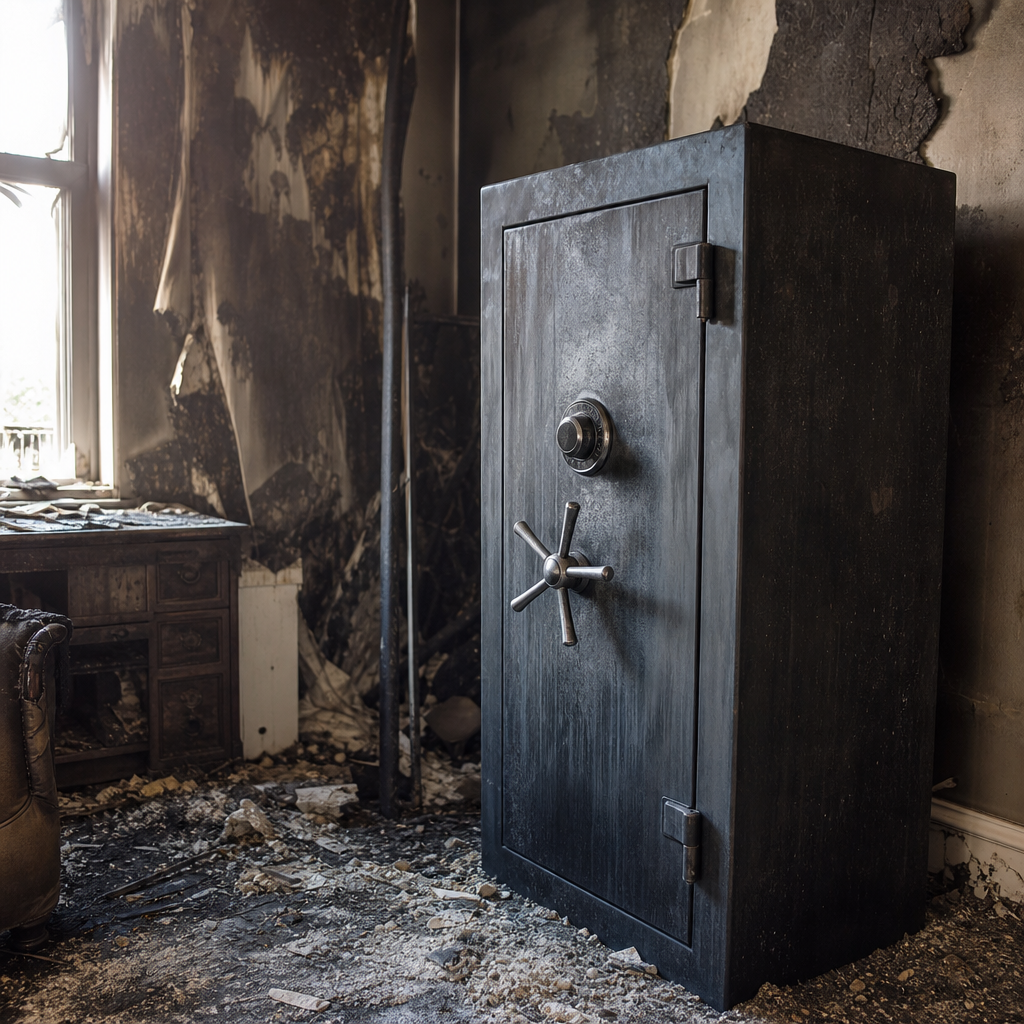
Fireproof gun safes are designed to slow heat transfer during a fire, but they do not automatically prevent smoke damage, soot contamination, corrosive residue, or moisture intrusion after suppression. That distinction matters because many gun owners hear “fireproof” and assume complete disaster protection, when in practice fire ratings address temperature and time, not every hazard created by a house fire. In my work evaluating residential safes and helping owners document losses after fire events, I have seen firearms survive the heat inside a rated safe yet still emerge needing full disassembly because acidic smoke residue entered through door gaps, bolt openings, cable ports, or damaged seals. Understanding what a fireproof gun safe can and cannot do is the first step toward choosing better protection.
A fireproof gun safe is usually a steel-bodied enclosure with insulation such as gypsum board, concrete amalgamate, ceramic wool, or proprietary composite layers intended to keep the interior below a target temperature for a stated period. Disaster-resistant storage is broader. It includes protection against smoke, water from sprinklers or hoses, impact from collapse debris, humidity, theft during evacuation, and corrosion during the days after an incident. For firearms, these threats are serious. Smoke contains fine particulates, unburned hydrocarbons, and combustion byproducts that settle into actions, triggers, optics turrets, and magazines. If the fire involves plastics, electronics, treated wood, or household cleaners, the residue can become especially corrosive. Even a tiny leak path can expose blued steel, stainless components, aluminum receivers, brass cases, and optic coatings to contamination.
This hub article explains where fireproof gun safes help, where they fall short, and how to build a realistic storage strategy around actual risks. It also serves as a central overview of fireproof and disaster-resistant storage within the broader gun safes and safety category. If you are comparing ratings, wondering whether a smoke seal is worth paying for, or deciding between a basic cabinet and a true safe, the answer is not one feature but a layered approach. The details below cover fire ratings, smoke pathways, materials, maintenance, humidity control, placement, insurance documentation, and the practical features that make the difference between temporary inconvenience and permanent loss.
What Fireproof Ratings Really Mean for Smoke Damage
Fire ratings are often misunderstood. Most residential gun safes are marketed with claims such as 30, 45, 60, or 90 minutes at temperatures ranging from roughly 1,200 to 1,800 degrees Fahrenheit. Those numbers generally describe how long the safe body can limit internal temperature rise under a test protocol set by the manufacturer or an independent lab. The key point is that the rating does not equal a smoke-tight certification unless the product specifically states one. A safe can pass a heat test and still allow smoke migration around the door perimeter or through accessory openings.
For firearms, the common temperature thresholds matter because wood stocks, polymer frames, lubricants, adhesives, and optics can degrade well before steel parts lose structural integrity. Paper char thresholds are often used in document safes, but gun safes need a broader standard of care because scope internals, night vision accessories, foam liners, and loaded ammunition all react differently to heat. Smoke is a separate variable. Hot smoke seeks pressure differentials and travels through surprisingly small gaps. During a fire, the safe door seal may expand and reduce this movement, but performance depends on seal quality, compression, body rigidity, and whether the frame warps under heat. In real incidents, the advertised fire rating tells only part of the story.
How Smoke Gets Into a Gun Safe During and After a Fire
Smoke enters safes through the path of least resistance. The most common route is the door seam. Many residential models use expanding intumescent seals that swell when heated, helping slow hot gases and flames. These are useful, but they are not perfect barriers under every condition. If the seal is uneven, poorly installed, compressed from years of use, or interrupted by hinge geometry, smoke can still penetrate. Secondary routes include pre-drilled anchor holes, pass-throughs for power cords, dehumidifier ports, lock penetrations, and any distortion caused by impact or heat.
Another overlooked stage is the aftermath. Once flames are out, the safe cools and pressure changes can pull in smoky, humid air if the interior was hotter than the room. Firefighters often soak a structure, and the resulting steam, ash, and wet soot become a corrosive mix. I have opened safes days after an incident and found a light gray film on barrels and optics despite no obvious burn damage. In those cases, the owner assumed the contents were fine because the safe looked intact from the outside. Smoke damage is often subtle at first and becomes obvious only when rust blooms in screw heads, under scope rings, or inside magazines.
Features That Improve Smoke and Disaster Resistance
Not every fireproof gun safe is built the same. Better smoke resistance usually comes from a combination of construction choices rather than one marketing term. Door fit matters. A continuously welded body, heavier steel, rigid frame, and multiple locking bolts help maintain alignment when the safe is heated or struck. Intumescent seals are valuable, but paired compression seals or true gasket systems improve everyday resistance to dust and smoke. Composite insulation tends to outperform simple drywall stacks in severe conditions because it can better manage heat and structural stability, though it increases cost and weight.
Fire lining should be evaluated together with lock protection, relockers, hard plates, and anchor design, because disaster events often create security problems too. During evacuation or repair, a damaged home becomes a theft target. Interior configuration matters as well. Fabric shelves and soft liners can trap soot. Bare steel interiors are easier to clean, while removable racks allow better post-incident inspection. Good manufacturers publish independent test information, not just glossy labels. Brands that discuss external dimensions, insulation type, seal design, and boltwork layout usually give buyers a clearer basis for comparison.
| Feature | What It Does | Why It Matters for Smoke Damage |
|---|---|---|
| Intumescent door seal | Expands under heat to reduce gaps | Helps limit smoke ingress during active fire exposure |
| Compression gasket | Creates tighter everyday seal when door closes | Reduces dust, odor, and residual smoke entry after the fire |
| Composite insulation | Combines multiple fire-resistant materials | Improves heat management and body stability under stress |
| Sealed cable port design | Controls accessory pass-through openings | Prevents a direct pathway for smoke and humidity |
| Raised base or plinth | Keeps safe off wet floors | Limits water wicking and muddy soot contamination |
Why Water, Humidity, and Soot Are Often the Bigger Threat
Many firearms survive brief smoke exposure if cleaned quickly, but water and humidity often turn a manageable problem into long-term corrosion. Fire suppression introduces large volumes of water, and even if the safe is not directly sprayed, the room can remain above 70 percent relative humidity for days. Soot absorbs moisture and holds acidic compounds against metal surfaces. On blued carbon steel, flash rust can appear in less than 24 hours. Stainless steel resists better but is not immune, especially where chloride residues are present. Optics are vulnerable at lens edges, adjustment caps, battery contacts, and mounting screws. Leather slings, ammunition boxes, and gun cases can trap moisture against the firearm and make the problem worse.
This is why disaster-resistant storage should include humidity control before any emergency occurs. Electric dehumidifier rods help keep air temperature slightly above ambient inside the safe, reducing condensation. Desiccant packs add a second layer but need scheduled recharging or replacement. Hygrometers are essential, not optional. I advise owners to keep safe humidity roughly between 35 and 50 percent depending on climate and finish type. Too high encourages corrosion; too low can dry wood stocks. After a fire, contents should be removed, documented, and stabilized in a clean, conditioned space as soon as authorities and insurers allow it.
Choosing the Right Safe for Fireproof and Disaster-Resistant Storage
The right safe depends on your risk profile, collection value, and building type. In a suburban single-family home, the biggest fire variables are response time, fuel load, garage adjacency, and whether the safe is installed on an exterior wall or upper floor. In a rural setting with longer fire department response, a longer fire rating and heavier composite construction become more important. In a condo, water from neighboring units and sprinklers may be a greater concern than direct flame. A thin steel cabinet with token fireboard is not the same as a true gun safe with tested insulation, robust seals, and anchorable mass.
Buyers should ask direct questions. Who conducted the fire test? Was the safe tested as a complete unit or as panels only? What was the furnace curve, duration, and internal temperature threshold? Are anchor holes sealed? Is there a listed smoke or dust seal? Can the power port be closed when unused? How much does the safe weigh empty, and what is the steel gauge of the body and door? Specific answers separate serious products from decorative storage. If your collection includes suppressors, heirloom shotguns, engraved revolvers, or high-end optics, the cost of better sealing and fire protection is usually small compared with restoration, replacement, and claim disputes later.
Safe Placement, Setup, and Maintenance After Purchase
Where you place the safe changes its real-world performance. Lower floors are usually better than upper floors because they reduce collapse risk and simplify anchoring, but basements can introduce flood exposure. Interior locations are often cooler during a fire than garage walls or rooms adjacent to fuel loads, yet exterior walls may allow easier recovery and less direct heat in some layouts. The best placement balances fire, water, theft, and structure. I prefer a ground-floor interior corner on a raised base, anchored into concrete when possible, with enough clearance to inspect seals and control humidity. Avoid storing the safe directly under plumbing lines if you can.
Maintenance is equally important. Check door seals annually for cracks, gaps, paint contamination, and compression set. Replace failed battery compartments and inspect cable ports, hinge-side clearances, and anchor hole caps. Keep an inventory with serial numbers, photographs, purchase dates, and appraisals stored offsite or in encrypted cloud storage. Do not overload the interior so tightly that air cannot circulate. Use silicone-treated gun socks carefully; they help against light moisture but can hold soot if contaminated. After any nearby fire, even without direct damage, inspect contents promptly because smoke can migrate through shared walls, attics, and HVAC pathways.
What to Do If Fire or Smoke Reaches Your Safe
If a fire occurs, safety comes first. Do not rush to open a hot safe. Rapid cooling and oxygen exposure can worsen conditions, and the exterior may remain dangerous for hours. Once cleared to enter, photograph the safe before moving anything. Document soot patterns, standing water, warped trim, and any breached openings for insurance purposes. Open the door slowly in a ventilated area if possible, wearing nitrile gloves to avoid spreading residues. Remove firearms one at a time, tag them, and separate visibly contaminated items from those that appear clean. Unload all firearms if safe to do so and avoid cycling actions repeatedly, because abrasive soot can scratch bearing surfaces.
Initial stabilization means dry air, soft wiping, and professional evaluation when needed. Use clean microfiber cloths, low-pressure air for loose particulates, and appropriate gun oil on exposed steel, but do not soak optics, wood, leather, or ammunition. Valuable firearms should go to a qualified gunsmith or conservator for disassembly and residue assessment. Ammunition exposed to significant heat, water, or soot should be treated cautiously and often replaced. The main benefit of a better fireproof gun safe is time: time below damaging temperatures, time with less contamination, and time to recover property in serviceable condition. Review your setup now, upgrade weak points, and build a storage plan that accounts for smoke, water, and the full reality of fire.
Frequently Asked Questions
Do fireproof gun safes actually protect firearms from smoke damage?
Not necessarily. A fireproof gun safe is primarily built to slow heat transfer for a stated period of time, such as 30, 60, or 90 minutes at a tested exterior temperature. That rating is about internal temperature performance during a fire event, not about sealing out smoke, soot, acidic combustion residue, or moisture. In a real house fire, smoke can infiltrate through door gaps, bolt openings, cable holes, or expanding seal imperfections, especially if the safe is not designed as an airtight container. Even when the contents survive the heat, firearms, optics, documents, and accessories inside can still be exposed to fine particulates and corrosive compounds that settle on surfaces and begin causing damage quickly. So the short answer is that a fireproof safe may reduce some smoke exposure in certain situations, but it should not be assumed to provide complete protection against smoke damage.
Why doesn’t “fireproof” mean full protection from smoke, soot, and corrosive residue?
The term “fireproof” is often used loosely in marketing, but in practice it usually refers to a fire-resistance test focused on temperature and time. Safe ratings are generally meant to show how long the interior remains below a threshold that helps protect paper, electronics, or other contents from heat damage. Those tests do not automatically mean the safe is hermetically sealed against smoke or that it can block every byproduct of combustion. Smoke is made up of extremely small particles and gases that can travel anywhere air can move. Soot may contain acidic and chemically aggressive residue that adheres to metal surfaces, wood stocks, optics coatings, and lubricated internal parts. After firefighting begins, steam, humidity, and suppression water can also enter the picture, adding another layer of risk. That is why it is important to separate fire resistance from contamination resistance. A safe can perform well on heat protection and still leave the contents vulnerable to post-fire corrosion and smoke-related cleanup issues.
Can smoke damage firearms even if the guns were never directly burned?
Yes, absolutely. Firearms do not need direct flame contact to suffer damage after a fire. Smoke and soot can settle into actions, barrels, trigger groups, magazine wells, optics mounts, and any other exposed or semi-sealed area. The residue left behind is not just cosmetic. Depending on what burned in the home, the smoke may contain corrosive chemicals from plastics, insulation, wiring, upholstery, paint, and household materials. Those residues can attract moisture and begin attacking blued steel, stainless finishes, aluminum components, optics housings, and even wood or polymer furniture. In many cases, the first visible signs are a haze, sticky film, discoloration, or a sour burnt odor, but corrosion can start before the damage is obvious. That is one reason post-fire inspection matters so much. A gun that looks “fine” at first glance may still need careful disassembly, cleaning, lubrication, and evaluation by a qualified gunsmith or restoration specialist to prevent long-term deterioration.
What should gun owners do after a house fire if their firearms were stored in a fireproof safe?
The first step is to avoid assuming the contents are unharmed just because the safe remained intact. Once the property is cleared for entry, document everything before moving or cleaning items. Take detailed photos of the safe exterior, the interior condition when opened, each firearm, optics, magazines, ammunition, and any related accessories or paperwork. If there is visible soot, moisture, residue, or rust, note it immediately. Do not aggressively wipe surfaces with household cleaners, because that can spread contaminants or remove evidence needed for insurance documentation. If the firearms are wet or exposed to obvious smoke residue, prompt professional attention is important. A qualified gunsmith, restoration technician, or firearms appraiser can help assess whether there is superficial contamination, active corrosion, finish damage, or deeper mechanical impact. You should also review your insurance policy and notify the carrier as early as possible, especially if you have scheduled firearms coverage. The key point is that post-fire losses are often not limited to things that were burned. Smoke, soot, and moisture damage inside a safe can create a legitimate claim even when the guns were not consumed by flames.
How can you improve protection against smoke damage if a fireproof gun safe is not enough by itself?
The best approach is to treat the safe as one layer of protection rather than the entire solution. Start by choosing a well-built safe with a credible fire rating from a reputable manufacturer and look closely at door seals, body construction, and fitment quality. Some models use intumescent seals that expand with heat, which can help limit smoke entry during a fire, but they still should not be viewed as perfect barriers. Inside the safe, use protective gun socks, silicone-treated sleeves, sealed document bags for records, and moisture-control products such as desiccants or a dehumidifier rod where appropriate. Keep an updated inventory with serial numbers, photographs, purchase records, and appraisals stored digitally offsite. That documentation is incredibly valuable if you ever need to prove smoke-related contamination or loss. It is also wise to verify that your insurance specifically covers firearms and related accessories for fire, smoke, and water damage. In short, a fireproof safe is important, but real-world disaster protection comes from combining safe selection, interior moisture control, protective storage practices, and strong documentation before anything ever goes wrong.