
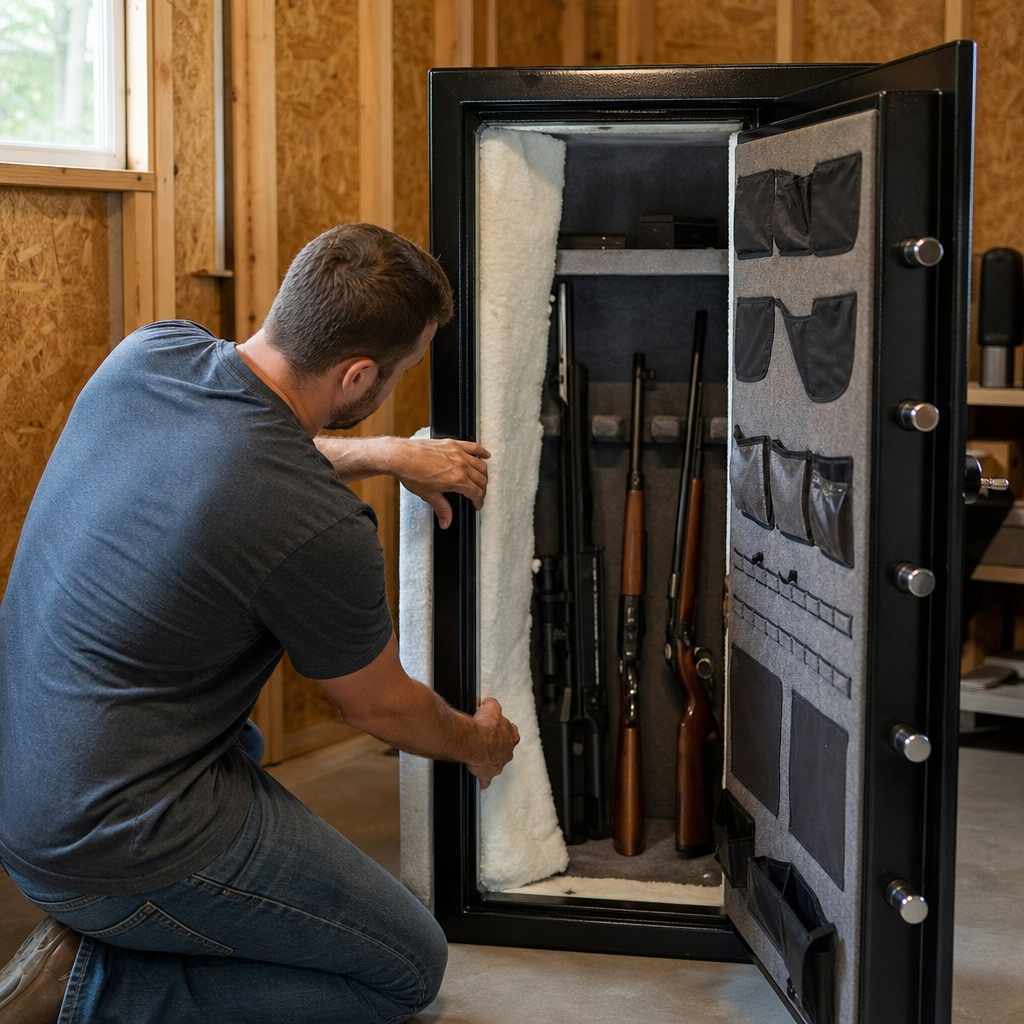
Fire can destroy firearms, documents, optics, and irreplaceable records long before flames ever touch the steel shell of a gun safe. If you want to fireproof an existing gun safe for extra protection, the real goal is not making the safe magically immune to heat, but improving how long its interior stays below damaging temperatures during a house fire. That distinction matters because “fireproof” is often used loosely. In practice, protection depends on fire rating, insulation type, seal performance, placement, humidity control, and how the safe is anchored and maintained. I have worked with homeowners upgrading residential security containers, and the biggest mistake I see is treating a factory fire label as a complete solution. It is only one layer.
For gun owners, this topic sits at the center of fireproof and disaster-resistant storage. A safe may need to defend against structure fires, wildfire ember exposure, sprinkler water, hurricane-driven moisture, basement flooding, and impact from partial building collapse. Fireproofing an existing gun safe therefore means building a system around the safe as much as modifying the safe itself. The best approach combines realistic expectations with targeted upgrades: adding dedicated fireboard where appropriate, improving door seals, using heat-resistant document containers inside, controlling humidity, and choosing a safer location in the home. This hub article explains what works, what does not, and how to prioritize improvements so your firearms, ammunition, records, and accessories have a better chance of surviving both fire and its aftermath.
Understand what “fireproof” means for an existing gun safe
A gun safe is never absolutely fireproof. It is fire resistant for a limited time at a tested temperature. Common residential claims include 30, 45, 60, 75, or 90 minutes at temperatures such as 1200°F, 1400°F, or 1680°F, but those numbers are not interchangeable. Testing methods vary by manufacturer, and independent certifications such as UL provide more confidence than internal tests. For firearms, internal temperature is critical because wood stocks, optics adhesives, lubricants, polymer parts, and paper records can be damaged well below the melting point of steel. Paper chars around 451°F, but many finishes and accessories degrade at much lower temperatures.
If your current safe has little or no factory fire lining, you can still improve performance, but you should think in terms of delay, not invincibility. Fireboard, gypsum-based liners, ceramic wool, intumescent door seals, and interior document chests all slow heat transfer. However, every aftermarket addition has tradeoffs. Extra liner thickness reduces interior space. Some insulation materials shed dust or trap moisture if installed poorly. Altering the door, body, or boltwork can void warranties or weaken burglary resistance. The practical objective is to increase survivability during the most likely event: a residential fire with finite burn time, not an industrial furnace scenario.
Another key concept is disaster resistance beyond heat. Smoke carries corrosive compounds that can etch blued steel. Firefighting water creates flash rust within hours if humidity spikes inside the safe. In wildfire zones, ember intrusion through damaged weatherstripping is a real threat. In flood-prone basements, a low placement can turn a fire-resistant safe into a water-filled box. That is why any plan to fireproof an existing gun safe should include water management, dehumidification, and location strategy from the start.
Evaluate the safe before making any upgrade
Begin with identification. Check the manufacturer label, serial plate, model documentation, and any stated fire rating. Look for signs of existing fire lining by measuring wall and door thickness versus steel gauge. Many residential gun safes use thin steel shells with drywall-style composite lining in the body and door. Higher-end units may use poured concrete amalgamate or proprietary barrier materials. Knowing what you already have prevents redundant or harmful modifications. I usually inspect door gaps, hinge-side clearance, lock penetrations, and any unsealed bolt-down holes first, because those are common heat and smoke entry points.
Next, assess structural condition. Rust, failed caulking, damaged relockers, misaligned doors, and compressed seals undermine fire performance. If the safe no longer closes evenly, heat will enter quickly around the perimeter. Check the anchor points too. A safe bolted to a damp slab without standoffs can wick moisture and corrode from below. Examine interior layout. Crowding firearms tightly together reduces airflow for dehumidification and can increase finish damage if heat and moisture event occurs. Separate high-value documents, suppressor paperwork, passports, and digital backups into smaller internal containers rather than relying on open shelves.
Finally, decide whether upgrading is sensible. If your safe is a light cabinet with minimal steel, poor locking geometry, and no meaningful seal surface, spending heavily on retrofit fireproofing may not be cost effective. In many cases, the best move is improving placement, adding internal fire boxes, and planning for a future replacement with a verified fire rating. A realistic inspection saves money and helps you direct effort where it delivers the most protection.
Best ways to improve fire resistance without damaging burglary protection
The safest upgrades are those that enhance thermal resistance without compromising the shell or lockwork. Interior fireboard panels are the most common option. Type X gypsum board is widely used because chemically bound water inside the board slows heat transfer when heated. Cut panels cleanly, fit them tightly against existing interior walls, and secure them in a way that does not interfere with bolts, hinges, wiring ports, or shelving hardware. In my experience, removable panel systems work better than aggressive adhesives because they allow inspection and reduce moisture-trapping risks. Focus on the door interior and the ceiling first, since heat rises and the door is often the weakest area.
Door seals are another high-value upgrade. Intumescent seals expand under high heat and help close small gaps where smoke and hot gases would otherwise enter. They must be sized properly for the available clearance; too thick, and the door will not latch correctly. Use products rated for fire doors or safes, not generic foam weatherstripping. Also pay attention to bolt-down holes and utility penetrations. If a hole is unused, cap or seal it with a fire-resistant solution compatible with the safe’s construction. Leaving open penetrations can defeat otherwise solid insulation.
For contents that are especially vulnerable, place a rated document chest or media box inside the gun safe. This layered method works extremely well because the outer safe absorbs the first wave of heat and impact while the internal container protects paper, passports, trust documents, hard drives, and backup keys at a lower temperature threshold. Avoid storing loose silica packs directly against blued firearms in contact areas, and never assume a simple lockbox offers meaningful fire resistance unless it is tested and rated.
| Upgrade | Main Benefit | Best Use Case | Important Limitation |
|---|---|---|---|
| Type X fireboard liner | Slows heat transfer through walls and door | Safes with spare interior clearance | Reduces capacity and can trap moisture if poorly fitted |
| Intumescent door seal | Limits smoke and hot gas entry at door gap | Safes with consistent door alignment | Wrong thickness can impair locking |
| Internal document chest | Adds a second thermal barrier for records | Protecting paper, passports, cash, and media | Takes shelf space and has its own temperature rating |
| Dehumidifier rod or desiccant | Reduces post-fire and everyday corrosion risk | Basements, humid regions, tightly sealed safes | Needs monitoring; heat alone does not stop rust |
| Raised base or stand | Improves flood protection and airflow under safe | Garage or basement installations | Must not weaken anchoring stability |
What should you avoid? Do not drill through the shell casually to mount extra panels. Do not spray expanding foam into wall cavities; it is not a tested fire barrier for this use and can obstruct mechanisms. Do not line the interior with combustible fabrics, carpet padding, or generic peel-and-stick insulation. And do not assume thicker steel equals better fire protection. Steel transfers heat efficiently. Without insulation and seals, a heavy steel box can become an oven.
Choose the right location because placement changes fire survival odds
Where the safe sits can matter as much as what the safe is made of. A garage seems convenient, but it often exposes the safe to higher temperature swings, faster fire involvement from vehicles or fuel storage, and slab moisture. An upper floor may reduce flood risk, yet collapse risk rises during a severe structure fire. Basements can be advantageous in some homes because they are partially below grade and may stay cooler during certain fire events, but they create obvious water and humidity concerns. The best location is usually a conditioned interior area on a load-supporting surface, away from major fuel sources, with limited direct exposure to exterior walls and windows.
Corner placement on a concrete slab or reinforced floor often improves both security and fire performance. Two surrounding walls reduce exposed surface area, and masonry or insulated interior walls can buffer heat. Keep the safe away from water heaters, furnaces, paint storage, and electrical panels. In wildfire regions, avoid garages packed with cardboard, fuel cans, or landscaping chemicals. If basement placement is unavoidable, elevate the safe on a steel stand or masonry plinth above potential water level, and maintain enough clearance underneath to inspect for moisture.
Anchor the safe properly after any relocation. A tipped safe can distort the door opening and defeat seals even if the shell remains intact. Use manufacturer-approved anchor points and hardware sized for concrete or structural framing. If local code or lease conditions apply, follow them. Good placement also supports everyday use. A safe that is too hard to access leads owners to leave firearms out, which defeats the broader safety purpose.
Protect against water, smoke, and humidity after the fire event
Many firearms are lost after the fire is out, not during peak flame exposure. Smoke residue is acidic and hygroscopic, meaning it attracts moisture. Add sprinkler discharge or fire hose runoff, and corrosion accelerates rapidly. That is why disaster-resistant storage must include moisture management. Inside the safe, use a dehumidifier rod if power is available or rechargeable desiccant if it is not. Monitor humidity with a small digital hygrometer and aim generally for about 40 to 50 percent relative humidity for mixed firearm and document storage. Too high invites rust and mold; too low can dry wood stocks excessively over time.
Use sealed pouches or archival sleeves for documents, tax stamps, serial-number inventories, and photos. Store digital copies off-site or in encrypted cloud storage as part of your recovery plan. For firearms, apply appropriate rust preventive products and inspect them regularly. I prefer a documented maintenance routine: serials photographed, optics receipts scanned, insurance riders updated, and a checklist kept both inside the safe and digitally. If a fire or flood occurs, that record speeds claims and recovery.
After any suspected heat or smoke exposure, open the safe only when it is safe to do so and conditions are stable. Remove contents, dry them carefully, and assess for soot and condensate. Optics, night vision, suppressors, and ammunition may require manufacturer inspection even if they appear intact. Water-resistant accessories such as gasketed ammo cans help, but do not overestimate them in a sustained fire. Layering remains the winning strategy.
Create a complete disaster-resistant storage plan
The strongest protection comes from combining upgrades, organization, and maintenance into one system. Start by separating contents by vulnerability. Firearms can often tolerate more heat than documents, electronics, and family records, so give the most heat-sensitive items their own rated internal container. Use shelves to prevent stocks, scopes, and metal surfaces from contacting each other. Keep ammunition in compliance with local laws and manufacturer guidance, and avoid overloading the safe with loose combustibles such as cardboard accessory boxes, oily rags, or excess foam inserts.
Build a schedule. Test door operation, inspect seals, recharge desiccants, review insurance coverage, and photograph contents at least annually. If you live in a wildfire area, include exterior defensible-space work around the home because the best safe cannot offset a structure that burns unchecked. If hurricanes or floods are the dominant risk, raise the safe, seal records in waterproof pouches, and consider duplicate storage at another location. If burglary is a higher threat than fire in your area, do not sacrifice lock integrity or anchor strength for cosmetic insulation upgrades.
This hub topic also points to deeper decisions you may want to explore next: comparing factory fire ratings, choosing between gypsum-lined and poured-barrier safes, protecting documents and digital media inside a gun safe, managing safe humidity, selecting basement versus main-floor placement, and building flood-resistant firearm storage. Fireproofing an existing gun safe is worth doing when you understand the limits and target the upgrades that measurably improve survival time. Inspect your current safe this week, identify its weak points, and make the next improvement based on actual risk rather than marketing claims.
Frequently Asked Questions
Can you really fireproof an existing gun safe, or are you just improving its fire resistance?
You are improving its fire resistance, not making it completely fireproof. That distinction is important. A gun safe is still a steel box, and steel transfers heat. In a real house fire, the danger is often the rapid rise in internal temperature, not just direct flame contact. Firearms, ammunition, optics, paper records, passports, deeds, cash, photos, and electronic media can all be damaged at different temperature thresholds, often long before the safe itself appears structurally harmed from the outside.
When people say they want to “fireproof” an existing gun safe, what they usually mean is extending the amount of time the interior stays below damaging temperatures. That can involve improving insulation around the safe, upgrading the door seal area, reducing heat transfer from the floor or surrounding walls, placing the safe in a more favorable location, and using internal protective containers for especially sensitive contents. The goal is layered protection rather than a single miracle fix.
It is also important to understand that a manufacturer fire rating and a homeowner upgrade are not the same thing. Factory-rated fire safes are typically engineered as complete systems, with tested body construction, door gaps, insulation materials, and seals designed to expand under heat. Retrofitting an existing safe can help, sometimes significantly, but it does not automatically give the safe an official certified fire rating. The most realistic approach is to combine sensible upgrades with smart storage practices so your safe performs better under heat stress than it did before.
What are the most effective ways to add fire protection to an existing gun safe?
The most effective improvements usually come from a combination of insulation, better placement, and interior organization. One common method is building a fire-resistant enclosure or closet around the safe using fire-rated gypsum board, masonry, or other noncombustible materials. This creates an additional thermal barrier before heat ever reaches the safe’s steel shell. Even a modestly well-built enclosure can slow the speed of temperature rise, which is exactly what you want during a fire.
Another practical upgrade is addressing the area around the door. Door gaps are often weak points because heat and smoke can penetrate more easily there than through thicker wall sections. Some owners add high-temperature expanding seals designed for fire applications, but this should be done carefully. The seal must not interfere with the locking mechanism, door alignment, or security. If installed properly, it can help reduce smoke and hot gas intrusion, which is especially valuable because smoke carries corrosive residues that can damage firearms and optics even if flames never enter the safe.
Interior layering also matters. Important documents should be placed inside UL-rated or similarly tested document boxes or media containers stored within the gun safe. This “safe within a safe” approach is one of the best ways to protect highly vulnerable items because paper, electronics, and digital media fail at lower temperatures than steel or many firearm components. You can also use fire-resistant pouches for some items, though rigid document boxes usually offer more reliable thermal buffering.
Finally, safe location makes a major difference. A safe placed against an exterior wall, in a lower-level concrete area, or away from fuel-heavy rooms may face less intense heat exposure than one installed in a garage full of combustibles or near the center of a heavily involved structure fire. In short, the best retrofit strategy is not one product but a system: improve the surrounding environment, reduce air and smoke infiltration, and protect the most sensitive contents individually.
Should you line the inside or outside of a gun safe with fireproof insulation materials?
In most cases, adding protection around the outside of the safe or around the room or enclosure containing the safe is more practical than modifying the interior. Interior space is valuable, and adding insulation inside the safe can reduce storage capacity, interfere with shelving, trap moisture if done poorly, and create uncertain performance if the materials are not intended for enclosed high-heat applications. Some insulation products also shed dust, absorb humidity, or release odors, which is not ideal around firearms, optics, and paper records.
Exterior strategies tend to work better because they delay heat before it reaches the metal shell. For example, building a fire-resistant chase, closet, or alcove around the safe can create a buffer zone that slows thermal exposure without affecting the interior layout. Materials such as multiple layers of fire-rated drywall can be used in a properly constructed enclosure, especially when seams, penetrations, and framing details are handled correctly. Concrete or masonry surroundings can also help, though every installation has to account for floor load, anchoring, accessibility, and moisture control.
If you are considering direct modifications to the safe itself, caution is warranted. Drilling, welding, gluing, or attaching materials to the body or door may void warranties, interfere with operation, or reduce burglary resistance if done improperly. Some adhesives also fail under heat or produce fumes. The most reliable retrofit path is usually noninvasive: improve the environment around the safe, add layered protection for delicate contents inside, and avoid any change that compromises the safe’s structure, lockwork, or door fit.
As a rule, think of fire protection in concentric layers. The room or enclosure is the first layer, the safe body is the second, and any internal document or media containers are the third. That layered model is usually more effective and more predictable than simply stuffing insulation into the interior and hoping for the best.
How do heat, smoke, and humidity damage the contents of a gun safe during a fire?
Fire damage is not limited to burning. Heat alone can ruin contents long before flames ever reach the safe. Paper documents can char, discolor, or become brittle as temperatures climb. Optical components, adhesives, polymers, lubricants, and certain stock materials can warp, soften, separate, or degrade. Electronic media and hard drives are even more vulnerable, and data loss can occur at temperatures well below what most people imagine. That is why time-and-temperature performance matters more than simply whether the safe survives structurally.
Smoke is another major threat. Hot smoke carries soot, acids, and corrosive combustion byproducts that can infiltrate weak door gaps or vents and settle on metal surfaces. Firearms exposed to smoke residue may develop corrosion quickly if they are not cleaned thoroughly. Optics can be especially frustrating because smoke particulates and chemical residues can affect coatings, seals, and clarity. Even if the items inside look intact immediately after a fire, hidden residue can continue causing damage afterward.
Humidity and steam add a third layer of risk. During firefighting, large amounts of water are introduced into the structure. A safe in a hot, humid environment can experience condensation as temperatures fluctuate. If your retrofit traps moisture without proper planning, you may solve one problem while creating another. That is why moisture management remains essential even when you are focused on fire protection. Desiccants, rechargeable dehumidifiers, and careful post-fire inspection all matter.
The bottom line is that effective fire protection is about controlling several threats at once: slowing heat transfer, limiting smoke infiltration, and managing moisture before and after an incident. A safe owner who plans for all three is far better protected than one who focuses only on flames.
What should you store inside additional fire-rated containers within the gun safe?
The best candidates for added internal protection are items that fail at lower temperatures than firearms or that are especially difficult or impossible to replace. This includes passports, birth certificates, property deeds, wills, insurance paperwork, family photos, backup drives, SD cards, external hard drives, old letters, collectible documents, and similar records. If you keep tax files, trust documents, military papers, or serialized item inventories in the safe, those should also be high on the list.
Firearms themselves may survive heat better than paper or electronics, but many related items benefit from added protection. High-end optics, suppressor paperwork, appraisals, receipts, NFA documents, and irreplaceable accessories should be stored with extra care. If you have data backups or digital media, use containers specifically rated for media, not just paper. Paper-rated containers are designed to keep interior temperatures below the level that paper can tolerate, but media often requires lower internal temperatures to remain usable.
It also helps to separate contents by vulnerability. Store the most heat-sensitive and irreplaceable items in the most protective inner containers, while less-sensitive items remain on the main shelves. That way, if conditions exceed what the outer safe can handle, your highest-priority materials still have an added buffer. Keep an inventory list and, if possible, scan important documents and store encrypted backups off-site or in secure cloud storage. Physical fire protection is crucial, but redundancy is even better.
In practical terms, a retrofitted gun safe works best when it is part of a broader protection strategy. Use the safe for security, use internal fire-rated containers for fragile essentials, and use off-site backups for anything that would be catastrophic to lose. That combination gives you the strongest real-world protection from both theft and fire.