
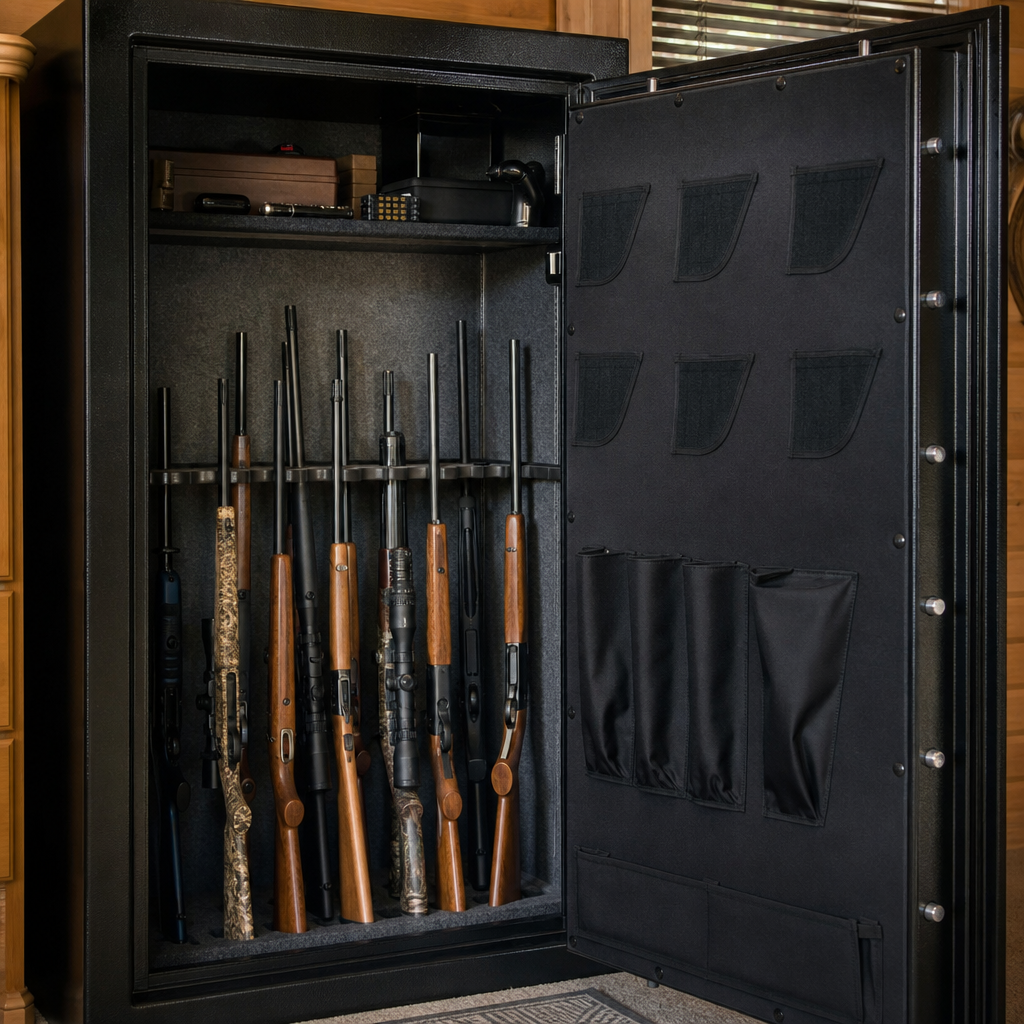
Fireproof storage is one of the most important investments a firearm owner can make because a gun collection is vulnerable not only to theft and unauthorized access, but also to house fires, smoke, water, and structural collapse. In practical terms, fireproof and disaster-resistant storage means using a gun safe or secure cabinet designed to slow heat transfer, resist forced entry, limit moisture damage, and keep firearms protected long enough for emergency crews to control the event. I have seen collections survive burglary attempts yet suffer irreversible loss after a routine residential fire, simply because the owner treated fire resistance as an optional feature instead of a core requirement. That mistake is expensive, dangerous, and preventable.
For gun owners, the stakes are higher than they are for ordinary valuables. Firearms contain metal parts, springs, optics, stocks, grips, ammunition, documents, and accessories that all react differently under heat and moisture. Steel can lose temper at elevated temperatures, wood stocks char and crack, polymer frames deform, optics fail, lubricants burn off, and paper records such as tax stamps, serial number logs, and purchase receipts can disappear completely. After a fire, suppression water, humidity, and acidic smoke residue often continue damaging guns for days. That is why fireproof gun storage should never be viewed as a single specification on a product label. It is a layered protection strategy that combines safe construction, placement, humidity control, documentation, and realistic planning for regional risks such as wildfire, flood, hurricanes, or tornadoes.
This hub article explains how fire ratings work, what disaster-resistant storage really includes, how to compare safe types, where owners often overspend or underbuy, and how to build a system that protects both firearms and supporting records. If you are researching the importance of fireproof storage for gun collections, the central answer is straightforward: proper storage preserves safety, value, legality, and family security when conditions turn catastrophic.
What Fireproof Gun Storage Actually Means
Fireproof is a convenient retail term, but no consumer gun safe is literally impervious to fire forever. The better question is how long a safe can keep interior temperatures below a threshold that prevents severe damage. Most residential fire-rated gun safes are tested for a stated duration, such as 30, 60, 90, or 120 minutes, at exterior temperatures commonly ranging from about 1200 to 1875 degrees Fahrenheit depending on the manufacturer and testing method. The interior target temperature also matters. Many ratings aim to keep the inside below roughly 350 degrees Fahrenheit because paper chars around that point, but firearms, optics, adhesives, batteries, and polymers may be compromised at lower levels. When I evaluate a safe, I look past the headline minutes and ask who tested it, what temperature curve was used, whether the door seal expands under heat, and whether the body and door share the same protection level.
Construction details determine whether a fire rating is meaningful. Composite safes often use multiple layers of steel and fireboard, sometimes gypsum-based, to create insulation. Better models include intumescent door seals that swell during a fire to block smoke and heat. Door gaps, weak hinges, poor welds, and thin steel can defeat a promising rating on paper. Interior layout also matters because rifles packed tightly against a hot wall can sustain more damage than guns separated with airflow and protective sleeves. A safe marketed for twelve long guns may realistically hold eight scoped rifles without crowding, and overcrowding reduces both protection and usability.
Fireproof storage also includes planning for what happens after the flames. A safe that survives the burn but fills with humidity can still leave a collection rusted. Desiccants, dehumidifier rods, elevated shelving for documents, and quick post-incident inspection procedures are part of real disaster resistance. In other words, the safe is the core, but the storage system is what saves the collection.
Understanding Ratings, Standards, and Marketing Claims
Many buyers assume all fire ratings are comparable. They are not. Some are based on independent testing, while others rely on manufacturer protocols. A recognized testing organization such as UL carries more weight than an in-house test because the procedure is documented and repeatable. UL 72 is widely cited for record protection, though many gun safes are not certified under that exact standard. For burglary resistance, classifications such as UL Residential Security Container, often abbreviated RSC, address forced-entry resistance rather than fire endurance. That distinction matters because a product can be decent at burglary resistance and mediocre at fire protection, or the reverse.
In real shopping conversations, I tell owners to separate four claims: fire duration, peak test temperature, independent verification, and construction method. If a safe says 60 minutes at 1400 degrees, ask whether the entire safe was tested or whether the claim is derived from materials used in the walls. Ask whether the door has the same insulation thickness as the body. Ask whether the rating includes a cool-down period, because interior temperatures can continue rising after external heat stops. A collection that survives active flame exposure may still be damaged during the smoldering phase.
| Feature | What to Verify | Why It Matters |
|---|---|---|
| Fire rating time | 30, 60, 90, or 120 minutes with stated test conditions | Longer endurance improves survival odds in larger or delayed-response fires |
| Test temperature | Published exterior temperature and interior threshold | Minutes alone are meaningless without knowing heat intensity |
| Independent testing | UL or other third-party documentation | Reduces reliance on marketing language |
| Steel thickness | Body and door gauge or plate steel details | Affects burglary resistance and structural integrity during collapse |
| Door seals | Intumescent expansion seal present | Helps block smoke, heat, and water intrusion at the door edge |
| Anchor system | Bolt-down hardware and floor compatibility | Prevents tipping, removal, and some flood-related movement |
The safest approach is skepticism. Marketing phrases like fireproof, heat shield, or military style do not replace technical details. If the manufacturer cannot explain the rating clearly, move on.
Why Disaster-Resistant Storage Goes Beyond Fire
House fires get the most attention, but comprehensive storage must account for the full disaster chain. In many losses I have reviewed, the main destructive force after the initial fire was actually water and corrosive residue. Firefighters may pour hundreds or thousands of gallons into a structure. If a safe is not sealed well, water seeps in around the door, through bolt holes, or from damaged seams. Flooding creates another problem entirely: standing water can submerge the lower portion of a safe, saturating stocks, magazines, slings, and paper records. In coastal regions, storm surge adds salt contamination, which accelerates corrosion dramatically.
Wildfire zones create different demands. A home may be exposed to extreme radiant heat, flying embers, and prolonged burn times caused by nearby structures or vegetation. Here, a marginal 30-minute rating may not be enough. Tornado and hurricane regions introduce impact risks from debris and partial structural collapse. An anchored, heavier safe with reinforced hinges and a stable installation has a better chance of staying in place and keeping the door aligned under stress. Earthquake areas require similar thinking, because a toppled safe can damage its own locking system and become harder to open after the event.
Smoke protection is often underestimated. Smoke carries acidic compounds that settle on blued steel, stainless components, brass, and optics. Even when no flame enters the safe, micro-leaks can create residue that starts corrosion once humidity rises. This is why door seals, interior humidity control, and immediate post-disaster cleaning plans matter. A true disaster-resistant storage plan is built around multiple threats acting together, not one threat in isolation.
Choosing the Right Safe for the Collection You Own
The right safe depends on the collection’s size, composition, and use pattern. A hunter with four long guns and basic accessories has different needs than a collector storing transferable machine guns, engraved shotguns, suppressors, and high-end optics. Start by calculating replacement value, not just purchase price. Older firearms may be irreplaceable, and certain accessories can be surprisingly expensive. Precision scopes, thermal optics, custom stocks, and serialized NFA items raise the storage standard because heat or moisture damage can destroy both function and value.
Capacity should be chosen conservatively. Most listed gun counts are optimistic and based on slim, unscoped long guns placed tightly together. In real use, optics, bipods, chassis systems, and soft sleeves reduce capacity fast. I generally advise buying one size larger than the collection currently requires because owners almost always add guns, ammunition storage plans change, and interior flexibility becomes more important over time. Adjustable shelving, door organizers, and separate compartments for handguns and documents improve protection because they reduce crowding.
Lock type is another practical decision. Mechanical dial locks are durable and battery-free, but slower. Electronic locks offer quick access and multiple user codes, though they depend on battery maintenance and quality electronics. Redundant lock systems on higher-end safes can be useful for primary residences. Regardless of lock choice, fire resistance should never be sacrificed for convenience or cosmetic finish. Thick steel, solid relockers, substantial bolts, and credible fire insulation are the foundation. Upholstered interiors and LED lights are secondary features.
Placement, Installation, and the Hidden Factors That Affect Survival
Where a safe sits can influence how well it performs. Interior locations on lower levels often provide more stable temperatures and less exposure than garages, exterior walls, or uninsulated outbuildings. Garages are popular because of floor strength and space, but they can expose safes to hotter fire conditions, easier visibility to thieves, and wider humidity swings. Basements may offer fire advantages but can increase flood risk depending on drainage, sump reliability, and local water table conditions. The best location balances structural support, concealment, climate control, and emergency access.
Anchoring matters for both security and disaster resistance. A safe that is not bolted down can be tipped with pry leverage, moved onto a dolly during a burglary, or shifted by floodwater and collapsing debris. Use manufacturer-approved hardware and verify the floor can handle the load. Large safes can exceed several hundred or even more than a thousand pounds before firearms are added. Concrete slabs are often ideal, while raised wood floors may need reinforcement. During installations, I also plan clearance for door swing, dehumidifier routing, and the ability to remove firearms without banging optics or muzzles.
The surrounding environment should support the safe. Install smoke alarms, monitored security, and if appropriate, residential sprinklers. Keep combustibles away from the safe, especially cardboard, fuel, paint, and overloaded extension cords. If documents are critical, place them inside a dedicated document pouch or secondary fire-rated box within the safe. Layered storage consistently outperforms single-layer storage in real incidents.
Protecting Firearms, Documents, and Accessories as a System
A gun collection is more than guns. Owners should protect serial number inventories, appraisals, tax documents, trust paperwork, photographs, and insurance records with the same seriousness given to the firearms themselves. After a loss, documentation determines how quickly you can file police reports, submit insurance claims, and prove ownership. I recommend a digital inventory with model, serial number, purchase date, distinguishing features, and current photos, backed up in an encrypted cloud service and an off-site copy. That way, even if the safe is destroyed, the records remain accessible.
Inside the safe, use silicone-treated socks or soft sleeves for long-term storage, but avoid trapping moisture against metal. Maintain relative humidity in the 40 to 50 percent range when possible. GoldenRod dehumidifiers, rechargeable desiccants, and wireless hygrometers are all useful tools. Optics should have lens caps fitted, batteries should be monitored, and valuable paperwork should be placed higher in the safe because water intrusion usually starts at the bottom. Ammunition can be stored in the same safe if local laws and manufacturer guidance permit, but many owners choose separate locked storage to improve organization and reduce crowding.
Insurance is part of the system as well. Standard homeowners policies may cap firearm coverage or exclude certain categories unless scheduled separately. Collectors with high-value inventories should review specialty firearm insurance and document appraised values regularly. The point of fireproof storage is not only to avoid total loss, but also to improve recoverability when a disaster exceeds the safe’s limits.
Common Buying Mistakes and How to Avoid Them
The most common mistake is buying on appearance or promotional price instead of verified protection. Thin metal cabinets with decorative finishes are not true fire-resistant safes. Another mistake is treating the safe’s printed gun count as real capacity, then packing it tightly enough to scratch firearms and reduce airflow. Underestimating weight, skipping anchoring, ignoring humidity, and placing the safe in a high-risk location are equally common errors.
Owners also misjudge response time. A 30-minute rating may sound substantial, but in rural areas or wildfire conditions, suppression can take much longer. Urban owners may assume fast response makes shorter ratings acceptable, yet modern homes with synthetic materials burn hotter and faster than many people realize. Finally, some collectors protect the guns but not the records, making recovery harder even when firearms survive.
The best way to avoid these mistakes is to buy for realistic risk, install for stability, document everything, and review the setup annually. A fireproof storage plan should evolve as the collection grows and as household risks change.
Fireproof storage for gun collections matters because it protects safety, preserves financial value, supports legal accountability, and gives owners a realistic chance of recovery after fire, flood, smoke, or collapse. The key lessons are clear: no safe is magic, fire ratings must be interpreted carefully, disaster resistance is broader than flame exposure, and the best results come from layered protection. Choose a safe with credible construction and transparent testing, install it in a smart location, control humidity, back up your records, and insure the collection appropriately.
As the hub for fireproof and disaster-resistant storage, this topic should guide every related decision you make about safe selection, installation, maintenance, and emergency planning. If your current setup was chosen mainly for price or convenience, now is the time to reassess it. Audit your collection, verify your documentation, and upgrade your storage before a disaster makes the decision for you.
Frequently Asked Questions
Why is fireproof storage so important for a gun collection?
Fireproof storage matters because firearms face more risks than theft alone. In a house fire, extreme heat can damage metal components, destroy wood stocks, ruin optics, melt accessories, and compromise ammunition storage. Even if flames never directly reach the collection, smoke, soot, steam, and the water used by firefighters can still cause severe corrosion and long-term damage. A quality fire-rated gun safe or disaster-resistant cabinet helps slow heat transfer and creates a protective barrier during the most critical period of an emergency, giving first responders more time to control the situation before the contents are exposed to destructive temperatures.
For many owners, a gun collection also carries significant financial, historical, and sentimental value. Some firearms are family heirlooms, limited-production models, or carefully built collections that would be difficult or impossible to replace. Fireproof storage is one of the few practical ways to reduce that risk in advance. It is not just about preserving property; it is about responsible ownership. Proper storage helps protect firearms from unauthorized access, while also shielding them from fire, smoke, moisture, and structural debris if part of the building collapses. In short, fireproof storage is an investment in safety, security, and long-term preservation.
What does a fire rating on a gun safe actually mean?
A fire rating is intended to show how long a safe can protect its contents at a specified external temperature. For example, a safe may be rated for 30, 60, 90, or 120 minutes at a given heat level. In practical terms, that rating reflects how effectively the safe slows the transfer of heat to the interior during a fire. The goal is to keep the inside temperature low enough to reduce damage to firearms, documents, optics, and other valuables stored inside. However, not all ratings are created equal, and the details matter. Some ratings come from independent testing, while others may be based on internal manufacturer standards.
When evaluating a safe, it is smart to look beyond the headline number. Ask whether the fire test was independently verified, what temperature was used, and whether the safe was tested under conditions that resemble a real residential fire. Also remember that fire resistance is only one part of the equation. A safe with a good fire rating should also have strong door seals, solid construction, quality locking bolts, and enough mass and durability to resist forced entry and physical damage during an emergency. A higher fire rating generally offers better protection, but it should be considered alongside build quality, burglary resistance, and the environment where the safe will be installed.
Can a fireproof gun safe also protect against smoke, water, and humidity?
Yes, a well-designed gun safe can help protect against more than heat alone, but the level of protection depends on the specific features of the safe. In real fire events, smoke and soot often reach areas that flames never touch, and firefighting efforts can expose a safe to large amounts of water. Moisture can seep into vulnerable enclosures and begin causing rust surprisingly quickly, especially on blued steel, internal mechanisms, and optics. Many higher-quality safes include expanding door seals that help block smoke and water intrusion during a fire, and some are specifically built with water-resistant features in mind.
Humidity control is also critical for long-term firearm preservation. Even in normal conditions, a sealed safe can trap moisture if it is placed in a damp basement, garage, or poorly ventilated room. That is why many firearm owners add a dehumidifier rod, desiccant packs, or a monitored humidity system inside the safe. These accessories help prevent condensation, mildew, rust, and deterioration of wood and leather components. So while “fireproof” is often the term people focus on, the best storage solution is really disaster-resistant storage: something that manages heat, restricts smoke and water intrusion, and controls moisture before and after an emergency.
What should I look for when choosing fireproof storage for my firearms?
Start with construction quality. Look for a gun safe or secure cabinet made from heavy-gauge steel, reinforced doors, reliable locking mechanisms, and internal fire-resistant materials designed to slow heat penetration. Check the fire rating carefully and compare the testing standards behind it. A safe that offers a meaningful amount of fire protection, strong resistance to prying or drilling, and enough weight to discourage removal is usually a better choice than a lightweight cabinet marketed with vague claims. Capacity also matters. Manufacturers often overstate how many firearms a safe can comfortably hold, especially if your collection includes scoped rifles, slings, or other accessories.
You should also think about placement, interior configuration, and environmental conditions. A safe installed on a ground-level concrete slab may perform differently in a fire than one placed on an upper floor where structural collapse is a greater concern. Consider anchor points, shelving, door organization, interior lining, and room for documents, ammunition, magazines, and accessories if you plan to store them together in compliance with local rules and best practices. If your home has high humidity or flood risk, water resistance and moisture control features become even more important. Ultimately, the right choice is one that matches the size and value of your collection, your home environment, and your security priorities without forcing you to outgrow the safe too quickly.
Is fireproof storage worth the cost for a small or modest gun collection?
In most cases, yes. Even a modest firearm collection can represent a substantial investment once you add up the cost of the firearms themselves, optics, magazines, accessories, cases, cleaning gear, and any sentimental or inherited value attached to them. Replacing even a few firearms after a fire can be expensive, time-consuming, and in some cases impossible. Certain models may no longer be available, and family pieces cannot simply be bought back. Fireproof storage helps reduce the chances that a single disaster will wipe out years of careful collecting, maintenance, and investment.
It is also worth the cost because it supports safe, responsible ownership regardless of collection size. A smaller collection still deserves protection from unauthorized access, environmental damage, and catastrophic loss. In many homes, a properly selected safe becomes a central security tool, not just for firearms but also for important documents and other valuables. While premium safes can be expensive, there are different levels of fire-rated and secure storage available for different budgets. The key is to avoid treating fire protection as an optional luxury. For most owners, it is a practical layer of risk management that can pay for itself the first time it prevents serious damage or total loss.