
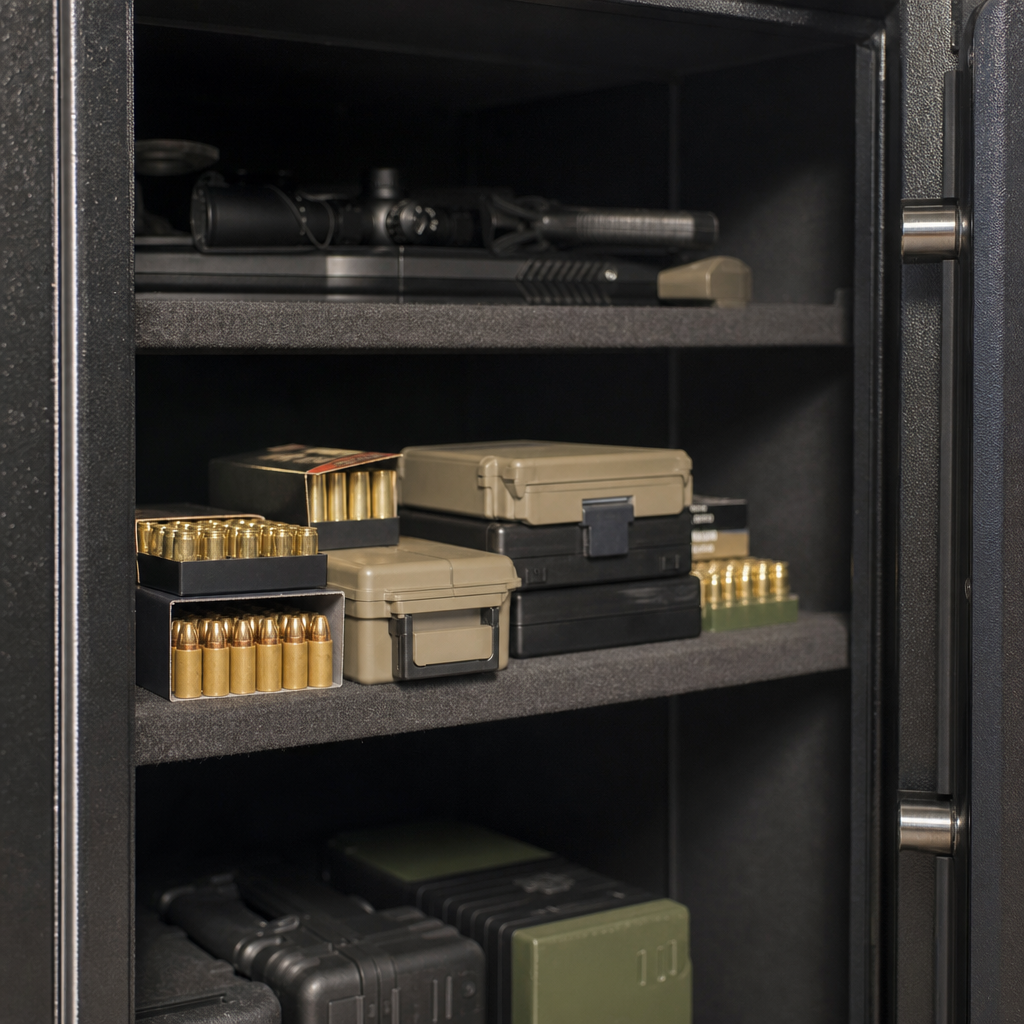
Properly storing ammunition in a fireproof gun safe means controlling heat, humidity, access, packaging, and organization so cartridges remain stable, legal to possess, and ready when needed without creating avoidable risk. In the broader topic of gun safes and safety, ammunition storage sits at the intersection of fire protection, disaster preparedness, household security, and long-term reliability. Many owners focus on securing firearms first, then treat cartridges as an afterthought, but in practice the condition of ammunition depends heavily on where and how it is stored. I have seen otherwise well-maintained safes filled with loose boxes, mixed calibers, rusted steel cases, and no humidity control. That setup may look secure from the outside, yet it can shorten service life, complicate emergency access, and increase confusion when conditions are poor.
Ammunition is designed to be durable. Modern centerfire cartridges tolerate ordinary handling, transport, and years of storage when kept cool and dry. However, durable does not mean indestructible. Excessive heat can degrade propellant and primers over time. Moisture can corrode brass, steel, bullets, and packaging. Floodwater and smoke residues can contaminate labels and cardboard boxes. A house fire may expose contents to radiant heat long before direct flame reaches the safe interior. For that reason, “fireproof” should always be understood as fire resistant for a tested duration and temperature, not absolute immunity. The same practical limitation applies to water resistance, impact resistance, and burglary resistance.
This hub article explains how to properly store ammunition in a fireproof gun safe, with emphasis on fireproof and disaster-resistant storage. It defines the key decisions: whether ammo should be stored with firearms or separately, what fire ratings actually mean, how to manage humidity, which containers work best, how to organize inventory, and what to inspect after a fire, storm, or flood. It also addresses common questions directly: Is it safe to keep loaded magazines in a safe? Should ammo stay in factory boxes? How much desiccant is enough? When should damaged rounds be discarded? The goal is simple: build a storage system that protects ammunition from environmental damage, limits unauthorized access, and remains usable after real-world emergencies rather than ideal conditions.
Understand what a fireproof gun safe can and cannot do
A fireproof gun safe is best understood as a controlled-environment container with limited but meaningful resistance to heat, smoke, water, and forced entry. Most residential gun safes use gypsum-based fireboard, expanding door seals, and insulated steel bodies. Manufacturers commonly advertise ratings such as 30, 45, 60, or 90 minutes at temperatures ranging from about 1,200 to 1,800 degrees Fahrenheit. Those ratings are not all created equal. Some are based on internal company testing, while higher-end models may reference independent laboratories such as UL. The practical question is not whether the safe survives a textbook burn, but whether interior temperatures remain low enough to protect primers, propellant, and packaging during the kinds of fires most homes actually experience.
For ammunition storage, lower interior temperature is more important than marketing language. Smokeless powder degrades faster when exposed to sustained high temperatures, and primers can become less reliable after severe heat exposure even if cartridges appear normal. In my experience, owners often buy a safe based on steel thickness and overlook where the safe will sit. A premium fire-rated safe placed in a hot garage, attic room, or sun-facing shed can expose ammunition to damaging seasonal heat long before any emergency happens. Climate and location matter as much as the safe label. The best setup places the safe in a conditioned interior space, away from direct sunlight, exterior walls prone to water intrusion, and rooms with high ambient humidity.
Disaster resistance also goes beyond fire. Wildfire zones bring ember intrusion and long-duration heat. Hurricane regions add flooding and salt-laden air. Tornado areas raise impact concerns. In earthquake regions, anchoring matters because an overturned safe can compromise seals, shelving, and door alignment. A true disaster-resistant ammunition plan therefore combines fire resistance, elevated placement above likely water level, solid anchoring to manufacturer specifications, and post-event inspection procedures. No single safe solves every hazard, but a well-chosen safe in the right location dramatically reduces avoidable loss.
Choose the right internal storage method for ammunition
The best way to store ammunition inside a fireproof gun safe is in labeled, stackable containers that protect cartridges from moisture while preventing dangerous confusion between calibers and load types. Factory boxes are useful because they preserve lot numbers, ballistic information, and clear caliber markings. For defensive loads and specialty rounds, I recommend keeping cartridges in their original boxes whenever possible, then placing those boxes into sealed but not vacuum-compressed ammo cans or polymer gasket containers. Vacuum sealing is often promoted online, but it can crush cardboard, trap unnoticed moisture, and remove easy access to lot information. Better practice is stable packaging with visible labels and moderate moisture control.
Military-style metal ammo cans remain excellent when gaskets are intact and interiors are clean. Polymer dry boxes from brands such as MTM Case-Gard and Plano also work well, especially in safes where weight is a concern. Inside the safe, containers should be arranged by caliber, purpose, and rotation date. Separate training ammunition from defensive loads. Keep shotgun shells isolated from rifle and handgun cartridges because shell hulls and cardboard bases can react differently to humidity. Do not dump loose rounds into drawers or bins unless they are dedicated to a single caliber and clearly marked. Mixed loose rounds create the exact kind of uncertainty that leads to chambering mistakes in low light or under stress.
| Storage choice | Best use | Main benefit | Main limitation |
|---|---|---|---|
| Factory boxes in gasketed ammo cans | Long-term storage and inventory control | Preserves lot numbers and labels | Takes more space |
| Loose rounds in labeled plastic boxes | High-volume range ammunition | Efficient stacking and quick counting | Lot data may be lost |
| Loaded magazines in pouches or bins | Ready-access defensive storage | Fast deployment and organized loadouts | Requires strict caliber separation |
| Shotgun shells in original cartons | Hunting and field loads | Easy identification by shot size and slug type | Cardboard packaging absorbs moisture faster |
Weight distribution matters too. Ammunition is dense, and safe shelves can sag when overloaded. A thousand rounds of 9mm commonly weighs around 26 pounds, while a case of 12-gauge can exceed 40 pounds. Put heavier ammo cans on the safe floor or lowest reinforced shelf. If your safe includes carpeted particleboard shelves, verify load limits before stacking multiple cans. Good storage is not just about preserving ammo quality; it is about preventing collapsed shelving, damaged firearms, and blocked access to critical items.
Control humidity, temperature, and corrosion inside the safe
Moisture is the most common enemy of ammunition in storage. Corrosion usually begins slowly: tarnished brass, green residue around case mouths, rust on steel cases, staining on nickel plating, or musty cardboard sleeves. By the time obvious corrosion appears, the storage environment has often been poor for months. The target condition for most ammo storage is a stable, cool environment with relative humidity generally around 30 to 50 percent. Brief swings are less harmful than chronic dampness. In many homes, the safe interior runs slightly different from room conditions because insulation slows change. That is why measurement matters. A digital hygrometer with min-max memory is one of the simplest upgrades you can make.
Desiccants help, but they are not magic. Silica gel canisters, rechargeable desiccant packs, and clay absorbers all remove moisture from enclosed spaces, yet each has finite capacity. If the safe leaks humid air every time it opens, or sits in a damp basement, desiccant alone will be overwhelmed. I prefer a layered approach: place the safe in conditioned indoor space, use a low-wattage dehumidifier rod such as a GoldenRod to maintain warmer internal air, add rechargeable silica packs inside ammo containers, and check a hygrometer monthly. The dehumidifier rod works by slightly raising internal temperature so moisture does not condense on metal surfaces. It does not dry standing water, but in normal conditions it is highly effective.
Avoid common mistakes. Do not store ammunition directly against an exterior wall where condensation can occur. Do not leave wet range bags, holsters, or cleaning rags in the safe. Solvents and oils should be stored separately because fumes can affect primers and packaging over long periods. If you bring ammunition in from a cold vehicle into a warm house, let containers acclimate before sealing them tightly. Condensation forms when cold objects meet warm humid air. Giving cartridges time to equalize reduces trapped moisture. These small practices make a measurable difference over years of storage.
Plan for fire, flood, and severe weather before they happen
Disaster-resistant storage starts with placement. The ideal safe location is on the lowest practical structurally sound floor above known flood risk, in a climate-controlled part of the home, away from fuel sources and away from areas firefighters may drench first through broken windows or exterior doors. Basements are common for security, but they are often the worst choice for flood exposure and humidity unless the basement is dry, finished, and protected by sump systems. Garages are convenient, yet they frequently experience extreme heat, vehicle exhaust, and stormwater intrusion. A first-floor interior closet or reinforced utility room often balances access, temperature stability, and reduced visibility.
For flood-prone properties, elevate the safe on a steel or concrete plinth that keeps the bottom several inches above historic water levels. If wildfire is the primary threat, prioritize longer fire ratings, quality intumescent door seals, and interior placement away from exterior walls that receive direct radiant heat. After hurricanes or tornadoes, water and structural shift are common. Anchor the safe with appropriate hardware into concrete or substantial framing so impact or movement does not topple it. Follow manufacturer instructions exactly because incorrect anchoring can weaken fire barriers or void warranties.
Create a simple disaster protocol. Photograph ammunition inventory and lot numbers. Keep a duplicate record off-site or in encrypted cloud storage. Label containers clearly enough that another adult in the household can identify what should be removed first if there is time to evacuate. After any event involving heat, smoke, floodwater, or building collapse, inspect ammunition conservatively. Cartridges exposed to direct flame, prolonged high heat, severe corrosion, or contaminated water should not be trusted for defensive use. In many cases they should be disposed of according to local hazardous waste or law enforcement guidance. Ammunition is relatively inexpensive compared with the consequences of a misfire, hangfire, or overpressure event.
Manage access, legal considerations, and household safety
Safe ammunition storage is not only about preserving cartridges; it is also about controlling who can reach them. In homes with children, teenagers, visitors, or contractors, unrestricted access to ammunition defeats much of the value of locking firearms. Many jurisdictions regulate firearm and ammunition storage differently, so owners should verify state and local law, lease terms, and insurance requirements. Some laws focus on preventing access by minors, while others address loaded firearms, prohibited persons, or negligent storage after unauthorized use. A separate lockable interior compartment for ammunition can add another layer of control, especially if multiple adults need different access permissions.
Whether ammunition should be stored in the same safe as firearms depends on your use case, local law, and household risk profile. For many owners, storing some ammunition in the same fireproof gun safe is reasonable if calibers are organized, access is controlled, and ready-use defensive loads are clearly separated from bulk stock. For larger collections, I often recommend a split system: a modest quantity of duty or defensive ammunition in the main safe, with bulk reserve stored in dedicated ammo cans inside a second locked cabinet or safe nearby. This reduces clutter and shelf stress while preserving controlled access.
Loaded magazines deserve special mention. It is generally acceptable to store loaded magazines if they are in good condition, rotated periodically for function testing, and clearly labeled by platform and ammunition type. Modern magazine springs wear more from repeated cycling than from remaining loaded, but feed lips and magazines themselves should still be inspected. Store magazines where bullets are protected from impact and where one platform cannot be confused with another. In practical terms, that means separate pouches or bins for AR-15 magazines, pistol magazines, and shotgun side saddles, not one mixed catchall container.
Inspect, rotate, and document ammunition for long-term reliability
The final step in proper ammunition storage is maintenance. Even excellent storage should be verified, because reliability is the point of the system. I suggest a quarterly visual inspection for active-use ammo and a semiannual inspection for deep reserve stock. Look for corrosion, bullet setback, dented cases, split necks, compromised primers, faded or soaked packaging, and any unusual odor from propellant. Smokeless powder that is breaking down can produce a sharp acidic smell. If you notice that, isolate the affected lot and do not continue storing it in the same container with good ammunition until you understand the source.
Rotation should match purpose. Defensive ammunition should be function-tested and replaced on a regular schedule, often every one to two years depending on carry conditions and manufacturer guidance. Range ammunition stored in stable conditions may remain usable far longer, but oldest lots should still be used first. A simple first-in, first-out system prevents forgotten cases from sitting for decades. Spreadsheet tracking works well, but a label maker and inventory card are enough if consistently maintained. Record caliber, brand, bullet weight, lot number, purchase date, and container location. During shortages or emergency buying periods, this record also helps avoid accidental duplication of incompatible loads.
When in doubt, err on the side of caution. Ammunition that has been submerged, baked by a structural fire, heavily corroded, or physically damaged should not be trusted because replacing it is cheap insurance. Properly storing ammunition in a fireproof gun safe is therefore not one decision but an integrated process: choose a genuinely capable safe, place it wisely, package cartridges correctly, manage humidity, prepare for disasters, control access, and inspect on a schedule. If you build that system now, your ammunition will stay safer, more reliable, and easier to manage when conditions are normal and when they are not. Review your current setup this week, fix the weakest point first, and treat ammunition storage as an essential part of responsible gun ownership.
Frequently Asked Questions
Can you store ammunition inside a fireproof gun safe, or should it be kept somewhere else?
Yes, ammunition can generally be stored inside a fireproof gun safe, but it should be done thoughtfully rather than simply placing boxes wherever there is extra room. A quality gun safe helps protect ammunition from theft, unauthorized access, water intrusion during emergencies, and many of the environmental changes that shorten shelf life. That said, a fireproof safe is not automatically a perfect ammunition storage environment. The key is to manage temperature swings, humidity, airflow, and organization so the cartridges remain dry, stable, and easy to inspect.
For most households, the best approach is to keep ammunition in its original boxes or sealed storage containers, place it on shelves rather than loose on the floor of the safe, and separate it from items that trap moisture. If the safe is crowded with firearms, documents, and accessories, ammunition can become an afterthought, which increases the chance of crushed boxes, mixed calibers, and poor rotation. Fireproof safes also tend to be tightly sealed, which is good for security but means any moisture that gets inside can linger. That is why a controlled setup matters just as much as the safe itself.
It is also important to follow local laws, manufacturer recommendations, and basic common sense. Some owners prefer to store large quantities of ammunition in a dedicated locking cabinet or separate secure container, especially if they have a substantial inventory. In practical terms, the safest answer is this: storing ammunition in a fireproof gun safe is appropriate when the safe is dry, organized, and not overloaded, and when the ammunition is packaged and monitored properly.
What is the ideal temperature and humidity for storing ammunition long term in a fireproof gun safe?
Ammunition lasts longest when it is stored in a cool, dry, and stable environment. While there is no single magic number for every brand or cartridge type, the general goal is to avoid excessive heat, high humidity, and repeated temperature fluctuations. Moderate room temperature is usually ideal, and relative humidity should be kept low enough to prevent corrosion on brass cases, bullet jackets, primers, and steel components. In most home storage situations, keeping humidity around 50 percent or lower is a smart target, with many owners aiming even lower if their safe and climate allow it.
Heat matters because prolonged exposure to elevated temperatures can degrade powder and primers over time. Humidity matters because moisture can lead to corrosion, staining, tarnish, and eventually unreliable ignition or chambering problems. What often gets overlooked, though, is fluctuation. A safe stored in a garage, attic, shed, or unconditioned basement may experience hot days, cold nights, and seasonal humidity swings. That repeated cycling can create condensation, especially when the inside of the safe lags behind the room temperature. Condensation is one of the quietest ways ammunition storage goes wrong.
To maintain better conditions, place the safe in a climate-controlled part of the home whenever possible. Use a hygrometer to monitor the interior, and add a dehumidifier rod or rechargeable desiccant packs to keep moisture in check. Check those moisture-control products on a schedule rather than waiting until you see a problem. If your safe has fireboard insulation, be aware that newly manufactured safes can sometimes hold residual moisture, so early monitoring is especially useful. Long-term ammunition storage is less about chasing perfection and more about maintaining a consistently dry, stable environment year after year.
Should ammunition be kept in its original boxes, ammo cans, or separate sealed containers inside the safe?
The best practice for most owners is to keep ammunition in its original factory boxes and then place those boxes inside well-labeled, dry storage containers if additional protection or organization is needed. Original packaging is useful because it identifies caliber, bullet weight, lot information, and manufacturer details. That information matters if you ever need to troubleshoot performance, rotate older inventory first, or respond to a recall. Loose rounds dumped into bins may save space, but they create confusion, increase the chance of mixing calibers, and make inspection much harder.
Ammo cans can be an excellent secondary layer of protection inside a gun safe, especially when they have good seals and are stored with desiccant. They help defend against moisture, keep boxes from getting crushed, and make inventory easier to manage. However, they should not be used carelessly. If you place damp ammunition, wet cardboard boxes, or a recently opened container into a sealed can, you may trap moisture where it can do damage slowly and unnoticed. The can should be dry before use, the contents should be dry, and the labels should remain visible either on the boxes or on the outside of the can.
Separate sealed containers are especially helpful if you store multiple calibers, hunting loads, defensive loads, and range ammunition in the same safe. Clear labeling and category separation reduce mistakes when you need something quickly. A practical setup might include one container for handgun calibers, another for rifle ammunition, and another for specialty loads. The point is not just neatness. Good packaging and organization protect cartridge integrity, improve safety, support legal accountability, and ensure that the ammunition you need is easy to identify and retrieve without unnecessary handling.
Is it safe to store ammunition and firearms together in the same fireproof gun safe?
Yes, in many cases it is safe to store ammunition and firearms in the same fireproof gun safe, provided the arrangement is secure, organized, and compliant with local law. Many responsible gun owners do exactly that. The important issue is not merely whether they share the same safe, but how they are positioned, separated, and controlled. A safe that contains both firearms and ammunition should allow you to access what you need without knocking over boxes, scraping optics, or creating clutter that slows retrieval during an emergency.
One of the best practices is to dedicate separate shelves, bins, or compartments for ammunition rather than stacking it among long guns or on top of handgun cases. This reduces the risk of damage to both the firearms and the cartridges. It also helps maintain a clear inventory and limits unnecessary handling. If children or unauthorized adults may be in the home, controlled access becomes even more important. A locked safe is a strong first layer of protection, but internal organization is what keeps that protection practical. If the safe has a door organizer, side pockets, or upper shelving, use those areas carefully and avoid overloading them with heavy ammunition if the design is not meant for that weight.
Some owners choose to separate defensive ammunition from bulk training ammunition or to place loaded magazines in a designated area distinct from boxed cartridges. That can make sense from an operational standpoint, but it should still be done in a way that prevents confusion. In short, storing firearms and ammunition together is common and can be done safely, but the setup should prioritize controlled access, quick identification, physical stability, and enough space that neither category becomes disorganized or compromised.
How often should you inspect ammunition stored in a fireproof gun safe, and what signs of trouble should you look for?
Ammunition should be inspected periodically rather than forgotten for years at a time. For most owners, a quick visual check every few months and a more deliberate review at least once or twice a year is a sensible routine. The purpose is not to handle every cartridge unnecessarily, but to confirm that the storage environment remains dry, the packaging is intact, and there are no warning signs of corrosion, contamination, or disorder. This is especially important if you live in a humid region, use a basement safe, open the safe frequently, or have experienced a leak, flood, or fire event.
During inspection, look for green or white corrosion on brass, rust on steel cases, staining around primers, bullet setback, cracked necks, swollen cases, damaged rims, oil contamination, water spots, mold on cardboard boxes, or a musty odor inside the safe. Also check your desiccant packs, dehumidifier rod, and hygrometer readings. If packaging feels soft, warped, or damp, investigate immediately. Ammunition that appears heavily corroded, contaminated, or physically damaged should be set aside and evaluated according to manufacturer guidance or local disposal procedures. It is not worth gambling on questionable rounds.
Inspection is also the right time to rotate stock using a first-in, first-out system. Put older ammunition toward the front, confirm labels are still readable, and verify that calibers have not been mixed. If you keep records, update quantities and purchase dates. These simple habits turn storage from a passive act into a reliability plan. Properly stored ammunition can remain dependable for many years, but long-term confidence comes from routine monitoring, not assumption.