
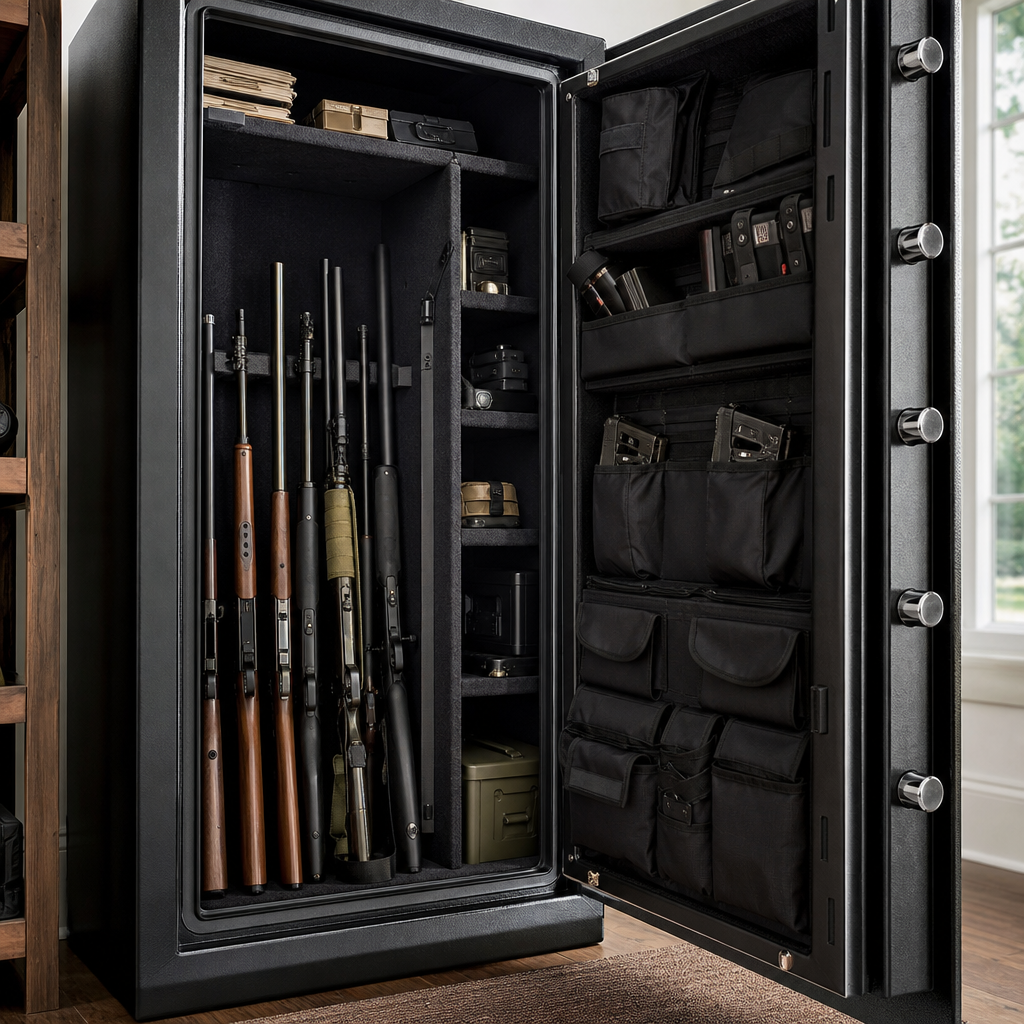
The best gun safe fireproofing upgrades and accessories turn a basic steel box into true disaster-resistant storage that can protect firearms, documents, optics, and electronics when heat, smoke, humidity, and water strike at the same time. In the gun safe market, “fireproof” usually means fire-resistant for a tested duration at a stated external temperature, while “disaster-resistant storage” covers a broader set of threats including structural fire, hose water, flood intrusion, corrosion, power loss, and post-fire cleanup conditions. That distinction matters because many owners buy a safe based on a bold minute rating and assume everything inside will survive any house fire. After installing, testing, and troubleshooting safes in garages, basements, closets, and dedicated gun rooms, I have seen the opposite: weak door seals, bad placement, unchecked humidity, and poor interior organization ruin contents long before the steel shell fails.
For a hub page under Gun Safes & Safety, this guide covers the full fireproof and disaster-resistant storage picture, from insulation upgrades and seals to dehumidifiers, waterproof accessories, anchoring, and maintenance. It also answers the practical questions buyers ask first. What upgrades improve fire performance the most? Which accessories protect paper records, suppressors, magazines, and optics? Where should a gun safe sit if you want the best odds in a fire? Which manufacturer claims should you verify before trusting a rating? A useful answer starts with a simple rule: the safe, the location, and the accessories work as one system. Improving only one part leaves avoidable failure points. The goal is not marketing language. The goal is preserving contents during the real sequence of a home disaster, when heat rises, smoke penetrates gaps, sprinklers or fire hoses drench the room, and the building may sit wet for days before recovery begins.
How fire ratings actually work in a gun safe
A gun safe fire rating is only meaningful when you know the test standard, the time duration, the temperature curve, and the maximum internal temperature allowed during the test. Consumer gun safes often advertise 30, 60, 90, or 120 minutes at temperatures such as 1,200 to 1,800 degrees Fahrenheit, but the test method may be internal, manufacturer-run, or based on older protocols rather than an independent lab certification. Established standards from UL, ETL, and similar testing bodies matter because they define how heat is applied and how interior temperatures are measured. For paper documents, keeping the interior below about 350 degrees Fahrenheit is critical. For digital media, acceptable internal temperatures are much lower, often around 125 to 150 degrees, which means a gun safe that protects rifles may still be unsafe for hard drives, memory cards, or thermal optics.
The most effective fireproofing upgrades usually target the three parts of the safe most likely to underperform: insulation, door sealing, and placement. Composite safes with poured or layered fireboard generally perform better than thin steel cabinets lined with minimal gypsum board, because mass and insulation slow heat transfer. Intumescent door seals are especially important. When exposed to high heat, these seals expand and close gaps around the door to block smoke and hot gases. If your safe has no visible expanding seal, or if the seal is cracked, compressed, or detached, replacing it is one of the smartest upgrades available. In my experience, owners overlook the latch side corners, where smoke often finds the easiest path inward.
Core fireproofing upgrades that deliver the biggest gains
If you want the best return on money spent, start with upgrades that strengthen the safe itself instead of cosmetic accessories. Add or replace an intumescent door gasket rated for high-temperature expansion, inspect all seams for warping, and confirm that interior fireboard panels fully cover vulnerable wall sections behind fabric liners. Some premium safes use multiple layers of gypsum-based board, ceramic wool, or proprietary composite insulation. On lower-cost safes, adding manufacturer-approved fireboard panels to the door back or top can improve resistance, but only if hinge clearance, lockwork movement, and weight limits are respected. Improvised modifications can interfere with relockers, bolt travel, or warranty terms, so factory guidance matters.
Door organizer panels are popular, but they can affect fire performance if they create uninsulated voids or press stored items against the door skin. I generally recommend organizers made by the safe manufacturer or those designed specifically to preserve gasket compression and lock clearance. The same caution applies to interior LED kits and power ports. Electrical pass-through holes are a vulnerability unless they are tightly sealed and purpose-built. If your safe has a factory outlet kit, verify that the pass-through includes a fire-resistant plug or insulated chase. A loosely stuffed cord opening defeats otherwise solid fireproofing.
External accessories can help too. A fitted fire blanket or thermal cover made for safes can reduce radiant heat exposure, especially in garages or outbuildings where contents may face flashover conditions. These covers are not a substitute for internal insulation, but they can buy time in marginal scenarios. Another high-value addition is a monitored temperature and humidity sensor inside the safe. Models from SensorPush and Govee let you track conditions over time and receive alerts if humidity spikes after a storm or power outage. Fire damage is often followed by moisture damage, and monitoring helps you catch the second problem before rust appears.
Accessories that protect contents from smoke, water, and corrosion
Fire does not destroy contents only by burning them. Smoke residue is acidic, soot works into actions and optics, and water from suppression can be just as damaging as heat. That is why the best gun safe fireproofing upgrades and accessories include layered protection inside the safe. Use waterproof document pouches or UL-classified document boxes for passports, trusts, tax records, and serial number inventories. Put suppressor paperwork, NFA forms, appraisals, and backup drives in sealed containers separate from firearms. For optics, thermal units, and night vision devices, add padded cases with desiccant packs because electronics are far less tolerant of heat and humidity swings than blued steel.
Corrosion control deserves equal attention. GoldenRod dehumidifiers, Eva-Dry rechargeable units, and silica gel canisters all help, but they do different jobs. A GoldenRod raises internal temperature slightly to reduce condensation in a continuously powered safe. Silica gel lowers humidity directly and works well in safes without power, though it must be recharged or replaced on schedule. Rechargeable desiccants fit smaller compartments or ammo lockers. In coastal climates, basements, or garages, I prefer combining a powered dehumidifier with large silica canisters and a visible hygrometer. Keeping relative humidity near 45 to 50 percent is a practical target for mixed storage of firearms, wood stocks, leather slings, and paper records.
| Accessory or Upgrade | Primary Threat Addressed | Best Use Case | Key Limitation |
|---|---|---|---|
| Intumescent door seal | Heat and smoke intrusion | Older safes or worn gaskets | Must fit correctly to avoid latch problems |
| Additional fireboard or composite panels | Heat transfer | Manufacturer-approved interior upgrades | Added weight and possible warranty issues |
| GoldenRod dehumidifier | Condensation and rust | Safes with power access | Needs constant electricity |
| Silica gel canisters | Humidity spikes | Power-free safes and document compartments | Require periodic recharging |
| Waterproof document box | Hose water and flood splash | Records, media, legal paperwork | Consumes interior space |
| Wireless temp and humidity sensor | Undetected environmental changes | Basements, garages, seasonal homes | Battery maintenance and signal limits |
Placement, anchoring, and room design for disaster-resistant storage
Where the safe sits can improve or reduce survivability more than many buyers realize. Heat rises, upper floors collapse sooner, garages can reach intense temperatures because of fuel loads, and basements face the greatest flood risk. In most homes, a ground-floor interior location on a concrete slab gives the best balance of fire resistance, structural support, and lower theft visibility. Avoid exterior walls when possible because they can transfer weather extremes and may be exposed to direct flame if a fire starts outside. Avoid rooms with high fuel loads such as workshops full of solvents, cardboard, and lithium battery chargers. If the only realistic location is a garage, use bollards or barriers against vehicle impact, control ambient humidity aggressively, and consider a thermal cover.
Anchoring is both a theft and disaster issue. A heavy safe can shift during structural failure, severe storms, or firefighting activity. Bolt the safe to concrete using manufacturer-specified anchors and verify clearance for door swing and pry resistance. If the safe is on a raised platform, make sure the platform is noncombustible and engineered for the load. Wood risers can wick water and contribute fuel. In flood-prone regions, raising the safe above typical water level sounds sensible, but elevation should not come at the cost of structural weakness or top-heavy instability. A short reinforced concrete curb often works better than improvised timber framing.
Dedicated gun room features can further strengthen fireproof and disaster-resistant storage. Fire-rated drywall, sealed penetrations, self-closing solid-core doors, and residential sprinklers all reduce the thermal assault on the safe. Even simple steps such as storing cardboard ammo cases elsewhere and keeping flammables out of the room can slow fire growth. Think in layers: room protection buys time for the safe, and internal accessories buy time for the contents.
Choosing accessories for firearms, ammunition, and sensitive gear
Not every item inside a gun safe needs the same protection strategy. Firearms benefit from stable humidity, separation that prevents metal-to-metal contact, and sleeves that do not trap moisture. Silicone-treated gun socks can reduce surface corrosion, but they should be used only in a controlled-humidity safe. Trapping a damp rifle inside any sleeve is a common mistake. Ammunition should be organized in labeled containers that tolerate moisture and make post-disaster inventory easier. Military-style ammo cans with intact gaskets are useful for water resistance, but they are not a cure-all in high humidity because trapped moisture remains trapped. Add desiccant and inspect regularly.
Optics, lasers, hearing protection, batteries, and charging gear need more careful planning. Remove alkaline batteries from devices stored long term, because leakage after a disaster can be catastrophic. For rechargeable lithium packs, follow manufacturer storage guidance and avoid leaving chargers energized inside the safe unless the electrical kit is purpose-built and monitored. Keep serialized accessories and expensive optics in padded, compartmentalized storage so they can be moved quickly during an emergency or documented easily for insurance. I also recommend a laminated or digital inventory stored in a separate waterproof container. After a fire, clear records accelerate claims and police reports.
For owners storing legal paperwork, estate documents, or digital backups with firearms, use nested protection. A fire-rated safe can hold a smaller document chest, and the chest can hold waterproof pouches and encrypted flash drives. This layered approach matters because interior conditions inside a gun safe may still exceed thresholds for paper or media during a long burn. If your primary goal is preserving irreplaceable records, a dedicated media safe or document safe may belong next to the gun safe rather than inside it.
Maintenance, testing, and replacement schedules that owners skip
A disaster-resistant setup is not a one-time purchase. Inspect door seals at least twice a year for brittleness, gaps, adhesive failure, or compression set. Check the safe body for rust around anchor holes, dehumidifier pass-throughs, and bottom edges, especially if the safe is in a garage or basement. Test digital locks on fresh batteries and keep mechanical override procedures documented. After any nearby fire, smoke event, burst pipe, or extended power outage, open the safe and inspect every item. Soot and elevated humidity can begin damaging finishes fast, sometimes within days.
Refresh desiccants on a schedule, not when you remember. Confirm hygrometer accuracy by comparing it with a calibrated unit occasionally. Vacuum dust from door jambs so gaskets seat fully. Review your insurance coverage annually and update your inventory with photos, serial numbers, receipts, and appraisals. Finally, replace accessories that have aged out. A ten-year-old document pouch with brittle seams, a warped door panel organizer, or a dead sensor is not protection. Build a checklist, follow it, and your safe will perform much closer to its rated potential.
The best gun safe fireproofing upgrades and accessories are the ones that address real failure points, not just brochure claims. Start with verified fire resistance, a sound door seal, and smart placement on a stable surface. Add humidity control, waterproof document protection, environmental monitoring, and organized storage for firearms, optics, and records. If you treat fireproof and disaster-resistant storage as a layered system, you dramatically improve the odds that your property survives heat, smoke, water, and the messy recovery period that follows.
As the hub for this subtopic, use this page to guide your next decisions: evaluate your safe’s rating, inspect its seals, review its location, and choose accessories based on the specific items you store. Small upgrades made before an emergency are far cheaper than replacing rusted rifles, damaged optics, and lost paperwork after one. Audit your setup today, fix the weak links, and build a safer storage system that is ready for more than theft alone.
Frequently Asked Questions
1. What does “fireproof” really mean for a gun safe, and how is that different from true disaster-resistant storage?
In the gun safe world, “fireproof” is usually shorthand for fire-resistant, not immune to damage under every fire condition. Most manufacturers rate a safe for a certain amount of time at a stated external temperature, such as 30, 60, 90, or 120 minutes. That rating typically reflects how long the interior is expected to stay below a target threshold during a controlled test. The important takeaway is that fire ratings are conditional. Real house fires vary in intensity, duration, ventilation, collapse risk, and how long the safe is exposed before firefighters arrive.
True disaster-resistant storage is a broader and more practical way to think about protection. It includes not just heat resistance, but also smoke infiltration, steam, corrosive residue, humidity spikes, sprinkler or hose water, flood intrusion, and the long-term rust risks that often appear after the fire is out. It also considers how contents behave under heat. Firearms, optics, paper records, passports, hard drives, suppressor paperwork, and batteries all have different temperature tolerances. A safe that prevents complete burn-through can still allow enough heat or moisture inside to damage wood stocks, ruin electronics, fog optics, or warp critical documents.
That is why the best upgrades do not focus on one label alone. Owners who want meaningful protection pair a solid fire-rated safe with accessory improvements such as upgraded door seals, interior document pouches, rechargeable dehumidifiers or rod heaters, elevated floor stands to reduce flood exposure, and organization that keeps valuables away from the hottest sections of the interior. In other words, “fireproof” is a marketing starting point, while disaster-resistant storage is the real goal.
2. Which fireproofing upgrades and accessories actually make the biggest difference in a gun safe?
The most valuable upgrades are the ones that address multiple threats at once. A high-quality heat-expanding door seal is one of the best examples. Intumescent seals swell when exposed to high temperatures and help slow smoke, heat, and hot gas intrusion around the door gap, which is one of the most vulnerable areas of any safe. If your safe supports an upgraded or replacement seal kit from the manufacturer, that can be a worthwhile investment.
Interior fire-resistant document bags or media pouches are another smart add-on because they provide layered protection for passports, trust documents, tax records, title papers, backup drives, and other sensitive items that may need more protection than firearms alone. Layering matters. Even if the safe interior gets hot or humid, an additional insulated pouch can buy valuable time and reduce direct exposure to soot and moisture.
Humidity-control accessories are equally important because many losses happen after the fire event, not during it. A dehumidifier rod, rechargeable desiccant pack, or smart humidity monitor helps prevent rust, corrosion, mold, and stock damage. This is especially critical if the safe is located in a garage, basement, or outbuilding where temperature swings are common. For optics, ammunition, and electronics, controlled humidity can be just as important as the fire rating.
Other high-impact accessories include raised safe platforms or plinths to reduce flood and hose-water exposure, thermal barrier liners approved by the safe manufacturer, and door panel organizers that keep smaller items from being crushed together and allow better airflow inside. If your safe sits directly on concrete, consider a moisture barrier and an elevated base. Concrete can wick moisture, and during cleanup after a fire or flood, standing water often collects at floor level first.
Finally, do not overlook internal layout. Keeping the most sensitive contents in the center of the safe, away from the door and exterior walls, can help because those outer surfaces generally see the most heat first. The best setup combines a good safe, layered insulation accessories, moisture management, and thoughtful placement rather than relying on a single “fireproof” feature.
3. Can you improve the fire resistance of an existing gun safe, or do you need to buy a new one?
In many cases, you can improve the overall protection of an existing safe, but there are limits. Accessories can enhance performance around the margins and make your storage more resilient, especially against smoke, humidity, document damage, and minor water intrusion. However, they usually cannot transform a lightly built cabinet into a premium long-duration fire safe. The thickness of the steel body, the type and amount of insulating material in the walls and door, the quality of the door fit, and the way the safe was engineered at the factory still determine the baseline level of fire resistance.
That said, existing safe owners can absolutely make practical upgrades. Adding manufacturer-approved intumescent seals, fire-resistant document organizers, humidity control, and an elevated base can produce meaningful real-world benefits. Reconfiguring the interior can also help. Place irreplaceable records and small electronics in the center of the safe inside secondary protective containers. Keep guns with wood furniture or expensive optics away from direct wall contact. Use silicone-treated gun socks or rust-inhibiting sleeves for an extra layer of corrosion resistance after exposure to moisture or residual humidity.
You should be cautious about aftermarket modifications that involve drilling, gluing unknown insulation materials inside, or altering the door and body in ways the manufacturer does not recommend. Those changes can interfere with door operation, void warranties, trap unwanted moisture, or create misleading confidence without proven test results. If a safe has very limited fire protection to begin with, the most cost-effective path may be upgrading to a better safe rather than over-investing in accessories that cannot overcome the original design.
A good rule of thumb is this: accessories are excellent for boosting layered protection and reducing common failure points, but they work best when added to a fundamentally well-built safe. If your current model already has a respectable fire rating and solid construction, upgrades can make it substantially more disaster-ready.
4. How do water, humidity, and smoke affect firearms and valuables inside a fire-rated gun safe?
Many owners focus so heavily on flames that they overlook what often causes the most widespread damage: moisture and contamination. During a structural fire, safes may be exposed to steam, smoke, suppression chemicals, sprinkler runoff, and high-pressure hose water. Even if the safe survives the heat, those byproducts can create a damaging environment inside or around it. Firearms are particularly vulnerable because metal surfaces, internal springs, bores, optics mounts, and trigger components can begin corroding quickly when exposed to moisture and acidic residue.
Smoke is not just dirty air. It can carry corrosive compounds that settle on gun metal, glass, polymer, leather slings, paperwork, and electronics. Optics can suffer from residue on lenses, seals, and adjustment turrets. Documents may survive the flames but still emerge stained, curled, or fused from humidity. Hard drives, flash media, and battery-powered devices can fail from heat plus moisture even when they do not look destroyed from the outside.
That is why humidity control is one of the most important safe accessories you can buy. A dehumidifier rod keeps the internal air slightly warmer and helps reduce condensation. Desiccant packs absorb excess moisture and are useful in enclosed spaces, especially when paired with a hygrometer so you can monitor conditions. Rust-prevention sleeves, oil-treated cloths, and protective storage cases can provide additional defense for individual firearms and accessories. For documents and digital media, use dedicated fire- and water-resistant pouches inside the safe for a second layer of protection.
Placement also matters. Safes in garages, sheds, and basements usually face more severe humidity swings before and after any fire event. If possible, install the safe in a climate-stable interior location and raise it off the floor to limit standing water exposure. In practice, the best fireproofing strategy is never just about withstanding heat. It is about managing the full chain of damage that heat, smoke, moisture, and cleanup efforts can cause together.
5. What should you look for when choosing the best gun safe fireproofing accessories for long-term protection?
Start with compatibility and proven function, not gimmicks. The best accessories are the ones designed for your safe model or recommended by a reputable manufacturer with clear specifications. A door seal upgrade should fit correctly and be intended for safe use under high temperatures. A dehumidifier should be sized for the safe’s interior volume. A document pouch should clearly state its intended protective purpose and not make vague, unrealistic claims. In general, avoid products that advertise absolute protection under all fire conditions, because that is not how real-world safe performance works.
Next, think in layers. For long-term protection, you want accessories that address four separate categories: heat resistance, moisture control, water mitigation, and organization. Heat resistance includes upgraded seals and insulated pouches. Moisture control includes desiccants, dehumidifier rods, and digital hygrometers. Water mitigation includes raised bases, moisture barriers under the safe, and interior storage solutions that keep key items off the floor of the safe. Organization matters because crowded interiors restrict airflow, hide moisture problems, and put delicate items too close to exterior walls where temperatures may rise fastest.
It is also wise to match the accessory package to what you actually store. If your safe holds collectible firearms with wood stocks, rust prevention and humidity stability should be