
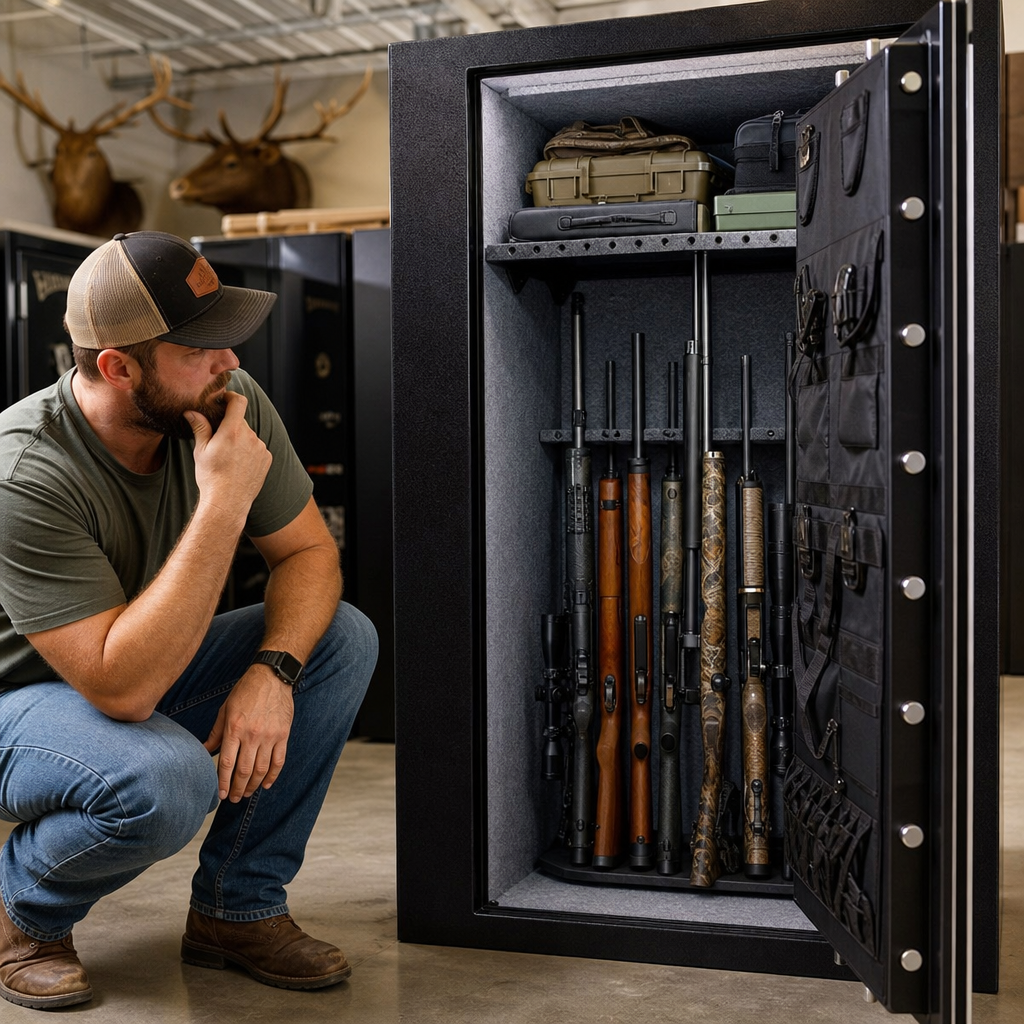
Shopping for a gun safe often starts with a simple assumption: the more expensive the safe, the better the protection. In practice, that belief is one of the most persistent gun safe myths, and it causes buyers to overspend on features they do not need while sometimes overlooking the specifications that matter most. Price can reflect stronger construction, better fire insulation, tighter tolerances, more secure lock options, and improved finish quality, but cost alone does not guarantee a safer or smarter purchase.
To answer the question directly, expensive gun safes are not always better. They are better only when the added cost buys meaningful performance in areas such as burglary resistance, fire endurance, child access prevention, long-gun capacity, organization, and long-term reliability. A mid-priced safe with a certified lock, heavier steel body, solid boltwork, and correct installation can outperform a more expensive model that spends its budget on glossy interiors, branding, and oversized dimensions unsupported by equivalent steel thickness.
In my experience evaluating residential security containers, true safes, and specialty firearm storage, the biggest gap between marketing and reality appears in consumer expectations. Many buyers think “fireproof” means no heat transfer, that a massive door automatically means better burglary protection, or that any safe sold in a sporting goods store is built to the same standard. Those assumptions are wrong. Gun safe performance depends on measurable factors: steel gauge, composite construction, lock certification, relocker design, hardplate coverage, door gap tolerances, anchor strategy, humidity control, and third-party ratings such as UL Residential Security Container classifications.
This matters because a gun safe is not just a cabinet with a lock. It is part of a broader safety system that protects firearms from unauthorized access, slows theft, preserves optics and documents, and supports responsible ownership. It also intersects with insurance requirements, child safety planning, and local risk conditions such as wildfire exposure, hurricane flooding, or smash-and-grab burglary patterns. As a hub for gun safe myths and misconceptions, this guide explains where higher prices help, where they do not, and how to judge a safe by construction, not assumption.
Myth 1: A Higher Price Automatically Means Better Security
The most common misconception is that price is a reliable proxy for security. It is not. Security is a function of design and tested resistance, not a retail number on a showroom tag. Two safes can differ by thousands of dollars because of finish options, interior upgrades, delivery packages, imported versus domestic production, or dealer markup. Those variables may matter to ownership experience, but they do not necessarily improve forced-entry resistance.
When I compare safes side by side, I look first at body steel thickness, door construction, locking system, and whether the unit has a recognized burglary rating. Many big-box gun safes use 14-gauge or 12-gauge steel bodies. Some premium models move to 10-gauge, 7-gauge, or thicker plate, and that difference is meaningful because thinner sheet steel is easier to peel, punch, or cut. A safe with heavier steel and a basic interior is often a stronger security buy than a more expensive unit with decorative hardware and plush upholstery.
Burglary resistance is also about time and noise. Most residential thieves want quick access with pry bars, grinders, or hand tools. A properly anchored safe with a tight door gap, reinforced frame, hardplate over the lock, and internal hinges can dramatically increase attack time. By contrast, an expensive but lightly built safe placed loose in a garage can be tipped, pried, or removed entirely. Buyers should focus on what delays an intruder, not what looks premium under showroom lighting.
Myth 2: “Fireproof” Means Your Guns and Documents Are Fully Protected
“Fireproof” is one of the most misleading terms in the industry. No gun safe is literally fireproof. Fire ratings describe test conditions for a specific duration at a stated external temperature, and the details matter. A manufacturer may advertise “60 minutes at 1,400 degrees,” but that number is only useful if you know who performed the test, what internal temperature threshold was used, and whether the test simulated a real structural fire with cool-down time.
For firearms, heat can damage stocks, optics, lubricants, polymer components, and ammunition performance long before complete destruction. Paper documents usually begin to char around 451 degrees Fahrenheit, while digital media fails at much lower internal temperatures. That means a gun safe marketed for firearms may still be a poor choice for passports, deeds, or backup drives unless it uses tested insulation and, ideally, separate media protection. I regularly advise owners to use document pouches or a dedicated media safe inside a larger gun safe when critical records are involved.
Fire protection also has tradeoffs. Many consumer gun safes achieve their rating with layers of gypsum-based board. That material releases steam during a fire and can help control internal temperature, but it increases weight without necessarily improving burglary resistance. Better fire protection can justify a higher price if your home faces real wildfire or structure-fire risk, yet it is not an automatic upgrade for every buyer. You should match the fire rating to your location, response times, and what you intend to store.
Myth 3: Bigger and Heavier Always Means Better
Size and weight matter, but they are not stand-alone indicators of quality. A larger safe may simply use more thin steel and more interior shelving. Weight can come from added drywall insulation rather than thicker plate. I have seen oversized safes that impress buyers on the sales floor yet offer mediocre resistance because the body is thin and the boltwork is mostly cosmetic. Large locking bolts around the door edge look serious, but the bolts do not help much if the frame or sidewalls fail first.
A safe should be large enough for your real inventory, including scoped rifles, handguns, magazines, suppressors where legal, documents, and future purchases. Still, “buy the biggest safe you can afford” is incomplete advice. The safer principle is to buy the largest model that also meets your minimum security and fire specifications, fits your floor load and installation location, and can be anchored correctly. A compact safe in a discreet closet often provides better real-world protection than an enormous unit exposed in a garage.
Placement changes performance. Basement corners, interior closets, and locations with limited side access reduce pry opportunities. Upstairs installations require floor-load evaluation. Garage placement increases visibility, humidity swings, and sometimes easier tool access for thieves. If a larger safe forces you into a poor location, the size advantage may disappear. Practical storage planning beats brute dimensions every time.
How to Evaluate a Gun Safe Beyond the Price Tag
The right way to compare gun safes is to break the decision into measurable categories. Start with steel thickness for the body and door. Then verify the lock type, relockers, hardplate, bolt engagement, hinge design, anchor holes, interior flexibility, dehumidification options, and fire test details. Finally, confirm warranty terms, service network, and replacement lock availability. This process turns an emotional purchase into a technical one.
| Feature | What to Check | Why It Matters |
|---|---|---|
| Body steel | 12-gauge minimum, preferably 10-gauge or thicker | Thicker steel resists prying and cutting longer |
| Lock | UL-listed mechanical or electronic lock | Certified locks are more reliable and attack-resistant |
| Burglary rating | UL RSC or higher where budget allows | Shows standardized attack resistance testing |
| Fire rating | Time, temperature, and test source | Marketing numbers without method are weak evidence |
| Anchoring | Factory anchor holes and concrete or structural mounting | Prevents removal and reduces pry leverage |
| Interior fit | Space for optics, accessories, and growth | Quoted gun counts are usually optimistic |
Gun counts deserve special skepticism. A “36-gun safe” rarely holds 36 modern long guns with optics, slings, bipods, and varied stock shapes in a usable layout. Real capacity may be closer to 18 to 24 if you want quick access without stock damage. This is another area where expensive safes are not automatically better; some premium models advertise ambitious capacities using the same unrealistic counting method as budget brands. Interior configurability is more valuable than a headline number.
Myth 4: All Lock Types Are Basically the Same
Lock choice affects speed, reliability, maintenance, and user behavior. Mechanical dial locks have a long track record and no batteries, which appeals to owners who want predictable durability. Electronic keypad locks offer faster access and easier code changes, which can improve daily compliance because users are more likely to secure firearms consistently if locking is convenient. Neither type is universally superior. Quality matters more than category.
Cheap electronic locks can fail from poor components, battery neglect, or environmental stress. Mechanical locks can be slower under stress and may frustrate users who need frequent access. Biometric locks are improving, especially on handgun safes, but fingerprint performance varies with skin condition, sensor quality, and enrollment accuracy. For long-gun safes, I usually recommend UL-listed electronic or mechanical locks from established manufacturers such as Sargent and Greenleaf, SecuRam, or La Gard, depending on the model and support options.
The myth to avoid is that an expensive safe always includes the best lock. Some high-priced models still use standard locks common across lower tiers. Ask whether the lock is UL listed, whether the keypad can be replaced without drilling, what relocker mechanisms back it up, and how the manufacturer handles lockouts. Access control is a critical part of safety, especially in homes with children, guests, contractors, or caregivers moving through the property.
Myth 5: A Safe Alone Solves Every Firearm Safety Problem
A gun safe is central to responsible storage, but it is not a complete safety plan by itself. Safe ownership works best when combined with layered practices: unloaded storage where appropriate, separate ammunition management when needed, routine lock checks, humidity control, inventory documentation, and clear household rules. I have worked with owners who invested heavily in a premium safe but never anchored it, never changed the default code, and never documented serial numbers. That is not a security strategy; it is wishful thinking.
Climate control is a good example of this wider system. Firearms stored in humid regions can develop rust even inside a quality safe. A desiccant pack may help in a small enclosure, but larger safes usually benefit from an electric dehumidifier rod and a basic hygrometer. Leather slings, wood stocks, and optics all respond differently to moisture and temperature swings. If your safe is in a garage or basement, environmental control becomes more important than many buyers expect.
Insurance is another overlooked layer. Standard homeowners policies may cap firearm coverage unless scheduled separately. A better safe can support insurability, but documented values, photographs, receipts, and serial records are what make claims smoother. The misconception that buying an expensive safe ends the conversation often leaves owners exposed in exactly the situations they thought they had solved.
When Paying More Actually Makes Sense
Higher prices are justified when they buy verifiable performance. If you own a large collection, keep heirloom firearms, live in a high-burglary area, or need stronger fire endurance because of wildfire risk or long fire-department response times, premium construction can be worth every dollar. The same is true if you want a true safe or a higher burglary classification rather than a basic residential security container.
Pay more for thicker plate steel, better welds, certified ratings, stronger frames, quality lock packages, and professional delivery with anchoring. Pay more if the safe will see heavy daily use and you need dependable door alignment, organized modular interiors, and serviceable parts. Pay more if your storage objective includes documents, jewelry, or high-value accessories that raise the consequences of loss. These are concrete reasons, not prestige reasons.
Do not pay more only for cosmetic panels, distressed paint, chrome hardware, or inflated capacity claims. Those features can be enjoyable, but they are not core security. The best buying decision is usually the one that aligns your risk profile, home layout, and collection value with tested construction. If you treat price as a shortcut, you can miss a better fit at a lower tier or underspec a critical area while paying for appearance. Use this guide as your starting point, then compare ratings, steel, locks, and installation plans before you buy.
Expensive gun safes are not always better, and that is the main lesson behind many gun safe myths and misconceptions. Better protection comes from matching a safe’s real specifications to your risks: theft, fire, child access, humidity, and collection growth. Price matters only when it reflects stronger steel, proven lock quality, credible fire testing, better fit, and proper installation.
As the hub for this subtopic, the key ideas are clear. Do not assume “fireproof” means absolute protection. Do not treat size or weight as proof of strength. Do not believe every gun-count claim. Do not ignore anchoring, lock certification, and environment control. And do not expect one product, no matter how expensive, to replace basic storage discipline, household safety rules, and inventory records.
The real benefit of understanding these misconceptions is confidence. You can compare safes on evidence instead of marketing language, avoid overpaying for cosmetic upgrades, and invest where performance is measurable. Review your collection, assess your home’s risks, and use these standards to narrow your options before making your next gun safe purchase.
Frequently Asked Questions
Are expensive gun safes always more secure than budget models?
No. A higher price can mean better security, but it does not automatically guarantee it. In many cases, buyers pay more for larger capacity, premium branding, decorative finishes, interior lighting, shelving upgrades, or cosmetic details that do little to improve actual burglary resistance. What matters most is how the safe is built. The steel thickness of the body and door, the design of the locking bolts, the strength of the hinges and frame, the lock quality, and whether the unit can be properly anchored all have a bigger impact on security than price alone.
A less expensive safe with solid steel construction, a reliable lock, and proper installation may outperform a more expensive model that focuses heavily on appearance or convenience features. It is also important to remember that many residential gun safes are designed to slow down smash-and-grab theft, not resist a prolonged attack with power tools. That means shoppers should compare objective specifications instead of assuming the highest price tag equals the highest protection. Expensive can be better, but only when the added cost is tied to meaningful security upgrades.
What should I look at besides price when comparing gun safes?
The best approach is to evaluate specifications, not marketing language. Start with steel thickness, because heavier steel generally resists prying and cutting better than thin sheet metal. Next, examine the door construction, the number and quality of locking bolts, and the design of the boltwork system. A safe that looks impressive from the outside may still use relatively light materials if the manufacturer emphasizes size and finish over structure.
You should also pay close attention to the lock type. Mechanical dial locks have a long track record for durability, while quality electronic locks offer speed and convenience. Not all locks are created equal, so look for reputable brands and proven reliability rather than simply choosing based on style. Fire protection is another major factor. Instead of relying on vague claims, review the stated fire rating, the test conditions if available, and whether the rating appears credible for your needs. Interior layout, anchor holes, weight, and overall fit and finish matter as well, but they should come after the core issues of security and fire resistance. In short, focus on construction, lock quality, fire performance, and installation options before using price as a deciding factor.
Why do some gun safes cost so much more than others?
Price differences often come from a mix of meaningful upgrades and non-essential extras. On the practical side, more expensive safes may use thicker steel, better welds, stronger doors, improved fire insulation, more advanced locking systems, and tighter manufacturing tolerances. These features can absolutely justify a higher price when they materially improve security and durability. Heavier safes also cost more to manufacture and ship, which contributes to the final retail price.
However, not every price increase reflects better protection. Premium paint, high-gloss finishes, custom interiors, door organizers, dehumidifiers, brand prestige, and decorative hardware can all push a safe into a higher price category without dramatically changing its resistance to theft or fire. Bigger safes also cost more simply because they use more material and offer more storage space, not necessarily because they are stronger. That is why two safes with very different price tags can deliver similar real-world protection. The key is separating functional upgrades from cosmetic or convenience upgrades and deciding which ones are actually worth paying for.
Can a mid-priced gun safe be a better value than a premium safe?
Yes, very often. A mid-priced gun safe can be the smartest buy if it delivers the level of security, fire protection, and storage you actually need without charging you for unnecessary features. Many buyers assume they should stretch to the most expensive model they can afford, but that can lead to paying for oversized capacity, luxury finishes, or premium branding instead of meaningful performance. A well-chosen mid-range safe frequently hits the sweet spot between build quality and cost.
Value comes from fit, not just from spending more. For example, if a mid-priced safe has adequate steel thickness, a dependable lock, a credible fire rating, and can be bolted down in a discreet location, it may serve a homeowner extremely well. By contrast, a more expensive safe that is too large for the space, difficult to install properly, or loaded with features you will never use may offer less practical value. The right question is not “What is the best safe at the highest price?” but “What safe best matches my risks, storage needs, and budget?” In many homes, that answer lands squarely in the mid-priced category.
How can I tell whether the added cost of a gun safe is actually worth it?
Start by identifying what problem the extra money is solving. If a higher-priced safe gives you thicker steel, a better lock, stronger boltwork, improved fire protection, and a design that is harder to pry open, the added cost may be well justified. If the price jump mainly buys upgraded upholstery, a fancier exterior, more shelves, or a recognizable brand name, then the benefit may be more about aesthetics and convenience than protection. Looking at manufacturer specs side by side is one of the best ways to see where your money is going.
It also helps to think about your specific situation. A buyer storing a modest number of firearms in a lower-risk environment may not benefit much from paying a large premium for features designed for more demanding circumstances. On the other hand, someone with a larger collection, higher theft concerns, or greater need for fire resistance may find that stepping up in price is worthwhile. Installation should be part of the value equation too. Even a costly safe loses security advantages if it is not anchored properly or is placed in an exposed, easy-to-attack location. In the end, the extra cost is worth it only when it measurably improves the type of protection you actually need.