
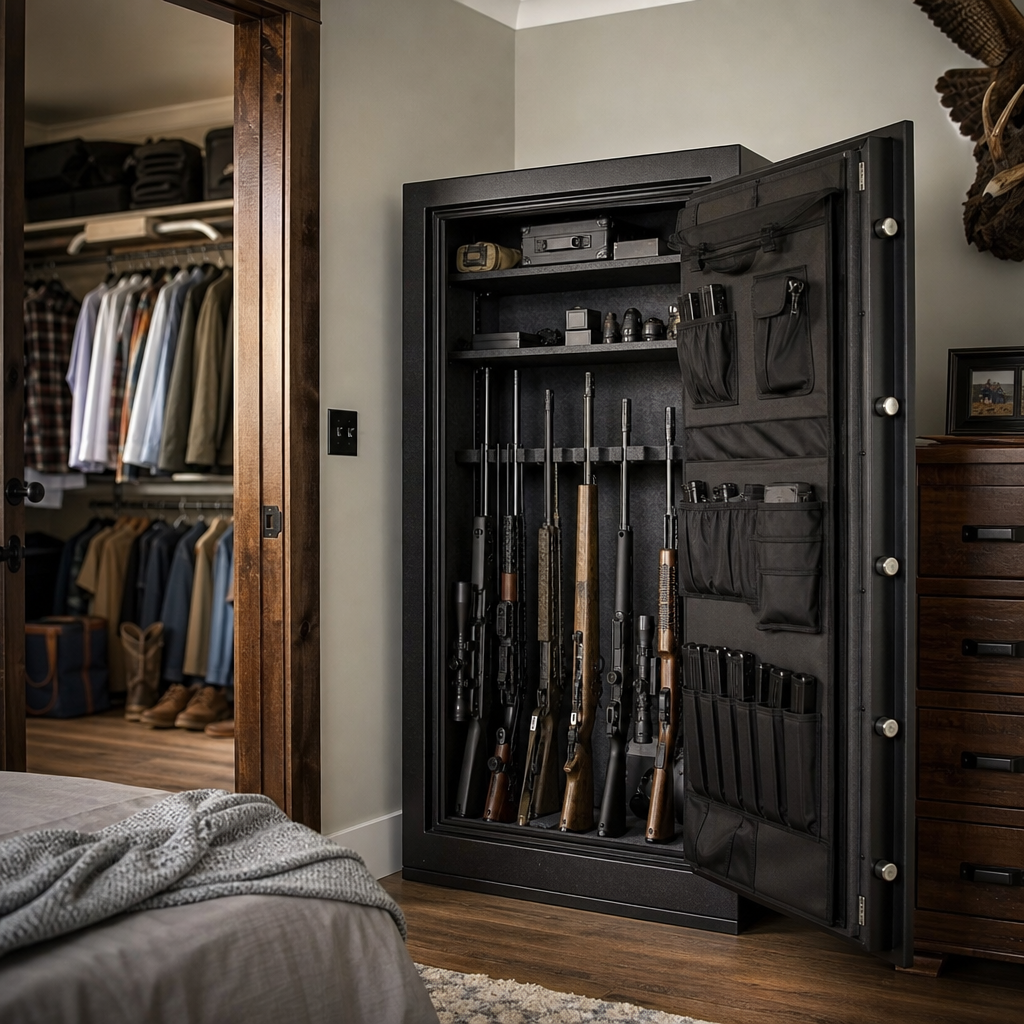
Choosing gun safe recommendations for people who own firearms for self-defense starts with one reality: a defensive firearm must be secured against unauthorized access while remaining accessible under stress. That tension shapes every buying decision. In my experience helping households evaluate handgun vaults, closet safes, and full-size security cabinets, the biggest mistake is shopping by brand first instead of by use case. A self-defense owner has different needs than a collector, hunter, or competitive shooter. The right answer depends on who lives in the home, where the gun is staged, how quickly it may be needed, and what level of theft resistance is realistic for the budget.
A gun safe, in this context, can mean several different products. A bedside handgun vault is a compact locking container designed for rapid access to one or two pistols. A vertical long-gun safe is a heavier enclosure for rifles and shotguns, usually placed in a bedroom, closet, or garage. A locking cabinet offers basic access control but less burglary resistance than a true safe. Underwriters Laboratories burglary ratings, California Department of Justice roster listings for safety devices, fire ratings expressed in time and temperature, and lock types such as mechanical dial, electronic keypad, biometric scanner, and RFID all matter, but not equally for every buyer persona.
This topic matters because self-defense ownership creates a narrow operational window. If a firearm is left unsecured, children, guests, burglars, or a person in crisis may access it. If it is buried in a cumbersome safe, the owner may not reach it during a home invasion. The best gun safe recommendations for people who own firearms for self-defense therefore balance speed, reliability, tamper resistance, fit for the room, and household risk. This hub article organizes the main buyer personas in the gun safe buyer personas category so you can identify which safe features actually matter for your situation, avoid overbuying cosmetic features, and choose a storage strategy that improves both readiness and safety.
Quick-access handgun safe buyer personas
The most common self-defense persona is the homeowner who keeps a handgun for immediate access at night. For this buyer, the ideal product is usually a dedicated quick-access handgun safe bolted to a nightstand, bed frame, wall stud, or floor. I generally recommend prioritizing lock reliability over novelty. A quality electronic keypad with tactile buttons and a backup key often outperforms cheap biometrics in real bedrooms where fingers may be sweaty, cold, or positioned awkwardly. Premium biometric units can work well, but they need repeated enrollment, battery discipline, and regular testing in low light.
Capacity also matters more than many buyers expect. A compact safe should fit the firearm in its ready configuration, including a mounted weapon light, red dot optic, and extended magazine if used. Many disappointed buyers discover after purchase that the internal dimensions do not accommodate a Glock 17 with an X300 or a compact pistol in a holster. Look for interior measurements, not just exterior dimensions, and confirm the lid clears the grip angle for a clean draw. Gas struts, spring-assisted lids, and interior lighting meaningfully improve access under stress.
This persona should care less about high fire ratings and more about anti-pry construction, secure mounting, and dependable one-handed opening. Models from Fort Knox, V-Line, Vaultek, Hornady, and GunVault are often compared in this space, but the practical test is simple: can you open it in the dark, from bed, with your support hand occupied? If the answer is no, keep shopping. A bedside safe succeeds when it supports a repeatable defensive routine without creating unsafe shortcuts such as leaving the pistol on furniture.
Parents and households with children
For parents, gun safe recommendations for people who own firearms for self-defense must start with layered security. A quick-access bedside safe may still be appropriate, but it should be complemented by stricter storage for spare firearms, ammunition, and backup magazines. Young children are highly motivated by imitation, while older children and teenagers may be capable of observing access codes or searching for keys. That means the safe should resist both casual discovery and informed tampering. Simple key-only boxes are usually a poor fit unless the key control plan is exceptionally disciplined.
In family homes, I advise separating speed from bulk storage. Keep the primary defensive handgun in a mounted quick-access vault and place all nonstaged guns in a heavier safe with better pry resistance and, ideally, anchoring into concrete or framing. Code hygiene matters. Avoid birthdays, addresses, and repeated patterns on keypad models. If using biometrics, remove old fingerprints after guests or service technicians have handled setup. If using RFID tags or cards, store them as carefully as house keys. Children do not need to defeat the lock electronically if an adult leaves the override key in a drawer nearby.
This persona also benefits from administrative controls beyond hardware. Regularly test batteries, practice opening procedures with a spouse, and maintain a verbal household policy that no child handles firearms without direct supervision. Secure storage aligns with guidance from pediatric and public health organizations that consistently associate locked, unloaded, and inaccessible firearms with reduced accidental injury risk. The safe is only one layer, but it is the layer that prevents a moment of curiosity from becoming an irreversible event.
Apartment dwellers and renters
Renters need a different approach because weight, visibility, and installation restrictions change the decision. A thousand-pound safe on a concrete slab is rarely realistic in a second-floor apartment with lease limitations. The apartment persona usually needs a lower-profile safe that can be anchored discreetly to substantial structure without obvious damage, or a compact security container integrated into furniture. A bedside handgun vault, under-desk unit, or closet-mounted safe often makes more sense than a large freestanding model that attracts attention from movers, maintenance workers, or neighbors.
Theft risk is also different in rentals. Shared walls, periodic maintenance access, and unpredictable turnover increase exposure. Because of that, concealment and anchoring become core criteria. I have seen small but well-mounted safes outperform larger unsecured units simply because a burglar could not remove them quickly. Look for predrilled anchor holes, reinforced lock areas, and designs with minimal external seams. If lease terms prohibit floor anchoring, a wall-stud installation behind hanging clothes or within built-in shelving may be the best compromise, provided the draw path remains practical.
Noise discipline matters too. Some electronic locks emit beeps that are easy to hear in a quiet apartment at night. Many better models allow silent mode while preserving keypad function. For the renter who may move every year or two, portability without fragility is key. Buy once with relocation in mind: manageable weight, robust packaging, replaceable batteries, and straightforward reprogramming after a move. The best safe for an apartment is rarely the biggest; it is the one that fits the building, the lease, and the owner’s actual defensive plan.
Multi-firearm owners using one hub safe
Some self-defense owners begin with one handgun and quickly expand to a pistol, a shotgun, a carbine, and training gear. This persona often needs a hub-and-spoke strategy: one rapid-access safe for the immediate defensive gun and one larger anchored safe for the rest. Full-size gun safes can support self-defense storage well, but only if buyers understand their limitations. Many advertised capacity numbers are optimistic and assume bare long guns without optics, slings, or lights. A “24-gun” safe may store half that comfortably once rifles have scopes and accessories.
Steel thickness, lock quality, hinge design, and interior layout matter more than glossy door panels. For body construction, thicker steel generally improves pry resistance, though total design and reinforcement matter as much as gauge alone. External hinges are not automatically weak; many quality safes use them successfully while allowing a wider door opening. Fire ratings should be read carefully because manufacturers test under varying methods. A stated 30 minutes at 1,200 degrees does not necessarily compare directly across brands without standardized protocols.
| Buyer persona | Best safe type | Top priority | Common mistake |
|---|---|---|---|
| Bedside handgun owner | Quick-access handgun vault | Reliable fast opening | Buying by brand instead of draw test |
| Parents with children | Vault plus larger anchored safe | Unauthorized access prevention | Leaving override key nearby |
| Apartment renter | Compact anchored safe | Concealment and mounting | Choosing an unanchored portable box |
| Multi-firearm household | Hub safe plus bedside vault | Capacity and organization | Believing advertised gun counts |
| Senior or mobility-limited owner | Ergonomic quick-access safe | Easy operation under stress | Choosing tiny controls |
For this persona, interior organization is not cosmetic. Door organizers, barrel racks, power outlets for dehumidifiers, and shelving that can be reconfigured around AR-pattern rifles, shotguns, and handguns directly affect whether the safe gets used properly. A cluttered safe leads to guns leaning against each other, optics getting bumped, and the defensive firearm ending up outside the safe “temporarily.” The better approach is to choose a larger footprint than current inventory requires, then stage one dedicated rapid-access unit near the sleeping area.
Seniors, mobility limits, and low-light access
Another important gun safe buyer persona is the older owner or anyone with arthritis, reduced grip strength, vision changes, or mobility limitations. Here, accessibility is not convenience; it is function. Tiny membrane buttons, stiff lids, flush fingerprint sensors, and floor-level placements can all fail the user when speed matters. I recommend evaluating safes in person whenever possible. Open and close them repeatedly. Test the lock with reading glasses off. Simulate nighttime use. If the owner cannot consistently access the firearm while seated or with one hand, the product is wrong regardless of reviews.
Mechanical Simplex-style pushbutton locks are often excellent for this persona because they provide tactile feedback, do not depend on batteries, and can be operated in darkness by feel. They do have limitations, including a finite set of button patterns and typically higher cost on well-made boxes, but their reliability record is strong. Electronic keypads can also work if buttons are raised, illuminated, and logically spaced. Biometric-only access is usually a poor primary method for owners whose fingerprints may read inconsistently due to age, dry skin, or medication effects.
Placement deserves equal attention. A safe mounted too low can be inaccessible during a fall or for someone using a walker. Wall, drawer, or bedside mounting at reachable height is often better. Interior orientation matters too; the grip should present naturally for the dominant hand without snagging on foam or accessories. Good gun safe recommendations for people who own firearms for self-defense must consider the body of the person opening the safe, not just the hardware on the spec sheet.
Vehicle owners and layered storage planning
Many self-defense owners ask whether a vehicle safe should be part of the plan. For some personas, yes, but it should be treated as supplemental storage, not a substitute for home storage. Car gun theft remains a major source of stolen firearms in many cities, especially when guns are left in glove boxes or center consoles. A dedicated vehicle lockbox secured with a steel cable or bolted mount can reduce opportunistic theft, but vehicles are inherently less secure than homes. The best practice is to minimize the time any firearm is left in a vehicle at all.
This matters for the hub topic because many buyer personas overlap. The commuter who cannot legally carry into certain workplaces may need a small vehicle safe during the day and a quick-access home vault at night. The parent doing school pickup may need strict routines to avoid administrative mistakes during transitions. Products from Console Vault, Fort Knox, and other specialized makers can be useful, but fit, concealment, and legal compliance must be checked for the specific vehicle and jurisdiction. Never assume a universal lockbox offers meaningful protection if it can be lifted out in seconds.
Layered planning is the common thread across all personas. One safe rarely solves every problem. Instead, match each firearm to a storage role: immediate defensive access, routine household storage, travel or temporary vehicle storage, and long-term backup storage. That framework prevents the common failure where owners buy one oversized safe for a remote corner of the house and then leave the actual defensive handgun unsecured because the main safe is too slow to reach.
How to choose the right persona-based gun safe
The most effective way to choose is to define your persona before comparing models. Ask five direct questions. What firearm must be accessed fastest? Who must be prevented from accessing it? Where will the safe be installed? How much burglary resistance is realistic for the budget and building type? What opening method can every authorized adult operate consistently in the dark? Those answers narrow the field faster than any marketing page. They also reveal whether you need one safe or a combination of quick-access and full-size storage.
From there, validate the shortlist with practical checks. Confirm internal dimensions with your exact firearm setup. Verify anchor points and installation surface. Read the manual before purchase if possible to understand battery type, lockout behavior, silent mode, and override procedures. Favor established manufacturers with available replacement parts and responsive support. If the safe will store valuables beyond firearms, consider insurance documentation and whether a true burglary rating is warranted. Price matters, but cheap locks, thin steel, and poor fit usually become expensive mistakes.
The core benefit of persona-based buying is simple: you end up with a gun safe that matches how you actually live. Bedside owners need speed. Parents need layered control. Renters need concealment and smart anchoring. Multi-gun households need organization and overflow capacity. Seniors need ergonomic reliability. Start with your real-world profile, then buy for that profile instead of for a catalog fantasy. If you are building out your gun safes and safety plan, use this hub as the starting point and map each firearm to a clear storage role before you purchase.
Frequently Asked Questions
What type of gun safe is best for someone who keeps a firearm for self-defense?
The best option is usually the one that matches how the firearm is actually stored and how quickly it may need to be accessed. For most self-defense owners, that means a dedicated handgun vault or quick-access safe rather than a large traditional safe alone. A defensive firearm has to be secured from children, guests, thieves, and unauthorized users, but it also has to be reachable under stress, in low light, and often with limited fine motor control. That makes use case more important than brand name. If the firearm is kept near the bed, a bedside quick-access vault is often the most practical solution. If it is stored in a closet or hallway for household defense, a larger rapid-entry safe or security cabinet may make more sense. If someone owns multiple firearms, the ideal setup is often a layered one: a full-size safe for long-term storage and a smaller fast-access unit for the defensive gun.
When evaluating the right type, focus on access method, placement, size, and reliability. A self-defense owner should look for a safe that can be opened consistently in seconds, accommodates the firearm in ready condition as intended, and fits the room layout without being obvious or easy to remove. Interior configuration matters too. A compact safe that technically holds a handgun but does not allow room for a mounted light, spare magazine, or natural hand placement can become frustrating when speed matters. The safest recommendation is not the largest or most expensive model by default. It is the one that secures the gun effectively while supporting realistic access in the exact environment where the firearm is intended to be used.
Are biometric gun safes reliable enough for home self-defense use?
Biometric safes can be useful, but they should be chosen carefully and tested extensively before being trusted as the primary access method. The appeal is obvious: fast entry without having to remember a code or fumble for a key. In practice, though, fingerprint readers are only as good as the sensor quality, programming, battery condition, and the user’s consistency in presenting a finger under pressure. Sweaty hands, dry skin, minor cuts, awkward angles, and rushed movement at night can all affect performance. That does not mean biometric safes are bad. It means they should never be purchased on marketing claims alone.
For self-defense use, a strong recommendation is to choose a safe with redundant entry methods, such as biometric plus a keypad, RFID, or mechanical backup. That gives the owner options if one method fails. It is also smart to enroll multiple fingers from each authorized user and practice opening the safe in realistic conditions, including darkness, fatigue, and different hand positions. If the safe struggles during repeated home testing, it is not the right choice for defensive use. Many owners ultimately prefer illuminated electronic keypads or simplex-style mechanical locks because they can be more predictable under stress. Biometric access is best viewed as a convenience feature that must prove itself through real-world repetition, not as an automatic sign of a better defensive safe.
Where should a self-defense gun safe be placed in the home?
Placement should be based on how the firearm is intended to be used, who lives in the home, and what access risks exist. For many people, the most logical location is the bedroom, especially if the firearm is primarily for nighttime defense. A bedside vault, drawer-mounted handgun safe, or anchored unit inside a nightstand can provide quick access while keeping the firearm secured from children or visitors. In other homes, a closet safe, wall-mounted unit, or hidden rapid-access vault near a central living area may make more sense if the owner spends more time there or wants a more discreet location. The key is to avoid a setup where the safe is technically secure but too slow, awkward, or distant to be useful when seconds matter.
Placement also has to account for unauthorized access and theft prevention. A small handgun safe that is not bolted down can be stolen entirely, turning a storage device into a transport box for a thief. Whenever possible, the safe should be anchored to solid furniture, floor joists, wall framing, or concrete according to the manufacturer’s instructions. It should also be placed where the owner can reach it naturally without excessive bending, searching, or clearing obstacles. Think through the route from sleeping position or normal daily activity to the safe. If that route involves turning on lights, moving clutter, opening multiple doors, or standing fully upright before access, the setup may need improvement. Good placement balances speed, discretion, and physical security rather than prioritizing only one of those factors.
What features matter most in a gun safe for defensive firearms?
The most important features are fast and consistent access, solid unauthorized-access protection, secure anchoring capability, and enough interior space for the firearm in its actual configuration. A defensive handgun safe should allow a full firing grip or near-full grip during retrieval, especially if the firearm has a weapon light or optic attached. The lock should be simple to use under adrenaline, and the safe door should open reliably without sticking or requiring awkward hand repositioning. Interior lighting is also more valuable than many buyers expect, because a safe used at night should not require guesswork. Quiet operation can be another meaningful feature if the goal is discreet access during a suspected break-in.
Construction quality matters, but it should be evaluated honestly. Not every self-defense owner needs an extremely heavy high-security safe beside the bed. What they do need is a unit that resists casual tampering, secures the firearm from unauthorized users, and stays put when mounted. Good steel thickness, reinforced hinges or protected hinge design, anti-pry features, and dependable electronics are more relevant than flashy branding. Battery monitoring and low-battery warnings are important on electronic models, because access problems often show up at the worst time. A backup entry method can add confidence. In short, the best defensive safe features are not the ones that sound impressive in a catalog. They are the ones that still work at 2 a.m. when the owner is startled awake and operating on stress, darkness, and muscle memory.
Is one gun safe enough, or should self-defense firearm owners consider a layered storage setup?
In many households, a layered setup is the smartest solution. One safe can be enough if the owner has a very simple situation, such as a single handgun used for home defense and no need to store additional firearms. But once multiple firearms, different rooms, children, regular visitors, or long-term storage needs enter the picture, one safe often has to serve too many roles at once. That is where compromises start. A large full-size safe is excellent for theft resistance, organization, and secure long-term storage, but it may be too slow or too far away for immediate defensive access. On the other hand, a small bedside handgun vault is ideal for rapid retrieval but not meant to replace a true storage safe for the rest of the collection.
A practical recommendation for many self-defense owners is to use a primary full-size safe or secure cabinet for most firearms and a separate quick-access safe for the designated defensive gun. This approach lets each storage method do the job it is best suited for. It can also improve safety habits by clearly separating the firearm intended for immediate defensive use from those kept unloaded, archived, or less frequently handled. The layered approach becomes even more important in homes with children, teens, roommates, caregivers, or frequent guests. It supports both readiness and responsibility without forcing the owner into an all-or-nothing decision. When evaluating cost, it helps to think of this not as buying duplicate products, but as building a storage system that reflects how defensive firearms are actually used and secured in real life.