
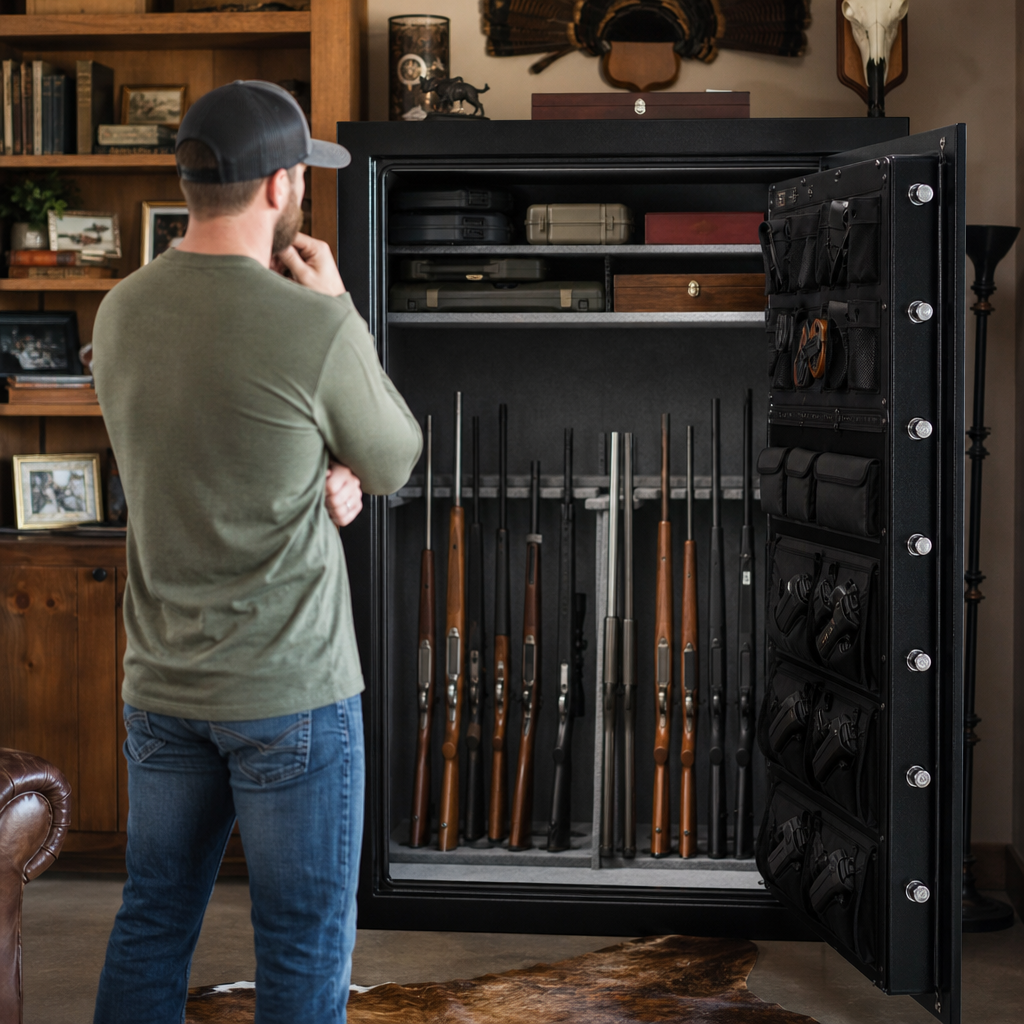
Choosing the best gun safe starts with understanding who you are as a buyer, because the right safe for a first-time handgun owner is rarely the right safe for a collector, hunter, competitive shooter, or family focused on child safety. Gun safe buyer personas are practical profiles that group owners by storage needs, risk level, firearm count, home layout, access speed, and budget. I have helped buyers compare dozens of models in showrooms and on installations, and the same pattern appears every time: people shop by brand first, then realize too late that capacity, lock style, fire rating, and placement matter more than the logo on the door. This buyer persona breakdown matters because a gun safe is not just a metal box; it is part burglary deterrent, part safety device, part environmental control system, and part daily-use access point. If you match the safe to your real habits, you protect firearms better, reduce unauthorized access, and avoid spending money twice.
At a basic level, a gun safe is a secure storage container designed to resist forced entry and limit unauthorized access to firearms. In the market, you will also see residential security containers, pistol vaults, modular safes, cabinet-style lockers, and fire-resistant safes. The distinctions are important. A heavy long-gun safe with multiple locking bolts may suit a basement installation, while a bedside handgun vault with biometric access may fit a defensive use case better. Some buyers need fire protection for paper records and optics; others need rust control in a humid garage. Some need discreet closet installation in an apartment, while others can anchor a 1,000-pound safe on a concrete slab. The best gun safe for you depends on what you own today, what you may own in five years, and how quickly you may need access in an emergency.
This hub article explains the major gun safe buyer personas and the selection criteria that matter most for each one. It covers new owners, apartment dwellers, parents, collectors, hunters, tactical users, and value-focused shoppers, then ties those needs to practical safe features such as steel gauge, locking mechanism, interior layout, bolt-down options, and dehumidification. Think of it as the top-level map for the entire Gun Safes & Safety subtopic. From here, you can branch into deeper pages on fire ratings, gun safe sizes, biometric versus mechanical locks, installation, and humidity control. If you want a direct answer before reading further, here it is: the best gun safe is the one sized for future growth, anchored properly, matched to your access needs, and built strongly enough to delay the kind of attack most likely in your home. Everything else is detail, but the detail determines whether you end up satisfied or frustrated.
The First-Time Firearm Owner Persona
The first-time owner usually needs a simple answer: what gun safe should I buy if I only own one or two firearms today? In most cases, the best choice is not a full-size safe marketed with an inflated long-gun count, and it is not a bargain cabinet with thin steel and weak lockwork. It is a compact, purpose-built safe that fits the firearm type, your living space, and your actual use pattern. For a single defensive handgun, a quick-access handgun safe from Vaultek, Fort Knox, Hornady, or V-Line often makes more sense than a large safe in the garage. For one rifle and one shotgun, a small anchored safe with a mechanical or electronic lock may be the better fit.
New owners often underestimate three things: mounting, access method, and growth. A lightweight safe that is not bolted down can be removed by two people in minutes. A biometric lock may seem convenient, but quality varies sharply by model, sensor cleanliness, and enrollment quality. Capacity claims are also optimistic. A “12-gun safe” may comfortably store six scoped rifles with slings, documents, and a few handguns. I usually advise first-time buyers to purchase one tier above their current collection size and to leave room for accessories, spare magazines, hearing protection, and paperwork. That approach costs slightly more upfront and usually prevents an early replacement.
The Parent and Child-Safety Persona
For households with children, the primary question is not only how to stop theft, but how to prevent unauthorized handling under normal daily conditions. The best gun safe for this persona balances secure storage with predictable, repeatable access for the adult user. A parent with a home-defense handgun may need a dedicated bedside quick-access vault plus a separate main safe for long guns, ammunition, and rarely used firearms. This two-safe setup is common because one safe rarely does both jobs well. Fast access and high-capacity storage are different problems.
Parents should prioritize lock reliability, tamper resistance, and storage habits over marketing claims. Mechanical Simplex-style locks remain highly respected because they require no batteries and have long service records. Electronic keypad safes can also work well when built by established manufacturers and maintained properly. Biometric safes are best treated as convenience tools, not magic. They should have a backup keypad or key override and should be tested regularly with the same conditions present at night: low light, dry or sweaty hands, and stress. If children are present, ammunition storage should be intentional. Some families store loaded defensive firearms in fast-access vaults and keep all other guns unloaded in the main safe, with ammunition organized on separate shelves or lockable interior compartments. Consistency matters more than a perfect theoretical system.
The Apartment, Condo, and Limited-Space Persona
Apartment and condo owners face constraints that suburban homeowners often ignore: floor loading, visibility during delivery, noise transmission, landlord rules, and the inability to anchor into concrete in an ideal location. For this buyer persona, the best gun safe is often a smaller, heavier-than-it-looks unit placed discreetly in a closet, utility room, or built-in space. Modular safes such as those from Zanotti have a loyal following because they can be moved in sections through narrow stairwells and assembled inside the unit. Under-bed safes and vertical closet safes also solve real urban storage problems when full-size safes are impractical.
The tradeoff is straightforward. Smaller safes are easier to conceal but may offer less steel mass, less fire protection, and less long-term capacity. In apartments, concealment becomes part of the security plan. A safe hidden behind clothing in a closet or integrated into cabinetry may avoid attention from maintenance workers, guests, or movers. Weight still matters, because even in small formats, heavier steel and better door construction raise the effort required for a smash-and-grab theft. If bolting down is limited, buyers should favor designs that can at least be anchored into wall studs, a subfloor with reinforcement, or a heavy platform that complicates removal. For urban owners, the best purchase is often not the biggest safe advertised, but the one that can be installed properly without attracting attention or violating building realities.
The Collector and Multi-Firearm Enthusiast Persona
Collectors shop differently because the safe is part storage system, part preservation environment, and part inventory control. If you own heirloom revolvers, scoped hunting rifles, AR-platform carbines, and paperwork such as tax stamps or appraisals, interior configuration matters almost as much as body strength. This buyer needs shelving flexibility, door organizers, pistol racks, and realistic spacing for optics and accessories. Premium brands such as American Security, Liberty, Browning, and Fort Knox are often considered because their interiors are more configurable and their steel, boltwork, and fit tend to exceed entry-level units.
Collectors should think in layers. The outer safe protects against theft and fire. Inside that envelope, humidity control protects bluing, wood stocks, leather slings, and optics. A GoldenRod-style heater, rechargeable desiccants, and a hygrometer are not extras in humid climates; they are standard operating equipment. Insurance documentation also belongs in the plan. I have seen owners spend thousands on safes and almost nothing on serial-number records, photographs, and off-site digital backups. That is backward. A collector should maintain an updated inventory and review policy limits for firearms, because standard homeowners insurance may cap coverage well below the collection value.
| Buyer Persona | Best Safe Type | Top Priority | Common Mistake |
|---|---|---|---|
| First-time owner | Compact handgun or small long-gun safe | Proper fit and anchoring | Buying too small or too cheap |
| Parent | Quick-access vault plus main safe | Unauthorized access prevention | Trusting speed over reliability |
| Apartment dweller | Modular, closet, or under-bed safe | Discreet installation | Ignoring move-in and floor limits |
| Collector | Large configurable safe | Capacity and preservation | Believing stated gun counts |
| Hunter | Mid-size rust-resistant safe | Long-gun organization | Skipping humidity control |
| Defensive user | Fast-access handgun safe | Reliable entry under stress | Overrelying on weak biometrics |
The Hunter and Field-Use Persona
Hunters usually need practical long-gun storage that accounts for mud, moisture, soft cases, optics, and seasonal access. The best gun safe for this persona is often a mid-size or large safe with enough depth for scoped rifles, enough height for shotguns, and enough shelf space for binoculars, rangefinders, choke tubes, and hunting documents. This group often stores firearms in garages, mudrooms, or outbuildings, which makes corrosion control especially important. Even a well-built safe can trap moisture if wet gear is put away carelessly.
For hunters, I recommend evaluating interior width honestly and adding dehumidification on day one. Wide fore-ends, bolt handles, and mounted optics reduce capacity quickly. A safe that seems oversized in the store can feel cramped by deer season. Door organizers are useful for handguns and accessories, but they should not create pressure points against long guns stored inside. Hunters also benefit from easy-clean interiors and elevated placement if the safe is installed in an area vulnerable to water intrusion. A modest platform can protect against minor flooding and make cleaning easier. In real use, the best hunting safe is not the flashiest model on the floor; it is the one that keeps rifles dry, organized, and accessible before dawn without turning every retrieval into a juggling act.
The Defensive, Tactical, and Quick-Access Persona
This buyer persona is focused on rapid access, often for a home-defense handgun, patrol-style rifle, or staged firearm in a controlled location. The key question is simple: how fast can you open the safe under stress, in darkness, and with one hand if necessary? That is why lock choice matters more here than almost anywhere else. Mechanical pushbutton locks, proven electronic keypads, and high-quality RFID systems can all work. What does not work is assuming every biometric reader is equally dependable. In testing and customer feedback, the gap between premium and low-cost biometric units is obvious.
Speed must not erase security. A thin bedside box with a weak latch may stop a child from casually opening it, but it may not resist prying tools for long. Defensive users should look for reinforced lids or doors, protected hinges, interior lighting, silent mode options, and mounting points that secure the unit to furniture or structure. If storing a defensive long gun, vertical quick-access safes from brands like SecureIt and Hornady can provide a balance between deployment speed and retention. The deciding factor is your routine. If you access the safe every day, the interface must be consistent and low-friction. A safe that is theoretically secure but annoying to use often ends up misused, left open, or bypassed entirely.
The Value-Focused and Budget-Conscious Persona
Budget shoppers are not wrong to care about price; they simply need to understand where savings are acceptable and where they become false economy. The best affordable gun safe is the one that protects against your most likely risk without pretending to be a commercial vault. Many entry-level safes sold through warehouse stores and sporting-goods chains are residential security containers, not high-security safes. That does not make them useless. When anchored properly and kept out of sight, they can provide meaningful protection against unauthorized access and opportunistic theft.
The smart budget approach is to spend on the basics that change outcomes: thicker steel where possible, solid bolt-down hardware, a reliable lock from a known manufacturer, and enough size to avoid immediate replacement. Fancy interiors, glossy paint, and oversized external hinges matter less. Fire ratings also deserve scrutiny. Because manufacturers use different test methods, the published number is not always apples to apples. Look for details on test temperature, duration, and whether the rating comes from an independent standard or in-house method. Budget buyers who understand these tradeoffs often make better decisions than prestige buyers who rely on branding alone.
How to Match Your Persona to the Right Specifications
Once you know your buyer persona, the selection process becomes concrete. Start with capacity based on actual firearm dimensions, not catalog gun counts. Then evaluate steel thickness, door construction, lock type, fire performance, anchoring, and environmental control. In general, thicker steel slows pry and cut attacks, stronger door frames resist flexing, and proper anchoring prevents removal of the entire safe. Fire protection helps, but it is not absolute. Most gun safes are designed to resist heat for a period, not guarantee survival under every fire condition. Placement affects all of this. A safe on a concrete slab in a low-visibility room usually performs better in both theft and fire scenarios than one displayed prominently in a garage.
Ask direct questions before buying. Where will the safe go? Who needs access? How fast is fast enough? What is the humidity level in that room? Will scoped rifles, suppressors, or documents share the same interior? Can the floor support the loaded weight? What happens if the keypad fails at midnight? Those questions separate a good purchase from an expensive compromise. Use this hub as your starting point, then move deeper into related guides on sizing, lock types, fire ratings, installation, and moisture control. The best gun safe for you is the one aligned with your persona, your home, and your habits. Define those clearly, compare models honestly, and buy once with a plan.
A well-chosen gun safe reduces risk every day you own firearms. It helps prevent unauthorized access, slows theft, protects valuables, and brings order to equipment that can otherwise become difficult to manage safely. The main takeaway from this buyer persona breakdown is that there is no universal best gun safe. There is only the best fit for your collection size, living situation, access needs, and long-term plans. First-time owners need right-sized simplicity. Parents need layered storage. Apartment dwellers need discreet installation. Collectors need capacity and preservation. Hunters need organization and moisture control. Defensive users need dependable speed. Budget shoppers need honest priorities.
If you remember one rule, make it this: buy for your real use case, not for marketing claims. Ignore inflated firearm counts, question vague fire ratings, and do not sacrifice anchoring or lock quality to save a small amount upfront. A safe should match the way you live and the way you will actually store, retrieve, and maintain your firearms. Use this hub to identify your persona, then continue into the connected articles in the Gun Safes & Safety section to compare sizes, locks, installation methods, and humidity-control options. The right next step is simple: list your firearms, measure your space, define your access needs, and choose a safe built for the life you actually have.
Frequently Asked Questions
How do I figure out which gun safe buyer persona fits me best?
The easiest way to identify your buyer persona is to start with how you actually use your firearms, not how you think you might use them someday. A first-time handgun owner usually needs something very different from a collector with long guns, optics, documents, and heirloom pieces. Think through five practical factors: how many firearms you own today, how quickly you need access, who lives in the home, where the safe will go, and how much risk you are trying to reduce. For example, a bedside handgun owner may prioritize fast entry and compact size, while a hunter may need room for scoped rifles, gear storage, and enough flexibility to handle seasonal use. A family with children often places the highest value on consistent lock discipline, pry resistance, and preventing unauthorized access in a shared home environment.
It also helps to think in terms of likely growth. Many buyers shop for their current needs and outgrow the safe much faster than expected. If you are new to ownership but already plan to add firearms, magazines, paperwork, and valuables, it often makes sense to buy one size larger than you think you need. Your home layout matters too. Apartment dwellers may need a lighter, smaller safe that can fit in a closet, while a homeowner with a garage or dedicated room may be able to install a larger, heavier model with better long-term capacity. The best persona match is the one based on your routine, your risks, and your space, because the right safe should support the way you live rather than force you into a storage solution that does not fit.
Is a fast-access handgun safe enough, or do I need a full-size gun safe?
A fast-access handgun safe is enough if your needs are narrow and clearly defined. If you own one or two handguns, want secure access near the bed or in a closet, and your main concern is preventing unauthorized access while still being able to retrieve the firearm quickly, a quality handgun safe may be the smartest choice. This is especially true for first-time owners, apartment residents, and people who do not yet have long guns or a growing collection. A good fast-access safe can be compact, discreet, and practical for daily use. It is often the right fit for people whose primary use case is defensive storage rather than long-term collection management.
That said, many buyers eventually discover that a handgun safe solves only one part of the problem. Once you add additional firearms, ammunition, passports, cash, jewelry, hard drives, or legal paperwork, the limitations become obvious. A full-size gun safe is often the better investment for collectors, hunters, competitive shooters, and anyone expecting their inventory to grow. It typically offers more theft resistance, better internal organization, room for accessories, and stronger fire protection options. In many homes, the smartest setup is actually both: a larger main safe for bulk storage and a fast-access handgun safe for defensive readiness. If your lifestyle includes both security and speed, combining the two often provides the best balance.
What features matter most for families with children in the home?
For families, the most important feature is reliable access control. That means a safe that remains locked when it should, opens consistently for the authorized adult, and cannot be easily manipulated, tipped, or left unsecured through bad habits. In real-world terms, this usually means looking for a solid locking system, a design that can be bolted down, and a size that fits the home without being placed in a high-traffic area where curious children are constantly around it. Families should also pay attention to daily usability. If the safe is frustrating to open or inconveniently placed, people are more likely to cut corners, and that is where safety breaks down.
Interior layout matters more than many buyers expect. A safe that separates loaded defensive firearms from other items can help create a more organized and safer routine. Some families prefer a larger primary safe in a master closet, office, or secured room, along with a secondary quick-access unit for one defensive handgun. This keeps the majority of firearms locked away while still allowing emergency access for a responsible adult. Mechanical integrity and anchoring are also crucial, because children do not have to defeat a lock for a bad situation to happen if a lighter container can be moved, tampered with, or opened due to user error. For a family-focused buyer persona, the best safe is one that supports consistent safe storage habits every single day, not just one with impressive marketing claims.
How much gun safe capacity do I really need if I plan to grow my collection?
Most buyers need more capacity than they initially estimate. Manufacturer ratings are often optimistic and may count tightly packed firearms without accounting for scopes, slings, wider stocks, door organizers, documents, handguns, or shelf use. If a safe is labeled for a certain number of long guns, real-world capacity can be significantly lower once you start storing modern rifles, optics, ammunition, and valuables. That is why growing collectors, hunters, and competitive shooters are usually better served by sizing up early. Buying too small often leads to overcrowding, poor organization, and the need to replace the safe sooner than expected.
A practical rule is to think in terms of storage categories rather than firearm count alone. Ask yourself how many long guns you own, how many handguns need secure storage, whether you want room for optics and range gear, and whether the safe will also hold documents or valuables. If you expect your collection to expand over the next few years, choose a safe with meaningful extra space instead of just enough room to fit today’s inventory. This is especially important for buyers who attend shows, inherit firearms, rotate seasonal hunting setups, or regularly add accessories. More capacity usually means easier organization, better protection for each firearm, and a longer useful life from the safe. In most cases, buyers regret outgrowing a safe far more often than they regret buying one slightly larger.
What should I prioritize first: security, fire protection, speed of access, or budget?
The answer depends on your buyer persona, because those priorities shift based on your risks and daily use. If your main concern is defensive readiness for a home protection handgun, speed of access may come first, as long as the safe still provides real unauthorized-access prevention. If you own several firearms and want to reduce theft risk, structural security, lock quality, weight, and bolt-down capability usually move to the top of the list. If you are storing irreplaceable documents, heirlooms, or valuable collections, fire protection becomes a more important part of the equation. Budget matters for everyone, but it should guide your options rather than decide the category outright. A cheap safe that does not match your actual needs can cost more in the long run if it fails to provide the protection, capacity, or convenience you require.
The smartest approach is to rank your priorities in order and shop accordingly. For example, a first-time owner may accept less storage space in exchange for dependable quick access and a manageable price. A collector may accept slower access in exchange for thicker construction, better organization, and room to expand. A parent may place daily lock reliability and secure installation above nearly everything else. In practical buying situations, there is rarely one universal “best” safe. There is only the best safe for your risk level, your routine, your household, and your budget. When you choose based on those real-life factors, the decision becomes much clearer and the safe is far more likely to serve you well for years.