
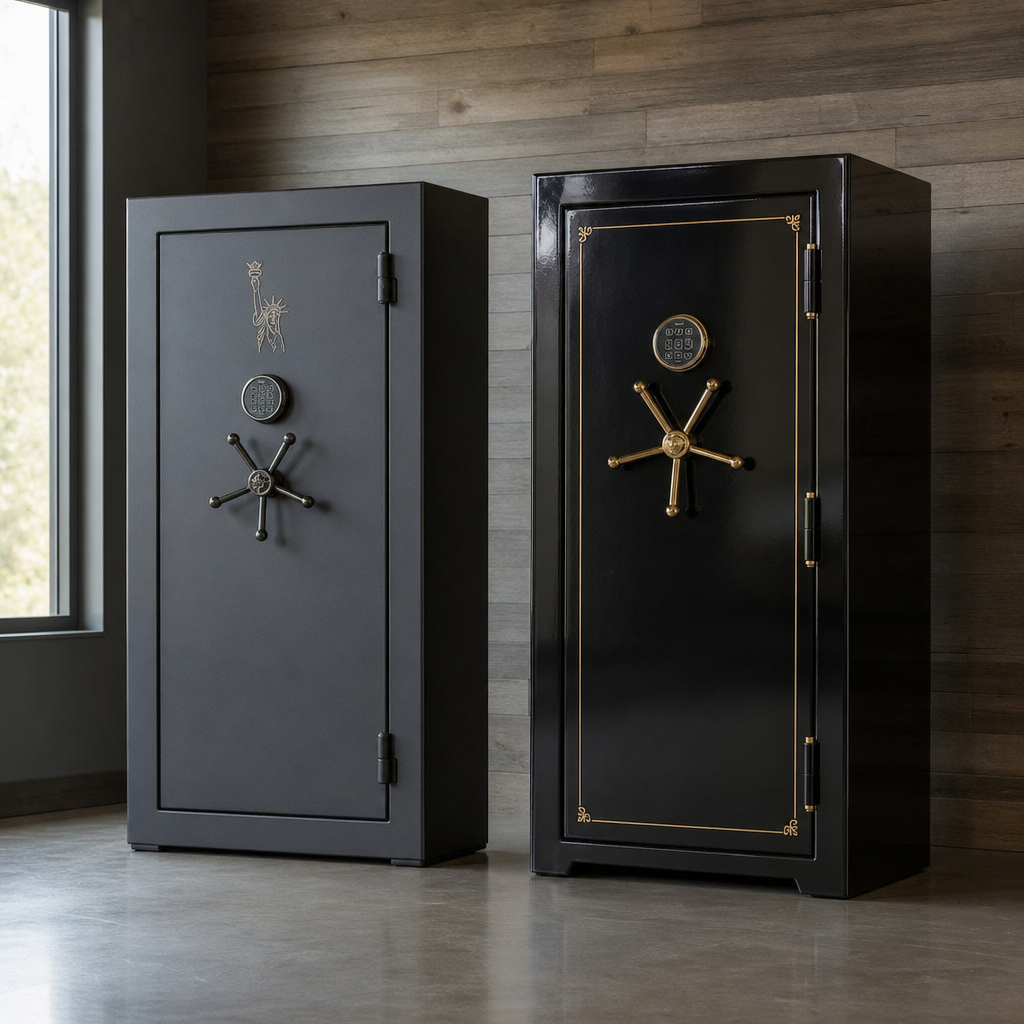
Choosing between Liberty and Fort Knox starts with a simple question: what kind of protection do you actually need from a gun safe? Both brands are prominent names in the American safe market, and both sell products aimed at gun owners who want burglary resistance, fire protection, organized storage, and long-term durability. Yet they approach those goals differently. Liberty generally offers a broader ladder of models and price points, while Fort Knox has built its reputation on heavier customization, thicker steel options, and a more bespoke buying process. For buyers comparing Liberty vs. Fort Knox, the right answer is rarely about brand loyalty alone. It depends on construction details, lock options, interior layout, warranty support, delivery realities, and the threat profile in your home.
In my experience evaluating safes for homeowners, collectors, and first-time buyers, the biggest mistake is comparing headline numbers without understanding what they mean. Terms like “12-gauge steel,” “fire rating,” “composite door,” and “UL-listed lock” sound straightforward, but they are often interpreted differently across brands and model lines. A gun safe is not a vault door, and no residential gun safe is invulnerable. The practical goal is layered protection: delay forced entry, resist opportunistic attacks, protect contents from typical house fires long enough for fire crews to respond, and keep unauthorized users out. This article serves as a hub for gun safe comparisons and brand spotlights by using Liberty and Fort Knox as the central matchup, then showing how to judge similar brands with the same framework.
Liberty Safe is widely known for accessible product segmentation, from entry-level and midrange safes to premium models with stronger construction and upgraded fire packages. Fort Knox is known for domestic manufacturing, higher-end build options, and the ability to configure steel thickness, liners, lock styles, and interiors with more flexibility than most mainstream brands. That distinction matters. If you want a safe that is easy to shop, easy to price, and available through many dealers, Liberty often has the advantage. If you want to spec out a safe more like a custom security product, Fort Knox usually stands out. Protection, however, is not decided by marketing categories. It is decided by steel thickness, door design, locking bolt engagement, relocker systems, anchoring, and whether the safe is sized and installed correctly.
For anyone researching gun safe comparisons and brand spotlights, this head-to-head matters because it teaches the core buying criteria that apply across the category. Once you can evaluate Liberty vs. Fort Knox properly, you can also compare Liberty vs. Browning, Fort Knox vs. AMSEC, or Cannon vs. Winchester with much more confidence. The sections below break down real protection differences in plain language so you can choose the safe that fits your risk level, collection size, and budget.
Steel construction and burglary resistance
The first protection question is always burglary resistance. In residential gun safes, steel thickness is one of the clearest indicators of how much abuse a cabinet can absorb before tools start winning. Liberty and Fort Knox both use formed steel bodies with reinforced doors, but Fort Knox has long emphasized heavier steel and more configurable body upgrades. On many Fort Knox models, buyers can step up body steel thickness or add liners that materially increase resistance to pry attacks and cutting. Liberty offers stronger and weaker constructions depending on the line, so model selection matters more than brand name alone.
Gauge numbers can confuse buyers because lower gauge means thicker steel. For example, 10-gauge steel is thicker than 12-gauge, and 7-gauge is thicker still. In practical terms, heavier steel bodies resist sidewall attacks, prying, and deformation better, especially when the safe is anchored to concrete and cannot be tipped easily. Door construction is equally important. A thicker door plate, better edge reinforcement, and strong bolt engagement on multiple sides increase the time and noise required for entry. Relockers also matter. These are devices designed to trigger if the lock is punched or attacked, helping keep the boltwork secured even after a direct assault on the lock area.
| Comparison Factor | Liberty | Fort Knox |
|---|---|---|
| Model range | Broad lineup from entry level to premium | Primarily premium with extensive custom options |
| Steel flexibility | Varies by series, fewer buyer-configured upgrades | Strong emphasis on selectable body and door upgrades |
| Dealer shopping experience | Easier to compare standardized models | More consultative, often configuration-driven |
| Best fit | Buyers balancing budget, features, and availability | Buyers prioritizing heavier build and customization |
When I inspect safes in showrooms, the difference often becomes obvious before looking at the spec sheet. Heavier doors swing with more mass, body panels flex less under pressure, and upgraded Fort Knox builds tend to feel closer to a true security product than a furniture-grade cabinet. That said, a premium Liberty can outperform an entry-level competitor from another brand, and a poorly installed heavy safe can still be vulnerable. For most households, the practical takeaway is this: if burglary resistance is your top priority and your budget allows it, Fort Knox often holds the edge because of steel and upgrade potential. If you are shopping midrange and want solid protection without moving into fully customized pricing, Liberty can be the better value.
Fire protection ratings and real-world limitations
Fire protection is the second major factor, and it is also the area where buyers are most likely to misunderstand marketing. Most gun safe fire ratings are manufacturer ratings rather than independent performance standards equivalent to a true data or media safe certification. That does not mean they are meaningless, but it does mean they should be read as comparative guidance, not guarantees. Liberty and Fort Knox both offer fire protection packages that use insulation layers, heat-expanding door seals, and reinforced door gaps to slow heat transfer into the interior.
The key variables are duration, maximum external temperature, insulation type, and how the safe is constructed around seams and door edges. A rating such as “90 minutes at 1200 degrees” sounds precise, but actual house fires vary dramatically by fuel load, ventilation, room location, and structural collapse. A safe in a garage may experience a different fire pattern than one on a first floor interior wall. In real use, placement matters as much as the published rating. Safes positioned on concrete slabs, away from accelerants, and not directly under high-collapse zones tend to fare better.
Liberty has built much of its mainstream appeal around understandable fire-rating ladders across its product lines, which makes shopping simpler. Fort Knox usually gives buyers more flexibility in matching insulation packages to a higher-security build, though pricing rises quickly. Neither brand should be treated as equivalent to a commercial record safe designed for sensitive documents or digital media. If your safe will hold passports, legal papers, hard drives, or irreplaceable photos, use dedicated document pouches, media-rated containers, or a separate certified document safe inside the gun safe. For firearms, both brands can provide meaningful fire delay; for paper and electronics, buyers should be more cautious and more specific.
Locks, access speed, and user error risk
A gun safe only protects what it can reliably keep locked, and lock choice influences both security and daily usability. Liberty and Fort Knox commonly offer electronic and mechanical lock options, often from established lock makers such as Sargent and Greenleaf or SecuRam, depending on model and dealer specification. A quality mechanical dial lock remains the benchmark for long-term durability and minimal electronic failure points. It is slower to open under stress and less convenient for frequent access, but it is time-tested. Electronic keypad locks are faster and easier for most households, though they add batteries, circuitry, and a greater chance of user-related issues such as dead batteries, forgotten codes, or damaged keypads.
In homes where the safe is opened regularly, convenience matters more than many buyers admit. A safe that is frustrating to open often gets left unlocked or used inconsistently, which defeats the purpose. For that reason, I often recommend electronic locks for active-use safes and mechanical locks for long-term storage safes, assuming the electronic lock is from a reputable manufacturer and the owner follows battery replacement discipline. Fort Knox buyers often appreciate the wider customization culture around lock types and finishes, while Liberty buyers benefit from easier packaged configurations. The security difference between the brands is usually less about the lock brand than about proper installation, boltwork design, and whether the lock is paired with relockers and a reinforced hardplate.
If quick defensive access is your primary goal, neither a large Liberty nor a large Fort Knox gun safe should replace a dedicated quick-access bedside safe for a home-defense handgun. Full-size gun safes are best viewed as primary storage and collection protection, not instant-access defensive devices.
Interior storage, fit, and long-term ownership
Capacity claims on gun safes are notoriously optimistic. A “30-gun safe” may not hold 30 modern rifles with optics, slings, bipods, and staggered stock shapes in any orderly way. This is one area where both Liberty and Fort Knox require realistic planning. Adjustable interiors, door organizers, handgun racks, shelving kits, and dehumidification accessories often make a bigger difference in day-to-day satisfaction than a small change in published capacity. Fort Knox tends to appeal to owners who want more control over interior configuration from the start. Liberty often appeals to shoppers who want a practical, dealer-ready setup that can be expanded with accessories later.
Long-term ownership also includes finish durability, hinge quality, service support, and moving logistics. A heavier, larger safe may offer better protection but can be harder to place in upstairs rooms, older homes, or tight stairwells. Delivery by an experienced safe mover is not optional for premium models; it is part of the security investment. Anchoring is equally critical. Even a strong safe becomes more vulnerable if thieves can tip it over and attack weaker areas with pry bars or grinders. The best practice is anchoring to concrete whenever possible and using proper hardware that matches the floor material and safe design.
Humidity control is another overlooked issue. In many climates, a gun safe needs a desiccant system, electric dehumidifier rod, or both. Rust damage is slow, expensive, and preventable. Whether you buy Liberty or Fort Knox, plan for moisture management, inventory documentation, and enough extra capacity for future purchases. Most gun owners outgrow a safe faster than they expect.
Price, warranty, and which brand fits which buyer
Price is where Liberty often becomes the easier recommendation for mainstream buyers. The brand typically offers clearer good-better-best pathways, broad dealer availability, and more approachable entry points. Fort Knox usually commands more money, especially once buyers add thicker steel, upgraded interiors, and enhanced fire protection. In return, you often get a more heavily built and more personalized safe. For some buyers, that premium is justified immediately. For others, it pushes them into a size tier they can no longer afford, which can be a mistake if it means buying too little capacity.
Warranty support matters because lock failures, shipping damage, and moving incidents do happen. Buyers should read the written warranty, not just the brochure summary. Pay attention to lock coverage, fire replacement terms, break-in damage terms, and whether labor, freight, and locksmith service are included. Dealer quality matters almost as much as brand quality. A strong local dealer can help with specification, delivery, anchoring, and service years after the sale.
So, which gun safe brand offers better protection? If the comparison is between similarly premium configurations, Fort Knox usually has the edge in raw burglary resistance because of heavier-build options and a customization-first approach. If the comparison includes overall market accessibility, shopping simplicity, and value across multiple price tiers, Liberty is often the stronger all-around choice. That is why this Liberty vs. Fort Knox guide works as a hub for gun safe comparisons and brand spotlights: it shows that the best brand is the one whose specific model matches your threat level, storage needs, and installation reality.
The smart next step is to compare exact models, not logos. Check steel gauge, lock type, fire package, interior layout, exterior dimensions, weight, warranty language, and anchoring plan. Then visit a dealer and handle the safes in person. When you compare them that way, the right answer becomes much clearer, and you are far more likely to buy a safe that protects your firearms well for decades.
Frequently Asked Questions
1. Which brand generally offers better burglary protection: Liberty or Fort Knox?
Burglary protection depends less on brand reputation alone and more on the specific construction details of the model you are comparing, but in many head-to-head matchups, Fort Knox is often viewed as the stronger option for buyers prioritizing raw physical security. That reputation comes from its emphasis on heavier steel, robust door construction, reinforced bodies, and extensive customization that allows owners to step up protection levels beyond standard configurations. In practical terms, more steel usually means more resistance to prying, bending, punching, and cutting, all of which matter in a real-world break-in attempt.
Liberty, however, should not be dismissed. The company offers a wide range of gun safes that move from entry-level models into more security-focused lines, giving buyers more flexibility across price points. Some Liberty safes are designed to make serious protection more accessible to the average homeowner, especially those who want a recognizable brand, practical storage, and balanced features without jumping immediately into a premium custom build. If your comparison is between a mid-tier Liberty and a similarly priced Fort Knox, the answer may come down to steel thickness, door design, locking mechanism, bolt coverage, and whether the safe is properly anchored rather than the logo on the door.
The best way to evaluate burglary protection is to compare objective specifications: body steel gauge, door plate thickness, the number and size of locking bolts, relocker systems, hard plate protection around the lock, hinge-side protection, and anchoring capability. Fort Knox often appeals to buyers who want to push those specs upward. Liberty often appeals to buyers who want a broader mix of security, fire rating, capacity, and affordability. So if maximum anti-theft resistance is your top goal and budget is less restrictive, Fort Knox frequently has the edge. If you want solid protection with more model variety and pricing options, Liberty may be the better fit.
2. Are Liberty safes or Fort Knox safes better for fire protection?
Fire protection is one of the most misunderstood parts of safe shopping because advertised fire ratings are not always directly comparable from one brand to another. Both Liberty and Fort Knox offer models with meaningful fire protection, but the better choice depends on how much confidence you want in the insulation system, seal design, and the testing standard behind the rating. A stated fire rating by itself does not tell the whole story. You need to know the temperature, the duration, whether the safe was tested as a complete unit, and whether the interior stayed below the threshold that can damage firearms, optics, documents, and valuables.
Liberty has built a strong market presence partly because it offers many models with clearly marketed fire protection features at different price levels. That makes it easier for shoppers to choose a safe that balances fire resistance and affordability. Fort Knox also offers serious fire protection, especially on upgraded and custom-configured safes, but its approach often aligns with its broader premium strategy: build a stronger platform and allow the buyer to tailor the final package. For some users, that means better control over what they are paying for. For others, it means more decisions and potentially a higher final cost.
In real-world terms, neither brand can guarantee absolute protection in every fire scenario, especially in prolonged, high-intensity structure fires or where water, collapse, and heat exposure exceed standard test assumptions. If fire protection is your main concern, focus on the details: insulation layers, door seals that expand under heat, interior temperature performance, and how the rating was determined. Also remember placement matters. A safe in a climate-controlled interior room may perform differently than one installed in a garage or near combustible materials. Liberty often stands out for giving average buyers a straightforward path to decent fire protection. Fort Knox may stand out for those who want to combine strong fire resistance with heavier-duty construction and custom options.
3. Is Fort Knox worth the higher price, or does Liberty offer better overall value?
This is really the central buying question for many shoppers, and the answer depends on whether you define value as the lowest upfront cost, the best mix of features for the money, or the highest level of long-term protection. Fort Knox is often considered worth the premium by buyers who want a safe built around heavier materials, upgraded security options, and a more customized ownership experience. If you are protecting a large firearm collection, high-end optics, NFA items, heirlooms, or other valuables where replacement would be extremely costly or impossible, paying more for stronger construction may be entirely justified.
Liberty often wins on accessibility and product range. The brand gives buyers more entry points into the market, which is important because a properly installed safe you can afford today is usually better than an ultra-premium safe you postpone buying indefinitely. Liberty also tends to appeal to owners who want practical interior layouts, recognizable product tiers, and a predictable buying process. For many households, that combination translates into better overall value. You get meaningful protection, fire resistance, storage organization, and brand familiarity without moving immediately into a custom-price category.
Fort Knox becomes easier to justify as the value choice when your priorities are durability, steel mass, upgrade flexibility, and confidence against aggressive attacks. Liberty becomes easier to justify when your priorities are balanced performance, wider price selection, and a strong feature set for mainstream gun owners. In other words, Liberty often offers better value for cost-conscious buyers who still want reputable protection, while Fort Knox often offers better value for buyers who see a gun safe as a once-in-decades purchase and want to maximize security from the beginning.
4. Which brand is better for customization, storage layout, and long-term usability?
Fort Knox is widely known for customization, and that can be a major advantage if you have very specific storage needs or want a safe that feels tailored rather than off-the-shelf. Buyers who care about personalized interior configurations, exterior finishes, hardware, and upgraded structural features often gravitate toward Fort Knox because the brand is associated with a more build-to-preference approach. That matters if your collection includes long guns of different lengths, scoped rifles, handguns, documents, jewelry, and other valuables that need to coexist in one secure space. A more customizable safe can improve not only convenience but also actual protection, since a poorly organized safe leads to crowding, damage, and inefficient use of capacity.
Liberty, on the other hand, tends to offer practical, user-friendly interiors across a broad model lineup. For many owners, that is exactly what they need. They want adjustable shelving, door storage, space for long guns, and a layout that works without requiring a highly customized order process. Liberty’s broader catalog also means buyers can often choose a model size and feature set that already fits their needs reasonably well. That can make the buying experience faster and more straightforward, especially for first-time safe owners.
Long-term usability comes down to more than interior layout. Think about future growth in your collection, access speed, shelf flexibility, power outlets for dehumidifiers or lighting, and how well the safe will serve multiple purposes over time. One of the most common regrets among safe buyers is choosing a safe that is too small. In that respect, both Liberty and Fort Knox offer solutions, but Fort Knox may have the edge for buyers with highly specific requirements, while Liberty may be better for those who want a proven, convenient storage solution at a range of sizes and budgets. If customization is a top priority, Fort Knox usually stands out. If simplicity and broad availability matter more, Liberty is often the easier choice.
5. How should I decide between Liberty and Fort Knox based on my specific protection needs?
The smartest way to choose between Liberty and Fort Knox is to start with your risk profile instead of the brand names. Ask yourself what threats are most realistic in your situation. Are you mainly trying to keep firearms secure from children and casual theft? Are you worried about determined burglars with time and tools? Do you live in an area where house fires are a higher concern than break-ins? Are you storing just a few hunting rifles, or a substantial collection that includes expensive accessories and important documents? Once you answer those questions, the decision usually becomes clearer.
If your goal is a well-rounded gun safe from a major American brand with multiple price points, solid fire protection options, and broad dealer availability, Liberty is often the logical place to start. It serves a wide audience and makes it easier to find a model that fits common residential needs. If your goal is to emphasize heavier construction, upgraded anti-burglary features, and a more custom-configured safe designed around your exact priorities, Fort Knox may be the stronger match. That is especially true for buyers who are comfortable spending more in exchange for added steel, flexibility, and a premium feel.
It is also important to remember that protection is not just about the safe itself. Installation matters. Anchoring the safe to a concrete floor, placing it in a discreet location, limiting visibility to visitors or contractors, controlling humidity, and choosing an appropriate size all contribute to the real level of protection you get. In many homes, a properly anchored mid- to upper-tier safe from either brand will provide excellent practical security. So the final decision should be based on a full picture: your budget, threat level, storage needs, fire concerns, and whether you value broad product selection or higher-end customization. Liberty is often the better choice for balanced value and accessibility. Fort Knox is often the better choice for buyers who