
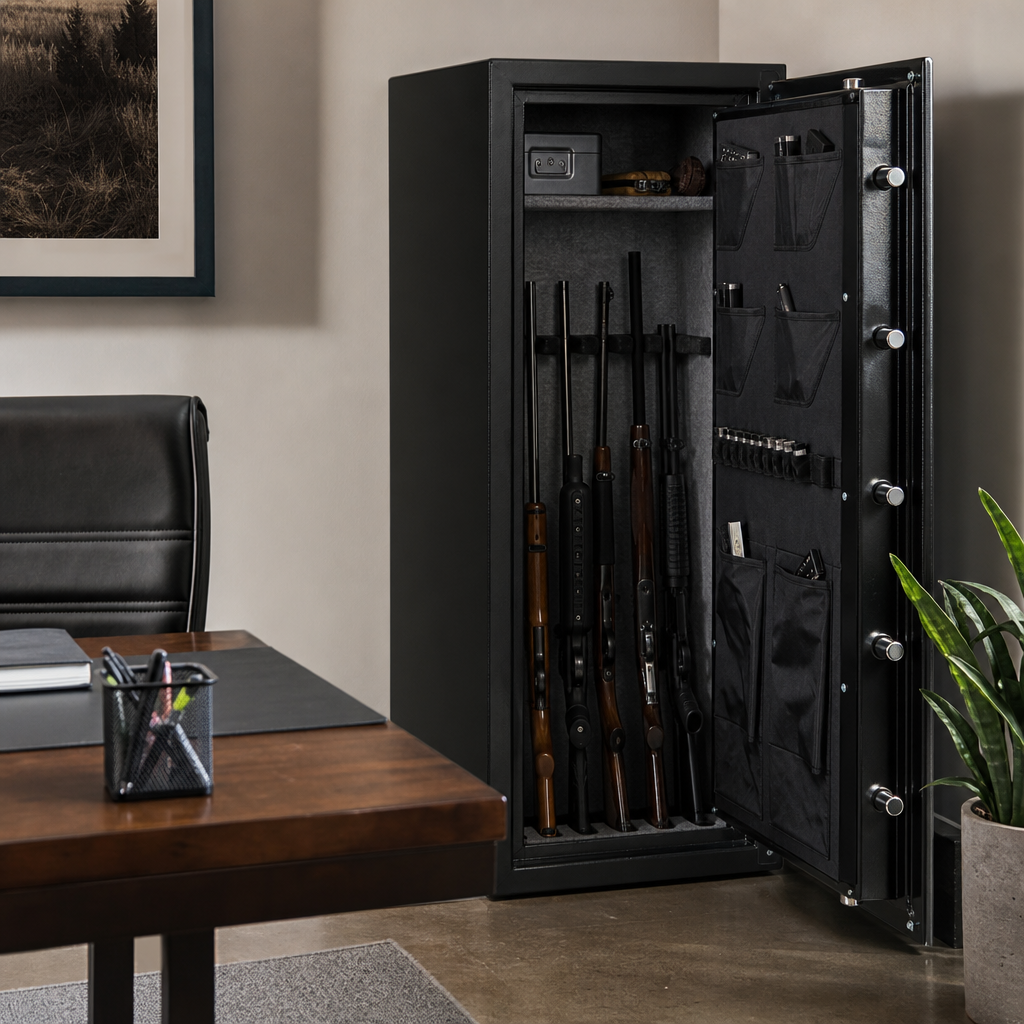
Choosing the best gun safe options for small business owners starts with understanding who is buying, what risks they face, and how different safes solve different problems. In the gun safes and safety category, buyer personas are practical profiles that group people by needs, constraints, and purchase triggers. For a small business owner, that might mean a jewelry store operator protecting a defensive handgun after hours, a ranch supply retailer securing long guns used for predator control, or a pawnbroker storing firearms inventory under strict access procedures. I have helped business owners evaluate safes for storefronts, mixed-use buildings, workshops, and home offices, and the wrong purchase usually comes from treating every buyer the same. A compact biometric pistol safe, a fire-rated cabinet, and a commercial burglary-rated unit can all be “good,” but only when matched to the right use case.
This matters because small businesses face a layered risk profile. They must prevent unauthorized access by employees, customers, cleaning crews, family members, and burglars while also balancing budget, floor space, insurance requirements, and daily workflow. Gun safe buyer personas make those tradeoffs easier to analyze. They clarify priorities like quick access versus delayed access, concealment versus visible deterrence, and portability versus anchoring strength. They also help business owners compare construction details that directly affect security, including steel gauge, lock type, bolt design, relocker systems, pry resistance, fire protection, and mounting method. A safe is not just a box with a lock. It is part of a broader firearms security plan that should include documented access rules, inventory control, alarm integration, surveillance coverage, and regular maintenance. When you understand the main buyer personas for small business owners, you can choose a safe that fits your operation instead of forcing your operation to fit the safe.
Why buyer personas matter when selecting a gun safe
Buyer personas matter because small business owners do not all secure firearms for the same reason. One owner may keep a single handgun on site for personal protection during opening and closing hours. Another may need to store multiple firearms, ammunition, and controlled accessories as part of normal business operations. The first buyer often values rapid access, discreet placement, and a smaller footprint. The second usually needs higher capacity, stronger organization, audit-friendly procedures, and better fire and theft resistance. Without a persona-based approach, shoppers overpay for features they will not use or underbuy and create avoidable security gaps.
In practice, personas improve decision-making by tying product features to real scenarios. For example, a florist working alone at dawn may need a compact handgun safe with biometric and keypad access mounted under a counter, while a rural feed store owner may need a larger long-gun safe in a back office with anchored installation and humidity control. The same concept applies to multi-location businesses, where the owner may standardize one safe type for satellite sites and use a heavier commercial-grade safe for the main location. Thinking in personas also supports internal linking and content planning across a buyer journey: entry-level pistol safes, fire-rated document-and-gun safes, commercial inventory safes, and compliance-oriented storage procedures all connect naturally from this hub topic.
The core gun safe buyer personas for small business owners
The most useful hub for gun safe buyer personas groups buyers by how they use firearms in a business setting. That approach is more accurate than broad labels like beginner or advanced. Below are the core personas I see most often when advising small businesses on firearm storage, along with the safe features that usually matter most.
| Buyer persona | Primary need | Best safe type | Key features to prioritize |
|---|---|---|---|
| Solo storefront owner | Quick defensive access | Compact handgun safe | Biometric plus keypad, steel housing, anchored mount, interior light |
| Retailer with staff | Controlled employee access | Mid-size burglary-resistant safe | User codes, audit trail, pry resistance, clear access policy |
| Rural operator | Long-gun and sidearm storage | Full-size gun safe | Rifle capacity, fire lining, dehumidifier, bolt-down hardware |
| Home-based business owner | Shared-space security | Concealed or closet-mounted safe | Compact footprint, child resistance, quiet access, fire protection |
| FFL or pawn business | Inventory protection | Commercial high-security safe | Heavy steel, hardplate, relockers, shelving, surveillance integration |
The solo storefront owner is common in boutiques, repair shops, and small offices. This buyer usually stores one handgun for lawful defensive use and wants the weapon secured during business hours without losing access speed. A quality handgun safe from brands such as Vaultek, Fort Knox, or Hornady can work well if it is anchored and placed out of customer sight. The best match includes redundant entry methods. Biometrics are convenient, but I recommend a keypad backup because fingerprints can fail with dirt, sweat, or cuts.
The retailer with staff has a more complex problem. Security is not only about burglars but also about internal control. If more than one person may access the firearm, the safe should support unique codes or at least clearly managed credentials. Some smart safes log openings through an app, which can be useful, but battery dependence and wireless risk need consideration. In higher-risk settings, a mechanical or commercial electronic lock from established lock makers such as Sargent and Greenleaf or SecuRam is usually more durable than consumer-grade smart features.
The rural operator often needs mixed storage: a ranch handgun, a truck gun after business hours, and perhaps one or two long guns used around the property. Capacity ratings can be misleading because manufacturers count tightly packed rifles without optics or slings. In real use, a “24-gun” safe may hold half that comfortably. For this persona, interior layout flexibility matters as much as shell strength. Adjustable racks, door organizers, and power ports for dehumidifiers often improve day-to-day value more than advertised capacity.
Home-based business owners need safes that function in dual-purpose spaces. They may meet clients in part of the home, have children present, or share rooms with household storage. A safe that disappears into a closet, cabinetry, or a reinforced utility room can reduce curiosity and lower theft risk. Fire protection is especially important here because the safe may also hold cash, records, backup drives, and legal paperwork tied to the business.
The FFL holder, firearms trainer, range operator, and pawnbroker sit at the high-security end of the spectrum. For these buyers, a residential gun safe may not be enough. Commercial burglary ratings, stronger body construction, inventory segregation, and documented key control become central. This persona often needs multiple layers: a hardened safe, monitored alarm, camera coverage, restricted room access, and written opening and closing procedures.
How to match safe features to each persona
The best gun safe options for small business owners come from matching construction and operational features to the persona’s actual threat model. Start with steel thickness. In general, lower gauge steel is thicker and stronger. Many entry-level residential gun safes use 14-gauge bodies, which are better than thin cabinets but still vulnerable to determined prying or cutting. Stepping up to 12-gauge or 10-gauge steel materially improves resistance. Door construction also matters because attackers usually target the door edge, lock area, and hinges rather than the body panels.
Next, evaluate lock systems. Mechanical dial locks are slower but proven and low-maintenance. Electronic keypad locks are faster and easier for shared access, provided they come from reputable manufacturers and are supported by a proper lock body. Biometric locks are useful for quick-access handgun safes but should not be the only credential method. In my experience, the best setup for a business-access handgun safe is biometric plus keypad, with a physical override only if the design is robust and the keyway is not easily exploited.
Fire protection is often misunderstood. Many residential safe brands publish fire ratings based on internal testing, not always a universal third-party standard. Ratings also vary by temperature threshold and duration. Paper chars around 451 degrees Fahrenheit, but digital media can fail at much lower internal temperatures. If the safe will protect both firearms and business records, ask what exactly the fire rating covers, how long the test lasted, and whether seals expand to block smoke. A modest fire rating is still useful, but buyers should understand its limits.
Anchoring is non-negotiable for most small business installations. Even a heavy safe can be tipped, pried, or removed with dollies if not bolted down. Concrete slab anchoring is generally best. In wood-frame floors, reinforcement may be needed to handle weight and resist pullout. Placement matters too. Tucking a safe into a corner or alcove reduces access for pry bars. Installing it where cameras see approach paths and where employees cannot casually observe combinations adds another layer of security.
Finally, think operationally. A safe is only as secure as the routine around it. Assign who can open it, when it can be opened, where firearms are handled, and how access changes when an employee leaves. For businesses with more than one authorized user, changing codes on a documented schedule is basic risk control. The right features support those habits rather than compensate for their absence.
Best gun safe categories for common small business scenarios
For a small office, boutique, or service counter, the best option is usually a compact handgun safe secured inside a drawer pedestal, cabinet, or under-counter location. This category works well when the firearm is intended for defensive access during vulnerable times such as opening, closing, cash handling, or after-hours paperwork. Look for 16-gauge steel or thicker in quick-access models, anti-pry tabs, tamper alerts, and interior lighting. Vaultek and Hornady RAPiD models are often considered here, though feature sets vary significantly by line.
For a workshop, warehouse office, or rural storefront, a mid-size to full-size gun safe is often the better fit. This category supports mixed storage and lets the owner secure firearms after transport or field use. Brands such as Liberty, Browning, AMSEC, Winchester, and Rhino offer options across price tiers. Buyers should compare body steel, door thickness, bolt count, lock brand, fire rating methodology, and included anchoring hardware rather than shopping by brand reputation alone.
For businesses storing firearm inventory or operating under elevated theft risk, a true commercial burglary-resistant safe is the strongest option. AMSEC, Hayman, Gardall, and similar manufacturers offer units with more serious protection than big-box residential gun safes. These products are heavier, more expensive, and often smaller internally for their external size because more of the structure is devoted to security material. That is a worthwhile tradeoff when the contents are high value or regulated.
A final category is the hidden or built-in safe for home offices and client-facing home businesses. Wall safes are space-efficient but limited by stud depth and usually weaker than equivalent floor or stand-alone units. In-floor safes provide concealment but can be less practical for long guns and may be vulnerable to moisture if poorly installed. For most home-based business owners, a compact anchored burglary-rated safe in a locked closet or reinforced room is a more balanced solution.
Mistakes small business owners make when buying a gun safe
The most common mistake is buying for price alone. A low-cost cabinet can organize firearms, but it is not equivalent to a safe. Thin sheet metal, exposed seams, and weak locking bars may deter casual access yet fail quickly against hand tools. Another common mistake is trusting inflated capacity claims. If optics, paperwork, handguns, magazines, and cash all need storage, the safe should be significantly larger than the initial estimate.
Owners also underestimate installation. Delivery path, stair loads, floor strength, and anchoring logistics should be planned before purchase. I have seen good safes lose effectiveness because they were placed where a door could not fully open, where surveillance had blind spots, or where an employee could watch the code being entered. Another avoidable error is relying on one security layer. A safe should work with alarms, lighting, cameras, and keyholder procedures, not replace them.
Legal assumptions create problems too. Storage laws and liability expectations vary by state and by business type. Employers should understand any local rules related to firearms on premises, employee access, negligent storage exposure, and insurance conditions. The safe purchase itself does not create compliance. Written policy and consistent training do.
How this hub supports the full gun safe buyer journey
As a sub-pillar hub under gun safes and safety, this page helps readers identify which buyer persona best describes their business and which detailed topic they should explore next. A solo owner comparing quick-access handgun safes can move to in-depth guidance on biometric versus keypad models, under-desk mounting, and daily readiness checks. A rural retailer can continue to content on long-gun storage, humidity control, and safe room placement. A regulated dealer can branch into commercial safe ratings, inventory security procedures, and alarm integration planning.
The central benefit of organizing this topic around gun safe buyer personas is clarity. Small business owners stop chasing generic “best gun safe” lists and start evaluating products against their own operating reality. That leads to better budgeting, better installation decisions, and safer daily use. If you are choosing a gun safe for your business, define your persona first, list your access and storage requirements, then compare safes by construction, lock quality, fire protection, and anchoring plan before you buy.
Frequently Asked Questions
What should a small business owner look for when choosing the best gun safe?
The best gun safe for a small business owner depends on the type of firearm being stored, the business environment, and the risks the owner is trying to reduce. A retailer who keeps a defensive handgun on-site after closing may need a compact, fast-access safe that fits in an office or behind a counter, while a rural business owner storing long guns for predator control may need a taller, heavier safe with more internal capacity. Start by evaluating the firearm type, how often it needs to be accessed, where the safe will be installed, and whether the main concern is theft, unauthorized employee access, fire protection, or a combination of all three.
Construction quality matters more than marketing language. Small business owners should pay close attention to steel thickness, lock type, door construction, pry resistance, and whether the safe can be securely bolted to the floor or wall. A safe that looks solid but uses thin metal and weak locking bolts may deter casual access but offer limited protection against a determined thief. Fire ratings are also worth reviewing, especially for businesses that store records, cash, or electronics near the firearm. While a fire rating does not make all safes equal, it can add an important layer of protection in commercial settings.
It is also smart to think beyond the purchase itself. Interior layout, shelving, lighting, dehumidification options, and room for future needs all affect long-term value. Many small business owners buy too little safe at first, then outgrow it. Choosing a model that balances access speed, durability, and expansion room often leads to a better investment. In short, the right safe is the one that fits the owner’s real-world workflow while improving security, compliance, and peace of mind.
Is a handgun safe enough for a business, or is a full-size gun safe a better option?
That depends on how the firearm is used and what the business needs to protect against. A handgun safe can be an excellent choice for small business owners who keep a single defensive pistol on-site and want quick, controlled access. In many office, storefront, and service-based settings, a compact handgun safe is practical because it can be installed discreetly in a desk, cabinet, back room, or secured drawer area. If it is built well and anchored correctly, it can do a very effective job of preventing unauthorized handling by employees, customers, cleaning crews, or visitors.
A full-size gun safe becomes a better option when the owner has multiple firearms, stores long guns, or needs more than quick access. It also makes sense when a business owner wants stronger theft resistance, additional storage for ammunition or important documents, or greater fire protection. For example, a ranch-related business, outdoor retailer, or owner in a remote area may keep rifles or shotguns on hand for pest or predator control. In that case, a larger safe is usually more appropriate than trying to force several security needs into a small handgun box.
Many small business owners ultimately benefit from matching the safe to the specific use case rather than assuming one size fits all. In some cases, the best setup is actually a combination: a quick-access handgun safe for immediate defensive use and a larger main safe for secure overnight storage of additional firearms and gear. The key is to avoid buying solely on size or price and instead focus on the actual security and access demands of the business.
How important is fire protection in a gun safe for small business owners?
Fire protection is often overlooked until a business owner starts thinking about everything that could be lost in a building fire. While theft prevention is usually the first reason people buy a gun safe, fire resistance can be just as important in a commercial setting. A firearm exposed to extreme heat, smoke, and water from fire suppression may be damaged beyond practical use, and if documents, backup drives, licenses, or cash are stored in the same safe, the loss can extend well beyond the firearm itself.
That said, fire ratings should be interpreted carefully. Not all ratings are tested the same way, and manufacturers may use different standards or internal testing methods. Small business owners should look for clear information about the temperature level, duration, and testing conditions rather than relying only on broad claims like “fireproof.” A safe with a meaningful fire rating and solid door seals can provide valuable extra time during an emergency, but it should still be viewed as one component of an overall risk management plan, not a guarantee against every fire scenario.
For businesses operating in standalone buildings, rural areas with longer fire department response times, or older structures with elevated fire risk, prioritizing fire protection makes even more sense. It is especially relevant if the safe will also hold sensitive business materials. In many cases, choosing a gun safe with both theft resistance and credible fire protection gives a small business owner broader value and better overall protection than focusing on one feature alone.
Where should a small business owner place a gun safe for the best security and access?
Placement is one of the most important decisions because even a high-quality safe can be less effective if it is installed in the wrong location. In general, the best place for a business gun safe is somewhere discreet, structurally secure, and appropriate for the owner’s access needs. For many small businesses, that means a private office, locked back room, utility area, or other employee-only space rather than a visible retail floor location. Keeping the safe out of plain sight reduces temptation and lowers the chance that customers or casual visitors even know it is there.
Anchoring is just as important as location. A smaller safe, especially a handgun safe, should be bolted down whenever possible so it cannot simply be carried off. Larger safes should be installed on a solid surface and secured according to the manufacturer’s recommendations. Owners should also think about environmental conditions. Avoid placing a safe in damp areas, locations prone to flooding, or spots with extreme temperature swings unless the safe is designed and maintained for those conditions. Moisture control is important for preserving firearms over time.
Access planning matters too. A safe should be reachable when needed, but not so exposed that unauthorized people can observe the code entry or learn the owner’s routine. In a small business setting, placement should support both daily security and after-hours procedures. The best installation point is usually the one that balances concealment, structural security, controlled access, and practical use without disrupting normal business operations.
Are there legal or liability issues small business owners should consider when storing firearms on-site?
Yes, and this is an area where small business owners should be especially careful. Firearm storage in a business setting can involve state and local laws, employer policies, insurance requirements, lease terms, and broader liability concerns. The rules may differ depending on whether the firearm is personally owned by the business owner, owned by the company, carried for defensive purposes, or stored only after hours. There may also be specific considerations for businesses open to the public, businesses with employees, and businesses operating in regulated industries.
From a liability standpoint, secure storage is essential. If a firearm is accessed by an unauthorized person because it was left unsecured or stored carelessly, the legal and financial consequences can be severe. A properly selected and installed gun safe helps demonstrate that the owner took reasonable steps to control access and reduce foreseeable risk. It can also support internal safety protocols, such as limiting who has access, defining when firearms are stored or retrieved, and documenting secure handling procedures.
Insurance is another major factor. Some commercial insurance carriers may ask about firearms on-site, security measures, alarm systems, and storage practices. A higher-quality safe, especially one that is anchored and used consistently, may strengthen a business owner’s risk profile. Because legal exposure varies so much by location and business type, the smartest approach is to review applicable laws, consult an attorney if needed, and make sure firearm storage practices align with both compliance requirements and common-sense safety standards. A gun safe is not just a product purchase in this context; it is part of a broader business security and liability strategy.