
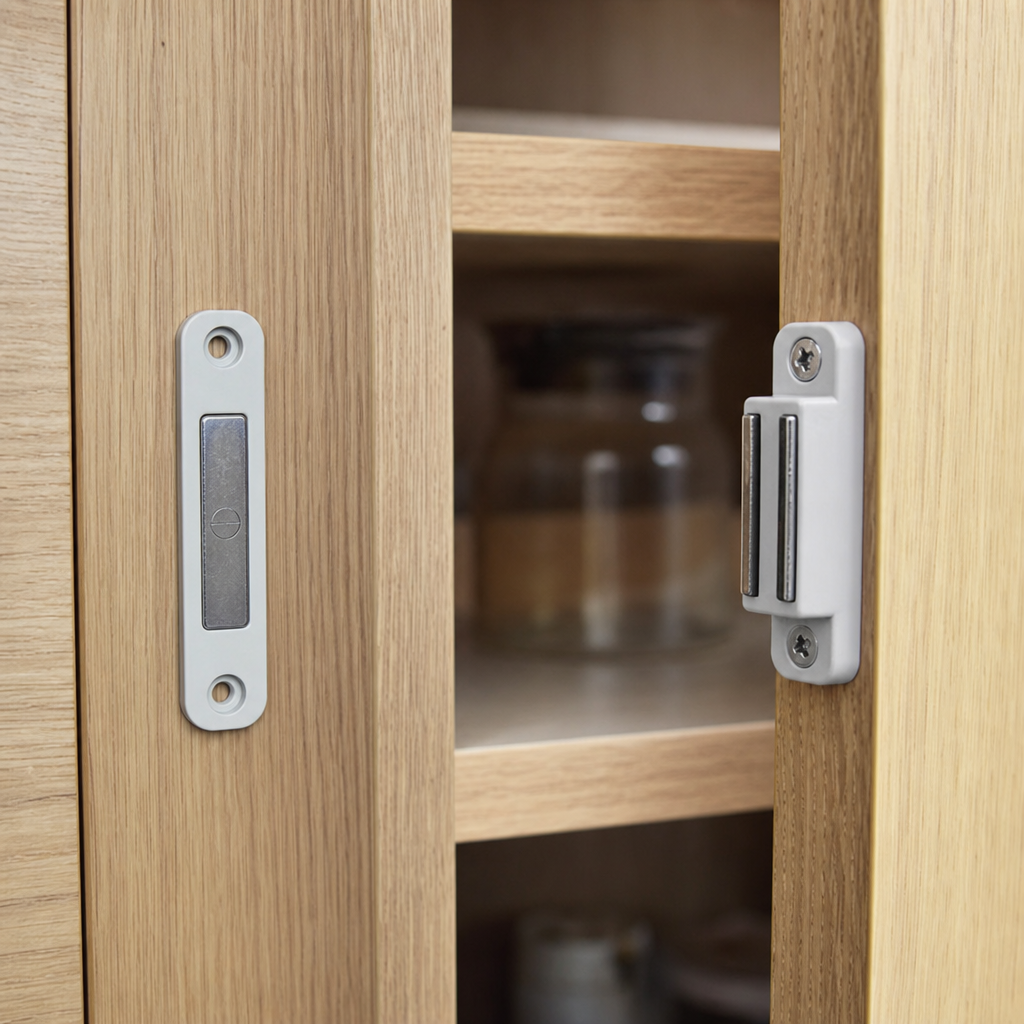
Adding a magnetic locking system for quick access can make a gun safe faster to open, easier to use under stress, and more adaptable to real-world defensive needs. In the context of gun safes and safety, a magnetic locking system usually means an electronically controlled lock that releases a latch or bolt when it receives the correct signal, often from a keypad, RFID credential, hidden magnet key, or integrated access controller. For gun owners modifying an existing safe, this falls under custom and DIY gun safe modifications: practical changes made to improve access speed, organization, power reliability, lighting, anchoring, and overall security without replacing the entire safe.
This topic matters because quick access and secure storage must work together, not compete. I have worked on compact bedside vaults, vertical rifle cabinets, and retrofitted steel enclosures where the biggest challenge was balancing response time against unauthorized access. A fast-opening system that fails during a power outage, creates an easy bypass point, or weakens the safe body is not an upgrade. A well-planned magnetic lock retrofit can be worthwhile, but only when matched to the safe’s construction, the firearm’s intended role, and the owner’s legal and household safety requirements.
As a hub for custom and DIY gun safe modifications, this guide explains where magnetic locks fit, when they make sense, what parts are involved, how to install them, and which related upgrades should be considered alongside them. It also answers the questions owners usually ask first: Are magnetic locks secure enough for a gun safe? Can you retrofit one into a mechanical safe? What power supply should you use? How do you avoid lockouts? Those answers depend on lock type, holding force, door geometry, battery management, and fail-safe versus fail-secure behavior, all of which deserve careful evaluation before drilling a single hole.
What a magnetic locking system is and when it works on a gun safe
A magnetic locking system for quick access generally falls into two categories. The first is an electromagnetic lock, often called a maglock, which uses powered magnetism to hold a door shut against a steel armature plate. The second is an electronic release system that uses a solenoid or magnetic trigger to retract a latch after valid authentication. For gun safes, the second approach is usually more practical because many safes need to remain locked when power is lost. Traditional electromagnetic locks are common on commercial doors, but they are often fail-safe by design, meaning they unlock when power is cut. That behavior is useful for life-safety egress on buildings, but it is usually the wrong default for firearm storage.
In small handgun vaults and custom lockboxes, a hidden magnetic key or RFID-triggered relay can activate an internal solenoid that withdraws a locking bar. In larger steel cabinets, a retrofit may involve an access module that triggers a strike release while the original keyed or mechanical lock remains as backup. The best use cases are bedside pistol safes, closet-mounted quick-access compartments, and secondary inner compartments inside a larger safe. Full-size traditional gun safes with hardened boltwork, relockers, and fire lining are more complex; modifying those often affects warranties, fire ratings, and burglary resistance.
A magnetic system works best when the safe door already closes squarely, has minimal sag, and does not require excessive force to latch. If the door binds, the frame flexes, or the existing lockwork is worn, the electronic add-on will not solve the underlying mechanical problem. I have seen owners blame batteries and readers when the actual fault was hinge misalignment that kept the latch from clearing the strike. Before any retrofit, inspect door alignment, measure clearances, and verify that the safe can open and close smoothly with the current hardware.
Security tradeoffs, legal considerations, and safety rules
The most important rule is simple: quick access cannot reduce safe firearm storage to the point that children, prohibited persons, or thieves gain easier access. Any DIY modification should preserve compliance with state storage laws, manufacturer recommendations, and household safety practices. If a jurisdiction requires a locking device or locked container when firearms are not under direct control, the modified safe still needs to meet that standard after the retrofit. If the safe stores defensive firearms in a home with minors, redundancy matters even more.
Magnetic systems introduce tradeoffs. They can speed access, but they also add electronics, batteries, wiring, and new failure points. A hidden magnetic key sounds discreet, yet if the trigger location is obvious or the panel is thin enough to map from the outside, it may be easier to defeat than a quality mechanical lock. RFID credentials are convenient, but tags can be lost. Keypads are familiar, but many low-cost models leave wear patterns on commonly used digits. Biometric modules are popular, yet fingerprint performance varies with dry skin, moisture, and sensor quality.
The safest approach is layered security. Keep the original mechanical key override or combination if possible. Use tamper-resistant fasteners on internal mounts. Route wiring where it cannot be snagged by long guns or shelving. Test the lock under low-battery conditions. Most importantly, do not modify fire-protective materials, relocking devices, or hard plates in ways that reduce burglary or fire performance. If the safe is UL-rated or carries a manufacturer security label, adding holes through critical areas can compromise the design. In some cases, the right answer is not a retrofit at all, but a purpose-built quick-access handgun safe installed near the primary storage safe.
Planning the retrofit: lock type, power, access method, and backup entry
Good retrofits start on paper. Identify what you want the system to do in five seconds, in thirty seconds, and in a complete power failure. For most owners, the desired outcome is immediate access to one defensive firearm while preserving slower, stronger security for the rest of the collection. That objective drives the design. A small interior compartment with an electronic magnetic release is often better than converting the main safe door itself.
Choose the access method based on environment and user behavior. Hidden magnetic reed systems offer stealth and simplicity for custom compartments. RFID readers are fast and can be concealed behind thin panels. Keypads are inexpensive and intuitive. Bluetooth-only locks are usually a poor primary choice for gun storage because phones fail, apps crash, and radio pairing adds delay. If you want remote monitoring, use it as a secondary feature rather than the sole means of entry.
Power design is critical. Many electronic gun safe locks use 9-volt batteries because they are easy to replace, but AA battery packs often provide better runtime and lower replacement cost. Hardwired DC power with battery backup is ideal for a fixed safe installation. Use a protected power supply, strain relief on all cable entries, and an accessible battery service path that does not require opening the locked compartment. I strongly recommend fail-secure behavior for firearm storage: on power loss, the system should remain locked and open only by an authorized backup method.
| Decision Area | Best Practice | Why It Matters |
|---|---|---|
| Lock mechanism | Solenoid or electronic strike with fail-secure operation | Keeps firearms secured during power loss |
| Authentication | RFID or keypad with mechanical override | Balances speed with reliable backup access |
| Power source | Hardwired DC plus battery backup, or sealed AA battery pack | Reduces downtime and surprise failures |
| Mounting location | Interior frame or secondary compartment wall | Protects hardware from tampering and impact |
| Door fitment | Verify alignment before installing electronics | Prevents false lock faults caused by binding |
| Emergency entry | Retain key override or hidden manual release | Avoids lockouts during dead batteries or component failure |
Backup entry is nonnegotiable. Every magnetic quick-access system should have a tested override path. That can be a tubular key, a retained mechanical lock, or an internal cable release accessible only from a separate secured area. Do not rely on memory alone for codes, and do not store backup credentials inside the locked compartment they are meant to open.
Installation fundamentals for custom and DIY gun safe modifications
The installation process depends on the safe and the lock, but the sequence is consistent. First, unload all firearms and remove ammunition from the work area. Second, strip the interior panels enough to inspect steel thickness, reinforcement points, and available clearances. Third, mark the lock body, strike location, wiring path, reader position, and battery compartment before drilling. Most retrofits fail because owners place the lock where shelves, carpeted liners, or boltwork interfere with travel.
Use the correct tools. A center punch, cobalt bits, cutting fluid, step bits, and deburring tools matter when drilling safe steel. For wiring, use grommets anywhere a cable passes through metal. For mounting, avoid short sheet-metal screws in thin steel if a backing plate or rivet nut would create a stronger connection. If the lock body pulls against the door under force, spread the load across a steel plate rather than concentrating stress on one small bracket.
Position the reader or magnetic trigger where you can reach it naturally in low light. On bedside units, that usually means the upper front corner or a consistent side reference point. Then bench-test the system with the door open for repeated cycles before final assembly. Cycle it dozens of times on fresh batteries, then again on partially depleted batteries. Close the door gently, then close it with realistic force. If the latch hesitates even occasionally, correct alignment immediately. An access system that works ninety-eight percent of the time is unacceptable for a defensive safe.
For hub-level planning across custom and DIY gun safe modifications, magnetic locks should also be considered alongside adjacent upgrades. Interior LED lighting helps identify the firearm and verify loaded magazines. Door organizers can obstruct wiring if they are added later without clearance checks. Dehumidifier rods and battery boxes compete for outlet access and internal space. Anchoring the safe affects cable routing if power is hardwired through the floor or wall. The best retrofit plan treats the lock as one component in a complete access and storage system, not as an isolated gadget.
Related upgrades that improve quick access without weakening security
Many of the best results come from combining a magnetic quick-access system with less glamorous modifications. Interior organization is first. A rushed draw from a cluttered safe is slower than a disciplined draw from a well-lit compartment with a stable holster bracket. Pistol racks, rifle rods, magazine shelves, and labeled bins reduce fumbling and minimize the chance of knocking another firearm loose while reaching for the primary one.
Lighting is another major improvement. Motion-activated LEDs are convenient, but hardwired low-voltage strips tied into the lock release are better because they illuminate exactly when the door opens. I prefer warm-white or neutral-white strips with diffusers because they reduce glare on optics and nickel hardware. If the safe is in a bedroom, keep brightness moderate so the light helps orientation without destroying night-adjusted vision.
Silent entry also matters. Rubber bumpers, felt-lined contact points, and adjusted door stops can make opening quieter without affecting lock integrity. In a defensive context, noise discipline may be useful. At the same time, do not remove positive door contact pressure just to make the action softer; the lock still needs a consistent seating force. If your safe uses an internal shelf as a mounting point for a handgun holster, reinforce that shelf so repeated draws do not loosen the structure over time.
Environmental control supports reliability. Condensation, dust, and oil migration can shorten the life of readers and lock bodies. Use a dehumidifier rod or desiccant system, and keep lubrication off electrical contacts unless the manufacturer specifically calls for a protective compound. When clients ask which upgrade to do first, I usually recommend this order: fix alignment, improve organization, add lighting, then install the quick-access lock. That sequence avoids building convenience on top of bad fundamentals.
Common mistakes, troubleshooting steps, and when to hire a pro
The most common mistake is choosing the wrong lock class. Consumer cabinet locks with weak latches are fine for a hidden drawer but not for a firearm compartment that may face prying. The second mistake is ignoring door geometry. If the lock and strike do not meet squarely, users end up slamming the door, which eventually bends brackets or strips screws. The third mistake is poor power planning, especially inaccessible batteries and loose connections.
Troubleshooting should follow a simple sequence. If the lock will not release, start with voltage under load, not just battery age. Then inspect wiring terminations, reader function, and relay output. After that, check latch travel with the door open, followed by strike alignment with the door closed. If the system releases electrically but the door stays stuck, the issue is mechanical preload, not authentication. If the reader fails intermittently, look for vibration, metal interference behind RFID antennas, or moisture exposure near entry points.
Hire a professional locksmith, safe technician, or fabricator when the safe has complex boltwork, a fire liner you do not want to disturb, or a rated body that requires precise drilling. Professional help is also smart when the project involves integrating AC power, welding reinforcement plates, or modifying a high-value safe that stores multiple firearms. A clean professional installation often costs less than correcting a failed DIY attempt that damages the door or compromises the lock area.
A magnetic locking system for quick access can be an excellent gun safe modification when it is designed around security first, speed second, and convenience third. The right setup usually means a fail-secure electronic release, reliable power, a mechanical backup, and careful attention to door alignment, mounting strength, and everyday usability. It should help you reach a defensive firearm quickly without making the storage system easier to bypass, easier to fail, or harder to maintain.
As the hub for custom and DIY gun safe modifications, this topic connects naturally to the rest of the category: interior organization, LED lighting, power management, anchoring, humidity control, door panel upgrades, and secondary lockbox design. The biggest takeaway is that no single gadget makes a safe both faster and better on its own. Real improvement comes from integrating the lock into a complete storage plan that respects legal requirements, household safety, and the physical design of the safe you already own.
If you are considering this upgrade, start by auditing your current safe: check alignment, identify the firearm you need quickest access to, choose a fail-secure lock path, and define your backup entry method before buying parts. Then move methodically, test extensively, and upgrade the surrounding organization and lighting at the same time. Done correctly, a magnetic locking system can deliver the speed you want without giving up the security you need.
Frequently Asked Questions
What is a magnetic locking system for quick access, and how does it work on a gun safe?
A magnetic locking system for quick access is typically an electronically controlled locking setup that uses a magnetic or electromagnetic release mechanism to secure and unlock a door, lid, or internal compartment. In practical gun-safe modifications, this often means the lock stays engaged until it receives the correct input from a keypad, RFID tag, hidden magnetic key, biometric reader, or another access device. Once the correct credential is presented, the system energizes or releases the latch so the safe can be opened quickly with minimal hand movement.
It is important to understand that “magnetic lock” can refer to a few different designs. Some systems use an electromagnetic lock that holds a door closed while powered, while others use an electronic strike, solenoid, or magnetic-triggered latch that releases a mechanical catch. For gun-safe applications, many owners prefer a setup that retains a strong mechanical latch and uses the electronic component only to release it. That approach can offer a better balance of speed, reliability, and resistance to tampering.
The appeal is speed under stress. Instead of manipulating a traditional dial or even a slower keypad sequence, a properly designed quick-access magnetic system can allow near-instant entry. That can be especially valuable in a defensive emergency, when fine motor skills decline and visibility may be poor. At the same time, the system should never be viewed as a shortcut that sacrifices safe storage. The best installations are designed so that the locking hardware, access control, power supply, and backup entry method all work together to maintain both security and rapid access.
Is it safe to add a magnetic locking system to an existing gun safe, or does it weaken security?
It can be safe to add one, but only if the modification is planned carefully and executed with the safe’s structural integrity and intended purpose in mind. The biggest mistake people make is focusing only on convenience and not on how the modification affects pry resistance, lock reliability, child safety, and unauthorized access. A poorly installed magnetic lock can absolutely weaken security if it requires excessive drilling, replaces a stronger lock with a weaker one, exposes wiring, or creates a predictable bypass point.
A better approach is to treat the project as an upgrade to access control rather than a replacement for core safe security. In other words, the body of the safe, the door fit, the latch engagement, and the backup locking method still need to do the heavy lifting. Ideally, the added system should work with the safe’s existing structure instead of compromising it. Hidden mounting, protected wiring paths, reinforced fastener locations, and a backup mechanical override are all important. So is choosing components rated for repeated use and appropriate holding force.
There is also the safety side beyond theft prevention. If children or unauthorized users are in the home, any quick-access modification must preserve secure storage at all times. A hidden magnetic trigger may sound convenient, but if it is too easy to discover or duplicate, it may not meet the standard of responsible firearm storage. Before modifying a safe, owners should also consider warranty issues, local laws, and whether the finished setup still satisfies any legal requirements for locked firearm storage in their area.
What components do I need to install a magnetic locking system for fast, reliable access?
The exact parts depend on the design, but most systems include several core elements: the lock or release mechanism itself, a credential reader or trigger device, a power source, a controller or relay, and a backup entry method. The release mechanism may be an electromagnetic lock, solenoid bolt, electric strike, or magnetic-trigger latch. The access device might be a keypad, RFID reader, concealed magnetic key location, or integrated smart access controller. The power side may involve a plug-in transformer, battery pack, or both, depending on whether you want a hardwired setup, battery backup, or fully battery-powered operation.
Just as important are the supporting parts that people often overlook. You may need mounting brackets, a door-closed sensor, inline fuses, wire loom, tamper-resistant fasteners, and a timed relay so the lock only releases for a controlled interval. If the lock is fail-safe or fail-secure, that choice matters a great deal. A fail-safe lock unlocks when power is lost, which may be undesirable for firearm storage. A fail-secure design typically remains locked when power is interrupted, which is often more appropriate, provided there is a dependable backup way to access the safe quickly when needed.
In many cases, the best-performing system is not the one with the most features, but the one with the fewest failure points. A simple, rugged release tied to a protected credential method and supported by reliable power is usually preferable to an overly complex setup with multiple consumer-grade electronics. If the safe is intended for defensive use, prioritize consistency, low-light usability, and easy operation when your hands are shaking. If you are not fully confident in hardware selection or electrical integration, involving a qualified locksmith, safe technician, or access-control installer is a smart move.
What are the biggest installation mistakes to avoid when modifying a gun safe with a magnetic lock?
One of the most common mistakes is drilling or cutting into the safe without first understanding what is inside the door or body panel. Many safes contain relockers, fire insulation, hard plates, internal linkages, and locking bars that can be damaged by careless modification. Hitting the wrong area can compromise not only the upgrade but the original lock system as well. Before making any permanent change, you need a clear understanding of the safe’s construction, available clearance, and how the new hardware will interact with the existing latch path.
Another major error is choosing the wrong lock type for the application. Some magnetic locks are designed for cabinet access or light commercial use, not for secure firearm storage. Others require continuous power to remain locked, which may create a dangerous failure mode during a power loss. Weak adhesive mounting, exposed wires, poor alignment, and underpowered batteries are also frequent problems. If the latch does not align perfectly every time, quick access becomes inconsistent, and inconsistency is exactly what you do not want in an emergency.
People also underestimate the importance of concealment and tamper resistance. If a hidden magnetic key location is obvious, if the reader is easy to bypass, or if the release wiring can be reached from outside the safe, the entire system may be vulnerable. Finally, some owners fail to test the system under realistic conditions. You should verify operation in darkness, from awkward positions, with sweaty hands, after long idle periods, and with primary power removed. A quick-access safe modification is only successful if it remains secure when it should and accessible when it must.
How do I make sure a magnetic quick-access system stays reliable over time?
Reliability comes from design, maintenance, and regular testing. Start with quality components and a layout that minimizes strain on the lock, latch, and door. The release should not have to fight a warped door, excessive seal pressure, or misaligned bolts. Mechanical drag is one of the most common reasons electronic locks behave inconsistently. If the door is hard to close or the latch binds, the system may work sometimes and fail at exactly the wrong moment. Smooth mechanical operation should be established before any electronic hardware is added.
Power management is the next critical factor. If the system uses batteries, replace them on a fixed schedule rather than waiting for low-power symptoms. If it uses house power, include surge protection and battery backup where appropriate. Wiring should be secured, protected from abrasion, and kept away from pinch points. It is also wise to keep a documented emergency access procedure and verify that all authorized users understand it. A backup mechanical key, override code, or secondary opening method should be tested periodically, not just assumed to work.
Finally, build routine testing into ownership. Open and relock the safe regularly under normal and low-light conditions. Test the credential method, the release timing, and the backup access path. Inspect for loose fasteners, corrosion, battery swelling, weak magnets, or signs of intermittent electrical behavior. If the safe is used for defensive firearms, reliability is not optional; it is the central requirement. A magnetic quick-access system can be an excellent upgrade when it is installed thoughtfully and maintained like any other critical safety device.