
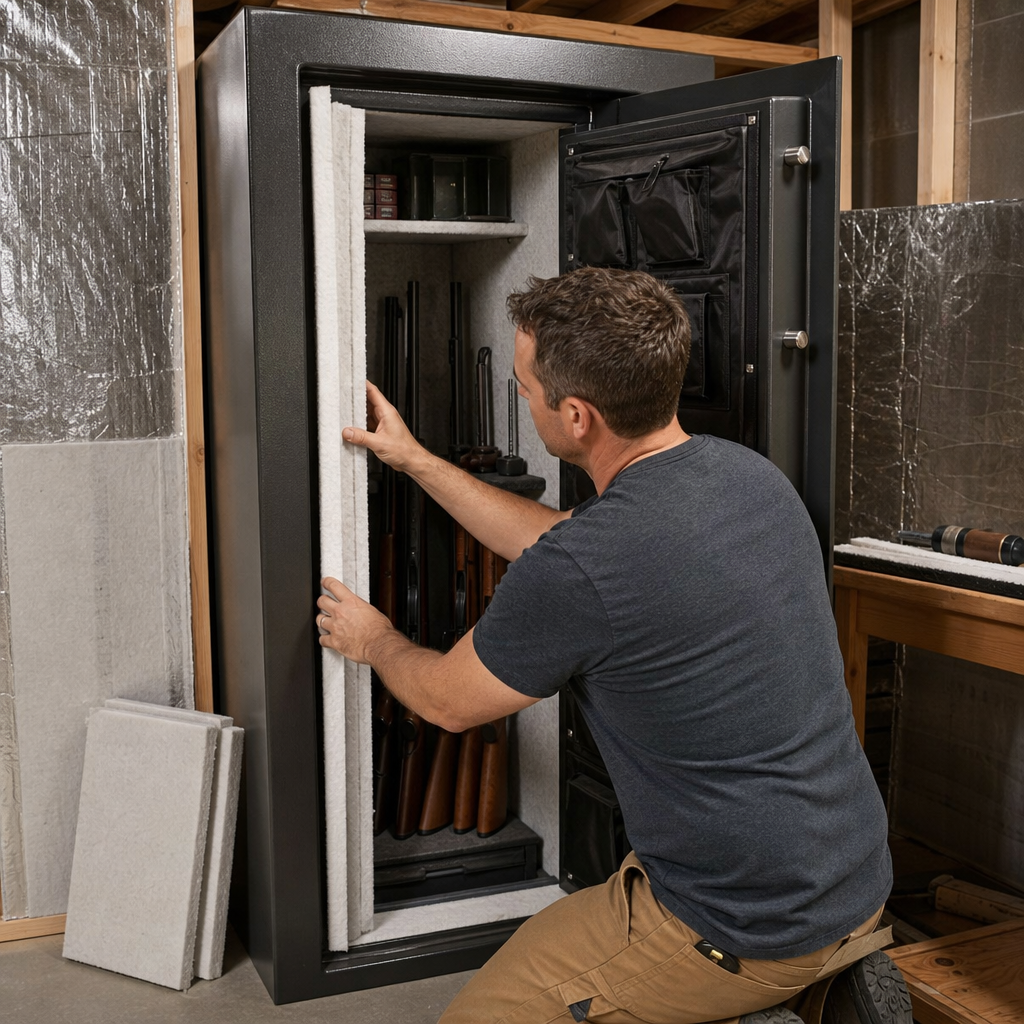
DIY fireproofing upgrades for long-term gun safe protection help owners close the gap between a factory rating and the real conditions a house fire creates. In practical terms, fireproofing means slowing heat transfer, limiting smoke and moisture intrusion, and protecting documents, optics, ammunition components, and firearm finishes long enough for suppression crews to act. A gun safe is not a vault, and most residential security containers rely on gypsum board, expanding door seals, and steel thickness that vary widely by brand. I have opened, moved, and retrofitted enough safes to see the same pattern repeatedly: buyers trust the sticker on the door, then discover too late that placement, seal quality, interior moisture, and weak accessory choices matter just as much as the published fire rating.
This matters because heat damage is cumulative and often invisible at first. Wood stocks dry and crack, polymer parts soften, optics lose seals, lubricants carbonize, and important paper records can discolor well below the temperatures that visibly deform steel. Long-term protection is also broader than surviving one event. A useful fireproofing strategy should improve everyday resilience against humidity swings, condensation after a fire hose soak, and maintenance mistakes made during custom gun safe modifications. As the hub for custom and DIY gun safe modifications, this guide explains which upgrades offer measurable protection, which materials are safe to add, and where homeowners should stop and call a qualified safe technician. The goal is not to turn a residential safe into a commercial UL Class vault, but to make smart, durable improvements that raise the odds of preserving both firearms and critical contents.
Start with the safe’s real fire baseline
Before adding anything, determine what protection you actually own. Manufacturers often advertise a fire rating such as thirty, sixty, or ninety minutes at a stated external temperature, but those claims are not always tested to the same protocol. A true third-party label from organizations such as UL carries more weight than a marketing claim printed in a catalog. On many residential gun safes, the insulation is Type X gypsum or a similar board layered inside sheet steel. That design works by releasing chemically bound water as temperature rises, which slows heat transfer, but it is vulnerable to gaps, poor door fit, and punctures created during aftermarket accessory installs.
I recommend documenting five baseline factors: insulation type, door gap consistency, seal condition, anchor method, and location in the home. Measure the door reveal with feeler gauges or even folded paper at multiple points to spot uneven compression. Inspect expanding seals for brittleness, flattening, or adhesive failure. Confirm whether interior organizers, electrical pass-throughs, or added shelving have pierced insulated walls. Also verify where the safe sits. A safe on an upper floor, beside a large fuel load, or in a garage with solvents faces more severe exposure than one on a concrete slab in a conditioned interior room. These details matter because the most effective DIY fireproofing upgrades build on the original design rather than fighting it.
Upgrade heat resistance without damaging the safe
The safest path for DIY heat resistance is to improve external conditions and internal buffering, not to weld random metal or drill through insulated panels. One of the best upgrades is a noncombustible surround. Homeowners routinely gain meaningful protection by placing the safe against an interior masonry wall, adding fire-rated drywall to adjacent framing, or building a code-compliant closet lined with Type X gypsum. Two layers of 5/8-inch Type X drywall on walls and ceiling, with staggered seams and appropriate fire-rated joint treatment, can materially slow room flashover effects around the safe. This does not change the safe’s tested rating, but it reduces the thermal assault it experiences.
Inside the safe, use secondary fire containers for the most vulnerable items. UL-rated document chests, media pouches designed for lower internal temperatures, and insulated lock boxes provide another thermal barrier for titles, passports, suppressor paperwork, photos, and backup drives. I have seen ordinary papers survive in a rated document chest inside a compromised gun safe when loose papers nearby browned badly. For firearms, silicone-treated gun socks offer corrosion resistance after steam exposure, but they are not a substitute for heat shielding. Keep optics, serialized paperwork, and irreplaceable records in dedicated inner containers because different contents fail at different temperatures. Paper can char around 451 degrees Fahrenheit, but digital media and adhesives in optics may fail much sooner.
Avoid common mistakes. Do not fill wall cavities with household fiberglass batts; fiberglass slows convection but is not a proper replacement for engineered fireboard, and stuffing cavities can interfere with lockwork clearances. Do not use spray foam inside or around a safe body; many foams are combustible, produce toxic smoke, and make future service difficult. Do not drill new holes unless the manufacturer confirms safe zones, because a misplaced fastener can breach insulation, hit relock components, or create a direct heat path.
Improve seals, gaps, and smoke resistance
In real house fires, smoke and superheated gases often damage contents before steel ever glows. That is why door perimeter performance matters so much in custom and DIY gun safe modifications. Most better safes use intumescent seals that expand when heated, reducing leakage around the door. Over time these seals age, especially in garages or non-climate-controlled spaces. Replacing a degraded seal with a high-quality intumescent product approved for this application is one of the few upgrades that can yield immediate benefit with modest cost. Surface prep is critical: remove old adhesive completely, degrease with a manufacturer-safe solvent, and maintain continuous contact along the entire perimeter without stretching the material.
Door gap consistency matters as much as the seal itself. If the body is racked from poor anchoring or an uneven floor, seal compression becomes irregular. Shim and level the safe correctly before chasing other fixes. Use steel shims where appropriate, not wood that can compress or char. Check hinge-side and latch-side clearance after leveling. If the door scrapes, binds, or requires excess handle force, stop and diagnose alignment rather than forcing it closed. On several retrofits, simple leveling restored proper seal contact and improved humidity control because air exchange dropped noticeably.
Smoke resistance also includes cable ports and accessory pass-throughs. Electrical dehumidifier holes are convenient but can become leakage points. If your safe has a factory pass-through, use the intended grommet and avoid oversized cords. If you do not need power inside, keep the port sealed. For owners running lighting, choose low-heat LED kits and route wiring neatly to avoid damaging the door seal. Every opening is a compromise, so keep penetrations minimal and reversible.
Control humidity before and after a fire event
Fire protection fails in practice when owners ignore moisture. Gypsum-based insulation can release water vapor during heating, and firefighting adds even more moisture. Afterward, a sealed safe can trap humid air against blued steel, springs, optics mounts, and ammunition cans. The answer is controlled humidity, not simply adding more desiccant and forgetting it. In most homes, aim to keep interior relative humidity around 45 to 50 percent. Below that, wood stocks can over-dry; above that, corrosion risk rises sharply.
For daily management, a GoldenRod-style convection dehumidifier works well in powered safes because it gently raises temperature a few degrees, lowering relative humidity without blowing dust. Pair it with rechargeable silica packs and a digital hygrometer placed mid-height, not on the floor. If the safe is unpowered, larger indicating desiccant canisters are better than small disposable packets. Recharge them on schedule, not when you happen to remember. During annual maintenance visits, I often find saturated desiccants sitting untouched for months, giving owners a false sense of protection.
After any smoke, sprinkler, or hose exposure, open the safe as soon as it is safe to do so, unload contents, and begin controlled drying. Wipe metal with a corrosion-inhibiting oil, remove wet liners, and circulate air with a fan outside the safe. Do not apply aggressive heat guns to optics, stocks, or the lock area. If water entered the lock body or electronic keypad, have it inspected. Long-term gun safe protection depends on recovery discipline as much as on preventive upgrades.
Choose DIY modifications that support, not weaken, fire protection
Many popular interior upgrades are compatible with fireproofing if installed thoughtfully. Door organizers, barrel rests, LED lighting, handgun racks, and modular shelves can improve space use and make emergency access easier, but they should not compress seal lines, block boltwork access panels, or add highly flammable clutter. Use low-mass accessories that mount with adhesive-backed hook-and-loop only on interior liner surfaces approved by the safe maker. Heavy screw-in panels can puncture insulation or create thermal bridges through the body wall.
The table below shows how common modifications affect long-term fire and moisture performance.
| Modification | Benefit | Risk | Best practice |
|---|---|---|---|
| Door organizer | Better storage density | Can interfere with seal compression | Verify clearance with paper test around full perimeter |
| Electrical dehumidifier | Stable humidity control | Pass-through can leak smoke | Use factory port and tight grommet only |
| LED lighting | Improved visibility | Poor wiring can damage liners | Use low-heat strips with protected routing |
| Extra shelving | Separates valuables | Fasteners may pierce insulation | Use manufacturer-approved mounting points |
| Document chest inside safe | Lower internal temperature for papers | Reduces usable firearm space | Reserve for irreplaceable records and media |
If you are planning broader custom gun safe modifications, prioritize reversible changes. Adhesive-backed fabric panels, freestanding rifle rods, and modular racks can be removed without affecting insulation. By contrast, cutting for aftermarket outlets, speakers, or biometric accessories may permanently reduce fire and smoke resistance. A good rule is simple: if the modification changes the shell, door geometry, or lock area, treat it as structural and proceed only with manufacturer guidance.
Placement, anchoring, and layered protection strategy
The safest gun safe is the one protected by its surroundings. Placement is the most underrated DIY fireproofing upgrade because it changes exposure duration and severity without touching the safe. Install on a concrete slab when possible, away from likely accelerants, and not directly under roof spaces that collapse early in a fire. Interior rooms generally outperform garages, detached sheds, and exterior walls subject to rapid temperature swings. If the home layout allows it, create a layered location: safe on slab, in a closet, behind a solid-core door, with fire-rated wall assemblies around it. That setup improves both security delay and thermal buffering.
Anchoring matters too. A stable, level safe keeps the door square so seals work correctly during years of use. Use the anchor pattern specified by the maker and choose hardware appropriate to concrete or structural framing. After anchoring, recheck door swing, reveal, and handle effort. I have seen safes twisted by uneven anchors, leaving a larger gap at one upper corner that would become a direct smoke path under heat. Good anchoring is not only theft prevention; it preserves the conditions the fire seal needs to perform.
Think in layers rather than single fixes. The strongest long-term setup combines a realistic baseline assessment, improved room construction, maintained door seals, controlled humidity, protected documents in rated inner containers, and disciplined post-event recovery. Each layer addresses a different failure mode: heat, smoke, steam, corrosion, or human error. That is why homeowners searching for the best DIY fireproofing upgrades for gun safes should avoid miracle coatings and focus on proven building materials, fitment checks, and maintenance routines.
DIY fireproofing upgrades for long-term gun safe protection work best when they respect the safe’s original engineering and strengthen the environment around it. The key lessons are straightforward: verify the real fire rating, improve surrounding room resistance, maintain intumescent seals, control humidity continuously, and choose custom gun safe modifications that do not puncture insulation or distort the door. Secondary document containers and careful placement on a concrete slab add meaningful protection that many owners overlook. These steps are practical, affordable, and based on how residential safes actually fail in fires, not on brochure language.
For anyone building out a complete Gun Safes & Safety plan, this hub should guide every future decision in the custom and DIY gun safe modifications category. Start with inspection and leveling, then add moisture control, then address room construction and interior organization. Keep a maintenance log, replace worn seals promptly, and review any structural modification with the manufacturer before drilling or cutting. If you want long-term protection, think in layers and act before an emergency exposes the weak point. Walk to your safe today, inspect the seal, check the humidity, and make your first upgrade with purpose.
Frequently Asked Questions
What does DIY fireproofing actually improve on a gun safe, and what are its limits?
DIY fireproofing upgrades help improve the amount of time a gun safe can resist dangerous interior heat, smoke infiltration, and moisture exposure during a fire, but they do not turn a residential gun safe into a true commercial vault. Most factory-rated gun safes or residential security containers rely on a combination of steel, gypsum-based fireboard, door seals that expand under heat, and basic construction methods designed to pass a specific test under controlled conditions. In a real house fire, heat can build unevenly, flames can reach higher temperatures than expected, and exposure times can be longer if the safe sits near concentrated fuel sources such as a garage wall, workshop area, or closet full of clothing and paper goods.
That is where careful DIY upgrades can help. Owners often focus on adding or improving layers that slow heat transfer, tightening gaps that allow smoke and steam to enter, and reducing interior moisture damage that can ruin optics, paperwork, and metal finishes even if the contents do not reach combustion temperatures. These upgrades can be especially useful for protecting passports, deeds, tax records, suppressor paperwork, backup drives, and firearm accessories that are more heat-sensitive than many people realize. However, the limits matter. If the safe body warps, the door seal fails, or the surrounding structure burns long enough, internal temperatures can still climb to destructive levels. DIY measures should be viewed as delay tactics that buy time for fire suppression, not as guarantees of survival under extreme burn conditions.
The smartest approach is to think in layers. Improve the safe’s location, strengthen passive thermal resistance where appropriate, maintain seals and door fit, organize contents to reduce heat exposure, and use dedicated interior fire-rated document pouches or boxes for the most vulnerable items. Long-term protection comes from stacking practical improvements rather than expecting one product or retrofit to solve everything.
Which DIY fireproofing upgrades are the most effective for long-term gun safe protection?
The most effective DIY upgrades are usually the ones that address the real pathways of damage: heat transfer through the steel shell, hot smoke entry around the door, and moisture accumulation inside the safe after a fire event or from everyday humidity cycles. A strong first step is inspecting the existing door seal system. Many safes already use heat-activated expanding seals, but owners should verify that the seal is intact, continuous, and not crushed, cracked, peeling, or contaminated with oil and dust. If a compatible replacement or supplemental high-temperature gasket is available from the manufacturer or a reputable source, restoring that seal can significantly reduce smoke intrusion.
Another common upgrade is improving the internal thermal barrier, typically with fire-rated gypsum board or similar noncombustible material installed in a way that does not interfere with locking bolts, relockers, wiring, door closure, shelving, or anchor points. This must be done carefully because poorly installed board can trap moisture, flake apart over time, reduce usable space, and in some cases interfere with the safe’s operation. Interior fire liners are best treated as a measured retrofit, not a random stuffing project. The goal is controlled thermal resistance, not simply adding bulk.
For long-term protection, interior organization matters more than many owners expect. Use dedicated fire-resistant document bags or boxes inside the safe for paperwork, cash, and digital media. Keep optics, electronics, and important records away from the door and outer walls, since those areas typically see heat first. Maintain air space around sensitive items instead of packing the safe tightly against the steel. Add a monitored dehumidifier or desiccant system because fireboard materials, temperature swings, and normal basement or garage humidity can all contribute to corrosion risk over time. Finally, placement upgrades are highly effective and often overlooked. A safe installed on a concrete slab, away from windows, fuel storage, and likely fire load concentrations, will generally perform better than the same safe placed in a second-floor closet surrounded by combustible materials.
Can I add fireboard or insulation to a gun safe myself, or is that risky?
It can be done, but it is one of the riskiest DIY modifications if approached casually. The main concern is that gun safes are engineered around specific clearances, latch paths, hinge geometry, and door sealing surfaces. Adding fireboard, ceramic insulation, or other materials without a plan can prevent the door from closing correctly, reduce bolt engagement, block moving parts, interfere with lock linkages, or create pressure points that damage the interior over time. In some designs, modifying the door panel or inner liner can also void warranties or compromise factory fire performance rather than improve it.
If an owner is considering adding fireboard, the safest route is to work from the manufacturer’s construction details when available, confirm there is enough interior depth, and avoid any modification near the lock body, relocker mechanisms, wiring channels, and active boltwork. Materials matter as well. Fire-rated gypsum products are commonly used because they release chemically bound water when heated, which helps slow temperature rise, but they are heavy, produce dust, and can absorb ambient moisture. Not every insulation product that sounds heat-resistant is appropriate inside a firearm safe. Some materials off-gas, shed fibers, hold moisture against steel, or perform poorly in enclosed long-term storage conditions.
A good rule is that non-invasive improvements should come first: restore seals, improve safe placement, use interior fire-rated containers for documents, increase spacing around sensitive contents, and control humidity. If board is added, it should be cut cleanly, mounted securely, and kept clear of mechanical systems and drainage paths. After any modification, the door should be checked for full closure, seal contact, smooth lock operation, and consistent bolt extension. If there is any doubt, a conservative setup with fewer structural changes is usually better than a more aggressive retrofit that compromises basic safe function.
How do smoke, steam, and humidity damage firearms and valuables during a fire, even if flames never enter the safe?
Many owners focus only on flame resistance, but in real fire conditions, smoke, steam, and humidity can be just as destructive. As temperatures rise, the contents of a home release a complex mix of soot, acidic combustion residues, and moisture. Even if flames never directly penetrate the safe, smoke can enter through door gaps, cable pass-throughs, imperfect seals, or pressure differentials created by heating and cooling. Once inside, those residues can cling to blued steel, stainless surfaces, optic housings, lens coatings, wood stocks, leather slings, and paper documents. The result can be corrosion, staining, pitting, etching, and persistent odor contamination.
Steam and humidity create another layer of risk. Fire suppression water, ambient steam from the fire environment, and moisture released by some fire-protective materials can increase the humidity inside the safe dramatically. When hot metal later cools, condensation can form on firearms and magazines, especially in tight spaces with poor air circulation. That moisture can attack springs, screws, bores, trigger components, and electronic sights very quickly. Important documents may survive flame exposure but still emerge warped, fused together, mold-prone, or chemically damaged.
That is why practical fireproofing is not only about adding insulation. It also includes maintaining an effective expanding door seal, using document-specific fire pouches or media containers, storing the most sensitive items in secondary protective layers, and running a reliable humidity-control system during normal use. After any fire exposure, even if the safe appears intact, contents should be removed carefully, dried if needed, inspected for soot and corrosive residue, and cleaned before long-term storage resumes. Preventing post-fire corrosion is part of long-term gun safe protection, not an afterthought.
Where should a gun safe be installed to improve fire performance before I spend money on upgrades?
Safe placement is one of the most cost-effective fire-protection decisions an owner can make. A gun safe located on a ground-floor concrete slab, in a low-clutter interior area, generally has a better chance of avoiding prolonged high-heat exposure than a safe placed in a garage near fuel, on a wood-framed upper floor, or in a packed closet full of combustible materials. Concrete floors can help reduce heat exposure from below and lower the risk of structural collapse dropping the safe into a hotter burn zone. Interior rooms also tend to be less vulnerable than perimeter walls with windows, where broken glass and direct flame entry can intensify conditions rapidly.
It is also wise to think about what surrounds the safe. A safe next to paint, gasoline cans, reloading powder, cardboard storage, cleaning solvents, or workshop materials is far more likely to experience a severe localized fire than one placed away from concentrated fuel loads. Even a bedroom closet can become a high-intensity fire environment because of clothing, bedding, shoes, and paper storage. Ideally, the safe should have clearance around it, minimal nearby combustibles, and secure anchoring to prevent tipping or movement. Anchoring also helps maintain door alignment over time, which is important for seal performance.
Environmental conditions matter in daily life too. Basements and garages may be convenient, but they often have higher humidity and larger temperature swings, which can shorten the life of seals, encourage corrosion, and stress interior fireboard materials. If those locations are the only practical option, humidity management becomes essential. In short, choosing a cooler, more stable, lower-fuel location can improve the real-world fire performance of the safe before