
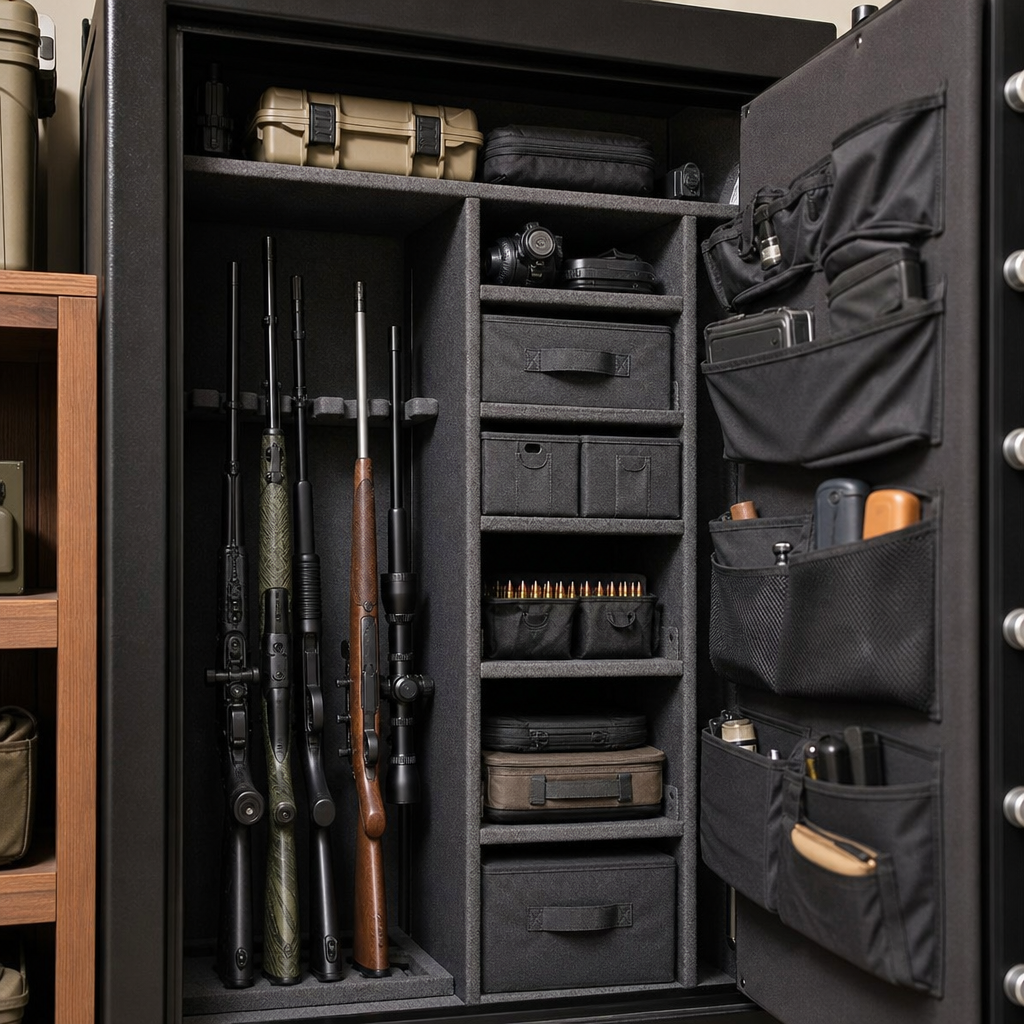
Adding additional storage compartments to your gun safe is one of the most practical upgrades you can make if you want better organization, faster access, and safer separation of firearms, documents, ammunition, and valuables. In the context of custom and DIY gun safe modifications, “additional storage compartments” means any added structure inside or attached to the safe that creates dedicated space: door panels, shelves, pistol racks, modular bins, false floors, document trays, magazine holders, and lockable interior boxes. I have worked on enough crowded safes to know the pattern: owners buy a safe sized for today, then quickly outgrow it once optics, suppressor paperwork, handguns, chargers, passports, jewelry, and training gear start competing for the same cubic feet. That matters because a disorganized safe is not just inconvenient. It can increase the chance of scratched finishes, damaged scopes, misplaced keys, blocked dehumidifiers, and unsafe stacking of loaded magazines or loose items. A well-planned storage layout turns unused dead space into structured capacity while preserving security, fire protection, humidity control, and access speed.
This hub article covers the full range of custom and DIY gun safe modifications focused on internal storage expansion. It explains what can be added, which materials work, how to avoid damaging fire liners or locking systems, and when a simple accessory is smarter than a permanent build. It also serves as the foundation for deeper articles on door organizers, shelf systems, handgun storage, moisture management, lighting, and safe interior retrofits. The goal is straightforward: help you evaluate your safe, choose storage compartments that fit your inventory, and install them in a way that improves function without compromising the safe itself.
Start With a Safe Interior Audit Before You Build Anything
The first step in adding storage compartments is measuring the safe and auditing what you actually store. I start every project by emptying the safe completely, photographing the interior, and separating contents into categories: long guns, handguns, important documents, cash, jewelry, suppressor tax paperwork, optics, magazines, ammunition kept inside for quick access, batteries, chargers, and maintenance items. Then I identify pressure points. Common ones include wasted vertical space above short rifles, unused door depth, dead corners beside long-gun stocks, and clutter on the floor caused by factory shelves set too high or too low. Measure interior width, height, depth, shelf pin spacing, door panel clearance, and the distance between the closed door and the front edge of stored firearms. That last dimension is critical, because many aftermarket door organizers reduce usable depth by one to three inches.
You should also identify construction limits before drilling, screwing, gluing, or bolting anything. Most residential security containers and many true safes use steel shells lined with gypsum-based fireboard, fabric, and shelving supports. Drilling through the wrong area can damage the fire barrier, expose bare steel, or interfere with relockers, linkage, wiring, or boltwork near the door. Manufacturers such as Liberty Safe, Browning, Fort Knox, Rhino Metals, and SecureIt all use different interior layouts, so there is no universal modification pattern. Review your owner’s manual, inspect hinge-side and lock-side clearances, and contact the manufacturer if you plan a permanent alteration. If the safe is under warranty, confirm whether adhesives, screws, or panel replacements affect coverage. A careful audit saves money because it tells you whether you need custom carpentry, modular accessories, or simply a better shelf arrangement.
Use Door Space First Because It Delivers the Biggest Storage Gain
If your safe door has open interior surface area, adding a door organizer is usually the highest-value upgrade. In practical terms, door storage compartments move shallow items off shelves and free the main body for firearms. Typical organizer systems include zippered document pockets, handgun holsters, magazine loops, mesh bins, choke tube sleeves, and passport pouches mounted on fabric-covered panels. The reason they work so well is geometry: the inside of the door is broad, flat, and often underused. A quality panel can add storage for six to twelve pistols, several documents, and dozens of small accessories without increasing the safe’s footprint.
Door organizers can be factory kits, aftermarket panels, or DIY builds using HDPE board, thin plywood, elastic webbing, and hook-and-loop fabric. Factory kits generally fit better and preserve appearance, while custom panels let you tailor placement around optics-heavy rifles or tall shelves. I prefer non-invasive mounting when possible. Hook-and-loop-backed systems, panel clips, or existing fastener points reduce the risk of hitting door linkage. If you build your own, use low-profile materials and verify that every stored item clears firearm muzzles and optics when the door closes. Documents should ride high and flat; pistols should be secured muzzle-down or according to holster design; heavy metal accessories should not swing loose. The best door storage turns small-item chaos into dedicated zones and immediately makes the rest of the safe feel larger.
Add Adjustable Shelves, Bins, and Vertical Dividers for True Capacity
Once door space is addressed, the next priority is converting large open cavities into adjustable compartments. Factory shelves are often too generic. They assume a mix of long guns and a few valuables, but real owners store hard drives, camera gear, estate papers, boxed handguns, night-vision accessories, and ammunition in containers of very different sizes. Adjustable shelves let you match compartment height to actual contents instead of wasting six inches of air above a three-inch document case. Vertical dividers are equally useful because they prevent shelf creep, support bins, and stop stacks from toppling when items are removed.
Good shelf materials include 3/4-inch cabinet-grade plywood, melamine panels edged and sealed, powder-coated steel inserts, and HDPE for moisture resistance. If you use wood products, seal raw edges to reduce off-gassing and moisture absorption. Cover contact surfaces with automotive carpet, felt, or closed-cell foam that will not retain water. For support, shelf pins in existing holes are ideal; if not available, freestanding modular racks are safer than drilling into the safe body. Clear bins are useful for grouping batteries, laser cartridges, hearing protection, and cleaning parts, but label them externally so you do not rummage with the door open. Narrow document trays sized for legal folders or fire sleeves create a dedicated paper compartment, which is much better than stacking records under pistol cases.
| Modification | Best For | Main Advantage | Key Limitation |
|---|---|---|---|
| Door organizer panel | Documents, pistols, magazines | Uses otherwise empty door area | Reduces interior depth slightly |
| Adjustable shelf system | Valuables, boxes, accessories | Fits compartment height to contents | Needs careful weight distribution |
| Pistol rack or handgun hanger | Handgun collections | Doubles usable shelf space | Can interfere with low shelves |
| Pull-out drawer or tray | Small valuables, paperwork | Improves visibility and access | More complex to install |
| Lockable interior box | Medications, cash, keys | Adds a second layer of access control | Consumes premium space |
Weight distribution matters more than many owners expect. Concentrating ammo cans, lead-filled supports, or metal parts on one side can sag shelves or stress weak brackets. Keep heavy items low and centered. Leave air channels around dehumidifier rods, desiccant canisters, and ventilation gaps so added compartments do not trap moisture. The most effective shelf upgrade is not the one with the most tiers; it is the one that gives each category a repeatable home.
Specialized Handgun, Magazine, and Document Storage Improves Access and Safety
General shelves create capacity, but specialized compartments create usability. Handguns are the clearest example. Without dedicated storage, pistols end up in soft cases stacked on shelves, which wastes vertical space and slows access. Foam pistol racks, wire handgun stands, under-shelf handgun hangers, and angled display racks all allow multiple pistols to occupy the same footprint cleanly. For collections with optics, lights, or threaded barrels, measure width and height carefully because many low-cost racks are sized for plain slides only. Soft foam inserts are fine for range pistols, but avoid long-term pressure points on premium finishes or delicate sight adjustments. A rigid rack with padded contact surfaces is usually better.
Magazines deserve their own compartments as well. Loaded rifle and pistol magazines are dense, awkwardly shaped, and easy to pile unsafely. Vertical mag bins, elastic loops, labeled trays, or small parts drawers keep calibers and platforms separated. This matters when you own multiple systems that use similar-looking magazines, such as AR-15 and .300 Blackout setups or Glock-compatible magazines in several capacities. Clear labeling reduces errors and speeds inventory checks. Documents also need more protection than an open shelf provides. Even in a fire-rated safe, use document sleeves, fire-resistant pouches, or dedicated trays to keep deeds, titles, trust papers, passports, and serial number records flat, dry, and easy to retrieve. If your safe stores NFA paperwork or estate planning documents, a compartment that prevents bending, tearing, or accidental burial under gear is not optional; it is basic records management.
Choose DIY Materials That Will Not Damage the Safe or Its Contents
DIY gun safe modifications succeed or fail on material choice. I have seen otherwise smart storage builds create rust problems because owners used untreated MDF, abrasive carpet, moisture-holding foam, or adhesives that released strong solvents inside a sealed steel box. The safest approach is to use dimensionally stable, low-odor materials that resist moisture and have smooth covered edges. Baltic birch plywood, sealed cabinet plywood, HDPE sheet, EVA foam, felt, and automotive trunk liner are all commonly used because they are easy to cut, durable, and relatively gentle on finishes. Stainless or coated fasteners are better than plain steel in humid climates.
Avoid pressure-treated lumber, crumbly particleboard, and unknown salvaged materials. Pressure-treated wood can off-gas corrosive chemicals. Particleboard swells when humidity rises and does not hold screws well. Cheap open-cell foam can retain moisture against blued steel. Adhesives deserve extra caution. Many spray adhesives and construction glues work, but let them fully cure outside the safe before installation so volatile compounds do not build up around firearms, optics coatings, cash, or documents. Magnetic mounts can be useful for lights or light accessories on steel interiors, but test the coating first and pad contact points to prevent scratching. If you need removable compartments, hook-and-loop fabric, friction-fit panels, tension rods, and freestanding inserts are often better than permanent anchors. The right materials protect both the safe and the collection.
Protect Fire Rating, Security, and Moisture Control During Any Modification
The most important rule in custom and DIY gun safe modifications is simple: added storage must not compromise the safe’s core job. That means preserving burglary resistance, fire performance, and moisture control. Never drill blindly into the door, sidewalls, ceiling, or floor without knowing what is behind the liner. On many safes, door interiors contain moving bars, cables, relock devices, and hardplate-protected lock areas. Sidewalls and ceilings may conceal fireboard layers that support the advertised fire rating. Any penetration can create thermal weak points and may void manufacturer claims. If you need anchoring, use existing shelf supports, factory accessory holes, compression-fit frames, or interior components that are intentionally replaceable.
Moisture management becomes more important as you add compartments because every shelf, pouch, and bin changes airflow. GoldenRod-style dehumidifier rods work best when mounted low so warm air rises naturally. Rechargeable desiccants work well in tighter compartments but must be rotated on schedule. Aim to keep relative humidity in the safe around 45 to 50 percent; much higher encourages corrosion, while extremely low conditions can affect some wood stocks over time. Do not block LED lighting, hygrometers, or electrical pass-throughs. Leave enough clearance to inspect corners, wipe condensation if needed, and vacuum dust. A clean, ventilated, and visible interior is part of safe storage. If a compartment makes maintenance harder, redesign it before you load the safe again.
Build a Modular Storage Plan That Can Evolve With Your Collection
The best gun safe storage compartments are modular because collections change. A shelf bank that works for paper records today may need to convert to optics storage next year. A pistol-heavy setup may later shift toward documents, estate items, or suppressor accessories. For that reason, I recommend building in layers: first door storage, then adjustable shelving, then specialized racks, and finally one or two premium compartments such as a pull-out valuables tray or lockable interior box. Test each layer for thirty days before committing to more permanent changes. You will quickly learn whether access is smoother, whether rifles snag on door pockets, and whether your chosen categories actually match how you use the safe.
This hub exists to guide that broader process across custom and DIY gun safe modifications. Start by measuring and auditing the interior. Use the door for shallow items. Add adjustable shelves and dividers for real capacity. Create dedicated compartments for handguns, magazines, and documents. Choose materials that will not trap moisture or harm finishes. Most important, protect the safe’s fire liner, lockwork, and airflow every step of the way. Done correctly, additional storage compartments make a gun safe easier to use, easier to maintain, and far more efficient without enlarging its footprint. If your safe feels full, do not default to stacking gear higher. Build a plan, upgrade one zone at a time, and turn wasted space into organized, secure storage.
Frequently Asked Questions
What types of additional storage compartments can I add to a gun safe?
You can add a wide range of storage compartments to a gun safe, and the best setup depends on what you need to store, how often you need access, and how much interior space you can give up. Common upgrades include door organizers, adjustable shelves, pistol racks, document trays, magazine holders, modular bins, ammo shelves, jewelry drawers, false floors, and small lockable interior boxes. Door panels are especially popular because they use otherwise wasted space and can hold handguns, magazines, documents, and small valuables without reducing the safe’s main floor area too much.
Adjustable shelving is one of the most flexible options because it lets you reconfigure the interior over time. If your collection changes, you can move shelves higher or lower to fit optics, handguns, ammunition cans, or paperwork. Pistol racks help separate handguns safely and neatly, while modular bins are useful for organizing cleaning supplies, ear protection, spare parts, and accessories. False floors and hidden trays can create discreet storage for documents or valuables, but they should be installed carefully so they do not interfere with the safe’s fire lining, door seal, or locking mechanism.
For most gun owners, the smartest approach is to combine several compartment types rather than relying on a single upgrade. For example, a door panel can hold handguns and documents, a shelf can store ammunition or range gear, and bins can sort small items that would otherwise get lost. The goal is not just to fit more inside the safe, but to create dedicated storage zones that improve organization, access speed, and safe separation of firearms from other contents.
Will adding shelves, door panels, or hidden compartments affect the safety or fire protection of my gun safe?
It can, depending on how the modification is done. The biggest concern is whether the added storage changes the structural integrity of the safe, interferes with the locking bolts or hinges, damages fire insulation, or compromises the door seal. If you drill into the wrong areas, cut into interior fireboard, or add hardware that presses against moving parts, you may reduce the safe’s security and fire resistance. That is why planning matters as much as the storage upgrade itself.
In general, non-invasive additions are the safest route. Adhesive-backed organizers rated for heavy use, magnetic accessories designed for steel interiors, freestanding pistol racks, tension-fit shelving, and hook-and-loop door panels can often be installed without permanently altering the safe body. These options are especially good if your safe is under warranty, because many manufacturers consider drilling or cutting a modification that can void coverage. Before making permanent changes, check the safe’s manual or contact the manufacturer to ask which areas are safe to fasten into.
You also need to think about weight distribution and clearance. Heavy ammo loaded onto a door organizer can strain hinges if the door was not designed for it. Deep shelves can block long guns or prevent the door from closing fully. Hidden compartments should never restrict dehumidifiers, lighting, or access to emergency override features. The safest rule is simple: any added compartment should improve storage without affecting lock operation, bolt travel, fire lining, humidity control, or the door’s ability to close and seal properly.
What materials work best for DIY gun safe storage compartments?
The best materials are durable, low-profile, moisture-conscious, and unlikely to scratch firearms or damage the safe interior. Steel, aluminum, sealed plywood, HDPE plastic, EVA foam, felt-lined panels, and coated wire systems are all commonly used, but each has a specific role. Steel and aluminum are strong and long-lasting for brackets, trays, and supports, while foam and felt are better for lining contact points so firearms, optics, and valuables are not marred during storage.
If you are building shelves or dividers, sealed wood can work very well, especially if it is properly finished to resist moisture and odor. Raw wood is less ideal because it can absorb humidity, shed dust, and in some cases off-gas compounds that are not great in a confined safe environment. Plastic bins and polymer organizers are excellent for grouping loose accessories because they are lightweight and easy to remove for cleaning. For pistol racks and magazine holders, coated metal or high-density polymer tends to hold up better than improvised materials over time.
Whatever material you choose, avoid anything that introduces rust risk, unstable adhesives, or rough contact surfaces. Sharp metal edges, low-quality glue, and unsealed particleboard can create long-term problems inside a gun safe. A good DIY compartment should be sturdy but also safe for finishes, grips, optics, and documents. If possible, choose materials that are easy to clean, resistant to humidity, and compatible with desiccants or dehumidifier rods already in the safe.
How do I plan the layout so additional compartments improve organization without reducing firearm access?
The key is to design around access first and storage second. Start by identifying what absolutely must remain quick to reach, such as defensive firearms, important documents, or frequently used magazines. Those items should be placed in the most accessible positions, usually on the door, on upper shelves, or in clearly defined front-facing compartments. Long guns need enough vertical clearance and spacing so stocks, scopes, and slings do not snag on added shelves or bins when you remove them.
Next, divide the safe into functional zones. One zone might be for long guns, another for handguns, another for documents, and another for ammunition and accessories. This reduces clutter and helps prevent unsafe stacking. It is also a good idea to separate heavy items from delicate ones. Ammunition cans should go on lower shelves or the floor where they are stable, while paperwork and valuables are better stored in upper trays, side pockets, or sealed document pouches. If you are adding a false floor or hidden tray, place it where it will not interfere with your primary storage pattern.
Before installing anything permanently, test the layout with cardboard templates or temporary bins. Open and close the door fully, remove each firearm, and check whether your hand naturally clears shelves, door pockets, and racks. This simple mock-up step often reveals problems that are easy to miss on paper. The most effective safe layout is one that balances capacity with visibility, keeps categories separate, and lets you reach the right item quickly without having to unload half the safe to get there.
Can I install additional storage compartments myself, or should I hire a professional?
Many gun safe storage upgrades are very manageable as DIY projects, especially if they involve modular shelves, freestanding pistol racks, magnetic bins, adhesive-backed organizers, or hook-and-loop door panels. If you are comfortable measuring carefully, working within tight spaces, and planning around the safe’s existing interior, you can usually complete these upgrades yourself with basic tools. DIY is often the best choice for non-destructive improvements because it gives you more flexibility and allows you to tailor the setup to your exact collection and routine.
That said, professional help is worth considering if the project involves drilling into steel, modifying the door panel, adding anchored internal frames, creating hidden compartments that require fabrication, or making changes near locking components and fire insulation. A mistake in those areas can be expensive and may compromise the safe’s security, warranty, or fire rating. Professionals who specialize in custom safes or metal fabrication can often build cleaner, stronger, and better-fitted compartments than a first-time installer, especially when space is limited.
A good rule is to match the installation method to the level of risk. If the upgrade is removable and does not alter the safe’s body, DIY is usually reasonable. If it changes the structure, load distribution, or protected interior layers, expert guidance is the safer path. Whether you do it yourself or hire a pro, the end goal should be the same: added compartments that improve organization, preserve security, support safe storage practices, and make the gun safe easier to use every day.