
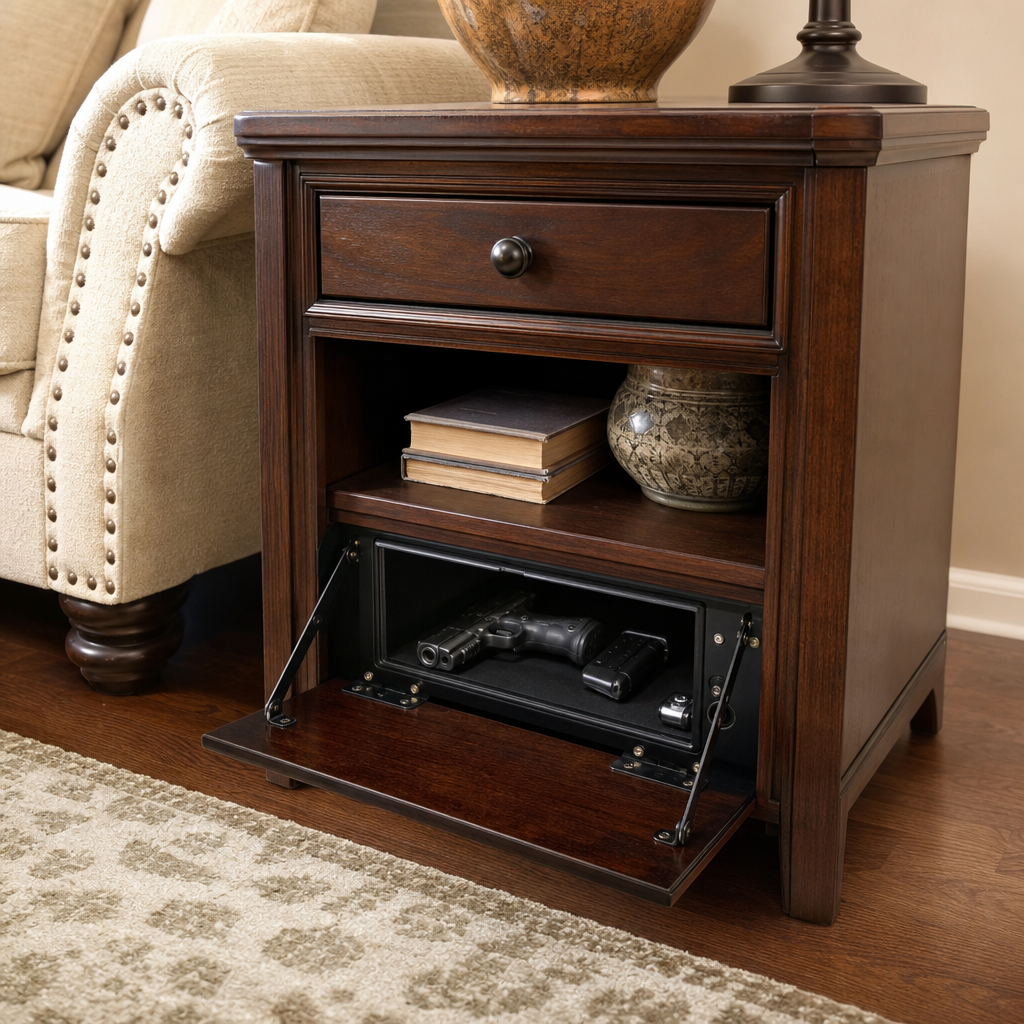
Hidden gun safes work best when they disappear into daily life while still opening fast, storing firearms securely, and fitting the owner’s exact routine. The best customization hacks for hidden gun safes focus on three goals: concealment, access, and protection. Concealment means the safe avoids obvious shapes, seams, and placement errors that attract attention. Access means the owner can reach a handgun, documents, magazines, or medical kit quickly under stress. Protection includes burglary resistance, child safety, moisture control, and interior organization that prevents damage. I have installed and upgraded wall safes, furniture safes, closet vaults, and under-stair compartments, and the same principle always applies: an off-the-shelf hidden safe becomes dramatically better when the layout, locking method, and installation details are tailored to the room and the user. That matters because a hidden safe that is slow, noisy, poorly anchored, or awkwardly organized fails when it is needed most. Smart modifications solve those practical weak points.
Custom and DIY gun safe modifications can range from simple adhesive lighting to more advanced carpentry, electronic access upgrades, false-back cabinetry, and humidity management. A hidden gun safe is any secure firearm storage unit intentionally disguised within architecture or furniture, such as a mirror safe, bookshelf compartment, bed-frame drawer, wall cavity vault, or bench seat with a reinforced lockbox inside. Customization is the process of improving that base design for a specific use case. In real homes, that may mean trimming a shelf to clear an optic, lining steel with closed-cell foam to reduce rattle, adding a UL-rated dehumidifier rod, relocating a keypad for cleaner sightlines, or reinforcing surrounding studs so a thief cannot simply pry out the entire assembly. Gun owners search for these hacks because factory interiors are often generic, hidden compartments can be obvious if poorly finished, and household layouts vary widely. A bedroom quick-access setup needs different modifications than a basement long-gun hideaway, and both differ from an RV, office, or vacation property installation.
This hub article covers the most effective ways to customize hidden gun safes without losing sight of legal compliance, safety fundamentals, and realistic security limits. No hidden safe should be mistaken for an impenetrable vault; concealment buys time, but anchoring, quality locks, and disciplined storage practices are what convert a clever idea into dependable firearm security. The sections below break down concealment upgrades, interior organization, lock improvements, environmental control, structural reinforcement, and planning mistakes to avoid, so you can choose modifications that fit your firearms, your space, and your risk level.
Choose the Right Hidden Safe Platform Before Modifying It
The first customization hack is choosing a platform that can actually support upgrades. Many low-cost hidden gun safes look attractive online but use thin sheet metal, weak cam locks, and shallow interiors that cannot accommodate pistols with weapon lights, red-dot optics, or spare magazines. Before changing anything, confirm steel thickness, hinge quality, lock type, door swing, mounting points, and interior depth. If a wall safe sits between standard 16-inch-on-center studs, interior space is limited by design, so organization matters more than raw capacity. If you need to store a full-size handgun with an optic, measure height and depth with the door closed, not just the advertised dimensions. I have seen owners mount a hidden mirror safe only to learn the pistol rubs the back panel because the foam insert was too thick.
Furniture-based hidden safes offer more room for creative modifications, but they also require more attention to load paths and visibility. A hidden compartment inside a dresser, nightstand, or bench can work extremely well when the safe body is bolted into the furniture frame and the furniture itself is stabilized to the wall or floor. Without that reinforcement, a thief may remove the entire piece in minutes. Wall safes blend naturally behind framed art or mirrors, yet they are vulnerable if the trim reveals fresh cuts, uneven reveals, or screws placed where a finish carpenter would never put them. Under-bed safes are fast to access and easy to customize with drawers, dividers, and LED strips, but they are among the first locations many burglars check. The right platform depends on whether your priority is fastest access, best disguise, or maximum capacity in a specific room.
Think in layers. Hidden storage should complement, not replace, broader firearm security. Many owners use a hidden handgun safe for immediate access and a heavier full-size safe for long guns, ammunition, and less frequently used items. That layered approach is practical and defensible because it matches the strengths of each storage type. When selecting a hidden platform, also consider nearby power, Wi-Fi reliability if using smart alerts, line of sight from normal room entry, and whether children or guests frequently use the space. These details shape every later modification.
Concealment Upgrades That Make a Hidden Gun Safe Truly Disappear
The most effective concealment upgrades are architectural, not theatrical. A hidden safe should look boring, proportionate, and consistent with the room. In practice, that means matching trim profiles, paint sheen, hardware finish, and spacing around surrounding objects. If you build a false cabinet back or conceal a wall safe behind artwork, the frame size should fit the wall logically. Oversized art on a narrow hallway wall often looks suspicious. So does a bookshelf with fake books that never move except for one hinged section. Better solutions use normal household patterns: a mirror above a dresser, a recessed medicine cabinet in a bathroom-adjacent dressing area, a toe-kick drawer in built-in cabinetry, or a hidden compartment behind a real shelf arrangement that remains functional.
A simple but powerful DIY modification is magnetic closure tuning. Many concealment panels fail because they slap shut too loudly or require awkward force to open. Upgrading to quality rare-earth magnetic catches, soft-close piston supports, or concealed touch latches can make the panel feel like normal cabinetry instead of a crude secret door. I also recommend blacking out visible metal inside shadow lines. A flash of bright steel behind a shelf gap can ruin concealment. Matte black paint on non-contact surfaces, edge weatherstripping to eliminate light leaks, and felt bumpers to silence panel contact all improve the illusion.
Another often overlooked hack is visual clutter calibration. A hidden gun safe behind a shelf should not be arranged like a movie prop. Real shelves contain ordinary, slightly imperfect objects with believable spacing. Leave enough genuine storage function that the area survives casual inspection. For high-use spaces, concealment must also survive routine cleaning. If a spouse, cleaner, or guest regularly moves décor items, the hidden opening method should not depend on one exact vase position. Durable concealment relies on repeatable mechanics and natural-looking placement, not gimmicks.
Interior Layout Hacks for Faster Access and Safer Storage
The inside of a hidden gun safe determines whether it is convenient or frustrating. Factory shelves waste space because they rarely match the dimensions of your firearms and accessories. The best DIY modification is creating a task-based layout. Group items by purpose: primary defensive handgun, spare magazine, flashlight, suppressor if lawful and secured appropriately, important documents, and small medical gear. Use kydex holster mounts, hook-and-loop backed magazine carriers, and modular pistol racks to keep grips oriented the same way every time. Consistency reduces fumbled access in low light or under stress.
Foam can help, but choose the right type. Open-cell foam absorbs moisture and can trap grit against finishes. Closed-cell polyethylene foam or custom-cut EVA foam is more durable and easier to clean. For pistols with optics, cut relief channels so pressure is not resting on the sight housing. For rifles stored in deeper compartments, barrel saddles and buttstock cups prevent tipping while preserving clearance around scopes. Small adhesive bins on the door can hold batteries, keys, and chamber flags, but avoid overloading the door if hinge capacity is limited.
| Modification | Best Use | Main Benefit | Common Mistake |
|---|---|---|---|
| Kydex holster mount | Defensive handgun storage | Consistent grip angle and trigger protection | Mounting too low for fast draw |
| Closed-cell foam liner | General interior protection | Reduces rattle and surface wear | Using moisture-trapping foam |
| Hook-and-loop mag panel | Spare magazine organization | Flexible layout changes | Crowding mags so removal is slow |
| LED light strip | Low-light access | Immediate visibility inside the safe | Harsh glare or poor battery maintenance |
| Door document sleeve | Permits and records | Keeps paperwork flat and separate | Blocking lock mechanism clearance |
Lighting is one of the highest-value upgrades. A dim hidden compartment becomes much easier to use with a motion-activated LED strip or low-profile puck light. Choose warm or neutral white lighting with diffused output so you can identify items without harsh reflection off stainless magazines or optic lenses. Battery-powered units are easy to install, but hardwired low-voltage lighting is more dependable in a frequently used safe. Route wiring carefully so it does not interfere with bolts, hinges, or interior drawers.
Lock, Access, and Power Upgrades That Improve Daily Use
Access speed matters, but reliability matters more. Hidden gun safes commonly use tubular key locks, mechanical simplex locks, biometric readers, electronic keypads, or RFID systems. Each has strengths. Mechanical pushbutton locks such as the Simplex style are valued because they do not depend on batteries and remain fast with practice. Electronic keypads can be very quick and support multiple codes, stealth modes, and audit features, but quality varies widely. Biometric access has improved, especially with capacitive fingerprint sensors, yet it still depends on finger condition, enrollment quality, and battery health. RFID can be elegant in furniture safes because it preserves concealment, though tag management becomes another household security variable.
My preferred upgrade path for a hidden quick-access safe is a proven electronic or mechanical primary lock paired with a physical override that is stored separately and discreetly. If you use battery-powered access, adopt a maintenance schedule. Replace batteries on a fixed calendar, not when the low-battery warning appears. Test enrollment regularly on biometric systems, especially if more than one adult needs access. If the safe is in a bedroom, disable loud beeps and use backlit controls or tactile button references. Quiet entry is not a luxury; it is part of realistic defensive use.
Power planning is equally important. A hidden safe inside built-in furniture may allow concealed low-voltage wiring from a nearby outlet, which is ideal for lighting, lock support, and sensors. Use grommets and strain relief, and avoid amateur drilling that exposes wires to sharp metal edges. If you add smart sensors, choose simple functions that matter, such as door-open alerts or tamper notifications, rather than gimmicky remote unlocking. The best access upgrades remove failure points, not add them.
Reinforcement, Anchoring, and Environmental Protection
Concealment fails if the safe can be pried out of the wall, carried away with the nightstand, or corroded by humidity. Reinforcement is therefore a core customization category. For wall-mounted hidden safes, add blocking between studs, use manufacturer-approved anchor hardware, and upgrade surrounding finish details so the wall itself does not telegraph the installation. In cabinetry, bolt the safe through structural members, not just thin panels or drawer bottoms. If furniture houses the safe, secure the furniture to wall studs using anti-tip hardware or structural screws. This is especially important in homes with children, where stability and access control are inseparable safety issues.
Door-side reinforcement can also pay off. Some owners add anti-pry lips, reinforced strike areas, or upgraded hinge-side support plates where the manufacturer design allows it. Be careful: unauthorized welding or drilling can void warranties and weaken heat-treated components if done poorly. A more reliable DIY path is improving the mounting environment rather than altering the lock body itself. For example, replacing short factory anchor bolts with proper concrete wedge anchors in a slab installation can substantially improve resistance to removal.
Environmental protection matters because hidden spaces often sit in exterior walls, basements, garages, or under furniture where airflow is limited. Firearms stored in these micro-environments are vulnerable to condensation and rust. Add rechargeable desiccant packs, a GoldenRod-style dehumidifier where power is available, and a hygrometer so you can measure conditions instead of guessing. Aim to keep relative humidity controlled and inspect firearms routinely. Silicone-treated gun socks can help protect finishes, but they should not become a substitute for climate management. If the compartment is near an exterior wall, insulate and air-seal around the cavity to reduce temperature swings that drive condensation.
Planning Mistakes, Legal Considerations, and Smart Next Steps
The biggest mistake in custom hidden gun safe projects is treating concealment as security by itself. Experienced burglars check closets, bedside furniture, home offices, and recently renovated wall sections first. Another common error is designing around aesthetics while neglecting access ergonomics. If you must kneel, move furniture, remember a complicated sequence, and then clear a snag-prone shelf, the setup is not truly defensive. Poor trigger coverage, loose storage of loaded magazines among clutter, and failure to account for children or unauthorized adults are even more serious problems. Follow all applicable firearm storage laws in your state and locality, especially regarding child access prevention, loaded firearm storage, and transport between residences.
Think realistically about what belongs in a hidden safe. Quick-access handgun storage is a strong use case. Storing multiple long guns in a lightly reinforced hidden compartment may not be. Expensive collections, NFA-regulated items where lawful, irreplaceable documents, and large ammunition quantities usually justify a heavier rated safe or dedicated vault room. Hidden safes are most valuable when they shorten access time, diversify storage locations, and reduce obvious targets during a quick smash-and-grab burglary.
As a hub for custom and DIY gun safe modifications, this guide should help you evaluate concealment methods, interior layout options, lock upgrades, and reinforcement choices with clear priorities. Start with the platform, then refine disguise, organization, access, and environmental control in that order. Test every modification repeatedly in daylight and darkness, under normal conditions and mild stress, until operation is smooth and predictable. If you are planning your next upgrade, map your room, measure your firearms with accessories attached, and choose one hidden gun safe customization that improves both security and usability today.
Frequently Asked Questions
What are the most effective ways to customize a hidden gun safe so it stays truly concealed?
The best concealment upgrades make a hidden gun safe look like it belongs exactly where it is, not like something trying too hard to disappear. In practice, that means avoiding obvious “safe-shaped” installations, exposed seams, mismatched finishes, and awkward placement. A customized hidden safe should blend into normal daily life by matching the room’s materials, proportions, and traffic patterns. For example, wall safes can be disguised behind mirrors, framed art, shallow shelving, or cabinet panels, but the surrounding design needs to look natural. If the frame is too thick, the object sits too far off the wall, or the item is placed in a strange location, it can draw attention instead of reducing it.
One of the smartest customization hacks is to design around common household visual patterns. Match paint color, wood stain, hardware style, trim profile, and even the wear level of nearby furnishings. In furniture-style hidden safes, use believable drawer fronts, doors, or decorative panels that match real furniture in the home. Another strong tactic is to break up straight lines and visible edges, since burglars often notice unusual seams, recessed boxes, or objects that look recently installed. Soft-close hinges, flush-mounted panels, magnetic catches, and carefully aligned reveals all help reduce visual clues.
Placement matters just as much as appearance. A hidden safe is usually most effective when installed in a room that makes sense for the items it stores and where its cover object feels ordinary. A bedside concealment safe, for instance, should integrate naturally into a nightstand, headboard, or nearby cabinet, while a document-and-firearm setup might fit better in a home office built-in. The key is not just “hiding” the safe, but making sure no one has a reason to focus on that part of the room in the first place. Good customization removes suspicion, reduces visual tells, and keeps the safe part of the environment rather than a feature that stands out.
How can I customize a hidden gun safe for faster access during an emergency?
Fast access customization starts with one simple rule: under stress, every extra motion matters. A hidden gun safe should not just conceal a firearm well; it should open quickly, consistently, and with minimal fine-motor effort. The most effective upgrades focus on how the safe is actually used in real-world conditions, including low light, elevated heart rate, awkward body position, and one-handed operation. That means choosing access methods and internal layouts that support speed without sacrificing security.
One of the best hacks is to tailor the opening method to your routine and location. For a bedroom safe, a biometric lock with a reliable backup keypad can work well if it has been tested repeatedly with dry hands, sweaty hands, and nighttime use. In some cases, a fast mechanical simplex-style lock is even better because it avoids battery dependence and can be opened by touch. The right answer depends on the user, but the customization principle is the same: choose a lock you can operate accurately in darkness and under pressure. Avoid systems that require overly precise finger placement, long code entry, or multiple hidden steps.
Interior organization is just as important. Foam inserts, adjustable holsters, magnetic retainers, and dedicated slots for a handgun, spare magazine, flashlight, documents, or trauma supplies can dramatically improve response speed. A poorly organized safe forces the user to search, reposition items, or risk grabbing the wrong object. A customized layout keeps the primary firearm oriented consistently, with the grip presented naturally for the dominant hand. If the safe stores more than one category of item, separate them clearly so emergency access is not slowed by clutter.
It also helps to customize the safe’s height, angle, and door swing. A safe that opens toward a wall, at knee level in a cramped space, or in a way that blocks the firearm grip can lose valuable seconds. The best setups are tested from the user’s normal sleeping, standing, or seated position. Practice opening the safe in realistic conditions and make adjustments based on what actually works, not what only looks good during installation. Speed comes from simplicity, repetition, and smart layout choices that fit the owner’s real habits.
What protection upgrades should I prioritize when customizing a hidden gun safe?
The most important protection upgrades address three separate threats: unauthorized access, burglary attack, and environmental damage. A hidden gun safe may already benefit from concealment, but concealment alone is not a complete security strategy. If someone finds the safe, it still needs to resist prying, removal, and forced entry long enough to matter. That is why the best customization plans strengthen both the safe itself and the structure around it.
First, prioritize anchoring and reinforcement. A hidden safe that can be removed easily is far less secure than one anchored into wall studs, floor framing, concrete, or a properly reinforced cabinet structure. Custom installers often strengthen the mounting area with steel plates, backing boards, or internal framing so the safe cannot simply be ripped out. Door strength, hinge protection, and pry resistance also deserve attention. Reinforced doors, concealed hinges, anti-pry lips, and stronger locking bolts can make a major difference if a thief discovers the unit.
Second, think about layered protection. Many owners customize hidden gun safes to store more than a handgun, including important documents, valuables, spare magazines, or a medical kit. In those cases, fire lining, moisture control, and corrosion prevention become important. Depending on the safe and the environment, useful upgrades can include fire-resistant insulation, dehumidifiers, desiccant packs, door seals, and interior materials that will not trap damaging moisture. These details help protect both firearms and paperwork over time, especially in basements, garages, and humid climates.
Finally, include simple monitoring and maintenance features. Tamper alerts, low-profile door sensors, interior lighting, and battery status checks can make the safe more dependable without undermining concealment. If the safe uses electronic access, battery maintenance is not optional. If it stores a defensive firearm, reliability must be verified routinely. The strongest hidden safe customization is the one that assumes discovery is possible and prepares for it with better anchoring, stronger resistance, and a well-managed internal environment.
Where should a hidden gun safe be placed for the best balance of concealment, access, and daily practicality?
The best location depends on what the safe stores, who needs access, and how quickly it may need to be opened, but in general, the ideal placement is one that feels natural in the room, supports fast reach, and does not create obvious visual or behavioral clues. A hidden gun safe should be positioned where it blends into everyday life and where the owner can access it without awkward movement. That usually means avoiding overly clever locations that are difficult to reach, hard to install securely, or obvious to experienced burglars.
For quick-access handgun storage, bedrooms, home offices, dens, and certain living areas are often the most practical choices because they align with normal routines. A bedside table, headboard compartment, built-in cabinet, or disguised wall feature can work very well if the safe opens cleanly and does not force the user into an unnatural body position. In contrast, a hidden safe placed too low, too high, or behind heavy furniture may be technically concealed but practically slow. That tradeoff defeats the purpose of quick access.
For broader storage, such as firearms plus documents or emergency supplies, custom built-ins can provide an excellent balance. Bookcases, closet cabinetry, office furniture, and mudroom storage can all hide safes effectively when designed with believable dimensions and finishes. What should be avoided are “classic hiding spots” that many thieves already know to check, such as obvious paintings with large voids behind them, hollowed-out furniture with poor structural logic, or isolated master bedroom locations that look recently modified. Burglars often move quickly but they also recognize patterns, especially in predictable rooms.
Daily practicality matters too. A well-placed hidden safe should not interfere with cleaning, furniture use, door movement, or family routines. It should also be located in a part of the home with appropriate structural support and environmental conditions. If the area is prone to moisture, heat swings, or impact, those factors need to be addressed during customization. The smartest placement is not just hidden; it is believable, convenient, structurally sound, and suited to the owner’s real access needs.
What common customization mistakes make hidden gun safes less secure or less useful?
The biggest mistake is focusing entirely on the “hidden” part and not enough on access, strength, and day-to-day usability. A hidden gun safe that disappears visually but is hard to open, poorly anchored, or organized badly can become frustrating at best and dangerous at worst. Many owners also overestimate novelty. A disguise only works if it looks ordinary. If a panel, mirror, shelf, or furniture piece appears out of scale, out of place, or overly elaborate, it can attract exactly the kind of attention it was meant to avoid.
Another common mistake is poor placement. Installing a safe in a location that is inconvenient under stress, obvious to anyone familiar with the room, or structurally weak can undermine the entire project. The same applies to choosing the wrong lock. Some users install biometric systems without thoroughly testing them in realistic conditions, while others rely on keypad or key access methods that are too slow or awkward