
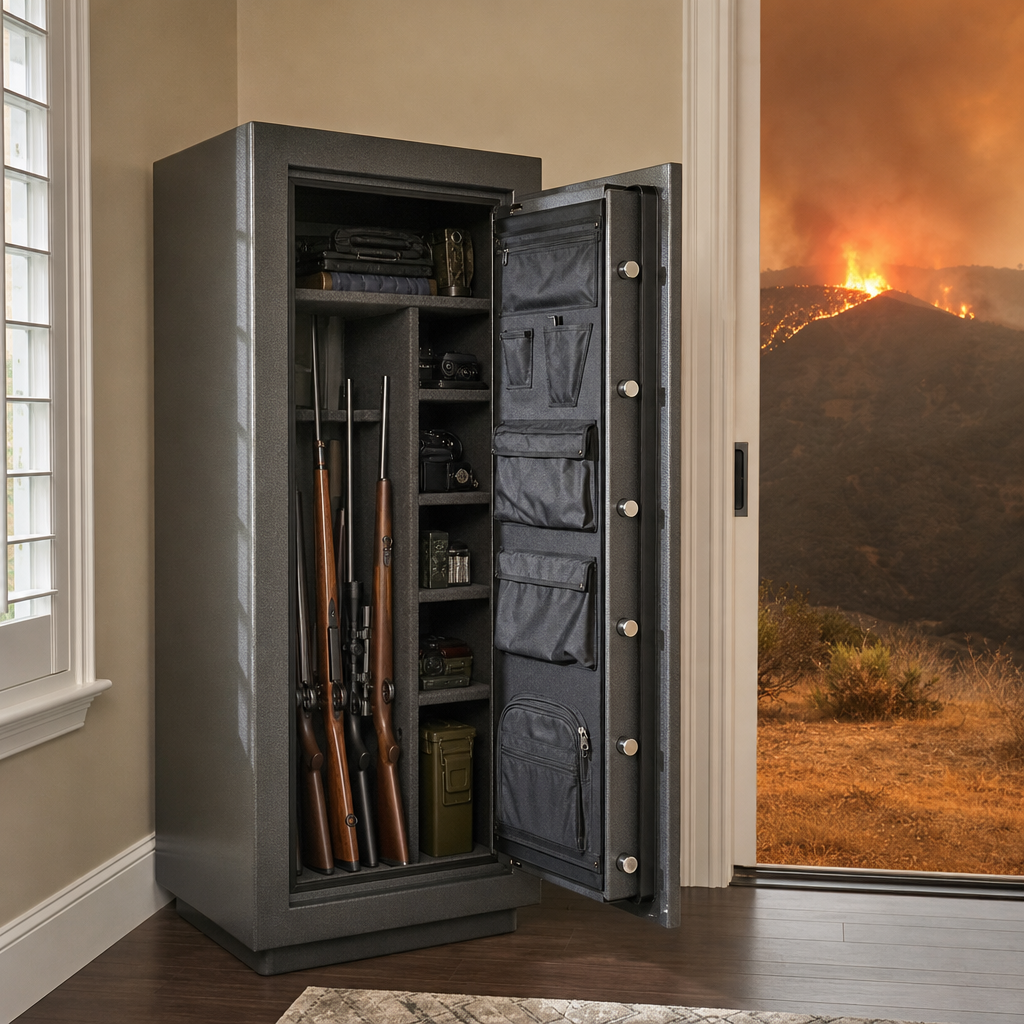
Choosing a fireproof gun safe based on your region’s risks starts with a simple truth: “fireproof” is not a universal standard, and disaster-resistant storage means different things in California, Florida, Texas, or the Upper Midwest. A gun safe that performs well during a short house fire in a suburban neighborhood may fail during a wildfire ember storm, a hurricane flood, a tornado-driven impact event, or a week-long humidity surge after a power outage. I have helped buyers compare safes for homes, ranch properties, detached garages, and basement workshops, and the biggest mistake I see is shopping by headline claims instead of matching the safe to local hazards. That matters because firearms are high-value assets, many owners store documents and optics alongside them, and poor storage can turn a manageable emergency into a total loss. In practical terms, a fireproof gun safe is a burglary-rated enclosure with some tested ability to keep interior temperatures below damage thresholds for a stated time, while disaster-resistant storage adds protection against water, smoke, corrosion, impact, and environmental instability. Understanding both is essential if you want a hub-level approach to fireproof and disaster-resistant storage rather than a one-size-fits-all purchase.
Most modern gun safes advertise a fire rating such as 30, 60, 90, or 120 minutes, usually at an exterior temperature in the 1,200 to 1,800 degree Fahrenheit range. Those numbers are useful, but they do not tell the whole story. You also need to know how the rating was established, what seal system the door uses, how the body is insulated, whether the steel thickness supports structural integrity under heat, and whether the safe was tested by a recognized lab such as Intertek/ETL or UL on comparable methods. Fire behaves differently across regions. In dense urban areas, fire response can be quick and a 60-minute safe may be appropriate. In rural Western counties, wildfire conditions and delayed response times can justify stepping up to thicker steel, longer ratings, and tighter intumescent seals. Regional risk also includes non-fire threats. Coastal humidity drives rust. Gulf storms bring storm surge. Plains states see tornado debris. Northern climates raise concerns about basement moisture and freeze-thaw conditions in outbuildings. The right purchase is not the safe with the loudest marketing; it is the safe whose design, placement, and certification align with your local threat profile, collection size, and insurance expectations.
Start with your regional hazard profile, not the catalog headline
The best way to choose a fireproof gun safe is to begin with a regional hazard profile. Ask four direct questions: What disasters are common where I live? How long could emergency response be delayed? Where in my home will the safe sit? What exactly am I protecting besides firearms? When I walk clients through this process, the answers usually change the buying decision immediately. A homeowner in Arizona may prioritize wildfire heat, dust intrusion, and garage temperature swings. A buyer in Louisiana may care more about flood depth, prolonged humidity, and post-storm power loss. Someone in Oklahoma often needs better anchoring and structural resilience because wind events can move a safe or collapse surrounding walls.
Use public data to ground the decision. FEMA flood maps help estimate inundation risk. The U.S. Forest Service and state agencies track wildfire exposure. NOAA storm history shows hurricane, tornado, hail, and wind patterns. Local fire department response times matter more than national averages. If your nearest station is twenty minutes away and your property has long driveway access, your safe should be selected as if the fire may burn unchecked longer than a suburban structure fire. In insurance workups, I also look at construction type. A safe in a concrete-slab interior closet faces different thermal and moisture conditions than a safe in a second-floor wood-framed room above a garage. Regional selection is less about labels and more about predicting real failure modes before you buy.
Understand fire ratings, insulation, and what heat really damages
A fire rating tells you how long a safe is intended to protect contents under a specific heat profile, but the details matter. Firearms themselves can tolerate more heat than paper documents, yet stocks, grips, optics, lubricants, ammunition packaging, and electronic accessories can degrade far earlier than the steel barrel and receiver. Interior temperatures around 350 degrees Fahrenheit are often used as the threshold for paper survival; plastics, adhesives, and optics can suffer well below that depending on duration. That is why safe construction matters as much as the posted rating.
Most gun safes use gypsum-based fireboard layers, ceramic wool, proprietary poured insulation, or combinations of these. More insulation generally improves fire endurance, but only if the door gap, hinge area, and body seams are controlled properly. Intumescent door seals expand when heated, slowing smoke and heat intrusion. Continuous welds and reinforced door frames help prevent warping. In my experience, thin steel bodies with generous fire claims are common in entry-level models, and they can disappoint in severe fires because structural distortion opens leakage paths. A more credible fireproof gun safe will specify steel gauge, insulation layers, seal type, and test conditions rather than just displaying a large badge on the door. If your region has high wildfire exposure or slower suppression, look for at least a verified 90-minute rating and robust door geometry, not just a marketing statement.
Match the safe to the dominant risk in your area
Regional buying becomes easier when you connect each hazard to specific safe features. The table below summarizes the practical matchups I recommend most often.
| Regional risk | What threatens the safe | Features to prioritize | Typical placement advice |
|---|---|---|---|
| Wildfire-prone West | Long-duration heat, ember intrusion, delayed response | Verified 90-120 minute rating, multiple fire seals, heavier steel body, external hinge protection | Interior ground floor, away from garage fuel loads, anchored to slab if possible |
| Hurricane and coastal regions | Flooding, storm surge, salt air, prolonged humidity | Elevated base, dehumidifier, corrosion-resistant finish, sealed body seams, document box inside | Above known flood level, upper floor only if structure supports weight |
| Tornado and severe storm zones | Debris impact, structural collapse, water from roof loss | Heavy weight, wide bolt coverage, strong anchoring, thicker steel, fire seal plus interior dry control | Concrete slab room or closet, not near exterior windows |
| Northern wet basements | Humidity, seepage, condensation, shorter structure fires | Moderate fire rating, sealed dehumidification, raised platform, rust prevention accessories | Not directly on concrete; use spacers or platform |
| Rural properties nationwide | Long response times, detached-building fires, theft after disaster | Longer fire rating, heavy body, quality lock, bolt-down kit, monitored alarm integration | Main residence interior rather than unconditioned outbuilding |
These are not theoretical distinctions. A flood-exposed owner who buys a high-rated fire safe and places it directly on a basement slab may still lose optics, paperwork, and magazines to standing water. A wildfire-zone owner who stores a safe in the garage next to fuel, paint, and batteries increases both fire load and exposure duration. Good selection always includes the safe itself and the environment around it.
Water, humidity, and corrosion resistance are nonnegotiable in many climates
Fire gets the advertising, but water ruins more contents than buyers expect. Some gun safes include a basic water-resistance claim, often based on door seals or short-term spray exposure. That is not the same as surviving flood submersion. In coastal and Gulf states, the bigger day-to-day threat can be moisture. Salt-laden air accelerates corrosion on blued steel, screws, springs, and optic mounts. In basements across the Midwest and Northeast, concrete emits moisture and temperature swings cause condensation inside the safe even when no leak is visible.
For these regions, choose a safe with a tight door seal, quality powder-coated finish, and a power port for a dehumidifier rod or rechargeable desiccant system. I prefer combining both: a low-watt heating rod to reduce condensation and silica packs to manage spikes after storms. Put hygrometers inside so humidity stays near 45 to 50 percent for most collections. Raise the safe off bare concrete with a composite platform or manufacturer-approved spacers. If your region has real flood risk, elevation matters more than any brochure claim. Store irreplaceable documents and small valuables in a separate UL-classified media or document container inside the gun safe, because mixed contents have different survival thresholds.
Placement, anchoring, and home construction can strengthen or weaken protection
Even an excellent safe performs poorly if installed in the wrong place. Fireproof and disaster-resistant storage depends on placement as much as construction. Interior rooms generally outperform garages and sheds because they are buffered from external heat, weather, and theft visibility. Concrete slab locations help with anchoring and reduce collapse risk, but only if they are not below likely flood level. In tornado country, a ground-floor interior closet on a slab is often the best compromise. In wildfire areas, avoid rooms adjacent to major fuel loads such as workshops, utility spaces, or garages with gas cans and lithium battery chargers.
Anchoring is essential in every region. A 700-pound safe can still be tipped with prying leverage, shifted by wind damage, or moved during cleanup after a disaster. Use manufacturer-approved anchor points and hardware sized for the slab or framing system. If you are on a raised foundation or upper floor, verify load capacity with a contractor or engineer. Gun safes can exceed 1,000 pounds before contents, and concentrated loads matter. I have seen buyers focus so heavily on fire ratings that they ignore floor deflection and moisture migration from crawlspaces. A smart installation includes structural review, concealment, humidity control, and enough door clearance to access long guns without scraping optics or stocks.
Choose the right lock, interior setup, and supporting accessories
Lock choice affects reliability during normal use and after disasters. Mechanical dial locks remain highly trusted because they are not dependent on batteries or circuit boards, though they are slower to open. Electronic keypad locks are convenient and common, but quality varies significantly. In humid or coastal regions, buy from established lock makers and replace batteries on schedule. In cold outbuildings, avoid bargain electronics. Redundant locks that combine keypad access with key override are not automatically better; override cylinders can introduce an additional attack point. For many buyers, a UL-listed electronic lock from a reputable brand is the right balance of speed and security, while rural users who prioritize maximum long-term simplicity often prefer mechanical dials.
Interior configuration also matters. Adjustable shelving lets you move ammunition, optics, passports, and hard drives away from floor level if water enters. Door organizers improve access but can reduce clearance for scoped rifles in narrow bodies, so test realistic layouts rather than the manufacturer’s maximum gun count. Add silicone-treated socks, low-profile LED lighting, and labeled bins for suppressor accessories, bolts, and magazines. If your safe is the hub for emergency documents, include a grab-ready pouch with serial-number records, insurance photos, and copies of key paperwork. Disaster-resistant storage is not only about surviving the event; it is also about making recovery faster and more accurate.
How to evaluate brands, certifications, and marketing claims before you buy
Shoppers should be skeptical of vague advertising. “Fireproof” can mean almost anything in retail copy unless the manufacturer explains the method. Look for specifics: duration, temperature, testing organization, and construction details. Independent verification from Intertek/ETL or comparable labs is more meaningful than an unstated factory test, though you should still read what was actually tested. Compare steel thickness in the body and door, bolt diameter and count, hinge protection, relocker features, and warranty terms that address fire, forced entry, and attempted break-in. Established brands often publish clearer data, but every model should be judged individually.
Read owner reports with care. Reviews are useful for delivery quality, finish issues, lock reliability, and customer support, but they rarely prove true disaster performance because few buyers experience controlled, comparable events. When possible, ask dealers how the safe’s fire package is built and whether replacement parts, lock service, and interior accessories are available years later. Also check your insurance policy. Some carriers require documented storage standards or serial-number schedules, and higher-value collections may justify a separate rider. The goal is to buy a safe that fits your region, your inventory, and your recovery plan, not simply the biggest cabinet in the showroom.
The strongest buying decision comes from treating your gun safe as a regional risk-management tool. Match the fire rating to likely burn duration, the water strategy to your flood and humidity exposure, the anchoring plan to wind and theft risk, and the interior setup to the full list of items you need to protect. In wildfire areas, favor longer verified fire endurance and careful placement away from fuel-heavy spaces. In coastal and hurricane zones, prioritize elevation, moisture control, and corrosion prevention. In tornado regions, focus on mass, anchoring, and protected placement inside the structure. In cold and damp climates, fight condensation as aggressively as you shop for fire resistance.
If you remember one principle, make it this: the best fireproof gun safe is the one designed, installed, and maintained for the disasters most likely to happen where you live. Marketing labels are a starting point, not a decision. Build your shortlist around regional hazard data, verified specifications, and realistic installation conditions. Then compare final candidates by lock quality, steel thickness, warranty support, and moisture-control options. Review your setup once a year, especially before wildfire season, hurricane season, or winter basement moisture spikes. A well-chosen safe protects firearms, documents, optics, and records when conditions are at their worst. Use this hub as your planning baseline, then map your local risks and buy the safe that answers them directly.
Frequently Asked Questions
1. What does “fireproof” really mean when choosing a gun safe for my region?
“Fireproof” is one of the most misunderstood terms in the gun safe market because it is not a single, universal performance standard. In practice, a safe’s fire protection depends on how long it can keep interior temperatures below a damaging threshold when exposed to a specific external temperature. That matters because paper documents, wood stocks, optics, electronics, and ammunition-related components all tolerate heat differently. A safe rated for 30 minutes at one temperature may perform very differently than a safe rated for 90 minutes at another, and those numbers do not automatically tell you how the safe will respond to your area’s real-world risks.
Regional conditions should shape how you interpret those ratings. In a dense suburban area with quick fire department response, a strong short-duration fire rating may be enough. In wildfire-prone regions, however, radiant heat, ember intrusion, and prolonged exposure can create a very different threat profile. In hurricane-prone areas, the fire rating may matter less than the safe’s seal design, corrosion resistance, and anchoring strength in flood conditions. In tornado zones, impact resistance and bolt-down performance may be just as important as insulation. The key point is that “fireproof” should never be evaluated in isolation. You are not buying a label; you are buying a safe that needs to survive the most likely emergency conditions where you live.
When comparing models, look beyond marketing language and focus on tested fire ratings, door seal quality, body construction, insulation type, and whether the manufacturer provides meaningful details about testing conditions. If your region faces multiple hazards, the best safe may not be the one with the highest advertised fire number, but the one with the most balanced protection against heat, moisture, smoke, impact, and post-disaster environmental exposure.
2. How should wildfire risk change the type of fireproof gun safe I buy?
If you live in a wildfire-prone area, such as much of California, parts of the Mountain West, or dry rural zones with heavy brush, you should think beyond a typical house-fire scenario. Wildfires can expose a home and everything inside it to sustained radiant heat, airborne embers, sudden structure ignition, and even partial building collapse. That means a safe that performs adequately in a brief residential fire may not offer the same level of protection during a wildfire event, especially if the fire burns nearby for an extended period or embers find their way into the structure before the main fire front arrives.
For wildfire conditions, prioritize a longer-duration fire rating, robust door seals that expand under heat, and a body design that minimizes gaps where heat and smoke can penetrate. Heavier steel construction can help with structural integrity, but insulation and seal design are equally important. You should also consider placement carefully. A safe installed against an exterior wall in a garage may face more intense heat and ember exposure than one located deeper inside the home on a noncombustible floor. In wildfire country, interior placement on a concrete slab often makes more sense than convenience-based placement in vulnerable outbuildings or attached garages full of fuel loads.
Wildfire buyers should also think about what happens after the flames pass. A safe may survive the fire, but contents can still suffer from lingering heat, smoke infiltration, and moisture introduced by suppression efforts. If you store firearms with optics, important paperwork, suppressor accessories, or electronic devices, interior humidity control and sealed storage containers inside the safe can add another layer of protection. In short, a wildfire region calls for a safe selected as part of a broader protection strategy: longer fire endurance, smarter placement, better sealing, and realistic expectations about prolonged heat exposure.
3. If I live in a hurricane or flood-prone area, is a fireproof gun safe still enough?
No, not by itself. In hurricane-prone states like Florida or along the Gulf Coast, fire resistance is only one part of the equation. Hurricanes introduce floodwater, storm surge, prolonged humidity, salt air in coastal regions, structural collapse, and power outages that can leave indoor moisture levels elevated for days. A safe that advertises a strong fire rating may still be a poor choice if it has weak door seals against water intrusion, limited corrosion resistance, or a low-profile base that allows shallow flooding to enter quickly.
In these regions, you should evaluate a gun safe as both a fire-resistant and moisture-management product. Look for elevated installation options, quality door seals, durable finish coatings, and interior setups that support dehumidification. If the safe will be in a garage or ground-floor room, think seriously about raised platforms or installing it on a concrete pedestal above expected minor flood levels. Anchoring is critical too. During severe flooding or storm surge, an unanchored safe can shift, tip, or even float if buoyancy becomes a factor, especially once surrounding materials break loose. A heavy safe is helpful, but proper anchoring is what keeps it where it belongs.
After a hurricane, the greatest threat to firearms may not be direct fire or even standing water, but lingering moisture. Long stretches without air conditioning can create severe condensation inside homes and safes. That means your regional risk assessment should include active or passive dehumidification, rust prevention practices, and regular post-storm inspection plans. In a hurricane zone, the best “fireproof” gun safe is one that treats heat protection as necessary but not sufficient. You need a model and installation plan designed for water, humidity, corrosion, and movement under extreme weather conditions.
4. What should buyers in tornado and severe storm regions look for in a fireproof gun safe?
In tornado-prone regions such as Texas, Oklahoma, Kansas, and much of the central United States, the risk profile changes again. A severe storm may bring lightning-related fire, but it can also produce violent structural damage, airborne debris, roof collapse, shattered framing, and sudden exposure to rain after the building envelope is breached. In that environment, a fireproof rating is valuable, but it should be paired with strong physical construction and secure anchoring to help the safe remain intact and in place during impact events.
Start with a safe that has substantial steel construction, a durable locking mechanism, and a bolt-down system installed into a solid concrete foundation whenever possible. If a tornado damages the home, a safe that is not anchored may be knocked over, buried, or displaced by debris. Door integrity also matters. Even if the fire insulation is good, a compromised door or frame can allow heat, water, and impact damage to reach the contents. In storm-heavy regions, placement in a lower level or interior room can improve survival odds compared with a garage corner or upper-floor closet, depending on the home’s layout and flood exposure.
It is also smart to consider post-storm access and recovery. After a tornado or major storm, you may need the safe to stay locked, identifiable, and structurally sound even if the surrounding room is damaged. That argues for a model with proven build quality rather than one chosen only for its advertised fire minutes. If your area frequently experiences power outages and high humidity after storms, add moisture control and routine inspection to your plan. For tornado country, think in layers: fire protection, impact resilience, anchoring, strategic placement, and environmental control after the storm passes.
5. How do humidity, cold winters, and seasonal swings affect the best fireproof gun safe choice?
In the Upper Midwest, the Northeast, and other regions with long winters, freeze-thaw cycles, damp basements, and major seasonal humidity swings, the biggest day-to-day threat to firearms may be condensation rather than flames. A fireproof gun safe still matters, of course, but regional climate should strongly influence both the safe you buy and where you install it. Cold exterior walls, uninsulated garages, and basement corners can create temperature differences that lead to moisture buildup inside the safe, especially when warmer air returns in spring or when indoor heating changes the humidity balance.
For these climates, choose a safe with solid insulation, a dependable door seal, and enough interior space to allow airflow around stored firearms rather than packing everything tightly together. You should also plan on humidity control from the start. That may include a dehumidifier rod, rechargeable desiccants, or both, depending on your storage area. If you store heirloom firearms, wood-stock rifles, optics, or important documents, managing moisture is not optional. It is a core part of protecting your collection. Even a very good fire-resistant safe can become a rust chamber if it is installed in a damp location without environmental controls.
Placement is especially important in cold-weather regions. Avoid unconditioned spaces unless the safe is specifically part of a carefully managed setup. Interior rooms with more stable temperatures generally outperform garages, sheds, and exterior-wall locations. It is also wise to inspect contents periodically during seasonal transitions, because spring and fall often reveal moisture problems first. In these regions, the right fireproof gun safe is one that balances fire endurance with climate stability. You are not just choosing protection against a catastrophic event; you are choosing a storage environment that works through months of humidity shifts, furnace cycles, storms, and cold-weather condensation.