
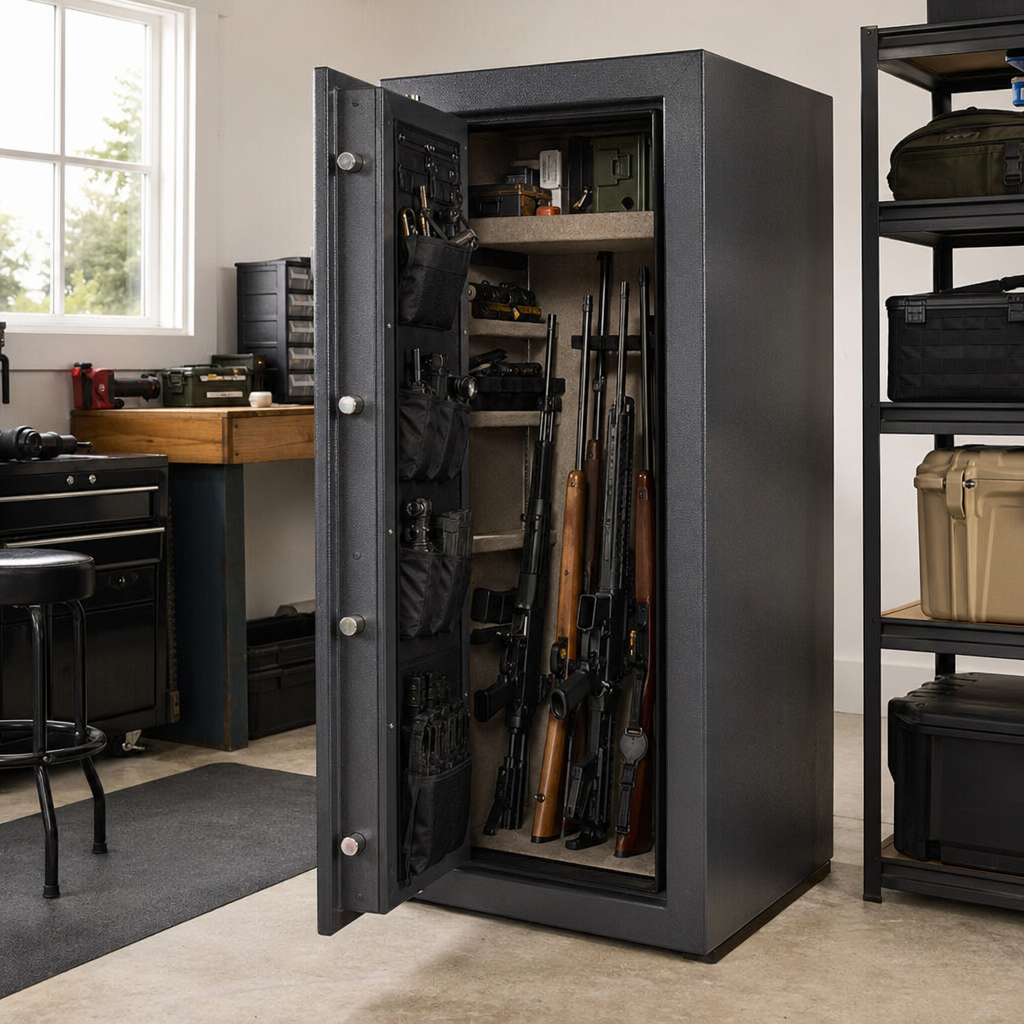
Choosing a gun safe that is resistant to high-impact falls starts with understanding a simple truth: a safe can survive fire ratings, resist basic pry attacks, and still fail when it tips from a vehicle, tumbles down stairs, or drops during delivery. In the gun safes and safety market, “high-impact fall resistance” refers to a safe’s ability to keep its door aligned, locking bolts engaged, body panels intact, and contents protected after a sudden drop or hard tip-over. For buyers comparing products, this matters because impact damage is one of the least advertised yet most expensive failure points.
I have inspected safes after freight mishandling, home moves, and garage tip-overs, and the pattern is consistent: thinner bodies twist, doors rack out of square, relockers misfire, and cheap interiors transfer shock directly into optics, stocks, and handguns. A buying guide on this subject has to go beyond brochure claims. You need to evaluate steel gauge, weld quality, door structure, anchoring design, hinge layout, concrete or composite fill, lock protection, and how the manufacturer handles testing. That broader perspective makes this article a hub for buying guides under gun safes and safety, because impact resistance is connected to size selection, installation, locking systems, theft prevention, moisture control, and long-term durability. The right choice protects firearms not only from unauthorized access, but also from the real mechanical stress that occurs in homes, trucks, workshops, and cabins.
What High-Impact Fall Resistance Really Means
A gun safe that resists high-impact falls does four things after a severe shock event. First, it stays closed. Second, the lock and boltwork still function. Third, the body does not split at welds or corners. Fourth, the interior reduces damage to the firearms and accessories inside. Buyers often focus only on whether the exterior looks rugged, but impact performance is mostly about structural integrity and load paths. When a safe falls, energy moves through the top, bottom, corners, and door opening. Weaknesses show up at hinge welds, frame seams, bolt carrier connections, and anchor plate areas.
Manufacturers rarely publish formal drop-test numbers the way other industries do, so you must infer quality from construction details. A safe built from 12-gauge steel can be acceptable for light residential storage, but for meaningful impact resistance I usually advise starting at 10-gauge bodies and moving toward 7-gauge or thicker if the unit may be exposed to transport, workshop use, detached-garage placement, or uneven flooring. Door thickness matters just as much. A heavy door with a flimsy frame can bend the opening under impact. Composite construction can improve rigidity, but only if the layers are engineered well. Added mass helps absorb force, yet bad internal design can still let that mass deform critical components.
Construction Features That Separate Durable Safes from Fragile Ones
The best buying guides for gun safes always return to materials and assembly. Steel thickness is the starting point, not the finish line. Look for continuous welds rather than intermittent tack welds on major seams. Continuous welds distribute force better when the safe lands on a corner or edge. Pay attention to formed body panels as well. Fewer separate pieces generally mean fewer failure points. A body bent from one larger sheet with reinforced corners often handles shock better than multiple stitched panels.
Door design is another key buying factor. A recessed door can gain some protection from direct contact during a fall, while a robust door frame reduces the chance of binding. Multi-sided bolt engagement helps keep the door secure if one side of the frame distorts. Hard plate protecting the lock area and a functioning relocker can prevent impact-induced compromise, but these systems should be mounted securely. I have seen low-cost electronic lock housings loosen after hard movement because they were attached to thin internal brackets. Mechanical dial locks are slower, but they often tolerate long-term vibration and shock very well. Quality electronic locks from recognized brands such as SecuRam, Sargent and Greenleaf, and La Gard can also perform reliably when properly installed.
The safe’s base is commonly overlooked. A reinforced bottom with substantial anchor points is critical because many high-impact events begin as a tip. Once a safe starts moving, its center of gravity takes over. Units with narrow footprints, top-heavy doors, and weak anchor zones are the most likely to fail in real houses. Interior shelving should also be secured well. Adjustable shelves that jump tracks during impact can turn into projectiles that damage rifles and optics.
How to Read Specifications Without Getting Misled
Gun safe marketing often uses broad terms such as “solid steel construction,” “heavy duty,” or “rugged.” Those phrases are meaningless unless tied to measurable specifications. Read steel gauge carefully and confirm whether the number refers to the body, the door plate, or a decorative outer shell. Ask whether fireboard adds to overall thickness or just fills space. Clarify if the listed weight comes from steel, composite fill, or interior material. More weight can help with impact resistance, but only when that weight supports structure rather than cosmetics.
Fire ratings deserve special scrutiny. A fire-lined safe may be heavier, but gypsum board does not automatically improve fall resistance. In some cases it can crack internally after impact and create voids or debris. By contrast, poured or composite fills can add rigidity, though repair becomes difficult if the shell is deformed. Locking bolt count is another area where buyers get distracted. More bolts do not necessarily mean a stronger safe. The strength of the door edge, bolt carriage, and frame engagement matters more than a large advertised number.
| Buying Factor | What to Check | Why It Matters in a Fall |
|---|---|---|
| Body steel | 10-gauge minimum, thicker preferred | Reduces twisting, puncture risk, and seam failure |
| Door frame | Reinforced opening, multi-sided engagement | Helps the door stay aligned and locked after impact |
| Weld quality | Continuous welds on major seams | Distributes force better than short intermittent welds |
| Anchor system | Large anchor plates and solid base reinforcement | Lowers tip-over risk and protects bottom structure |
| Lock system | Quality lock brand, hard plate, secure mounting | Prevents shock damage from disabling access control |
| Interior layout | Secured shelves, dense padding, organized storage | Limits secondary damage to firearms and optics |
Why Weight, Size, and Placement Matter Before You Buy
A heavier gun safe is generally more resistant to movement and impact, but there is an important tradeoff: a very heavy safe placed badly is still vulnerable. In residential buying decisions, placement often determines whether a safe experiences a high-impact event in the first place. A safe at the top of basement stairs, on a slick garage slab, or in the bed of a pickup during transport faces much greater risk than one installed on a ground-floor concrete pad and anchored correctly. When I help buyers narrow options, I ask about floor structure, doorway width, stair access, delivery path, and whether the safe may ever be relocated. Those practical details are as important as lock type.
Size selection affects stability. Tall, narrow safes can be efficient for long-gun storage, but they are easier to tip if not anchored into a strong substrate. Wider safes with lower centers of gravity generally handle accidental force better. If your firearms collection is growing, do not buy exactly to current capacity. Overpacked interiors increase the chance that rifles strike one another during a sudden jolt. That secondary collision damage is common after moves and drop events. A realistic capacity rule is to buy for at least 25 to 50 percent more storage than your immediate need, especially if you use scoped rifles, AR-style platforms, or door organizers.
Placement also connects this buying guide to other gun safe and safety topics. Humidity control works better in climate-stable locations. Theft resistance improves when a safe is hidden from casual view. Child access prevention is stronger when the safe is in a controlled room. Impact resistance is not an isolated feature; it is part of a complete storage strategy.
Installation and Anchoring Are Part of the Purchase Decision
Many buyers think impact resistance is something you purchase at the factory, but a large portion of it is created during installation. Even an excellent safe can become vulnerable if it is set on shims, weak wood flooring, or undersized anchors. For concrete installations, use anchor hardware that matches the manufacturer’s hole pattern and load recommendations. Wedge anchors and adhesive anchors can both work, but the slab condition, embedment depth, and edge distance must be correct. On framed floors, anchoring into blocking or structural members is far better than relying on subfloor alone.
If a safe sits on a raised platform, verify that the platform is engineered for the full static and dynamic load. During a fall or hard tip, forces multiply beyond the listed weight. I recommend buyers ask dealers a direct question: what anchoring method do you consider appropriate for this exact model and this exact floor? Reputable dealers and installers will answer specifically, not generically. Professional delivery matters as well. Some of the worst impact damage happens before the safe ever reaches the customer’s room. Inspect the body, door gap, lock function, and corners at delivery, and document any rubbing, warping, or chipped seam areas immediately.
Testing, Certifications, and Brand Questions Worth Asking
There is no single consumer label that perfectly certifies high-impact fall resistance for gun safes, so smart buying depends on asking disciplined questions. Start with recognized burglary and fire standards where applicable, including UL-listed lock components and verified ratings from established testing bodies. These do not directly equal drop performance, but they signal a manufacturer that works within measurable standards rather than pure marketing language. Ask whether the company performs internal tip-over, packaging, freight, or drop simulations. Some manufacturers test palletized units to ISTA-style shipping protocols even if they do not advertise it prominently.
Ask about hinge construction, warranty coverage for freight damage, replacement parts availability, and service network depth. A strong warranty is not proof of a strong safe, but weak support is often a warning sign. Established brands such as AMSEC, Liberty Safe, Fort Knox, Browning, Rhino Metals, and Zanotti all approach construction differently, so compare actual specifications instead of buying by badge alone. In my experience, the best results come from pairing brand reputation with model-level scrutiny. One line from a respected maker may be excellent, while an entry-level line from the same company may use lighter bodies and simpler frames. That is why model-specific buying guides are useful under a larger gun safes and safety hub.
Best Buying Strategy for Different Households and Use Cases
The right gun safe depends on where and how it will be used. For a single-story suburban home with a concrete slab, a mid-size safe with a 10-gauge body, reinforced door frame, quality electronic lock, and four-way boltwork can be a practical balance of cost and durability. For a rural property, workshop, or detached garage where movement, uneven surfaces, and equipment contact are more likely, step up to thicker steel, more mass, and a simpler interior that will not shake apart. If you move frequently, prioritize a modular or better-serviceable design only if it still maintains robust panel connections and secure locking geometry.
Collectors with optics-heavy rifles should pay close attention to interior protection. Dense fabric, barrel supports, and scope clearance reduce damage during shocks. Handgun owners using door panels should verify that added door weight does not compromise long-term alignment. Families with children should avoid any safe that sacrifices structural quality for fast access branding. A dedicated quick-access handgun safe can complement a larger long-gun safe, but it should not replace one for full collection storage. Budget matters, and not every buyer needs a premium plate-steel unit. Still, the cheapest way to buy a safe is rarely the least expensive ownership decision. Repairs, lockouts, damaged firearms, and replacement after a failure cost more than buying sturdier construction from the start.
Buying a gun safe that is resistant to high-impact falls means evaluating the whole system: steel thickness, welds, door structure, lock protection, interior support, weight, footprint, anchoring, delivery, and placement. The strongest takeaway is that impact resistance is not a niche feature reserved for commercial buyers. It affects ordinary homeowners every time a safe is moved, installed on a marginal floor, loaded unevenly, or placed where a tip-over is possible. A well-chosen safe protects against theft and unauthorized access, but it also preserves function after real mechanical stress.
Use this hub article as your starting point for gun safe buying guides, then compare specific models with the same discipline. Read the specifications, ask direct questions, and inspect installation conditions before you purchase. If you want fewer surprises and better long-term protection for your firearms, choose a safe built to stay intact when the unexpected happens.
Frequently Asked Questions
What does “high-impact fall resistance” actually mean in a gun safe?
High-impact fall resistance refers to how well a gun safe holds its structure, locking system, and contents together after a sudden tip-over, drop, or violent impact. In practical terms, it is not just about whether the steel shell dents. A truly impact-resistant safe should keep the door aligned with the frame, maintain full lock engagement, prevent body seams from splitting, and protect firearms and valuables inside from secondary damage caused by internal movement. This matters because a safe can perform well in controlled fire or burglary tests and still fail if it falls off a dolly, tips in a truck, or tumbles down a staircase during delivery or relocation.
When evaluating this feature, think beyond marketing phrases. A safe that resists high-impact falls should have a rigid body design, reinforced door frame, strong welds, stable hinge support, and a lock mechanism that is less likely to jam or disengage after shock. Interior protection matters too. Shelving, barrel rests, and padding should reduce the chance of scopes, stocks, and finishes being damaged if the safe experiences a sudden hit. In short, high-impact fall resistance is about post-impact survivability: after the event, the safe should still lock properly, stay closed, and continue protecting what is inside.
Which construction features are most important if I want a safe that can survive tipping or falling?
The most important construction features are steel thickness, body design, weld quality, door reinforcement, and overall weight distribution. Thicker steel generally offers better resistance to deformation during a hard impact, especially around corners, seams, and the door opening. A one-piece or heavily reinforced body is usually preferable to designs that rely too much on thin panels and light internal framing. Continuous welds or strong, well-spaced welds are also critical because impact loads often expose weak seams faster than static pry tests do. If the safe body twists when dropped, even slightly, the door can become misaligned and the lock bolts may no longer operate correctly.
Pay special attention to the door frame and boltwork area. These are common failure points during impact events because the momentum of the door and the force of the body shifting can stress the locking side of the safe. A robust door with reinforced edges, solid bolt engagement, and a frame designed to resist warping is a major advantage. Internal hinges may offer some protection from direct hinge-side damage, but hinge style alone does not determine impact resistance. You should also consider the base design. A stable, reinforced bottom panel and properly engineered anchor points can help the safe stay upright and distribute shock more effectively. Finally, heavier safes often perform better simply because mass can reduce sudden movement and lessen the odds of severe tumbling, although weight should always be paired with sound engineering rather than treated as the only quality indicator.
How can I tell whether a manufacturer’s claims about drop resistance are credible?
Start by looking for specifics. Credible manufacturers usually explain what was tested, how the safe was positioned, what type of impact occurred, and what counted as a pass or failure. Vague claims such as “rugged construction” or “built tough” are not enough. More useful language would mention resistance to tip-over damage, reinforced door alignment after shock, or testing that evaluated latch retention and structural integrity after impact. If the brand provides photos, technical diagrams, third-party test references, or warranty details tied to shipping or handling damage, that is often a stronger sign than broad advertising language alone.
You should also ask practical questions that reveal how much engineering is behind the claim. For example: Did the lock remain functional after impact? Did the door stay shut? Were the welds inspected for cracking? Was the safe tested empty or fully loaded? Was the shelving system designed to prevent firearms from striking one another during a fall? Reputable dealers and manufacturers should be able to answer these questions clearly. Reviews from professional installers, movers, and long-term owners can also be valuable because they often mention real-world incidents like delivery mishaps or accidental tip-overs. The key is to separate decorative features from structural ones and to favor companies that provide measurable details over those that rely on generic toughness claims.
Does the type of lock matter when choosing a gun safe that may experience impact or rough handling?
Yes, the lock type can matter, but it should be considered as part of the entire locking system rather than in isolation. Mechanical dial locks are often valued for simplicity and long-term reliability because they do not depend on batteries or electronic circuits that could potentially be affected by vibration, moisture, or handling damage. Electronic locks offer speed and convenience, but their durability depends heavily on build quality, mounting security, and how well the keypad and internal components are protected from shock. A high-quality electronic lock on a well-built safe can perform very well, while a poorly mounted or lightly protected lock system may be more vulnerable after a sudden impact.
More important than lock style alone is whether the safe’s boltwork, relockers, and door alignment remain functional after a hard hit. Even the best lock can become difficult to operate if the door frame twists or the bolts bind. Look for safes with strong internal linkages, solid lock mounting, and a design that minimizes bolt pressure changes if the safe is tipped or dropped. If possible, ask whether the manufacturer has evaluated lock operation after simulated impact or rough transport. In a real-world high-impact scenario, the winning design is the one that still opens when authorized, stays locked when it should, and does not suffer from jammed bolts or a shifted door frame after shock.
What can buyers do besides choosing the right safe to reduce the risk of damage from a fall?
Choosing the right safe is only part of the equation. Proper placement, anchoring, and transportation practices play a major role in preventing impact damage in the first place. A safe should be installed on a level, structurally sound surface and anchored according to the manufacturer’s instructions whenever possible. Anchoring reduces the likelihood of tip-overs caused by uneven loading, accidental force, or attempted theft. It also helps the safe behave more predictably under stress. If the safe is going into a garage, truck, upper floor, or area with stairs nearby, think carefully about the route it will travel and whether the floor can support both its static weight and the forces involved during movement.
During delivery or relocation, use professional safe movers if the unit is large or heavy. Many serious impact failures happen before the safe is ever put into service. Proper equipment, controlled strapping, stair-climbing tools, and informed handling reduce the chance of a drop that could compromise the safe’s structure. Inside the safe, use padded racks, shelf supports, and sensible spacing so firearms do not collide if the safe is jolted. Heavier items should be placed lower to improve stability and reduce center-of-gravity issues. After any significant tip or impact, inspect the safe carefully before relying on it: check for door misalignment, locking difficulty, cracked welds, shifted interior components, and signs that the body has twisted. A safe that appears cosmetically fine can still have hidden mechanical issues, so post-impact inspection is an important part of long-term security.