
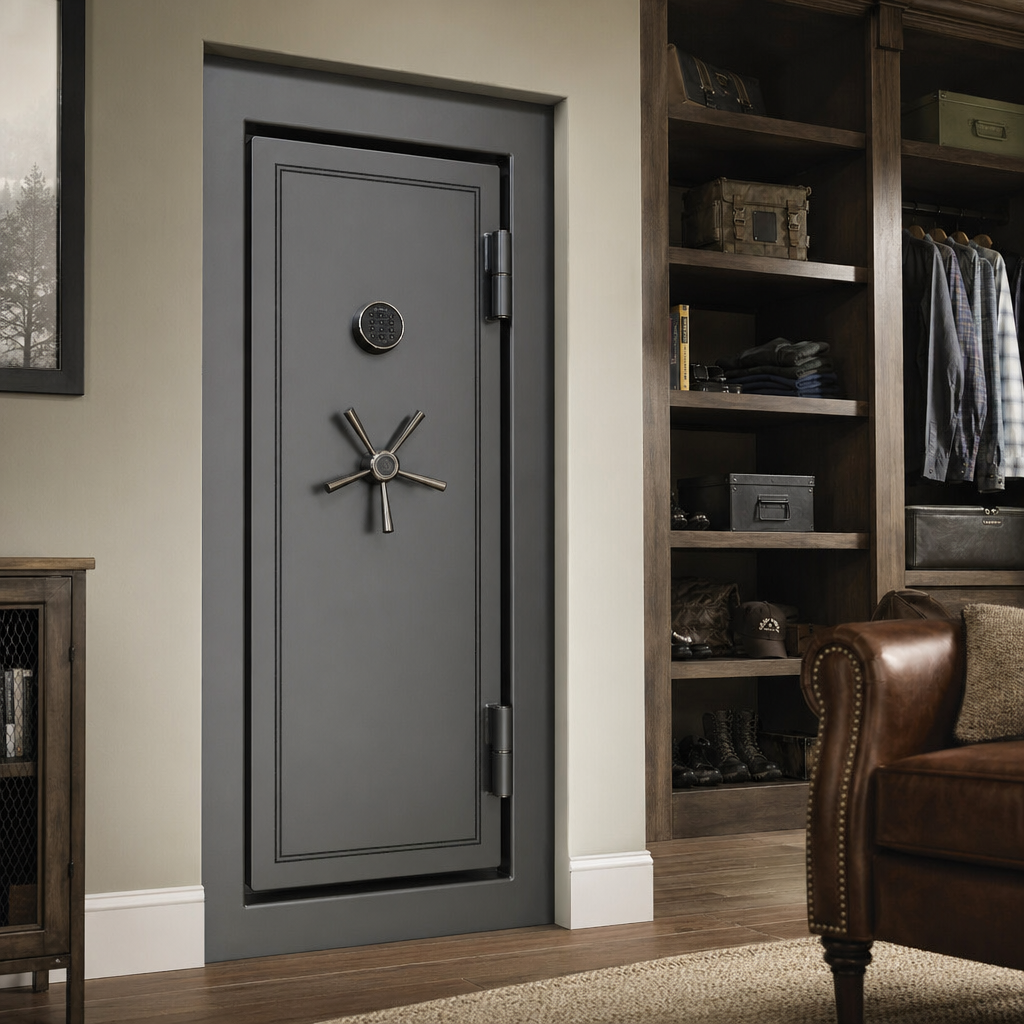
The best gun safes with recessed doors to prevent forced entry combine smart engineering, verified burglary resistance, and practical storage design in a way that standard box-store cabinets simply do not. A recessed door sits behind a surrounding steel frame, reducing pry points and making it far harder for thieves to wedge in a bar and peel the door outward. In the gun safes and safety category, this feature matters because most successful residential safe attacks are not sophisticated lock manipulations; they are fast, noisy pry attacks using common tools during short windows of opportunity. I have inspected safes after attempted break-ins, and the pattern is consistent: exposed door gaps fail first, while properly recessed doors force attackers to spend more time, make more noise, and often give up.
For buyers researching gun safe buying guides, recessed-door construction should be treated as one part of a complete forced-entry strategy rather than a standalone selling point. You still need adequate steel thickness, a reinforced door edge, hard plate over the lock, relockers, robust boltwork, and correct anchoring to concrete. Fire protection, interior capacity, humidity control, and access speed also matter, but if your priority is stopping a pry attack, door geometry is the first thing to evaluate. This hub article explains what recessed doors are, how they work, which specifications actually matter, and how to compare residential security containers, higher-security gun safes, and premium custom models. It also highlights the tradeoffs buyers face so you can choose the best gun safe with recessed doors for your budget, layout, and risk level.
What a recessed door is and why it prevents forced entry
A recessed door is set back inside the safe body opening instead of sitting flush or proud on the exterior face. That step-in design creates a protective channel around the door perimeter, limiting the exposed seam where a pry bar can gain purchase. On well-built gun safes, the surrounding door jamb is reinforced and the door edge is often formed from thicker plate than the body, making the frame-and-door relationship work like a barrier against leverage. The result is simple: less access for tools and less mechanical advantage for the attacker.
In plain terms, most forced-entry attempts against consumer gun safes target the gap between the door and the body. A thief wants to insert a screwdriver, wedge, halligan bar, or long pry bar, then bend metal until locking bolts lose contact with the frame. Recessed doors make that much harder because the frame shields the seam. Even if the attacker gets a thin tool into the gap, the depth of the recess reduces leverage. This is why recessed doors are common on better burglary-rated safes and on premium gun safes designed around pry resistance rather than showroom appearance.
That said, not every recessed door is equally protective. Some manufacturers market a shallow step as a major anti-pry feature even when the body uses thin steel and minimal frame reinforcement. Effective pry resistance depends on the entire assembly: door plate thickness, internal stiffeners, continuous weld quality, bolt engagement depth, hinge-side protection, and lock protection. A recessed door on a 14-gauge body is better than none, but it does not perform like a recessed door on a safe built from 3/16-inch or 1/4-inch steel with a reinforced jamb and relocking system.
Core specifications that separate real security from marketing claims
When I evaluate gun safes with recessed doors, I start with body steel thickness because that determines how much abuse the safe can absorb before the frame deforms. Many entry-level gun safes use 14-gauge or 12-gauge steel, which can be acceptable for low-risk environments when the safe is anchored well and hidden. However, for meaningful pry resistance, 10-gauge is a stronger baseline, while 3/16-inch and 1/4-inch bodies move you into substantially more serious construction. The same logic applies to the door. A composite door with multiple layers can perform well, but you need the manufacturer to specify equivalent steel thickness and reinforcement, not just use terms like “solid” or “military style.”
Next, look at the door jamb and boltwork. A recessed door should sit inside a formed or reinforced frame, not a lightly bent sheet-metal opening. Active locking bolts on at least three sides are common, but bolt count alone is not a quality metric. Large numbers look impressive in a catalog, yet the critical issues are bolt diameter, travel, engagement depth, and whether the door uses a continuous dead bar or fixed bolts on the hinge side. A safe with fewer, larger bolts and a stronger frame often outperforms one with many small decorative bolts. Hard plate over the lock and relockers are also essential. If an attacker drills the lock area, a relocker triggers and keeps the boltwork secured.
Independent ratings help cut through marketing. UL RSC is the most common baseline in the gun safe market, indicating the safe resisted a limited tool attack for a defined test period. Newer UL RSC Level II standards raise that bar. True burglary safes rated TL-15 or TL-30 provide much stronger security, though they are heavier, more expensive, and often smaller internally than similarly sized gun safes. Fire labels should also be read carefully. A stated temperature and duration are only useful if the testing protocol is disclosed. Reputable brands are transparent about whether ratings come from independent testing or internal estimates.
How to compare the best gun safes with recessed doors
The fastest way to compare options is to evaluate construction, certification, lock type, and installation demands side by side. Buyers often start with capacity, but security should come first because advertised gun counts are optimistic and easy to manipulate. Compare external dimensions, usable interior width, and long-gun layout after you confirm the safe can resist attack. If the safe will live in a garage, also check for an elevated door threshold, durable finish, and seal performance in humid conditions.
| Feature | Entry-Level Better Choice | Strong Residential Choice | High-Security Choice |
|---|---|---|---|
| Body steel | 12-gauge | 10-gauge to 3/16-inch | 1/4-inch or composite burglary construction |
| Door design | Shallow recessed door | Deep recessed door with reinforced jamb | Plate or composite door with heavy anti-pry frame |
| Security rating | UL RSC | UL RSC or RSC Level II | TL-15 or TL-30 when budget and floor load allow |
| Lock protection | Basic hard plate | Hard plate plus relocker | Multiple relockers and advanced drill protection |
| Best use | Low-risk home storage | Most homeowners with defensive and collection needs | High-value collections or elevated theft risk |
This comparison shows why recessed doors should be tied to the rest of the safe’s architecture. For many households, the strongest value point is a 10-gauge or 3/16-inch body, recessed reinforced door, UL-listed lock, hard plate, relocker, and anchor-ready base from a reputable brand. That combination generally delivers better real-world forced-entry resistance than a larger, flashier safe built from thinner steel with an exposed door seam.
Lock options, boltwork, and the hardware that matters in an attack
Buyers often ask whether electronic or mechanical locks are better on gun safes with recessed doors. Both can be excellent if they are UL-listed and installed properly. Mechanical dial locks have a long service history and no batteries, which appeals to buyers who prioritize longevity and minimal electronics. Electronic keypad locks offer faster access and easier code changes, making them popular for defensive firearms. In my experience, lock quality matters more than lock type. Trusted names such as Sargent and Greenleaf, SecuRam, and La Gard appear regularly on better safes because they have established track records and service networks.
For forced-entry prevention, the lock is only part of the picture. The surrounding hardware has to survive drilling and punching attempts. A hard plate, usually made from hardened steel, is positioned to resist drill bits over the lock and linkage. Some safes add a ball-bearing hard plate that causes bits to skate rather than bite. One or more relockers then protect the boltwork if the lock is attacked. Without these features, a recessed door still leaves a vulnerability at the lock area, especially on thinner doors.
Boltwork design deserves careful attention. External hinge safes can still be secure if they use full-length hinge-side dead bars or fixed locking bolts, because the hinges do not carry the anti-pry load once the door is shut. Internal hinges look cleaner and protect the hinge barrels, but they can slightly reduce door swing. Neither style is automatically superior. What matters is whether the door remains captured if hinges are cut and whether the frame resists spreading under leverage. On strong recessed-door safes, the answer should be yes.
Best use cases, storage planning, and installation mistakes to avoid
The best gun safe with a recessed door for a first-time owner is not always the best choice for a collector, competitive shooter, or homeowner storing documents, optics, and jewelry in the same unit. A buyer with six long guns and a few handguns can often choose a smaller, heavier safe with better steel and better pry resistance rather than a tall model that advertises twenty-four-gun capacity. Real capacity is usually sixty to seventy percent of the stated number once you account for scopes, slings, bipods, and modern rifle widths. If you plan to expand your collection, buy more interior volume than you think you need, but do not sacrifice construction to get it.
Placement matters almost as much as safe selection. Install the safe where attackers have limited room to work a pry bar around the sides and top. A corner location with the hinge side close to a wall can reduce attack angles, though you still need full door swing and usable access. Anchor the safe with manufacturer-approved hardware into concrete whenever possible. A non-anchored safe, even a heavy one, can be tipped onto its back where door attacks become easier. In wood-frame floors, verify joist capacity and use proper reinforcement. For very heavy safes, especially TL-rated models, floor loading may require a structural review.
Climate and daily use also shape the right purchase. In basements and garages, add a dehumidifier rod or desiccant, check for an intumescent fire seal, and avoid direct contact with damp concrete by using the manufacturer’s base system or spacers where appropriate. Organize the interior so defensive firearms are accessible but secure, and store documents in fire-rated pouches if the safe’s fire performance is limited. If children are in the home, fast lockout capability and disciplined key management are nonnegotiable. The point of a recessed-door safe is not only burglary resistance; it is controlled, reliable access under safe conditions.
Brands, price tiers, and how to buy with confidence
In the current market, brands such as AMSEC, Fort Knox, Liberty, Browning, Rhino Metals, and Hollon are frequently considered by buyers looking for better anti-pry construction, though product quality varies by model line rather than brand name alone. AMSEC’s BF series, for example, is widely discussed because it combines substantial body construction and strong door design in a package that remains practical for homeowners. Fort Knox and Rhino offer customizable premium gun safes where recessed doors, heavier steel upgrades, and interior layouts can be tailored to the buyer. Hollon is often cross-shopped by customers who want a step closer to true burglary-safe design. The lesson is simple: compare specific model specifications, not logos.
Expect meaningful recessed-door security to start above the bargain tier. At the low end, many products marketed as gun safes are closer to security cabinets, useful for safety and deterrence but not ideal for determined forced-entry resistance. In the midrange, usually around the price point where 10-gauge bodies, better doors, and listed locks appear, value improves sharply. Premium and custom tiers add thicker steel, upgraded liners, stronger fire packages, and more refined interiors, but returns diminish unless your risk justifies them. For very high-value collections, a true TL-rated burglary safe or vault room may be the smarter investment than an oversized consumer gun safe.
Before you buy, request the spec sheet, lock model, steel thickness details for both body and door, weight, anchor-hole pattern, and warranty terms. Ask whether the fire rating is independently tested, whether the lock is UL-listed, and whether the door uses relockers and hardened drill protection. Buy from a dealer who can explain delivery, stair carries, bolt-down service, and post-installation support. A safe is only as secure as its installation and long-term maintenance. When you approach the purchase this way, the best gun safes with recessed doors become easy to identify: they are the models that reduce pry access, resist deformation, and integrate that advantage into a complete security system.
Choosing the best gun safe with a recessed door comes down to matching forced-entry resistance to your real risk, not chasing the biggest interior or the loudest marketing language. Recessed doors matter because they reduce pry points, protect the seam, and make common burglary tools less effective. But they deliver their full benefit only when paired with thick steel, a reinforced jamb, quality boltwork, hard plate, relockers, a listed lock, and proper anchoring. For most homeowners, the sweet spot is a well-built residential safe with a recessed reinforced door and transparent specifications from a reputable manufacturer.
As a hub for gun safe buying guides, this page should give you a clear framework for every related decision: how to evaluate steel thickness, how to compare lock types, how to judge ratings, how to size the interior realistically, and how to install the safe so the design can do its job. If you remember one principle, make it this: door geometry is your first line against a pry attack, but the whole safe must support it. Start your shortlist with recessed-door models that publish real construction data, then compare installation requirements and total ownership costs before you commit.
If you are shopping now, measure your space, estimate true firearm capacity, verify floor strength, and ask every dealer for complete specifications instead of brochures. That simple process will steer you toward a gun safe that protects firearms, slows thieves, and serves your household for years.
Frequently Asked Questions
What is a recessed door on a gun safe, and why does it help prevent forced entry?
A recessed door is designed to sit back inside a surrounding steel frame rather than resting flush on the front of the safe. That matters because it reduces the exposed edge that a thief can attack with a pry bar, screwdriver, or other leverage tool. On many low-end cabinets and entry-level safes, the seam around the door is easy to access, which gives an intruder a place to start peeling the door open. A recessed door limits that opportunity by shielding the gap and making it much harder to gain a useful angle for prying.
In practical terms, this design improves burglary resistance by forcing an attacker to work against the frame, the door edge, and the locking system all at once. Instead of simply wedging a bar into an accessible crack and trying to bend the door, the intruder has to overcome a more protected structure. This does not make any gun safe invulnerable, but it does address one of the most common weaknesses seen in forced-entry attempts on residential safes: exposed pry points.
When comparing models, a recessed door should be viewed as part of a larger anti-theft package. Its benefits are strongest when paired with a robust door plate, solid locking bolts, reinforced hinges or internal hinge designs, thick steel construction, and a body that is properly anchored to the floor. In other words, the recessed door is not just a cosmetic feature. It is a meaningful engineering choice that can make forced entry significantly more difficult when the rest of the safe is built to the same standard.
Are gun safes with recessed doors always more secure than standard gun safes?
Not always, but in many cases they offer a real advantage against pry attacks. A recessed door specifically improves resistance to one common method of attack: using leverage to get between the door and the safe body. If two safes are otherwise similar in steel thickness, locking bolt design, frame strength, and lock quality, the one with the recessed door often has the edge because it exposes fewer vulnerable pry points.
That said, overall security depends on the entire construction of the safe, not just the door style. A poorly made safe with a recessed door can still underperform if it uses thin steel, weak welds, a low-quality lock, or a flimsy door frame. Conversely, a very well-built safe without a deeply recessed door may still provide strong protection if it has heavy-gauge steel, a reinforced door jamb, hardplate protection, relockers, and a verified burglary rating. This is why buyers should avoid focusing on a single feature in isolation.
The best way to evaluate security is to look at the complete specification sheet and, when possible, third-party testing or certifications. Pay attention to steel thickness in both the body and door, how the locking bolts engage, whether the safe includes anti-drill and relocking features, and whether the manufacturer clearly explains its burglary protection. A recessed door is an excellent sign that the safe was designed with pry resistance in mind, but it should be treated as one important factor rather than a guarantee of superior security on its own.
What features should I look for in the best gun safes with recessed doors?
Start with steel quality and overall construction. A recessed door works best when the safe body and frame are also built to resist flexing and deformation under attack. Look for a solid steel door, a sturdy frame around the door opening, and body steel that is substantial enough to withstand prying, punching, and bending. In general, thicker steel is better, especially in the door and the front face where attacks are most likely to occur.
Next, examine the locking system. Strong gun safes typically use multiple locking bolts that engage deeply into the frame, helping prevent the door from being twisted or peeled open. Good models may also include hardplate to resist drilling, relockers that trigger if the lock is attacked, and well-protected boltwork. The lock itself also matters. Both quality mechanical dial locks and reputable electronic locks can perform well, but they should come from established lock manufacturers and be properly installed.
Interior design is another key consideration, especially if you are storing long guns, optics, documents, and valuables together. The best safes balance security with usable storage. Look for adjustable shelving, barrel supports, protected interior finishes, and enough depth to accommodate scoped rifles without crowding. Fire protection may also matter, particularly if the safe is going in a garage, basement, or utility area. Finally, make sure the safe can be anchored securely. Even an excellent recessed-door design loses value if the entire unit can be tipped, moved, or hauled away.
Do recessed-door gun safes offer better protection against pry bars and smash-and-grab theft?
Yes, they are generally better suited to resist pry-bar attacks, which are among the most common methods used in quick residential burglaries. Smash-and-grab thieves usually rely on speed, noise, and basic tools rather than advanced safe-cracking techniques. Their goal is often to exploit obvious weak points, especially around the perimeter of the door. A recessed door helps by limiting access to those edges and making it more difficult to insert a tool where leverage is most effective.
This design can buy valuable time, and time is one of the most important security factors in any burglary scenario. The longer a safe resists, the greater the chance the thief gives up, is interrupted, or decides the effort is too risky. Recessed doors can frustrate fast attacks because they force the intruder to spend more time trying to create an opening, often against a frame that was specifically designed to counter that type of leverage.
However, no safe should be expected to rely on door design alone. To maximize protection against smash-and-grab theft, the safe should be bolted down to a solid surface, placed in a discreet or hard-to-access location, and supported by broader home security measures such as alarms, cameras, reinforced entry points, and good lighting. A recessed door improves the safe’s odds in a real-world attack, but the strongest overall defense comes from combining that engineering advantage with smart installation and layered security planning.
Is a recessed-door gun safe worth the extra cost for home firearm storage?
For many buyers, yes. If secure firearm storage is the priority, paying more for a better-designed safe is often justified because the difference in protection can be substantial. A recessed door is one of those features that directly addresses how break-ins actually happen in homes. Most thieves are not trying to manipulate locks with professional tools; they are trying to force the door open quickly. A recessed design makes that much harder, which means the extra cost often reflects a genuine security upgrade rather than a marketing gimmick.
It is especially worth considering if you are storing multiple firearms, expensive optics, important documents, or valuables that would be difficult or impossible to replace. It also makes sense for households that want a higher standard of unauthorized-access prevention, including families with children or homes where firearms must remain both secure and quickly accessible to the owner. In those situations, better construction and stronger anti-pry design can deliver real peace of mind.
That said, value depends on the full package. A moderately priced safe with a recessed door, strong steel, a reliable lock, and proper anchoring may be a smarter purchase than a larger but weaker safe with more interior space and less real protection. The best buying approach is to set a realistic budget, prioritize burglary resistance first, and then choose the largest high-quality safe you can afford. If a recessed door is included in a well-built model from a reputable manufacturer, it is usually money well spent.