
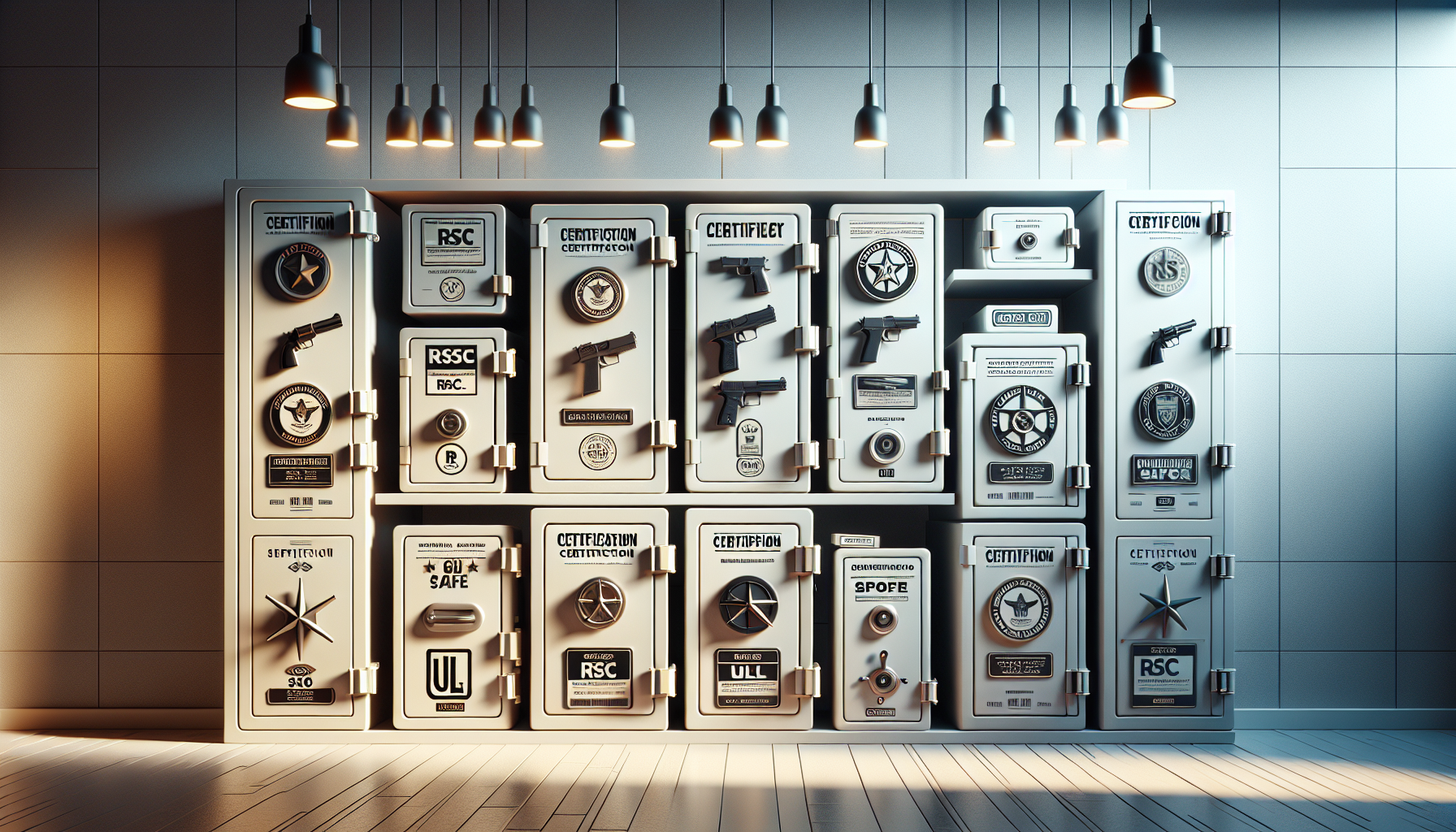
Buying a gun safe is easy; buying the right gun safe requires understanding the certifications, test standards, and marketing claims that separate real protection from thin steel boxes with locks. In the firearms storage market, terms like RSC, UL-listed lock, California DOJ approved, and fire rating appear on product pages, dealer tags, and manufacturer brochures, but they do not all measure the same thing. Some standards focus on burglary resistance, some on lock reliability, some on child access prevention, and some on fire exposure. I have helped compare safes for first-time handgun owners, collectors with dozens of long guns, and families trying to meet insurance or state storage requirements, and the same confusion comes up every time: what does the certification actually certify?
Gun safe certifications matter because a safe is not just a metal cabinet. It is a layered security system that combines steel thickness, door construction, locking hardware, relockers, boltwork, hinge design, anchoring, and in many cases fire insulation. A certification is useful when it comes from a recognized testing body and clearly states the attack tools, test duration, and pass criteria. Without that, the phrase “safe” can mean almost anything. Many mass-market products sold as gun safes are technically residential security containers, which is a lower but still meaningful classification designed to resist limited forced entry. That distinction affects insurance expectations, burglary resistance, and buyer value.
This guide explains the major gun safe certifications and related standards, including RSC ratings, UL lock listings, California DOJ requirements, and common fire-test claims. It also serves as a buying guide hub for the broader Gun Safes & Safety topic by showing how these standards connect to construction features, use cases, and shopping decisions. If you want a fast answer, here it is: the most important certification for most home gun owners is an RSC burglary rating from UL paired with a UL-listed lock, solid steel construction, and professional anchoring. Everything else should be interpreted in that context.
What RSC means and why most gun safes are classified this way
RSC stands for Residential Security Container, a UL classification used for many products commonly marketed as gun safes. In practical terms, an RSC is designed to resist a limited attack by one person using common hand tools for a specified test period. The standard most buyers encounter is UL 1037. For a container to qualify, the door must remain closed and the attacker must fail to create a large enough opening or compromise the lock within the test requirements. The exact testing protocol matters because “five minutes” in certification language is not the same as a burglar casually pulling on a handle in your garage; it is concentrated attack time by trained testers using approved tools.
For most households, an RSC-rated gun safe is the baseline standard worth paying for. It is substantially more credible than an untested cabinet that relies on thin sheet metal and simple cam locks. However, buyers should not confuse RSC with high-security commercial burglary safes rated TL-15 or TL-30. An RSC is intended for residential threats: smash-and-grab theft, curious teenagers, opportunistic burglars, and short-duration forced entry attempts. It becomes much more effective when bolted to concrete, placed in a tight corner, and kept out of obvious sight lines. I have seen otherwise decent safes fail in real homes because owners left them free-standing, where pry leverage and tip-over attacks become much easier.
Some newer products advertise enhanced RSC levels, such as RSC Level I or Level II, reflecting tougher test expectations than older baseline terminology. If you are comparing safes in the same price band, a clearly documented higher-level RSC certification can justify a premium, especially if the manufacturer also discloses door plate thickness, body steel gauge, and bolt dimensions. If a seller mentions “RSC construction” but cannot point to actual third-party certification, treat that claim as marketing, not proof.
UL, ETL, and the difference between safe certification and lock certification
One of the biggest buying mistakes is assuming a safe with a UL-listed electronic lock is the same thing as a UL-rated safe. It is not. UL can certify an entire container under one standard and certify the lock under another. A lock listing indicates the lock met a performance standard for manipulation resistance, reliability, or attack resistance under defined conditions. That matters, because the lock is a critical component, but it does not tell you whether the safe body will resist prying, drilling, or peeling. In showroom conversations, this distinction gets blurred constantly.
For gun safe buyers, the most common lock-related mark is UL Type 1 for electronic safe locks. A UL Type 1 lock has been tested for resistance to expert manipulation and certain forms of surreptitious entry. Mechanical dial locks may be listed under other relevant standards, and many established lock makers such as Sargent and Greenleaf, SecuRam, and La Gard build products used across the industry. In my experience, a quality lock from a reputable brand paired with a robust lock mounting plate and relocker is more important than debates over keypad versus dial. Electronic locks offer speed and easy code changes, while mechanical locks avoid battery dependence. Both can be excellent when properly installed.
ETL and other testing labs may appear on some products as well. The key is not the logo alone but the exact standard tested. Ask three questions: what component was tested, to which published standard, and what result was achieved? If those answers are vague, the certification is not helping you compare products in a meaningful way.
How common certifications compare for burglary, lock, and compliance claims
The safest way to shop is to separate burglary ratings, lock listings, legal compliance approvals, and fire claims into different buckets. They solve different problems. Burglary ratings tell you how hard the container is to break into. Lock listings tell you about the lock mechanism. State compliance standards often focus on unauthorized access prevention. Fire claims measure heat exposure under a controlled protocol, which may or may not resemble a house fire in your area.
| Certification or Claim | What It Covers | Why It Matters to Buyers |
|---|---|---|
| UL RSC / UL 1037 | Forced-entry resistance of the container | Baseline third-party burglary standard for many home gun safes |
| UL Type 1 lock | Electronic lock security and manipulation resistance | Shows the lock itself meets a recognized performance standard |
| California DOJ approval | Standards for firearm safety devices and approved gun safes | Useful for state compliance, but not equal to a high burglary rating |
| Manufacturer fire rating | Claimed heat resistance for a stated time and temperature | Can help compare models, but test methods vary widely |
| UL fire or impact tests | Independent fire endurance and sometimes drop testing | More credible than in-house claims when clearly documented |
If you remember one buying rule, make it this: compare like with like. A DOJ-approved safe and an RSC-rated safe are not competing claims. One may satisfy a state requirement while the other gives you stronger evidence of burglary resistance. The best buying decisions balance both when needed.
California DOJ approval and what legal compliance does not tell you
California’s Department of Justice maintains standards and an approved roster for firearm safety devices and qualifying gun safes. For residents of California, or anyone trying to understand legal-storage language used by manufacturers nationwide, DOJ approval is important because it signals the product meets a recognized threshold for firearm storage compliance. Depending on the safe, qualification may involve construction requirements such as minimum steel thickness, a locking system specification, or demonstrated resistance to forced entry under the state’s criteria.
What DOJ approval does not do is replace a more demanding burglary certification. A safe can be compliant for legal-storage purposes without offering the level of pry resistance, door structure, or tool-attack performance that a serious collector wants. That is why I tell buyers to treat DOJ approval as a legal and access-control checkpoint, not a complete quality verdict. It helps answer the question, “Will this satisfy the storage requirement?” It does not fully answer, “How well will this hold up during a burglary attempt?”
For households with children, new gun owners, or apartment residents limited by size and budget, a DOJ-approved safe may be a practical entry point. Still, if the budget allows, choose one that also documents third-party burglary testing and uses a listed lock from a known manufacturer.
Fire ratings: useful, inconsistent, and often misunderstood
Fire protection is one of the most aggressively marketed parts of the gun safe category, and it is also one of the least standardized at the consumer level. You will see ratings like “60 minutes at 1,200 degrees” or “90 minutes at 1,400 degrees,” but those statements are only as useful as the test method behind them. Some manufacturers rely on proprietary furnace testing. Others use independent labs. A few publish enough detail to let you judge whether the test included preheating, internal temperature monitoring, humidity effects, or post-fire impact from a fall through a weakened floor.
For firearms, the target is not just preventing complete destruction. Heat can damage optics, warp stocks, degrade lubricants, and ruin documents stored alongside guns. Paper chars at roughly 451 degrees Fahrenheit, but many fire-protective products are designed around lower internal temperature limits to protect paper or media. Gun safes with gypsum-based insulation can slow heat transfer, yet the amount, placement, and continuity of that insulation vary widely. Door seals that expand under heat are another important feature because smoke and hot gases often cause damage before flames directly penetrate the body.
In real buying terms, fire ratings are helpful when compared within the same reputable brand family and when backed by independent testing language. They are less helpful when used across brands with completely different test methods. If burglary resistance is weak, a strong fire claim does not compensate. A thief can remove the safe long before a fire rating matters.
Construction details that matter more than the brochure headline
Certifications are essential, but they should lead you into the construction details, not replace them. The first thing I examine is steel thickness. Many entry-level containers use 14-gauge or thinner body steel, while stronger models may use 12-gauge, 10-gauge, or composite plate designs. Lower gauge numbers mean thicker steel. Door construction often matters even more than body thickness because most attacks target the door edge, lock area, and bolt side. A formed door that looks massive from the outside may still use relatively thin steel if the thickness comes from panel spacing and drywall rather than solid plate.
Look for hardplate protecting the lock, relockers that trigger if the lock is punched or drilled, continuous welds or substantial stitch welding, and pry-resistant door clearances. Bolt count is less important than bolt engagement and door frame strength. Marketing loves to advertise twenty or more bolts, but thin active bolts attached to weak internal linkages do not create real security. Hinge style also gets overemphasized. External hinges are not automatically less secure if the door has fixed dead bars on the hinge side. Internal hinges can look cleaner but may reduce opening angle.
Anchoring is nonnegotiable. Even a well-built RSC can be defeated more easily if thieves tip it over and attack the door with gravity and body weight working in their favor. Bolting a safe to concrete significantly improves real-world performance. In closets, alcoves, or corner installations, you can further reduce pry access around the door edges.
How to match certification levels to your buying guide needs
The right gun safe certification depends on what you own, who lives in the home, and what problem you are solving first. If your main concern is preventing unauthorized access by children or visitors, a compact safe with a compliant locking system may be enough for one or two firearms. If your concern is burglary, start with a documented RSC rating, then prioritize steel thickness, lock quality, and anchoring. If you own collectible firearms, suppressors, or high-value optics, move up from basic big-box-store models and consider heavier safes with stronger body steel and more transparent test documentation.
As the hub for buying guides under Gun Safes & Safety, this article points to the key comparisons every shopper should make next: handgun safe versus full-size gun safe, electronic lock versus mechanical dial, fire lining versus burglary strength, modular safe versus welded safe, and budget safe versus insurance-grade storage. The common thread is simple. Certifications help narrow the field, but your final decision should align with use case. A competitive shooter with six rifles and travel cases has different needs from a homeowner storing one pistol for defense. A rural home with delayed police response should weight burglary resistance more heavily than an urban condo with strict space limits.
The best buyers ask for documentation, not adjectives. They request the exact standard, confirm the lock brand, inspect door and body steel, and plan the installation before the safe is delivered. That process consistently leads to better purchases than shopping by capacity numbers and glossy paint.
Understanding gun safe certifications turns a confusing purchase into a defensible decision. RSC ratings show whether a container has verified burglary resistance at a residential level. UL-listed locks show whether the locking mechanism meets a recognized performance standard. California DOJ approval helps with legal-storage compliance, especially for buyers in that state. Fire ratings can add value, but only when you understand who tested the safe and how the test was conducted. Together, these labels create a clearer picture, but none should be read in isolation.
The main benefit of learning these standards is simple: you avoid paying for marketing language and start paying for measurable protection. In practice, the smartest choice for most gun owners is a third-party-tested RSC safe with a listed lock, credible fire protection, adequate steel thickness, and secure anchoring. From there, you can scale up based on firearm value, household risk, and insurance requirements. That is the foundation of every strong buying guide in the Gun Safes & Safety category.
Use this page as your starting point, then compare models by certification, construction, and installation plan before you buy. If a manufacturer cannot clearly explain what was tested, to which standard, and by whom, move on. The right safe should earn your trust with evidence.
Frequently Asked Questions
What does RSC mean on a gun safe, and how much protection does it really provide?
RSC stands for Residential Security Container, and it is one of the most commonly referenced burglary-related labels in the gun safe market. In practical terms, an RSC rating means the container has been tested to resist a limited attack using basic hand tools for a specific amount of time under controlled conditions. This is important because it separates products that have undergone at least some standardized security testing from lightweight cabinets or lockboxes that simply look secure in marketing photos.
That said, buyers should understand what the RSC label does and does not mean. It does not mean the safe is “tool proof,” commercial-grade, or capable of stopping a determined burglar indefinitely. An RSC is designed to slow down smash-and-grab access, not to perform like a high-security jewelry vault or a bank safe. For many homeowners, however, that delay matters a great deal. Most residential break-ins are fast, noisy, and opportunistic, so even moderate forced-entry resistance can push a thief to give up or move on.
It also helps to know that not all steel boxes with locks qualify as RSCs. A true RSC designation involves independent testing, often associated with UL standards, rather than a manufacturer simply claiming the safe is “RSC-style” or “built to RSC principles.” That distinction matters because the safe industry is full of phrases that sound official without being actual certifications. If a product is marketed as secure but does not clearly state it has been tested and rated, buyers should ask for the exact standard and certifying body before assuming it offers meaningful burglary protection.
Is a UL-listed lock the same thing as a UL-rated safe?
No, and this is one of the most common points of confusion for gun safe buyers. A UL-listed lock means the lock itself has been tested to meet certain standards for performance, manipulation resistance, reliability, or security, depending on the type of lock and listing involved. That is valuable, because the lock is a critical component of any safe. A high-quality lock can reduce the risk of failure, improve resistance to tampering, and provide more confidence in daily use.
However, a UL-listed lock does not automatically mean the entire safe body has been tested for burglary resistance. A safe can have a reputable UL-listed lock mounted on relatively thin steel with weak door construction, minimal reinforcement, or vulnerable boltwork. In other words, the lock may be strong while the container around it is not. From a buyer’s perspective, that means a product page highlighting a UL-listed electronic or mechanical lock should be seen as only one piece of the security picture.
When evaluating a gun safe, it is smart to separate the lock certification from the safe certification. Ask whether the safe body itself has a recognized rating such as RSC, and then ask what kind of lock is installed. The best setup combines a tested container and a tested lock. If the manufacturer only advertises the lock’s credentials while staying vague about the body construction, steel thickness, door design, and independent testing, that is often a sign to look more closely before buying.
What does California DOJ approved mean, and should I rely on it when choosing a safe?
California DOJ approved generally refers to a firearm safety device or gun safe meeting specific requirements set by the California Department of Justice. In many cases, this standard is focused on safe storage compliance, unauthorized access prevention, and minimum construction or locking requirements rather than robust burglary resistance. That makes it useful for legal compliance and basic child-access prevention, but it should not automatically be treated as proof that a safe offers strong anti-theft protection.
This label is often misunderstood because it sounds highly official, and in a legal sense it is. But “approved” in this context does not necessarily mean the product has passed the same kind of forced-entry testing that serious burglary-rated containers undergo. A DOJ-approved safe may satisfy state standards for firearm storage, which is important for responsible ownership, but those standards are not always aimed at stopping a determined intruder with pry tools, leverage, and time.
For that reason, California DOJ approval is best viewed as one checkpoint, not the final word. It can be meaningful if your priorities include compliance, preventing unauthorized household access, and meeting state requirements. But if your main concern is theft resistance, you should still look for independent burglary-related testing, quality steel construction, solid hinge and relocker design, and a credible fire rating if fire protection matters to you. In short, DOJ approval is helpful, but it is not a substitute for understanding the broader certification landscape.
How should I interpret fire ratings on gun safes, and why are they so inconsistent?
Fire ratings are among the most confusing claims in the gun safe industry because manufacturers often present them in ways that are difficult to compare directly. You may see labels such as “60 minutes at 1,200 degrees” or “90-minute fire protection,” but those claims do not always come from the same test method, testing lab, or pass criteria. Some ratings are based on independent testing, while others are derived from internal manufacturer testing, engineering estimates, or proprietary protocols. That is why two safes with similar published fire numbers may not actually offer the same level of protection.
Another key issue is that fire performance depends on more than one number. Test temperature, duration, internal temperature threshold, humidity generation, door seal quality, insulation type, and whether the unit was heated from all sides can all affect real-world results. Fire ratings also do not always account equally for structural collapse, water exposure from firefighting, or prolonged smoldering conditions after the main flames subside. For gun owners storing documents, optics, ammunition accessories, or electronic media alongside firearms, these details matter.
The best way to read a fire claim is with healthy skepticism and a focus on specifics. Ask whether the rating was independently verified, what standard was used, what internal temperature was maintained, and whether the safe design includes expanding door seals and meaningful insulation rather than thin layers of gypsum marketed aggressively. Fire protection is important, but a fire number on a brochure is not automatically a guarantee. If the manufacturer cannot explain how the rating was established, the claim may be more marketing than measurable protection.
What certifications and construction details matter most when buying the right gun safe?
The most important answer is that no single label tells the whole story. A smart gun safe purchase starts by matching certifications and construction details to your actual risks. If your top concern is burglary, prioritize an independently tested container rating such as RSC, and then examine steel thickness, door edge protection, boltwork design, anchor holes, and how the safe can be installed. A well-anchored, properly rated safe in a discreet location often performs far better in the real world than a larger but weaker unit that is easy to tip, pry, or remove.
If unauthorized access by children or guests is a major concern, look closely at lock quality, code reliability, backup access features, and whether the product meets state or departmental storage requirements such as California DOJ approval where relevant. If fire protection is equally important, demand details about the fire testing method rather than relying on a single headline number. You should also consider practical ownership factors such as interior layout, long-gun capacity realism, humidity control options, shelving flexibility, and whether the safe will hold your collection as it grows.
Finally, be careful with marketing language. Terms like “military style,” “vault door,” “drill resistant,” or “premium security” often sound impressive but may have no standardized meaning. The most trustworthy manufacturers clearly identify what was tested, who tested it, and what standard was applied. In the end, the right gun safe is the one that balances verified security, realistic fire protection, responsible access control, and honest construction quality for your budget. Certifications are essential, but they are most useful when you understand exactly what they measure and what they do not.