
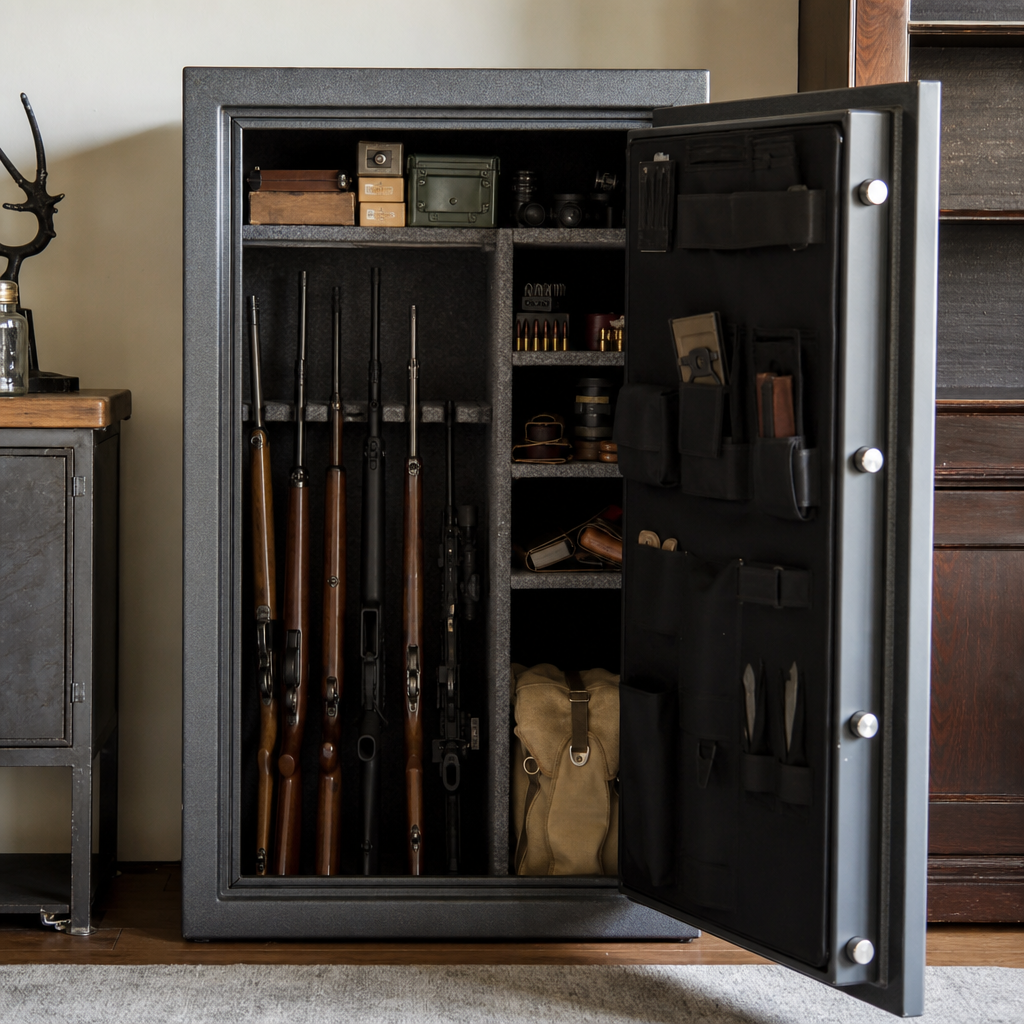
Converting a regular safe into a gun safe can work well if you start with the right cabinet, understand firearm storage requirements, and modify the interior for secure, organized, low-moisture access. I have helped owners retrofit document safes, jewelry safes, and commercial burglary safes for rifles and handguns, and the difference between a frustrating DIY project and a dependable storage system always comes down to planning: dimensions, fire lining, anchoring, humidity control, and access layout. A regular safe is not automatically a gun safe. A gun safe is designed around long-gun clearance, muzzle and buttstock support, quick identification, limited metal-to-metal contact, and controlled conditions that reduce rust, stock warping, optic damage, and unauthorized access.
This matters because many households already own a sturdy safe and want to avoid buying another large cabinet. In some cases, an existing safe offers better burglary resistance than an entry-level gun safe, especially if it has a thicker body, robust hardplate, and a quality lock from brands such as Sargent and Greenleaf, La Gard, or Kaba-Mas. Still, storage for firearms adds requirements ordinary valuables do not have. Scoped rifles need depth. Shotguns need vertical height. Pistols benefit from door organizers or shelves that do not press on sights, red dots, or mounted lights. Ammunition adds weight and should be separated in a way that preserves access and balance. If the safe is fire lined, every drilled hole or adhesive choice has consequences.
For readers exploring custom and DIY gun safe modifications, this article serves as the hub page. It explains how to evaluate whether a regular safe is a good candidate, which modifications deliver the biggest gains, what mistakes create safety or moisture problems, and when conversion is not worth the compromise. If you are comparing rifle racks, pistol door panels, LED lighting, dehumidifiers, shelving, or anchor methods, this guide gives the framework for each. The goal is simple: turn unused secure storage into a practical firearm storage system without weakening the safe or damaging the firearms inside.
Start by Deciding Whether the Safe Is a Good Candidate
The first question is not how to modify the safe. It is whether the safe should be modified at all. I evaluate three things first: external construction, internal dimensions, and intended firearm mix. External construction tells you whether the safe offers real security. A welded steel body, substantial door edge, relocker, and quality lock are positive signs. A thin sheet-metal cabinet with decorative fireboard may keep children out, but it is not an upgrade over a purpose-built gun safe. Internal dimensions matter even more than advertised exterior size. Measure actual clear height from floor to the lowest obstruction, clear depth from the back wall to the inside of the door panel, and clear width between shelf supports. Then subtract for rifle stocks, scopes, barrel tips, and any interior paneling you plan to add.
In practical terms, many office safes fail the rifle test because shelves, compartment walls, or door bolts eat into usable height. A safe that looks tall enough on paper may only provide 47 inches of clean vertical space, which is tight for common hunting rifles once a scope is mounted. By contrast, some commercial burglary safes are excellent conversion candidates because they provide dense steel construction and adjustable shelving. The tradeoff is weight. Moving and anchoring a 1,200-pound commercial unit is a very different project from setting up a residential gun safe. Before you spend on accessories, map every firearm you plan to store: barrel length, optic height, stock profile, and frequency of access. That list will determine whether a vertical rack, side-by-side slots, angled shelves, or mixed long-gun and handgun zones make sense.
Another candidate issue is fire protection. If the safe uses gypsum fireboard, drilling through walls or doors can reduce performance and create dust. That does not make conversion impossible, but it changes your options. I generally favor reversible interior modifications first: freestanding rifle racks, hook-and-loop organizers, pressure-fit lighting, rechargeable humidity solutions, and shelf inserts. When a safe has poured insulation or proprietary composite walls, avoid structural changes unless the manufacturer confirms acceptable methods. Security, fire resistance, and function all matter. The best conversion preserves the first two while improving the third.
Measure Firearms, Build the Interior Layout, and Protect Clearance
A successful conversion starts with a layout plan drawn to actual dimensions. The most common mistake I see is owners buying generic foam rifle racks without accounting for scopes, bipods, sling studs, or pistol-grip stocks. Long guns do not occupy identical rectangles. An AR-pattern rifle with a mounted optic and 30-round magazine profile needs different spacing than a slim bolt-action deer rifle. If the safe is shallow, alternating muzzle heights or staggering stocks can create room. If the door swings into the interior opening, door organizer thickness must also be included or the forend and optic may collide when closing.
For long guns, the most reliable DIY setup uses a bottom buttstock tray and an upper barrel rest lined with low-abrasion material. Closed-cell foam, marine carpet, and felt-backed panels are common choices, but each has tradeoffs. Foam is easy to cut and shape, though cheap foam can trap moisture and deteriorate. Marine carpet is durable and kinder to wood stocks than bare metal, but the adhesive behind it matters. Some solvent-heavy adhesives outgas in a confined safe. Felt looks clean but compresses and holds dust. I prefer inert liners with mechanical fastening where possible, especially in tighter safes. For handguns, shelf cradles and vertical pistol rods work well, but rods should not stress the bore crown or front sight. Door panels are excellent for pistols and magazines when the hinges can support added weight and the organizer does not interfere with locking bolts.
Optics deserve special planning. Scoped rifles often dictate the entire arrangement because scope turrets and objective bells require depth. One practical approach is placing the tallest optics on the outer positions where the safe body is widest, then reserving center positions for slimmer firearms. Another is using offset barrel rests so neighboring scopes overlap vertically rather than collide horizontally. This kind of small geometry change can increase capacity materially without crowding. It is also smarter than trying to force more guns into a safe than the interior truly supports. Manufacturer capacity ratings are optimistic. If a regular safe is converted carefully, expect real usable capacity to be roughly half to two-thirds of a marketing number for long guns with optics.
Best DIY Gun Safe Modifications for Organization, Access, and Preservation
Once the basic layout is set, add modifications in the order that improves daily use without compromising the safe. Interior lighting is usually first because visibility changes everything. LED strip kits with motion sensors or magnetic rechargeable bars make identification faster and reduce unnecessary handling. Choose low-heat, low-profile lighting and route wires so they do not bind against door frames. Next comes door storage. A quality handgun and magazine panel turns wasted space into high-visibility access, but keep heavy loads evenly distributed. I have seen overloaded door panels misalign on lighter residential safes, causing rubbing and poor closure. Shelf dividers, document bins, and labeled ammo cans then create zones so defensive firearms, hunting firearms, paperwork, and maintenance supplies are separated.
Humidity control is not optional. Firearms, optics, and ammunition all benefit from a stable, dry environment. In most retrofits, the right answer is layered moisture management: a passive desiccant pack for short-term absorption and an active dehumidifier rod or renewable desiccant unit for continuous control. Aim for roughly 45 to 50 percent relative humidity. Much higher invites rust; much lower can dry wood stocks excessively over time. A small digital hygrometer is one of the cheapest, highest-value additions to any converted safe because it tells you whether the system is working. If your safe sits in a garage, basement, or exterior-wall closet, humidity swings are often more severe than owners realize.
Below is a practical comparison of common modifications and when they make sense in a regular-safe conversion.
| Modification | Main Benefit | Best For | Key Limitation |
|---|---|---|---|
| Rifle rack with buttstock tray | Organizes long guns vertically and prevents contact | Mixed rifle and shotgun storage | Needs precise spacing for optics and pistol grips |
| Door handgun organizer | Improves access and frees shelf space | Pistols, magazines, suppressor pouches | Can interfere with door closure in shallow safes |
| LED lighting | Faster identification and safer handling | Deep or dim interiors | Wiring and battery maintenance |
| Dehumidifier rod or desiccant | Reduces rust and moisture damage | All firearm storage environments | Requires monitoring with a hygrometer |
| Adjustable shelves and bins | Separates ammo, documents, and accessories | Hybrid safe use | Can reduce rifle clearance if overbuilt |
Other worthwhile modifications include barrel sleeves for heirloom wood-stock guns, silica canisters near the floor where cool air settles, and magnetic task lights mounted temporarily during cleaning or inventory. Keep chemicals out unless they are tightly sealed. Solvents and oil-soaked rags do not belong in a sealed firearm storage environment. The safest, cleanest conversions favor organization and climate control over gimmicks.
Avoid Structural Mistakes That Reduce Security or Fire Protection
The biggest errors in custom and DIY gun safe modifications happen when owners treat a safe like a cabinet. Drilling new holes through the body for power, lighting, hooks, or anchors can expose insulation, create rust points, and weaken carefully designed barriers. If a pass-through hole already exists, use it. If not, look first for battery-powered lights, rechargeable dehumidifiers, adhesive cable clips rated for metal, or interior mounting systems that rely on compression, magnets, or existing shelf tracks. Magnets are useful inside steel safes, but test their holding strength against vibration and door movement before trusting them with anything heavy.
Adhesives also deserve caution. Cheap construction adhesive can fail in summer heat, attack finishes, or off-gas in a confined space. Use low-VOC products suitable for enclosed interiors, and allow full cure before storing firearms. The same goes for foam. Upholstery foam is easy to cut, but it can retain moisture and compress permanently. Closed-cell polyethylene or EVA foam is better for many supports because it is more stable and less absorbent. Avoid PVC that may react with finishes over time. If you use carpet, choose a low-pile material and secure edges so fibers do not catch on front sights or optics knobs.
Anchoring matters too. A converted safe should be anchored according to floor type and manufacturer guidance, especially if the original unit is narrower or taller than a dedicated gun safe. Concentrated long-gun weight can shift the center of gravity, particularly when door organizers load the front. Concrete wedge anchors or approved expansion anchors are typical for slab installations; wood subfloors require joist-aware fastening and may need reinforcement plates. Placement matters because some safe floors contain fire lining over steel. If you cannot verify the construction, do not guess. Poor anchoring can damage the safe and still fail to resist tipping or removal. Good conversion work respects the safe’s engineered structure instead of fighting it.
When Conversion Works, When It Does Not, and What to Do Next
Converting a regular safe into a gun safe works best when the safe already offers strong burglary protection, sufficient interior height and depth, and a layout that can be adapted without major structural changes. It is especially effective for owners storing a modest collection: a few scoped rifles, several handguns, documents, and valuable accessories. In that situation, a retrofit often outperforms a cheap big-box gun safe because the steel and lockwork may be better, the interior can be tailored, and the footprint is already part of the home. It also works well for specialized uses, such as turning a secondary safe into a humidity-controlled handgun safe or creating a discreet safe room cabinet for a small defensive set.
It does not work as well when capacity expectations are unrealistic. If you need fast access to a dozen long guns with large optics, slings, bipods, and magazines attached, a converted office safe will usually feel cramped. It is also a poor fit when the safe is shallow, has fixed internal compartments that cannot be removed, or relies on thin sheet metal and basic locking tabs. In those cases, a purpose-built gun safe or secure cabinet designed around firearm dimensions is the smarter investment. The point of custom modification is not to force a bad platform into service. It is to improve a solid platform intelligently.
The practical next step is to inspect your current safe with a tape measure, hygrometer plan, and firearm inventory in hand. Measure the real interior, sketch a layout, decide which modifications can be reversible, and prioritize rifle support, handgun access, lighting, and moisture control. If the safe passes those tests, you can build a conversion that stores firearms safely, protects finishes and optics, and makes better use of secure space you already own. If it fails, you will know why before wasting time and money. Start with the safe you have, evaluate it honestly, and upgrade with purpose.
Frequently Asked Questions
1. Can you really convert a regular safe into a functional gun safe?
Yes, in many cases you can convert a regular safe into a very functional gun safe, but the success of the project depends heavily on the starting safe. A document safe, jewelry safe, or commercial burglary safe can often be adapted effectively if it has enough interior depth, a strong locking system, solid construction, and room to organize firearms without crowding them. The biggest mistake people make is assuming that any lockbox or office safe will automatically work for rifles and handguns. Firearms require more than just enclosed storage. They need proper support, protection from contact damage, enough clearance for optics and accessories, and a controlled environment that limits rust and moisture problems.
The best conversions begin with careful measurements. Long guns need height, but they also need usable depth once shelves, fire lining, and barrel rests are added. Handguns need stable shelving or pistol racks that prevent sliding and accidental impact. If the interior is too shallow or oddly shaped, the safe may technically hold firearms, but it will be inconvenient to use and more likely to cause wear, scratches, or poor access under stress. That is why planning matters so much. A converted safe should not just “fit guns”; it should store them in a way that is secure, organized, and easy to access.
When done properly, a retrofit can work extremely well. In fact, some converted safes outperform entry-level gun safes in burglary resistance because many commercial safes and older heavy cabinets have better steel bodies and stronger boltwork than budget gun models. The tradeoff is that you usually need to customize the interior yourself. If you start with a well-built cabinet and address anchoring, layout, humidity control, and quick retrieval, a regular safe can absolutely become a dependable gun storage solution.
2. What should you check before choosing a regular safe for conversion?
Before converting any safe, evaluate five things: structure, size, interior layout, fire protection materials, and installation location. First, confirm that the body and door are actually substantial. You want a safe with meaningful steel thickness, a reliable lock, strong hinges or internal hinge-side protection, and a door that closes squarely without play. A thin-walled cabinet with a decorative lock is not a good candidate. If the safe is older, inspect for corrosion, damaged relockers, worn bolts, or previous repairs that may affect security.
Second, measure the interior carefully, not just the exterior. Firearms take up more practical room than people expect. Rifle stocks, scopes, slings, extended magazines, and barrel lengths all affect usable capacity. A safe that looks large from the outside may lose significant space to insulation, inner panels, and door recesses. Measure height, width, depth, and especially the depth from the back wall to the inside of the closed door. If you plan to store scoped rifles, that front-to-back dimension is critical.
Third, examine the existing shelves and compartments. Some document safes have fixed shelving that limits long-gun placement. Others have interiors that can be modified easily with removable shelves or false panels. The ideal candidate is one that allows you to create a vertical rifle section and separate storage zones for handguns, magazines, ammunition, and important documents. A clean layout improves both safety and access.
Fourth, look closely at the fire lining. Many safes use gypsum-based fireboard or other insulation materials behind interior panels. If you cut, drill, or remove these materials carelessly, you can compromise fire performance and create a mess. In older units, you also need to be mindful of unknown insulation types and avoid aggressive modifications until you understand the materials involved. Finally, think about where the safe will live. A converted gun safe should still be anchored properly, kept in a low-humidity area if possible, and positioned so the door can open fully. The right safe in the wrong location can still become a poor storage system.
3. How do you modify the inside of a regular safe to store rifles and handguns properly?
The interior conversion is where the project succeeds or fails. Start by deciding exactly what you need to store: number of rifles, barrel lengths, optics, handguns, magazines, suppressors where lawful, documents, and valuables. From there, create dedicated zones instead of trying to make every inch do everything. Most effective conversions use a vertical section for long guns with a stable buttstock base and a barrel support rack higher up. The lower support should be firm but padded, while the upper support should keep firearms separated so scopes, sights, and stocks do not bang into each other when the door opens or closes.
For handguns, adjustable shelves, pistol pegs, handgun hangers, or custom foam-lined trays can all work well depending on the safe’s shape. The key is to avoid stacking pistols loosely. Loose stacking wastes space, slows access, and increases cosmetic wear. Shelf surfaces should be covered with a non-abrasive material such as automotive headliner fabric, closed-cell foam, or felt designed for safe interiors. Avoid materials that trap moisture or shed fibers excessively. If you are building insert panels or dividers, use stable materials that will not warp easily in changing humidity.
Door storage can add a lot of capacity, but only if it does not interfere with the interior depth needed for rifles. Shallow organizer panels are useful for handguns, documents, and accessories, but bulky pockets can reduce clearance and make the safe frustrating to close. Test fit everything with the door shut before finalizing the layout. Also think about retrieval order. The firearms you access most often should not be blocked by lesser-used items. A converted safe should make safe handling easier, not create a puzzle every time you open it.
If you need to drill for mounts, lights, or dehumidifier pass-throughs, be deliberate. Do not drill into lockwork, relockers, wiring, or fire barriers without understanding the safe’s construction. In many cases, adhesive-backed mounting systems, removable rack inserts, and friction-fit panels are better options because they preserve the safe’s integrity. The best retrofit interiors are simple, sturdy, and tailored to your actual collection rather than a generic “one-size-fits-all” setup.
4. How do you protect firearms from moisture and rust inside a converted safe?
Moisture control is one of the most overlooked parts of a safe conversion, and it is especially important when adapting a regular safe that was not originally designed around firearm storage. Guns are vulnerable to corrosion, especially blued steel, internal springs, screws, bores, and metal surfaces hidden under grips or optics mounts. A safe can actually trap humidity if the environment is damp and the interior lacks air circulation or active drying. That means a secure safe can still become a bad storage environment if humidity is ignored.
The first step is to understand the room the safe sits in. A garage, basement, or exterior wall location will usually create more temperature swings and condensation risk than a climate-controlled interior room. If possible, place the safe in a conditioned part of the home. Then add humidity management inside the safe. Rechargeable desiccant packs help absorb moisture in smaller spaces, while electric dehumidifier rods are excellent for maintaining consistent conditions in larger safes. Many owners use both: a rod for ongoing control and desiccant as backup.
It also helps to use a hygrometer so you are not guessing. Monitoring relative humidity gives you a real sense of whether your setup is working. In general, moderate humidity control is the goal. You do not want a damp environment, but you also do not need extreme dryness. Consistency matters more than chasing a perfect number. In addition, wipe firearms down with appropriate protectants before long-term storage, especially after handling. Fingerprints and skin oils can contribute to corrosion over time.
Finally, avoid lining the safe with materials that hold moisture or emit chemicals that may affect finishes. Some fabrics and adhesives are better than others. Use clean, low-odor, stable materials intended for interiors rather than random household carpet scraps or foam of unknown composition. Check the safe periodically, even if conditions seem good. The most dependable gun storage systems are not just locked and organized; they are actively maintained as controlled environments.
5. Is converting a regular safe as secure as buying a purpose-built gun safe?
It can be, and in some cases it can be better, but only if you compare the actual construction rather than the label on the door. A purpose-built gun safe offers convenience because it already includes long-gun racks, shelving, and often preplanned door storage. However, many consumer gun safes emphasize capacity and appearance more than true security. A heavy commercial burglary safe or a well-built document safe may offer stronger steel, better boltwork, and more serious resistance to forced entry than an entry-level gun safe from a big-box store. In that sense, a conversion can be an excellent security upgrade.
That said, security is not just about the shell. A converted safe must still be anchored correctly so it cannot be tipped, removed, or pried more easily. It should have a lock you trust, whether mechanical or electronic, and the access method should fit how the firearms are actually used in the home. If quick access is a priority for a defensive handgun, for example, storing everything in one deep converted safe may not be the best answer. Many