
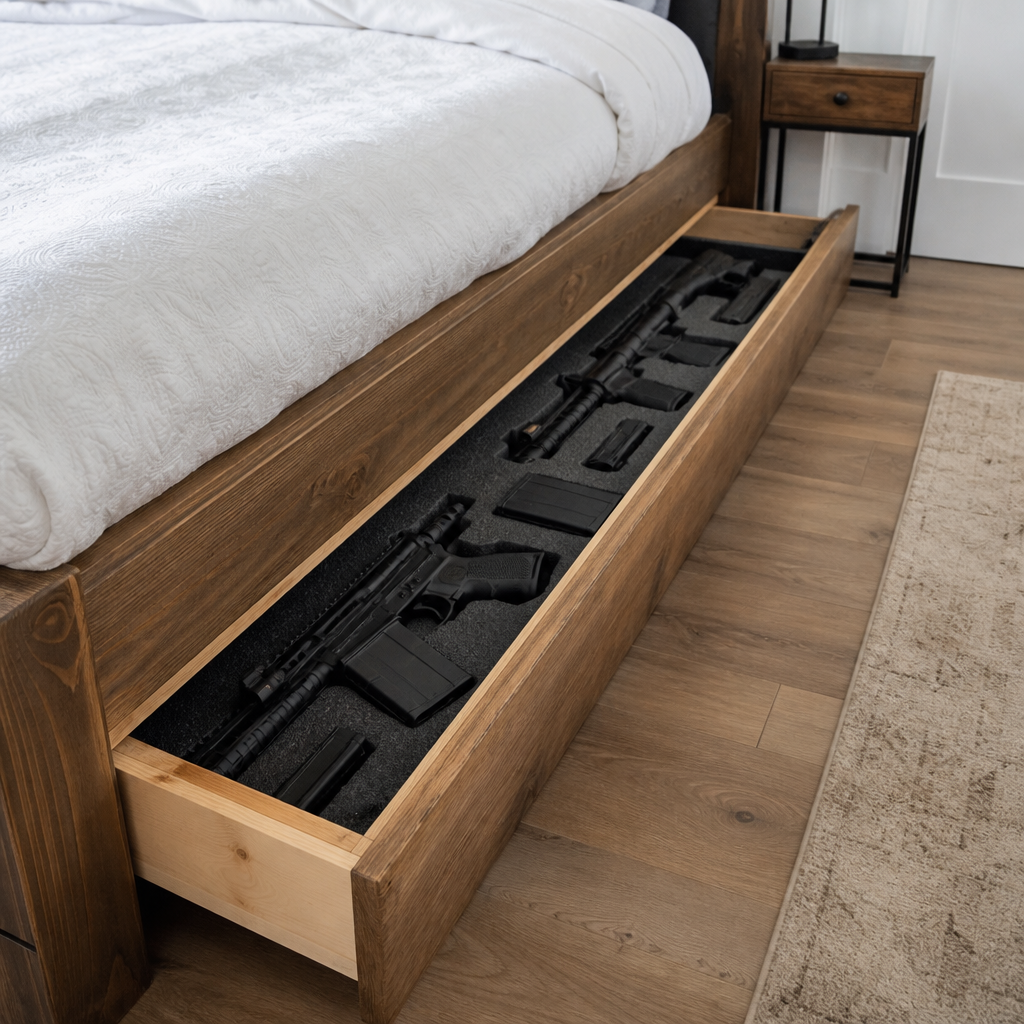
Hidden firearm storage inside furniture appeals to gun owners who want fast access without advertising where valuables are kept, and a bed frame is one of the most practical places to build that capability. A secret gun compartment inside a bed frame is a concealed storage space integrated into the bed structure, typically beneath the mattress platform, behind a panel, or inside a modified rail, designed to keep a defensive firearm nearby while remaining out of casual sight. In my experience installing both commercial concealment products and custom compartments, the bed frame works well because it offers unused volume, supports sturdy hardware, and sits in a predictable location where access matters most. This matters for more than convenience. Secure yet discreet storage can reduce visual exposure during visits by contractors, guests, or children’s friends, and it can complement a primary gun safe by serving a specific defensive role in the bedroom.
That said, hidden storage is not a shortcut around real firearms safety. A concealed compartment is only a responsible solution when it combines concealment, controlled access, structural integrity, and compliance with local law. Gun owners often ask whether hidden storage is safer than a nightstand, faster than a closet safe, or adequate for homes with children. The direct answer is that it can be effective for rapid access, but only if the compartment uses a dependable lock, resists accidental discovery, and keeps the firearm oriented consistently. It should never leave a loaded firearm loosely stored where a child, burglar, or untrained adult can access it. Throughout this guide, the goal is to show how to install a secret gun compartment inside a bed frame while also explaining the broader category of hidden and discreet gun storage solutions, because this topic is best approached as a system rather than a gimmick.
Before cutting wood or ordering hardware, define the key terms that shape a good installation. Hidden storage means the firearm is not obvious at a glance. Discreet storage means the firearm may be secured in ordinary-looking furniture or architectural elements without drawing attention. Quick-access storage means the lock can be opened in seconds under stress. Tamper resistance refers to how well the compartment resists prying, forced entry, or accidental opening. Those distinctions matter because many poor-quality concealment products do one thing well and fail at the others. A magnetic latch may be hidden, for example, but it is not secure. A biometric lock may be fast, but if it fails in low battery conditions or reads poorly with sweaty hands, it becomes a liability. The best bedroom setup balances concealment, access speed, and reliable mechanical execution.
As the hub page for hidden and discreet gun storage solutions, this article covers where bed frame compartments fit within a larger safety plan, what design choices actually work, and how to install one without compromising readiness or safety. It also points toward related subtopics you should explore next, including under-bed safes, concealed furniture, wall and headboard compartments, RFID and biometric locks, and child-resistant quick-access options. If your objective is a practical bedroom storage solution that keeps a defensive firearm close while minimizing visibility, a properly designed bed frame compartment can be one of the smartest options available.
When a Bed Frame Compartment Is the Right Choice
A bed frame compartment is best for homeowners who need immediate nighttime access but do not want a pistol safe sitting in plain view. Compared with a drawer, it is harder for a casual visitor to notice. Compared with a large floor safe, it is much faster to reach from bed. I usually recommend this approach for a dedicated home-defense handgun, a spare magazine, and sometimes a compact flashlight. It is less suitable for multiple firearms, long guns in standard lengths, or homes where the only realistic option should be a fully enclosed, certified safe. If the firearm must remain loaded for defensive readiness, access control becomes the deciding factor. In practical terms, that means a lockable compartment with a predictable opening motion, not a loose cavity hidden behind fabric or trim.
The bed frame itself also determines whether the project makes sense. Solid wood platform beds, captain’s beds, and heavy upholstered frames with internal rails offer the most usable structure. Thin metal frames generally do not. Storage beds can sometimes be adapted, but factory drawers often expose contents too easily and rarely provide proper firearm retention. Adjustable beds introduce moving parts, pinch points, and power dependence, all of which complicate a hidden compartment. A successful installation depends on unused internal space, a rigid mounting surface, and an opening path that does not interfere with slats, lift mechanisms, or bedding. If any of those are missing, another hidden storage method is usually better.
From a broader hidden storage perspective, bed frame compartments sit between obvious quick-access safes and fully custom concealment furniture. They are more discreet than a nightstand vault, more accessible than a closet safe, and often less expensive than a built-in wall compartment. Their weakness is that concealment can create overconfidence. If a thief has time to search thoroughly, many furniture compartments are vulnerable unless reinforced with steel and quality locking hardware. That is why concealed storage should be layered. Keep your main collection in a bolted safe. Use the bed compartment only for the single firearm that serves a clear defensive purpose.
Design Principles That Make Hidden Storage Safe and Functional
The first design principle is controlled access. For bedside use, the most reliable options are Simplex mechanical pushbutton locks, high-quality electronic keypads with low-battery override, or RFID systems from established concealment furniture makers. Biometric locks can work, but I have seen too many inconsistent fingerprint reads to trust them as the sole method in a defensive application. The second principle is firearm orientation. The gun should sit in exactly the same position every time, typically muzzle in a safe direction, grip presented consistently, and trigger guard protected by a fitted holster or retention bracket. Foam cutouts alone are not enough if the firearm can shift during movement.
The third principle is structural strength. A compartment inside a bed frame should not weaken the frame’s load-bearing rails, center support, or slat anchors. When I build these, I avoid cutting into primary support members unless I can sister in reinforcement with hardwood or steel angle. The fourth principle is silent, one-motion access. In a high-stress moment, fumbling with two latches or lifting heavy panels is unacceptable. Gas struts, piano hinges, and soft-close magnetic catches can help, but the lock release must be positive and repeatable. The final principle is low signature. No visible seams, odd hardware, or frequent handling marks should reveal the compartment’s location.
Because this page serves as a hub for hidden and discreet gun storage solutions, the same principles apply across related products. A headboard concealment box, mirror safe, under-desk drawer vault, or under-bed sliding safe all need secure locking, repeatable firearm indexing, and discreet exterior design. The category differs in form, but the safety logic is constant. If a product relies entirely on secrecy with little real locking strength, treat it as inadequate. If it gives access in two seconds but leaves the firearm loose and exposed inside, it is also inadequate. Good hidden storage blends concealment with disciplined engineering.
Planning the Installation: Measurements, Materials, and Legal Checks
Start with measurements. Document internal bed frame dimensions, mattress overhang, slat spacing, floor clearance, and the exact firearm dimensions including optic, weapon light, and holster. Many failed installs happen because owners measure the pistol but forget the mounted red dot or extended magazine. Next, map the access path from your normal sleeping position. Can you reach the compartment one-handed? Will bedding block the opening? Can the panel open without dragging against carpet? I recommend mocking the movement with cardboard before cutting wood. It reveals ergonomic issues immediately.
Material selection should match the frame. Hardwood plywood, poplar, maple, and steel plate are common choices. For hidden panels, cabinet-grade plywood with matching veneer usually blends best. For interior trays, closed-cell foam, Kydex holsters, or aluminum brackets provide better retention than upholstery foam. Hardware matters as much as materials: full-length piano hinges distribute weight, gas struts control movement, threaded inserts allow stronger repeat assembly, and security screws reduce tampering. Avoid cheap barrel locks and light magnetic catches unless they are secondary components rather than the primary security feature.
Legal checks come before construction. State and local laws vary on storage obligations, especially where minors may be present. Some jurisdictions impose criminal liability if a child gains access to an unsecured firearm. Lease terms, dormitory rules, and military housing regulations may also restrict firearm storage methods. Insurance is another overlooked factor. A concealed compartment may not satisfy policy requirements for theft coverage that specify a safe or vault. The practical rule is simple: verify that your plan meets legal standards for secure storage and does not create a negligent-access risk.
| Component | Best Practice | Common Mistake |
|---|---|---|
| Lock | Mechanical pushbutton or proven electronic keypad with override | Cheap biometric-only lock with inconsistent reads |
| Compartment interior | Holster or retention bracket plus protected trigger guard | Loose pistol in foam-lined cavity |
| Frame modification | Reinforce any cut structural members with hardwood or steel | Cutting rails without restoring strength |
| Access path | One-handed opening from normal sleeping position | Panel blocked by bedding or carpet |
| Concealment | Matched finishes, hidden seams, ordinary appearance | Obvious gaps, exposed fasteners, unusual panel lines |
How to Install a Secret Gun Compartment Inside a Bed Frame
The cleanest approach for most wood bed frames is a side-rail compartment with a hinged false panel. First, unload the firearm, remove all ammunition from the work area, and strip the bed enough to expose the frame fully. Mark a section on the inside face of the side rail or bed box where the compartment will sit without intersecting major bolts, center supports, or slat pockets. Build an internal box from three-quarter-inch plywood sized to the firearm and lock body, then test-fit it inside the frame cavity. If the frame lacks cavity depth, create a shallow outward bump concealed by upholstery or trim, but do not reduce mattress support.
Next, cut the access opening carefully with an oscillating tool or track saw, preserving the removed face piece if you want to reuse it as the hidden door. Reinforce the surrounding frame with hardwood cleats glued and screwed into place. Install the compartment box so its load transfers into those cleats rather than hanging from thin paneling. Mount a piano hinge on the lower or rear edge depending on your preferred opening motion. Add a stop so the door opens to a consistent angle. Fit the lock according to the manufacturer’s template, then wire it if electronic, routing leads away from moving bed components and protecting them with loom.
Inside the compartment, mount a holster, Kydex bracket, or purpose-built quick-draw rack so the firearm is secure but easy to grasp. Position a spare magazine and flashlight only if they do not interfere with the draw. Cycle the opening fifty times before considering the project finished. Test it in daylight and darkness, from your normal sleeping position, and with the bedding arranged as it usually is. Listen for rattles. Check that the panel does not sag. Confirm that the frame remains solid under body weight and movement. If the lock hesitates, the panel binds, or the gun shifts at all, correct those issues immediately. Concealed storage succeeds on repeatable performance, not appearance alone.
Common Mistakes, Better Alternatives, and Related Hidden Storage Options
The most common mistake is prioritizing secrecy over security. Homeowners spend time matching stain and hiding seams, then secure the panel with magnets that a child can pull open. Another mistake is storing too much in the compartment. A bedside hidden compartment should be mission-specific, not a junk drawer for firearms, documents, and valuables. Overcrowding slows access and increases the risk of negligent handling. I also see poor planning around maintenance. Electronic locks need battery schedules, hinges need periodic checks, and any compartment near carpet collects dust that can affect fit and function.
Sometimes a bed frame is not the best answer. Under-bed safes on heavy drawer slides offer stronger steel construction and easier retrofitting. Headboard compartments can place the grip even closer to hand height. Nightstand vaults remain the simplest compliant option for many households, especially with children. Wall concealment behind art or mirrors works when the wall cavity is available and you want zero impact on the bed structure. The right choice depends on room layout, family circumstances, local law, and whether speed, capacity, or tamper resistance matters most.
As a hub for hidden and discreet gun storage solutions, this page should guide your next steps. If you need more capacity, explore under-bed safes and concealed furniture safes. If speed is the priority, compare mechanical quick-access locks with RFID and keypad systems. If child resistance is your main concern, focus on products that meet recognized safe-storage expectations and keep the trigger fully protected. The best hidden storage plan is never a single product in isolation. It is a layered system built around one question: how do you keep a defensive firearm accessible to you and inaccessible to everyone else?
Conclusion
Installing a secret gun compartment inside a bed frame can be a smart bedroom defense solution when it is built with the same seriousness you would apply to any other firearm storage system. The essentials are straightforward: choose a bed frame with usable structure, design around controlled access, reinforce anything you cut, present the firearm in a consistent orientation, and test the compartment until operation is automatic. Hidden storage works best when it serves a narrow purpose, usually one defensive handgun near the bed, while your broader collection remains secured in a proper safe.
The larger lesson across hidden and discreet gun storage solutions is that concealment alone is never enough. A successful setup combines concealment, locking strength, safe firearm indexing, and realistic access under stress. Whether you ultimately choose a bed frame compartment, an under-bed safe, a headboard vault, or concealed furniture, evaluate it by those standards first. Use this hub as your starting point, then review the related guides on under-bed safes, hidden furniture storage, quick-access lock types, and child-resistant bedroom options so you can build a system that is fast, discreet, and genuinely responsible.
Frequently Asked Questions
Is it legal to install a secret gun compartment inside a bed frame?
In many places, building a concealed storage area into furniture is legal, but the legality depends on where you live, how the compartment is used, and what you store in it. A hidden compartment inside a bed frame is generally treated as furniture modification, not as a prohibited device by itself. However, firearm laws vary widely by state, county, city, and country, especially when it comes to safe storage, child access prevention, loaded firearms in the home, and who may lawfully possess the gun. If the bed is in a home with minors, you may be required to store firearms in a locked or otherwise secured manner, even if the compartment is hidden from plain view.
It is also important to understand that a secret compartment does not automatically satisfy legal safe-storage standards. In some jurisdictions, concealment alone is not enough. The law may expect the firearm to be stored in a locking container, disabled with a trigger or cable lock, or otherwise made inaccessible to unauthorized users. If the firearm owner is prohibited from possessing a gun, or if the bed frame storage creates access for someone who should not have it, legal consequences can be severe. Before installing anything permanent, it is smart to check current local regulations and, if necessary, speak with a qualified firearms attorney or local law enforcement agency familiar with storage rules. The goal is not just concealment, but lawful, responsible storage that balances access, safety, and compliance.
What is the safest way to design a hidden gun compartment in a bed frame?
The safest design starts with the idea that hidden is not the same as secure. A well-designed bed frame compartment should prevent accidental discovery, block unauthorized access, protect the firearm from shifting or damage, and still allow the lawful owner to reach it quickly if needed. In practical terms, that usually means choosing a compartment location that is structurally stable and naturally discreet, such as beneath the mattress platform, inside a widened side rail, or behind a false panel integrated into the frame. The compartment should be large enough for the intended firearm and any necessary accessories, but not so oversized that the gun can slide around, rotate, or get buried under loose contents.
Good internal retention matters. Foam inserts, fitted cradles, soft-lined brackets, or purpose-built mounts can keep the firearm in a consistent orientation for safe retrieval. The compartment should also open smoothly without requiring awkward hand placement near the trigger area. If speed is important, many owners prefer a system that presents the grip in a predictable position while covering the trigger guard. If there are children, frequent guests, cleaners, or other household members around, a hidden magnetic latch alone may not be enough. A mechanical or electronic lock adds meaningful protection. Beyond access control, the bed frame itself must remain structurally sound. Any cuts into rails, slats, or support members should avoid weakening the load-bearing parts of the bed. In short, the safest setup combines concealment, controlled access, secure firearm positioning, and preservation of the bed’s strength and stability.
Where is the best place in a bed frame to put a secret firearm compartment?
The best location depends on the bed’s construction, your access needs, and how much concealment you want. For many setups, the area beneath the mattress platform is the most practical because it offers usable space without changing the outward appearance of the bed. This can work especially well with platform beds, captain’s beds, or frames that already have under-bed cavities and enclosed panels. Another popular option is a modified side rail, where the exterior profile remains unchanged but a section opens to reveal a fitted storage cavity. This approach can be especially discreet because most people do not inspect bed rails closely, and the gun can often be reached from a standing or kneeling position beside the bed.
That said, the “best” location is not always the most hidden one. A compartment behind the headboard or deep under the frame may be excellent for concealment but slower to access under stress. A side-mounted compartment near your usual sleeping position is often more realistic for defensive use, provided it can be secured properly. You also need to account for practical constraints such as center supports, slats, upholstery, drawers, electrical components in adjustable bases, and clearance around the bed. If the frame is lightweight or made from thin composite materials, some areas may not support modification well. Ideally, choose a location that allows discreet access, does not interfere with sleeping comfort or bed movement, and keeps the firearm protected from dust, moisture, and routine bumps. The best placement is the one that gives you a consistent balance of concealment, safety, structure, and accessibility.
Do I need a lock on a hidden bed frame gun compartment if it is already concealed?
In most cases, yes. Concealment reduces casual discovery, but it does not replace the safety benefits of a lock. A hidden compartment can still be found by a curious child, a visitor, a contractor, a housekeeper, or anyone who spends time around the bed. If the compartment contains a loaded defensive firearm, that risk becomes especially important. A lock adds a second layer of protection and helps address both real-world safety concerns and legal safe-storage requirements in many jurisdictions. For households with children or frequent guests, a locking mechanism is strongly advisable and often essential.
The right lock depends on how you intend to use the compartment. Mechanical push-button locks can be reliable and fast without depending on batteries. RFID or magnetic access systems can preserve the hidden appearance, though they should be chosen carefully so they are not too easy to defeat or too prone to accidental activation. Electronic keypad or biometric systems may offer quick access, but they require maintenance, testing, and backup entry methods in case of power failure or malfunction. Whatever system you choose, reliability matters more than novelty. A lock should not compromise your ability to safely retrieve the firearm, but it also should not be so simple that anyone who discovers the panel can open it immediately. If your goal is responsible concealed home access, the best approach is a hidden compartment with a dependable lock, not a hidden compartment alone.
How can I install a hidden compartment without weakening the bed frame or making it obvious?
The key is to work with the bed’s structure rather than against it. Before making any modifications, identify which components actually carry weight. In many bed frames, the side rails, center beam, legs, slat supports, and connection points handle most of the load. Cutting large openings into these areas without reinforcement can create wobble, sagging, noise, or long-term failure. A better approach is to use existing voids, add an internal box within non-critical space, or create a false panel that attaches to an already enclosed section. If a structural member must be altered, reinforcement should be added in a way that restores rigidity, such as sistering material alongside the cut section or transferring load through additional brackets and supports.
To keep the compartment discreet, match materials, fasteners, finishes, and seams to the original bed construction. Hidden hinges, touch latches, magnetic catches, and tight panel reveals can help the modification disappear visually, but the compartment should still feel solid and intentional. Avoid exterior handles, visible screw patterns that do not match the rest of the frame, or panels that rattle when the bed moves. It is also wise to think about use over time. The compartment should open and close repeatedly without loosening, and it should remain aligned despite the normal flex and movement of the bed. Inside, use padding or fitted retention so the contents do not make noise. From a practical standpoint, the most successful installations are the ones that preserve the bed’s original appearance and strength while creating a clean, repeatable access point. If you are unsure about the structural implications, a skilled carpenter or furniture maker can often help you integrate the compartment more safely and more cleanly than a rushed DIY cutout.